
The Art of the Walk? Summit collapse and Trump’s diplomacy
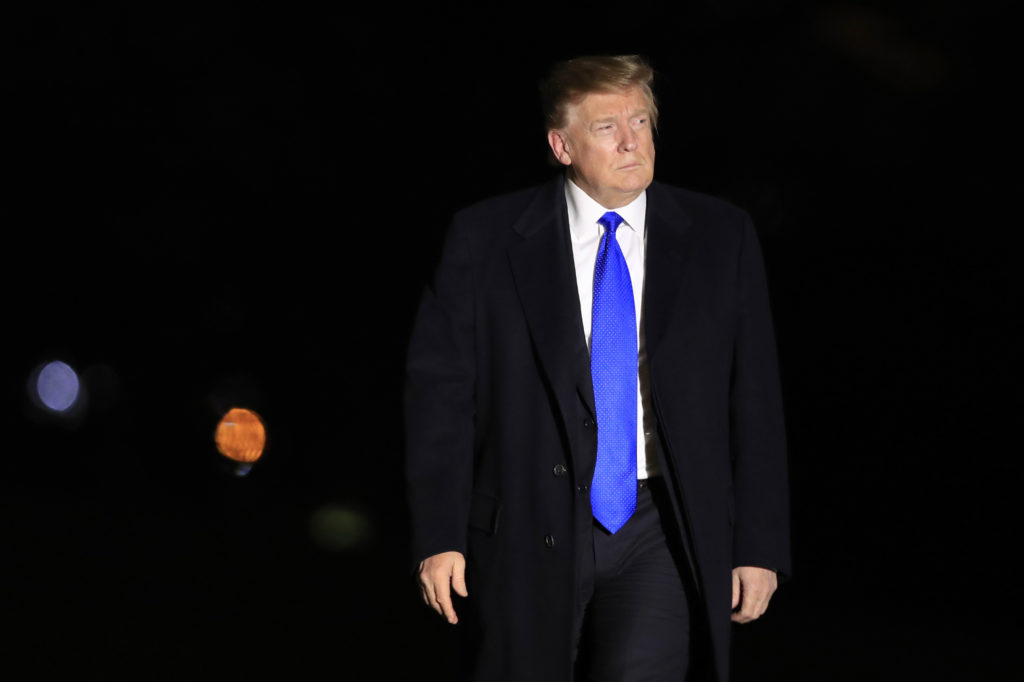
President Donald Trump framed the breakdown of his nuclear summit with North Korea’s Kim Jong Un as wisely knowing when “to walk.” But the stunning collapse revealed the limits of his unique brand of personal diplomacy and raised concerns about future efforts to disarm a global threat. Eyeing the history books and a much-needed political victory, Trump bet big on the two-day Vietnam summit only to be forced to explain away its sudden failure. The president and North Korea gave conflicting explanations of what went wrong, though the result actually was a relief to some critics and even some Trump supporters who feared he might give too much away in pursuit of a deal. Trump, the businessman who was elected in part on his boasts of deal-making prowess, said a proposed agreement was “ready to be signed.” But he said he refused to accept what he described as North Korean insistence that all U.S. sanctions be lifted without the North committing to eliminate its nuclear arsenal. “I’d much rather do it right than do it fast,” the president said. “We’re in position to do something very special.” The North said it had demanded only partial relief from the punishing sanctions. Trump had pushed for the summit, telling wary aides that his personal chemistry with North Korea’s young and reclusive leader outweighed any need for detailed, staff-level talks to iron out differences before either head of state set foot in Hanoi. Secretary of State Mike Pompeo, who along with his special envoy for North Korea, Stephen Biegun, had been leading the preparatory effort, said staff work had achieved some results but that negotiators had intentionally left some of the most contentious issues unresolved. “We were hoping we could take another big swing when the two leaders got together,” he told reporters as he flew from Vietnam to the Philippines after the summit collapsed. “We did. We made some progress. But we didn’t get as far as we would have hoped we would have gotten.” Pompeo noted that “when you are dealing with a country that is of the nature of North Korea, it is often the case that only the most senior leaders have the capacity to make those important decisions.” Echoing the refrain that “no deal is better than a bad deal” — often used during the Obama administration by critics of its Iran negotiations — there was relief in some quarters that the president had not impulsively agreed to concessions without much in return. “Kudos to him for walking away from the table,” said Jonathan Schanzer of the Foundation for Defense of Democracies, a Washington think-tank that has been highly skeptical of Trump’s efforts with Kim Jong Un. “No deal is, in fact, better than a bad deal.” And White House aides stressed that Trump stood strong. Some observers evoked the 1987 Reykjavík summit between Ronald Reagan and the Soviet Union’s Mikhail Gorbachev, a meeting that ended without a nuclear weapons deal but laid the groundwork for a future agreement. Long-standing U.S. policy insists that American sanctions on North Korea will not be lifted until that country commits to, if not concludes, a complete, verifiable and irreversible end to its nuclear weapons program. Trump, who did not consult with allies South Korea and Japan before breaking off the talks, declined to restate that goal Thursday, saying he wanted to retain flexibility with Kim. But North Korea’s foreign minister, in a rare news conference, said that Trump wasted an opportunity that “may not come again” and that the North’s position wouldn’t change even if there was another round of dialogue. The failure in Hanoi laid bare a risk in Trump’s negotiating style: Preferring one-on-one meetings with his foreign counterparts, his administration doesn’t always do the staff-level advance work intended to make a summit more of a victory lap than a negotiation. “The developments over the past 48 hours highlight in stark fashion the inherent weaknesses of President Trump’s preference for summit diplomacy — international media spectacles that have failed to achieve substantial progress on the key issues, especially denuclearization,” said Paul Haenle, the director of the Carnegie-Tsinghua Center for Global Policy. Unsurprisingly, former Obama administration officials agreed. “At every step of the way, Trump has placed himself, rather than professionals, at the center of this process — and as a result, he’s been outmaneuvered every step of the way,” the National Security Action, a group of mainly Obama-era foreign policy practitioners, said in a statement. Michael Fuchs, who worked on Asian issues as a State Department official under Obama, said there should be no more summits until the two sides are ready to announce a concrete agreement. “Let the real negotiators from both sides get to work,” he said. “Until then, no more reality TV summitry.” One beneficiary of the Vietnam summit may have been the North Korean leader. The first Trump-Kim meeting in Singapore gave the reclusive nation’s leader an entry to the international stage. The second appeared to grant him the legitimacy his family has long desired. Kim, for the first time, affably parried with the international press without having to account for his government’s long history of oppression. He secured Trump’s support for the opening of a liaison office in Pyongyang, without offering any concessions of his own. Trump’s backing for that step toward normalization provided the sort of recognition the international community has long denied Kim’s government. Experts worried that the darker side of Kim’s leadership, was being brushed aside. That includes massive human rights abuses, prison camps filled with dissidents, an absence of religious and speech freedoms and the executions of government and military officials. Trump also appeared to accept the North Korean leader’s assertion that he had nothing to do with the 2017 death of Otto Warmbier, an American college student who was imprisoned for allegedly taking a propaganda poster while on a visit to the country. The president said he took Kim “at his word” that he was unaware of the mistreatment
Beyond bluster, U.S., N. Korea in regular contact
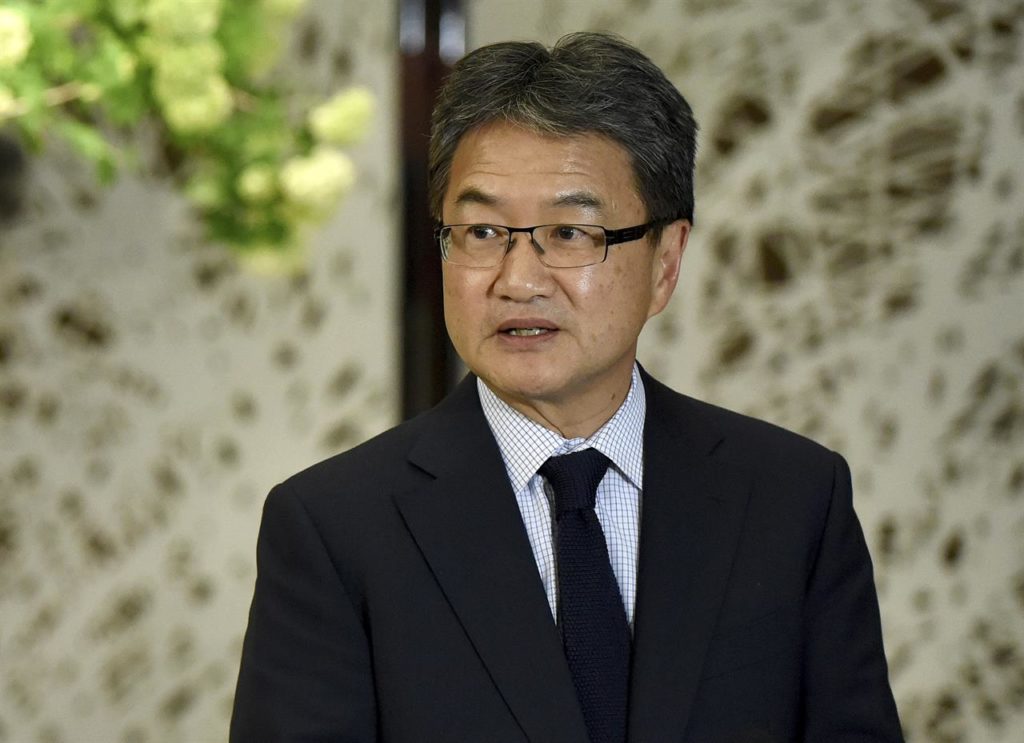
Beyond the bluster, the Trump administration has been quietly engaged in back channel diplomacy with North Korea for several months, addressing Americans imprisoned in the communist country and deteriorating relations between the longtime foes, The Associated Press has learned. It had been known the two sides had discussions to secure the June release of an American university student. But it wasn’t known until now that the contacts have continued, or that they have broached matters other than U.S. detainees. People familiar with the contacts say the interactions have done nothing thus far to quell tensions over North Korea’s nuclear weapons and missile advances, which are now fueling fears of military confrontation. But they say the behind-the-scenes discussions could still be a foundation for more serious negotiation, including on North Korea’s nuclear weapons, should President Donald Trump and North Korean leader Kim Jong Un put aside the bellicose rhetoric of recent days and endorse a dialogue. Trump refused to discuss the diplomatic contacts. “We don’t want to talk about progress, we don’t want to talk about back channels,” Trump told reporters Friday. The diplomatic contacts are occurring regularly between Joseph Yun, the U.S. envoy for North Korea policy, and Pak Song Il, a senior North Korean diplomat at the country’s U.N. mission, according to U.S. officials and others briefed on the process. They weren’t authorized to discuss the confidential exchanges and spoke on condition of anonymity. Officials call it the “New York channel.” Yun is the only U.S. diplomat in contact with any North Korean counterpart. The communications largely serve as a way to exchange messages, allowing Washington and Pyongyang to relay information. Drowned out by the furor over Trump’s warning to North Korea of “fire and fury like the world has never seen,” Secretary of State Rex Tillerson has expressed a willingness to entertain negotiations. His condition: Pyongyang stopping tests of missiles that can now potentially reach the U.S. mainland. Tillerson has even hinted at an ongoing back channel. “We have other means of communication open to them, to certainly hear from them if they have a desire to want to talk,” he said at an Asian security meeting in the Philippines this week. The interactions could point to a level of pragmatism in the Trump administration’s approach to the North Korean threat, despite the president’s dire warnings. On Friday, he tweeted: “Military solutions are now fully in place, locked and loaded, should North Korea act unwisely.” But on Thursday, he said, “we’ll always consider negotiations,” even if they haven’t worked in the last quarter-century. The contacts suggest Pyongyang, too, may be open to a negotiation even as it talks of launching missiles near the U.S. territory of Guam. The North regularly threatens nuclear strikes on the United States and its allies. The State Department and the White House declined to comment on Yun’s diplomacy. A diplomat at North Korea’s U.N. mission only confirmed use of diplomatic channel up to the release of U.S. college student Otto Warmbier two months ago. Trump, in some ways, has been more flexible in his approach to North Korea than President Barack Obama. While variations of the New York channel have been used on-and-off for years by past administrations, there were no discussions over the last seven months of Obama’s presidency after Pyongyang broke them off in anger over U.S. sanctions imposed on its leader, Kim. Obama made little effort to reopen lines of communication. The contacts quickly restarted after Trump’s inauguration, other people familiar with the discussions say. “Contrary to the public vitriol of the moment, the North Koreans were willing to reopen the New York channel following the election of President Trump and his administration signaled an openness to engage and ‘talk about talks,’” said Keith Luse, executive director of the National Committee on North Korea, a U.S.-based group that promotes U.S.-North Korean engagement. “However, the massive trust deficit in Pyongyang and in Washington toward each other has impeded the confidence-building process necessary to have constructive dialogue,” he said. The early U.S. focus was on securing the release of several Americans held in North Korea. They included Warmbier, who was imprisoned for stealing a propaganda poster and only allowed to return to the U.S. in June — in an unconscious state. He died days later. Yun traveled on the widely publicized mission to Pyongyang to bring Warmbier home. Despite outrage in the U.S. with Warmbier’s treatment and sharp condemnation by Trump, the U.S.-North Korean interactions in New York continued. Yun and his counterpart have discussed the other Americans still being held. They include Kim Hak Song, a university employee detained in May accused of unspecified “hostile” acts; Tony Kim, a teacher at the same school, accused of trying to overthrow the government; and Kim Dong Chul, sentenced last year to a decade in prison with hard labor for supposed espionage. But the American and North Korean diplomats also have discussed the overall U.S.-North Korean relationship. The two countries have no diplomatic ties and are still enemies, having only reached an armistice — not a peace treaty — to end the 1950-1953 Korean War. Twenty-eight thousand U.S. troops are still stationed in South Korea. In its own convoluted way, North Korea has indicated openness to talks in recent weeks, even as it has accelerated the tempo of weapons tests. On July 4, after the North test-launched an intercontinental ballistic missile that could potentially strike the continental U.S., leader Kim added a new caveat to his refusal to negotiate over its nukes or missiles. Instead of a blanket rejection, he ruled out such concessions “unless the U.S. hostile policy and nuclear threat to the DPRK are definitely terminated.” That message has been repeated by other North Korean officials, without greater specification. Nor have they offered an indication as to whether Pyongyang would accept denuclearization as the goal of talks. Still, advocates for diplomacy, including some voices in the U.S. government, view the addendum as a potential opening. “North Korea is assessing its options,”
