
Jerry Carl and Barry Moore support failed impeachment of Homeland Security Secretary Alejandro Mayorkas
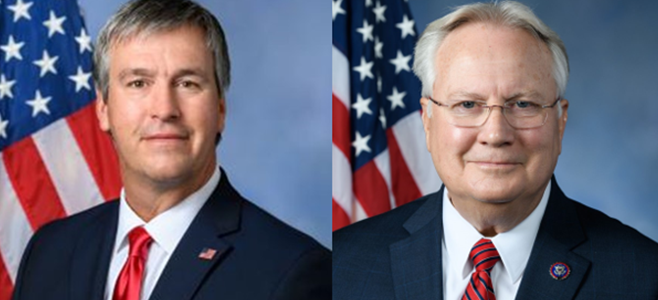
On Tuesday night, the U.S. House of Representatives voted to thwart a motion by Congresswoman Marjorie Taylor Greene (R-Georgia) to impeach embattled Homeland Security Secretary Alejandro Mayorkas. Eight Republicans joined House Democrats to stop the impeachment effort and instead refer the motion to the Homeland Security Committee for their consideration. The eight Republicans were Representatives Ken Buck (R-Colorado), Darrell Issa (R-California), Tom McClintock (R-California), Patrick McHenry (R-North Carolina), John Duarte (R-California), Virginia Foxx (R-North Carolina), Cliff Bentz (R-Oregan), and Mike Turner (R-Ohio). All six of Alabama’s Republican Congressmen voted with Rep. Greene to proceed with impeaching Mayokas. Congressman Jerry Carl (R-AL01) wrote on X, “Tonight, the House voted on a motion to refer this impeachment resolution to the Homeland Security Committee. This motion passed, so we didn’t vote to impeach him. I voted against this motion because the House needs to take immediate action to impeach Secretary Mayorkas.” Rep. Barry Moore (AL-02) also voted against killing the resolution to begin impeachment proceedings against Homeland Security Secretary Mayorkas. Rep. Moore is also a co-sponsor of this resolution. Moore was one of the first Members of Congress to call for the impeachment of Mayorkas back in May. “Under Mayorkas’ watch, there have been 8 million illegal border encounters, 52,900 pounds of fentanyl seized at the border, more than 280 people on terrorist watchlists caught while attempting to cross the border, and 1.8 million known “got aways” who have evaded U.S. authorities,” said Moore. “In the private sector, if you don’t do your job, you get fired. Mayorkas’ failure to do his job is putting Americans in grave danger every day, and it’s past time for him to be impeached.” Carl is also a co-sponsor of Rep. Greene’s resolution. “Our southern border is wide open, and we have an unprecedented illegal immigration crisis at our southern border because Secretary Mayorkas has failed to do his job. That’s why I proudly co-sponsored @RepMTG’s resolution to impeach him.” Carl said on X. Americans for Legal Immigration PAC (ALIPAC.us) announced afterward that it is dropping the national organization’s long-standing endorsement and support for Rep. Tom McClintock after McClintock joined seven other Republicans in voting with Democrats to protect Mayorkas from impeachment. “Our decade-long support for Rep. McClintock ends today, and we call on American patriots, conservatives, Republicans, and invasion opponents to mount GOP Primary challengers to any of these eight sellouts still on the ballot in 2024,” said William Gheen of ALIPAC. “These Republicans supporting Democrat efforts to flood and overwhelm U.S. elections with illegal alien Democrat voters should be run out of office! Shame on them for depriving all Americans of a true choice against illegal globalist policies.” Rep. Marjorie Taylor Greene said that she will continue her efforts to hold the Biden Administration accountable for its thwarting of the nation’s immigration laws and the crisis on the southern border. “I will not stop fighting to hold the Biden administration accountable for their open border policies that are killing Americans every day,” Congresswoman Greene said on X. “It’s time for Republicans to grow a spine and join me in impeaching Mayorkas and others who are destroying our country.” An impeachment by the House had it occurred would likely have been rejected by the Democratic-controlled U.S. Senate if the Senate even took the matter up. To connect with the author of this story or to comment, email brandonmreporter@gmail.com.
Republicans announce nine new speaker candidates
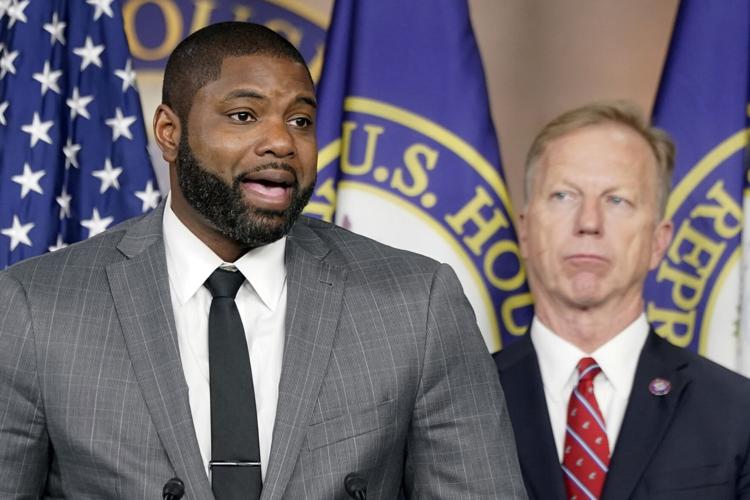
By Casey Harper | The Center Square Nine new Republican lawmakers have thrown their hat in the ring to become the next speaker of the U.S. House. Republican Conference Chair Rep. Elise Stefanik released the list of candidates, who had until noon Sunday to announce their candidacy. The list, which Stefanik posted on X, formerly known as Twitter, is as follows: The new list of candidates comes after former House Speaker Kevin McCarthy, R-Calif., was ousted from the role when Rep. Matt Gaetz, R-Fla., filed a motion to vacate. Then, Majority Leader Steve Scalise, R-La., was the party’s choice to become speaker, but he withdrew when he was unable to get the support he needed. House Judiciary Chair Rep. Jim Jordan, R-Ohio, was next in line and worked for several days to get the needed 217 votes to become speaker. However, at least 20 Republicans voted against him across his three floor-vote attempts, and on Friday, his nomination was revoked. Some of the candidates have more support than others. Donalds’ announcement drew more attention than some others. Emmer has been a rumored pick for speaker as well. However, conservative Republicans have expressed frustration with moderate Republicans for rejecting Jordan, who had significant support with the Republican base but was seen as a hardline conservative who questioned the results of the 2020 presidential election. “The most popular Republican in Congress was just knifed in an anonymous vote in a secret closed-door meeting in the basement of the Capitol,” Gaetz wrote on X Friday. “This is the Swamp at work.” Meanwhile, some more moderate Republicans have expressed frustration with Gaetz and do not want to reward his ousting of McCarthy with an aggressive conservative pick. As The Center Square previously reported, Jordan sparked pushback from his own party on Thursday after reports surfaced that he said behind closed doors he would back the speaker pro Tempore, U.S. Rep. Patrick McHenry, R-N.C., for a limited temporary speakership role so the government could be funded and other key legislative goals hit. The federal government faces a partial shutdown in November, and there is increasing pressure to send more funds for the Ukraine and Israel wars. President Joe Biden called on Congress to pass a spending package of $105 billion for those wars as well as some border funding and money for Taiwan, which national security experts say China could invade at any time. Jordan later addressed reporters, announcing he would drop that plan and instead hold another vote. That plan still has potential to take effect. While many Republicans have expressed opposition to the idea, Democrat Minority Leader Hakeem Jeffries has seemed open to the idea when talking with reporters. Republished with the permission of The Center Square.
After third failed vote, Jim Jordan will not be Speaker of the House
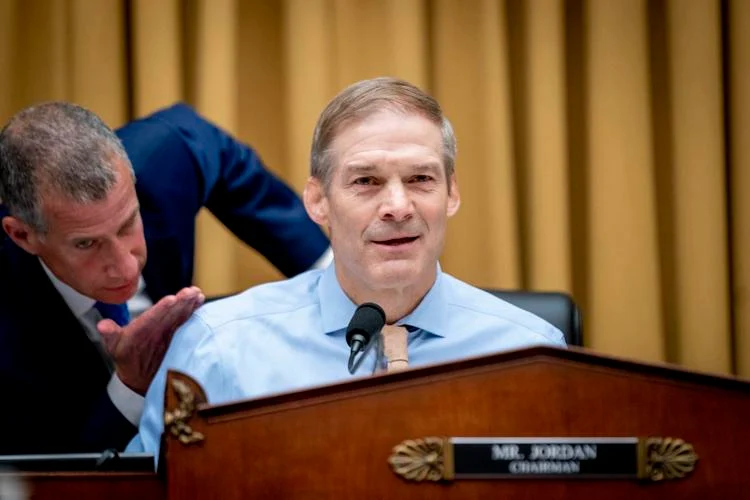
On Friday, the House of Representatives again rejected House Judiciary Chairman Jim Jordan (R-Ohio) in a third vote for the Speaker of the House. The third vote was his poorest performance yet as more and more GOP House members abandoned the conservative firebrand’s cause. Just hours after that vote, the Republican Conference met and, in a secret ballot, voted to no longer back Jordan as the GOP nominee for Speaker. Jordan was never the first choice of House Republicans. Most, including Jordan himself, voted not to oust Speaker of the House Kevin McCarthy (R-California). Rep. Matt Gaetz (R-Florida) and eight disgruntled far-right House members voted with House Democrats to oust McCarthy. The Conference chose House Majority Leader Steve Scalise (R-Louisiana) over Jordan in a close conference vote. Scalise failed to get the commitment from conservatives for a viable run for Speaker. Seeing that he did not have the 217 votes needed to be elected Speaker, Scalise withdrew. Jordan defeated Rep. Austin Scott (R-Georgia) on Friday, August 13. All six Republican Alabama House congressional delegation members supported Jordan’s failed bid for the Speaker’s gavel. Former Speaker McCarthy endorsed Jordan and gave a floor speech Friday morning encouraging members to back him, but this failed to sway the growing anti-Jordan faction within the House Republican Caucus. Jordan, the founding Chairman of the ultra-conservative Freedom Caucus, struggled to convince mainstream and moderate House members to support him. On the first vote, he received just 200 votes – 17 shy of being elected Speaker. That was the closest that he would ever come. On Thursday, Jordan announced that he had suspended his campaign for Speaker and instead would back giving the Speaker Pro Tem Patrick McHenry (R-North Carolina) emergency powers so that the House could function until January. Opposition prevented that plan from being adopted, so Jordan resumed his campaign for Speaker late Thursday evening, leading to that doomed third vote on Friday morning. With Jordan no longer the nominee and the GOP Conference extremely divided, the House is in something close to chaos. On Thursday, President Joe Biden asked Congress to provide $10 billion to Israel for its war with Hamas and other terror organizations and $50 billion more in emergency aid for Ukraine in its war with Russia. Moving on the aid request or passing budgets to avoid a government shutdown on November 15 is all at a standstill until House Republicans can decide on a Speaker of the House. At this point, it appears that the next Republican nominee will not be Rep. Jordan. To connect with the author of this story or to comment, email brandonmreporter@gmail.com.
Jim Jordan: Speaker vote is back on, no Patrick McHenry deal
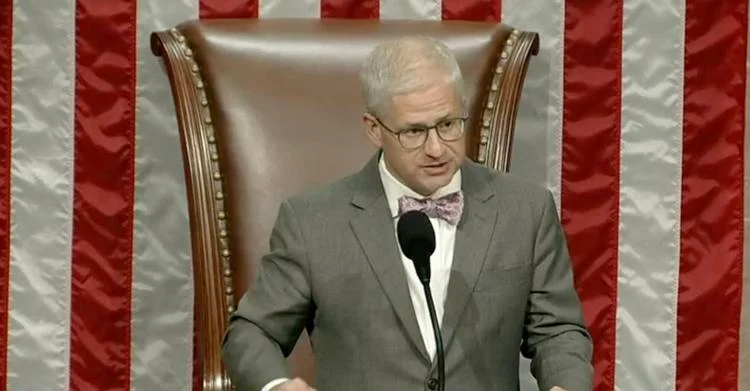
By Casey Harper | The Center Square U.S. House Judiciary Chair Rep. Jim Jordan, R-Ohio, told reporters Thursday afternoon that he would in fact keep running for speaker and hold another floor vote, despite reports that he was considering postponing his effort. The news came after Jordan reportedly said behind closed doors he would back the speaker pro Tempore, Rep. Patrick McHenry, R-N.C. for a limited temporary speakership role so that lawmakers can hit key funding deadlines coming this year. “I’ll just say this,” Jordan told reporters Thursday. “We made the pitch to members on the resolution as a way to lower the temperature and get back to work. We decided that wasn’t where we were going to go. I’m still running for speaker, and I plan to go to the floor and get the votes and win this race.” The House faces a government shutdown deadline in the middle of November and calls to pass funding measures for the respective Ukraine and Israel wars. “But I want to go talk with a few of my colleagues, particularly I want to talk with the 20 individuals who voted against me so that we can move forward and begin to work for the American people,” Jordan added. Some Republicans were immediately critical of the news, which was reported by Punchbowl News, that Jordan would strike a deal with McHenry. “There is no path for a GOP-only empowerment of a Speaker Pro-Tem so it will necessarily require Democrat votes,” U.S. Rep. Chip Roy, R-Texas, wrote on X, formerly known as Twitter, as rumors of the deal swirled. “It is, in any event, a fool’s errand – breaking with tradition & setting constitutionally questionable precedent to empower someone who is NOT the duly elected Speaker but will be empowered to negotiate a CR & massive supplemental bills (approx. $100BB) for Israel & Ukraine (& $ to process more illegals). “It will then set the [House GOP] up for a Xmas omni ‘deal,’” he added. “I strongly oppose.” A third vote for Jordan was expected Thursday, but Jordan’s reported temporary endorsement of McHenry delayed it. It remains unclear if lawmakers will vote later Thursday or later this week. Jordan failed to get the needed 217 votes both Tuesday and Wednesday as moderate Republicans held out, voting for a range of other potential candidates. Senate Republicans chimed in as well. “House Uniparty GOP members insisted last week that a ‘Speakerless House’ was a national crisis, but they’re now willing to experiment with unprecedented long-term pro-tem powers when asked to vote for a more conservative Speaker. Stunning hypocrisy,” Sen. Mike Lee, R-Utah, wrote on X. Republished with the permission of The Center Square.
Jim Jordan suspends bid to be Speaker; endorses reforms giving powers to interim Speaker Patrick McHenry
On Thursday, Congressman Jim Jordan (R-Ohio) suspended his bid to be Speaker of the House. He announced that he will now back giving powers to interim Speaker Republican Patrick McHenry.(R-North Carolina). More than 20 House Republicans have stood against Jordan’s bid to be the next Speaker of the House. A third-floor vote on Jordan’s speakership had been scheduled for midday on Thursday, but at a meeting of the House Republican Caucus, it became apparent that the mainstream Republicans opposing Jordan as Speaker were not ready to be swayed. Rep. Jim Banks told reporters that Jordan told the conference that he would not seek a third vote for Speaker knowing the outcome and would instead back a plan to give powers to interim Speaker McHenry to hold the post until January. Congressman Barry Moore (R-AL02) is the strongest supporter of Jordan. “To me, Jim Jordan being in this race is quite amazing when you figure that he was one of the founders of the House Freedom Caucus just a few short years ago,” Rep. Moore said recently. “I talked with Senator Bud the other night, and he said who would have ever dreamed that Jim Jordan would up for Speaker of the House given his conservative leanings. What I tell everybody is that there is a mass movement across this country right now. You see it with the Bud Light and Oliver Anthony with the Rich Men North of Richmond (a pop song). There is a lot of pressure on the rich men north of Richmond.” Moore expressed frustration with members who oppose Jordan. “How do you defend not voting for Jim Jordan?” Moore said. “There is not a principled stand if you are a Republican and the party of Reagan, and there is not anybody that I know of right now who can get to the 217 without working with the Democrats.” Those comments were made before Jordan suspended his campaign. If those rule changes pass, the House will be able to function so Congress can get back to work. Republicans who control the House 221 to 212. Jordan got 200 votes on Tuesday but just 199 votes on Wednesday. Some GOP Congress members who have opposed Jordan, report receiving death threats. To connect with the author of this story or to comment, email brandonmreporter@gmail.com.
Jim Jordan next to try shot for speaker of the House
By Casey Harper | The Center Square House Republicans have nominated Judiciary Chair Jim Jordan, R-Ohio, to be speaker of the House, but it remains unclear if Jordan can get the needed 217 votes from his own fractured party. Rep. Austin Scott, R-Ga., a lesser-known member, threw his name in the hat for the position as well and got significant support in the nomination vote, though possibly only as a vote against Jordan instead of a true vote for Scott. Later, though, Scott threw his support behind Jordan. “I highly respect Jim Jordan. He is an asset to the Republican Party and our nominee for Speaker,” Scott wrote on X, formerly known as Twitter. “Our conference has spoken, and now we must unite behind Jordan so we can get Congress back to work.” Jordan has conservative chops and support from the party base, but many moderates may not be willing to go his way. “For years, I’ve stayed out of House leadership elections, but this time I endorsed [Jordan],” Sen. Ted Cruz, R-Texas, wrote on X. “Jim is a good friend and a strong conservative. My philosophy on political endorsements is to support the strongest conservative who can win. That is Jim Jordan.” U.S. House Republican Majority Leader Steve Scalise, R-La., was the leading contender to be the speaker of the House Thursday morning, but he later withdrew his bid before taking it to a public vote after he failed to get enough support. Meanwhile, lawmakers in the House face a partial government shutdown in mid-November along with growing pressure to supply funds, ammunition, and weapons to both Ukraine and Israel, which has declared war on the terrorist group Hamas. Until lawmakers land on a speaker, legislation cannot move forward. As The Center Square previously reported, another key issue for lawmakers to handle is whether one lawmaker will still be able to file a motion to vacate the speaker, an unusual allowance given by McCarthy to secure the needed votes after the series of speakership votes earlier this year. Rep. Matt Gaetz, R-Fla., used that very allowance to file the motion that led to the ousting of former House Speaker Kevin McCarthy, R-Calif. The current Speaker Pro Tempore is Rep. Patrick McHenry, R-N.C., who will determine the times of any speaker votes until a lawmaker wins the speakership. “The DC Uniparty does not want a Speaker who would threaten their status quo,” Rep. Andy Biggs, R-Ariz., wrote on X. “We need a strong conservative for Speaker of the House!” Republished with the permission of The Center Square.
Steve Scalise faces significant opposition in speakership bid
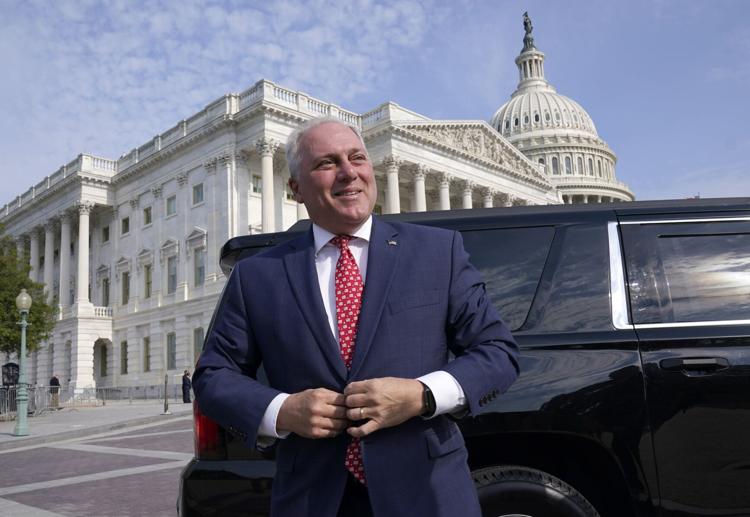
By Casey Harper | The Center Square U.S. House Republican Majority Leader Steve Scalise, R-La., was the leading contender to be the Speaker of the House Thursday morning, but mounting opposition is threatening his chance. House Judiciary Chairman Jim Jordan, R-Ohio, is a key contender as well, but at least for now, neither seems able to nab the 217 needed votes to become speaker of the House. Meanwhile, Democrats have nominated Democrat Minority Leader Hakeem Jeffries, D-N.Y., to be speaker. While Republicans will likely be unwilling to support that choice, they may have to work with Democrats to find a lawmaker palatable enough to both sides. Until the House selects a speaker, no legislation can go forward. After Scalise’s nomination, there were hopes of an immediate vote but is still working to rally the 217 votes needed to become House Speaker. Republicans met again Thursday, but a vote has yet to take place. The pushback comes after Scalise received the support of a majority of his fellow House Republicans for the speaker of the House nomination during a closed-door conference meeting Wednesday. That vote was conducted by secret ballot, with Scalise narrowly besting Jordan on a vote of 113-99, according to multiple media reports. Some Republicans have taken issue with having the votes behind closed doors. “Let’s do this on the House floor instead of behind closed doors. Stop dragging it out,” Rep. Marjorie Taylor Greene, R-Ga., wrote on X, formerly known as Twitter. “If Kevin McCarthy had to go 15 rounds then the next Speaker should be able to do the same or more if they have to.” Jordan, who has the endorsement of former President Donald Trump, still has the support of some Republicans despite Scalise’s majority win. “I will be voting for Jim Jordan to be Speaker of the House on the floor when the vote is called. In conference, Jordan received 99 votes and Scalise received 113,” Rep. Lauren Boebert, R-Fla., wrote on X. “We had a chance to unify the party behind closed doors, but the Swamp and K Street lobbyists prevented that. The American people deserve a real change in leadership, not a continuation of the status quo.” And some Republicans are optimistic that Jordan could re-enter the race if Scalise fails to get momentum. “Just for clarification: I was one of the earliest endorsers for Jim Jordan for Speaker,” Rep. Ronny Jackson, R-Texas, wrote on X. “I whipped hard for his support around the Republican conference and I enthusiastically voted for Jim for speaker yesterday. Jim is a great conservative and I was proud to be one of his strongest supporters. Last night when we voted, Steve Scalise received the majority of votes. Jim Jordan withdrew his name from consideration and pledged to vote for Steve Scalise, as did I. It is now up to Scalise to get 217 votes on the floor of the House. “If Steve Scalise can’t win the Speakership, I will be aggressively urging Jim to put his name back in the race,” he added. Scalise is the current Majority Leader, so a significant leadership role in the party will immediately become vacant if he becomes speaker. U.S. Rep. Kevin McCarthy, R-Calif., who only narrowly won the speakership earlier this year after more than a dozen public votes, said he will not run again after being ousted by Rep. Matt Gaetz, R-Fla, and a handful of other Republicans. Later, though, McCarthy softened his tone, saying he would let the conference decide. Another key issue for lawmakers to handle is whether one lawmaker will still be able to file a motion to vacate the speaker, an unusual allowance given by McCarthy to secure the needed votes after the series of speakership votes earlier this year. Gaetz used that very allowance to file the motion that led to the ousting of McCarthy that kicked off this battle for the speakership. Now, lawmakers face a looming partial government shutdown in mid-November as well as pressure to supply funds and munitions to both Ukraine and Israel, which has declared war on the terrorist group, Hamas. Scalise announced in August that he had been diagnosed with blood cancer. The current Speaker Pro Tempore is Rep. Patrick McHenry, R-N.C., who will determine the times of any speaker votes until a lawmaker secures the speakership. Gaetz echoed Greene’s call for public votes. “Let’s do the messy work of governing and leadership selection in front of the people,” he wrote on X. “Just like I voted against McCarthy time after time…in public…making my argument, others should have to reveal their thinking and be appropriately judged by their voters. We elected [and] removed McCarthy with total transparency. Let’s replace him in the same manner.” Republished with the permission of The Center Square.
House Republicans nominate Steve Scalise for speaker, faces tough vote
By Casey Harper | The Center Square U.S. House Republican Majority Leader Steve Scalise of Louisiana reportedly received the backing of a majority of his fellow House Republicans for the speaker of the House nomination during a closed conference meeting Wednesday afternoon. Now, Scalise faces a vote of the full House for the vacant position possibly this week, and his battle is far from over. Scalise needs the support of nearly all his Republican colleagues since Democrats will likely vote against his nomination. Scalise was by no means a landslide winner of the vote, which was conducted by secret ballot, winning 113-99, according to multiple media reports. In particular, House Judiciary Chairman Jim Jordan, R-Ohio, put his name in the hat for speaker and received some support, including the endorsement of former President Donald Trump. U.S. Rep. Kevin McCarthy, R-Calif., is no stranger to wrangling Republicans in this setting. He narrowly secured the speakership for this Congress after more than a dozen public votes, but was ousted after he reached a deal with Democrats to keep the federal government open temporarily late last month. If Scalise fails to get the necessary votes, McCarthy could resurface as a contender. McCarthy said he would not run again after being ousted but later softened his tone, saying he would “let the conference decide.” Another issue at hand is whether one lawmaker will be able to file a motion to vacate the speaker, an unusual allowance given by McCarthy to secure the needed Republican votes after the marathon series of speakership votes earlier this year. U.S. Rep. Matt Gaetz, R-Fla., filed that motion, which led to the ousting of McCarthy and frustration from many of his Republican colleagues. With a partial government shutdown looming in mid-November as well as pressure to supply funds and munitions to both Ukraine and Israel given the conflicts there, House Republicans are facing increased pressure to figure things out quickly. Scalise is the current Majority Leader, so if he is able to win the speakership, a significant leadership role in the party will immediately open up. Scalise announced earlier this year that he was diagnosed with blood cancer, but he has insisted he is up to the leadership role. Until the House chooses a speaker, no legislation can proceed. The current Speaker Pro Tempore is Rep. Patrick McHenry, R-N.C., who will determine the times of any speaker votes until a speaker secures the spot. Republished with the permission of The Center Square.
Steve Scalise, Jim Jordan announce bids to replace Kevin McCarthy as Speaker of the House

By Casey Harper | The Center Square House Judiciary Chair Rep. Jim Jordan, R-Ohio, and Majority Leader Steve Scalise, R-La, both announced Wednesday their bid to replace Kevin McCarthy, R-Calif., as Speaker of the House. A vote for a new Speaker is reportedly not expected until Oct. 11, giving lawmakers about a week to plan their next move. McCarthy, who was pushed out after striking a deal with Democrats to keep the government open, said he does not plan to run again for the position. “I think Matt has planned this all along,” McCarthy told reporters. “It didn’t matter what transpired. He would’ve done it if we were in shutdown or not.” Scalise’s and Jordan’s announcement comes after a handful of House Republicans joined Democrats to oust Kevin McCarthy, R-Calif., from his role as Speaker of the House, the first time Congress has ever done so. Now, the House has until mid-November to elect a new Speaker and pass some kind of spending measure or face a government shutdown. Scalise sent a letter to House Republicans asking for their support. “Our strength as a Conference comes from our unity, and we have seen when we unite as a Conference, we can deliver wins for the American people,” the letter said. “Now we need to take those unified positions and work to extract conservative wins from the Democrat Senate and White House by leveraging upcoming deadlines. While we need to be realistic about what can be achieved, if we stay united, we can preserve leverage for the House to secure tangible wins in our impending policy fights.” Jordan sent a similar letter to his fellow Republicans asking for their support. “We must address rising crime in major cities and reject soft-on-crime, pro-criminal policies,” the letter said. “We must get our fiscal house in order and reduce spending so that we can leave more to the next generation than a crushing deficit. We must do our constitutional oversight of the federal bureaucracy to ensure they work for the American people not the other way around. And we must continue working to secure the border and protect our national security. “I respectfully ask for your support for Speaker of the House of Representatives,” the letter added. Jordan’s move was welcomed by some Republicans like Rep. Matt Gaetz, R-Fla., who filed the motion to oust McCarthy. “We should get to electing a new, more conservative and more trustworthy Speaker immediately,” Gaetz wrote on X, formerly known as Twitter. “I’m calling on [Patrick McHenry] who is currently the Speaker Pro Tem, to reconsider the decision that he just made to send everyone in Congress home for a week. This is not the time to go home for a week. We should stay and elect a new Speaker.” Other potential frontrunners to replace McCarthy include Majority Whip Tom Emmer, R-Minn., and Rep. Kevin Hern, R-Okla, who suggested he might run. Some lawmakers spoke out to make clear they are not running. “While I appreciate the confidence of some colleagues and their request that I step into the Speaker race, my team and I have been doing important work on the Homeland Security Committee – and we still have much more to do to hold President [Joe] Biden and Secretary [Alejandro] Mayorkas for one of the worst national security failures in the history of the country,” Rep. Mark Green, chair of the Homeland Security Committee, wrote on X. “Therefore, I am not throwing my name into the race,” he added. With the existing divide in the party, it may be impossible for any Speaker to be successful. “The most important issue facing the next House speaker is soaring federal debt pushing the nation to the brink of fiscal disaster,” Chris Edwards, an expert at the Cato Institute, told The Center Square. “Interest rates on 10-year government bonds have shot up far above projections to 4.8 percent and rising, which will raise the burden of accumulated debt to crushing levels. “America needs a new House speaker – and presidential candidates – who put spending restraint and debt reduction as top national priorities,” he added. Republished with the permission of The Center Square.
Gary Palmer says Republicans must come together and choose a leader who can unify the party

On Tuesday, Congressman Matt Gaetz (R-Florida) led a successful effort to oust Rep. Kevin McCarthy (R-California) as the Speaker of the House. All of Alabama’s Republican congressional delegation supported McCarthy, but under the rules of the House, McCarthy’s ouster had enough votes to succeed given the razer-thin GOP majority in the Congress. Following the removal and McCarty’s telling the Republican Caucus that he would not run again, U.S. Representative Gary Palmer (R-AL06) released a statement. “What we just experienced has never occurred in the history of our nation,” said Rep. Palmer. “For the first time, a Speaker of the House has been removed. This action is reflective of how divided our nation is, including among Republican members of the House. While I am deeply disappointed about where we are, we still must find a way to govern.” McCarthy’s ouster comes at a critical time with the 12 spending bills still not having passed either House of Congress and the federal government having to operate under a 45-day continuing resolution that McCarthy negotiated on Saturday. “Our country faces a $33 trillion debt crisis threatening the future of all Americans – those living and those yet to be born,” said Rep. Palmer. “Our border is not secure, threatening not only our economy but also our national security. As Republicans, we must find a way to come together and choose a leader who can unify our party and has the ability to address these issues head on. We have a job to do for the American people, and they deserve a unified majority focused on what’s best for the nation.” The last GOP Speaker battle was an intense affair that required 15 votes of the House before McCarthy was finally elected as the 55th Speaker. At one point, it appeared as if Congressman Mike Rogers (R-AL03) had to be restrained from attacking Gaetz after Gaetz’s faction thwarted the 14th vote to elect McCarthy as the Speaker of the House. His tenure lasted less than nine months. The Speaker Pro Tempore – Patrick McHenry (R-North Carolina), has assumed the daily duties of Speaker in the wake of McCarthy’s ouster and ahead of the GOP choosing a new leader. Palmer is in the leadership in the House as the head of the House Republican Policy Committee. He represents Alabama’s Sixth Congressional District and has already announced that he is running for re-election next year. To connect with the author of this story or to comment, email brandonmreporter@gmail.com.
Katie Britt, Tim Scott, and colleagues lead a bicameral amicus brief challenging the CFPB’s funding structure
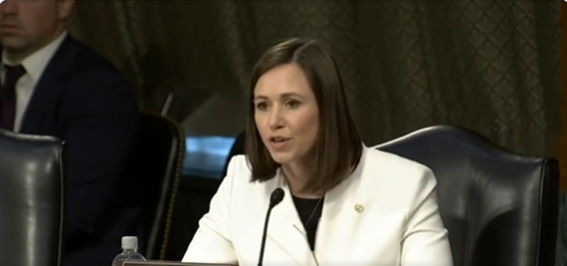
U.S. Senator Katie Britt recently joined Ranking Member Tim Scott (R-S.C.) of the Senate Committee on Banking, Housing, and Urban Affairs, Chairman Patrick McHenry (R-North Carolina) of the House Financial Services Committee, Representative Andy Barr (R-Kentucky), the Chairman of the Subcommittee on Financial Institutions and Monetary Policy, Representative Bill Huizenga (R-Michigan), the Chairman of the Subcommittee on Oversight and Investigations, and a bicameral group of 132 members of Congress in filing an amicus curiae brief to the Supreme Court in Consumer Financial Protection Bureau, et al., v. Community Financial Services Association of America, Limited, et al. U.S. Senator Tommy Tuberville (R-Alabama) has also joined the amicus brief. The brief urges the Supreme Court to uphold the Fifth Circuit’s decision that the Consumer Financial Protection Bureau’s (CFPB) funding structure is unconstitutional and to make the Bureau’s funding subject to congressional appropriations like most of the federal government. “The Constitution clearly grants Congress power over the appropriations process. The CFPB should be no exception but has been operating outside of this lawful process with little oversight or taxpayer accountability,” said Senator Britt. “This amicus brief reaffirms the importance of spending public funds as directed by Congress and ‘not according to the individual favor of Government agents.’ The current funding scheme utilized by the CFPB is unsustainable and unconstitutional, and I urge the Court to uphold the Fifth Circuit’s decision.” “Thankfully, our government has a system of checks and balances, one of which includes congressional oversight and the power of the purse—appropriations,” Sen. Scott said. “In these important and trusted roles, we analyze and scrutinize the executive branch’s actions on behalf of the American taxpayer, so that the voices of the country’s citizens are heard and their viewpoints reflected. Unfortunately, the Consumer Financial Protection Bureau—or the CFPB—is a notable exception. It is not accountable to Congress or the American taxpayer through the appropriations process, and it routinely and brazenly acts outside of the scope of its authority.” The brief states, “The Court need not determine which particular aspect of the CFPB’s funding scheme is the most problematic. This is the easy case. The CFPB ‘is in an entirely different league’ from other entities when it comes to its insulation from Congress… to the point that the CFPB currently operates as ‘a sort of junior-varsity Congress’ setting its own funding levels in perpetuity… Such insulation means that Congress itself is not determining the CFPB’s funding. The Court should affirm the judgment below, which will return the matter of the CFPB’s funding to the normal political and legislative channels, as Article I and the Appropriations Clause require.” Questions about the constitutionality of the CPFB have followed the agency since its founding in the early years of the Obama Presidency. Then U.S. Sen. Richard Shelby (R-Alabama) said. “For years, I have argued that supporters of Dodd-Frank sacrificed our Constitution in the name of bureaucratic independence,” Shelby stated. “While the court’s ruling today is a victory for accountability, it is meaningless without a President who is willing to rein in the unmatched authority of the CFPB’s Director.” Conservatives are optimistic that the Court will rule to place the troubled agency under congressional oversight through the budgeting process. Katie Britt was elected to the U.S. Senate in 2022. To connect with the author of this story or to comment, email brandonmreporter@gmail.com.
Tommy Tuberville urges Supreme Court to rule Consumer Financial Protection Bureau’s funding structure unconstitutional

On Tuesday, U.S. Senator Tommy Tuberville joined Senator and presidential candidate Tim Scott in filing an amicus curiae brief to the U.S. Supreme Court in Consumer Financial Protection Bureau, et al., v. Community Financial Services Association of America, Limited, et al. The brief urges the Court to uphold the Fifth Circuit’s decision that the Consumer Financial Protection Bureau’s (CFPB) funding structure is unconstitutional and to make the Bureau’s funding subject to congressional appropriations. The brief states, “The Court need not determine which particular aspect of the CFPB’s funding scheme is the most problematic. This is the easy case. The CFPB ‘is in an entirely different league’ from other entities when it comes to its insulation from Congress… to the point that the CFPB currently operates as ‘a sort of junior-varsity Congress’ setting its own funding levels in perpetuity… Such insulation means that Congress itself is not determining the CFPB’s funding. The Court should affirm the judgment below, which will return the matter of the CFPB’s funding to the normal political and legislative channels, as Article I and the Appropriations Clause require.” Sen. Tuberville represents Alabama on the Senate Committee on Banking, Housing, and Urban Affairs, where Sen. Scott is the Ranking Member. Tuberville and Scott were joined in the brief by Chairman Patrick McHenry (R-North Carolina) of the House Financial Services Committee; Representative Andy Barr (R-Kentucky), the Chairman of the Subcommittee on Financial Institutions and Monetary Policy, and Representative Bill Huizenga (R-Michigan), the Chairman of the Subcommittee on Oversight and Investigations in a bicameral group of 132 members of Congress. “Thankfully, our government has a system of checks and balances, one of which includes congressional oversight and the power of the purse—appropriations,” Sen. Scott said. “In these important and trusted roles, we analyze and scrutinize the executive branch’s actions on behalf of the American taxpayer, so that the voices of the country’s citizens are heard and their viewpoints reflected. Unfortunately, the Consumer Financial Protection Bureau—or the CFPB—is a notable exception. It is not accountable to Congress or the American taxpayer through the appropriations process, and it routinely and brazenly acts outside of the scope of its authority.” Then U.S. Sen. Richard Shelby raised similar constitutional concerns over the independent funding mechanism of the CFPB when he was in office, and the Obama Administration created the CPFB. “For years, I have argued that supporters of Dodd-Frank sacrificed our Constitution in the name of bureaucratic independence,” Shelby stated. “While the court’s ruling today is a victory for accountability, it is meaningless without a President who is willing to rein in the unmatched authority of the CFPB’s Director.” Sen. Shelby concluded, “That is why it is critical for the Bureau to be subject to the congressional appropriations process and governed by a board of directors. Only then will Congress have the ability to conduct meaningful oversight to ensure that the CFPB is truly accountable.” Tommy Tuberville was elected to the Senate in 2020. To connect with the author of this story or to comment, email brandonmreporter@gmail.com.
