
Airbus Alabama facility in line to build tanker aircraft with Lockheed Martin

The Airbus manufacturing facility in Mobile is poised for potential growth, thanks to plans announced Monday by the aerospace company and Lockheed Martin to collaborate on a refueling tanker aircraft if the partners win an Air Force competition. In a news conference at its Alabama facility, Airbus said it would begin building A330 aircraft in Mobile that would be converted into a tanker outfitted for military use at Lockheed Martin’s plant in Marietta, Georgia. Lockheed Martin — which also has a major presence in Alabama — provided details in an announcement released Monday morning. The tanker aircraft, called the LMXT, would represent a significant new chapter for the Alabama Airbus facility, where the company builds A320 and A220 passenger jets. The $1 billion factory at the Mobile Aeroplex at Brookley employs about 1,000 people. “Establishing this production work in Alabama and Georgia confirms Lockheed Martin’s commitment that the LMXT will be built in America, by Americans, for Americans,” said Lockheed Martin Chairman, President and CEO James Taiclet. “The LMXT will strengthen global security by enabling our U.S. service members to carry out their most critical missions at extended ranges. “At home, the LMXT will strengthen job growth and manufacturing by drawing on the experience and talents of a high-tech American workforce in two states that are proven leaders in aviation,” he said. Lockheed Martin and Airbus plan to compete for a new contract from the Air Force for aerial refueling tankers as part of a competition set to begin later this year. “Today’s announcement further cements Alabama’s reputation for excellence in the aerospace industry,” Gov. Kay Ivey said. “We have a world-class workforce making Mobile a top city for manufacturing and innovation, and we are excited to welcome the Lockheed Martin LMXT to Brookley. “This state-of-the-art aircraft is the right plane for the war fighter, and we’re thrilled to have it built in Alabama.” Ivey joined Airbus officials and local leaders at the announcement ceremony at the Brookley facility. Lockheed Martin scheduled a formal announcement at its Georgia facility later in the day. “This partnership between Lockheed Martin and Airbus brings together two titans in the aerospace/aviation sector,” said Greg Canfield, secretary of the Alabama Department of Commerce. “It also heralds a new shared synergy in the military aviation space between the state of Alabama and the state of Georgia as Airbus will assemble the well-proven A330 jet aircraft in Mobile and Lockheed Martin will militarize the jet, transforming it into the LMXT. “From the Alabama perspective, this signifies the potential of a significant expansion of Airbus’s activities in Mobile and could elevate Alabama’s critical role in our national defense,” Canfield said. For France-based Airbus, Monday’s announcement represents its second attempt to provide the Air Force with an aerial refueling tanker, made in Mobile. In 2011, Airbus was part of a winning team for the first phase of the contract, but the decision was reversed and the contract awarded to Boeing. Airbus later began producing passenger aircraft at the Brookley site. Its tanker aircraft, based on the A330-200, has been ordered by NATO, Australia, France, the United Kingdom, and several other nations. “Over our 50-year history in the U.S., some of our proudest moments have come from supporting our American service members,” said C. Jeffrey Knittel, chairman and CEO of Airbus Americas. “Our U.S. workforce, which is more than 35% military veterans, is eager to see an Air Force tanker join the fleet of Airbus aircraft flying for the U.S. Army, National Guard, Navy, and Coast Guard.” Bethesda, Maryland-based Lockheed Martin’s presence in northern Alabama spans more than five decades, with a concentration in the rotorcraft and hypersonics sectors. More than 2,600 Lockheed Martin employees live and work in Alabama. In October, Lockheed Martin opened an advanced production facility in Courtland focused on hypersonic strike production. Our LMXT offering for the @usairforce will be built in Georgia and Alabama and extend our 60+ year history of delivering tankers to U.S. and global operators. Watch for more on how our proven, ready solution will fuel future missions. pic.twitter.com/jdtgGPrlEV — Lockheed Martin (@LockheedMartin) January 31, 2022 “Alabama Power was involved in supporting the original tanker project that unfortunately never came to fruition,” said Alabama Power Mobile Division Vice President Patrick Murphy. “Over the last 10 years, Alabama Power has partnered with the Alabama Department of Commerce and Team Mobile to strategically support the growth of Airbus and its supplier base. Alabama Power’s Mobile Division and our corporate Economic Development group have worked steadily to lay the framework for Airbus and Lockheed Martin to be successful in this project and we will continue to lend our support as the project evolves.” This story originally appeared on the Alabama Department of Commerce’s Made in Alabama website.
Religion and the death penalty collide at the Supreme Court
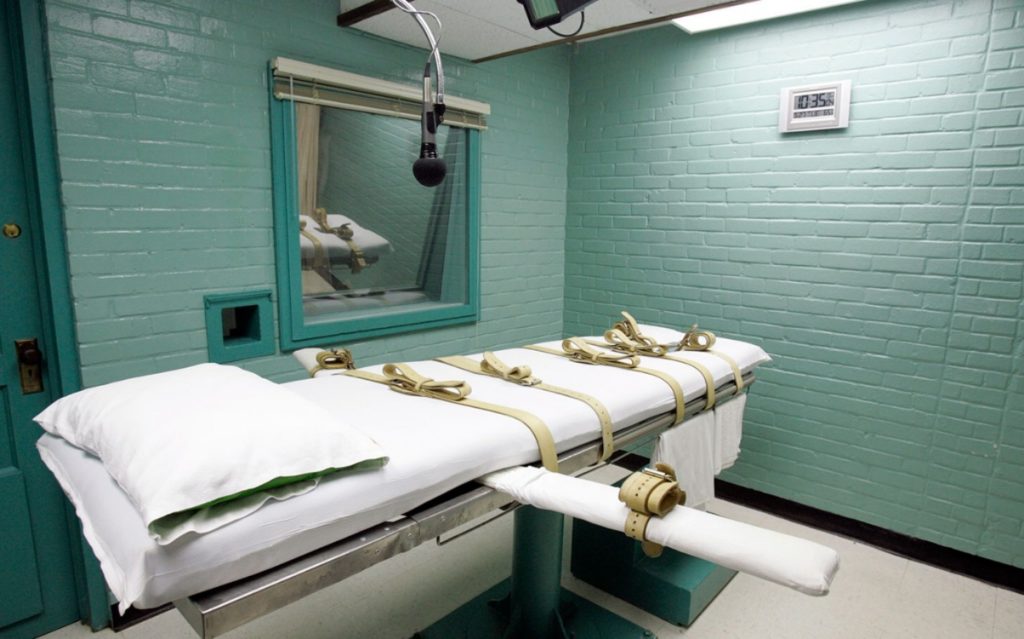
The Supreme Court is sending a message to states that want to continue to carry out the death penalty: Inmates must be allowed to have a spiritual adviser by their side as they are executed. The high court around midnight Thursday declined to let Alabama proceed with the lethal injection of Willie B. Smith III. Smith had objected to Alabama’s policy that his pastor would have had to observe his execution from an adjacent room rather than the death chamber itself. The order from the high court follows two years in which inmates saw some rare success in bringing challenges based on the issue of chaplains in the death chamber. This time, liberal and conservative members of the court normally in disagreement over death penalty issues found common ground not on the death penalty itself but on the issue of religious freedom and how the death penalty is carried out. Justice Brett Kavanaugh, one of three justices who said they would have let Smith’s execution go forward, said Alabama’s policy applies equally to all inmates and serves a state interest in ensuring safety and security. But he said it was apparent that his colleagues who disagreed were providing a path for states to follow. States that want to avoid months or years of litigation over the presence of spiritual advisers “should figure out a way to allow spiritual advisors into the execution room, as other States and the Federal Government have done,” he wrote in a dissent joined by Chief Justice John Roberts. Justice Clarence Thomas also would have allowed the execution of Smith, who was sentenced to die for the 1991 murder of 22-year-old Sharma Ruth Johnson in Birmingham. Alabama had up until 2019 allowed a Christian prison chaplain employed by the state to be physically present in the execution chamber if requested by the inmate, but the state changed its policy in response to two earlier Supreme Court cases. Robert Dunham, the executive director of the Death Penalty Information Center, says the court’s order will most clearly affect states in the Deep South that have active execution chambers. Dunham said most state execution protocols, which set who is present in the death chamber, do not mention spiritual advisers. For most of the modern history of the U.S. death penalty since the 1970s, spiritual advisers have not been present in execution chambers, he said. The federal government, which under President Donald Trump resumed federal executions following a 17-year hiatus and carried out 13 executions, allowed a spiritual adviser to be present in the death chamber. The Biden administration is still weighing how it will proceed in death penalty cases. The court’s order in Smith’s case contained only statements from Kavanaugh and Justice Elena Kagan. “Willie Smith is sentenced to death, and his last wish is to have his pastor with him as he dies,” Kagan wrote for herself and liberal justices Sonia Sotomayor and Stephen Breyer, as well as conservative Amy Coney Barrett. Kagan added: “Alabama has not carried its burden of showing that the exclusion of all clergy members from the execution chamber is necessary to ensure prison security.” Justice Neil Gorsuch and Justice Samuel Alito did not make public their views, but at least one or perhaps both of them must have voted with their liberal colleagues to keep Smith’s execution on hold. The court’s yearslong wrestling with the issue of chaplains in the death chamber began in 2019, when the justices declined to halt the execution of Alabama inmate Domineque Ray. Ray had objected that a Christian chaplain employed by the prison typically remained in the execution chamber during a lethal injection, but the state would not let his imam be present. The next month, however, the justices halted the execution of a Texas inmate, Patrick Murphy, who objected after Texas officials wouldn’t allow his Buddhist spiritual adviser in the death chamber. Kavanaugh wrote at the time that states have two choices: Allow all inmates to have a religious adviser of their choice in the execution room or allow that person only in an adjacent viewing room. In response, the Texas prison system changed its policy, allowing only prison security staff into the execution chamber. But in June, the high court kept Texas from executing Ruben Gutierrez after he objected to the new policy. Diana Verm, a lawyer at the Becket Fund for Religious Liberty, which had submitted briefs in two of the spiritual adviser cases, said it was unusual for the court with its conservative majority to halt executions. “You can tell from some of the opinions that the justices don’t like the last-minute nature of execution litigation, but this is an area where they are saying: ’Listen … religious liberty has to be a part of the process if it’s going to happen,” Verm said. Republished with the permission of the Associated Press.
Personnel Note: Patrick Murphy takes over as President of EDAA
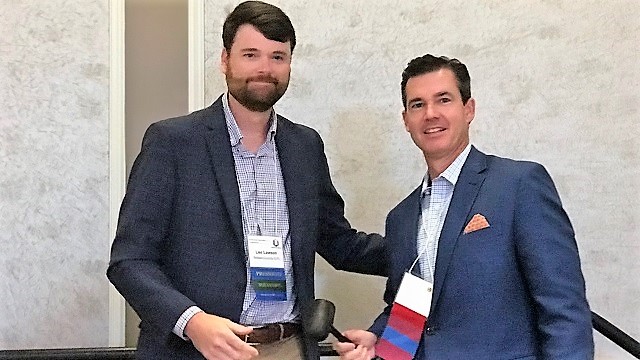
The head of economic development at Alabama Power has been named the new president of the organization representing those who practice the profession that is behind job growth and investment in the state. Patrick Murphy, vice president of Business, Sales and Economic Development at Alabama Power, received the gavel Wednesday as president of the Economic Development Association of Alabama at the organization’s 2018 Summer Conference. Lee Lawson, president and CEO of the Baldwin County Economic Development Alliance, is outgoing president. Murphy said he steps into the role at a time when he feels it’s important to emphasize the work that economic development professionals do throughout the state. “Economic development is a local issue,” Murphy said. “It is done, performed locally and regionally, by people in the communities. Our goal this year is to highlight that a little bit better.” Murphy said Alabama’s economic development success over the past couple of decades has been due in large part to the teamwork among the state, regional, local and private-sector economic developers. “This is not a weekend job and it’s not something you can do after hours,” Murphy said. “We can’t create the demand, but it’s important for us to create the awareness.” Jim Searcy is the executive director of EDAA. He said the organization is made up of 475 professionals throughout the state. He said EDAA seeks to represent those professionals with networking, education and advocacy that support the important work they do for the state. “Economic development used to be kind of a ‘mother and apple pie’ issue and it’s obviously something that is critical for the future of the state,” Searcy said. “One of the things that has been kind of disconcerting to us is that economic development has taken some hits to the meaning of that term and it’s been kind of lessened.” Patrick Murphy elected new president of Economic Development Association of Alabama from Alabama NewsCenter on Vimeo. Searcy said EDAA will be leading a public relations effort to improve and capture the true meaning of economic development. He said it’s not incentives and ribbon cuttings, it’s the work that goes into convincing business leaders that they will have the most success in a community in Alabama. “When you ride by an industrial facility or you ride by a commercial facility and you see all of those cars in the parking lot, they’re not just cars, those are lives that have been changed through economic development,” Searcy said. One key issue the organization faces is the need for legislation preventing economic developers from being listed as lobbyists in the state. While they were successful in getting such language passed in this year’s legislative session, that law sunsets in April 2019, putting pressure on EDAA to get a permanent fix early in the new session. “We’ve got to get a permanent fix,” Searcy said. “If we do not fix it, it will hurt Alabama’s competitiveness.” Should economic developers be defined as lobbyists, they would lose the confidentiality that comes with working with companies conducting site searches in multiple states, putting Alabama at a disadvantage. “Our competitor states – whether it’s Georgia or whether it’s Tennessee or whether it’s Ohio or California – were starting to use that against us,” Searcy said. “It just goes without saying that economic developers aren’t lobbyists. We advocate for better schools. We advocate for better infrastructure – transportation, broadband. We advocate for all of that because that makes the communities, it makes the state more competitive to go after projects. But we’re not lobbyists and that’s the clarification we’re looking to do legislatively in the next session.” In addition to Murphy as the new president, EDAA voted Megan McGowen-Crouch, city of Auburn Deputy Economic Development director, as second vice president; Brooks Kracke, president of NAIDA, as secretary and treasurer; and added board members Jeff Rabren of Regions Bank, Mike Swinson of Spire and Tanya Maloney of the city of Heflin. Republished with the permission of the Alabama Newscenter.
New pro-Trump ads praise Gary Palmer for trying to repeal, replace Obamacare
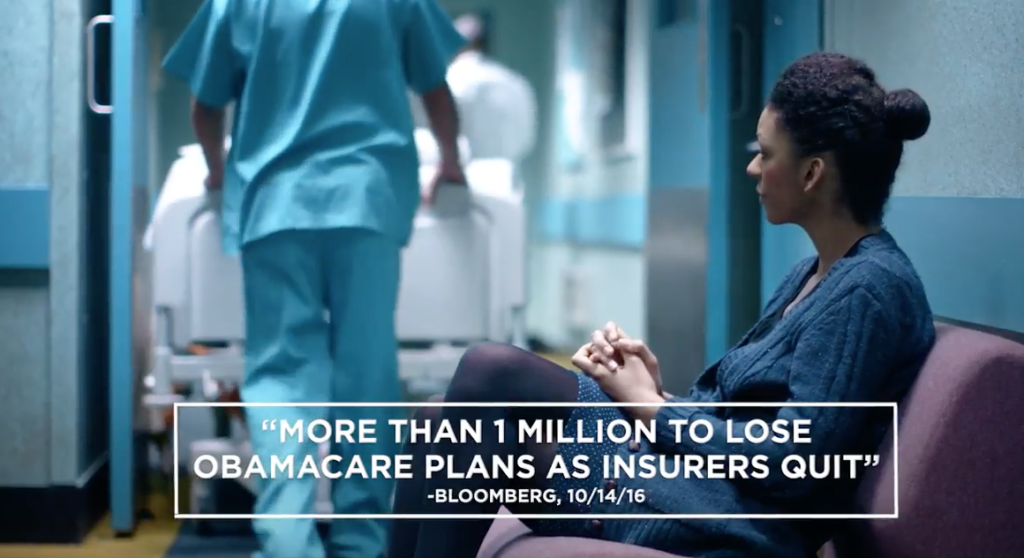
An advocacy group formed by six of President Donald Trump‘s top campaign aides launched a $3 million advertising campaign to praise Congress members working to repeal and replace the Affordable Care Act. The list of 12 select members from America First Policies includes Alabama Republican Gary Palmer of Alabama’s 6th Congressional District. “Obamacare is collapsing and bringing our health care system down with it, harming millions of American families,” said Nick Ayers, Chairman of the Board of America First Policies. “The time is now to repeal and replace this terrible law, but we need citizens to engage.” The issue advocacy campaign will be on broadcast or cable, the internet and through phone calls in twelve districts, including CD 18, which stretches from Ft. Pierce to Palm Beach in Southeast Florida. “We are also utilizing Trump voter data in partnership with the Data Trust to reach the same grassroots supporters that supported America First issues over the last two years,” said Brad Parscale, Senior Digital Advisor for America First Policies. “We will be utilizing Google and Facebook to connect with millions of targeted followers across twelve districts to ask them to contact their representative and encourage them to keep working to repeal Obamacare.” Many lawmakers were lobbied personally by Trump to support the GOP’s health care bill that never came up for a vote last month, and he reportedly called on his colleagues to unite behind the bill in an emotionally charged address, according to The Washington Post. One of those praised in the ads was in Florida’s 18th Congressional District, where Republican Brian Mast flipped the seat from blue to red last November when he defeated Democrat Randy Perkins. The seat had been held for the previous four years by Patrick Murphy, who opted to run for U.S. Senate last year. Announcing their creation in January, America First Policies officials said they would conduct research into public policies and promote Trump’s favored causes, such as changing immigration policies and dismantling and replacing the Affordable Health Care law. In their news release, America First Policies enclosed the ad specifically praising Palmer.
It’s likely to be a close election in Florida, again
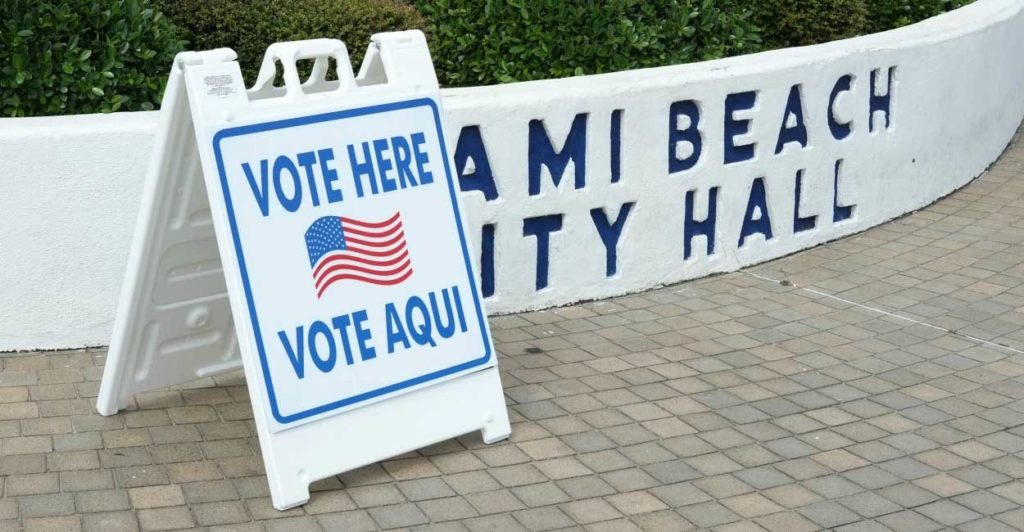
Another close election in Florida? Count on it. Through Friday, 2,268,663 Democrats and 2,261,383 Republicans had cast ballots by mail or at early voting sites – a difference of 7,280 in favor of Democrats. Overall, more than 5.7 million Floridians have voted, or nearly 45 percent of those registered. That far surpasses 2012 totals, when 4.8 million Floridians cast ballots before Election Day. As early voting was set to end in 51 of Florida’s 67counties Saturday, Hillary Clinton and Donald Trump once again were campaigning in the Sunshine State. Their running mates Tim Kaine and Mike Pence and other top surrogates have been frequent visitors in the state that’s a must-win for Trump’s presidential campaign. “How many of you have already voted?” Clinton asked a crowd in Broward County. The response was enthusiastic cheers. “OK, so that means you’ve got time to get everybody else to get out and vote, right?” Earlier in Tampa, Trump told supporters at a rally that 66 of the state’s 67 counties supported him in Florida’s primary last March. “Florida is just a place I love – my second home, I’m here all the time. I might know Florida better than you do,” Trump said. “I see maybe more enthusiasm right now than I did (in March).” Florida’s 29 electoral votes are the biggest prize in Tuesday’s presidential election among states that could swing to either candidate. In 2000, Florida set the standard for close presidential elections when George W. Bush beat Al Gore by 537 votes out of about 6 million cast. It took five weeks to call the election in the state that determined the presidency. Republican Sen. Marco Rubio was campaigning across north Florida Saturday, starting with an event at a Pensacola Beach bar. He’s being challenged by Democratic U.S. Rep. Patrick Murphy. Unlike Murphy, Rubio has avoided campaigning with his party’s presidential nominee. While he supports Trump, he has condemned his words and behavior. Murphy attended a Broward County rally with Clinton and later planned to attend a St. Petersburg concert with singer Jon Bon Jovi and Kaine. While only 16 counties will continue early voting on Sunday, they are some of the state’s largest, including Democratic strongholds of Miami-Dade, Broward and Palm Beach. Democrats were planning “souls to the polls” events encouraging African-American churchgoers to take advantage of the last day of early voting in the counties where polls will be open. Republished with permission of the Associated Press.
Marco Rubio on Donald Trump: First a con man, now better than Hillary Clinton

A dangerous, erratic, con man with the worst spray tan ever. That’s how Sen. Marco Rubio described Donald Trump when they were both seeking the Republican presidential nomination. Now that Trump is the nominee and Rubio is running for re-election, his tone is different. He’s no longer criticizing Trump, but he isn’t exactly gushing praise. Democrats are trying to make him look like a hypocrite for backing the man he previously said shouldn’t have access to nuclear weapon codes, and for jumping back into the Senate race after he said he wouldn’t. “Sen. Rubio is actually the real con man here,” said U.S. Rep. Patrick Murphy, who is challenging U.S. Rep. Alan Grayson for the Democratic nomination. “He said something to the effect of, ‘Ten thousand times, I’m telling you I’m not going to run for the Senate again.’ Well guess what? He’s running for the Senate again.” But don’t ask Rubio to reconcile supporting Trump with his past criticism. “We’ve gone through that a million times,” Rubio said at a campaign stop at a Tallahassee restaurant. “At this point we’re just going to continue to focus on my race and leave the past in the past.” Last month in Panama City, Rubio said he is supporting Trump because he pledged early in the campaign to support the Republican nominee. “There are only two people in the world that are going to be president of the United States in 2017,” Rubio said. “It will either be Hillary Clinton or Donald Trump. And It can’t be Hillary Clinton.” Leaving his remarks in the past isn’t something his opponents are willing to do. Republican developer Carlos Beruff often criticizes Rubio for not enthusiastically supporting Trump, and Murphy and Grayson are calling him out for his hypocrisy. Grayson described the relationship between Trump and Rubio by quoting late New York Yankees manager Billy Martin, who once said of late team owner George Steinbrenner and star outfielder Reggie Jackson: “The two of them deserve each other. One’s a born liar and the other’s convicted.” (Steinbrenner had pleaded guilty to making illegal contributions to President Richard Nixon‘s campaign.) “That’s sort of how I feel about watching the love/hate fest between Marco Rubio and Donald Trump,” Grayson said. Beruff, who has spent $8 million of his own money in the Republican primary, has repeatedly criticized Rubio for not doing more to support Trump. “There are some people who don’t like the tepid response that Rubio has shown to Trump,” Beruff said. “There’s a loyalty there.” Beruff’s effort doesn’t appear to be working: He’s far behind Rubio in the polls just a week away from the Aug. 30 primary. Republicans say it’s a matter of forgiving and forgetting, despite Rubio making fun of Trump’s small hands, suggesting the billionaire wet his pants during a debate and mocking his Twitter misspellings at a campaign rally. Wearing a “Make America Great Again” baseball cap to show support for Trump, Republican Bob Bezick, 64, of Madison said after attending Rubio’s Tallahassee event that he didn’t appreciate the back and forth between Rubio and Trump. But it won’t stop him from backing Rubio. “It’s policies more than any of the chatter. All that stuff is just noise,” Bezick said. And despite the not-so-cozy relationship between Rubio and Trump, Republicans say they won’t vote for Murphy or Grayson. “That would be an extreme example of cutting off your nose to spite your face,” said Orange County Republican Party Chairman Lew Oliver. If anything, Oliver said, keeping his distance from Trump could help Rubio with independent voters or Democrats dissatisfied with their party’s nominee. “Tactically, that’s not a bad maneuver from his perspective because he’s probably going to get the Republican votes regardless,” Oliver said. Republished with permission of The Associated Press.
Neutral in presidential race, Barack Obama digs in for other Dems
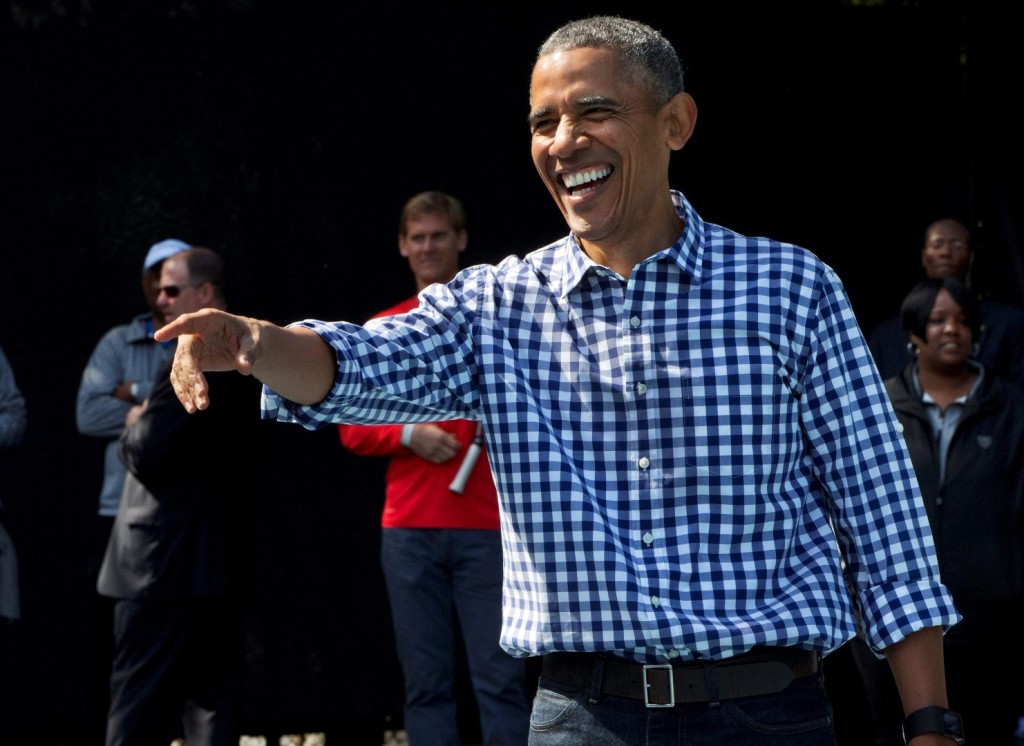
In a rural stretch of Kentucky, voters picked up the phone in March to hear President Barack Obama on the line, urging them to vote for a little-known Democrat named Jeff Taylor. That an obscure special election for a Kentucky House seat had caught the president’s attention seemed odd. Yet Taylor won, joining two other victorious Democrats to deny Republicans the chance to take over the last Democratic-run legislative chamber in the South. Though he’s staying neutral in the Democratic presidential race, Obama is wading deep into Democratic primaries for Congress, state legislature and even mayoral races, cherry-picking candidates he sees as stronger while preparing to campaign in person for Democrats in the fall. Democratic officials said Obama and Vice President Joe Biden are in high demand this year —a sharp reversal from just two years ago, when Obama was politically toxic. Most Democratic candidates in 2014 practically begged Obama and his sagging poll numbers to stay away, relegating the president to a few Democrat-friendly states like Michigan. This year, upbeat economic news and rising approval ratings have increased his value to Democrats in the last election cycle before he leaves office. “You’re going to see ever-increasing requests for Obama and Biden to campaign for candidates this year,” said Amy Dacey, the CEO of the Democratic National Committee. So far this year, Obama has endorsed candidates in nine races, in addition to four he endorsed last year. He’s backed former Gov. Ted Strickland for Senate in Ohio over Cincinnati councilman P.G. Sittenfeld, and he came to the aid of Rep. Debbie Wasserman Schultz, who faces a surprisingly strong primary challenge despite being the chairwoman of the Democratic Party. Obama and Biden also endorsed Katie McGinty in Pennsylvania, who faces an uphill battle to defeat former Rep. Joe Sestak in the Democratic primary for Senate. The Democratic Senatorial Campaign Committee, which works to elect Senate Democrats, touted the endorsements in a television ad released Tuesday as part of a $1.1 million campaign. In Florida, Obama sided with Rep. Patrick Murphy over Rep. Alan Grayson, a favorite of the liberal wing of the Democratic Party who is under scrutiny by the House Ethics Committee. The two Democrats are running for outgoing GOP Sen. Marco Rubio‘s seat. All the Senate candidates Obama has endorsed have also been endorsed by the DSCC, a wing of the Democratic Party. “It’s mirroring what’s going on with Hillary Clinton and Bernie Sanders, where the establishment Democrats are backing different candidates than their liberal, progressive base wants,” said Andrea Bozek, communications director for the National Republican Senatorial Committee. Bozek called it a sign of desperation that Democrats felt they needed to bring in Obama to secure their preferred candidates. Even Democrats denied Obama’s endorsement are reluctant to complain about favoritism, wary of turning off loyal Obama supporters. Tim Canova, the law school professor challenging Wasserman Schultz, said the attention actually helped because it “really put us on the map.” “It seemed like a sign that Wasserman Schultz is worried about our campaign, that she would have gone running to the White House for an endorsement,” Canova said. Two years ago, Democrats fought their toughest Senate races in conservative-leaning states where Obama has always been deeply unpopular. The map shifted this year to states Obama won twice, including New Hampshire, Nevada and Colorado — also critical states for winning the White House. “The president right now is the most popular elected official in the country among Democrats and independents,” said David Simas, the White House political director. “When you start looking at what these battleground states will be at the presidential, Senate and House level, the map is pretty wide open for the president to engage and be helpful.” Though Obama won’t be on November’s ballot, the stakes for his legacy are just as high. A return of the White House to GOP control would augur the likely rollback of many of his policies on health care, immigration and the environment. Yet Democrats say the chaos in the GOP presidential race has created an opening to take back the Senate and maybe even the House, preserving Obama’s policies for years to come. Obama’s involvement in lower-tier races stands in contrast to his lower profile in the presidential race, where Obama is avoiding publicly choosing sides between Clinton and Sanders. White House officials said Obama will campaign full-force for the eventual nominee, but in the meantime his main role has been to attack Donald Trump. Biden, huddling with House Democratic candidates over the weekend in New Mexico, told them having Trump or Texas Sen. Ted Cruz on the ballot would benefit Democrats in lower-tier races, said a Democratic aide who requested anonymity to discuss the private meeting. Biden has already campaigned for Senate candidates in Florida, Ohio, Pennsylvania and Nevada. Republished with permission of the Associated Press.
Patrick Murphy joins in SEIU Florida Minimum Wage Challenge
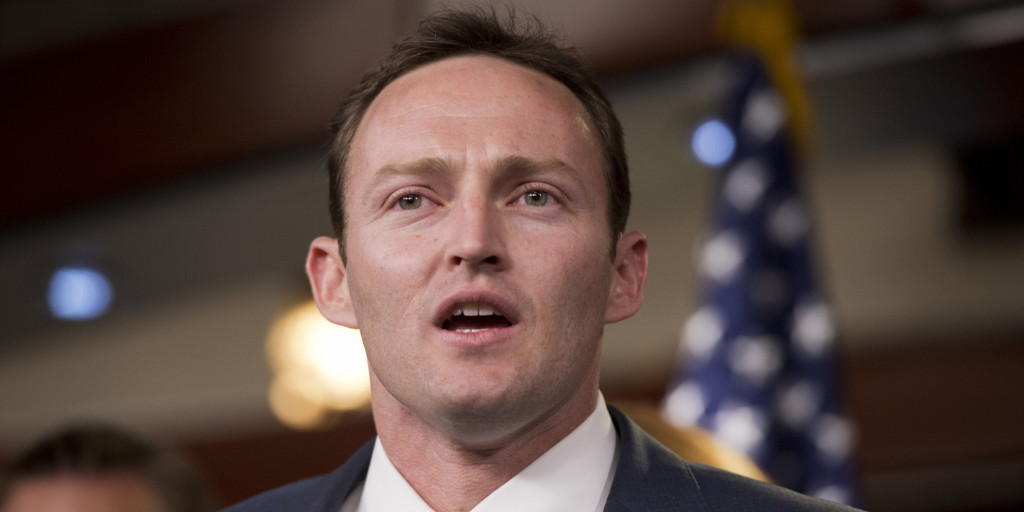
U.S. Rep. Patrick Murphy will try to stretch $85 over five days as part of the Florida Minimum Wage Challenge, the Jupiter Democrat announced Wednesday. The Service Employees International Union launched the Minimum Wage Challenge to advocate for increasing the minimum wage to $15 an hour. Florida’s minimum wage is currently $8.05 an hour. “As living costs rise, hardworking families have not seen a pay raise for far too long, and they deserve better,” Murphy said. “A meaningful increase in our minimum wage would mean bigger paychecks for working families and more customers for small businesses. That’s exactly what Florida needs right now, and I will continue fighting every day to put our middle-class families first.” SEIU came up with the $85 budget based on how much the average minimum wage worker has left over after housing expenses. A 40-hour week at $8.05 an hour comes out to about $285 after taxes, with the average minimum wage worker spending $200 a week on rent and utilities. Challengers are encouraged to take public transportation, go on a grocery shopping trip and see what social activities are affordable with a $17 a day budget. The service industry union notes that actual minimum wage workers would need to spread that money over seven days, not five, which it says is “a little break” for challenge participants. Murphy is the only one of Florida’s 27 representatives who has agreed to the challenge though many state legislators participated in the event in 2015. The first-term congressman is currently running against fellow Democratic U.S. Rep. Alan Grayson and a host of Republicans for Marco Rubio’s Senate seat.
Ed H. Moore: Which GOP candidate is most like Ronald Reagan?
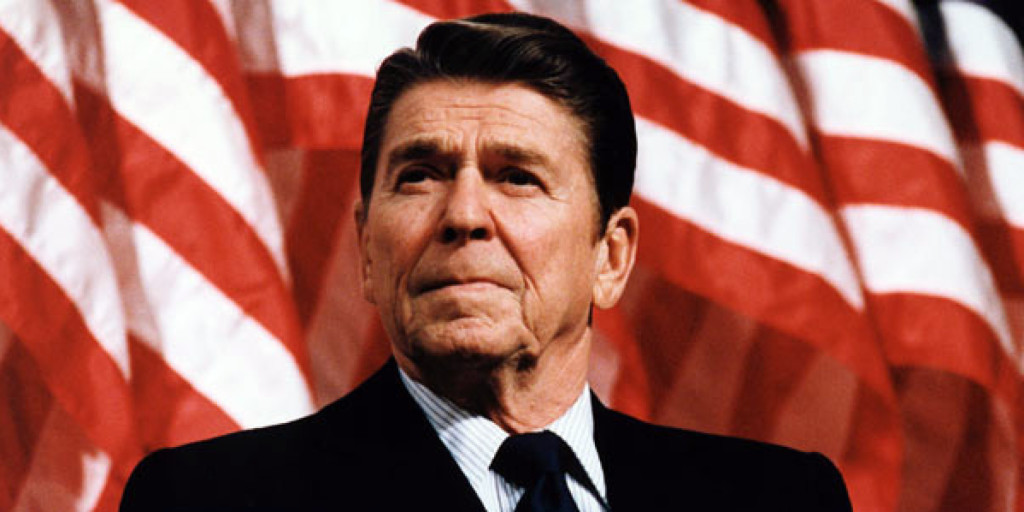
I was sitting in my car eating lunch from a drive-thru and listening to a host who has presumed to speak for all things conservative in America. He was rambling on about which of the current Republican candidates for president was most like Ronald Reagan and concluded it must be Ted Cruz. I nearly choked on my sandwich and then decided to list several of the key elements of the eight years of Reagan’s presidency. Unlike the talk show host, I will not assign the Mantle of Reagan Conservatism upon any specific candidate. I will let you be the judge. History matters a lot, which is why I read historical novels, biographies and even do a monthly radio show on topics in history. When I do speak, I work to let the listeners draw their own conclusions. I present a historical narrative, working to set the times and the temperature of a period, so they do not judge what has come before through the lens of current times. I want listeners to filter out biases, grabbing a slice of time and attempting to see what influenced decisions and actions based on what they knew and what they attempted to accomplish. I am aware of the adage that historians, by writing about the past, can alter what is known in the present to affect the future. Not all historians have an agenda; most do not. But I know that all radio talk show hosts have agendas and use their time to alter perceptions so that the future might be bent to their way of thinking. That is what they are paid to do. We, the listeners, are the filters. So let’s take a look at Ronald Reagan’s history and some decisions and positions he took as president. Do any of them or all of them lead to the conclusion that any single candidate shares his vision, philosophy, and style of governance? You decide. On taxes: When Reagan took office, there were 14 income tax brackets from 14 to 70 percent. He pushed Congress to reduce to two rates, at 15 and 28 percent, although these low levels did not last long. He also got incomes taxes indexed for inflation. He increased corporate and capital gains rates, cigarette taxes, gas taxes and altogether supported a dozen or so increases in various revenue programs. However the significant cuts were in income taxes, all designed to place more money in the hands of the consumers and less in government control. Note he was not rigidly anti-tax, and he worked closely with Congress to modify programs. He was decidedly small government in orientation and believed money should stay as much as possible with those who earned it. During his term, the deficit tripled to about $3 trillion, about 15 percent of what it is today. But we saw a huge growth in military spending during that era. On abortion: He proposed a constitutional amendment to ban all abortions except to save the life of the mother. It didn’t move forward, and he didn’t use much political energy to get it considered. He spoke often against abortion, but few actions were taken. As governor of California, he signed into law a bill that expanded abortion for therapeutic reasons. On Foreign Engagement: Reagan went to Washington determined to push back communism, especially in Latin America. Contrary to the leading 2016 candidate who wants to fully open doors to Cuba, Reagan wanted to make test cases out of El Salvador, Nicaragua and Cuba working to make sure Cuban adventurism was contained. The expansion of communism was thwarted and by the end of his term, the Soviets were in disarray. On Engagement with Congress: Early in his first term he worked with Congress to trade tax adjustments for spending cuts. He was offered a deal of $3 in spending cuts for every $1 of tax increases, and he accepted the “Tax Equity and Fiscal Responsibility Act of 1982.” As years went by, Congress ignored the cuts and focused on revenue enhancements. Reagan started out with a bang, working hard to get the Democrat-controlled House to support him on tax reductions. He worked phones, invited members to the White House and did personal pleas. Reagan wrote in his diary, “These Dems are with us on the budget and it’s interesting to hear some who’ve been here ten years or more say that it is their first time to ever be in the Oval Office. We really seem to be putting a coalition together.” He understood the critical role of being affable, cordial and compromising when he needed to do so. He was nonpartisan in his approach on matters requiring diplomacy, and he pledged to not campaign against any Democrat that voted for his tax and budget bills. Reagan was a master of getting along with people, allies or opposition, and found ways to come out ahead in the deal-making without either party losing face or respect. He revered the Office of the President and would never go into the Oval Office without being dressed for business. He carried himself with respect and was liked by his peers, unlike some running today. He worked hard to convince his opponents of the value of going his way, but profanity and name-calling were not tools of his trade. Maybe we should judge candidates more on comportment, personality and philosophy instead of who speaks the loudest, who is the quickest with a cutting remark or who places himself so far outside Washington they won’t be able to work within Washington to get things done. Who best wears Reagan’s mantle? *** Ed H. Moore resides in Tallahassee, Florida, where he is perpetually awaiting a rebirth of wonder.
