
Federal court hearing on redistricting case set for today
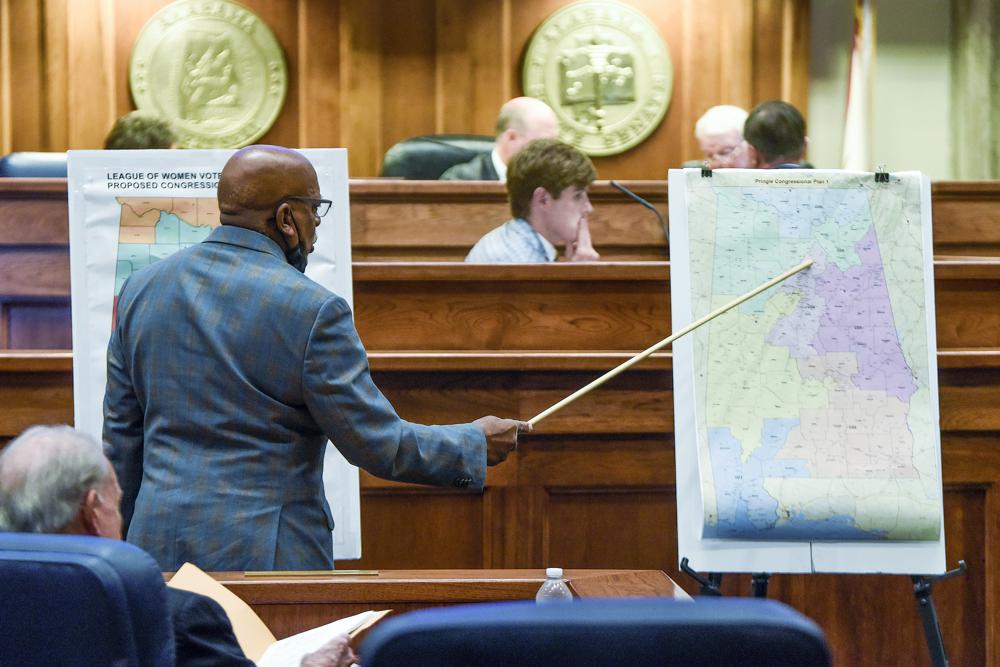
The entire political world in Alabama will be watching Monday to see what the court does with Alabama’s disputed redistricting case. A hearing is scheduled for Monday, August 14, in federal court at 9:00 a.m. CDT at the Hugo L. Black United States Courthouse in Birmingham. The hearing will focus on whether the map recently passed by the Alabama State Legislature complies with section two of the Voting Rights Act of 1965. Civil rights groups sued the state challenging the redistricting map that the Legislature passed in 2021. A three-judge panel of the Eleventh Circuit Court of Appeals in Atlanta ordered a halt to the 2022 election over concerns the map violated the 58-year-old Voting Rights Act. The U.S. Supreme Court intervened at the request of the state and allowed the election to proceed with the 2021 map. In June, the Supreme Court ruled in a 5 to 4 ruling that the congressional map likely violated the VRA and referred the case back to the three-judge panel. The Legislature was given until July 21 to submit a new map. The parties that sued the state and Alabama Democrats had wanted the Legislature to submit a map with two majority-minority districts. The Legislature, voting along party lines, refused and instead introduced and passed a controversial new map that simply increased Alabama’s Second Congressional District from 30% Black to 39.9%. That map kept the Gulf Coast, the Wiregrass, and Montgomery County whole; but was denounced by Democrats. The civil rights groups suing the state in federal court in Allen versus Milligan are asking the court to reject this new map. Members of the Alabama House Democratic Caucus, including House Minority Leader Anthony Daniels (D-Huntsville), will be outside the courtroom on Monday to issue their response following the conclusion of Monday’s hearing. Joining Daniels will be Caucus Chair Barbara Drummond (Mobile), Caucus Policy Chair Adline Clarke (Mobile), Caucus Secretary/ Treasurer Kelvin Lawrence (Hayneville), Rep. Patrice McClammy (Montgomery), Rep. Phillip Ensler (Montgomery), Rep. Chris England (Tuscaloosa), Rep. Patrick Sellers (Birmingham), Rep. Rolanda Hollis (Birmingham), Rep. Curtis Travis (Tuscaloosa), Rep. Napoleon Bracy (Mobile), Rep. Tashina Morris (Montgomery), Rep. A.J. McCampbell (Demopolis), and Rep. Sam Jones (Mobile) to comment on the court proceeding. “As we gather for the August 14th federal court hearing in Birmingham, Alabama, surrounded by the hallowed sites of the Civil Rights movement, we are reminded that this moment is inseparable from that struggle,” Daniels said. “We hope and pray that this court hearing, this next step, is a step forward on a continued path towards fair representation for all.” The Alabama House Democratic Caucus endorsed a redistricting plan, proposed by the Milligan and Caster plaintiffs, that would have created two majority Black congressional districts while respecting traditional redistricting guidelines. That map was rejected by the Republican supermajority and largely excluded from consideration during the legislative process. The major party primaries are on March 5, with candidate qualifying opening on October 16, so knowing where the congressional district lines are for that pending election is of some importance. To connect with the author of this story or to comment, email brandonmreporter@gmail.com.
Democrats oppose GOP absentee ballot bill
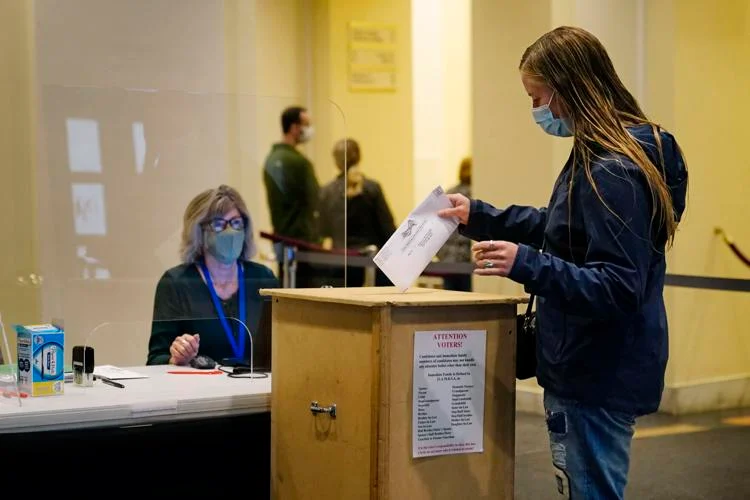
On May 4, the Alabama House Republicans passed legislation that would severely limit outside groups’ abilities to influence elections. The legislation makes it a felony to pass out absentee ballot applications or assist someone with filling out an absentee ballot application unless they are a family member. On Wednesday, House Democrats held a press conference to express their concerns about that legislation and promote their bills that would make it easier to participate in Alabama elections. House Bill 209 is sponsored by State Representative Jamie Kiel. The House Republicans passed HB209 Thursday on a party-line vote after voting to cloture debate. Rep. Patrick Sellers said, “Sadly, last week, the Alabama House was on the wrong side of history when it passed House Bill 209, strictly along partisan lines, which will criminalize many of those who would help the elderly and disabled with their absentee ballots. Not only is this wrong, it will have a chilling effect of causing some people not to vote at all out of fear. It reminds me of days not too long ago in our nation’s history when we had poll tests and poll taxes, which were clearly designed to keep Black people from voting. How is this different? It appears to me that this bad piece of legislation targets the elderly, the disabled, and nonpartisan civic groups that are doing everything they can to increase voter participation and voter turnout. Voting is our fundamental right to vote as a citizen. Our elections are secure and accurate. HB209 doesn’t prevent election fraud. It is a bill that suppresses the vote and makes people afraid. We need to make voting more accessible and easier, especially for those who genuinely need assistance or accommodation due to age or disability.” Rep. Thomas Jackson said, “The right to vote was initially for White men who owned property. It wasn’t until the passage of the nineteenth amendment in 1920 when women – and let me relate – white women, was able to vote, and that was half the country. My colleague spoke of poll tax and whether or not they were abolished because what we are going through now is a form of poll tax. In 1964 as a nation, we struggled and bled over this most basic right. Today we are still struggling, but we will not quit this fight because our nation is too strong, and the people are too determined, and we are founded on the bedrock and principle of government that is of the people, by the people, and for the people. For our democracy to prosper and flourish, it is vital that we increase our voting turnout, and for everything, we must have increase in participation and not suppression. Our colleagues across the aisle should be making it more accessible for people to vote rather than taking away that right that we already gained some 57 years prior. We must enact legislation for automatic registration at the age of 18, curbside voting, early voting, and guaranteed absentee voting.” Rep. Kenyatte Hassell said, “I agree that freedom is the continuous action we must all must continue to take, especially in protecting our right to vote.” “The right to vote is sacred because without this right, we cannot be free, and we cannot prosper,” Hassell said. “I and my colleagues strongly opposed House Bill 209 and voted against this,” Rep. Adline Clarke said. “We did so because it makes it a crime to assist those who need help the most, and it suppresses the vote using fear, as one of my colleagues already stated, as a tactic. It is morally wrong, and it doesn’t do anything. It doesn’t do one thing to make our elections more secure or more accurate.” HB209 does allow family members to help an elderly or disabled person to assist with absentee voting. “Not all people have families that they can rely on for help,” Clarke said. HB209 targets outside groups paying persons to canvas communities bringing absentee ballot applications to persons who likely would not vote, and then teams of canvassers assisting people in filling out those absentee ballots when they arrive. This has become part of the election process. Generally, those outside groups target communities where they know that voters will be overwhelmingly sympathetic to their party or cause. 501C3 organizations canvassing neighborhoods where they know that demographics and past voting histories are aligned with their political goals was widespread during the 2020 election, particularly in swing states like Georgia, Arizona, Pennsylvania, Ohio, and Wisconsin. “Had we not been clotured last week, Democrats were prepared to offer an amendment that would at least make House Bill 209 a little bit better,” Clarke said. “One of those amendments would allow nonprofit organizations like the League of Women Voters, the NAACP, churches, and other nonprofit 501C3 organizations to continue assisting individuals with the absentee voting process.” “House Bill 209 states that the Secretary of State, probate judges, absentee ballot election managers or their designee,” Clarke said. “Now, it is absolutely unrealistic to believe that these individuals can take up the slack for the hundreds of volunteers that assist voters in every election. It is not humanly possible and will cause a huge decrease in the number of voters who vote absentee. That is a sad thought.” Clarke warned that many people could inadvertently violate SB209 if it became law. “We envision that neighbors and many other well-intentioned people will be caught off guard if this bill passes,” Clarke said. “They will continue to be neighborly. Many will continue assisting elderly neighbors with absentee voting until they are personally notified in writing on a potential violation.” Kiel said that he drafted the legislation with the help of Secretary of State Wes Allen. Under HB209, groups would still be able to conduct voter registration drives and hand out voter registration forms. They would not be allowed to hand out absentee ballot request forms, and canvassers helping persons fill out absentee ballots would be banned. A voter who needs help could call the Secretary
Alabama House OKs ban on trans athletes at a college level
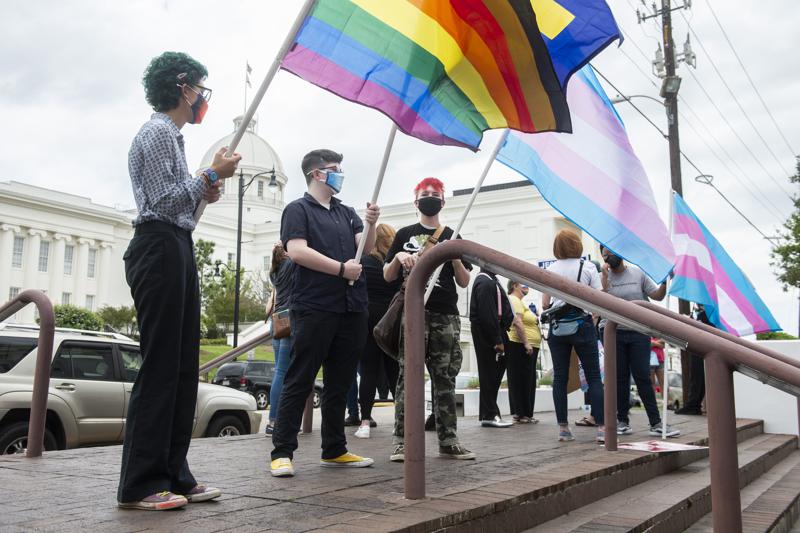
Transgender women in Alabama would be prohibited from joining female sports teams in college under legislation advanced Tuesday by the Alabama House of Representatives — a part of a wave of restrictions on transgender people being pushed in conservative states. The House voted 83-5 in favor of the legislation that would extend a 2021 ban on transgender athletes in K-12 sports teams to include college teams. The bill states that sports teams “designated for females, women, or girls shall not be open to a biological male.” Similarly, a “biological female” would also not be allowed to participate on teams for boys and men. The legislation now moves to the Alabama Senate. “Forcing women to compete against biological men would reverse decades of progress women have made for equal opportunity in athletics,” Republican Rep. Susan DuBose, the bill’s sponsor, told lawmakers. DuBose said that “no amount of hormone therapy can undo” physical advantages. At least 20 other states have now imposed restrictions on transgender athletes at the K-12 or collegiate level, or both. Supporters said transgender women have an unfair advantage in competition, while opponents argue the bills are rooted in discrimination and fear. “This is discriminatory, and it is unnecessary. States and university sports leagues already have their own governing bodies to determine the best regulations that work for their students,” Carmarion D. Anderson-Harvey, state director for the Human Rights Campaign, said in a statement. The Human Rights Campaign is an advocacy group for LGTQ+ individuals. Rep. Chris England, a Democrat from Tuscaloosa who voted against the bill, said Republicans are acting like the issue is an “epidemic” problem when they can’t name examples of it happening in the state. “This is just an opportunity for people to create an issue or a solution that is looking for a problem,” England said. And Rep. Roland Hollis, a Democrat from Birmingham, said she thinks there are more important issues for the state to address, such as gun violence rates that rank among the highest in the country. Hollis abstained on the vote, along with 13 other lawmakers. Other Democrats supported the bill, however. “It is just not fair for a man to play against the women,” said Rep. Patrick Sellers, a Democrat from Pleasant Grove. Republished with the permission of The Associated Press.
Delor Baumann campaigns for House District 57
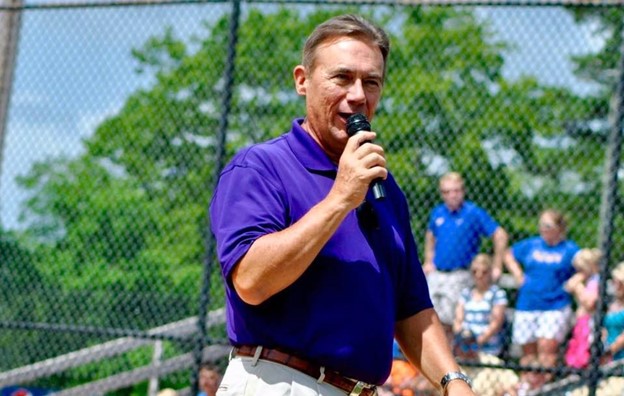
Candidate for the Alabama House of Representatives Delor Baumann addressed a joint meeting of the Jefferson and Shelby County BamaCarry groups Monday night at Mr. Wang’s Buffet in the Homewood area. Baumann is the Republican nominee in House District 57. Baumann said that he supports gun rights and the goals of the group and promised to be accessible if elected to the Statehouse. “I support permitless carry,” Baumann told the Second Amendment rights group. The Alabama Legislature passed and Governor Kay Ivey signed legislation that ended the requirement that Alabama citizens have to purchase a concealed carry permit from their local sheriff in order to carry their firearms with them concealed on their person or in a vehicle. That law goes into effect on January 1. Baumann served three terms as the former Mayor of Hueytown from 2004 to 2016. He emphasized that as Mayor he focused on improving the police and fighting crime. “When I became Mayor, we only had six police officers, and there was just one officer on duty at night,” Baumann stated. “Hueytown is a drive-thru city. We have a lot of people coming through Hueytown.” “Most of the people causing problems were not from Hueytown,” Bauman said. “I contacted the Sheriff, and he said that we are aware of it (the crime problem Hueytown was experiencing). I contacted the City of Birmingham, and they said that they are aware of it.” Baumann said that for several months they increased the number of traffic citations in Hueytown to over one thousand and one thousand warnings a month. “We increased the number of police contacts,” Baumann said. “After a few months, it was back down to two hundred citations a month, and the message was sent. We accomplished what we wanted to accomplish.” “The most important thing with a small city is having a good police department and a good fire department,” Baumann said. House District 57 includes Hueytown, Pleasant Grove, Maytown, Mulga, Midfield, Lipscomb, and Brighton. HD57 is currently represented by State Rep. Merika Coleman. Coleman is leaving the House to run for the open District 19, currently represented by the retiring Sen. Priscilla Dunn. Patrick Sellers received 52.5 percent of the vote (1,261 votes) over Charles Winston III with 47.5 percent (1,143 votes) in the Democratic primary. “I called my opponent after he won the primary to congratulate him,” Baumann said. “He asked if I would drop out of the race. I asked why I would drop out of the race. He said because I have more voters than you.” Baumann said that he had looked at running for the legislature in 2006 and went to Montgomery to learn more about the position where he talked to an influential person in state politics. “He took me to the top of the tallest building in Montgomery and told me that you can be the smartest person in Montgomery, but you won’t get anything done unless you know the right people in Montgomery,” Baumann said. He decided to stay Mayor. “I saw him again at the store and asked him how he was doing. Just after that, he was indicted and went to prison,” Baumann said of the Montgomery contact he had met with. The 2021 redistricting by the Legislature made the majority-minority HD57 a more purple district. A Baumann win would represent a legislative pickup for Alabama Republicans in the House. The Republicans currently hold a supermajority in the Alabama House of Representatives. “I have a lot of close friends in the Black community,” Baumann told Alabama Today. Baumann had no Republican primary opponent, so he said that he is just getting his campaign up and running. Baumann (R) will face Sellers (D) and Libertarian Manijeh Jones in the November 8 general election. To connect with the author of this story, or to comment, email brandonmreporter@gmail.com.
