
U.S. Supreme Court to decide fate of medication abortion access nationwide
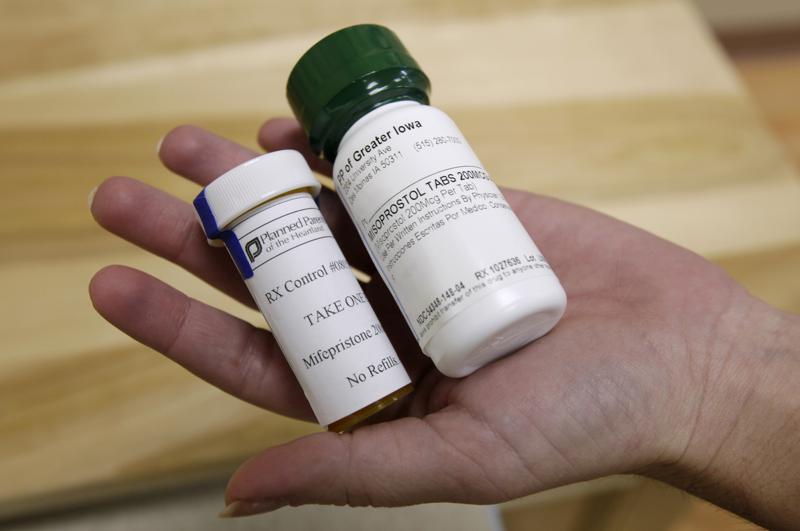
Jennifer Shutt, Alabama Reflector WASHINGTON — The U.S. Supreme Court announced Wednesday it will hear oral arguments and decide whether broad access to the abortion pill can remain legal across the United States. The justices’ decision to hear the case this term will put abortion access and the politics that comes with it back in front of the nation’s highest court just before voters head to the polls for the 2024 presidential election. The drug at the center of the case, mifepristone, is used in more than half of pregnancy terminations within the United States as part of a two-pharmaceutical regimen that includes misoprostol as the second medication. Both are also used in miscarriage treatment. Patients’ ability to access mifepristone cannot change until the Supreme Court issues its ruling, under an order the court put out earlier this year. The nine members of the court will be answering three questions in their ruling, including whether changes the U.S. Food and Drug Administration made to prescribing and dosage in 2016 and 2021 were “arbitrary and capricious.” Those changes that expanded access included shipping the abortion pill to patients through the mail. The Supreme Court will also decide if the federal district court judge who ruled earlier this year to overturn the FDA’s original 2000 approval of the pharmaceutical “properly granted preliminary relief.” Nancy Northup, president and CEO of the Center for Reproductive Rights, said in a written statement the Supreme Court “has never invalidated a long-standing FDA approval like they are being asked to do here.” “The stakes are enormous in post-Roe America,” Northup said. “Even those living in states with strong protections for abortion rights could have their ability to access mifepristone severely restricted if the Court rules against the FDA.” Northup said the ability for health care providers to prescribe the medication through telehealth and for patients to get it delivered to their homes became “critical” after the court ended the constitutional right to an abortion last year. “Abortion pills have been used safely in the U.S. for more than 20 years, and they are more important than ever in this post-Roe landscape,” Northup said. “That is precisely why the anti-abortion movement is attacking them.” Alliance Defending Freedom Senior Counsel Erin Hawley said in a written statement the anti-abortion organization urged the Supreme Court to determine “that the FDA acted unlawfully in removing common-sense safeguards for women and authorizing dangerous mail-order abortions.” “Like any federal agency, the FDA must rationally explain its decisions,” Hawley said. “Yet its removal of common-sense safeguards — like a doctor’s visit before women are prescribed chemical abortion drugs — does not reflect scientific judgment but rather a politically driven decision to push a dangerous drug regimen.” Constitutional right to abortion overturned The nine Supreme Court justices who will hear the case and ultimately render a ruling are the same justices who overturned the constitutional right to abortion in a June 2022 ruling. In the majority opinion in that case, Dobbs v. Jackson Women’s Health Organization, the conservative justices wrote that “the authority to regulate abortion is returned to the people and their elected representatives.” Following that decision, states throughout the country began to implement laws of their choosing, with some setting significant restrictions on when abortion is legal and other states moving to expand access. Several states have prohibited legal access to the abortion pill mifepristone, despite it being an FDA-approved pharmaceutical. In mid-November 2022, Alliance Defending Freedom filed a lawsuit challenging the original approval of the abortion pill in 2000 as well as the changes to when and how the drug could be used that were made in 2016 and during the COVID-19 pandemic. The lawsuit was filed on behalf of the Alliance for Hippocratic Medicine, the American Association of Pro-Life Obstetricians and Gynecologists, the American College of Pediatricians, and the Christian Medical & Dental Associations, as well as four doctors from California, Indiana, Michigan, and Texas. U.S. District Court for the Northern District of Texas Judge Matthew Joseph Kacsmaryk ruled in April 2023 that mifepristone should be removed from the market entirely, though he wrote that he did “not second-guess FDA’s decision-making lightly.” “But here, FDA acquiesced on its legitimate safety concerns — in violation of its statutory duty — based on plainly unsound reasoning and studies that did not support its conclusions,” Kacsmaryk wrote. The Biden administration requested the ruling be placed on hold until it could appeal the case, which was ultimately granted by the Supreme Court. That stay from the justices ensured mifepristone remains legal until they issue a ruling. 5th Circuit ruling The case went before the 5th Circuit Court of Appeals in New Orleans, Louisiana, which heard arguments in May 2023. The three-judge panel ruled in August 2023 that it believed the abortion pill should stay available nationwide, but that dosage and use should revert to what was in place before the FDA began implementing changes in 2016. That ruling was immediately placed on hold pending an appeal to the Supreme Court. Had the justices decided not to hear the appeal, that ruling would have taken effect. Going back to what was in place before 2016 would prevent mifepristone from being prescribed during a telehealth appointment or sent through the mail. Only doctors would be able to prescribe mifepristone, removing the option for other healthcare providers with the ability to prescribe medication from being able to do so with that particular drug. Prescriptions could only be written for up to seven weeks gestation, less than the 10-week threshold currently used by prescribers. Patients would need to attend three in-person doctor’s office appointments in order to receive a medication abortion. The dosage and timing of mifepristone as well as the second drug, misoprostol, would both revert to what was used more than seven years ago. DOJ appeal Following the 5th Circuit’s ruling, the U.S. Justice Department appealed its ruling to the Supreme Court, arguing the two lower courts made “serious legal errors.” “The loss of access to
Congress sends stopgap spending bill to Biden’s desk, averting shutdown for now
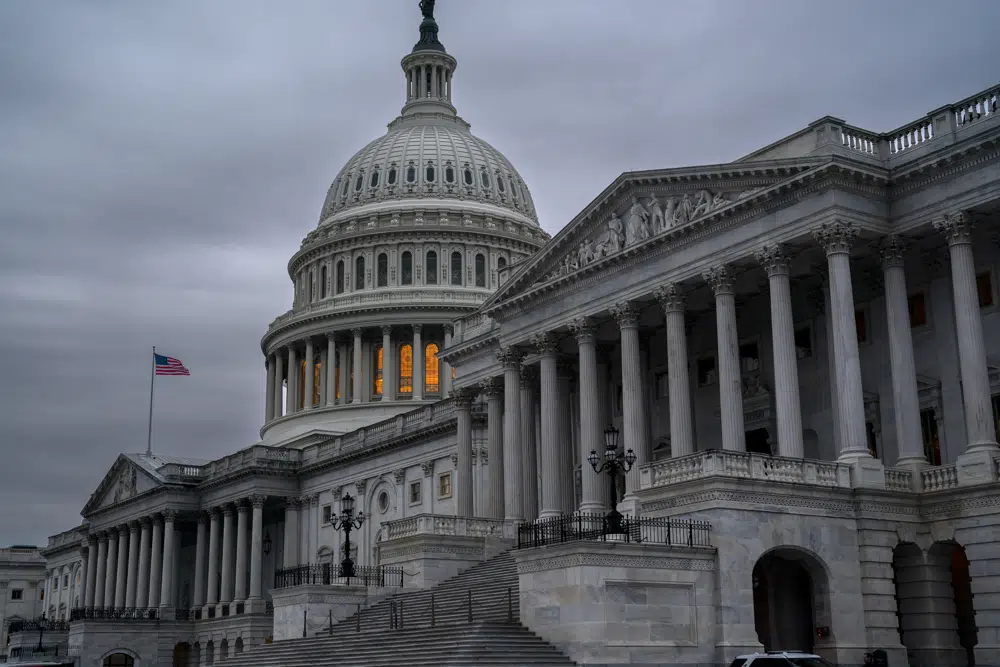
Jennifer Shutt, Alabama Reflector WASHINGTON — U.S. senators voted 87-11 to approve legislation Wednesday that would fund the government into next year, clearing the measure for President Joe Biden’s signature. The stopgap spending bill, sometimes called a continuing resolution or CR, would fund part of the government until mid-January and the rest of the programs within the annual appropriations process through early February. But many hurdles likely remain before a final deal is reached on full-year spending. Senate Appropriations Chair Patty Murray, a Washington state Democrat, said just before the bill passed that she’s already turned her attention to “what happens next.” “Because avoiding a shutdown is so very far from mission accomplished,” Murray said. “We have a lot of work to do after the dust settles and before the next shutdown deadline comes up. Now is not the time to pat ourselves on the back.” That conference process between the House and Senate, Murray said, will require “listening to the other side, making some tough decisions, leaving out partisan nonstarters, and writing a bill that can actually pass into law.” “That is going to make a difference for people we represent at home,” Murray said. The House voted 336-95 to approve the stopgap legislation on Tuesday, and Biden is expected to sign it before current funding expires Friday at midnight. House members abruptly canceled further votes and left D.C. for their Thanksgiving recess on Wednesday morning, after far-right members objected to advancing a different spending bill. More time needed The stopgap spending bill is intended to give the Republican House, Democratic Senate, and White House more time to reach agreement on the dozen full-year spending bills. Congress was supposed to finish its work by the start of the fiscal year on Oct. 1 but is relying on the stopgap spending bill to continue current funding levels until a deal is negotiated. Reaching agreement is a well-established practice for the four leaders of the Appropriations Committees — Senate Chair Murray; Senate ranking member Susan Collins, a Maine Republican; House Chair Kay Granger, a Texas Republican; and House ranking member Rosa DeLauro, a Connecticut Democrat. The four lawmakers have years of experience working out bipartisan deals on spending bills as well as other legislation, but they all often caution against politics or outside influences meddling in those negotiations. “Appropriators left to their own devices” can reach agreement, they often say. But they rarely are left to do their work. New faces in the talks Sign-off on the final dozen full-year bills also falls to the four congressional leaders. Senate Majority Leader Chuck Schumer, a New York Democrat, and Senate Minority Leader Mitch McConnell, a Kentucky Republican, have plenty of experience negotiating spending bills and other consequential legislation with each other. Joining them at the table this year will be newly elected House Speaker Mike Johnson, a Louisiana Republican, and House Democratic Leader Hakeem Jeffries, of New York. Both are new to forging agreement on the annual appropriations bills, which last year totaled about $1.7 trillion. Congress will have until Jan. 19 to come to find compromise on the Agriculture-FDA, Energy-Water, Military Construction-VA, and Transportation-HUD spending bills. They’ll have until Feb. 2 to reach a deal on the Commerce-Justice-Science, Defense, Financial Services, Homeland Security, Interior-Environment, Labor-HHS-Education, Legislative Branch, and State-Foreign Operations appropriations bills. The Senate drafted its dozen spending bills to the total spending levels in the debt limit law that Congress approved this summer. But House Republicans wrote their bills more than $100 billion below those levels and added in dozens of hot-button policy proposals that stand no chance of becoming law. Collins said Wednesday that she met with Johnson last week to talk about total funding levels and the supplemental spending package that Congress could pass in the coming weeks to fund Israel, Ukraine, Taiwan, and U.S. border security. Ultimately, she said, congressional leaders will be the ones who decide whether to stick to the spending levels in the debt limit law or go in a different direction. “To me, it should be guided by the numbers in the (Fiscal Responsibility Act), plus the side agreement that was worked out between Speaker McCarthy and President Biden,” Collins said, referring to the debt limit deal from earlier this year and former House Speaker Kevin McCarthy. In the meantime, she suggested, the Senate could take up a four-bill spending package that includes the Commerce-Justice-Science, Energy-Water, Defense, and Labor-HHS-Education spending bills. “That might be a good four-bill package that we could bring,” Collins said. A senior appropriator, speaking on background, said Wednesday that a proposal was circulating that would have the Senate turn to that exact four-bill spending package once it gets back from the Thanksgiving recess. The Senate has approved a three-bill package with a broadly bipartisan vote and the House has approved seven bills without Democrats’ support. House exit The House was set to vote on two additional spending bills this week, but Republican leaders announced late Wednesday morning the chamber was done until after the Thanksgiving break. The canceled votes came after the House was unable to adopt the rule that would have set up debate on the Commerce-Justice-Science spending bill, amid anger on the stopgap spending bill from far-right members of the party. Senate Republican Whip John Thune, of South Dakota, said Wednesday it will be difficult to work out agreements between the two chambers on the dozen appropriations bills before the new deadlines. “One of the biggest challenges, obviously, is there’s a difference in numbers between the House and the Senate,” Thune said, noting the two chambers will have to deal with that when they begin the conference process. “And I think we have to give that a chance,” Thune said. “You’ve got a new speaker over there. It seems like people want to cooperate a bit, so let’s see if they can move bills.” Alabama Reflector is part of States Newsroom, a network of news bureaus supported by grants and a coalition of donors as a
Katie Britt votes against the Homeland Security Appropriations Act
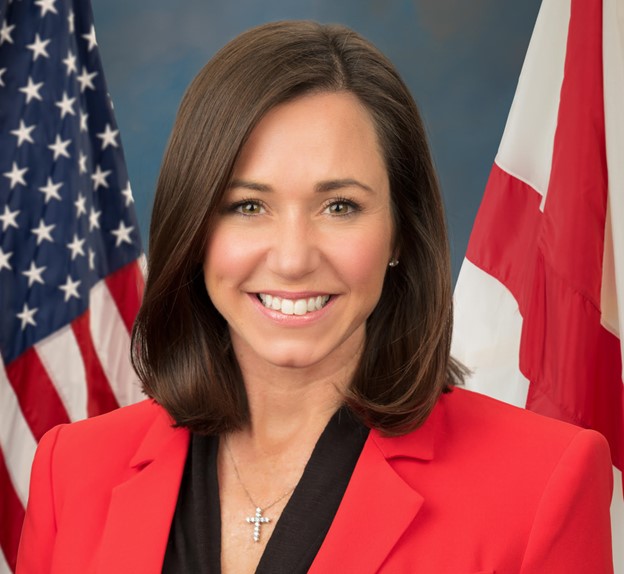
On Thursday, U.S. Senator Katie Britt, the Ranking Member of the Homeland Security Subcommittee for the Senate Committee on Appropriations, voted against advancing the Fiscal Year 2024 Homeland Security Appropriations Act to the full Senate. During the Appropriations Committee’s markup on Thursday, Senator Britt voiced her concerns with the legislation. “While I have no doubt this bill makes significant strides compared to President [Joe] Biden’s woeful budget request, there is still more that needs to be done to end – rather than manage – the ongoing border crisis,” said Sen. Britt. “On the heels of record encounters, I believe that we must complement the border security technology included in this bill with funding for a physical barrier system along our southern border. After several visits to the border, it is something that I personally believe is a critical tool to keep our homeland safe and secure.” “Despite the Administration admitting it urgently needs an additional 6,000 beds, this bill does not increase the number of ICE detention beds,” Britt continued. “As we all know, there (is $752 million) flowing to different groups – DHS, nongovernmental organizations included to house migrants and move them around the country, and we need answers as to how, and why, and where this money is being spent.” “As I watch the daily encounter numbers continue to increase day after day, yesterday – 6,883, I remain concerned that each of these issues serves as an incentive for people to continue to come here outside the legal pathways,” Britt added. There were some parts of the bill that Britt liked. “I am pleased that the bill funds an increase of more than 1,100 personnel across Customs and Border Protection and Immigration and Customs Enforcement,” said Britt. “It also includes significant funding for border security technology. “In addition, fentanyl is the leading cause of death, as you all know, for Americans ages 18 to 45. This bill appropriates over $800 million in new funding to combat the scourge of fentanyl that is poisoning our communities, schools, and families, and destroying too many American lives.” “This bill is a positive step forward in a whole-of-government approach to target the cartels and transnational criminal organizations engaged in fentanyl trafficking, child exploitation, and human smuggling,” Britt said. “Additionally, this bill provides necessary funding to allow the Coast Guard to continue to invest in critical programs like the Offshore Patrol Cutter and to acquire a Commercially Available Icebreaker that will expand our near-term presence in the Arctic to counter the ambitions of Russia and China.” “I remain thankful to Senator Chris Murphy for working with me to secure critical these priorities,” Britt said. This is the first time since 2018 when Richard Shelby chaired the Appropriations Committee, that the U.S. Senate has advanced all 12 of the appropriations bills out of committee and to the Senate floor. “There’s more to do: we still have to get these bills passed through the full Senate, and House, and signed into law—and that is our focus moving forward,” Sens. Patty Murray (D-Washington) and Susan Collins (R-Maine), chairwoman and vice-chairwoman of the committee, respectively, said in a joint statement. “However, what this committee has achieved over the last several weeks shows that it is possible for Congress to work together and work through real differences—to find common ground and produce serious, bipartisan bills that can be signed into law.” “It is a testament to the tremendous leadership and determination of both of you that today marks the milestone of this committee marking up twelve out of twelve appropriations bills,” Britt said during her comments. “This is a significant accomplishment, and no doubt a win for the American people that the appropriations process is proceeding in this fashion. That would not have happened without the leadership of the two of you.” The United States has been operating on a series of often hasty continuing resolutions and omnibus spending bills since 2019. Doing budget deals with House Republicans could prove more difficult than moving them in the Senate. Katie Britt was elected to the U.S. Senate in 2022. Britt has made the border crisis and its role in the drug overdose and human smuggling crisis a key focus of her tenure in the Senate. To connect with the author of this story or to comment, email brandonmreporter@gmail.com.
Katie Britt votes to advance water projects bill

U.S. Senator Katie Britt, a member of the Senate Committee on Appropriations, joined her colleagues in advancing the Fiscal Year 2024 Energy and Water Development Appropriations Act. The bill appropriates more than $72 million in direct investments Senator Britt secured for projects across Alabama. “From the rivers that wind across Alabama to Mobile Harbor, our state’s waterways are critical connectors that drive opportunity, recreation, and economic growth in every corner of our great state,” said Sen. Britt. “These investments would help ensure Alabama remains beautiful and a sweet home to do business long into the future.” In the bill, Britt prioritized investing in key Alabama priorities, including the following: · $20.6 million to revitalize and repair the George W. Andrews Lock and Dam on the Apalachicola, Chattahoochee, and Flint Rivers at Columbia, Alabama. · $18.4 million for dredging, maintenance, and operations on the Tennessee-Tombigbee Waterway. · $12.1 million for dredging, maintenance, and operations on the Black Warrior and Tombigbee Rivers · $11.2 million for dredging, maintenance, and operations in Mobile Harbor. · $10.5 million for dredging, maintenance, and operations on the Alabama-Coosa-Tallapoosa River System Senator Britt also supported programmatic language in the bill that would set aside $200 million for the Appalachian Regional Commission, which serves 37 counties in Alabama, and $30.1 million for the Delta Regional Authority, which serves 20 counties across the state. The Fiscal Year 2024 Energy and Water Development Appropriations Act provides $58.095 billion in total funding for the Department of Energy, Army Corps of Engineers, Bureau of Reclamation, and independent agencies. Senator Dianne Feinstein (D-California) Chairs the Senate Appropriations Subcommittee on Energy and Water Development. “Our energy and water infrastructure need significant investment to meet the needs of Americans throughout the country, particularly in the West,” said Sen. Feinstein. “This bill will help modernize our water systems to improve and increase dam safety, water storage, water recycling, desalination projects, and more. And as we experience new heat records, our bill also makes key investments in expanding clean energy and fighting against climate change. I want to thank Ranking Member [John] Kennedy for being a partner in moving forward this important bipartisan legislation.” Senator Patty Murray (D-Washington) Chairs the Senate Appropriations Committee. “This is a strong bipartisan bill that keeps America’s lights on and water flowing to our farms, propels cutting-edge scientific research, ensures nuclear security, and advances key environmental cleanup efforts,” said Chairwoman Murray. “These investments are key to making sure communities have the water resources they need to grow crops, strengthening our competitiveness globally, furthering clean energy research and capacity, and so much else. I’m also glad we are able to provide new resources to maintain our ports and harbors, which are so critical to trade, tourism, and even people’s daily commutes.” The bill provides $8.934 billion in total funding for the Corps of Engineers. The bill provides a historic $2.77 billion for the Harbor Maintenance Trust Fund to improve navigation through dredging ports, maintain waterways, and ensure efficient water transport. The bill also includes funding for critical inland waterways navigation projects. The bill continues investments in critical construction projects to protect communities from extreme weather events and more frequent flooding. The bill also expands the Water Infrastructure Financing Program to include levees, allowing low-interest loans for communities to make improvements and increase protection from flood events. The Bureau of Reclamation receives $1.921 in funding to deliver reliable water and hydroelectric power to the western United States. The bill includes $186 million for Western drought programs under the Water Infrastructure Improvements for the Nation (WIIN) Act, which supports long-term drought strategies, including water storage, water recycling and reuse, and desalination. The bill includes funding to support rural water supply projects and critical grant programs that invest in research and innovative applications of water-saving technologies. The bill provides $17.3 billion for the Department of Energy’s non-defense programs. The bill provides $8.43 billion in new directed funding—$330 million over fiscal year 2023—for the Office of Science. This funding will help implement the bipartisan CHIPS and Science Act of 2022. The Office of Science is the largest federal sponsor of basic research in the physical sciences and supports 22,000 researchers at 17 national laboratories and more than 300 universities. The bill provides $3.5 million in new funding for industrial emissions and technology coordination to coordinate clean industrial research, development, demonstrations, and deployment across the Department of Energy. The bill provides $3.686 billion for energy efficiency and renewable energy programs, $227 million above fiscal year 2023. This includes increases in wind energy, water technologies, and advanced manufacturing. The bill provides $200 million for Cybersecurity. The bill provides $1.55 billion for Nuclear Energy research and development, including funding for microreactor development and accident-tolerant fuel important for nuclear reactor safety. The bill provides $75 million for the Indian Energy Policy and Programs and updates the Tribal Loan Guarantee Program to help Tribal Nations deploy clean energy. The bill also provides $32.8 billion for atomic energy defense activities for the Department of Energy, including Nuclear National Security, and $18.8 billion for Weapons Activities, $1.7 billion above fiscal year 2023, including $142 million above the request for Savannah River plutonium pit production, and a nearly $400 million or 110 percent increase above fiscal year 2023 for the Uranium Processing Facility in Oak Ridge, Tennessee. The Fiscal Year 2024 Energy and Water Development Appropriations Act now moves to the full Senate for consideration. Katie Britt was elected to the Senate in 2022. To connect with the author of this story or to comment, email brandonmreporter@gmail.com.
U.S. Senate is focus of politicos across the country
In Alabama, with hours left in the 2022 election cycle, the Republican nominee for U.S. Senate, Katie Britt, appears to be a prohibitive favorite over Democratic nominee Dr. Will Boyd and Libertarian nominee John Sophocleus for the open U.S. Senate seat, currently held by the retiring Richard Shelby. Nationally, though, there is intense speculation over what could happen on election day on Tuesday and which party will control the next Congress. Polling shows Republicans with growing momentum, and it appears almost a certainty that the GOP will take control of the U.S. House of Representatives after four years of Nancy Pelosi’s leadership, and it does not appear to even be close. Real Clear Politics does not see any of Alabama’s Seven Congressional Districts as even being in play in this election. With the House effectively lost to them, Democrats have focused their efforts on maintaining their narrow control of the U.S. Senate, which for the past two years has been tied 50 to 50; but Vice President Kamala Harris gives the Democrats control of the body. Democrats had staked their hopes on the Select Committee on January 6, and the abortion issue to energize their base. That has not happened. Instead, Republicans are running on inflation, crime, the border, and economic issues, and that strategy appears to be playing well with voters. It is too close to call who will control the Senate before the votes are counted, but clearly, the trend has been moving in favor of the GOP in the last three weeks. The best opportunity for a Republican pickup appears to be Nevada. There, the Republican challenger, former state Attorney General Adam Laxalt, is leading Democratic incumbent Sen. Catharine Masto in recent polling. The latest Real Clear Politics rolling poll average has Laxalt leading Masto by 1.9 points. The best opportunity for a Democratic pickup appears to be Pennsylvania, where Republican incumbent Sen. Pat Toomey is retiring even though he is only 60 years old. Toomey’s controversial vote in 2021 to convict former President Donald Trump of inciting the January 6 insurrection made his ability to win a Republican primary unlikely. Democratic lieutenant Governor John Fetterman had appeared to have an insurmountable lead over Republican nominee television host Dr. Mehmet Oz, but that lead has evaporated. The race is now a tossup, but Oz has the momentum after clearly besting Fetterman in the debate. Presidents Barack Obama and Joe Biden are both campaigning hard for Fetterman, and Trump is campaigning for Oz. Both parties recognize that there is little chance of the Democrats holding on to the Senate if Pennsylvania falls to the GOP. Georgia is a tossup between Democratic incumbent Sen. Raphael Warnock and college football star Republican challenger Hershel Walker, but Walker clearly has the momentum in this race. Due to Georgia’s election rules, however, this race will likely go to a December runoff. Warnock is being dragged down in the general election by the terrible performance of Democratic gubernatorial candidate Stacey Abrams. Brian Kemp is sure to best Abrams on Tuesday. If Walker faces Warnock again on December 6, however, will those Kemp voters come out to help the Republicans lift Walker over Warnock? The trifecta of Pennsylvania, Nevada, and Georgia likely decide the Senate, but there are other races where Democratic incumbents are fighting for their political lives. In New Hampshire, Democratic incumbent Sen. Maggie Hassan is leading Republican challenger Dan Bolduc, but this race is much closer at this point than politicos expected this summer. If there really is a Republican “red wave” where GOP voters come out to the polls on Tuesday with more enthusiasm than Democrats, then the Granite state could easily swing to the GOP. According to the latest Real Clear Politics rolling poll average, Hassan has a lead of just .8 – well inside the margin of error and trending in the wrong direction for Hassan. Another state where a “red wave” could unseat a Democratic incumbent is Arizona. This summer, it appeared that incumbent former astronaut and the husband of former Congresswoman Gabby Giffords, Sen. Mark Kelly, would win easy reelection by more than ten points. Now this race is much closer than even the most enthusiastic GOP supporters thought possible. Republican nominee Blake Masters has won over a lot of voters. If the GOP candidate for Governor wins and wins big, Arizona could be a surprise U.S. Senate pickup for the GOP. This race has been a tie in two of the last 5 polls, with Kelly’s best performance being plus three in a Marist poll. Both Remington and Fox News have Kelly leading by just one point. If Republicans flip Arizona, there is little likelihood of the Democrats holding on to the Senate. In the summer, the Democrats believed that Republican incumbent Ron Johnson in Wisconsin was very vulnerable. Those hopes are fading fast as Johnson is surging in the polls over Democratic challenger Lt. Gov. Mandela Barnes. Senate colleague Bernie Sanders is on the ground campaigning for Barnes this weekend. Johnson leads Barnes by 3.2 points in the most recent Real Clear Politics rolling average. If there is no GOP wave, this could be closer than the polls indicate, and a Barnes upset win is still not outside the realm of possibility. In Washington state, even Republicans were expecting incumbent Sen. Patty Murray to coast to another easy re-election. That race is now much closer than anyone had previously thought possible. Republican challenger Tiffany Smiley has pushed Murray far harder than anyone could have anticipated in this blue state. Murray was consistently polling nine points or more in September, but recent polling has shown her lead shrink to just 1 to 4 points. The Real Clear Politics still has Murray up by 3.0 points in their most recent polling average, but that has dropped from 9 points just four weeks ago. This would still be an unlikely pickup for Republicans in a state that Biden won by 19.2 points just two years ago. That said, a Smiley victory is now within the margin of error in some recent polling. Murray holding on to her seat remains the most likely outcome, but that is now far from certain. In North Carolina, Republican incumbent Sen. Richard Burr is retiring. This seemed to be an opportunity for Democrats to flip this red seat blue, and Civitas/Cygnal had the race between Republican Ted Budd and Democratic nominee Cheri Beasley tied as recently as September 26, but Budd appears to
Bipartisan deal near on trimmed $10 billion COVID bill

Lawmakers moved to the brink Thursday of shaking hands on a scaled-back bipartisan compromise providing a fresh $10 billion to combat COVID-19, a deal that could set up final congressional approval next week. The price tag was down from an earlier $15.6 billion agreement between the two parties that collapsed weeks ago after House Democrats rejected cutting unused pandemic aid to states to help pay for it. President Joe Biden requested $22.5 billion in early March. With leaders hoping to move the package through Congress quickly, the lowered cost seemed to reflect both parties’ calculations that agreeing soon to additional savings would be too hard. The effort, which would finance steps like vaccines, treatments, and tests, comes as Biden and other Democrats have warned the government is running out of money to counter the pandemic. At the same time, the more transmissible omicron variant BA.2 has been spreading quickly in the U.S. and abroad. “We’ve reached an agreement in principle on all the spending and all of the offsets,” Sen. Mitt Romney of Utah, the lead Republican bargainer, told reporters, using Washington-speak for savings. “It’s entirely balanced by offsets.” Senate Majority Leader Chuck Schumer, D-N.Y., and others were more circumspect. “We are getting close to a final agreement that would garner bipartisan support,” Schumer said on the Senate floor. He said lawmakers were still finalizing the bill’s components and language and awaiting a cost estimate from the nonpartisan Congressional Budget Office. Sen. Patty Murray, D-Wash., chair of the Senate health committee and another bargainer, said, “I’m hoping,” when asked about Romney’s assessment. Once clinched, an agreement would represent a semblance of bipartisan cooperation in battling the pandemic that dissolved a year ago, when a far larger, $1.9 trillion measure proposed by the new president cleared Congress with only Democratic votes. That bill was laden with spending to help struggling families, businesses, and communities, while this one would be aimed exclusively at public health. Many Republicans have been willing to go along with the new expenditures but have insisted on paying for them with unspent funds from previous bills Congress has enacted to address the pandemic. Half the new measure’s $10 billion would be used for treatments, said Sen. Roy Blunt, R-Mo., who has helped negotiate the agreement. He said top federal health officials would be given wide discretion on spending the rest of it, but it would include research and other steps for battling the disease, which has killed around 975,000 Americans and millions across the world. Romney and others said savings the two parties had agreed to for the new bill would not include the cuts in state assistance that House Democrats opposed. He said some unused funds would be culled from another pandemic program that gives state and local governments funds for grants to local businesses. Blunt said both sides had also agreed to savings that include pulling back an unspent $2.2 billion for aiding entertainment venues closed during the pandemic and more than $2 billion still available for assisting aviation manufacturing. Romney said the $10 billion might include $1 billion for vaccines, treatments, and other support for countries overseas. Blunt said that figure seemed unresolved. One-third of the earlier $15.6 billion measure had been slated to go abroad. The lowered figure for assisting other countries encountered opposition in the House, where some Democrats wanted to boost the figure. Epidemiologists have cited the need to vaccinate more people around the world and reduce the virus’ opportunities for spinning off new variants. “It’s a problem,” House Speaker Nancy Pelosi, D-Calif., told reporters. “It’s a shame.” Kate Bedingfield, White House communications director, said officials were “very hopeful” an agreement would be reached and prodded lawmakers to include funds to help other countries cope with the disease. “We’re not going to be able to put this pandemic behind us until we stop the spread and proliferation of new variants globally,” Bedingfield said. Leaders hope Congress can approve the legislation before lawmakers leave for a spring recess after next week. Republicans have leverage in the Democratic-controlled, 50-50 Senate because 60 votes are needed to pass most major bills. Romney and Blunt both said they believed a finalized package they described would attract significantly more than the 10 GOP votes needed. Since the pandemic began, Congress has approved more than $5 trillion to address the economic and health crises it produced. Only a small fraction of that has been for public health programs like vaccines. In an interview earlier Thursday with Punchbowl News, Senate Republican Leader Mitch McConnell, R-Ky., said the measure’s price tag seemed to have fallen to $10 billion because Democrats weren’t agreeing to additional savings. Minutes later, Schumer took to the Senate floor and mentioned no figures but suggested its size could fall. “I’m pleading with my Republican colleagues, join us,” Schumer said. “We want more than you do, but we have to get something done. We have to get something done.” Asked if he thought an agreement could be reached before lawmakers’ recess, McConnell said, “We’ll see. Hope so.” Republished with the permission of the Associated Press.
Senate approves bill to make daylight saving time permanent
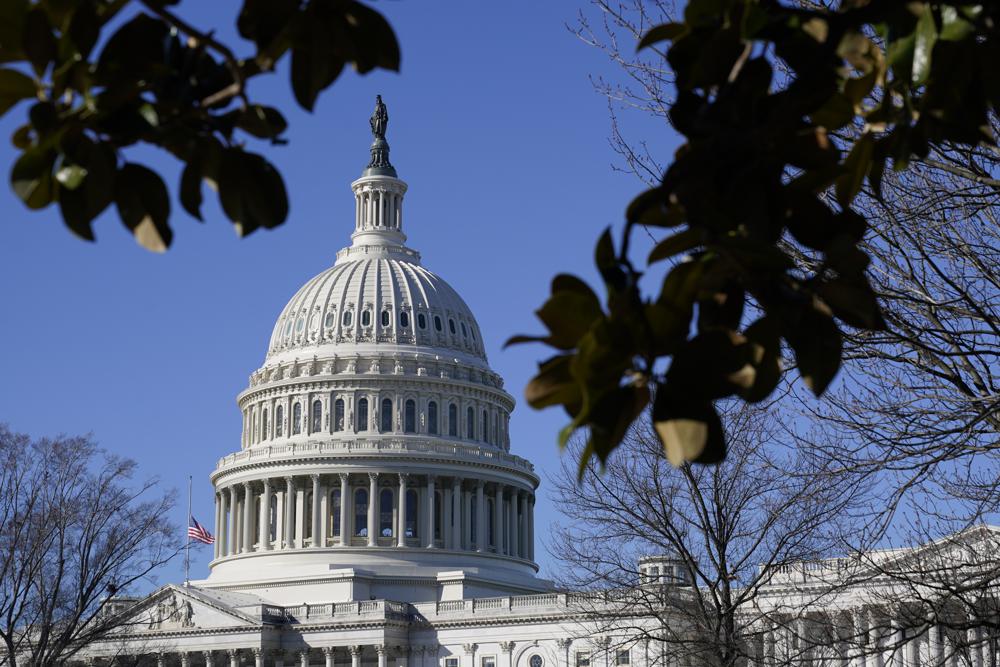
The Senate unanimously approved a measure Tuesday to make daylight saving time permanent across the United States next year. The bipartisan bill, named the Sunshine Protection Act, would ensure Americans would no longer have to change their clocks twice a year. But the bill still needs approval from the House, and the signature of President Joe Biden, to become law. “No more switching clocks, more daylight hours to spend outside after school and after work, and more smiles — that is what we get with permanent Daylight Saving Time,” Sen. Ed Markey of Massachusetts, the original cosponsor of the legislation, said in a statement. Markey was joined on the chamber floor by senators from both parties as they made the case for how making daylight saving time permanent would have positive effects on public health and the economy and even cut energy consumption. “Changing the clock twice a year is outdated and unnecessary,” Republican Sen. Rick Scott of Florida said. “I’ve said it before, and I’ll say it again: Americans want more sunshine and less depression — people in this country, all the way from Seattle to Miami, want the Sunshine Protection Act,” Sen. Patty Murray of Washington added. Nearly a dozen states across the U.S. have already standardized daylight saving time. Daylight saving time is defined as a period between spring and fall when clocks in most parts of the country are set one hour ahead of standard time. Americans last changed their clocks on Sunday. Standard time lasts for roughly four months in most of the country. Members of Congress have long been interested in the potential benefits and costs of daylight saving time since it was first adopted as a wartime measure in 1942. The proposal will now go to the House, where the Energy and Commerce Committee had a hearing to discuss possible legislation last week. Rep. Frank Pallone, the chairman of the committee, agreed in his opening statement at the hearing that it is “time we stop changing our clocks.” But he said he was undecided about whether daylight saving time or standard time is the way to go. Markey said Tuesday, “Now, I call on my colleagues in the House of Representatives to lighten up and swiftly pass the Sunshine Protection Act.” Republished with the permission of the Associated Press.
Senate rejects Joe Biden’s vaccine mandate for businesses
The Senate narrowly approved a resolution Wednesday to nullify the Biden administration’s requirement that businesses with 100 or more workers have their employees be vaccinated against the coronavirus or submit to weekly testing. The vote was 52-48. The Democratic-led House is unlikely to take the measure up, which means the mandate would stand, though courts have put it on hold for now. Still, the vote gave senators a chance to voice opposition to a policy that they say has sparked fears back home from businesses and from unvaccinated constituents who worry about losing their jobs should the rule go into effect. “Every so often Washington D.C. does something that lights up the phone lines. This is one of these moments,” said Sen. Steve Daines, R-Mont. At home, he said, “this issue is what I hear about. This issue is a top-of-mind issue.” Lawmakers can invalidate certain federal agency regulations if a joint resolution is approved by both houses of Congress and signed by the president, or if Congress overrides a presidential veto. That’s unlikely to happen in this case. Under the rule, private-sector companies with 100 or more workers must require their employees to be fully vaccinated against COVID-19 or be tested for the virus weekly and wear masks on the job. The Occupational Safety and Health Administration said it would work with companies on compliance but would fine them up to more than $13,000 for each violation, though implementation and enforcement is suspended as the litigation unfolds. Senate Majority Leader Chuck Schumer, D-N.Y., said Americans who have refused to get vaccinated are the biggest impediment to ending the pandemic. He implied that some of the resistance to mandated vaccines is based on politics. “Some of the anti-vaxxers here in this chamber remind me of what happened 400 years ago when people were clinging to the fact that the sun revolved around the Earth. They just didn’t believe science. Or 500 years ago when they were sure the Earth was flat,” Schumer said. Schumer said social media has played a role in spreading falsehoods about the vaccine, and “so has the far right.” He urged senators to vote against the resolution, sponsored by Sen. Mike Braun, R-Ind. Republicans said they are supportive of the vaccine, but that the mandate amounts to government overreach. “His mandates are under fire in the courts. Main Street job creators are complaining against it, and tonight, the U.S. Senate must send a clear message: back off this bad idea,” Braun said. Some argued that the mandate may even contribute to people not getting vaccinated. “I think, actually, the mandate has made it worse in terms of hardening people who don’t want to be told what to do by the government,” said Sen. John Barrasso, R-Wyo. Sen. Shelley Moore Capito, R-W.Va., said a telephone town hall she recently held with constituents made clear they are concerned about keeping their a job if the mandate goes into effect. “If you look at my state, 40% of my state’s workforce stands to lose their job under this mandate,” Capito said. “It will be a killer to our economy.” In the end, two Democratic lawmakers voted with 50 Republicans to void the mandate, Sens. Joe Manchin of West Virginia and Jon Tester of Montana. Manchin had said in a tweet that he does not support any federal vaccine mandate for private businesses. Tester’s office said his opposition is based on conversations with Montana businesses who “expressed deep concerns about the negative effect on their bottom lines and our state’s economy during this fragile recovery period.” Sen. Patty Murray, D-Wash., sided with the Biden administration, noting that the pandemic is still raging and that deaths are overwhelmingly among the unvaccinated. “How on earth does it make sense right now to undercut one of the strongest tools that we have to get people vaccinated and stop this virus?” Murray said. “In what world is that a good idea?” The White House released a statement earlier this week stating that Biden’s advisers would recommend he veto the resolution in the unlikely event it makes it to his desk. “The president wants to see Americans back on the job, and Americans back at work should not face risk from those who are not vaccinated and who refuse to be tested,” the White House said. Deaths in the United States stemming from COVID-19 are running close to 1,600 a day on average. The overall U.S. death toll less than two years into the pandemic could soon reach 800,000. Republished with the permission of the Associated Press.
Richard Shelby praises Patrick Leahy upon his retirement announcement
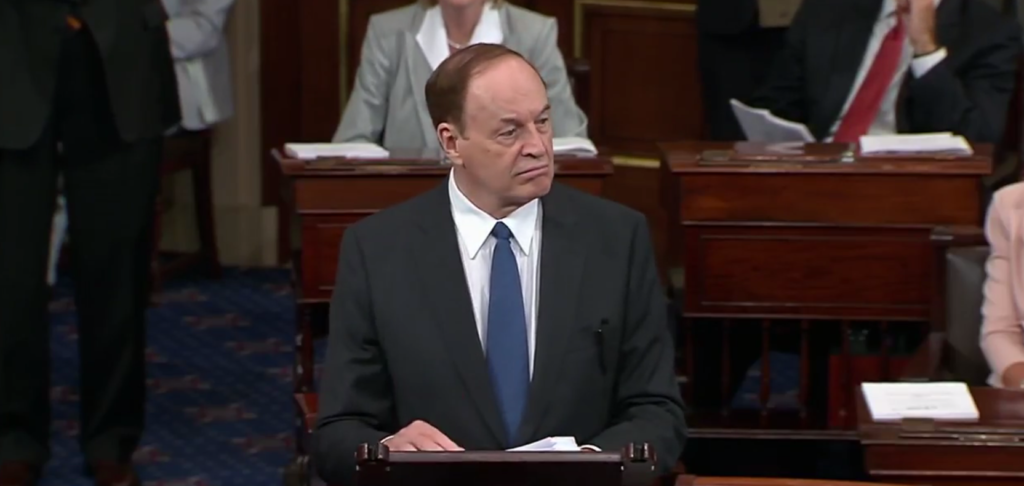
Vermont Sen. Patrick Leahy has announced that he won’t seek reelection to a ninth term in Congress, becoming the first Senate Democrat to announce his retirement, AL.com reported. Leahy is the most senior senator in the chamber and serves as president pro tempore. He is also chairman of the Appropriations Committee. “It’s time to put down the gavel,” Leahy said. “It is time to pass the torch to the next Vermonter who will carry on this work of our great state. It’s time to come home.” Senator Richard Shelby, vice chairman of the Senate Committee on Appropriations, announced his retirement months ago. Leahy’s retirement means two ranking members will leave Congress at the same time, ushering in the first time women will likely lead the panel; it’s expected that Maine’s Susan Collins and Washington state’s Patty Murray will take over the two positions. Shelby praised Leahy and his legacy, stating, “Over the past 47 years, Chairman Leahy has had a remarkable career in the Senate. As chairman of the Appropriations, Judiciary, and Agriculture committees and president pro tempore of the Senate, Pat has served Vermont well and with honor. His devotion to our nation and his state merits praise. I thank Pat for his friendship and wish he and his wife, Marcelle, all the best.”
Doug Jones, colleagues reintroduce Paycheck Fairness Act to close gender wage gap

Alabama U.S. Sen. Doug Jones joined his colleagues on Wednesday to reintroduce the Paycheck Fairness Act, a bill that would strengthen the Equal Pay Act of 1963 and guarantee that women can challenge pay discrimination and hold employers accountable. Jones first sponsored the legislation, which Democrats have tried to pass for 20 years, last year when he first joined the Senate. The legislation endeavors to strengthen and close loopholes in the Equal Pay Act of 1963 by holding employers accountable for discriminatory practices, ending the practice of pay secrecy, easing workers’ ability to individually or jointly challenge pay discrimination, and strengthening the available remedies for wronged employees. “Despite the strides we’ve taken since the Equal Pay Act of 1963, millions of women, and particularly women of color, still face wage discrimination,” said Jones. “It is long past time to level the playing field for America’s workforce and to fulfill the vision Congress laid out over fifty years ago. We took an important step forward a decade ago thanks to the courage and persistence of Lilly Ledbetter, but as long as women still face a wage gap with their peers, we must continue to fight for equal pay.” According to Senator Patty Murray, the bill’s sponsor, women “still only make 80 cents for every dollar men make.” “For women of color—the pay gap is even worse. African American women working full-time only make 61 cents for every dollar white men make and Latinas on average are paid 53 cents for every dollar their white male colleagues make,” Murray explained. “The gender wage gap doesn’t just hurt women—it hurts families, communities, and our economy. So I’m proud to introduce the Paycheck Fairness Act today to make important updates to the Equal Pay Act and reaffirm that every worker in America has the right to receive equal pay for equal work.”
Betsy DeVos: No plans to take action on funding to arm teachers
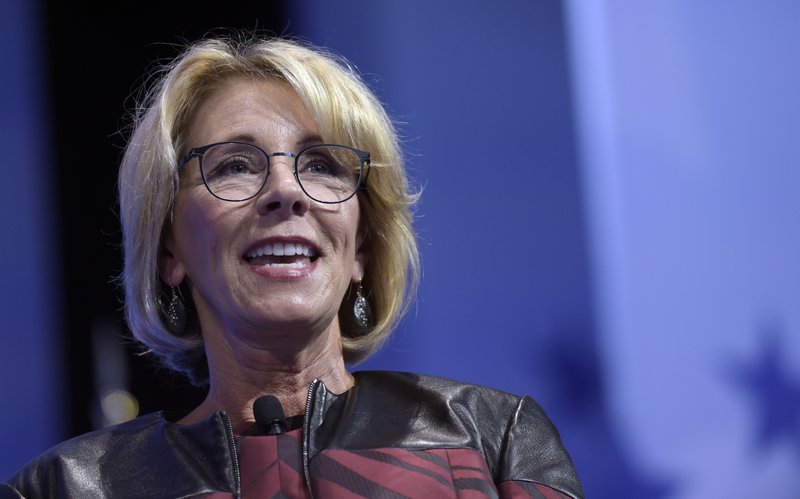
Education Secretary Betsy DeVos says she has “no intention of taking any action” regarding any possible use of federal funds to arm teachers or provide them with firearms training. DeVos’ comments came Friday after a top official in her department, asked about arming teachers, said states and local jurisdictions always “had the flexibility” to decide how to use federal education funds. Frank Brogan, assistant secretary of elementary and secondary education, said arming educators “is a good example of a profoundly personal decision on the part of a school or a school district or even a state.” President Donald Trump and DeVos have said schools may benefit from having armed teachers and should have that option. DeVos said Friday that “Congress did not authorize me or the Department to make those decisions” about arming teachers or training them on the use of firearms. Her comments were in a letter to Virginia Rep. Bobby Scott, the top Democrat on the House committee overseeing education, and were posted by the department on Twitter. “I will not take any action that would expand or restrict the responsibilities and flexibilities granted to state and local education agencies by Congress,” DeVos wrote. Democrats and education groups have argued, however, that the funds are intended for academics, not guns. DeVos heads a federal commission on school safety that was formed after the deadly Valentine’s Day shooting at a Florida high school. An early draft of the commission’s report recommends that states and communities determine “based on the unique circumstances of each school” whether to arm its security personnel and teachers to be able to respond to violence. The draft’s section on training school personnel was reviewed by AP. That approach, the draft says, “can be particularly helpful” in rural districts where the nearest police unit may be far away. Other recommendations included employing school resource officers and ensuring they worked closely with the rest of the school staff. In an interview with The Associated Press Thursday, Brogan cited the “school marshal” program in Texas where school employees can volunteer to carry weapons on campuses after undergoing training. Educators from some remote rural schools also told the panel that they rely on armed school personnel because the police may take too long to arrive. Others, however, argued that arming teachers is dangerous and could make schools feel like prisons. Brogan said the Every Student Succeeds Act, a bipartisan law that shifts education authority to states, provides about $1 billion in annual funding for various school needs, including 20 percent specifically set aside for school safety. “The people at the local level who’ve been there for years could make the decisions about what services to purchase, what equipment to buy to fulfill the general broad obligations laid out in that law,” he said. It would be up to Congress, not the U.S. Department of Education, to place any restrictions or barriers to use those funds for purposes not currently in the law, a department spokeswoman said. The debate arose earlier this month after a small rural school district in Oklahoma and the state of Texas asked the department to clarify what the funds can be used for. “The position is: You have the language … the language was written specifically to and always interpreted to mean ‘this is your money,’” Brogan said. Democratic lawmakers and teachers blasted the idea, accusing the Trump administration of acting in the interests of the National Rifle Association, and several congressmen called for legislation that would prohibit the use of those funds for guns. Senator Patty Murray, the top Democrat on the Senate commission overseeing education, said on Twitter that she was “extremely disappointed that (DeVos) is moving forward with this awful plan to allow federal funds to be used to arm teachers.” “I hope she reconsiders and we need to keep pressure on her until she does,” Murray added. Brogan also clarified that the commission will tackle gun control as instructed by the White House. DeVos had told a Senate hearing in June that the panel will not look at guns “per se,” causing confusion. Brogan said the commission will consider age restrictions for gun purchases, as well as whether people with mental health problems who are likely to harm themselves and others can possess weapons. Brogan said the panel will produce a tool kit “that provides recognized best practices, not just the shiny new object on school safety, but what people are already doing that seems to be showing a track record of success that can be put out there in inventory fashion.” “You cannot do that with a uniform approach to this thing because the country is so very different, place to place, school to school, state to state,” Brogan said. “There is no one way to make schools safe.” Besides recommendations on arming and training school staff, the research and best practices identified by the panel will include suggestions on equipping schools with magnetometers and other safety tools, character development programs and the impact of video games and movies on violent behavior. The report will be issued in “very late fall or by the end of the year,” Brogan said. The commission was created by President Donald Trump in March after 17 people were killed in the shooting at Marjory Stoneman Douglas High School in Parkland, Florida. The panel is chaired by DeVos and also consists of the heads of the departments of Justice, Health and Human Services and Homeland Security. Republished with the permission of the Associated Press.
Lax vetting on Trump nominees begins to frustrate senators

As President Donald Trump’s pick to lead Veterans Affairs skids to a halt, senators from both parties are voicing frustration that the White House is skipping crucial vetting of nominees and leaving lawmakers to clean up the mess. That sentiment was evident Tuesday on Capitol Hill after senators delayed hearings for White House physician Ronny Jackson, Trump’s surprise pick to head the VA. Jackson is facing questions about improper workplace behavior, and even Trump himself acknowledged that there were concerns about his nominee’s experience. “The White House still seems to be feeling its way on the nomination process,” said Sen. Susan Collins, R-Maine, “and does not fully appreciate how important it is to do a thorough vetting and FBI background check on nominees.” Sen. John Thune, R-S.D., said that while lawmakers want to be “deferential as much as we can” to the president’s preferences for his Cabinet, “it would be nice to know some of the issues that come up after the fact before the fact.” Trump, who promised to fill his administration with the “best people,” often gravitates toward advisers he has a personal connection with or who look the part, drawing on the approach he took as a business executive. But as president, the result is a growing list of Cabinet secretaries and other officials who do not appear to undergo the rigorous scrutiny typically expected for White House hires. Andy Puzder, Trump’s initial choice to lead the Labor Department, stepped aside before his confirmation hearings, in part over taxes he belatedly paid on a former housekeeper not authorized to work in the United States. Health and Human Services Secretary Tom Price won confirmation, but ultimately resigned amid disclosures about his expensive travel habits. Others are fighting similar charges, most notably Scott Pruitt, the embattled head of Environmental Protection Agency. Pruitt faces multiple allegations of improper housing, expensing and other practices, prompting several lawmakers to call for him to step down. The Senate has increasingly become a partisan battleground for nomination fights, a war that escalated when President Barack Obama was in the White House and Senate Democrats, who had majority control, changed the rules to allow majority vote for confirming most nominees — the so-called nuclear option — to get around GOP filibusters. Republicans returned the favor once Trump was in the White House, and they had the Senate majority, deploying the tactic to seat Neil Gorsuch on the Supreme Court. Some GOP senators argue that Democrats are slow-walking even those Trump nominees with a solid track record, including Mike Pompeo, who got votes from 14 Democrats and one aligned independent last year during his confirmation for CIA director. Pompeo is now in line to run the State Department, but has faced stiff opposition from some of the same Democrats who backed him a year ago. The Democratic opponents are going to “embarrass themselves,” said Sen. John Cornyn, R-Texas. Thune called it “really a new low.” But questions about the White House’s vetting standards have no doubt given Democrats fresh ammunition to challenge Trump’s Cabinet picks. “Our Republican colleagues bemoan the pace of the nominations,” said Senate Minority Leader Chuck Schumer, D-N.Y. But he said because of the administration’s “quick, sloppy vetting process,” the Senate job of vetting nominees “is more important than ever before.” Sen. Patty Murray, D-Wash., said senators don’t have to agree with a nominee’s position on the issue, but the Senate has a historic role — to advise and consent — that the president’s picks are up to the job. “We’re not going to allow nominees to be jammed through without proper scrutiny and debate,” Murray said. “Now hopefully, the events of the last 24 hours have made it very clear why this is so important.” Asked about the adequacy of vetting process Tuesday, Senate Majority Leader Mitch McConnell said that such questions are better raised with the White House. “Look,” McConnell said, “it’s up to the administration to do the vetting.” Republished with the permission of the Associated Press.
