
Paul Ryan not interested in presidential run this year
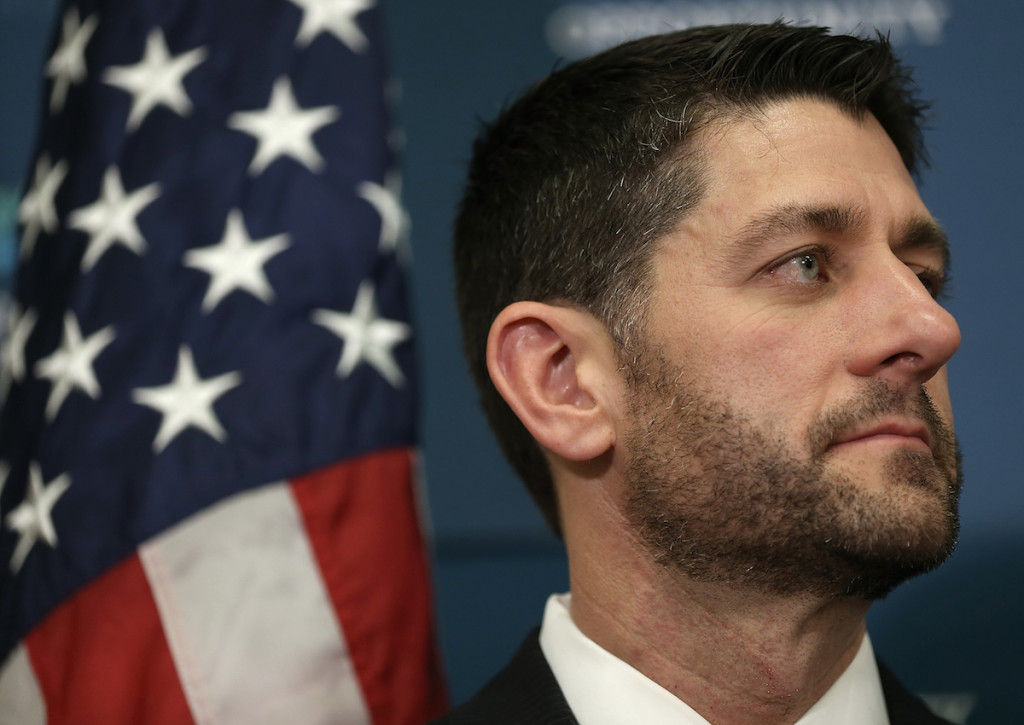
Amid extraordinary Republican infighting over Donald Trump, the word from House Speaker Paul Ryan is nope, he’s not running for president. The professed lack of interest from Ryan, R-Wis., came Friday in a letter from a lawyer representing him to the Federal Election Commission. The note by Timothy E. Kronquist disavows the Committee to Draft Speaker Ryan, a political action committee that filed papers with the FEC on Thursday. “The speaker has not, and does not, explicitly or implicitly, authorize, endorse, or otherwise approve of the organization’s formation or activities, and he is not involved with the organization in any way,” the letter says. “Speaker Ryan has repeatedly announced publicly that he is not running for president in 2016.” Ryan spokeswoman AshLee Strong added in an emailed comment, “He is flattered, but not interested.” The GOP has been knotted in turmoil since Trump took a big lead in convention delegates Tuesday by winning seven state primaries. GOP 2012 presidential nominee Mitt Romney and other leading Republicans have talked publicly about blocking the billionaire businessman from winning the nomination, and talk has turned to alternative GOP figures. The letter does not specifically address what Ryan would do if Republicans, tied in knots at their July convention in Cleveland, begged him to accept the nomination. Ryan was Romney’s vice presidential running mate and has deep respect across the GOP. Last fall, he rose to the speaker post when he was pressured to take the job after the abrupt resignation of his predecessor, John Boehner, R-Ohio. The letter said Ryan hopes “donors and supporters are not confused by, or misled into supporting, this organization.” David Satterfield, listed as treasurer of the committee, did not immediately return an email seeking comment. Republished with permission of the Associated Press.
Viewer’s Guide: GOP debate about Donald Trump vs. everyone else

And then there were four. Ben Carson‘s departure from the GOP presidential race means the quartet of remaining Republicans on the debate stage Thursday night get more time for attacks as Donald Trump treads a path to the GOP nomination and his three rivals try to trip him up. Cheered on by many Republican leaders, Ted Cruz, Marco Rubio and John Kasich are racing the primary clock to March 15, likely their last chance to stop Trump in a series of winner-take-all contests. Some things to watch Thursday night as the candidates meet at 9 p.m. EST for the Fox News Channel debate in Detroit: HE WHO WAS NOT NAMED Love him or loathe him, Trump has taught the poohbahs of the Republican Party what a power grab really is — and he’s done it by winning over large swaths of the GOP’s own core supporters far from Washington. His wobbling over whether to disavow the support of former Ku Klux Klan leader David Duke finally gave the Republican leaders of Congress a way to go after the billionaire publicly — without uttering Trump’s name. Trump responded by saying House Speaker Paul Ryan would have to get along with a President Trump or pay some sort of “big price.” On the eve of the debate, Ryan’s office confirmed that Trump’s campaign had contacted the speaker’s staff in a first sign of outreach. Notably, Trump has started talking about unifying the GOP. Look for Trump to be asked about the existential rift in the party and how he expects to govern. ___ RUBIO, RUDE? TRUMP, TOO? The Florida senator who once insisted on staying above the scuffling has leapt right into it, emulating Trump’s schoolyard-taunting style. At campaign events in the past week, Rubio made sometimes crude jokes about everything from Trump’s tan to the size of his hands — he even suggested that the billionaire wet his pants at the last debate. Look for whether a newly confident Rubio, emboldened by his first primary win in Minnesota Tuesday, keeps it up or takes a more statesmanlike approach. And what to expect from Trump? “I can’t act overly presidential because I’m going to have people attacking from every side. A very good man, Ben Carson’s not there anymore, so now we’re going to have more time for the fighting,” he said. “When people are hitting you from different angles, from all different angles, unfortunately you have to hit back. I would have a very, very presidential demeanor when I win, but until such time, you have to hit back,” he told NBC on Thursday. ___ CRUZ’S STAND Thanks to Rubio’s win Tuesday, Cruz can no longer say he’s the only Republican who has shown he can beat Trump. But he won three states on Super Tuesday — Alaska, Oklahoma and his home state of Texas. And the delegate math shows that Cruz is emerging as the candidate who might stop Trump. Look for some confidence from Cruz, because on Super Tuesday alone he came close to Trump. For the night, Trump won at least 237 delegates and Cruz won at least 209. Rubio was a distant third with at least 94. Even Sen. Lindsey Graham, who a week earlier joked at a dinner about killing Cruz, acknowledged on CBS that the Texas senator might be the party’s best hope to beat Trump. ___ KASICH, STILL The debate setting is likely most helpful to Ohio Gov. John Kasich, who is looking for a strong showing in Michigan in the state’s March 8 contest, to survive. __ FOX AND TRUMP, FRENEMIES Trump has uttered barely a peep about the fact that Fox News Channel is hosting the debate, and that his sometime-nemesis Megyn Kelly, is one of the moderators. This is a marked change from the upheaval that led to Trump boycotting Fox’s debate just before the leadoff Iowa caucuses. Trump had demanded that Kelly be removed; Fox refused and Trump headed a few miles away to host his own event. He later said that could have been one of the reasons he lost Iowa to Cruz. Trump has not tweeted about Kelly in weeks. In an interview with the Associated Press this week, Kelly said she thinks Trump has more confidence now. “He knows he can handle me. He can handle any interviewer,” she said. ___ TRUMP UNIVERSITY How good is a degree from Trump University? “Worthless” — as are his promises — according to former GOP presidential nominee Mitt Romney. Romney will brand the billionaire businessman as “a phony, a fraud” in a Salt Lake City speech on Thursday, as party of a push by GOP establishment figures to paint the billionaire as unfit to represent the party. Trump should have a few things to say about it. He already started slugging on Thursday morning, saying that Romney “begged” him for his endorsement four years ago, and called him a “failed candidate.” ___ REMEMBER BEN CARSON? Kelly said he wouldn’t have gotten much attention even if he had stuck around for the debate. Fox will concentrate its questions on Trump, Cruz and Marco Rubio — making for potentially awkward moments for Kasich. Republished with permission of the Associated Press.
Paul Ryan: GOP nominee must reject bigotry
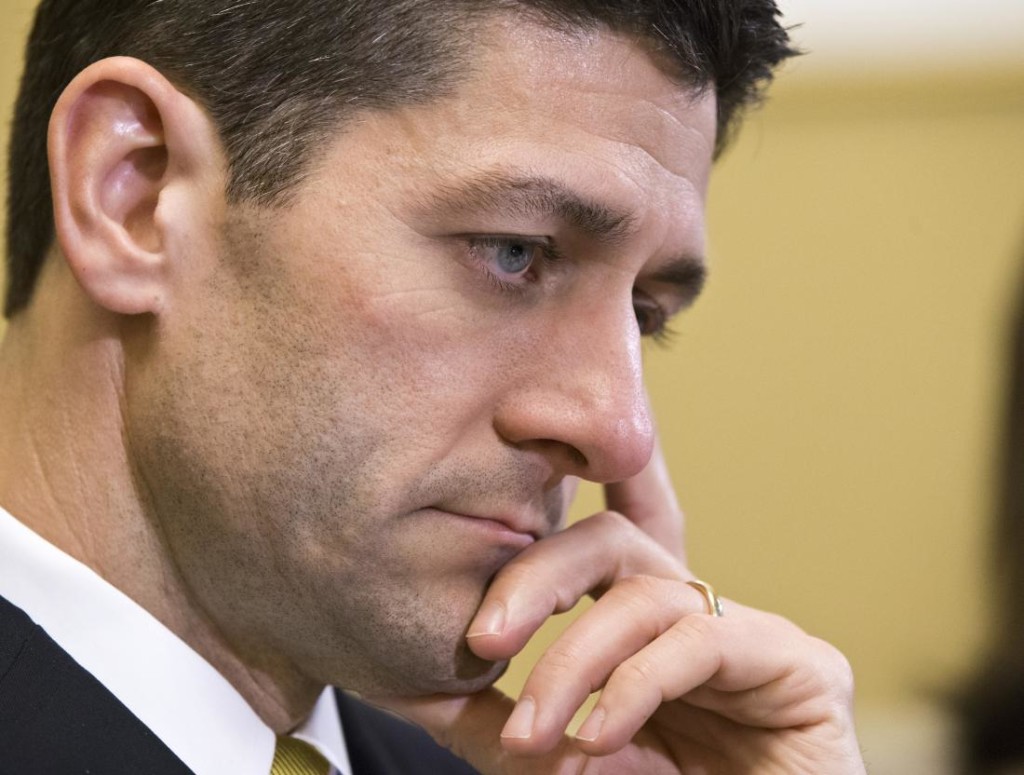
House Speaker Paul Ryan said Tuesday anyone who wants to be the Republican presidential nominee must reject any racist group or individual. Ryan made the tacit swipe at GOP front runner Donald Trump as voters in 11 states holding Republican contests headed to the polls on Super Tuesday. Ryan told reporters Tuesday that the GOP is the party of President Abraham Lincoln and “this party does not prey on people’s prejudices.” Ryan was apparently referring to Trump’s appearance Sunday on CNN when he declined to disavow the support of former Ku Klux Klan leader David Duke and other white supremacists. “When I see something that runs counter to who we are as a party and a country I will speak up. So today I want to be very clear about something: If a person wants to be the nominee of the Republican Party there can be no evasion and no games. They must reject any group or cause that is built on bigotry,” Ryan said. Trump subsequently disavowed Duke, blaming his interview performance Sunday on a bad earpiece. Ryan again said he plans to support whomever emerges as the GOP nominee but bemoaned the current discourse in the party and said it was time to get back to focusing on how Republicans would solve the nation’s problems. “We are the party of Lincoln,” Ryan added. “We believe all people are created equal in the eyes of God and our government. This is fundamental. And if someone wants to be our nominee they must understand this.” Ryan was the GOP vice presidential nominee in 2012. He said he has tried to avoid commenting on the presidential race but felt a need to speak up. “I try to stay out of the day-to-day ups and downs of the primary,” Ryan said. “But I’ve said when I see something that runs counter to who we are as a party and a country I will speak up.” Republished with permission of the Associated Press.
Robert Aderholt-backed bill would allow drug testing for food stamps
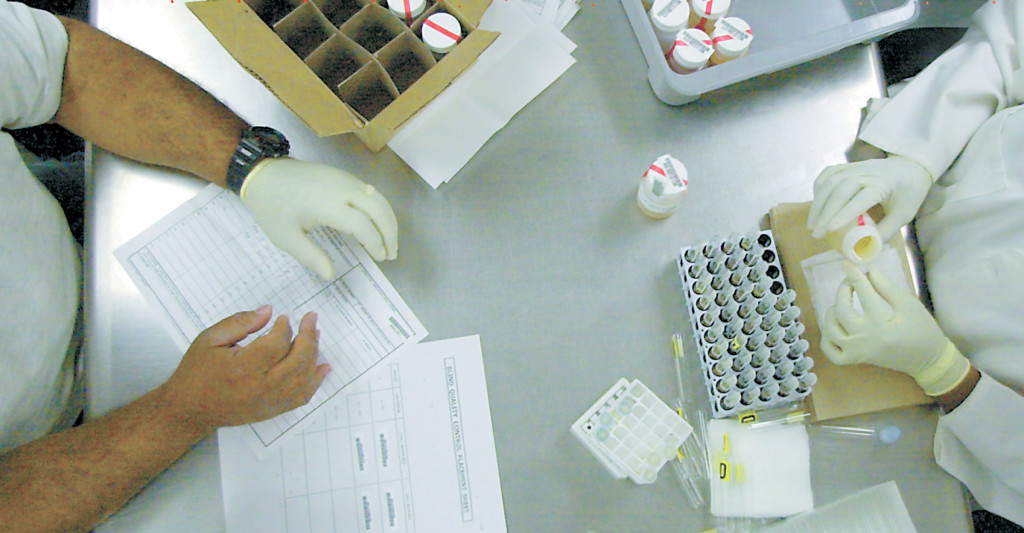
A key House Republican is renewing a GOP push to allow drug tests for low-income food stamp recipients, a move to help states like Wisconsin, where Gov. Scott Walker has sued the federal government to permit screening. Alabama Rep. Robert Aderholt unveiled the measure on Thursday as Republicans look to find savings in the program. Aderholt says that states could choose whether they wanted to allow drug testing, so the legislation wouldn’t be a mandate. He says it’s common sense to create drug programs for those who need help. “This is a compassionate way to try and help these people who have issues, instead of turning the head,” said Aderholt, chairman of the House subcommittee that oversees spending for the Agriculture Department, which administers the food stamp program. The bill is designed to aid states like Wisconsin, where former GOP presidential candidate Walker has sought to require food stamp recipients to undergo drug screening. Walker’s administration filed suit against the Agriculture Department, which has said federal law bars the practice. The government says states cannot impose new standards of eligibility under the law, and Agriculture Secretary Tom Vilsack has said drug testing recipients is intrusive and ineffective. The legislation would find savings – and cut benefits for some recipients – by making it harder for people to become automatically eligible for food stamps if they already participate in a federal heating assistance program. Aderholt’s office says the estimated savings are around $1.2 billion, with about half of that awarded to states for drug treatment programs. The food stamp program, now called the Supplemental Nutrition Assistance Program, or SNAP, served more than 46 million Americans and cost $74 billion last year. That’s twice the program’s 2008 cost. Though he has not weighed in on Aderholt’s legislation, House Speaker Paul Ryan, R-Wis., has long said he wants to overhaul the food stamp program, along with other federal assistance for the poor. He has in the past proposed budgets that would convert federal food stamp dollars into block grants for the states, a move that would cut spending for the program. Aderholt says he hopes his legislation is a first step in a larger GOP effort to overhaul the food stamp program. In 2013, House Republican leaders tried unsuccessfully to cut the program by 5 percent annually by passing broad new work requirements as part of a massive farm bill. The bill also included drug testing for recipients. House leaders held up the bill for more than a year, insisting that money for farm programs be paired with significant cuts to food stamps. Democrats balked, and the final bill included a much smaller cut and no allowances for drug testing. That effort was before Republicans won the Senate in 2014. Since then, House Agriculture Chairman Mike Conaway of Texas has led what he calls a comprehensive, multiyear review of the program to see what’s working. He said last year that “either huge reforms or small reforms” could come from that process. Aderholt did not rule out adding his legislation to this year’s agriculture spending bill, which he writes. But he said he will try and move it through Conaway’s committee first. Republished with permission of the Associated Press.
‘Tis the season for dreams of brokered political convention

‘Tis the season — no, not THAT season. It’s that point in the presidential election cycle when speculation starts swirling that the primaries won’t produce a clear winner and one of the parties’ big nominating conventions will dissolve in chaos. This time, it’s the Republican side of the race that’s looking particularly unsettled. After a crazy year in which Donald Trump‘s ability to stay on top in a supersized pack has repeatedly confounded the conventional wisdom, the what-if chatter is wilder and louder than usual. What if no one gets a majority of delegates in the primaries and caucuses? What if Trump leads the delegate count but party elites want to derail his route to the nomination? What if delegates to the Cleveland convention deadlock on multiple votes and then try to turn to someone completely new, perhaps House Speaker Paul Ryan?!? Ridiculous, says Ryan. Silly, says Republican Party Chairman Reince Priebus. “I don’t think that’s going to happen,” says Trump. Veteran politicos agree such scenarios are unlikely. The outlook will clarify once people start voting in February, they insist. But they also acknowledge that the chances of an unsettled outcome are higher than usual in the current unconventional political environment. Ben Ginsberg, the lawyer who was counsel for the Mitt Romney and George W. Bush presidential campaigns, says that because this GOP election cycle offers three lanes of candidates instead of two — a “Trump” lane in addition to the traditional “establishment” and “conservative” lanes — “it becomes more likely that no one will have a majority of delegates.” “The odds are still really small,” Ginsberg continues, then offers this caveat: “I did say on the day before the 2000 election that there would never be another presidential recount.” This from the man who went on to play a central role in the Florida recount at the heart of the Bush v. Gore battle for the presidency. The large field of GOP candidates and Trump’s wildcard candidacy aren’t the only factors at play in speculation that the 2016 primaries could end in uncertainty. The GOP in recent years has been shifting to a more proportional way of allocating delegates from each state than the old winner-take-all approach. And that means the momentum Romney achieved after winning a couple of big states in 2012 “is just not going to be as likely” this time, says Mark Stephenson, a Republican consultant who handled delegate strategy for Scott Walker‘s short-lived presidential campaign and worked on the Romney campaign in 2008. Even if the field of candidates has been winnowed to three or four after the first four states award 130 delegates in February, the winner in the big Super Tuesday round of voting on March 1 still might come up with just 300-400 delegates of the 600-plus to be awarded that day, says Stephenson. That’s a far cry from the 1,237 delegates needed to clinch the nomination. Stephenson agrees that a contested convention is unlikely, but says that between the unusual campaign dynamics at play this year and the proportional delegate allocation rules, “as people start playing with the math, it’s certainly an interesting exercise to come up with scenarios” under which nobody gets to a majority before the convention. This, then, is the time of joy for delegate geeks who love to nerd out on the fine print of presidential politics and speculate on the what-ifs of a divided convention. “We do this every four years,” says Joshua Putnam, a political science lecturer at the University of Georgia whose frontloading.blogspot.com wallows in the intricacies of the primaries. “We want it to happen just for the sheer excitement of it all,” Putnam says of a contested convention. “But the chances of it happening are pretty slim.” The idea of a brokered convention harks way back to when power brokers in smoke-filled rooms could twist arms and party bosses could steer their preferred candidate toward the nomination. More likely these days, if still a longshot, is a contested or deadlocked convention that opens without a presumptive nominee. The last time a Republican convention opened without a clear nominee was 1976, when Gerald Ford led in delegates but lacked a majority coming into the convention. There was plenty of drama as Ford beat back a challenge from Ronald Reagan and eked out the nomination on the first vote. You have to go all the way back to 1952 for a true brokered convention at which delegates turned to someone new. Democrats drafted Adlai Stevenson, who won on the third ballot. Putnam says a rule approved at the GOP convention in Tampa in 2012 could add intrigue in 2016. It requires a candidate to have a majority of delegates in eight states to win the nomination, up from the previous requirement of a plurality of delegates in five states. In a large field, this higher hurdle to the nomination could be daunting. But it’s also a temporary rule that the party can change if the outlook is muddled coming out of the last round of primaries in June. Talk that party elites might try to derail a Trump presidency at the convention runs into all sorts of pushback against the idea of disregarding the will of GOP voters. “I’m an ANTI-Trump guy, but if the GOP elites (of whom I might be one) attempt to smother the will of Republican primary voters, I will spring to Trump’s defense,” GOP consultant Rich Galen said in an email. As for the Paul Ryan scenario, the House speaker declares it “dumb speculation” that should stop. Of course, it was just two months ago that Ryan was pooh-poohing pleas that he become speaker after John Boehner resigned. Republished with permission of the Associated Press.
White House, congressional negotiators near agreement on spending, tax cut deal
White House and congressional negotiators moved toward clinching a tax and spending compromise that would cap Congress’ year by extending numerous tax credits and financing government agencies in 2016. Eleventh-hour differences remained over Republican efforts to lift a ban on U.S. oil exports. House Speaker Paul Ryan said Tuesday morning that the deal would be released later in the day and come to a vote on Thursday. That would require passage of another short-term spending bill since government funding expires Wednesday at midnight. “I’m not going to predict how the vote count is going to go down. Look, in negotiations like this you win some, you lose some. Democrats won some, they lost some. We won some, we lost some,” Ryan, R-Wis., said at a breakfast hosted by Politico. “At the end of the day we’re going to get this done.” But on the Senate floor, Minority Leader Harry Reid, D-Nev., said Democrats would not relent on demands that in exchange for allowing American crude oil exports for the first time in four decades, his party wanted provisions aimed at encouraging alternative energy development and protecting Obama administration efforts to reduce greenhouse gas emissions. “If Republicans think reducing our carbon emissions and encouraging use of alternative energy is an unacceptable price to pay, we can move the rest of the package” without lifting the oil export ban, Reid said. He added, “It’s decision time.” Appearing with Ryan, Senate Majority Leader Mitch McConnell, R-Ky., avoided offering details but spoke of the benefits of a long-term deal to extend dozens of tax breaks sought by lawmakers on both sides. McConnell said such a deal would make a larger tax reform package easier to achieve next year, while satisfying business goals, including extending a research and development tax credit and a popular deduction for equipment purchases. “Making those permanent is, I think, an important shot in the arm to our economy,” McConnell said. A major priority for the GOP and some Democrats was lifting the 40-year-old bar against exporting U.S. crude oil, a remnant of the 1970s oil shortages that industry supporters consider unneeded with today’s explosion of domestic oil extraction. Critics say ending the prohibition would be a windfall to big oil companies that would damage the environment by encouraging more drilling. In exchange, Democrats were seeking concessions including renewing tax breaks for solar and wind energy producers for five years and reviving an environmental conservation fund. Democrats also wanted to block GOP efforts to roll back Obama administration environmental regulations, including one setting new emission standards for power generating plants. Negotiators had sorted through remaining disputes over environment, labor and other provisions in a $1.1 trillion bill financing federal agencies for 2016. The final package is expected to ignore conservative demands for language clamping down on Syrian refugees entering the U.S. Instead it would contain changes to the “visa waiver” program that allows visa-free travel to the U.S. for citizens of 38 countries, including France and Belgium, where many of the Paris attackers were from. Lobbyists said the spending package would likely lack a provision pushed by House Minority Leader Nancy Pelosi, D-Calif., easing curbs against gun violence research by the federal Centers for Disease Control and Prevention. Also in play were about 50 lapsed and expiring business and individual tax breaks that the two sides were looking to extend, in some cases permanently. The price tag of the overall package was unclear but it could mushroom to several hundred billion dollars over a decade, which would further add to federal deficits. “If I can play it right, both sides should walk out of here feeling pretty good,” said Sen. Orrin Hatch, R-Utah, chairman of the tax-writing Senate Finance Committee. Lobbyists said bargainers had tentatively agreed to postpone the launch of a tax on high-value health insurance plans from 2018 to 2020. There may also be a two-year pause in the existing 2.3 percent medical device tax and a one-year suspension of a levy currently imposed on health insurers, which the companies generally pass on to customers as higher premiums. Those three taxes were boosted as part of President Barack Obama‘s 2010 health care overhaul to pay for the law’s expanded coverage for millions of people. The administration has long resisted unraveling that statute, but there is strong bipartisan support in Congress for easing those taxes. The two sides also were working to make some expiring business tax credits permanent in exchange for doing the same to tax breaks for children, college students and lower-earning families. Republished with permission of the Associated Press.
Donald Trump shrugs off GOP rejections of proposal to ban Muslims
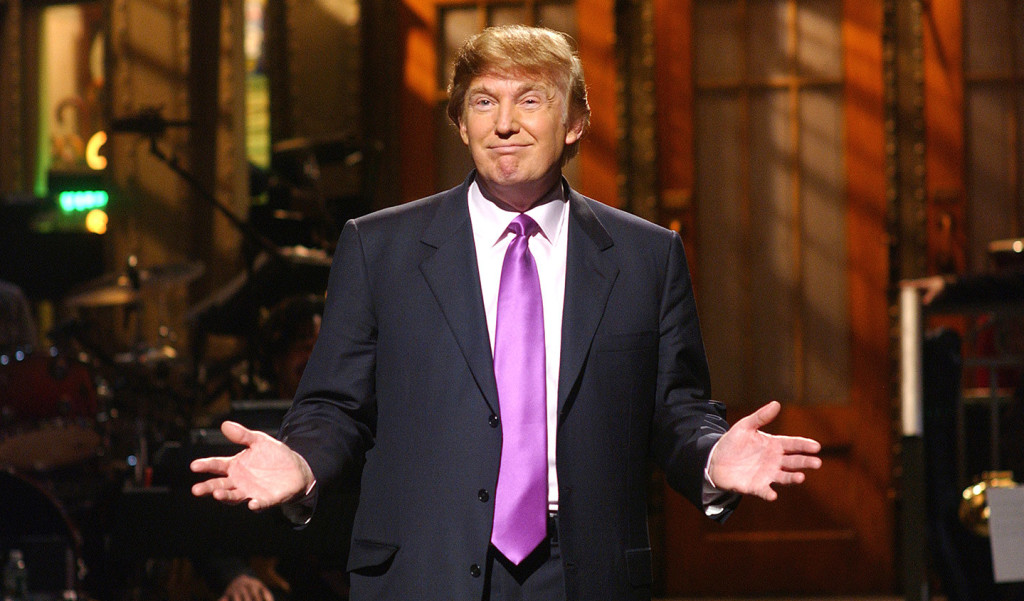
Donald Trump is standing by his call to block Muslims from entering the United States, even as the idea draws condemnation from rival Republican presidential candidates, party leaders and others as un-American and potentially dangerous. “I don’t care about them,” Trump told CNN Tuesday in a telephone interview, when asked about denunciation by GOP leaders. “I’m doing what’s right.” Trump’s call on Monday for a “total and complete shutdown of Muslims entering the United States” has drawn an unusually forceful level of rebuke from across the nation and abroad. British Prime Minister David Cameron slammed it as “divisive, unhelpful and quite simply wrong.” Muslims in the United States and around the world denounced it as unconstitutional, offensive or both. The front page of The Philadelphia Daily News featured a photo of Trump holding his right hand out as if in a Nazi salute with the headline “The New Furor.” Harry Potter author J.K. Rowling decried Trump on Twitter as worse than her fictional villain Lord Voldemort. “This is not conservatism,” Republican House Speaker Paul Ryan told reporters after a closed-door GOP caucus meeting. “What was proposed yesterday is not what this party stands for, and more importantly it’s not what this country stands for.” But Trump, who appears to revel in controversy, didn’t back down, saying that banning Muslims “until our country’s representatives can figure out what the hell is going on” is warranted after last month’s attacks by Muslim extremists in Paris and last week’s shootings in San Bernardino, California, that killed 14. “We are now at war,” Trump said, adding: “We have a president who doesn’t want to say that.” Trump’s proposed ban would apply to immigrants and visitors alike, a sweeping prohibition affecting adherents of a religion practiced by more than a billion people worldwide. The current Republican front-runner announced his plan to cheers and applause at a Monday evening rally in South Carolina. Trump clarified in a round of television interviews Tuesday that his proposed ban would not apply to American citizens traveling abroad and would allow exemptions for certain people, including the leaders of Middle Eastern countries. Since the Nov. 13 attacks in Paris that killed 130 people and wounded hundreds, some other Republican presidential contenders have proposed restrictions on refugees and tighter surveillance in the U.S. But their proposals have not gone nearly as far. Sen. Lindsey Graham said Trump’s rhetoric risked inflaming tensions in the Middle East, playing into the recruiting strategy of Islamic State militants, who have framed their battle as a war between Islam and the West. “He’s putting our soldiers and diplomats at risk, he’s empowering the enemy,” said Graham, another GOP presidential contender, in an interview with CNN. Trump, he said, is making new enemies of people “who came to our side in Iraq and Afghanistan and who are under siege in their own countries.” “It basically becomes a death sentence for them,” he added. Trump’s proposal has also drawn criticism from legal experts who challenge its constitutionality and feasibility. Leti Volpp, a University of California expert on immigration law, said, “Excluding almost a quarter of the world’s population from setting foot in the United States based solely upon their religious identity would never pass constitutional muster.” At the White House, press secretary Josh Earnest lambasted Trump as a “carnival barker” and called on his rivals to denounce their fellow candidate. “What he said is disqualifying,” Earnest said. “Any Republican who’s too fearful of the Republican base to admit it has no business serving as president, either.” Republished with permission of The Associated Press.
Speaker Ryan to House GOP: Donald Trump comments ‘not who we are’
Speaker Paul Ryan on Tuesday dismissed Republican presidential candidate Donald Trump‘s comments on Muslims, saying such views are “not what this party stands for and more importantly it’s not what this country stands for.” Speaking to reporters after a closed-door GOP caucus meeting, Ryan addressed Trump’s remarks – without mentioning his name. The speaker said he doesn’t normally comment on the presidential race but was making an exception. “Freedom of religion is a fundamental constitutional principle…This is not conservatism what was proposed yesterday, is not what this party stands for and more importantly it’s not what this country stands for,” Ryan said. The Wisconsin Republican said many Muslims served the country and work in Congress. He said the “vast, vast majority of them are peaceful.” Trump on Monday called for a “total and complete shutdown of Muslims entering the United States” in the wake of attacks at home and abroad. Trump’s proposed ban would apply to immigrants and visitors alike. Asked if he will support Trump if he’s the nominee, Ryan said he will support whomever the Republicans nominate for the presidency. In the closed-door session, Ryan urged the GOP rank and file to steer clear of Trump’s message. Rep. Tom Cole, R-Okla., said Ryan told Republicans “not to go down that road. That’s not who we are as a country or who we are as a party – that religious liberty is a fundamental American right and that we should never compromise on that front and that’s an inappropriate policy to pursue. He was very direct and very strong.” Republican Rep. Matt Salmon of Arizona told reporters that Ryan told the weekly closed-door meeting of the House GOP that Trump’s remarks violate at least two constitutional amendments. Republished with permission of the Associated Press.
Jeff Sessions, lawmakers try to block Syrian refugee plan
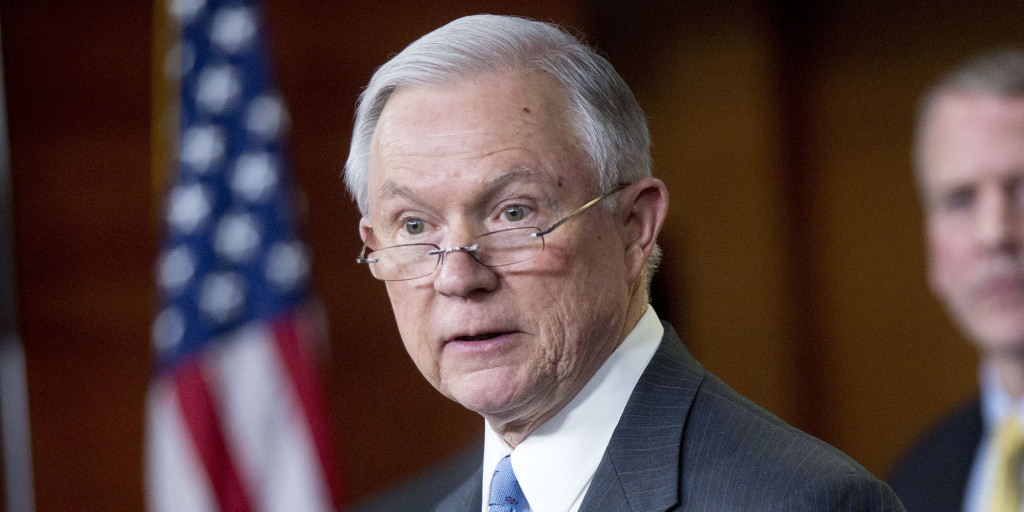
Republican lawmakers may try to use must-pass government spending legislation to block President Barack Obama’s plans to increase the number of Syrian refugees entering the U.S. Pressure to do so follows Friday’s deadly attacks in Paris. Congress is facing a Dec. 11 deadline to approve a spending bill to keep the government running. Republican Sen. Jeff Sessions of Alabama released a letter on Monday saying the legislation should require congressional approval for the president’s refugee resettlement plans and the money needed to carry them out. New House Speaker Paul Ryan of Wisconsin tells conservative talk host Bill Bennett on Monday that he’s looking at all options. In September the White House announced plans to accept an additional 10,000 refugees from Syria, with no congressional approval needed. Republished with permission of The Associated Press.
A year from Election Day, GOP faces chaos it hoped to avoid
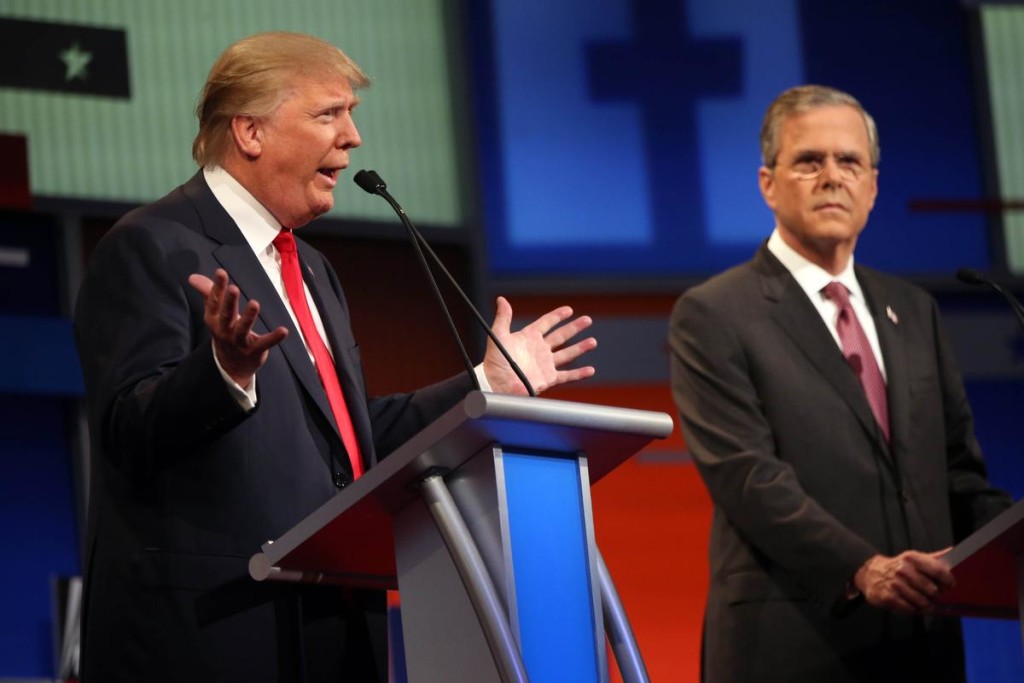
After a devastating loss in the 2012 presidential election, the Republican Party entered a period of intense self-reflection and emerged with a firm promise to learn from its mistakes. The GOP vowed to avoid a prolonged and vicious 2016 primary. It concluded it must embrace an overhaul of the nation’s immigration laws and adopt a more welcoming tone to win over women and minorities. Yet a year from Election Day 2016, the GOP primary is a rough and bumpy competition. More than a dozen candidates are fighting for the support of voters — and skirmishing among themselves over the process of picking the nominee. There are few signs the candidates are committed to expanding the party’s appeal beyond its conservative base. “For Republicans, a free-for-all is good — I guess,” said Steve Duprey, a Republican National committeeman from New Hampshire. “We always anticipated a vigorous contest, but I never anticipated 16 candidates.” Meanwhile, there’s no such drama among Democrats. The party appears to be coalescing behind front-runner Hillary Rodham Clinton, who is building a campaign operation aimed at turning out the general election voters who catapulted Barack Obama to the White House. The GOP’s challenges were on display Monday, as bickering continued among campaigns about upcoming debates. That’s an issue the GOP thought it had resolved, having spent years retooling its primary process after officials said it left 2012 nominee Mitt Romney bloodied heading into the general election. Members of both parties say the GOP’s White House hopefuls have also ignored the recommendation from the RNC’s self-study that insisted Republicans must improve the party’s appeal among women and minorities. “Devastatingly, we have lost the ability to be persuasive with, or welcoming to, those who do not agree with us on every issue,” the report found. In addition to an improved tone, the RNC outlined a single policy imperative: “We must embrace and champion comprehensive immigration reform. If we do not, our party’s appeal will continue to shrink to its core constituencies only.” After a bipartisan group of senators failed to turn immigration legislation into law, Republicans on the campaign trail — including those involved with that effort — have moved sharply in the other direction. Almost the entire GOP field now calls first and foremost for increased security along the Mexican border. Some, including front-runner Donald Trump, want to deport the estimated 11 million immigrants in the country illegally — a policy prescription experts suggest would be difficult if not impossible to achieve. Incoming House Speaker Paul Ryan said during the weekend there would be no immigration bill until 2017, at the earliest. But Trump, who has infuriated Latinos by describing Mexican immigrants as rapists and criminals, keeps the topic front-and-center in the race. “There have been moments that have been a little painful,” says Henry Barbour, an author of the RNC’s post-election report and a Republican National committeeman from Mississippi. “We have to nominate a candidate who can win, someone who can grow our party instead of making it smaller.” Absent a clear front-runner of their own, Republicans are trying to rally around their opposition to Clinton — amid signs that she’s getting stronger. Commanding performances in the first primary debate and during 11 hours of testimony before a Republican-led congressional committee reassured many Democrats who’d feared the controversy over her use of a private email server as secretary of state could harm her campaign. Her poll numbers have rebounded from a summer slump, and she now holds a wide lead nationally over Vermont independent Sen. Bernie Sanders. The relatively clear Democratic field has allowed her team to focus a full year before Election Day on building the kind of operation that can carry her beyond the primary contests. She employs 511 staff members across the country — close to the number of staff on all the Republican campaigns combined. Fundraising reports show an energized Democratic Party, with Clinton and Sanders together raising only slightly less than 15 candidates on the Republican side combined. The two top Democrats had about the same amount in the bank at the beginning of October as all the Republicans. Clinton aides say that they budgeted for a high level of spending early in the campaign, and that the team is making important investments in data analysis, digital infrastructure and organizing that will help both in the primaries and the general election. Few, if any, Republican campaigns have made such investments, although the Republican National Committee has expanded its digital operation. Still, with two Senate committees and the FBI investigating Clinton’s email arrangement, that issue could re-emerge. And an unpredictable Democratic primary electorate, which has moved to the left during President Obama’s administration, leaves Clinton and her team cautious about their prospects. “I once made the mistake of thinking we could talk about these kinds of things before a single vote was cast,” said former Vermont Gov. Howard Dean, a Clinton supporter. “Anything could happen still. This is a presidential campaign. You have no idea what may be waiting in the wings.” Republished with permission of The Associated Press.
This week in the U.S. House of Representatives: Nov. 2 – Nov. 6
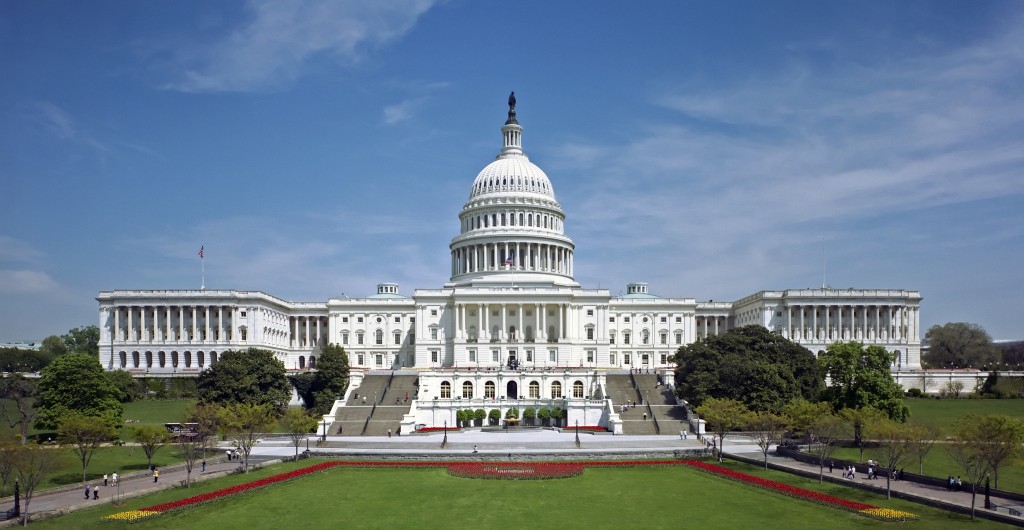
The U.S. House of Representatives has a new speaker — its youngest in 150 years — Rep. Paul Ryan (R-Wis.), and this is his first full week on the job. Up first for the new speaker — tackling a multi-year highway spending bill, then working toward a solution to the vetoed defense spending bill. On Monday, the House is in session and will consider several bills under suspension of the rules. A full list of bills can be found here. On the floor this week: H.R. 22: the DRIVE Act. The House will consider a House amendment to the Senate amendment to the initial bill, which passed the Senate. The amendment would take the Transportation and Infrastructure Committee‘s highway and transit provisions (H.R. 3763) would replace the Senate’s transportation provisions, while the Senate’s financing and offset language and certain other provisions, including an Export-Import Bank reauthorization, would remain. The proposed $325 billion measure would cover projected Highway Trust Fund shortfalls and provide full program funding for six years — but only if Congress can come up with a way to pay for the final three years of spending. Currently federal transportation spending is set to expire on Nov. 20, right before the busy holiday travel season begins. Once it passes the House, negotiators will move toward reconciling differences with their Senate counterparts ahead of the Nov. 20 deadline. The week, the House is also expected to tackle legislation related to the FY 2016 National Defense Authorization Act (NDAA). On Oct. 22, the President Barack Obama vetoed the 2016 NDAA, a sweeping $612 billion defense policy bill, leaving Congress to cobble together a new solution. Several options on how best to proceed are on the table. On Friday, the House of Representatives is not in session. Next week, the House is in recess and will return the following week, Nov. 16., only to recess the week after for the Thanksgiving holiday.
Presidential Primary Brief: 372 days until Election Day
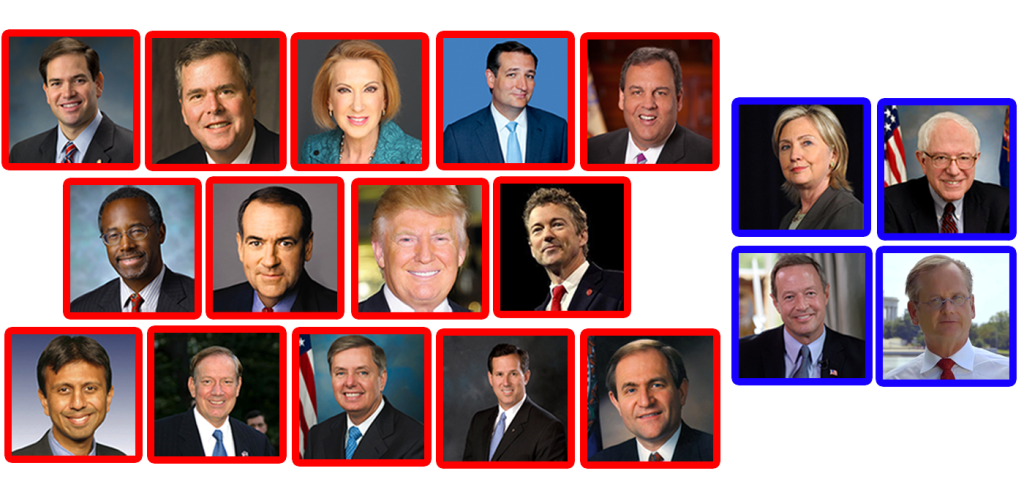
118 days until AL Presidential Primary 372 days until Election Day Convention Dates: Republican July 18-21 2016, Democratic July 25-28 2016 Weekly Headlines: Poll: Hillary Clinton Hits 50 Percent Support GOP mega-donor Paul Singer endorses Marco Rubio NY Times Calls on Chris Christie to Drop Out of Presidential Race Press Clips: Small-dollar donors and the 2016 presidential election (Center for Public Integrity 10/27/15) Center for Public Integrity senior reporter Dave Levinthal appeared on C-SPAN’s “Washington Journal” program on Oct. 24 to detail the influence and importance of small- dollar donors in the 2016 presidential election. He also spoke more generally about how much money campaigns, nonprofits and super PACs are raising and spending. Ryan rules out immigration reform before 2016 election (LA Times 11/1/15) House Speaker Paul Ryan said Sunday he will not consider or negotiate an immigration reform bill during President Obama’s tenure, ruling out calls to revive the issue in an effort to broaden GOP appeal to Latino voters before the 2016 election. Ryan, who was elected speaker last week, said he had promised the conservative House Freedom Caucus, which opposes easing immigration laws, that he would not move forward on the issue before a new president takes office. Ryan, who appeared on Hive major TV talk shows, blamed Obama, not the caucus, however. In Virginia, Donald Trump unveils Veterans Affairs plan (CBS News 10/31/15) Calling the Department of Veterans Affairs “a total disaster,” business mogul Donald Trump unveiled his plan to reform the beleaguered department in front of thousands at a Saturday rally in Norfolk, Virginia. With the USS Wisconsin, a retired World War II-era battleship, docked behind him and with a number of veterans flanking the podium, Trump called for all veterans eligible for health care at VA hospitals to be allowed the same care at any hospital that accepts Medicare. This, according to Trump, would increase competition and decrease wait times. Major Florida newspaper editorial board: Marco Rubio should resign (Politico 10/28/15) The editorial board of one of Florida’s most prominent newspapers has a recommendation for Sen. Marco Rubio: just resign already. The editorial in the Florida Sun-Sentinel follows an interview the senator did with The Washington Post where he said he was “frustrated” with his chamber. The story also quoted a “longtime friend from Florida” who said “he hates it.” Well, the Sun-Sentinel editorial board has had enough. The Wednesday editorial said that the 2016 presidential candidate “has missed more votes than any other senator this year. His seat is regularly empty for floor votes, committee meetings and intelligence briefings. He says he’s MIA from his J-O-B because he Hinds it frustrating and wants to be president, instead.” Bill De Blasio Endorses Hillary Clinton For 2016 Presidential Bid (HNGN 10/30/15) New York Mayor Bill de Blasio finally announced Friday that he is backing Democratic front-runner Hillary Clinton’s bid in the 2016 presidential election. De Blasio said that Clinton was the candidate that was best suited to go to Washington and follow through on enacting liberal policies to combat income inequality. “The candidate who I believe can fundamentally address income inequality effectively, the candidate who has the right vision and the right experience to get the job done is Hillary Clinton,” he said during an early morning appearance on MSNBC’s “Morning Joe.” Bush team bracing for cash crunch (Politico 10/30/15) Jeb Bush’s campaign, wounded after another mediocre debate performance, is bracing for the possibility that revenue dries up in the coming weeks ahead. It’s a striking turn for a campaign that had embarked on a “shock and awe” approach to fundraising and then delivered a record-breaking haul of $114 million of hard money and super PAC dollars during the Hirst half of the year. After Wednesday’s bruising in the third GOP debate, Bush spent much of the latter half of this week responding to media questions about whether his presidential bid is now “terminal” or “on life support.” The candidate didn’t do himself any favors with his seemingly pained delivery of “having lots of fun” when asked if he’s enjoying himself on the trail.
