
Lawmakers struggling to develop a response to Donald Trump, Vladimir Putin

Congress is producing an unusual outpouring of bills, resolutions and new sanctions proposals to push back at President Donald Trump’s approach to Vladimir Putin, shore up relations with NATO allies and prevent Russian interference in the midterm election. But it remains uncertain if any of their efforts will yield results. Lawmakers are struggling with internal party divisions as well as their own onslaught of proposals as they try to move beyond a symbolic rebuke of Trump’s interactions with the Russian president and exert influence both at home and abroad. And while many Democrats are eager for quick votes, some Republicans prefer none at all. As Trump and Putin weigh another face-to-face meeting, lawmakers in both parties — particularly in the Senate — appear motivated to act. Senate Majority Leader Mitch McConnell issued a rare warning that Russia “better quit messing around” in U.S. elections as he tasked two Senate committees to start working on sanctions-related legislation and other measures to deter Russia. In the House, Speaker Paul Ryan joined McConnell in saying that Putin would not be welcome on Capitol Hill, though he did not push forward any Russia-related legislation before his chamber recessed for August. Still, the past few weeks have been one of the rare moments in the Trump era that Republicans and Democrats have jointly asserted the role of Congress as a counterweight to the administration. “You look at the action of Congress since the summit in Helsinki, you find Democrats and Republicans both standing up and saying no,” said Sen. Ben Cardin, D-Md., in an interview on C-SPAN with The Associated Press and The Washington Post. For starters, there’s a bipartisan push from Sen. John McCain, R-Ariz., Sen. Tim Kaine, D-Va., and others to “explicitly prohibit” the president from withdrawing from NATO without Senate approval. Other senators are debating action to prevent meddling in the midterm election. Sen. Lindsey Graham, R-S.C., and Sen. Amy Klobuchar, D-Minn., call the protection of the election system a “national security priority.” Graham said it’s “extremely important that Congress recognize the threat to our electoral system coming from Russia and act in a decisive way.” In addition, legislation from McCain and Cardin would require approval from Congress before Trump could reverse sanctions issued under the Sergei Magnitsky Act, which bans visas for travel and freezes assets of key Russians involved in alleged human rights abuses. Russia’s displeasure at the 2012 Magnitsky Act played into what Trump initially called an “incredible offer” from Putin at the summit to allow U.S. questioning of Russians indicted by the Justice Department for hacking Democratic emails. In return, Putin requested the ability to investigate Americans involved in the Magnitsky Act. McCain called it a “perverse proposal” and Trump has since backed away from it. With some 100 days before the midterm election, some say Congress is not acting fast enough. One bill that has been given a go-ahead nod from McConnell is legislation from Sen. Marco Rubio, R-Fla., and Sen. Chris Van Hollen, D-Md., that attempts to warn Putin off more election interference by setting up tough new sanctions on Russia if it does try to intervene. The measure is slowly making its way through the Senate Banking Committee, but some lawmakers in the House and Senate have raised concerns it casts too wide a net and could cause problems for allied nations that do business with Russia. Rubio says he’s willing to adjust the legislation to meet concerns, but says the goal is for Russia to understand there will be a price to pay for further election interference. He adds the legislation was introduced months before the Helsinki summit and isn’t intended to embarrass or attack the president. “I’m deeply concerned about their ability to interfere in our politics,” Rubio said in an interview. “We want them to know what the price is going to be to make that choice.” The legislation would likely see overwhelming support, lawmakers in both parties say. But a vote is not scheduled. Some symbolic measures on Russia have failed to make it out of the starting gate. Already, the Senate has blocked a symbolic resolution from Sen. Jeff Flake, R-Ariz., and Sen. Chris Coons, D-Del., to reaffirm the findings of the American intelligence community that Russia interfered in the 2016 election. Twice over the past two weeks, Republicans objected to motions to advance the measure, saying they prefer a more strategic approach that goes beyond symbolic resolutions. House Democrats were similarly thwarted in their attempts to slap new sanctions on anyone who has interfered in U.S. elections and bolster election security funds to the states as Republicans blocked those votes. Key Republicans are panning more federal spending on election security. The GOP chairman of the Senate Appropriations Committee, Alabama Sen. Richard Shelby, said Monday that he worried federal funds would come with “strings attached” that would interfere with elections operations he believes should be left to the states. Ryan says the U.S. has “learned a great deal” about Russian interference. “So, I think we’re far better prepared today than we were just a couple of years ago.” But the Speaker added there’s more for Congress to do. Republished with the permission of the Associated Press.
Donald Trump says he has ‘no problem’ shutting down government
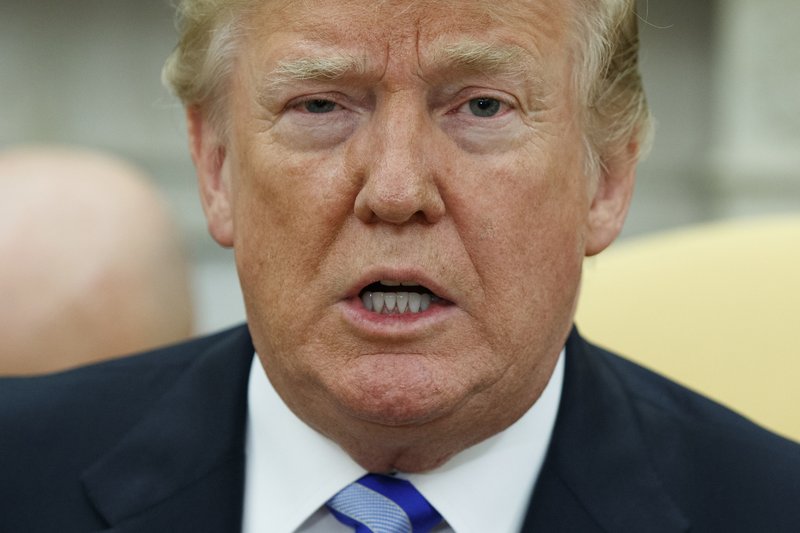
President Donald Trump said Monday he would have “no problem” shutting down the federal government this year if Congress doesn’t agree to provide additional border security funding. Trump’s declaration puts him at odds with members of his own party in Congress, where many Republicans are facing tough re-election fights this November. Government funding expires at the end of September, just weeks before the midterm elections. A shutdown would be the second under unified Republican control of Washington, following an embarrassing weekend stoppage in January. Asked about specific requirements, Trump said he had no “red line” for what must be approved, and he made no comment on timing — before or after the election. “I’ll always leave room for negotiation,” he said. “I would have no problem doing a shutdown,” Trump said during a joint press conference at the White House with Italian Prime Minister Giuseppe Conte. “It’s time we had border security.” Asked about specific requirements, he said he had no “red line.” His comments echoed his unexpected tweet a day earlier that “I would be willing to ‘shut down’ government if the Democrats do not give us the votes for Border Security, which includes the Wall!” “Must get rid of Lottery, Catch & Release etc. and finally go to system of Immigration based on MERIT!” he tweeted. Trump returned to the idea after a meeting at the White House last week with House Speaker Paul Ryan, R-Wis., and Senate Majority Leader Mitch McConnell, R-Ky., where they were said to have agreed on the way forward on government funding for the budget year that starts Oct. 1. McConnell told a radio interviewer last week that a shutdown so close to the Nov. 6 midterm elections won’t happen. McConnell acknowledged, however, that the border funding issue in particular was unlikely to be resolved before the balloting. Ryan said on Capitol Hill after the meeting: “The president’s willing to be patient to make sure that we get what we need so that we can get that done.” He added that money for the wall was “not a question of if, it’s a question of when.” The White House did not immediately respond to request for comment on what may have changed since the meeting. Trump has pledged to campaign aggressively, starting after Labor Day, to help Republicans retain control of the House and Senate, but GOP lawmakers don’t appear to be rallying to his side on this not-so-new idea. Sen. Ron Johnson, R-Wis., chairman of the Senate Homeland Security and Governmental Affairs Committee, said Sunday on CBS’ “Face the Nation” that it would be unhelpful to shut down the government just before elections “so let’s try and avoid it.” Trump campaigned on the promise of building a wall to deter illegal immigration and making Mexico pay for it. Mexico has refused, leading Trump to look to U.S. taxpayers to fund the endeavor instead, at least for now. Trump has gotten some wall money from Congress, and likely will get more, though the total is short of the $25 billion he has requested. He also wants changes to legal immigration, including scrapping a visa lottery program. In addition, Trump wants to end the practice of releasing immigrants caught entering the country illegally on the condition that they show up for court hearings, along with shifting the U.S. immigration system to one based more on individual merit and less on family ties. Democrats and some Republicans have objected to those proposals. Both chambers will have a short window to act before government funding expires at midnight Sept. 30. The House is in recess and won’t return until after Labor Day. The Senate will stay in session for most of August, except for a weeklong break scheduled to begin Aug. 6. McConnell canceled most of his chamber’s recess to give senators time to work on the annual spending bills. Trump would be taking a political risk if he allows most government functions to lapse on Oct. 1 — the first day of the new budget year — roughly a month before the elections, when Republican control of both the House and Senate is at stake. House Republicans released a spending bill this month that provides $5 billion next year to build Trump’s wall, a plan he supports. Democrats have long opposed financing Trump’s wall but don’t have enough votes by themselves to block House approval of that amount, but they do have the strength to derail legislation in the closely divided Senate. The $5 billion is well above the $1.6 billion in the Senate version of a bill funding the Department of Homeland Security. The higher amount matches what Trump has privately sought in conversations with Republican lawmakers, according to a GOP congressional aide who wasn’t authorized to publicly talk about private discussions and spoke on condition of anonymity. At the White House meeting, Trump, Ryan and McConnell agreed that Congress is on track to enact more than half of federal spending before the new budget year begins Oct. 1, but that DHS funding, including the border wall money, doesn’t have to be settled before then, according to a person familiar with the meeting who was not authorized to discuss it publicly and insisted on condition of anonymity. Republished with the permission of the Associated Press.
On trade policy, Donald Trump is turning GOP orthodoxy on its head
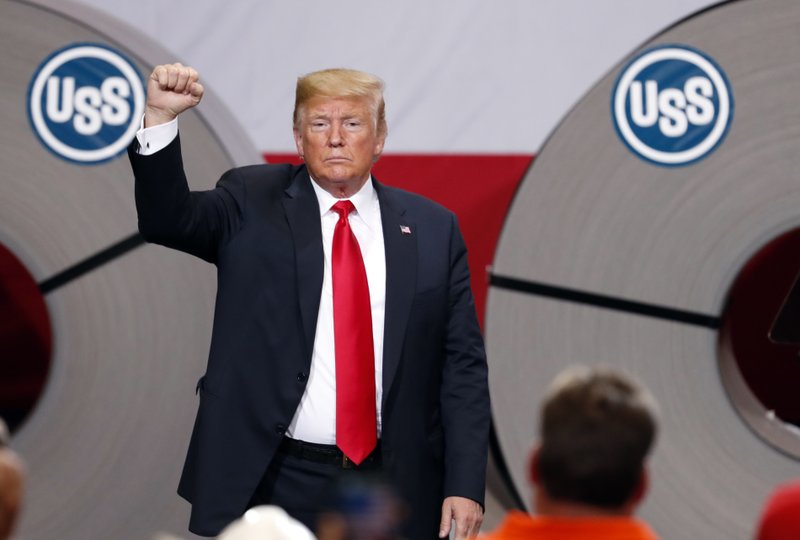
President Donald Trump’s trade policies are turning long-established Republican orthodoxy on its head, marked by tariff fights and now $12 billion in farm aid that represents the type of government intervention GOP voters railed against a decade ago. President George W. Bush increased the number of countries partnering with the United States on free trade agreements from three to 16. President Ronald Reagan signed a landmark trade deal with Canada that was later transformed into the North American Free Trade Agreement (NAFTA) and expanded to include Mexico. Both those Republican presidents also enacted tariffs, but their comments on trade were overwhelmingly positive. “We should beware of the demagogues who are ready to declare a trade war against our friends, weakening our economy, our national security and the entire free world, all while cynically waiving the American flag,” Reagan said in a 1988 radio address. Trump, by comparison, has called NAFTA “the worst trade deal maybe ever signed anywhere,” and his administration has opted to use tariffs as a tool intended to leverage more favorable agreements with virtually every major U.S. trading partner. He shredded the trade agreement the Obama administration tried to work out with Pacific Rim nations that had strong backing from farm groups and chief executives from major U.S. corporations. Republicans also have altered the priority of tackling the national debt, an issue the GOP hammered President Barack Obama on as the country struggled to recover from the 2008 economic crisis. “Our nation is approaching a tipping point,” GOP Rep. Paul Ryan of Wisconsin, now the House speaker, said in January 2011 when the national debt hit $14 trillion. Today, the Congressional Budget Office projects the $21 trillion debt will rise to more than $33 trillion in 10 years. That estimate notes that the tax cut lawmakers passed in December would increase economic output but add $1.8 trillion to the deficit over the coming decade. The GOP’s evolving priorities are not lost on some in the party. Rep. Mark Sanford, R-S.C., who lost a close primary election this year after butting heads with Trump on some issues, said he finds it “perplexingly destructive” for the GOP brand. “It takes a long while to build a brand, but brands can be diminished or destroyed in relatively short order, and I think the administration is destroying bedrock cornerstones to what the party has historically stood for,” Sanford said. “There is no conversation on the debt, deficit and government spending these days. That has been a cornerstone.” Sanford made headlines as South Carolina governor when he said he would reject stimulus money approved during the financial crisis because he did not think the country should go into debt to fund recovery efforts. “Here we are now with a hypothetical $12 billion bailout package and you don’t hear a word,” Sanford said. “That is quite a transition in not so many years from decrying what the Obama administration had done with bailouts to now endorsing the idea of bailouts.” Trump, in a Friday interview on Fox News’ Sean Hannity’s radio show, said the strong economy would help the U.S. reduce the deficit. “The economy, we can go a lot higher. … We have $21 trillion in debt. When this really kicks in we’ll start paying off that debt like water. We’ll start paying that debt down.” The administration’s plan on the bailout announced last week would borrow money from the Treasury to pay producers of soybeans, sorghum, corn, wheat, cotton, dairy and hogs. Many farmers have criticized Trump’s tariffs and the damage done to commodity prices and markets. Some GOP lawmakers are expressing concerns. “I didn’t come up here to start new government programs,” said Sen. John Kennedy, R-La. But it’s unlikely that the Republican-controlled Congress will try to block the administration’s agricultural aid plan. “I’m looking at this and saying, ‘You’re going to single out one sector?’ What about the manufacturing sector? What about the energy sector?” said Sen. Lisa Murkowski, R-Alaska. “Where do you draw the line? I’ve got some real concerns.” But others praised the move. GOP Rep. Mike Conaway of Texas, chairman of the House Agriculture Committee, called it “welcome relief.” “This is the right fight to have, but in the meantime, our producers have got to live as this fight is going on,” Conaway said of a trade dispute with China that has prompted the imposition of tariffs by both nations. Conaway said the president has reshaped the way Republicans think about trade. “He’s kind of changed the narrative of the conversation that it’s really not OK to let other people take advantage of America,” Conaway said. Rep. Dan Kildee, D-Mich., said it’s clear the GOP has changed over the past two years with Trump in office. “This is the party of Trump. He calls the plays and they line up and they execute the play,” Kildee said. But Kildee also opposed the Trans-Pacific Partnership deal that the Obama administration was trying to work out with Japan, Vietnam, Singapore and others. He and many other Democrats described past trade deals such as NAFTA as hurting workers in their home districts. So why the criticism of Trump and the efforts he has undertaken on trade? Kildee said he would prefer a more deliberative approach and a multilateral approach that doesn’t fray longstanding alliances. “Simply engaging on the issue of trade doesn’t mean he’s doing it right,” Kildee said. The president’s meetings with lawmakers in the past week and his trade advisers’ visits to Capitol Hill are acknowledgements that many GOP lawmakers are worried about where Trump is headed — and what it could mean in the November election as farmers, bourbon makers and manufacturers who use imported steel and aluminum deal with the fallout. A possible breakthrough with the European Union announced Wednesday at the White House appears to have eased their concerns and given the president more time to work out new deals. “The fact the EU was here today and good talks happened, I think
Donald Trump plans emergency aid to farmers affected by his tariffs
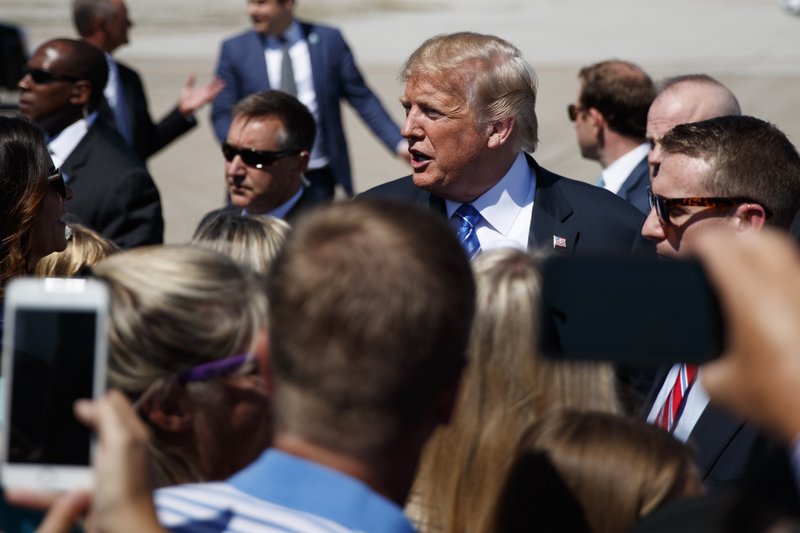
The U.S. readied a plan Tuesday to send billions in emergency aid to farmers who have been hurt by President Donald Trump’s trade disputes with China and other American trading partners. The Agriculture Department was expected to announce the proposal that would include direct assistance and other temporary relief for farmers, according to two people briefed on the plan, who were not authorized to speak on the record. The plan comes as Trump speaks at the Veterans of Foreign Wars national convention in Kansas City in the heart of the nation’s farm country. Trump declared earlier Tuesday that “Tariffs are the greatest!” and threatened to impose additional penalties on U.S. trading partners as he prepared for negotiations with European officials at the White House. Sen. John Hoeven, R-N.D., said the funding may need to be approved by Congress and the aid would be temporary. “The administration is trying to negotiate better trade deals,” he said. “In the near term is there some relief we can look at? Well, we’ll see.” But the plan magnified objections among many Republicans that the tariffs amount to taxes on American consumers. House Speaker Paul Ryan of Wisconsin said lawmakers are making the case to Trump that tariffs are “not the way to go.” Sen. Ben Sasse, R-Neb., said the plan would spend billions on “gold crutches.” “America’s farmers don’t want to be paid to lose — they want to win by feeding the world,” he said. “This administration’s tariffs and bailouts aren’t going to make America great again, they’re just going to make it 1929 again.” The Trump administration has slapped tariffs on $34 billion in Chinese goods in a dispute over Beijing’s high-tech industrial policies. China has retaliated with duties on soybeans and pork, affecting Midwest farmers in a region of the country that supported the president in his 2016 campaign. Trump has threatened to place penalty taxes on up to $500 billion in products imported from China, a move that would dramatically ratchet up the stakes in the trade dispute involving the globe’s biggest economies. Before departing for Kansas City, Trump tweeted that U.S. trade partners need to either negotiate a “fair deal, or it gets hit with Tariffs. It’s as simple as that.” The president has engaged in hard-line trading negotiations with China, Canada and European nations, seeking to renegotiate agreements he says have undermined the nation’s manufacturing base and led to a wave of job losses in recent decades. The imposition of punishing tariffs on imported goods has been a favored tactic by Trump, but it has prompted U.S. partners to retaliate, creating risks for the economy. Trump has placed tariffs on imported steel and aluminum, saying they pose a threat to U.S. national security, an argument that allies such as the European Union and Canada reject. He has also threatened to slap tariffs on imported cars, trucks and auto parts, potentially targeting imports that last year totaled $335 billion. During a Monday event at the White House featuring American-made goods, Trump displayed a green hat that read, “Make Our Farmers Great Again.” The president is meeting with European Commission President Jean-Claude Juncker on Wednesday. The U.S. and European allies have been at odds over the president’s tariffs on steel imports and are meeting as the trade dispute threatens to spread to automobile production. Republished with the permission of the Associated Press.
Social Security and Medicare finances weakening

An unexpected weakening in the finances of Social Security and Medicare has raised concern about the bedrock programs for the middle class. The problems may only keep getting worse in a time of political tension and deep partisan divisions. Here are some questions and answers on an issue that ultimately will affect every American family and isn’t going away: WHAT’S NEW? The government’s annual Trustees Reports on the programs shows the financial condition of both worsening significantly since last year. The projected insolvency for Social Security stayed unchanged — in 2034 — but Medicare’s moved three years closer, to 2026. A more immediate warning signal caught the eye of experts. Both programs will start tapping their reserves this year, meaning that income from payroll taxes and interest earned by the Social Security and Medicare trust funds will no longer cover costs. That threshold was still a few years away in the 2017 checkup. “The near-term outlook in both programs got substantially worse,” said Republican economist Charles Blahous, a former public trustee helping to oversee program finances. “What is unusual in the space of one year is to go from something that isn’t supposed to happen for four or five years to something that’s happening right now.” As a result, Social Security and Medicare will need a $416 billion transfer from the government’s general revenues this year, when the federal deficit is shooting up due to tax cuts and increased spending. __ SHOULD WE BE WORRIED? “Yes,” said Leon Panetta, a Democratic elder statesman who held many government posts over a long career, from California congressman to White House budget director, defense secretary and CIA director. “What people have to worry about is that in a democracy we govern either by leadership or by crisis,” Panetta added. “What you are looking at right now is a situation where crisis is going to be driving decisions. Rather than fixing it today, which is what we should be doing, we’re simply going to postpone the day.” Panetta is co-chair of the Committee for a Responsible Federal Budget, a nonpartisan watchdog group. __ WHAT’S WRONG WITH WAITING? “A lot of people in Congress are focused on what’s going to happen tomorrow, not what’s going to happen in 2026,” observed Rep. Frank Pallone, D-N.J. But waiting in the context of Social Security and Medicare inflicts more pain, leading to bigger tax increases, benefit cuts as high as 20 percent, or some combination of both, as the programs slide deeper into the hole. Younger people, less likely to be following the debate, have the most to lose. “Really the system is fine for older people; it’s not fine for younger people,” said Robert Bixby of the Concord Coalition, a nonpartisan group that advocates better control of federal budgeting. “People under 50 are paying into a system that can’t afford to pay them the benefit it’s promising them, and I don’t think they realize it. The more we delay reforms, the more sudden and draconian they would be, especially for younger people.” __ WHAT ARE SOME POLICY OPTIONS? They boil down to tax increases and benefit cuts, with an effort to spare current retirees of modest means. Options for Social Security include lifting the limit on which payroll taxes are levied (now $128,400), reducing annual cost-of-living increases, raising the underlying payroll tax rate, changing the benefit formula, and raising the full retirement age (now gradually rising to 67). Options for Medicare include raising the eligibility age —now 65— to match Social Security’s, cutting payments to medical service providers, raising premiums for beneficiaries, and raising the payroll tax. Some groups are drawing a line against benefit cuts. “Core Medicare coverages which exist under current law should not be diminished for current or future beneficiaries,” said Judith Stein, head of the Center for Medicare Advocacy, which provides legal help to beneficiaries. “Until we actually try to negotiate Medicare drug prices, we are spending billions of dollars a year that could be saved for the program.” __ WHERE DO TRUMP AND LAWMAKERS STAND? Trump promised not to cut Social Security or Medicare, and Treasury Secretary Steven Mnuchin recently suggested that tax cuts, rolling back regulations, and better trade agreements could boost economic growth and help stabilize the programs. But nonpartisan government experts who produced the annual Social Security assessment don’t seem to be buying that, forecasting “sustained moderate economic growth.” Republicans in Congress are losing their most prominent advocate for overhauling benefit programs with the retirement of House Speaker Paul Ryan of Wisconsin. Their budget credibility is seen as damaged after passing major tax cuts and spending increases. Democrats want to expand social programs, not pare them back. Problem-solving is becoming a lost skill in Washington, said GOP economist Douglas Holtz-Eakin. “There used to be a playbook where the White House provided leadership and gave air cover to Congress to do hard things, so members could go home and defend their votes,” said Holtz-Eakin. “Maybe such a strategy is being hatched behind closed doors at the White House,” he added, but “to date, there is no evidence.” Republished with the permission of the Associated Press.
DOJ offers new briefing as lawmakers dispute Donald Trump spy claim

The Justice Department says it will offer a third classified briefing for lawmakers next week as House Republicans push for documents related to the use of an FBI informant who spoke to members of President Donald Trump’s presidential campaign in 2016. The department’s late Wednesday offer comes as three Republicans who attended classified briefings on the subject last month have contradicted President Donald Trump’s claims that there was a “spy” in his campaign. Trump insisted in a series of angry tweets last month that the agency planted a spy “to help Crooked Hillary win,” referring to his Democratic opponent Hillary Clinton. At issue is the FBI’s use of a longtime government informant in its investigation into whether Russia was trying to sway the election. House Intelligence Committee Chairman Devin Nunes, R-Calif., demanded documents on the informant and its contact with Trump campaign officials, while Trump dubbed the matter “spygate” and said it was “starting to look like one of the biggest political scandals in U.S. history.” Under Trump’s orders, the Justice Department held two briefings May 24. But House Speaker Paul Ryan, R-Wis., said Wednesday that he agreed with House Oversight and Reform Chairman Trey Gowdy, R-S.C., that there is no evidence of a planted spy. Senate Intelligence Committee Chairman Richard Burr, R-N.C., also said he has seen no evidence of that. Still, Ryan said Congress has “more digging to do.” Nunes has said the committee is still waiting for documents after the briefings, and Ryan backed him on that Wednesday. “We have some more documents to review. We still have some unanswered questions,” Ryan said. Late Wednesday evening, a senior department official said the Justice Department and the FBI would offer an additional briefing to the so-called “Gang of 8” that includes bipartisan congressional leaders and the top Republicans and Democrats on the House and Senate intelligence committees. The official said they would provide new documents and also “the documents that were available for review but not inspected by the members at the previous briefing.” The official said they are prepared to “brief members on certain questions specifically raised by Ryan and other members.” The official declined to be named because the briefings are classified. The department originally denied Congress access to any of the documents, citing national security concerns. But they eventually relented after pressure from Trump, Nunes and Ryan. The Justice Department and FBI believe they “can provide information that is directly responsive to congressional inquiries in a manner that is consistent with its national security and law enforcement responsibilities, and is pleased to do so,” the official said in a statement. Though senators are invited to the briefing, there has been less interest in that chamber in prolonging the public fight over information concerning the informant. Senate Majority Leader Mitch McConnell said after the briefing that he learned “nothing particularly surprising.” On Wednesday, Burr appeared ready to move on, saying the briefing he attended “sufficiently covered everything to do with this right now.” After the original briefings, Gowdy was the first to disagree with Trump on the matter, saying days later that the FBI was doing its duty. “I am even more convinced that the FBI did exactly what my fellow citizens would want them to do when they got the information they got,” Gowdy said on Fox News last week. “And that it has nothing to do with Donald Trump.” Gowdy added, in a separate interview on “CBS This Morning,” that such informants are used all the time and “the FBI, if they were at the table this morning, they would tell you that Russia was the target and Russia’s intentions toward our country were the target.” Ryan told reporters on Wednesday that he thinks Gowdy’s “initial assessment is accurate,” and he has seen “no evidence to the contrary” of what Gowdy said. Hours after Ryan’s comments, Burr told The Associated Press that he, too, agreed with Gowdy. “I have no disagreement with the description Trey Gowdy gave,” Burr said. Democrats made similar comments immediately after the briefing. In a joint statement, the four Democrats who attended said “there is no evidence to support any allegation that the FBI or any intelligence agency placed a ‘spy’ in the Trump Campaign, or otherwise failed to follow appropriate procedures and protocols.” That statement was issued by Senate Democratic leader Chuck Schumer, House Democratic leader Nancy Pelosi, and the top Democrats on the Senate and House intelligence panels, Sen. Mark Warner of Virginia and Rep. Adam Schiff of California. Republished with the permission of the Associated Press.
House Republicans in eleventh-hour attempt for immigration accord

Fractured House Republicans huddled privately Thursday as leaders tried pushing them toward consensus on immigration, racing the clock and trying to defuse a civil war within the party that threatens their effort to keep control of the chamber in November’s elections. But even as they gathered in a Capitol basement meeting room, there were no indications that a deal mending the party’s chasm over immigration was at hand and no definitive details of where middle ground might be. If leaders fail to find a solution, that would give momentum to moderates seeking to stage election-year votes in just three weeks on the issue, a showdown that leaders want to head off. Both conservative and moderate lawmakers, the two factions at odds over the issue, said they didn’t know what to expect as they entered the session. “I don’t know. That’s why I’m on time here, for once,” joked Rep. Leonard Lance, R-N.J., a moderate who’s joined the leadership-opposed rebellion aimed at forcing immigration votes. GOP lawmakers emerged from the office of Speaker Paul Ryan, R-Wis., on Wednesday saying he would present the rank and file with broad ideas for resolving a dispute that has split Republicans for years, damaging the party with Hispanic and moderate voters. “There’s some loose consensus right now,” said Rep. Carlos Curbelo, R-Fla., a leader of centrists threatening to force votes if they can’t strike a deal with conservatives. He said leaders would unveil “an outline of a potential bill,” while conservative leader Rep. Mark Meadows, R-N.C., said Ryan would present “concepts.” Curbelo, Rep. Jeff Denham, R-Calif., and other moderates need just two more GOP signatures on a petition to require immigration votes, assuming all Democrats sign on. If Thursday’s meeting doesn’t produce an accord, the moderates could reach that threshold quickly. The major hang-up in GOP talks has been how, as the moderates have demanded, to offer a chance for citizenship to young “Dreamer” immigrants brought to the U.S. illegally as children. Conservatives have opposed creating a special pathway for them to become citizens, calling it amnesty. “We’ve got the rule of law in this country, and nobody gets special consideration,” said Rep. Scott Perry, R-Pa., a member of the conservative House Freedom Caucus. Rep. Mark Walker, R-N.C., said a large group of conservatives he leads has discussed providing a pathway to citizenship to Dreamers in exchange for giving President Donald Trump nearly all the $25 billion he wants to build his proposed wall with Mexico. In addition, the conservatives want to end a lottery that grants visas to countries with few immigrants to the U.S. and curb the relatives who can be brought over by immigrants, Walker said. Democrats and at least some moderates would likely oppose such measures, giving it little chance of surviving in the more centrist Senate. Walker said the more Dreamers who’d be given an opportunity for citizenship, the tighter curbs on family-based migration would be. Roughly 700,000 people are protected under the Deferred Action for Childhood Arrivals program, or DACA, an Obama-era policy that Trump has halted. But by some estimates, 1 million or more other people qualify for that program but haven’t applied. The moderates’ petition would force House votes on four immigration bills, ranging from a liberal one helping Dreamers win citizenship to a conservative version curbing legal immigration. GOP leaders and conservatives say the votes the moderates would force would probably produce legislation that is too liberal, with all Democrats joining a handful of Republicans to push it through the House. Senate Republicans would block such a measure, and Trump would veto it if it went that far. But such an outcome could alienate conservative voters, damaging GOP chances for holding the House. Because of those divisions, averting the issue completely unless an agreement is reached has been the GOP leadership’s preference all year, until their hand was forced by moderates wielding the rarely used petition process. Republished with the permission of the Associated Press.
House GOP factions at odds as immigration showdown nears

Leaders of opposing House GOP factions are convening with Speaker Paul Ryan on Wednesday as Republican leaders try to prevent passage of legislation that would protect young immigrants in the country illegally from deportation by providing them with a path toward citizenship. The speaker fears the bill being pushed by GOP centrists for the immigrants known as “Dreamers” would be so popular with Democrats that it would be easily approved in the House, an election-year embarrassment for Republicans who mostly view the approach as amnesty. Instead, Ryan is taking on the daunting task of trying to craft an alternative that could win the support of conservatives. It’s a tough sell ahead of a looming deadline for possible votes. Still, Ryan was upbeat Wednesday that the legislation being developed behind closed doors could hit a sweet spot to please opposing groups within the Republican majority. “I feel good about the kind of conversations we’re having,” Ryan said. The policy and politics of the immigration standoff are complex, even more so in an election year when House control is at stake and the conservative and centrist factions in the House majority have different priorities as lawmakers campaign back home. President Donald Trump is staying out of the fray for now, leaving House Republicans on their own to try to resolve their differences. “The speaker desperately wants to get something we can coalesce around,” said Rep. Chris Collins, R-N.Y., a Trump ally. Centrist Republicans have pushed the issue forward by relying on an unusual process to collect signatures from lawmakers on a so-called discharge petition. The group is a couple of signatures shy of forcing a vote on its preferred bill over leadership’s objections. The centrists, whose elections in the fall could determine majority control of the House, are anxious to show voters back home that they have tried to resolve the uncertainty facing the young immigrants. They largely represent districts in California, Florida, New York and other states with larger immigrant populations than those of their conservative colleagues. Some face stiff challenges from Democratic candidates. Trump announced he would end the Obama-era Deferred Action for Childhood Arrivals program, which allowed nearly 700,000 young immigrants to obtain permits to work and temporarily stay in the U.S. But the program largely continues temporarily, pending an unresolved legal battle. Conservative Republicans, who hold influence as the biggest block in the House GOP majority, are opposed to any special path to legal status for the young people unless it comes with other measures they favor. They want to beef up border security, clamp down on workplace employment verification and impose fresh limits on legal immigration by family members. Rep. Mark Meadows, R-N.C., a leader of the conservative House Freedom Caucus, said Wednesday that talks are in the “final stages,” but he doesn’t think there is a deal yet. Some lawmakers want Trump to use his negotiating power to help strike a deal on legislation that he would sign. “We don’t want to waste our time,” said Rep. John Faso, R-N.Y., who joined in the petition effort. “At the end of the day, he has to get involved.” Others, though, said it’s better for Republicans to work it out themselves, for now. “Goodness gracious, he’s played a big role,” said Rep. Mark Walker, R-N.C., leader of the conservative Republican Study Committee. “This is what he campaigned on.” Republished with the permission of the Associated Press.
Immigration fight, tension on tariffs await Congress’ return
This was supposed to be the quiet time on Capitol Hill, but Congress returns to work Monday facing a showdown in the House over immigration while Senate Republicans are trying to stop an all-out trade war after President Donald Trump’s decision to impose import tariffs on close U.S. allies. Tensions are running particularly high as Senate Majority Leader Mitch McConnell is threatening to cancel the traditional August recess as he fights Democratic opposition to GOP priorities in a show of busy-work before the midterm election. It’s shaping up to be far from the typical summer slowdown when legislating usually makes way for campaigning. “Another summer, another heavy work load,” tweeted Sen. Chuck Grassley, R-Iowa, as he pushed to confirm nominations. “NOW is the time to vote on Fridays (even wknds!).” The Senate often is not in session on Fridays. Congress faces a few should-do items in the weeks ahead. Topping the agenda is passage of the annual defense bill, which includes pay raises for the troops. It has already cleared the House. The Senate could begin consideration of its defense bill this week. But the Senate version carries a warning to Trump with a trade provision to block any White House plan to lift penalties on the China-based telecommunications company ZTE, which faces trade law violations over selling sensitive technologies to U.S. adversaries. Trump’s moves on trade are expected to consume conversations among Senate Republicans this week. They’re worried about a wider trade war spiking prices for home-state businesses and consumers if Trump imposes steel and aluminum tariffs, as planned, on imports from Canada, Mexico and the European Union. Republicans will be making the case to the administration that the tariffs could dampen the economic gains from the GOP tax cuts and sour the mood among voters as lawmakers are campaigning to protect the Republican majority in Congress. Some Republicans are also hoping Trump simply changes his mind and doesn’t follow through with it. But aides said others may be signing on to a bill from Sen. Mike Lee, R-Utah, that would subject all trade actions by the executive branch, including tariffs, to congressional approval. Rep. Will Hurd, R-Texas, said he would support a similar move in the House. “Congress has shared our responsibility when it comes to trade with the executive branch over the last couple of decades, and I think that’s something that we need to re-evaluate,” he told CBS’ “Face the Nation.” Meanwhile, House Republicans face a self-imposed deadline Thursday for resolving an immigration standoff between GOP centrists who are forcing a vote on legislation to protect young immigrants who were brought to the country illegally as children and conservatives who want stricter immigration enforcement with money for Trump’s border wall. The centrists want to provide a way for the young immigrants to become permanent residents, which can lead to citizenship. Conservatives are opposed to creating a new pathway to staying in the U.S. permanently, equating it with granting amnesty to lawbreakers. Speaker Paul Ryan, R-Wis., and Majority Leader Kevin McCarthy, R-Calif., are trying to craft a Republican-led bill as a compromise between the factions, but it’s difficult. House leaders plan a two-hour private meeting of GOP lawmakers Thursday morning to hash out whether talks among the party’s factions have produced an immigration compromise that can win broad support. Underscoring the sensitivity of the session, staff is to be excluded. They’re trying to prevent the moderates from joining with Democrats to pass the “Dreamer” protections, which polls suggest are popular, but which would be a setback for GOP leaders and expose the majority to complaints from the conservative base. Without a deal, the moderates say they’ll push ahead with enough signatures on a so-called discharge petition to force the vote over the leadership’s objections. Hurd said moderates have the votes already, but are “engaged in conversations to figure out … is there another path. I don’t believe that there is.” Rep. Carlos Curbelo, R-Fla., said in an interview last week that he saw a 50-50 chance of those talks succeeding. He warned that if they didn’t bear fruit, he and his supporters “fully expect” to continue pushing their petition. Curbelo said the young immigrants must “be guaranteed a future in our country, meaning they cannot be exposed to deportation.” He said, “They must have permanent status immediately and they must have the option of a bridge into the legal immigration system,” meaning a pathway to citizenship. The moderates’ effort has won the backing of GOP Sen. John McCain, fighting brain cancer back home in Arizona, who tweeted on Saturday: “Congress can’t ignore this critical issue — and the many lives it impacts — any longer.” Starting Monday in the Senate, McConnell has teed up votes on three nominees to serve as federal district court judges, including the first Hispanic lawyer whom Trump nominated for the bench, Fernando Rodriguez Jr. of Texas. The selections are expected to receive bipartisan support, though more contentious votes are expected in coming weeks. Republicans have made it a top priority to get Trump’s nominees on the bench, to the alarm of Democrats, who say Republicans are working to stack the federal judiciary with young ideologues who will shape it for decades to come. Republished with the permission of the Associated Press.
The end of an era? Tea party class of House Republicans fades
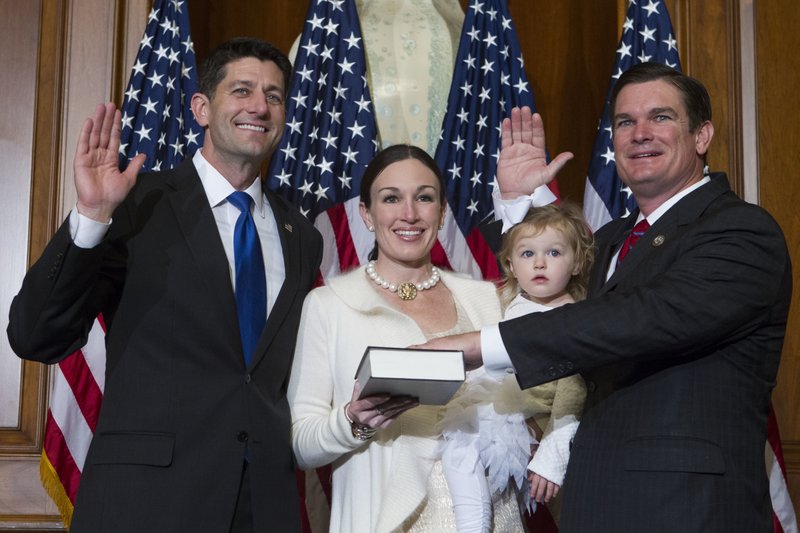
The Republican newcomers stunned Washington back in 2010 when they seized the House majority with bold promises to cut taxes and spending and to roll back what many viewed as Barack Obama’s presidential overreach. But don’t call them tea party Republicans any more. Eight years later, the House Tea Party Caucus is long gone. So, too, are almost half the 87 new House Republicans elected in the biggest GOP wave since the 1920s. Some, including current Secretary of State Mike Pompeo and White House budget director Mick Mulvaney, joined the executive branch. Others slipped back to private life. Several are senators. Now, with control of the House again at stake this fall and just three dozen of them seeking re-election, the tea party revolt shows the limits of riding a campaign wave into the reality of governing. Rep. Austin Scott, R-Ga., who was president of that freshman class, objects to the tea party brand that he says was slapped on the group by the media and the Obama administration. It’s a label some lawmakers now would rather forget. “We weren’t who you all said we were,” Scott said. He prefers to call it the class of “small-business owners” or those who wanted to “stop the growth of the federal government.” Despite all those yellow “Don’t Tread on Me” flags and anti-Obama health law rallies, Scott said the new Republican lawmakers wanted to work with the president, if only Obama would have engaged them. “We didn’t come to take over the country,” he said. Yet change Washington they did, with a hard-charging, often unruly governing style that bucked convention, toppled GOP leaders and in many ways set the stage for the rise of Donald Trump. By some measures, the tea party Republicans have been successful. The “Pledge to America,” a 21-page manifesto drafted by House Republican leadership, outlined the promises. Among them: “stop out of control spending,” ″reform Congress” and “end economic uncertainty.” They forced Congress into making drastic spending cuts, in part by threatening to default on the nation’s debt, turning a once-routine vote to raise the U.S. borrowing limit into a cudgel during the annual budget fights. Republicans halted environmental, consumer and workplace protection rules, and that rollback continues today. Perhaps most notably, the GOP majority passed $1.5 trillion in tax cuts that Trump signed into law, delivering on the tea party slogan penned on so many protest signs: “Taxed Enough Already.” But former Rep. Tim Huelskamp, R-Kan., said the “most egregious failure” was the GOP’s inability to undo the Affordable Care Act, Obama’s signature domestic achievement. Huelskamp said the class never really stuck together. When he arrived that first week in Washington in January 2011, he was stunned to find the leadership slate already set with then-Rep. John Boehner, R-Ohio, as speaker-in-waiting, facing little resistance. “That was a sign: The establishment in Washington was happy to have our votes, but not to follow our agenda,” said Huelskamp, who lost a primary election in 2016 to a political newcomer and now runs the conservative Heartland Institute. It was “just a clear misunderstanding of what the people wanted.” Over time, budget deals were struck with Democrats, boosting spending back to almost what it was before the revolt. Combined with the tax package, the GOP-led Congress is on track to push annual deficits near $1 trillion next year, as high as during the early years of the Obama administration when the government struggled with a deep recession. Maya MacGuineas, president at the Committee for a Responsible Federal Budget, said Republicans talked a good game promising to balance the budget, but with control of Congress — and now the White House — they failed to tackle the tough tax-and-spending challenges needed to get there. “That’s a whole lot of talk and zero follow through,” she said. Other proposals to improve transparency in government — a pledge to “read the bill” and post legislation three days before votes — remain works in progress. House bills are typically made public, but sometimes just before midnight to conform with the three-day rule. Frustrations within the ranks grew, and the new class splintered. Not all of them had been favorites of their local tea party groups. Some joined other conservatives to form the House Freedom Caucus, which nudged Boehner to early retirement in 2015. Former Florida Rep. Allen West, among the more prominent class members who lost re-election and is now a Fox News contributor living in Texas, said the challenge for House Republicans heading into the fall election is, “Who are they? What do they stand for?” House Republicans are wrestling with a midterm message at a pivotal moment for a party that Boehner says no longer exists. “There is no Republican Party. There’s Trump’s party,” Boehner said at a recent policy conference in Michigan. Boehner’s successor as speaker, Rep. Paul Ryan, R-Wis., also is stepping aside. He was a conservative up-and-comer long before the tea party, but has run into many of the same challenges Boehner faced in managing a fractured majority. He will retire after this term. In fact, there are an unusually high number of House Republicans retiring this year, including nearly a dozen from the tea party class. Several are running to be governors or senators, though some have already lost in primaries. Others, including Rep. Trey Gowdy, R-S.C., another rising star, are simply moving on. Some resigned this year amid ethics scandals. Jenny Beth Martin, a co-founder of Tea Party Patriots, says every movement “goes through phases.” As the group looks to elect the next “Tea Party 100″ members of the House, it’s seeking “tested and proven” candidates beyond the “citizen legislators” who powered the early days. Another 2010 leader, South Carolina’s Tim Scott, now a senator, says he has no problem with the tea party label that’s now etched in history. But he reminds his colleagues as they campaign that to keep the majority they must also eventually govern and that “promises made should be promises kept.” Republished
U.S. allies to fight Donald Trump’s tariffs plan, warn of trade war
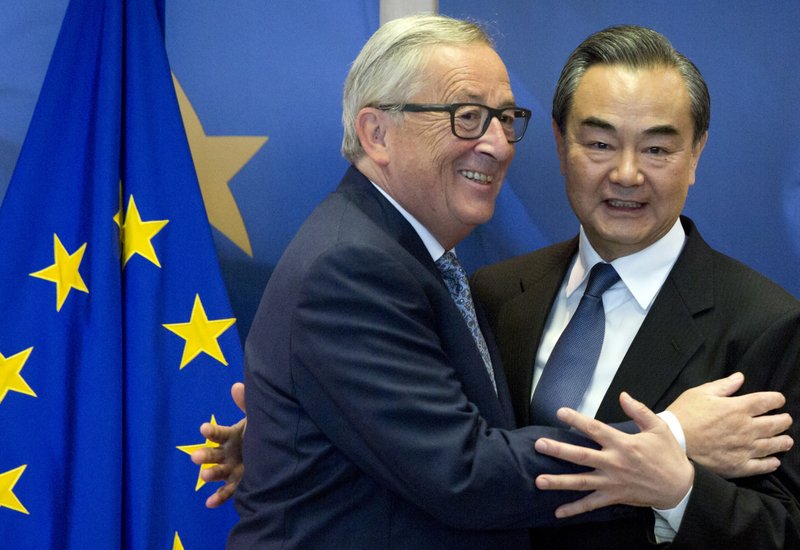
Countries around the world fought back Friday against President Donald Trump’s decision to slap tariffs on steel and aluminum imports, announcing retaliatory countermeasures and warning that the U.S. plan will hurt U.S. consumers. French President Emmanuel Macron said in a statement Friday that he told Trump in a phone call that the new U.S. tariffs on European, Mexican and Canadian goods are illegal and a “mistake.” Macron pledged the riposte would be “firm” and “proportionate” and in line with World Trade Organization rules. Germany’s Volkswagen, Europe’s largest automaker, warned that the decision could start a trade war that no side would win. The European Union and China said they will deepen ties on trade and investment as a result. “This is stupid. It’s counterproductive,” former British trade minister Francis Maude told the BBC. “Any government that embarks on a protectionist path inflicts the most damage on itself,” he added. Macron warned that “economic nationalism leads to war. This is exactly what happened in the 1930s.” Trump’s move makes good on a his campaign promise to crack down on trading partners that he claims exploit poorly negotiated trade agreements to run up big trade surpluses with the United States. Commerce Secretary Wilbur Ross says the tariffs — 25 percent on imported steel, 10 percent on aluminum from Canada, Mexico and the European Union — take effect Friday. The import duties threaten to drive up prices for American consumers and companies and are likely to heighten uncertainty for businesses and investors around the globe. Stock prices slumped amid fears of a trade war, with the Dow Jones industrial average falling nearly 252 points, or 1 percent, to 24,415.84. Mexico complained that the tariffs will “distort international trade” and said it will penalize U.S. imports including pork, apples, grapes, cheeses and flat steel. In Canada, Prime Minister Justin Trudeau said Thursday that the tariffs were “totally unacceptable.” Canada announced plans to slap tariffs on $12.8 billion worth of U.S. products, ranging from steel to yogurt and toilet paper. “Canada is a secure supplier of aluminum and steel to the U.S. defense industry, putting aluminum in American planes and steel in American tanks,” Trudeau said. “That Canada could be considered a national security threat to the United States is inconceivable.” Trump had originally imposed the tariffs in March, saying a reliance on imported metals threatened national security. But he exempted Canada, Mexico and the European Union to buy time for negotiations — a reprieve that expired at midnight Thursday. Other countries, including Japan, America’s closest ally in Asia, are already paying the tariffs. “This is protectionism, pure and simple,” said Jean-Claude Juncker, president of the European Commission. The EU earlier threatened to counterpunch by targeting U.S. products, including Kentucky bourbon, blue jeans and motorcycles. David O’Sullivan, the EU’s ambassador in Washington, said the retaliation will probably be announced in late June. Trump had campaigned for president on a promise to crack down on trading partners that he said exploited poorly negotiated trade agreements to run up big trade surpluses with the U.S. The U.S. tariffs coincide with — and could complicate — the Trump administration’s separate fight over Beijing’s strong-arm tactics to overtake U.S. technological supremacy. Ross is leaving Friday for Beijing for talks aimed at preventing a trade war with China. The world’s two biggest economies have threatened to impose tariffs on up to $200 billion worth of each other’s products. The steel and aluminum tariffs could also complicate the administration’s efforts to renegotiate the North American Free Trade Agreement with Canada and Mexico, a pact that Trump has condemned as a job-killing “disaster.” The White House released a statement from Trump Thursday night saying of NAFTA, “Earlier today, this message was conveyed to Prime Minister Justin Trudeau of Canada: The United State (sic) will agree to a fair deal, or there will be no deal at all.” Trump had offered the two U.S. neighbors a permanent exemption from the steel and aluminum tariffs if they agreed to U.S. demands on NAFTA. But the NAFTA talks stalled. Ross said there was “no longer a very precise date when they may be concluded,” and that as a result, Canada and Mexico were added to the list of countries hit with tariffs. Likewise, the Trump trade team sought to use the tariff threat to pressure Europe into reducing barriers to U.S. products. But the two sides could not reach an agreement. The import duties will give a boost to American makers of steel and aluminum by making foreign metals more expensive. But companies in the U.S. that use imported steel will face higher costs. And the tariffs will allow domestic steel and aluminum producers to raise prices, squeezing companies — from automakers to can producers — that buy those metals. House Speaker Paul Ryan and several leading Republicans in Congress were critical of the administration’s tariff action. Ryan said there are better ways to help American workers and consumers and that he plans to work with Trump on “those better options.” Republished with the permission of the Associated Press.
Paul Ryan vents frustration over GOP infighting over immigration
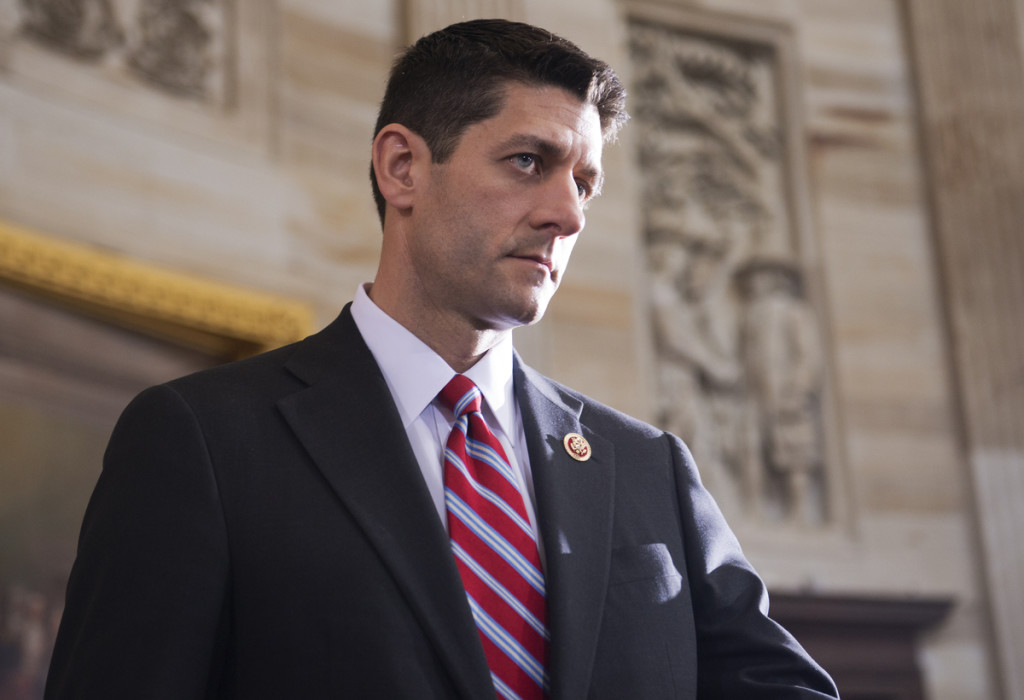
A frustrated Speaker Paul Ryan chided House Republicans for election-season infighting over immigration that sank the party’s farm bill last week, participants in a closed-door meeting said Tuesday. Leaders said they will schedule a late- June showdown over immigration, an issue that has divided the GOP for years. “I think he said ‘gee whiz’ and ‘gosh’ and used the word ‘crap’ once,” Rep. Mark Amodei, R-Nev., said of Ryan’s remarks to his colleagues. “For Paul Ryan, ‘crap’ is pretty blue language.” At a news conference minutes later, the Wisconsin Republican criticized anew an effort by GOP moderates to force votes on immigration by collecting signatures from a majority of House members on a little-used procedure called a discharge petition. The centrists need just five more GOP signatures to prevail. “I can guarantee you a discharge petition will not make law,” Ryan said. That was a reference to the expectation that the votes moderates want to have would produce a bill that President Donald Trump would consider too weak and veto. Ryan also defended himself against calls from conservatives that he step down as speaker in the wake of the party’s anarchy over the farm bill and continuing disarray on immigration. Ryan will retire from the House after this year but has said he will remain as speaker until he leaves office. “Members drafted me into this job because of who I am and what I stand for,” he said. He was elected speaker in 2015 after conservatives pressured his predecessor, John Boehner, R-Ohio, to step aside. Asked if he would remain as speaker all year, he said, “Obviously I serve at the pleasure of the members.” He said Republicans should concentrate on the party’s legislative agenda and not have “a divisive leadership election.” Lawmakers exiting the GOP meeting said leaders told them the House would vote on immigration during the third week of June. They said it was unclear exactly what they would vote on. The centrist push for immigration votes is considered likely to result in passage of a middle-ground measure backed by a handful of Republicans and all Democrats. Ryan has said he will avert that outcome, though it’s unclear how, and many conservatives consider it intolerable. Conservative and moderate GOP leaders negotiated privately Monday over ways to win centrist support for a conservative-backed measure that for months has floundered short of the 218 Republican votes it would need for House passage. They discussed changes that would help young “Dreamer” immigrants brought to the U.S. illegally as children and immigrant farm workers stay longer in the U.S., said one lawmaker who described the private discussions on condition of anonymity. The conservative bill would currently reduce legal immigration, clear the way for construction of President Donald Trump’s border wall with Mexico and let Dreamers stay in the U.S. for renewable three-year periods. All Democrats oppose the measure and it would have no chance of clearing the more moderate Senate. The farm bill crashed last Friday, partly because of opposition by members of the hard-right House Freedom Caucus. They had refused a leadership offer for a vote on the conservative immigration bill in June, which they said was too late. Some members of the Freedom Caucus suggested it would be time for Ryan to step down should moderates prevail. “If we run an amnesty bill out of a Republican House, I think all options are on the table,” said Rep. Scott Perry, R-Pa., a member of the group, when asked if Ryan should remain as speaker if the moderates’ effort succeeds. Many conservatives say legislation protecting immigrants in the U.S. illegally from deportation is amnesty. Other Republicans said it seemed unlikely Ryan would abandon his post. They said potential successors including Majority Leader Kevin McCarthy, R-Calif., so far lack the GOP votes they’d need to win the job. The moderates need 218 signatures — a House majority — on a petition to force votes on immigration bills. With all 193 Democrats expected to sign, the moderates need five more than the 20 signatures they already have. If they succeed, a vote could occur no earlier than late June. Republished with the permission of the Associated Press.
