
Bill passed to keep abortion clinics 2,000 feet from Alabama schools

An Alabama House committee has passed a bill to keep abortion clinics at least 2,000 feet away from public schools. The House Health Committee voted Wednesday in favor of HB 301 sponsored by Rep. Ed Henry, a Decatur Republican. The bill directs the Alabama Department of Public Health not to reissue licenses for any clinic within 2,000 feet of a school. The bill passed the state Senate in March by a vote of 27-6, and will now move to the full House for a vote. “If we currently protect a physical buffer between students and liquor stores, it is common sense that we would protect them from attending school near an abortion clinic,” Sen. Paul Sanford of Huntsville said upon the Senate’s passage of the bill. “This will not mandate any abortion clinic to shut down, but I have no problem if it forces a clinic or two to move away from our kids.” If signed into law, the bill would force two abortion clinics in the state to close, including one in Huntsville stationed across the street from Edward H. White Middle School, which was forced to move to its current location near a public school after the state mandated new facility requirements in 2013. The American Civil Liberties Union (ACLU) of Alabama has vowed to challenge the restrictions in court if it clears the House, which would be the fourth lawsuit in the last three years challenging abortion restrictions in Alabama. “We all agree that protecting our children is a top priority. But this law isn’t about protecting Alabama’s children,” stated Susan Watson, Executive Director of the ACLU of Alabama in March when the bill passed the state Senate. “It’s about making a sure a woman who has decided to have an abortion can’t get one.” “And make no mistake about it: If the legislature passes this bill, the ACLU will challenge this law in court,” Watson stated. If the bill is signed into law, Alabama will become one of the first states in the nation to have a school proximity provision for abortion clinics.
Alabama Attorney General: Daily fantasy sports leagues are illegal gambling

Televisions, smartphones, and computers were flooded during the 2015-2016 football season with advertisements for a relatively new form of fantasy sports. Between FanDuel and DraftKings, sports fans across the country were inundated with commercials promising a fast-paced game with the potential for high payouts. But on Tuesday, Alabama Attorney General Luther Strange sent cease-and-desist letters to two Daily Fantasy Sports companies, after determining that paid daily fantasy sports contests constitute illegal gambling. In daily fantasy sports (DFS), participants pay to create a roster of players, then pit their roster against those of other participants. Whomever’s roster performs the best that day within a certain pool wins prize money through the site. “As Attorney General, it is my duty to uphold Alabama law, including the laws against illegal gambling,” said Strange in a news release Tuesday afternoon. “Daily fantasy sports operators claim that they operate legally under Alabama law. However, paid daily fantasy sports contests are in fact illegal gambling under Alabama law.” According to Alabama code section 13A-20-12, a person participates in gambling if he or she “stakes or risks something of value upon the outcome of a contest of chance or a future contingent event not under his control or influence, upon an agreement or understanding that he or someone else will receive something of value in the event of a certain outcome.” Gambling in Alabama is illegal, with a few exceptions including buying securities and commodities, insurance, and some grandfathered activities. DFS sites often contend they are games of skill, not of chance, and thus aren’t covered under most states’ gambling laws, but Strange contends this is not sufficient to keep them legal in Alabama. “There is, of course, a measure of skill involved in creating a fantasy roster,” wrote the AG’s office. “But in the end, contestants have no control over the performance of the players on their rosters. For example, a player could fall ill before a game, be injured in pre-game warm-ups, or miss a large portion of the game due to injury or equipment failure. All of these factors, and many more, are outside the control of a fantasy sports player. Thus, the results of paid daily fantasy sports contests depend to a large degree on chance.” Two bills currently stalled in committee, SB114 by Sen. Paul Sanford (R-Huntsville) and HB56 by Rep. Connie Rowe (R-Jasper) would each establish regulatory rules regarding fantasy sports games in the state. The bills would require contest operators to institute procedures for consumer protection, require audits of operators and provide penalties for those operating outside of the established regulations. Were they to be passed, the bills would undo Strange’s decision, making the industry immune from being considered a gambling operation in the state. AG Strange says Alabama is the twelfth state to declare DFS to be illegal.
Alabama legislative preview: April 4 – April 8, 2016
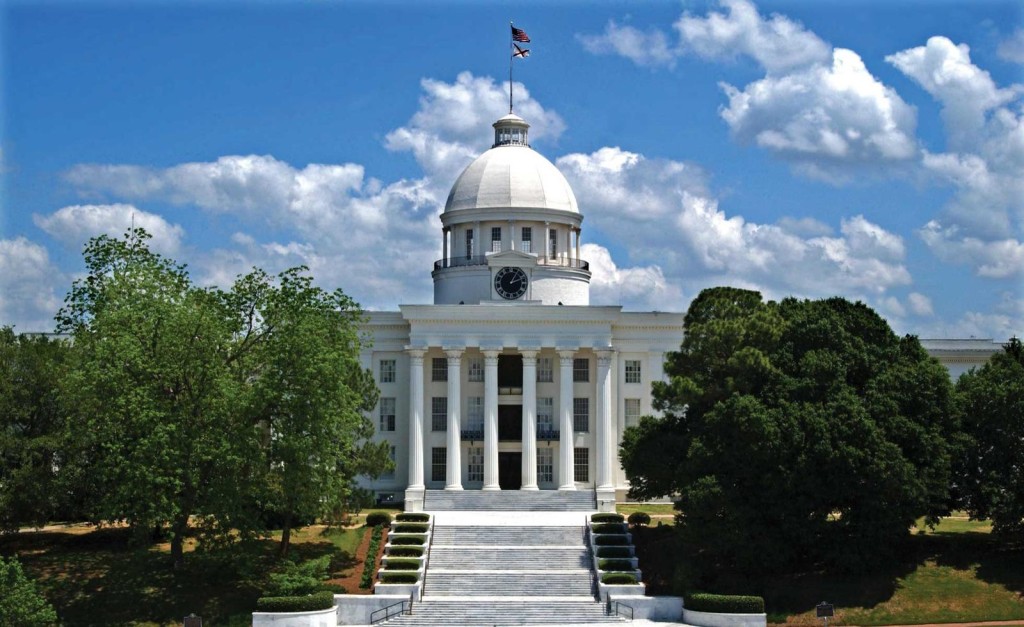
Legislators return to Montgomery this week after their spring break, with the House of Representatives convening at 1 p.m. and the Senate an hour later Tuesday. In the Senate, lawmakers are slated to take up SB342 from Sen. Vivian Figures (D-Mobile), which would make the transmission of an explicit message a Class A misdemeanor. The body will also take up SB347 from Sen. Paul Bussman (R-Cullman), which would legalize the manufacturing of industrial hemp in the state. The Senate will also take up SB14 from Sen. Gerald Allen (R-Tuscaloosa), which would allow citizens to carry a pistol in a vehicle without a permit. Over in the House, lawmakers will take up two alcohol-related bills: HB46 from Rep. Alan Boothe (R-Troy) would allow Alabama distilleries to sell their product for off-premise consumption and HB83 from Rep. David Faulkner (R-Birmingham) would allow state wineries to establish an off-site tasting room. On Wednesday, committee hearings will get underway. At 1 p.m. in room 325 of the state house, the Senate Judiciary Committee will take up the grandparent’s visitation rights bill, HB334 from Rep. Mike Jones (R-Andalusia), as well as HB115 from Rep. Paul Sanford (R-Huntsville), which would decriminalize possession of the marijuana-based, seizure-reducing medication CBD oil. At 1:30 p.m in room 727 at the state house, the Senate Rules Committee will take up SB97 from Sen Gerald Dial (R-Lineville), which would allow the Ten Commandments to be displayed on state property and at public schools. At 9 a.m. in room 429 of the state house, the House Health Committee will take up HB183 from Rep. Kerry Rich (R-Guntersville), which would require abortion providers to conduct a sonogram before providing an abortion. At 1:30 p.m. in room 418 of the state house, the House Committee on Education Policy will take up HB299 from Rep. Ed Henry (R-Decatur), which would prohibit local school boards from adopting or enforcing “zero tolerance” policies regarding drugs, alcohol, weapons or physical harm to another person. The bill would also require that the definition of firearm be “narrowly construed.”
Conservative legislators ask colleagues to “Stop the Gas Tax”

https://www.youtube.com/watch?v=llTMdXbnZ-s&feature=youtu.be In a video published on Rep. Will Ainsworth‘s YouTube account, several conservative Republican state legislators proclaim their opposition to a proposed fuel tax increase currently making its way through the state legislature. The bill, sponsored by Rep. Mac McCutcheon, would raise the gasoline tax by 6 cents per gallon initially, but could be reassessed every four years to be adjusted to equal the average of Alabama’s neighboring states. In the video, published Thursday, Reps. Ainsworth, Mike Holmes, Phil Williams, Arnold Mooney, Ed Henry, Allen Farley, and Mack Butler join with Sens. Bill Holtzclaw, Paul Bussman, Paul Sanford, and Phil Williams to express their disapproval for the legislation. Ainsworth was the only member of the House Transportation, Utilities and Infrastructure Committee to vocally dissent to the bill in committee when it was overwhelmingly passed with a voice vote. Proponents of the bill, including Jeremy L. Arthur, the president and CEO of the Chamber of Commerce Association of Alabama, and William J. Canary, president and CEO of the Business Council of Alabama, say the increased tax is a much-needed investment in the state’s infrastructure and ability to recruit jobs and businesses. Ainsworth maintains that he isn’t arguing the importance of infrastructure spending, but believes Alabama should get its fiscal house in order first. “No one argues the importance of infrastructure spending in Alabama,” he said in the video. “However, before we look at that we need to cut waste, reduce the size of government, and look at best practices in other states.” Other opponents of the legislation made a similar argument, citing the state’s unusual budgeting process, as well as the high number of government employees. “Why should we raise the Alabama gas tax when we already transfer $63.5 million away from the Department of Transportation to support other government services?” Sanford said. “I don’t see how we can talk about raising fuel tax at the gas pumps when for a number of years, there have been several of us at the State House have tried to get a conversation going about looking at our 91-94 percent earmarked budgets,” Farley said. “Alabama is seventh in the nation in full-time employment, both state and local, that is not education. We need to deal with the size of government, and cut it.” The legislature will likely take up the bill when it returns from spring break on Tuesday.
Fantasy sports, gambling could be big business for state

A slate of bills aimed at loosening Alabama’s gambling laws and setting the state up to benefit from the lucrative gaming industry have been slowly winding their ways through the legislative chambers this Session, but none have gained any real traction in a Legislative Session marred in controversy over ill-fated budgets and sexually explicit recordings. Despite that, the bills keep coming, aimed at regulating untapped gaming revenues and opening the doors to a state lottery and even full-on casino gambling. The first high-profile lottery bill was announced only days before the start of the Legislative Session. Sen. Jim McClendon (R-Springville) and Rep. Alan Harper (R-Northport) introduced SB19 and HB13, respectively, that offer a constitutional amendment to allow a state lottery to be established. The bill makes no mention of how the proceeds from such a lottery would be spent, it only allows for residents to vote on whether a lottery should be operated in the state. Legislators would be tasked with figuring out how to set up and allocate the proceeds next year. The Harper-McClendon legislation has passed hurdles in their respective committees, but so far has not come up for discussion on either floor Rep. Craig Ford (D-Gadsden) has offered four bills aimed at establishing the Alabama Lottery Commission and distributing the proceeds from the operation. HB10 would establish the commission, as well as the Lottery Trust Fund where profits would be stashed to fund college scholarships for qualifying students. HB208 establishes the Alabama Gaming Commission, which would oversee pari-mutuel wagering at county-approved racetracks and levy taxes on some establishments. HB209 is the meat and potatoes of 10 and establishes all of the commissions, corporations and funds required to oversee the proposed state lottery and gaming endeavors. HB278 allows the governor to negotiate a compact with the Poarch Creek Indians, who are currently the only operation allowed to offer slot-machine gaming in the state. Like the Harper-McClendon bills, Ford’s bills have gone before their required committees but have gained no real traction. Sen. Trip Pittman (R-Daphne) has offered his own lottery bill, SB232, which would allow Alabama to participate in other multistate lotteries and compel the legislature to establish rules regarding the enterprise. Pittman’s legislation has gone before committee but has not yet come out on the other side. Rep. John Knight (D-Montgomery) has offered HB263, which would simply repeal Alabama’s prohibition on a state lottery. Knight’s legislation was directed to committee in February but, so far, has gone nowhere. And while lottery and pari-mutuel gambling has long been a centerpiece of Alabama’s political discourse, a newcomer has made its way into the fold. Two bills have been filed to regulate fantasy sports contests in the state, possibly setting the state up to be involved in what has quickly become a multibillion operation. SB114 from Sen. Paul Sanford (R-Huntsville) and HB56 from Rep. Connie Rowe (R-Jasper) would both establish regulatory rules regarding fantasy contests in the state. The bills would require contest operators to institute procedures for consumer protection, require audits of operators and provide penalties for those operating outside of the established regulations. Further, the bill makes the industry immune from being considered a gambling operation in the state. Both have seemingly stalled in committee. Despite the fact Alabama could benefit greatly from the revenue that these types of gaming operations would generate – Missouri is expecting to generate “several million” dollars off of fantasy contest regulation (an industry slated to rake in about $20 billion by 2020) and South Dakota has raised nearly $2.5 billion through its state lottery – state lawmakers appear poised to avoid a vote on the topic and let another year tick by with no good answers on how to generate much-needed funding. Being in the Bible Belt may be the biggest reason Alabamians have long opposed such gaming operations, but it doesn’t hurt that organizations that run gambling enterprises, such as the Poarch Creek Indians, have funneled money into anti-gambling candidates’ campaigns. The New York Times reported in 2014 that the group had covertly spent $350,000 to fund anti-gambling candidates. And that wasn’t the first time. In the late 1990’s, Christian Coalition Chairman Ralph Reed was caught up in a scandal with GOP lobbyist Jack Abramoff. The duo funneled $1.3 million from the Choctaw Tribe to the Alabama Christian Coalition. The move was made to hide that the money had come from Choctaw gaming interests and used to fight video poker and a proposed lottery in the state.
Alabama legislative week in review: March 21 – March 25, 2016
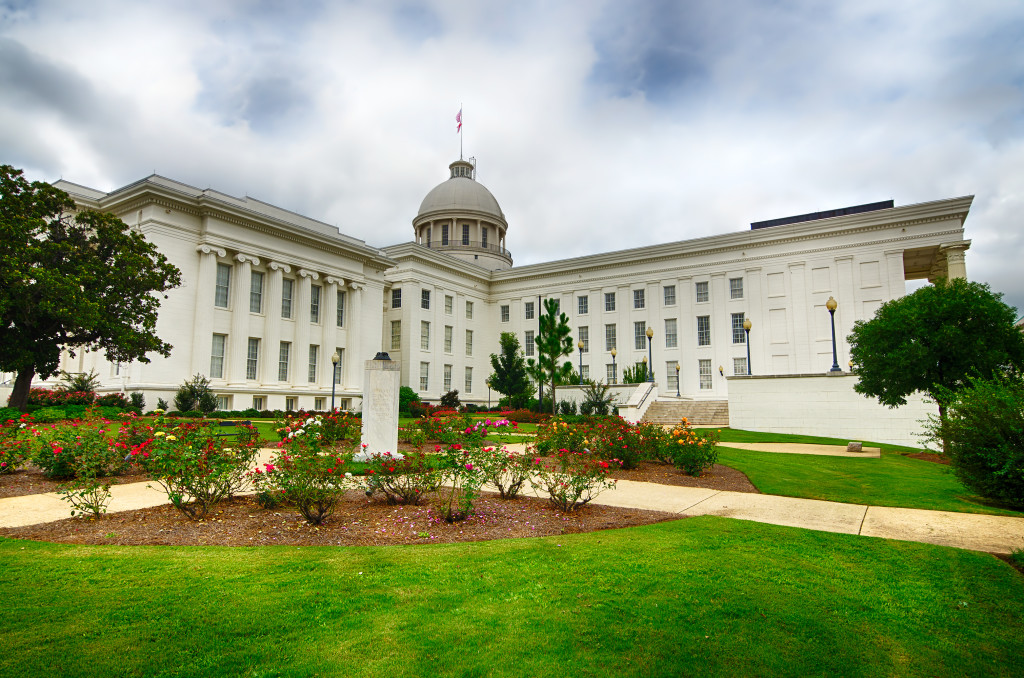
Legislators briefly passed through Montgomery this week with an eye toward their spring break, which began Thursday and won’t have them back in the statehouse until April 5. Despite only two legislative action days this week, both bodies took up high-profile legislation. Tuesday, the 17th day of the legislative session, got under way with the Alabama House of Representatives clearing the long-contested bill to provide a path to visitation rights for grandparents. HB334 from Rep. Mike Jones (R-Andalusia) passed with an affirmative vote from 97 lawmakers, though debate came over the fact that the bill may circumvent the will of fit parents to make decisions regarding the welfare of their children. Over in the Senate, lawmakers passed SB260 from Sen. Clay Scofield (R-Guntersville). The bill would bar the state from taking money from the state’s park system to prop up the General Fund. The practice is a legitimate concern, as lawmakers have taken $15 million from state park coffers over the past five years to deposit into the General Fund. The Senate also cleared HB34 from Rep. Mac McCutcheon (R-Capshaw). The bill, which was carried by Sen. Greg Reed (R-Jasper), provides tax breaks for state ports in an effort to remain competitive among states with similar incentives. Supporters say the move will attract large businesses and bring jobs to the state. The Senate continued on its roll Wednesday with the passage of SB205 from Sen. Paul Sanford (R-Huntsville), which would prohibit the location of abortion clinics within 2,000 feet of a school and bar the Alabama Department of Public Health from reissuing licenses to any clinic in violation of the new law. The Senate also approved a General Fund budget, which lacks sufficient funding for Medicaid, despite a veto threat from Gov. Robert Bentley. The Senate’s session came to a halt when it stalled a vote on Bentley’s landmark prison transformation bill. In committee hearings this week, the Mobile delegation declined a bill along party lines that would allow county residents to vote on whether or not to raise the local minimum wage to $10.10 an hour. A house committee approved a bill that will put to a vote the notion that a person is a person from the time of fertilization, effectively outlawing abortion in the state. A Senate committee took up a bill that would decriminalize possession of the epilepsy-relieving drug cannabidiol (CBD), but did not vote on the measure. It will likely come up for discussion again when legislators return from spring break April 5.
Senate committee hears arguments over decriminalization of cannabis oil
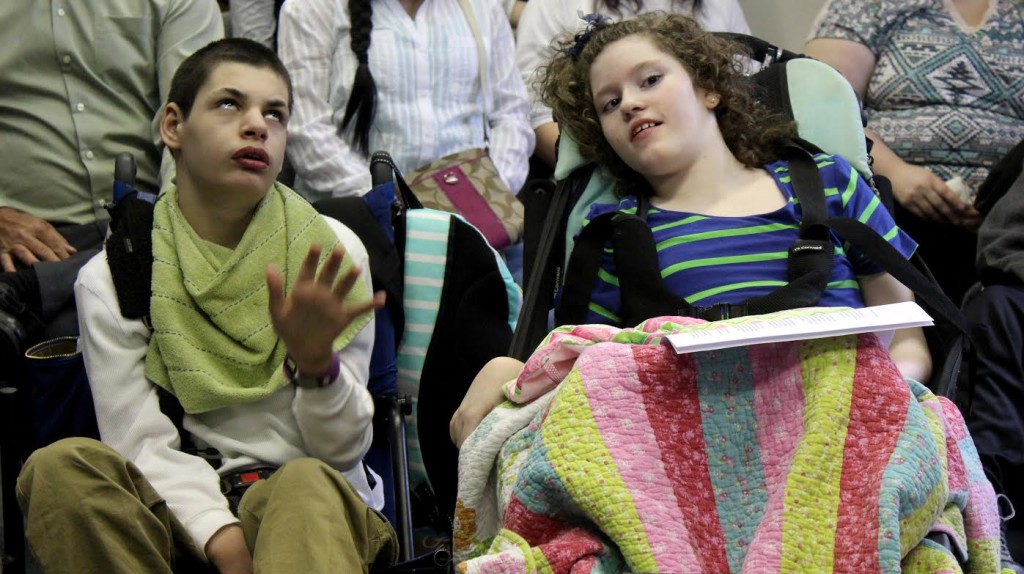
The Senate Judiciary Committee met Wednesday in a room filled to the brim with desperate families and ailing children. The contingent was on hand to hear the committee discuss SB115 from Sen. Paul Sanford (R-Huntsville), which would decriminalize possession of the seizure-reducing drug cannabidiol (CBD). The bill is the Senate version of HB61 from Rep. Mike Ball. Ball brought forth the legislation, also known as “Leni’s Law,” after the previously passed “Carly’s Law” left many needy children out of the CBD studies. Ball’s legislation is named for Leni Young, a 4-year-old Alabama girl whose family was forced to move to Oregon to gain access to the medicine after she was excluded from the CBD study. According to Amy Young, Leni’s mother, access to the marijuana-derived medication has allowed Leni to improve by leaps and bounds. The little girl is now verbal and able to sit on her own, two things she was not able to do before moving across the country. Ten minutes after the meeting was set to begin, the contingent was told to move to the seventh floor. Sanford introduced the legislation, referencing Leni and the failures of “Carly’s Law” to include more families. “Basically, an Alabama family has turned into refugees,” Sanford said. “I believe government is basically standing in the way right now.” Sanford said the new law would provided families with an “affirmative defense” against prosecution for possession of the medicinal oil. “These parents are not criminals,” Sanford said. “They’re trying to help their children.” Despite a public hearing being scheduled and there being no plans for a vote on the bill, Sen. Bobby Singleton (D-Greensboro) immediately called for a vote on the legislation. “We’re talking about the lives of children,” Singleton said, noting his disdain for opponents of the measure. “I think we need to go and vote on this bill and get it out of committee and give these children what they need.” Committee chairman Sen. Cam Ward (R-Alabaster) noted Singleton’s suggestion, but added that each side has a right to plead its case. One of the opponents was Dr. Roxanne Travelute, president of the Jefferson County Medical Society. Travelute contended that the bill’s allowance of CBD oil containing as much as 3-percent THC, the psychoactive chemical in marijuana, would cause addiction and neurological disorders, as well as widespread use for illnesses the drug was not designed to treat. Another opponent was Dr. Shannon Murphy, speaking on behalf of the American Academy of Pediatrics (AAP), who opposed the bill on the basis that CBD oil attained by parents may not be safe for patients. “We all sympathize greatly with these families,” Murphy said. “But as physicians, our Hippocratic Oath requires that we first do no harm.” Dr. Gina Dawson spoke in favor of the bill, saying that many of the claims made by opponents are patently false. Dawson noted that the AAP opposes legalization but has said exceptions should be made for “compassionate use.” She cited drugabuse.gov, which says that abuse of CBD oil is almost nonexistent, and remarked that the Epilepsy Foundation has called for legislation providing access to CBD oil to be passed. Dawson also noted that CBD oil is expensive and has no street value. Parents would willingly be on the hook for the cost of the medicine, but drug dealers would not be interested in a high-cost, low-potency drug for sale on the black market. Another proponent, Joe Church, noted that the ingredients in Tylenol or Ibuprofen are more dangerous than CBD oil, as are the mind-numbing drugs these children must take every day. He also alleged that much of the opposition to Leni’s Law comes from GW Pharmaceuticals, which has $1.1 billion invested in its stranglehold over the manufacturing of the oil. The committee is scheduled to take the legislation up again after spring break.
Senate passes bill banning abortion clinics located near schools
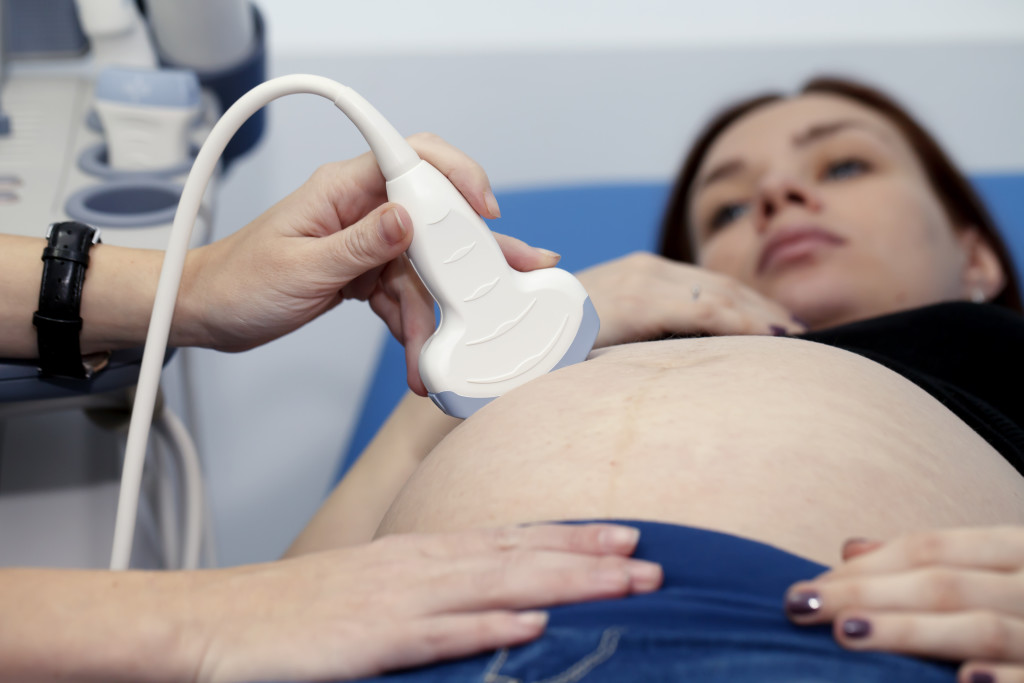
On Tuesday, the Alabama Senate passed a bill that would prohibit abortion clinics from being within 2,000 feet of a school, which will directly impact a clinic in Huntsville stationed across the street from Edward H. White Middle School. The Alabama Women’s Center for Reproductive Alternatives moved to its current location in 2014 when it was forced to vacate its old location to comply with the Women’s Health and Safety Act, HB57, which required that clinics meet “all ambulatory health care occupancy standards.” The new facility is near Huntsville Hospital’s emergency room, which puts it in compliance with the law’s requirements. SB205 from Sen. Paul Sanford (R-Huntsville) directs the Alabama Department of Public Health not to reissue licenses for any clinic within 2,000 feet of a school, effectively closing down the Huntsville clinic in its new location. “If we currently protect a physical buffer between students and liquor stores, it is common sense that we would protect them from attending school near an abortion clinic,” Sanford said in a statement release Tuesday. “This will not mandate any abortion clinic to shut down, but I have no problem if it forces a clinic or two to move away from our kids.” With passage of the bill, Alabama will become one of the first states in the nation to have a school proximity provision for abortion clinics. “Abortion clinics can attract unrest and protest – from people on both sides of the issue – and therefore can pose a public safety risk to young students,” Sanford added in the release. “Having an abortion clinic so close to an elementary school that children are required to walk on the sidewalk past the clinic is not in their best interest.” An floor amendment changed the bill to where a clinic could stay open if a school is built near an already-operating facility.
Alabama legislative preview: March 21 – March 25, 2016
The Alabama House of Representatives will convene at 1 p.m. Tuesday, and the Senate an hour later, as state lawmakers gather for the 17th day of the regular session. This week, the Senate will take up SB89 from Sen. Arthur Orr (R-Decatur), which would require Alabama public school students to pass a civics test as a requirement for graduation. Orr’s legislation has been on the agenda for a while, but has likely been stalled due to a focus on more contentious issues. The body is also slated to take up SB148 from Sen. Jim McClendon (R-Springville), which would require all vehicle passengers to wear a safety belt, and SB114 from Sen. Paul Sanford (R-Huntsville), which would regulate fantasy contests and “exempt fantasy contests from certain criminal penalties associated with gambling activity.” The bill would increase spending by the Attorney General’s office, which would be responsible for overseeing such activities, by $1 million in the first year. Also on the Senate’s agenda this week are SB14 from Sen. Gerald Allen (R-Tuscaloosa), which would allow citizens to carry a firearm in their vehicle without a permit, and SB205 from Sanford, which would bar the Alabama Department of Human Resources from renewing health center licenses for an “abortion clinic or reproductive health center” within 2,000 feet of a school. In the House, lawmakers will take up HB46 from Rep. Alan Boothe (R-Troy), which would allow Alabama spirit makers to sell fifths for off-premise consumption. The body is also slated to debate HB13 from Rep. Alan Harper (R-Northport), which would allow citizens to vote on whether or not to allow a lottery in the state – the legislation provides no details on how proceeds from such an operation would be used, which is likely why it hasn’t been discussed thus far. HB218 from Rep. Dickie Drake (R-Leeds) is also on the agenda and would require that all elementary school students be instructed in cursive writing before the end of their third grade year. HB244 from Rep. Connie Rowe (R-Jasper) will also be taken up this week – the bill prohibits law enforcement from requiring victims of a sexual offense to take a polygraph examination. Committee hearings get underway Tuesday, though the vast majority take place on Wednesday, beginning with the Senate Judiciary Committee, which will take up SB237 from Sen. Quinton Ross (D-Montgomery). Ross’s legislation would make it unlawful for employers to request information regarding arrests and convictions on employment applications. The committee will also take up Sanford’s SB115, the Senate version of “Leni’s Law” from Rep. Mike Ball (R-Madison), which would decriminalize possession of the marijuana-based medicine cannibidiol. The Senate Committee on Constitution, Ethics and Elections will debate SB360 from Sen. Tom Whatley (R-Auburn), which would require voters to register as a Democrat or Republican before voting in a primary. Voters who do not will not be allowed to vote on party candidates, only on ballot measures and nonpartisan issues. The House Committee on Agriculture and Forestry will take up HB393 from Rep. Ken Johnson (R-Moulton), which would allow for the growing of industrial hemp in the state for use in a variety of products. The House Committee on Mobile County Legislation will mull over HB248 from Rep. Napoleon Bracy (D-Mobile), which would establish a $10.10 minimum wage in Mobile County. At the close of business this week, legislators will adjourn for spring break.
Robert Bentley reacts to prison reform bill’s Senate progress
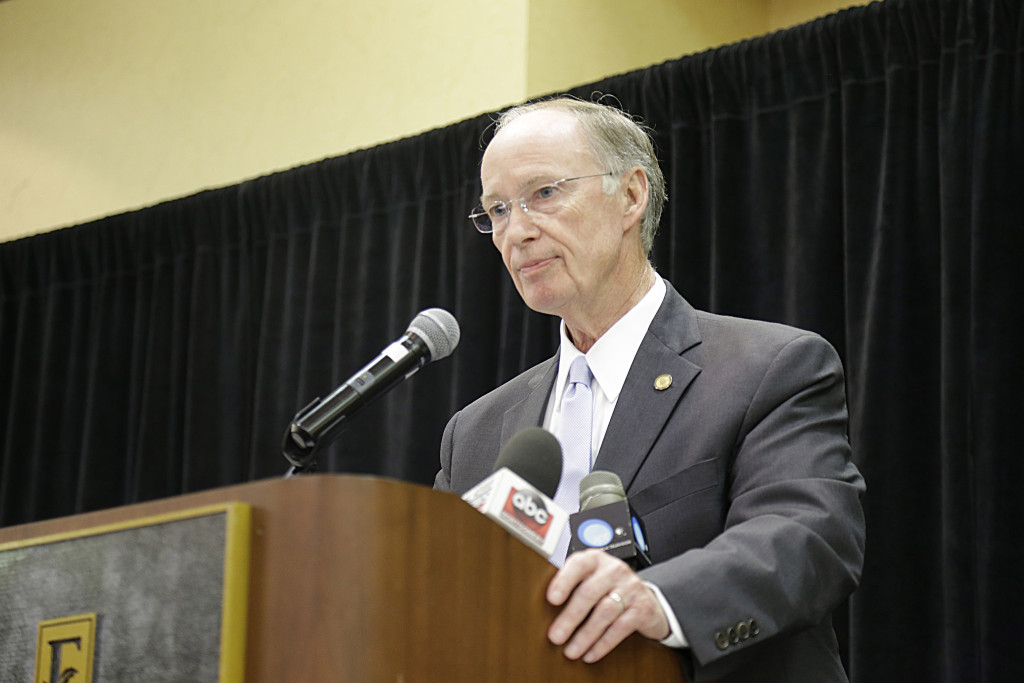
Gov. Robert Bentley and the GOP-led Legislature in Montgomery haven’t been known for getting along – some expect this year’s Legislative Session to possibly hit another snag over the budget yet again. But Bentley did come out Wednesday with a bouquet of rhetorical flowers for Alabama lawmakers when it comes to the prison reform act currently circulating in the statehouse. The bill — approved by the Senate Finance and Taxation General Fund Committee this week — would attempt to overhaul the state’s notoriously ailing prison system by providing an $800 million revenue bond for the demolition of 14 of Alabama’s 16 prisons and subsequent renovation of the remaining two. The bill further provides for the construction of four new prisons, three male and one female, which will pay off the bond through perceived savings. “For decades, Alabama’s prisons have become increasingly overcrowded, dangerous to both inmates and our corrections officers and incredibly costly to taxpayers. I commend the Senate committee for passing the long needed Prison Transformation Initiative Act out of committee today,” said Bentley in a statement. “This bill will allow Alabama to take the next step toward constructing four new prisons, which will provide safer conditions for our corrections officers as well as inmates in facilities such as Tutwiler Prison for Women. Alabama can and should be a national leader in safe and effective incarceration of inmates. I look forward to continuing a partnership with the members of the Legislature to make Alabama a truly great state,” Bentley concluded. The bill was OK’d by the finance panel with just one dissenting ‘No’ vote, cast by Huntsville Republican Sen. Paul Sanford.
Prison reform bill passes committee, moves forward to full Senate
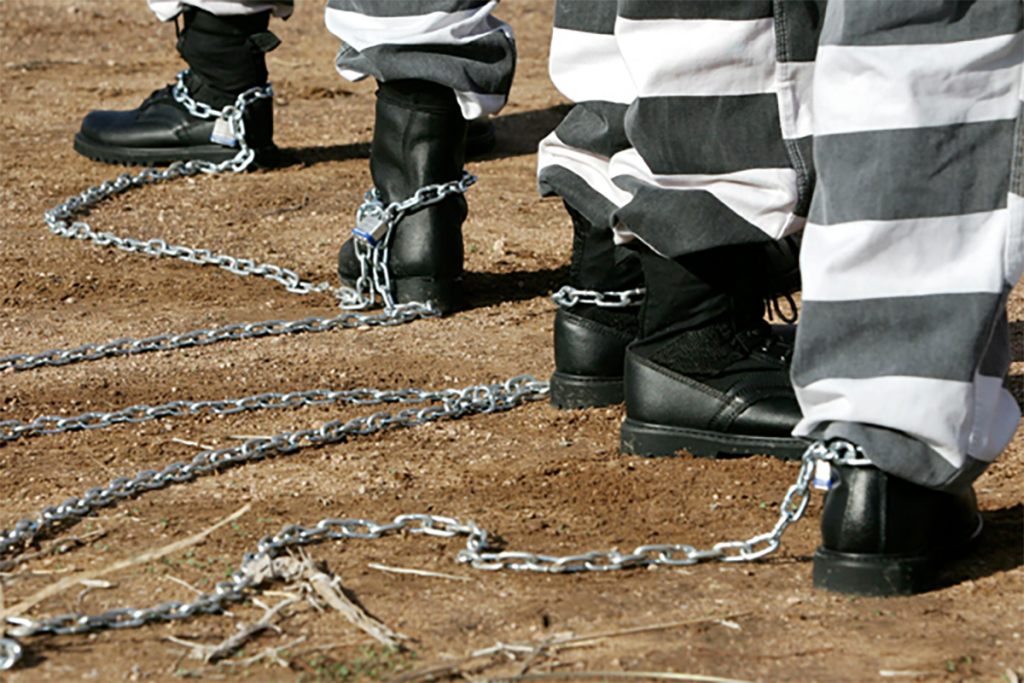
On Wednesday, the Senate Committee on General Fund Taxation and Finance passed the long-debated Alabama Prison Transformation Initiative Act, clearing its path to go before the full Senate next week. SB287 from Sen. Trip Pittman (R-Daphne) provides an $800 million revenue bond for the demolition of 14 of Alabama’s 16 prisons and subsequent renovation of the remaining two. The bill further provides for the construction of four new prisons, three male and one female, which will pay off the bond through perceived savings. As collateral, the bill provides a 1-mill tax currently reserved for funding the Alabama Department of Human Resources (ADHR) and the Alabama Department of Veterans Affairs (ADVA). Proponents say that the tax would only be used if the Alabama Department of Corrections (ADOC) defaults on its bond payments, which is not expected to happen. In previous committee meetings, opponents spoke out against the 1-mill tax commitment as well as the design/build method laid out in the bill, which state contractors have argued would stifle competition and have a negative effect on local companies. With the 1-mill tax concerns in mind, Sen. William Holtzclaw (R-Madison) offered an amendment which would protect the ADVA and ADHR. If forced to use the money because of an ADOC default, money would taken from each agency incrementally and, if funding became unsustainable, future legislatures would be forced to fully fund both departments. The amendment further imposes a sunset on the 1-mill tax commitment to alleviate concerns that it could be on the table for many years to come. The amendment was unanimously approved, with only Pittman abstaining from the vote. In regard to the design/build method, which repeatedly drew the ire of state engineers and architects, Pittman alleged that altering that language would be a nonstarter for Gov. Robert Bentley, who contends that the method is best for the state and the project. State Finance Director Bill Newton noted that design/build would shorten the time of construction by one year and save the state about $100 million. Many committee members spoke favorably of the legislation, despite the longstanding uproar and inner-concerns over the bill. “Don’t let this die in committee today and we lose the only vehicle we have for improving those facilities,” said Sen. Cam Ward (R-Alabaster). “That would be a terrible, terrible shame for all of us.” “If this is the only way we can make things better then we ought to do it,” said Sen. Priscilla Dunn (D-Bessemer). “I think it’s time that we try to do something about it. We need to do something about these prisons.” In the end, only Sen. Paul Sanford (R-Huntsville) voted against the bill.
Alabama legislative preview: Mar. 14 – Mar. 18, 2016
The Legislative Session resumes Tuesday when the Alabama House of Representatives reconvenes at 1 p.m and the Senate an hour later. The Senate is slated to take up a slew of measures this week, including SB89 from Sen. Arthur Orr (R-Decatur) which would require all Alabama public school students to pass a civics test to graduate. SB148 from Sen. Jim McClendon (R-Springville), which would require all passengers in a vehicle to wear a safety belt, will also come up this week. The measure met with opposition when last it appeared on the floor, as lawmakers questioned the need for furthering meddling in people’s private matters. The “Fantasy Contests Act,” SB114 from Sen. Paul Sanford (R-Huntsville), will also come up for discussion this week, as well as SB14 from Sen. Gerald Allen (R-Tuscaloosa), which would authorize carrying weapons in vehicles without a permit. Over in the House, lawmakers will take up their version of the “Fantasy Contests Act,” as well as the lottery bill from Rep. Alan Harper (R-Northport). HB13 would allow people to vote on whether or not a lottery is allowed in the state, though it provides no details on how profits from such a lottery would be allocated. The body will also take up three bills from Rep. Mike Jones (R-Andalusia): HB332 which would abolish common law marriages; HB333, which would change laws related to judge’s ruling in divorce cases; and HB334, which would provide a process for grandparents to petition for visitation rights with their grandchildren. A slew of alcohol-related legislation is also scheduled to go before the House. The House was scheduled to take on the General Fund budget this week, but the activity calendar makes no mention of the legislation coming before the body. The Senate Committee on Agriculture, Conservation and Forestry is set to take up a bill that would legalize industrial hemp in the state on Wednesday and the Senate Judiciary Committee is slated to take up SB97 from Sen. Gerald Dial (R-Lineville), which would allow the Ten Commandments to be displayed on state and public school property. The Alabama Prison Transformation Initiative Act will once again appear before the Senate Committee on General Fund Finance and Taxation, where a vote is scheduled to take place. The House Committee on Public Safety and Homeland Security will take up HB98 from Rep. David Standridge (R-Hayden), which would provide a lifetime pistol permit to retired military veterans and the House Committee on Health will debate HB159 from Rep. Arnold Mooney (R-Birmingham), which would allow doctors to decline services that violates their conscience. The House Judiciary Committee will take up two marijuana-related bills: HB61, also known as “Leni’s Law,” from Rep. Mike Ball (R-Madison), which would decriminalize possession of the seizure-reducing medication cannabidiol, and HB257 from Rep. Patricia Todd (R-Birmingham), which would make possession of 1 ounce or less of marijuana punishable by only a fine.
