
Black lawmakers say Alabama GOP’s proposed new congressional map insults the Supreme Court
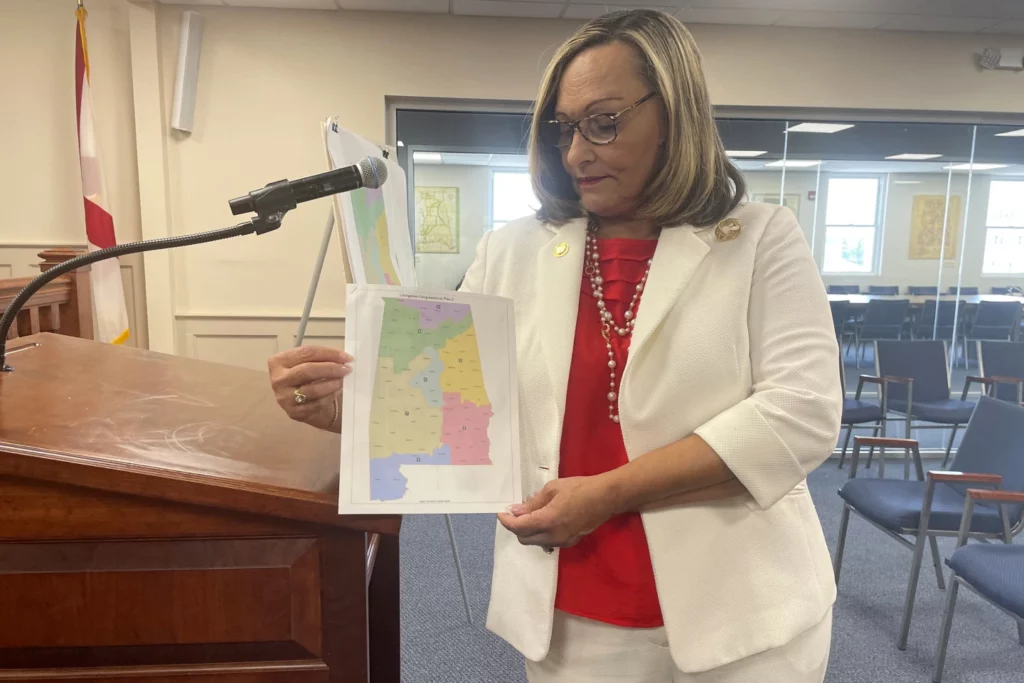
Alabama Republicans advanced new congressional lines Wednesday, a proposed map that Black lawmakers called an insult after the U.S. Supreme Court ordered the legislature to redraw districts to give Black voters a greater voice in elections. The House of Representatives voted 74-27 to approve the GOP plan, which does not establish the second majority-Black district sought by plaintiffs who won the Supreme Court case. Instead, the GOP would increase the percentage of Black voters to 42% in the district. That’s enough, GOP lawmakers said, to consider it a political swing district — where either a Republican or Democrat could get elected — in compliance with the court. The bill now moves to the Alabama Senate. “This is really a slap in the face, not only to Black Alabamians, but to the Supreme Court,” Rep. Barbara Drummond, D-Mobile, said during the floor debate. Rep. Prince Chestnut, a Democrat from Selma, said, “Once again, the state decided to be on the wrong side of history.” “We’re fighting the same battles that they were fighting 100 years ago, 50 years ago, 40 years ago, right here today,” Chestnut said. “Once again, the (Republican) super majority decided that the voting rights of Black people are nothing that this state is bound to respect. And it’s offensive. It’s wrong.” State lawmakers face a Friday deadline to adopt new lines after the U.S. Supreme Court in June upheld a finding that the current state map — with one majority-Black district out of seven in a state that is 27% Black — likely violates the federal Voting Rights Act. Republican House Speaker Pro Tempore Chris Pringle argued that the proposed lines satisfy the court requirement to provide greater “opportunity” to Black voters. The GOP-backed House plan would increase the percentage of Black voters in the 2nd Congressional District, now represented by Republican Barry Moore, from about 31% to 42.4%. “We’ve drawn a district that provides an opportunity for the minorities to elect a candidate of their choosing,” Pringle said. “The court said we had to provide an opportunity, and that’s what that district does.” A group of voters who challenged the existing congressional plan said white Republicans drew the map “to maintain power by packing one-third of Black Alabamians” into a single majority-Black district while leaving lopsided white majorities in every other district. Alabama now sends one Black congresswoman to Washington — Rep. Terri Sewell, whose 7th congressional district is majority Black — and six white Republicans. The appellate ruling that struck down the existing congressional map said Alabama should have “either an additional majority-Black congressional district, or an additional district in which Black voters otherwise have an opportunity to elect a representative of their choice.” The language reinforced by the Supreme Court specified that a new map should include two districts in which “Black voters either comprise a voting-age majority or something quite close to it.” Black lawmakers said Wednesday that history shows that Black candidates generally don’t win in Alabama unless they run in a majority-Black district. “We’ve been held back too long. We’re human beings. We’re Alabama citizens. We work. We do things, but we don’t have the representation that we need,” said Rep. Pebblin Warren, a Democratic lawmaker from Tuskegee. Republicans hold a lopsided majority in the Alabama Legislature and will control what ultimately passes. Representatives on Wednesday voted down an effort by Democrats to bring up a plan, backed by plaintiffs who won the Supreme Court case, that would create a second majority-Black district. The Alabama Senate planned to vote later Wednesday on a proposal that’s similar but would put even a lower percentage of Black voters in the 2nd congressional district — 38.31%. Once a new GOP map passes, the fight will shift quickly back to the courts. Republicans, who have been resistant to creating a Democratic district, are wagering that they’ll be successful in a second round of appeals. The three-judge panel could step in and draw up its own plan if they deem it unacceptable. “You can save your time. You can save your money because we’re going to have a special master drawing this map,” Rep. Chris England, D-Tuscaloosa, said. Republished with the permission of The Associated Press.
Alabama lawmakers end session marked by tax cuts

Alabama lawmakers on Tuesday concluded the 2023 legislative session that was marked by tax cut measures and ended with the shelving of some controversial measures, including a bill that would make it a crime to help a non-family member fill out an absentee ballot. Republican and Democratic leaders cited the tax cut measures, which included removing half of the 4% state sales tax on groceries, as well as a temporary tax cut on overtime pay. “Those tax cuts were focused on working Alabamians,” said Senate President Pro Tempore Greg Reed, R-Jasper. House Speaker Nathaniel Ledbetter said the session resulted in the “largest tax cut in Alabama history” with the partial removal of the state sales tax on food. “It’s been a historic session, in my opinion, and it’s the work of the body that has made that possible,” he said. Some lawmakers, mostly Democrats, had attempted for more than a decade to remove the sales tax on food, but the effort failed amid concerns about the cost to education funding. The effort drew broad bipartisan support this year in the face of soaring grocery prices and larger-than-usual tax collections. Sen. Merika Coleman, D-Pleasant Grove, who had pushed for the full removal, said she was “excited that the people of Alabama will get some sort of relief on their grocery taxes.” Lawmakers on Tuesday shelved a number of controversial measures rather than get bogged down in contentious floor debates on the final night of the legislative session. The absentee ballot proposal, which cleared the House on a party-line vote, had emerged as one of the most contentious issues of the session. It did not get a vote in the Alabama Senate. Republicans had said the measure was needed to prevent voter fraud, including so-called ballot harvesting, but opponents called it an attempt at voter suppression by threatening people with jail time for helping someone vote. Kathy Jones, president of the League of Women Voters of Alabama, said she was relieved the bill did not pass. She said it would have authorized the state to “intimidate, arrest and prosecute patriotic, law-abiding citizens for merely helping their friends and neighbors be able to vote absentee.” Other measures that died on the final meeting day of the session included an effort to strengthen the state public records law and a long-running effort to require students to complete kindergarten or demonstrate first-grade readiness, before starting first grade. Ledbetter said Alabama Gov. Kay Ivey’s office had concerns about the public records bill. “We are very disappointed that we didn’t get the bill passed this year. The governor’s legal team did not agree with the finite timeline to produce a public record,” Felicia Mason, executive director of the Alabama Press Association, wrote in an email. The Republican governor had expressed her support for the first-grade readiness bill in her State of the State address. The House had approved the measure, but it did not get a vote in the Alabama Senate where a Democratic senator had raised concerns. Rep. Pebblin Warren, D-Tuskegee, said she will bring the bill back next year. “We’re going to keep on trying for our babies, and I’m going to keep on fighting,” Warren said. Republished with the permission of The Associated Press.
Alabama Senate Committee advances mandatory kindergarten bill

On Wednesday, the Alabama Senate Education Policy Committee advanced legislation requiring every Alabama six-year-old to either have completed kindergarten or pass a competency test to enter first grade. Children who fail the test will be forced to attend kindergarten rather than first grade with their peers. House Bill 43 (HB43) is sponsored by State Representative Pebblin Warren (D-Tuskegee), who has carried this legislation for the last few years. “This issue has become a really important issue in the State of Alabama,” Warren said. “It is a tragedy that we would let a child reach third grade without being able to read competently.” This is the fourth year that Warren carried similar legislation. It has not passed the Senate in the past. Governor Kay Ivey endorsed the bill in her State of the State speech. “A child can attend kindergarten or maybe in homeschooling, private schooling, or religious schooling,” Warren explained. “As long as they demonstrate competence, they can enter into first grade.” Sen. Rodger Smitherman (D-Birmingham) asked how much this would cost in the fiscal note. “$8.4 million,” Warren answered. “We are just preparing them to fail,” Smitherman said. “Requiring those little children to pass this without doing any of that is setting up these kids to fail. We know that the resources are not there .” Sen. Jay Hovey (R-Auburn) said, “I would prefer this as an opportunity to identify needs and opportunities to avoid problems later on. I would rather catch it now in kindergarten and first grade than third and fourth grade. Hovey said, “It is easier and less disruptive to fail them then than it would be in third, fourth, or fifth grade.” Smitherman said, “We haven’t provided nothing for them. You think it is alright to flunk them if they are six years old?” “I hope there is a way we can facilitate that tutoring,” Hovey said. “I hope that we can find a way to raise them up.” “How are they going to get where you want them to get without giving them any money or structure?” Smitherman said. “I am hurt that we are even considering this.” Warren said, “This is already being enacted by the state school board.” Sen. Donnie Chesteen (R-Dothan) said, “We have some questions that need to be answered. Rep. Warren.” Chesteen is the Chairman of the Senate Education Policy Committee. Sen. Kirk Hatcher (D-Montgomery) said, “My professional worth is as an educator. I am the Director of Montgomery Head Start. I would almost rather disagree with God than disagree with my mentor Senator Smitherman.” Hatcher said that if a child is six years old and doesn’t know their numbers, colors, or ABCs and can’t write their name, “they are woefully behind.” Hatcher said that if a child cannot read by the third grade, “They drop off rapidly. The numbers are startling.” “Money needs to be put in the kindergarten program,” Hatcher said, “We have got to do something.” Hatcher said that he favored funding an “at-risk program.” “I am on the side of mandating kindergarten,” Hatcher said. The Committee then entertained a motion to give HB43 a favorable report. Smitherman said, “No, with every fiber of our being.” The motion carried, and the Committee voted to advance the legislation to the full Senate. Warren said, “Thank you, and on behalf of the children of Alabama, I say thank you.” Chesteen said, “Rep. Warren, get with Sen. Smitherman before it gets to the floor (of the Senate).” The full Senate could consider HB43 as soon as Thursday. The House previously voted to pass HB43 in a vote of 87 to 12. Thursday will be day 26 of the 2023 Alabama Regular Legislative Session. The Alabama Constitution of 1901 limits the legislature to no more than 30 legislative days in the regular session. To connect with the author of this story or to comment, email brandonmreporter@gmail.com.
House passes bill addressing Sheriff’s succession rules
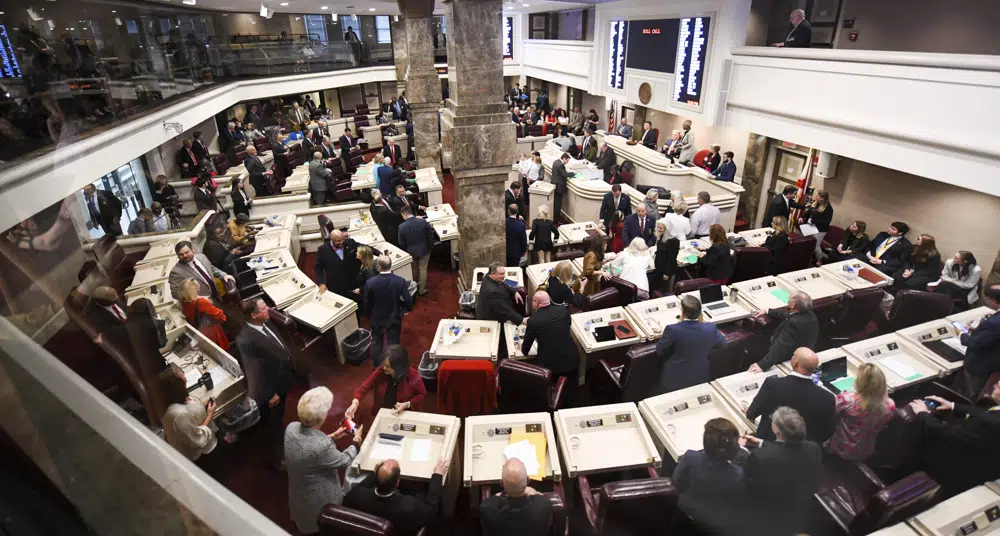
On Thursday, the Alabama House of Representatives passed legislation establishing that in the event of a sheriff dying, quitting, or being charged with a serious crime, the next senior officer in the department would take control of that department until the Governor appoints a successor. House Bill 276 (HB276) is sponsored by State Representative Ron Bolton. According to the synopsis, “Under existing law, when the office of the sheriff of a county is vacant or in certain other circumstances when existing law has provided that it is not appropriate for the sheriff to serve, the county coroner discharges the duties of the sheriff. This bill would provide that when the office of sheriff is vacant or when certain other circumstances exist, the highest ranking deputy sheriff in the county would serve as acting sheriff.” Bolton explained that in the event of a vacancy in the sheriff’s office, the highest-ranking member of that department would take control of the department. Bolton said, “They will automatically take control of that office until the governor makes the appointment.” Rep. David Standridge said, “I want to make sure that that deputy wouldn’t lose their job when a new sheriff is appointed if it is not him or her that is appointed.” Bolton said he would be open to amending the bill to include that stipulation when the bill is in the Senate. Rep. Pebblin Warren said, “The only thing that really concerns me is that the sheriff, in most cases, is the most liked person in the county. The chief deputy may not be well-liked. What is the current law?” Bolton said, “The current law puts the coroner in charge instead of the senior deputy.” Warren asked, “And that person will stay in office until the governor makes an appoint?” Bolton answered, “That is correct.” Warren said, “I personally know of a situation where the sheriff was popular, and the chief deputy was liked by no one.” Rep. John Rogers asked, “What if the highest-ranking deputy has some charges pending against him?” Bolton said, “He would be removed himself. It would go to the next-ranking deputy.” Rep. Juandalynn Givan asked, “Did you talk to the sheriffs about this, and specifically, did you talk with Jefferson County Sheriff Mark Pettway about this?” Bolton said, “I did. I taught Sheriff Pettway in the academy 27 years ago. The Sheriffs Association helped draft the bill, and I spoke with Sheriff Pettway about this when he is in town. Bolton said that the law establishing that the coroner assumes the powers of a sheriff in the event of a vacancy dates back to 1852. “It has been amended a number of times, but it has never been changed in terms of succession,” Bolton said. HB276 passed the House of Representatives 104 to 0. It now goes to the Senate for their consideration. HB276 was Rep. Bolton’s first bill to pass the House for the freshman lawmaker. Thursday was day 15 of the 2023 Alabama Regular Legislative Session. To connect with the author of this story or to comment, email brandonmreporter@gmail.com.
House passes legislation requiring first graders to go to kindergarten or pass skills competency test

On Tuesday, the Alabama House of Representatives voted in favor of legislation requiring all incoming first graders to have either attended kindergarten or pass a test proving that they have the competency to enter first grade. Children who fail the test will be forced to attend kindergarten rather than first grade with their peers. House Bill 43 (HB43) is sponsored by State Representative Pebblin Warren, who has carried this legislation for the last few years. “I am back again. I am back with the kindergarten bill again,” Warren said. “This bill is what is referred to as a First Grade readiness bill.” “This issue has become a really important issue in the State of Alabama,” Warren said. “It is a tragedy that we would let a child reach third grade without being able to read competently.” “This bill does not make kindergarten mandatory,” Warren continued. “A child can attend kindergarten or may be in homeschooling, private schooling, or religious schooling. As long as they demonstrate competence, they can enter into first grade.” Rep. Mary Moore asked, “Will this make it mandatory?” Warren answered, “It does not make it mandatory, but the child must pass a skills competency test to be admitted into first grade.” “If their parents aren’t education-oriented, that is the group that is always going to be behind,” Moore said. “We need to make K-4 and K-5 mandatory instead of leaving that up to the parents.” “I agree,” Warren said. “It should be mandatory, but this is a process. This is our beginning step to making it mandatory.” “What I want to see is Alabama’s ranking improved,” Warren said. “It is that foundation that is going to build the foundation of Alabama.” “We need to go back to K to 8,” Moore said. “They get to sixth grade, and they have been left behind, and they just look for that crack to get out without even going to go to high school.” “We are not giving up. We are going to continue fighting,” Warren said. “I have prayed to God, asking him what I can do to get this bill passed.” “I think unless we are going back to a time where a three-year-old goes to pre-K, we need to get that four-year-old in K4,” said Rep. Kyle South. The House voted to adopt the substitute version of the bill that Warren had prepared in the Education Policy Committee in a 92 to 7 vote. Rep. Phillip Pettus said, “I would like to see us mandate kindergarten.” “If this goes through, let’s come back next time and mandate kindergarten,” Warren said. Rep. Danny Garrett said, “The synopsis says that this mandates kindergarten. A lot of people in my district do not want to be mandated kindergarten.” There was some discussion on whether or not a parent could enroll the child in first grade even if they did not pass the skills competency test that will be required for children who did not have kindergarten before first grade. Rep. Terri Collins stated, “I have an actual amendment that spells it out that if they are not ready for first grade that the child shall enroll in kindergarten.” “This is mainly those children who have never been in any kind of organized program before,” Collins explained. “They do not know their numbers. They do not know their letters. They are not ready for first grade.” “Legally, you have to go to school as a six-year-old,” Collins stated. “This amendment says that if that child comes to school as a six-year-old and is not prepared to start in first grade, then they will be enrolled in kindergarten. It will be the best thing for the child at that point.” Rep. Barbara Drummond asked, “Will the parent have the option of placing them in the first grade?” “No, they will start at the most appropriate place,” Collins answered. “This is a friendly amendment,” Warren said. Collins explained that the Alabama State Department of Education would write the first-grade readiness test. The House voted to adopt the Collins Amendment 92 to 5. The House voted to pass HB43 in a vote of 87 to 12. This is the fourth year that Warren carried similar legislation. It has not passed the Senate in the past. Governor Kay Ivey endorsed the bill in her State of the State speech. It has been referred to the Senate Education Policy Committee. Tuesday will be day 14 of the 2023 Alabama Regular Legislative Session. The Alabama Constitution of 1901 limits the legislature to no more than 30 legislative days in the regular session. To connect with the author of this story or to comment, email brandonmreporter@gmail.com.
Bill would let parents ‘opt out’ of school mask mandates

Alabama lawmakers on Wednesday advanced legislation aimed at letting parents bypass requirements for students to wear face masks in school. The House Health Committee approved the legislation that harkens back to disputes over public health orders during the peak of the COVID-19 pandemic. The bill says parents of a student at a K-12 school have the right to “opt his or her child out” of any policy for students to wear a face covering at school, at a school function, on a school bus, or at a school bus stop. The bill now moves to the full Alabama House of Representatives for debate. “This is a parental rights bill,” Republican Rep. Chip Brown, the sponsor of the bill, told the committee. “It’s a bill that basically says, as a parent, that I should make the health decisions for my children, not the state.” Alabama had a statewide mask requirement during the pandemic, but the order expired on April 9, 2021, and the decision then was left to local school officials. Mask requirements have largely gone by the wayside as COVID-19 case numbers fell. And legal battles have played out in Florida and other states over who has the authority to ban mask mandates in schools. Democratic Rep. Pebblin Warren questioned the impact on other children and their families if a child without a mask spread an illness. “I’m just trying to be fair to all the parents. If my child gets sick because your child carried a virus, what rights do I have to deal with that situation?” Warren said. Bart Reeves, assistant executive director of the Alabama Association of School Boards, said the bill would strip decision-making authority from local school officials who were either elected or appointed by elected officials. “This sends a concerning message to our communities that individual preferences can override the collective decisions made through the democratic process,” Reeves said during a public hearing on the bill. The co-founder of a group that opposed mask and vaccine mandates spoke in favor of the bill during the public hearing. “During the last few years, we saw the rights of parents obliterated through the forced masking of their children,” Kaycee Cavender told the committee.
House Committee advances legislation guaranteeing that patients can have visitors
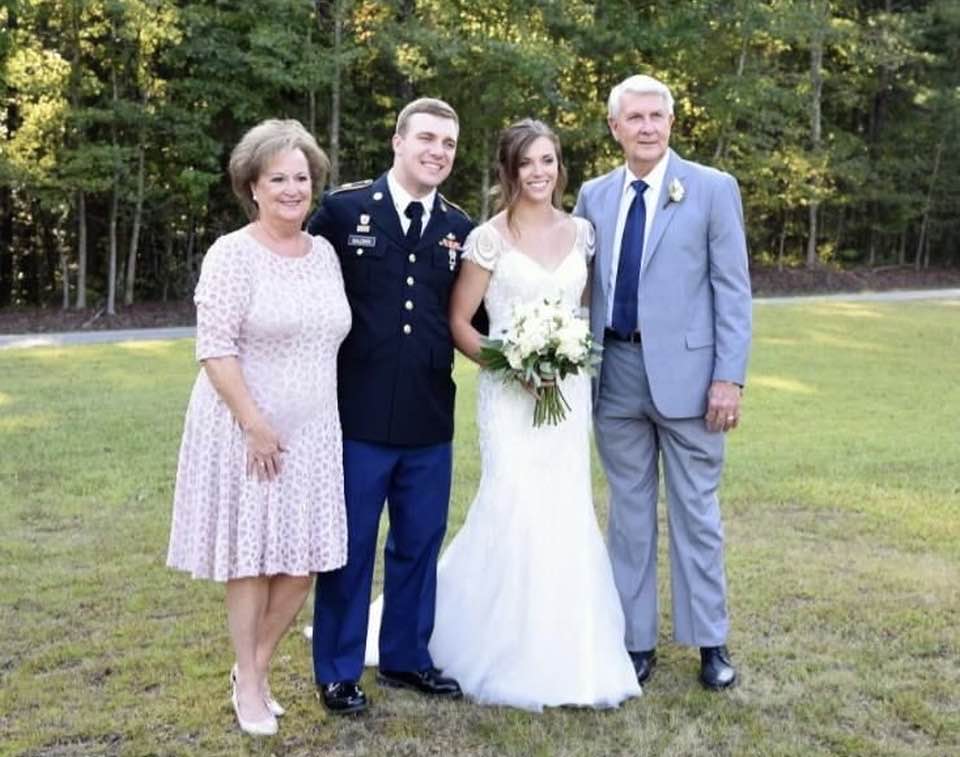
On Wednesday, the Alabama House Healthcare Committee voted to advance legislation that would guarantee that family members may spend time with their sick and dying loved ones in an Alabama hospital or nursing home. Senate Bill 113 (SB113) is sponsored by State Sen. Garlan Gudger. It is being carried in the House by Rep. Debbie Wood. The bill replaces last year’s patient visitation law. “Last year, we passed House Bill 521,” Wood said. “The problem was we still had family members who were not able to get into see their loved ones.” “Sen. Gudger worked hard to come up with another one with teeth in it,” Wood explained. The synopsis states, “Under existing law, a health care facility must follow certain requirements related to visitation for patients, clients, or residents. This bill would repeal existing law related to healthcare facility visitation and would require healthcare facilities to adopt visitation policies and procedures that meet certain standards. This bill would provide that residents, clients, or patients of a health care facility have the right to visit with any individual of their choosing during the facility’s visiting hours.” “This bill would allow a resident, client, or patient to designate an essential caregiver and would require healthcare facilities to allow essential caregivers at least two hours of daily visitation. This bill would require that any safety-related policies or procedures may not be more stringent than those established for the health care facility’s staff. This bill would prohibit a healthcare facility from requiring visitors to submit proof of vaccination or from prohibiting consensual physical contact between a visitor and a resident, client, or patient. This bill would allow a health care facility to suspend in-person visitation of a specific visitor if a visitor violates the facility’s policies and procedures.” Our healthcare facilities are the greatest asset we have,” Wood said. The bill also defines “end of life.” “End of life means something totally different to different people,” Wood explained. “I would think end of life would mean the last few weeks of life, but to a healthcare facility, end of life might mean the last fifty minutes.” Wood explained that the substitute bill carves out an exception for psychiatric care facilities from the visitation requirements if a doctor signs that the patient cannot receive visitors. During the COVID-19 global pandemic, hospitals and nursing homes banned visitors to try to halt the spread of the SARS-CoV-2 virus. Those measures largely failed, as did vaccine requirements once the vaccine was commercially accessible. Thousands of Alabamians died, many of them believing their family had abandoned them because of the strict limits against visiting the sick and seniors in nursing homes. “We also learn when we go through something traumatic,” Wood said. State Rep. Arnold Mooney said, “Thank you both for your work on this.” “We are a state that respects the dignity of life,” Mooney continued. Rep. Pebblin Warren asked, “Was there any conversation or dialogue with the institutions? The Hospital Association and the Nursing Home Association.” “This bill is a joint effort of everyone to make sure that we have policies and procedures that we The bill is named after Harold Sachs – the longtime Chief of Staff of the Alabama Republican Party. Sachs was diagnosed with COVID-19 and pneumonia in late 2020. His condition deteriorated quickly, and after a few weeks, he passed away. Sachs’ family – like many Alabama families- were not allowed to visit Harold in the COVID-19 ward. “They have been instrumental in pushing this issue,” Wood said. Rep. Paul Lee. is the Chairman of the Healthcare Committee Rep. Mooney made a motion to give the bill a favorable report. The favorable report motion passed unanimously. SB113 has already passed the Senate on a 33 to 0 vote. It could be taken up by the full House of Representatives as early as Thursday. Wednesday is the sixth legislative day of the 2023 Alabama Regular Legislative Session. To connect with the author of this story or to comment, email brandonmreporter@gmail.com.
Governor Kay Ivey gives State of the State Address
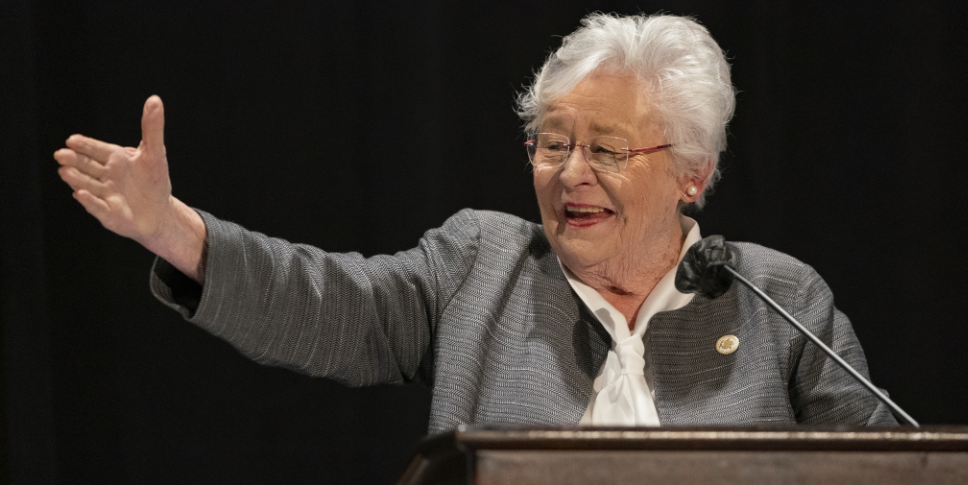
On Tuesday, Alabama Governor Kay Ivey addressed a packed joint meeting of the State Legislature in the Old House Chambers in Alabama’s historic Capitol Building. This was Gov. Ivey’s sixth State of the State address and the first since winning re-election in a landslide last November. Ivey extolled the strength of the Alabama economy and the strength of the state’s budgets. “Alabama is thriving,” Ivey said. “Alabama’s budgets are strong, and that is not by chance.” “We can be very proud of the fact that during my time as governor, we have never used the word proration,” Ivey added. The state has $3 billion in surplus left over from the 2022 fiscal year. Ivey promised to use that for tax rebates. “This is the people’s money,” Ivey said. “It is only fair that we give a share of this money back to the people of Alabama.” Ivey also wants to dole out $200 million in government handouts to Alabama businesses. “I am also proposing we invest even more into our locally owned businesses – the ones engrained into the DNA of our communities – through a $200 million grant program known as our Main Street Program,” Ivey said. “These competitive grants will help revitalize our small cities and towns. When folks think of main streets, they should think of rural Alabama!” In the aftermath of the Great Recession, the state increased and modernized its incentive program to lure new jobs and industry. Even though state unemployment has dropped to well below three percent and there is a worker shortage across the state, Ivey wants the legislature to renew these incentives. “I am proud of the successful track record we have had in recruiting business and industry to both the rural parts of Alabama and the larger cities,” Ivey said. “Since I’ve been governor, more than $42 billion have been invested in our state, which has created some 78,000 new jobs. For most of those, we can thank the Alabama Jobs Act. And any good coach knows when you have a play that’s working; the team needs to keep running it. Today, we have to look ahead and create an economic development strategy for the 2030s. I assured you we would have a winning game plan here at home, and tonight, I am calling on you to get behind our playbook for economic success, what I am calling The Game Plan. We will ensure stability and growth by renewing and improving the Alabama Jobs Act and the Growing Alabama Act.” In addition, the state has over a billion dollars in American Rescue Plan Act (ARPA) dollars it needs to appropriate. “We are, once again, tasked with allocating our taxpayers’ dollars that are part of the second round of the American Rescue Plan Act from Congress,” Ivey said. “This is not “free money,” and we must invest these one-time funds wisely. Last year, thanks to you, members of the Alabama Legislature, we put these dollars to work, meeting some of Alabama’s biggest challenges. I commit to the people of Alabama we will once again take a smart approach and put it towards major and needed endeavors like expanding broadband access, improving our water and sewer infrastructure, and investing in our health care – including telemedicine.” Ivey has called a special session beginning on Wednesday for the Legislature to focus on appropriating that $billion in ARPA funds. “This evening, I am calling a Special Session of the Alabama Legislature to begin tomorrow so that we can urgently address these endeavors,” Ivey said. Tuesday was the first day of the 2023 Alabama Regular Legislative Session, but since Ivey has called a special session, day 2 of the regular session will not begin until Tuesday, March 21. The Alabama Constitution limits the Legislature to just thirty legislative days in a regular session. “I predict that we will have a busy and production session,” Ivey said. Ivey emphasized education in her speech. “Everything we do today is for a better tomorrow for these children and all who call Alabama home,” Gov. Ivey said. “We must make sure that Alabama provides a quality education for each of these children no matter where they live.” The governor wants to mandate kindergarten, so that compulsory education begins at kindergarten rather than the first grade. “It’s also past time we require our students to complete kindergarten,” Ivey said. “I call on you to adopt legislation to ensure our students are ready for the first grade. Our first-grade teachers should be preparing those students for the second grade, not simply catching them up to be on a first-grade level.” The mandatory kindergarten bill, HB43, has been introduced by State Rep. Pebblin Warren. Ivey also announced plans to build a healthcare magnet school, the Alabama School for Healthcare Science, so that future high school graduates are ready for a career in the healthcare sector. That magnet school will be sited in Demopolis in Marengo County. “Improving our children’s educational outcome will be my top priority and will continue to be over the next four years,” Ivey said. The governor expressed confidence that her previous efforts of plowing money into pre-K classrooms, math coaches, reading coaches, and other programs will eventually yield fruit, and she wants to throw even more money at these efforts. Ivey also promised state support for the Saban Center – a STEM school in Tuscaloosa that is a partnership between Tuscaloosa and Nick and Terry Saban. Ivey also said that her goal was to have the highest starting pay for teachers in the Southeast before this term ended. Ivey voiced support for school choice but stopped short of giving every parent the freedom to decide where and how to educate their children. “I am proposing we provide startup funds for Charter Schools and make needed reforms to the governance of the Charter School Commission in order to create better accountability,” Ivey said. Ivey promised to help businesses by cutting government red tape. “Tomorrow, I will issue an executive order to cut red tape so that our businesses can thrive,” Ivey
Ten more pre-filed bills to watch
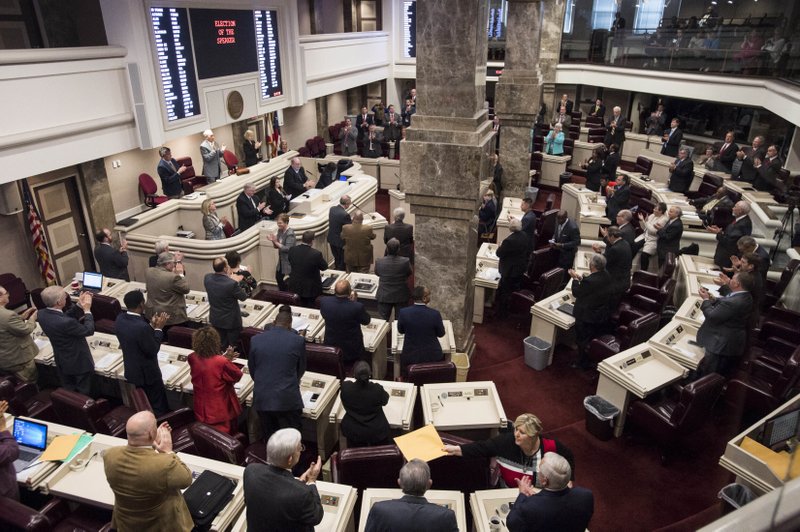
Last week, Alabama Today looked ahead at the coming 2023 Alabama Regular Legislative Session. We looked at ten of the more interesting of the 36 bills that had been pre-filed at that time. Since then, 22 more bills have been pre-filed by legislators. As more bills have been pre-filed, we look at ten more bills that could become law this year. House Bill 34 was introduced by Rep. Tracy Estes (R-Winfield). HB34 would provide that it is unlawful to discharge a firearm on school property. Under existing law, it is already unlawful to discharge a firearm into an occupied or unoccupied school building. This bill would make a person who shoots or discharges a firearm into an occupied school bus or school building guilty of a Class B felony. A person who shoots or discharges a firearm into an unoccupied school bus or school building shall be guilty of a Class C felony. House Bill 40 was introduced by Rep. Jim Hill (R-Odenville). Under existing law, retired justices and judges may be called to active duty status and are compensated for their service. This bill would provide that retired justices and judges receive per diem, mileage, and be provided court-supportive personnel. This bill would require retired justices and judges to complete at least six hours of approved continuing legal education annually. House Bill 31 was sponsored by Rep. Artis “A.J. McCampbell (D-Livingston). Under existing law, a public K-12 school or school district determined to have poor performance is labeled by the State Superintendent of Education as failing to make adequate progress or as a failing school under the school grading system. Also, under existing law, the Alabama Accountability Act of 2013 provides financial assistance through an income tax credit to a parent who transfers a student from a failing public school to a nonfailing public school or nonpublic school of the parent’s choice. HB31 would change the designation of a failing school to a fully supported school and the designation of a nonfailing school to a non-fully supported school for the purposes of school grading and the Alabama Accountability Act of 2013 and would require the State Board of Education to reflect those changes in terminology when amending or adopting rules. House Bill 43 is sponsored by State Rep. Pebblin Warren (D-Tuskegee). Under existing law, a child six years of age on or before December 31 is entitled to admission to the first grade in public elementary schools, and a child five years of age on or before September 1 is entitled to admission to the local public-school kindergarten. HB43 would allow a child who becomes six years of age between September 1 and December 31 to be admitted to the first grade as long as they have completed kindergarten or otherwise demonstrates first-grade readiness. This mandatory kindergarten bill has passed the House of Representatives in the past two years but failed in the Senate. This bill would also allow a child under five years of age on September 1 to be admitted to public kindergarten under certain circumstances. House Bill 46 is sponsored by Rep. Allen Treadaway (R-Morris). This bill would permit any individual retired under the Employees’ Retirement System, who was classified as a law enforcement officer, to perform duties as a school resource officer without suspension of his or her retirement allowance. House Bill 36 was sponsored by Rep. Terri Collins (R-Decatur). Under existing law, the Solid Waste and Recyclable Materials Management Act regulates the disposal and recycling of solid waste and recyclable materials. This bill would define “advanced recycling” as a manufacturing process to convert post-use materials such as plastics into recycled products. This bill would specify that advanced recycling at an advanced recycling facility would not be considered solid waste disposal or incineration under the solid waste act. Term in the definition of solid waste. This bill would also define “mill scale and slag” and include the term in the definition of solid waste. House Bill 38 was also sponsored by Rep. Hill. Under existing law, a judge must sentence an offender convicted of a nonviolent offense pursuant to the presumptive sentencing standards. This bill will allow a judge to deviate from the presumptive sentencing guidelines if a defendant is convicted after requesting a trial. House Bill 28 is sponsored by Rep. Chris England (D-Tuscaloosa). Under existing law, persons with a lawful pistol permit may possess their gun on school property. This bill would remove this exemption so that even a person with a concealed carry permit may not carry a gun on school grounds. House Bill 45 is sponsored by Rep. Jeremy Gray (D-Opelika). This bill would create the Sudden Cardiac Arrest Prevention Act. It would require the State Board of Education to adopt certain guidelines to inform and educate student-athletes, parents, and coaches about the signs and symptoms of sudden cardiac arrest. This bill would require each student-athlete and his or her parent or guardian to provide written acknowledgment of receipt of information about sudden cardiac arrest before the student may participate in any athletic activity. HB45 would require a student who passes out, faints, or exhibits symptoms of sudden cardiac arrest to be pulled from the athletic activity and would prohibit the student from returning to the athletic activity until an appropriate medical professional provides written clearance for their return. This bill would require each coach of an athletic activity to receive annual training relating to sudden cardiac arrest and would provide that a coach may be suspended if he or she does not complete the necessary training or if he or she fails to pull a student from an athletic activity for fainting or exhibiting symptoms of sudden cardiac arrest. This bill would protect a coach from liability related to a student who exhibits symptoms of sudden cardiac arrest unless the coach is reckless or grossly negligent. House Bill 25 was introduced by Rep. Parker Moore (R-Decatur). Under existing law, when an offender has previously been convicted of any three or more felonies or has been previously convicted of two or more Class A or Class B felonies and subsequently commits a Class D felony, he or she is sentenced as if he or
House votes to allow concealed handguns without permit

The Alabama House of Representatives on Tuesday approved legislation ending the requirement for a person to get a permit in order to carry a concealed handgun in public. Lawmakers voted 65-37 for the bill after Republicans in the chamber limited debate to two hours. The bill now moves to the Alabama Senate. Gun rights advocates have championed the proposal they call “constitutional carry,” arguing that people should not have to get a permit, which requires a background check and paying a fee, to carry a handgun they legally own. Many state sheriffs and other law enforcement officials have opposed the legislation, arguing the permits provide a crucial tool to combat crime and enhance public safety. “This bill does not change who can and cannot carry a gun. The people that are prohibited now will still be prohibited,” Republican Rep. Shane Stringer of Citronelle said of his bill. Stringer, a former law enforcement officer, disputed arguments that the permits enhance public safety. “The fact of the matter is, criminals don’t obey laws. This $20 piece of plastic, a permit, is not going to stop an evil person from committing a crime or doing wrong and it will not protect our law enforcement from getting hurt or killed.” Alabama currently requires people to get a concealed carry permit, which requires a background check, to carry a handgun under their clothes or in a purse or bag when they go in public. The bill would do away with the requirement, but people could still choose to get a permit if they wanted. It would also do away with the current requirement for people without concealed carry permits to keep handguns unloaded and secured when driving. Rep. Pebblin Warren, a Democrat who represents Tuskegee, said the change will encourage young people to “just go wild in the street with guns.” “We’re opening the door to really encourage violence,” Warren said. Warren, the wife of a former state sheriff, read a letter from Montgomery County Sheriff Derrick Cunningham, who now heads the Alabama Sheriffs Association, opposing passage of the bill. Republican Rep. Allen Farley, a retired assistant sheriff and the only Republican to vote against the bill in committee, said the permits are a tool “for us to catch those people who should not have a firearm.” Farley said the permit fees help fund small sheriffs’ offices and that the arrests for permit violations have led to seizures of drugs and the solving of crimes. “Why are we making the thin blue line in Alabama thinner?” Farley said. There are 21 states that allow concealed weapons in public without a permit, according to Stateline, an initiative of the Pew Charitable Trusts. Proponents of the bill said the Alabama Law Enforcement Agency is developing a database, authorized by a state law creating a lifetime concealed carry permit option, that officers will be able to use to flag people not legally entitled to carry a handgun. Stringer maintained that will be a better tool for law enforcement officers to remove guns from people who can not legally possess them. Lee County Sheriff Jay Jones last week said the intent of the database is good but said he did not think it could take the place of permits because there will be inevitable gaps in collecting data. Republished with the permission of the Associated Press.
Alabama House Democratic Caucus calls for an agenda that is ‘pro-growth, pro-innovation, and pro-Alabama’
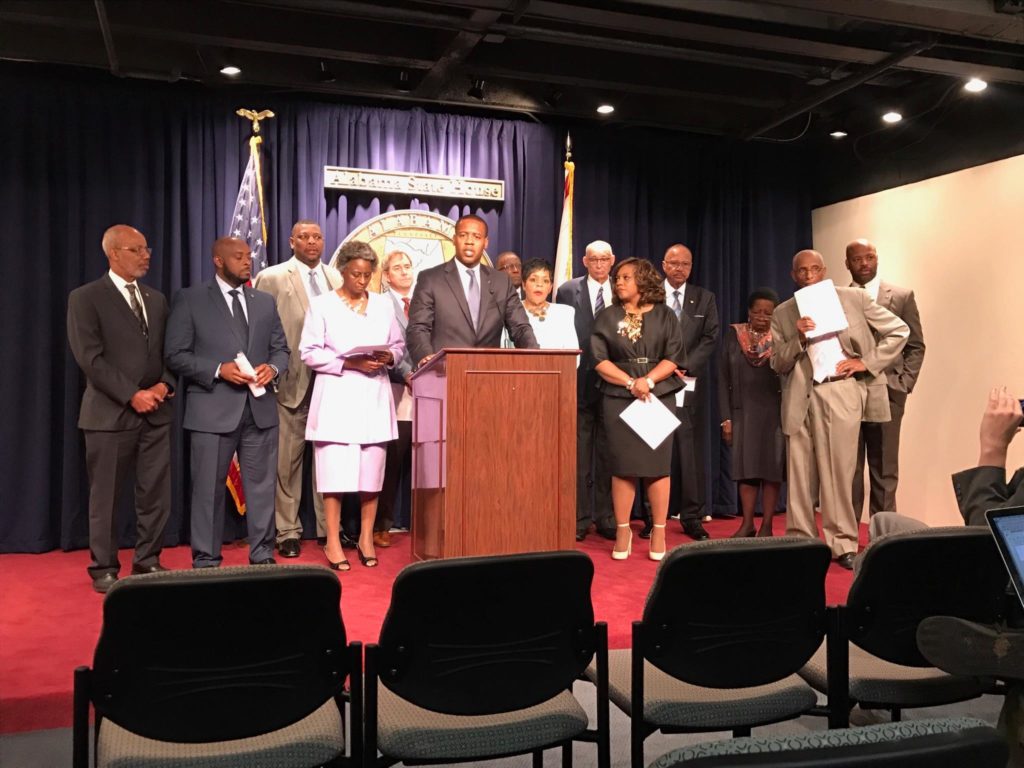
The Alabama House Democratic Caucus released its legislative agenda on Wednesday after Gov. Kay Ivey’s State of the State address. The Caucus said that their agenda was “pro-growth, pro-innovation, and pro-Alabama.” Rep. Anthony Daniels opened the conference, stating that “we all win” when Alabama focuses on those goals, arguing that the group aims to “move Alabama forward.” Daniels argued that it’s time for Alabama to “rebuild and recover” and not focus on issues that will divide the state. The caucus also called upon Republicans, who enjoy a supermajority status in the Legislature, to spend federal relief funds on health care, and asked leadership to encourage “sustainable, long-term economic growth.” Policy director Adline Clarke called on a tax cut on small businesses, stating, “We vehemently opposed the majority’s efforts to defy and replace federal vaccination mandates with conflicting state mandates. This has now, essentially, resulted in the largest tax, or burdens, on small businesses in the history of Alabama.” The caucus also renewed calls to expand Medicaid under the Affordable Care Act and called to repeal the state’s 4 percent tax on groceries. Additionally, they want to expand early voting, and call on the state to provide pay raises to teachers and retired educators. AL.com reported that Daniels urged lawmakers to be mindful of any grant programs they authorized with the federal funds. He said that local matching funds, while often available in cities with strong revenue bases, are not often a solution in cities where budgets were hit hard during the pandemic. “There are communities across the state of Alabama not collecting revenue at the level they had been in the past. We need to look at this problem holistically so communities have a fair shot across the board and not just communities that can afford it,” Daniels commented. Rep. Pebblin Warren discussed using funds to incentivize doctors to relocate to Alabama, noting a shortage in healthcare workers. “We know a healthy Alabama is a basic foundation for our wellness. Simply put, there has never been a more important time to expand Medicaid. We need to do everything we can to ensure access to affordable and quality health care.” Daniels also spoke about the GOP and the agenda that focuses on issues that he argued as not important, like Critical Race Theory and Republicans’ call to remove the requirement to purchase a permit to possess a concealed handgun. Daniels argued that the conceal carry measure has been opposed by sheriffs. “It hurts our public safety,” Daniels stated. “This is an issue that we are on the side of law enforcement on, and we are working alongside all of the citizens of Alabama because it’s dangerous.” “They’ve referenced Birmingham in one of the articles that I read, but they failed to say one word about January 6th,” Daniels said. Daniels reflected on the lives lost to COVID-19 and the prison system, stating those are more important issues. “We are focusing on things that continue to divide us as a state. Those days should be gone.”
Kay Ivey signs protections for unvaccinated workers
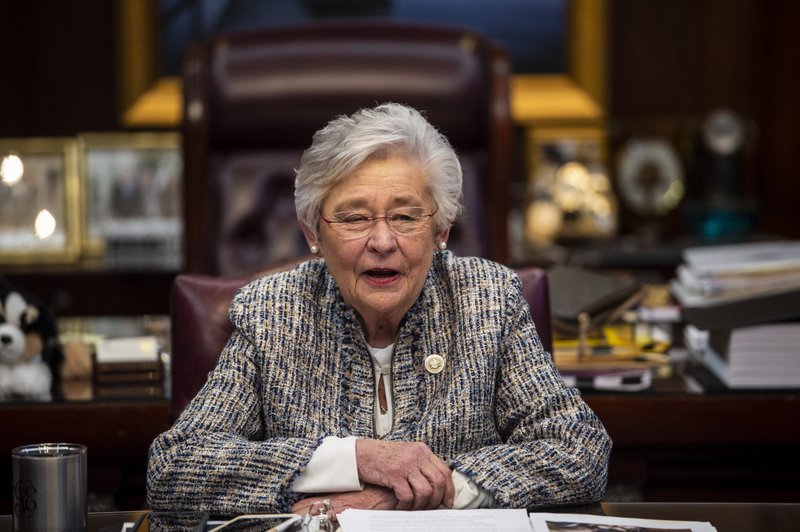
Alabama Gov. Kay Ivey on Friday signed employment protections for workers who claim a religious or health reason for not getting vaccinated against COVID-19. The Republican governor signed the legislation a day after it was approved by the Alabama Legislature as GOP-led states turn to lawsuits and legislation to fight the federal vaccine requirements they call an infringement on personal liberties. Ivey also signed into law a separate bill requiring parental consent for minors to get vaccinated for COVID-19. The new law says state employers can’t fire workers for being unvaccinated against COVID-19 if the employee returns a new standardized state form to claim a religious, medical exemption. “From the moment the White House rolled out their scare tactic plans to try to force this vaccine on Americans, I called it for what it is: an un-American, outrageous overreach. Alabamians – including those like myself who are pro-vaccine – are adamantly against this weaponization of the federal government, which is why we simply must fight this any way we know how,” Ivey said in a statement. President Joe Biden in September announced contractors who do business with the federal government must have workforces vaccinated — with no option to test out. The Alabama law will also affect companies, such as medical providers, who wanted to independently place vaccination requirements on workers. The bill drew opposition from the Business Council of Alabama, which said it would put federal contractors in a no-win situation. Democrats said Republicans were putting both jobs and public health in jeopardy for the sake of scoring political points. “After supporting a bill like that, I don’t think they can say they are pro-business or pro-growth. Hopefully, the business community will remember that House Democrats support their interests,” House Minority Leader Anthony Daniels of Huntsville said. Under the legislation, employees would check a box in a new standardized form for the reason they couldn’t get vaccinated — such as a religion, certain qualifying medical conditions, or a health provider’s signed recommendation. There would be no requirement to provide proof of the reason. An employee denied an exemption can appeal to the state Department of Labor. The new process and job protections will end automatically on May 1, 2023, unless extended by lawmakers. The legislation is a carve-out from existing law that allows companies to fire workers at will and specifies that it wouldn’t alter the ability of an employer to terminate an employee for reasons other than the employee’s COVID-19 vaccination status. Republicans argued that the federal government already allows exemptions for medical and religious reasons, and lawmakers are trying to provide an easy way for employees to claim those exemptions. “They’re fearful of losing jobs they’ve had for 20 years, very good jobs that they had with federal contractors,” Republican Rep. Mike Jones of Andalusia said. Some Democrats said the GOP proposal would create a wide-open portal for people to fraudulently claim an exemption without truly having a valid reason. “You know and I know, everybody, even atheists, is going to come up and say it’s because of their religious beliefs,” Democratic Rep. Pebblin Warren of Tuskegee said. Alabama has had at least 15,629 COVID-19 related deaths and has the second-highest per capita death rate from COVID-19 among states, according to researchers from Johns Hopkins University. Republished with the permission of the Associated Press.
