
Study finds COVID-19 vaccine may reduce virus transmission
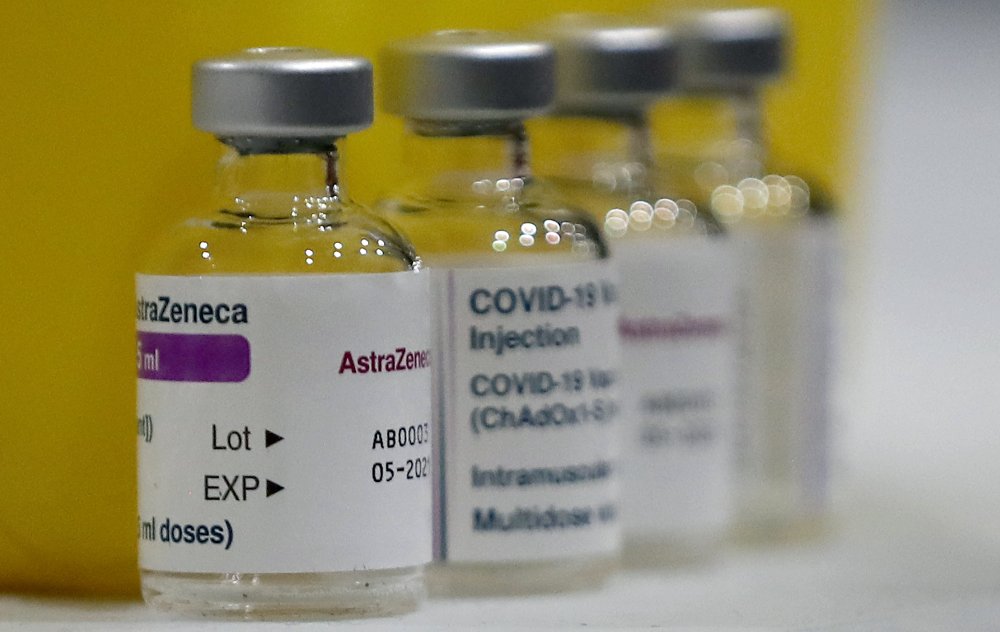
AstraZeneca’s COVID-19 vaccine shows a hint that it may reduce transmission of the virus and offers strong protection for three months on just a single dose, researchers said Wednesday in an encouraging turn in the campaign to suppress the outbreak. The preliminary findings from Oxford University, a co-developer of the vaccine, could vindicate the British government’s controversial strategy of delaying the second shot for up to 12 weeks so that more people can be quickly given a first dose. Up to now, the recommended time between doses has been four weeks. The research could also bring scientists closer to an answer to one of the big questions about the vaccination drive: Will the vaccines actually curb the spread of the coronavirus? It’s not clear what implications if any, the findings might have for the two other major vaccines being used in the West, Pfizer’s and Moderna’s. In the United States, Dr. Anthony Fauci, the nation’s top infectious disease expert, dismissed the idea of deliberately delaying second shots, saying the U.S. will “go by the science” and data from the clinical trials. The two doses of the Pifzer and Moderna vaccines are supposed to be given three and four weeks apart. Still, the research appears to be good news in the desperate effort to arrest the spread of the virus and also suggests a way to ease vaccine shortages and get shots into more arms more quickly. The makers of all three vaccines have said that their shots proved to be anywhere from 70% to 95% effective in clinical trials in protecting people from illness caused by the virus. But it was unclear whether the vaccines could also suppress transmission of the virus — that is, whether someone inoculated could still acquire the virus without getting sick and spread it to others. As a result, experts have been saying that even people who have been vaccinated should continue to wear masks and keep their distance from others. Volunteers in the British study underwent regular nasal swabs to check for the coronavirus, a proxy to try to answer the transmission question. The level of virus-positive swabs — combining volunteers who had asymptomatic infection with those who had symptoms — was 67% lower in the vaccinated group, the researchers reported. While not a direct measure, “that’s got to have a really beneficial effect on transmission,” Oxford lead researcher Sarah Gilbert told a meeting of the New York Academy of Sciences Wednesday. The researchers also looked at how likely people who have been vaccinated are to get a symptom-free infection. In one subset of volunteers, there were 16 asymptomatic infections among the vaccinated and 31 in an unvaccinated comparison group. Pfizer and Moderna also are studying the effect of their vaccines on asymptomatic infections. Only the Pfizer and Moderna vaccines are being used in the United States. Britain is using both AstraZeneca’s and Pfizer’s. AstraZeneca’s has also been authorized by the 27-nation European Union. Pfizer has not endorsed the British government’s decision to lengthen the time between doses. Mene Pangalos, executive vice president of biopharmaceuticals research and development at AstraZeneca, said that no patients experienced severe COVID-19 or required hospitalization three weeks after receiving a first dose, and that effectiveness appeared to increase up to 12 weeks after the initial shot. “Our data suggest you want to be as close to the 12 weeks as you can” for the second dose, Pangalos said. British Health Secretary Matt Hancock said the study “backs the strategy that we’ve taken” to make sure more people have gotten at least one shot. Britain’s decision has been criticized as risky by other European countries. Stephen Evans of the London School of Hygiene and Tropical Medicine said the study’s suggestion that a single dose protected people for 12 weeks was “useful but not definitive.” He said that the authors themselves acknowledged their research was not designed to investigate the vaccine’s dosing schedule and that their conclusions were based on statistical modeling, not actual patients tracked over time. “It certainly isn’t very strong evidence, but there is also no indication this is the wrong thing to do,” Evans said of Britain’s strategy. One of the Oxford researchers, Dr. Andrew Pollard, said scientists also believe the AstraZeneca vaccine will continue to offer protection against new variants of COVID-19, though they are still waiting for data on that. Fast-spreading mutant versions have caused alarm around the world. “If we do need to update the vaccines, then it is actually a relatively straightforward process. It only takes a matter of months, rather than the huge efforts that everyone went through last year to get the very large-scale trials run,” Pollard told the BBC. Meanwhile, a U.N.-backed program to supply COVID-19 vaccines to the neediest people worldwide is gearing up after a troubled start. The COVAX Facility announced plans Wednesday for an initial distribution of some 100 million doses by the end of March and more than 200 million more by the end of June to dozens of countries. Nearly all of the doses expected for the first phase are due to come from AstraZeneca and its partner, the Serum Institute of India. The rollout will be contingent on the World Health Organization authorizing the AstraZeneca shot for emergency use, which is expected to happen this month. Some 190 countries and territories are participating in COVAX, which has seen rich nations scoop up vaccine supplies, sometimes at premium prices. The pandemic’s worldwide death toll has eclipsed 2.2 million, including about 447,000 in the U.S., according to Johns Hopkins University data. New cases per day in the U.S. and the number of Americans in the hospital with COVID-19 have dropped sharply in the past few weeks, but deaths are still running at close to all-time highs at an average of around 3,100 a day. Deaths often lag behind the infection curve, because it can take weeks to sicken and die from COVID-19. As the Super Bowl approaches, Fauci is warning people against inviting others over
Vaccination eligibility to be expanded starting Feb.8
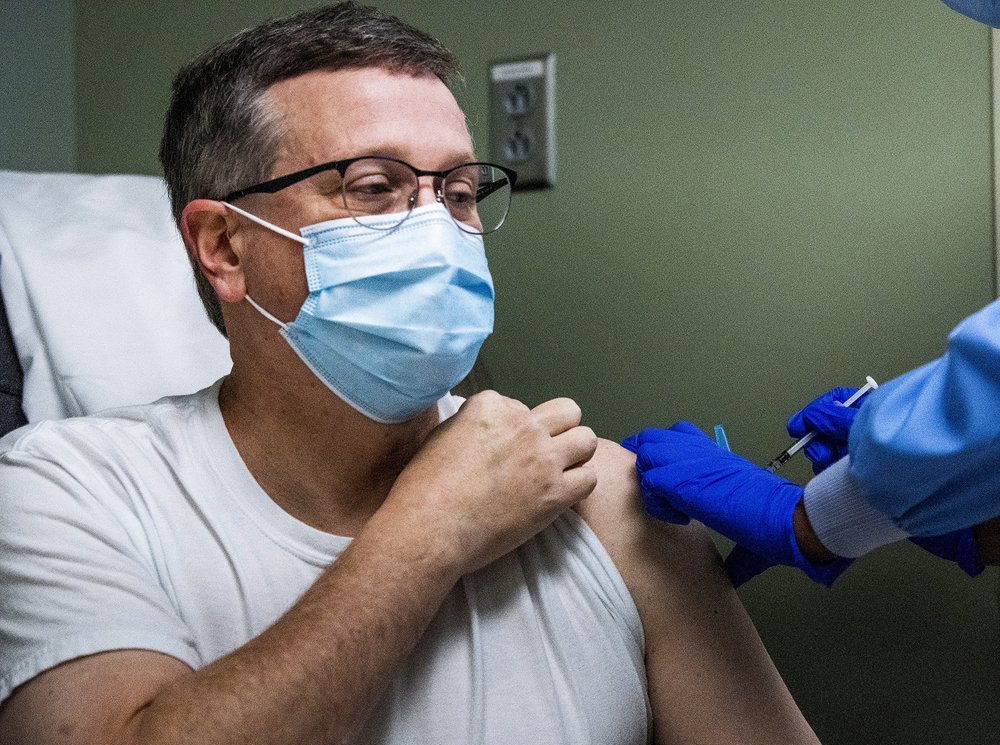
Governor Kay Ivey and the Alabama Department of Public Health (ADPH) announced they will extend eligibility for COVID-19 vaccinations to include people 65 or older, and additional groups of frontline workers starting February 8. These additional groups will add over 1 million people who are now eligible to receive the Covid-19 vaccine in Alabama. Two million people will be eligible to get the vaccine, while only around 100,000 doses are being distributed weekly. The list of frontline critical workers includes first responders, corrections officers, food and agriculture workers, postal workers, grocery workers, public transit workers, judiciary, and educational personnel (teachers, support staff, community college, and higher education). Recently the Alabama Education Association sent a letter to State Health Officer Dr. Scott Harris, asking the state to begin vaccinating education employees “as soon as possible.” 39 school workers in Alabama have died from COVID-19. 772,275 vaccines have been delivered to Alabama, and 42% of those have already been administered. 148,549 doses of the Pfizer vaccine and 175,326 doses of the Moderna vaccine have been used. Gov. Ivey stated, “We have all been frustrated that the supply of vaccine coming from the federal government hasn’t kept up with the demand. To be blunt, we simply haven’t gotten the vaccine that we’ve been promised, and this has created a major backlog of aggravation. Today’s announcement will ensure that as more vaccine is released, we will have a plan in place to get the vaccine in people’s arms more quickly.” “Alabama is expanding its guidance despite the limited vaccine in order to accelerate the vaccine uptake in our state,” Dr. Harris commented. “I want to reiterate that any remaining vaccines that have not been administered are either someone’s first dose and they are waiting on their appointment or they are waiting on their second dose. Any vaccine currently in the state has someone’s name on it.” To schedule an appointment for the free COVID-19 vaccination at a county health department, individuals may call the ADPH COVID-19 Vaccine Scheduling Hotline at 1-855-566-5333. The vaccine providers can be found within the Alabama COVID-19 Vaccine Distribution Dashboard at arcg.is/OrCey. The Vaccine Allocation Plan is available at www.alabamapublichealth.gov/covid19vaccine/assets/adph-covid19-vaccination-allocation-plan.pdf. The ADPH dashboard can be viewed here.
Vaccinations begin in Alabama as COVID-19 cases soar
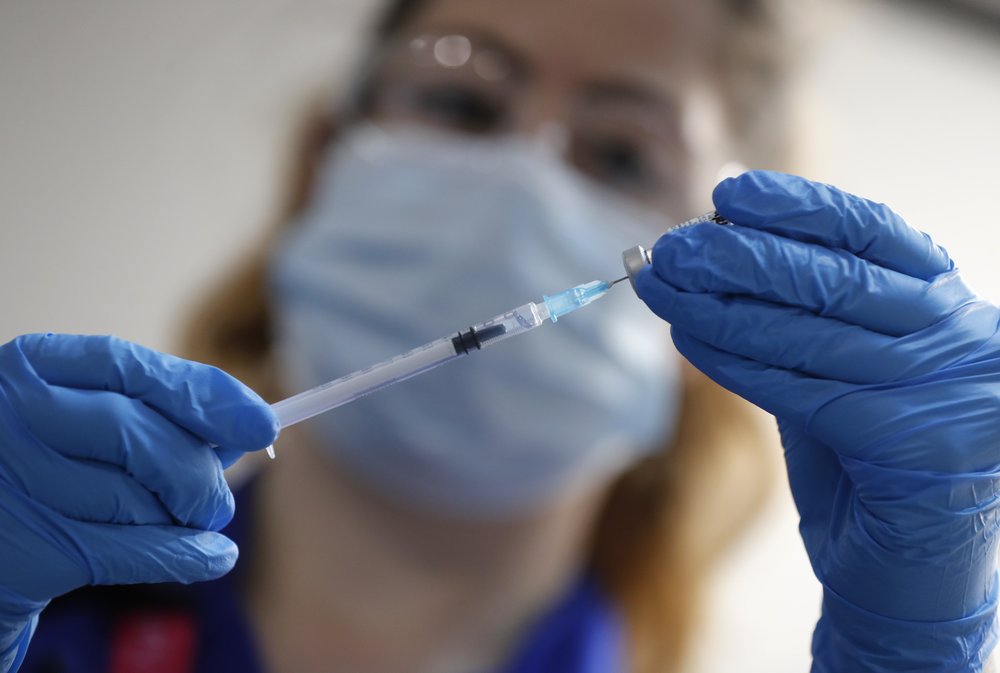
Health care workers began receiving the first vaccinations against the new coronavirus in Alabama on Tuesday as cases of the illness caused by the virus soared. Cullman Regional Medical Center said a longtime nurse, Donna Snow, had received an initial dose of the two-step vaccine a day after the hospital, located north of Birmingham, received its first shipment. “I’m hopeful that more people are able to take the vaccine so we can begin to see a decline in the number of critically ill patients and families impacted by this disease,” Snow, who works in critical care, said in a statement released by the hospital. The Birmingham VA Medical Center said health care workers and veterans at high risk for the disease also would begin receiving vaccinations Tuesday, and additional hospitals will begin providing vaccinations — most to front-line health care workers at first — as more shipments arrive. Workers from the University of Alabama at Birmingham, which is providing vaccinations for multiple organizations across seven counties, will begin giving the first of 11,000 doses on a large scale on Friday, said Dr. Donna Nafziger of UAB Hospital. As many as 1,000 people a day could get the shots. “That’s our goal,” she said. It’s unclear when the vaccine will be available to members of the general public, Nafziger said, but it could be by spring. The state received nearly 41,000 doses of the new Pfizer vaccine in the initial round of shipments. More than 300,000 people in Alabama have contracted the virus, and COVID-19 has killed more than 4,120 people statewide. State health regulators said they have loosened licensing rules to allow more out-of-state doctors to work in the state, where intensive care beds are filling up and medical workers are among the ill. The Alabama Department of Corrections, which has one of the nation’s highest rates of inmate deaths from COVID-19, said three more elderly inmates had died of the illness caused by the coronavirus. All three men had serious health problems before contracting the virus, the agency said in a statement. Republished with the permission of the Associated Press.
Gov. Kay Ivey extends Safer at Home, mandates masks in public, and warns of ‘dark days’ ahead
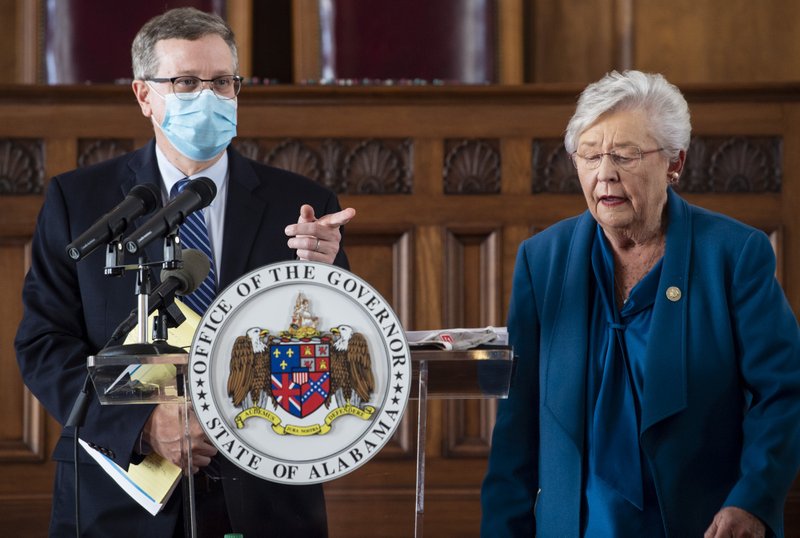
Pushback from citizens and political leaders alike has led to controversy over mask-wearing in the state of Alabama. Lieutenant Governor Will Ainsworth, who tested positive for the virus in October, has been resistant to continuing a mask order. He has stated that “masks should be voluntary, not mandatory.” With Covid-19 cases higher than they’ve ever been, Governor Kay Ivey issued her twentieth supplemental emergency proclamation extending the Safer at Home Order that includes a statewide mask requirement. Individuals will be required to wear a mask or other facial covering when in public and in close contact with other people. This order extends until Friday, January 22, 2021, at 5:00 p.m. Except for the extension, all guidelines remain the same. “The mask mandate remains the one stop gap in order to keep the balance of our daily lives and maintaining health and safety,” Ivey stated. “We returned to school, to church, and to work under the conditions of simply wearing a mask.” “These are some of our darkest days since COVID-19 became a part of our daily conversations,” Ivey continued. Ivey posted to Twitter, saying, “Y’all, none of this has been easy. As I have done previously, I cannot thank the people of Alabama enough for the sacrifices you are making-sacrifices for yourself and for others.” Y’all, none of this has been easy. As I have done previously, I cannot thank the people of Alabama enough for the sacrifices you are making—sacrifices for yourself and for others. @ALPublicHealth #alpolitics #TogetherAL 1/7 pic.twitter.com/cbmQ4xK96X — Governor Kay Ivey (@GovernorKayIvey) December 9, 2020 State Health Officer Dr. Scott Harris also spoke at the press conference and discussed the new Covid-19 vaccine rollout. Harris said that infections are “out of control” in much of the country. He said the number of COVID-19 deaths in Alabama is equivalent to a 747 jet crash every month for the past 10 months. “We really are in a difficult time right now in Alabama,” he stated. “This is a very challenging time, and we’re looking at some pretty dark days for the foreseeable future.” Harris said the state expects to receive about 41,000 dozes of Pfizer’s vaccine, possibly within the next week. However, only about 15 hospitals have the capability of storing it. Currently, the Pfizer vaccine has a recommended storage temperature conditions of -70°C±10°C for up to 10 days unopened. This requirement means only certain hospitals can be utilized for storage and distribution. “People have sacrificed so much. It’s been such a difficult year for everybody,” Harris stated. “I would say everybody knows someone who’s been sick from this disease, and most of you know someone who’s died from this disease. We still have some tough weeks ahead of us.”
Coronavirus vaccine will be free for all Alabamians, available as soon as December

With two possible vaccines being released as soon as December, the Alabama Department of Health announced that the COVID-19 vaccine will be free for all Alabamians. According to the press release, healthcare providers and the chronically ill would be the first to receive the vaccine. Residents and workers in long-term care facilities will also be prioritized. Drug company Moderna announced their vaccine has a 94% effectiveness rate, AL.com reported. This is slightly higher effectiveness than Pfizer’s vaccine, which has a 90% effectiveness. Most vaccines will require two doses taken three to four weeks apart. Dozens of companies have vaccines in the works. There are already large doses of the Pfizer and Moderna vaccines being produced and stored. U.S. Army Gen. Gustave Perna, Chief Operating Officer of Operation Warp Speed, recently spoke with State Health Officer Dr. Scott Harris about how quickly Alabama will receive the vaccinations. The FDA is expecting to spend around two weeks reviewing the vaccine trials before beginning distribution. Once the review is complete, the Advisory Committee on Immunization Practices will study the data and make recommendations. Once it is confirmed that the vaccine is safe and effective, and when an Emergency Use Authorization is received, vaccine kits will be shipped to several locations statewide. “All Americans can receive their initial vaccine treatment without any charge, including people with no health insurance. Gen. Perna and State Health Officer Dr. Scott Harris emphasized that the goal is for all people to have access to the free vaccine regardless of their financial status or location. Distribution of the vaccine will be made equitably to those most at risk, the chronically ill and seniors in all 67 Alabama counties.”
CPI study: There are six lobbying entities to every Alabama lawmaker

A recent study by The Center for Public Integrity (CPI) has detailed the reach that national lobbying groups enjoy across the country. According to the study, 20 lobbying entities have access to all 50 states, including Aflac, the National Rifle Association (NRA), Pfizer, Wal-Mart and Anheuser-Busch. While all of these agencies and more are licensed to lobby in all 50 states, and a laundry list of others are allowed to lobby in fewer, the biggest lobbying presence in Alabama comes from the Alabama Education Association, Southern Company, AT&T, the Business Council of Alabama and Blue Cross/Blue Shield of Alabama. A lot of work has obviously been done on the part of these lobbying groups, as Alabama lawmakers have made great strides in expanding technology, providing tax breaks to small businesses and providing robust increases to the state’s education budget. But other entities are seemingly at work influencing other Alabama legislation as well. Among the bills on this week’s Senate calendar is SB296 from Sen. Tim Melson (R-Florence), which would allow epinephrine auto-injectors to be administered by “non-medical persons” at “summer camps, day care centers, restaurants, places of employment, and other entities.” The CPI study lists Mylan, Inc. among the entities which has significantly expanded operations over recent years. Mylan lobbies for EpiPens to be available in schools and restaurants and has expanded its lobbying efforts into 36 states since 2010 – one of which is Alabama. Another group which has expanded its lobbying efforts across the country is Uber Technologies, Inc., which has expanded into 35 states since 2010 and has recently seen its operations approved in Huntsville, Birmingham and Montgomery. Other groups include Excellence in Education National, which pushes for the establishment of charter schools and expanded technology access for students, and Xerox Corporation, which has pushed its state government services like speed cameras and state health insurance exchange software. Still other entities have decreased their presence across the country but remain active in Alabama. Reckitt Benckiser Group PLC has reduced its reach by four states due to a decision to allow competitors to make generic versions of its opioid-addiction drug Suboxone. SB280 from Sen. Priscilla Dunn (D-Bessemer), which also appears on this week’s calendar, would allow drug prescribers to indicate that a “generic equivalent drug” should not be used for participants in the Public Education Employees Health Insurance Program (PEEHIP). Currently, PEEHIP enrollees must receive a generic drug when available, assumedly for cost-saving purposes. While it is unclear that lobbying efforts have had any impact on the aforementioned legislation, the CPI study notes that there are six lobbying entities to every Alabama lawmaker.
