
North America trade pact deals rare setback to big pharma
![[Photo Credit: canva.com]](https://altoday.com/wp-content/uploads/2018/10/Canva-Cure-Drug-Cold-Dose-The-Disease-Pharmacy-1024x683.jpg)
A revamped North American trade deal nearing passage in Congress gives both the White House and Democrats a chance to claim victory and offers farmers and businesses clearer rules governing the vast flow of goods among the United States, Canada and Mexico. But the pact leaves at least one surprising loser: the pharmaceutical industry, a near-invincible lobbying powerhouse in Washington. To satisfy House Democrats, the Donald Trump administration removed a provision that would have given the makers of ultra-expensive biologic drugs 10 years of protection from less expensive knockoffs. Democrats opposed what they called a giveaway to the industry that could have locked in inflated prices by stifling competition. Top examples of the injected drugs made from living cells include medications to fight cancer and immune disorders such as rheumatoid arthritis. “This is one of the first times we’ve actually seen pharma lose,” said Rep. Earl Blumenauer, an Oregon Democrat who leads a subcommittee on trade. “They have a remarkable track record because they are a huge political force. They spend lots of money on lobbying, on advertising, on campaign contributions. But we held firm, and we won on all counts.” The removal of the provision also helped illustrate just how potent a political issue sky-high drug prices have become. It was a reminder, too, that President Donald Trump repeatedly pledged to work to lower drug prices. Last week, drug manufacturers absorbed another — though likely only temporary — defeat when House Democrats passed legislation, along party lines, that would authorize Medicare to use its influence in the marketplace to negotiate lower prices from drug companies. The bill is thought to have no chance of passage, though, in the Republican-led Senate. Yet the revamped U.S.-Mexico-Canada Agreement, Trump’s rewrite of the 25-year-old North American Free Trade Act, seems set to clear Congress without the biologics protection that the drug industry had sought. On Tuesday, the House Ways and Means Committee approved the legal text. The full House is expected to approve it Thursday, though the Senate isn’t likely to take it up until January. “It’s not a mystery,’’ said Rep. Jan Schakowsky, an Illinois Democrat who helped negotiate with the administration. “If you poll the American people, the cost of pharmaceuticals is a really big deal. It’s at the top of the list.’’ The trade agreement the administration reached last year with Mexico and Canada gave biologics 10 years of protection from cheaper near-copies known as biosimilars. Among the leading biologics are the anti-cancer drug Rituxan and Humira and Enbrel, which fight immune disorders. The industry — and the Trump administration — had argued that manufacturers of biologics require years of protection to profit from their drugs before biosimilars should be allowed to cut into sales. Otherwise, they contend, brand-name drug companies and biotech startups that rely on money from venture capital firms would have little incentive to invest in developing new medicines. “The announcement made today puts politics over patients,” the leading drug industry trade group, PhRMA, said in a statement last week. “Eliminating the biologics provision in the USMCA removes vital protections for innovators while doing nothing to help U.S. patients afford their medicines or access future treatments and cures.’’ The industry also rejected the notion that the biologics provision would keep drug prices high and hurt consumers. Existing U.S. law, they noted, already gives makers of biologics 12 years’ protection, more than the proposed 10 years in the USMCA. But the provision the Democrats succeeded in removing would have forced Mexico to expand biologics’ monopoly from five years and Canada from eight, potentially hurting U.S. consumers who seek lower drug prices in those countries. What’s more, Democrats argued, if Congress had expanded the biologics’ monopoly in the USMCA, it would have prevented lawmakers from ever scaling back that monopoly to, say, the seven years that the Obama administration had once proposed. “We would have been locked in,’’ Schakowsky said. For Big Pharma, the setback marked a sharp turnabout. Four years ago, the drug industry helped scuttle an Obama administration trade deal with 11 Pacific Rim countries, arguing that a provision establishing eight years of protection for biologics was not sufficient. Now the latest U.S. trade deal contains no biologics protections at all. Back in 2006, the industry scored a major victory when it helped push legislation through Congress that added prescription drug coverage for Medicare recipients but barred the government from negotiating lower prices. That restriction opened a “Pandora’s box” that paved the way for unsustainable price hikes, said Steve Brozak, an analyst at WBB Securities. Drug makers began raising prices of existing drugs several times a year, sometimes totaling more than 20% annually. They also started launching biologics with list prices topping six figures a year. In May, U.S. regulators approved a one-time gene therapy, Zolgensma, with an eye-popping price of $2.1 million per patient. A backlash has been growing, especially after news reports and congressional hearings exposed stories of patients rationing medicine and even dying because they couldn’t afford insulin or other drugs. Drugmakers have “been on defense more than we’ve ever seen,” said David Certner, legal counsel for AARP. Last year, Certner noted, Congress dealt the industry two losses: First, by increasing the discounts that drug makers must give to seniors with high drug costs who have landed in a Medicare coverage gap. Then, months later, lawmakers rejected industry efforts to reverse that change. And in January, the industry lost perhaps its biggest champion in Congress when Sen. Orrin Hatch, Republican-Utah, retired. Trump has long promised to address drug prices. On Wednesday, the administration moved ahead with a plan to allow Americans to safely and legally gain access to lower-priced medicines from abroad. So far, most of Trump’s drug-price initiatives have gone nowhere. His trade team negotiated biologics protections into the USMCA. Facing public anger, Democratic resistance and the fact that Canada and Mexico had no reason to support the protections for biologics, the administration yielded. When it reached a deal with House Democrats
In taking on high drug prices, Donald Trump faces a complex nemesis
Before taking office, President Donald Trump railed against the pharmaceutical industry and accused it of “getting away with murder.” The populist rhetoric appears to be giving way to a more nuanced strategy focused on making the pharmaceutical market more open and competitive, with the aim of lowering costs for consumers. It’s an approach that could avoid a direct confrontation with the powerful pharmaceutical lobby, but it could also underwhelm Americans seeking relief from escalating prescription costs. On Friday, Trump is scheduled to give his first speech on an overarching plan to lower drug prices. Administration officials previewing the speech Thursday touted it as the most comprehensive plan to tackle prescription drug costs that any president has ever proposed, but offered few specifics. Officials said the plan would increase competition, create incentives for drugmakers to lower initial prices and slash federal rules that make it harder for private insurers to negotiate lower prices. The result would be lower pharmacy costs for patients — a key Trump campaign promise. The plan will not include giving the federal Medicare program power to directly negotiate prices with drugmakers, they noted. Trump campaigned on the idea, which is vigorously opposed by the pharmaceutical industry. Public outrage over drug costs has been growing for years, because Americans are being squeezed in a number of ways: New medicines for cancer and other life-threatening diseases often launch with prices exceeding $100,000 per year. Drugs for common ailments like diabetes and asthma routinely see price hikes around 10 percent annually. Meanwhile some companies have been buying up once-cheap older drugs and hiking prices by 1,000 percent or more. Since entering the White House, Trump has backed away from reforms directly targeting drugmakers and staffed his administration with appointees who have deep ties to the industry, including his health secretary, Alex Azar, a former top executive at Eli Lilly. Still, administration officials ratcheted up the rhetoric ahead of Trump’s speech. Azar promised bold action. FDA Commissioner Scott Gottlieb — another Trump appointee with industry connections — hinted at a plan to “dismantle” the convoluted system of discounts and rebates between drugmakers and health care middlemen. On Thursday, administration officials also vowed to address foreign governments that rely on U.S. medicines but pay drastically lower prices due to government controls. The U.S. accounts for 70 percent of the world’s brand-name drug profits, according to a White House report released earlier this year. Here are some of the drivers of U.S. prescription drug prices, proposals for reducing the costs and what’s at stake: LACK OF REGULATION Drugmakers generally can charge as much as the market will bear because the U.S. government doesn’t regulate medicine prices, unlike most other countries. Medicare is the largest purchaser of prescription drugs in the nation, covering 60 million seniors and Americans with disabilities, but it is barred by law from directly negotiating lower prices with drugmakers. Democrats have long favored giving Medicare that power, but Republicans traditionally oppose the idea. The powerful pharmaceutical lobby has repeatedly fended off proposals that could lower prices, such as Medicare negotiations or importing drugs from countries that regulate pricing. With no direct government price regulation, the primary check on prices comes from buyers in bulk — such as insurance companies and pharmacy benefit managers, which handle prescription coverage for insurers, employers and other big clients. But because there are so many players in the fragmented system, the discounts achieved in the U.S. are generally far more modest than those in other countries. The result is that the U.S. spends more on medicines than any other nation. In 2015, the U.S. spent $1,162 per person on pharmaceuticals, according to the Organization for Economic Cooperation and Development. That compares with $756 for Canada and $497 for the United Kingdom, both of which have government measures to control drug prices. LACK OF TRANSPARENCY The U.S. system for pricing drugs is notoriously complex, so much that the “real” price for most medicines isn’t clear. Critics contend that this lack of transparency limits competition and drives prices higher. Pharmaceutical companies often launch their drugs with high initial prices. But they argue list prices are merely a starting point for negotiations because they give substantial rebates and discounts to pharmacy benefit managers. Those price concessions are almost never disclosed and it’s unclear what portion actually flows back to consumers. FDA Commissioner Scott Gottlieb and others say the lack of transparency in the current system creates perverse incentives in which drugmakers and other health care companies benefit from rising prices — at the expense of patients. Trump officials have suggested requiring Medicare pharmacy benefit managers to share rebate payments with patients. Another proposal would do away with rebates altogether to encourage more upfront discounts in Medicare. But the benefit managers and insurers say that they use rebates to lower health care premiums overall and that doing away with them would drive up costs. PATENTS AND ANTI-COMPETITIVE TACTICS Patents last longer in the U.S. than most countries, typically giving companies a dozen years of competition-free marketing after a drug launches. Most drugmakers increase their prices annually during this monopoly period, and until recently double-digit price hikes were the norm. Drugmakers also have developed a number of techniques to block competitors from launching lower-cost generic drugs. Companies often tweak drug formulations to extend their patents. In other cases, companies directly pay would-be competitors to stay off the market in so-called “pay-to-delay” deals. Gottlieb has promised a crackdown on some of these techniques used to “game the system.” He’s highlighted a practice in which drugmakers use tightly controlled distribution systems to prevent rival manufacturers from purchasing their drug. This effectively blocks the development of generic versions because generic drugmakers must test their products against the original medicine before they can win FDA approval. PUBLIC PERCEPTION A majority of Americans say bringing down prescription drug prices should be a “top priority” for Trump and Congress, according to recent polling by the Kaiser Family Foundation. And experts who study drug pricing say
Hill panel probing opioids abuse targets distributor firms
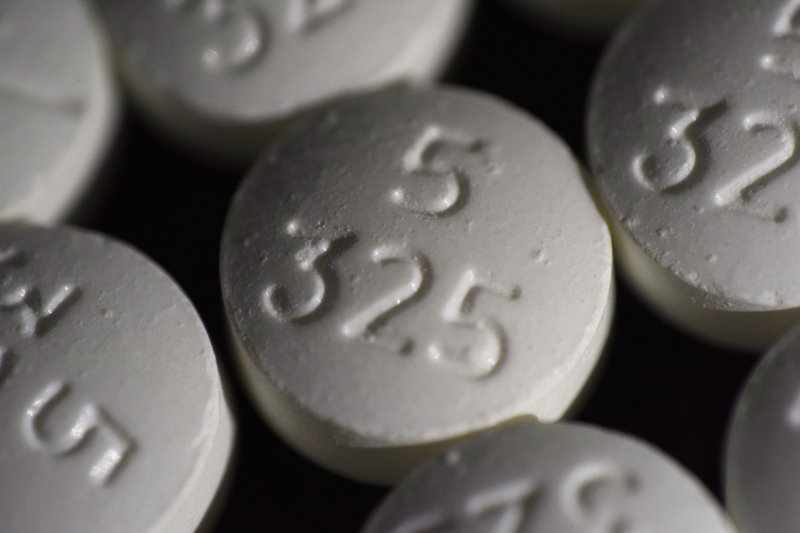
Congressional investigators say wholesale pharmaceutical distributors shipped hundreds of millions of prescription opioid pills to West Virginia, a state disproportionately ravaged by deaths caused by the addictive drugs. Now, lawmakers want executives of those companies to explain how that happened. Current and former officials from five distributor companies are set to give sworn testimony on the subject Tuesday to a House subcommittee. Their appearances come during an election-year push by Congress to pass largely modest legislation aimed at curbing a growing epidemic that saw nearly 64,000 people die last year from drug overdoses, with two-thirds of those deaths involving opioids. The House Energy and Commerce Committee began investigating the distribution of prescription opioids last May. The panel has said distributors sent more than 780 million pills of hydrocodone and oxycodone — prescription pain-killers that have caused many overdose deaths — to West Virginia from 2007 to 2012. That’s an average of more than 400 pills per person over that period in the state, where around 1.8 million people live. Investigators said 20.8 million opioid pills were shipped from 2006 to 2016 to Williamson, population 2,900. One pharmacy in Kermit, with around 400 residents, ranked 22nd in the U.S. in the number of hydrocodone pills it received in 2006, according to the investigation. West Virginia had the nation’s highest drug overdose death rate of 52 per 100,000 in 2016, according to federal figures. Other states with high death rates included Ohio, Pennsylvania and New Hampshire, as well as Washington, D.C. Nearly 12 million people misused opioids in 2016, according to federal figures. Executives slated to testify included top officials from Cardinal Health Inc., AmerisourceBergen Corp. and McKesson Corp., the nation’s three biggest wholesale drug distributors. The executives were appearing before the Energy and Commerce committee’s oversight and investigations subcommittee. The government requires distributors of controlled substances to report suspicious drug orders to the federal Drug Enforcement Administration and to deny questionable transactions. The Trump administration and lawmakers of both parties have been drawing attention to opioids, a range of pain-killing drugs that can be addictive when misused. They include prescription drugs like hydrocodone, oxycodone and codeine, synthetic opioids like fentanyl that can be made illegally, and illegal drugs like heroin. The Energy and Commerce panel has been working on dozens of bills that include encouraging doctors to use non-addictive pain killers, spurring research on such products, broadening access to treatment and giving financial incentives for drug treatment specialists to work in underserved areas. Senate committees are working on their own legislation. The setting was reminiscent of 1994 hearings at which executives of the nation’s tobacco companies testified before the Energy and Commerce panel, then controlled by Democrats. The officials said they didn’t believe cigarettes were addictive, despite evidence to the contrary. Four years later, the industry reached a settlement to pay the states more than $200 billion over 25 years to reimburse them for tobacco-related health care costs. Republished with permission from the Associated Press.
