
Supreme Court overturns Roe v. Wade; states can ban abortion

The Supreme Court has ended constitutional protections for abortion that had been in place nearly 50 years in a decision by its conservative majority to overturn Roe v. Wade. Friday’s outcome is expected to lead to abortion bans in roughly half the states. The decision, unthinkable just a few years ago, was the culmination of decades of efforts by abortion opponents, made possible by an emboldened right side of the court that has been fortified by three appointees of former President Donald Trump. The ruling came more than a month after the stunning leak of a draft opinion by Justice Samuel Alito, indicating the court was prepared to take this momentous step. It puts the court at odds with a majority of Americans who favored preserving Roe, according to opinion polls. Alito, in the final opinion issued Friday, wrote that Roe and Planned Parenthood v. Casey, the 1992 decision that reaffirmed the right to abortion, were wrong the day they were decided and must be overturned. “We hold that Roe and Casey must be overruled. The Constitution makes no reference to abortion, and no such right is implicitly protected by any constitutional provision,” Alito wrote. Authority to regulate abortion rests with the political branches, not the courts, Alito wrote. Joining Alito were Justices Clarence Thomas, Neil Gorsuch, Brett Kavanaugh, and Amy Coney Barrett. The latter three justices are Donald Trump appointees. Thomas first voted to overrule Roe 30 years ago. Chief Justice John Roberts would have stopped short of ending the abortion right, noting that he would have upheld the Mississippi law at the heart of the case, a ban on abortion after 15 weeks, and said no more. Justices Stephen Breyer, Sonia Sotomayor, and Elena Kagan — the diminished liberal wing of the court — were in dissent. “With sorrow—for this Court, but more, for the many millions of American women who have today lost a fundamental constitutional protection—we dissent,” they wrote. The ruling is expected to disproportionately affect minority women who already face limited access to health care, according to statistics analyzed by The Associated Press. Thirteen states, mainly in the South and Midwest, already have laws on the books that ban abortion in the event Roe is overturned. Another half-dozen states have near-total bans or prohibitions after 6 weeks of pregnancy, before many women know they are pregnant. In roughly a half-dozen other states, the fight will be over dormant abortion bans that were enacted before Roe was decided in 1973 or new proposals to sharply limit when abortions can be performed, according to the Guttmacher Institute, a research group that supports abortion rights. More than 90% of abortions take place in the first 13 weeks of pregnancy, and more than half are now done with pills, not surgery, according to data compiled by Guttmacher. The decision came against a backdrop of public opinion surveys that find a majority of Americans oppose overturning Roe and handing the question of whether to permit abortion entirely to the states. Polls conducted by The Associated Press-NORC Center for Public Affairs Research and others also have consistently shown about 1 in 10 Americans want abortion to be illegal in all cases. A majority are in favor of abortion being legal in all or most circumstances, but polls indicate many also support restrictions, especially later in pregnancy. The Biden administration and other defenders of abortion rights have warned that a decision overturning Roe also would threaten other high court decisions in favor of gay rights and, even potentially, contraception. But Alito wrote in his draft opinion that his analysis addresses abortion only, not other rights that also stem from a right to privacy that the high court has found implicit, though not directly stated, in the Constitution. Abortion is different, Alito wrote, because of the unique moral question it poses. Whatever the intentions of the person who leaked Alito’s draft opinion, the conservatives held firm in overturning Roe and Casey. In his draft, Alito dismissed the arguments in favor of retaining the two decisions, including that multiple generations of American women have partly relied on the right to abortion to gain economic and political power. Changing the composition of the court has been central to the anti-abortion side’s strategy. Mississippi and its allies made increasingly aggressive arguments as the case developed, and two high-court defenders of abortion rights retired or died. The state initially argued that its law could be upheld without overruling the court’s abortion precedents. Then-Gov. Phil Bryant signed the 15-week measure into law in March 2018, when Justices Anthony Kennedy and Ruth Bader Ginsburg were still members of a five-justice majority that was mainly protective of abortion rights. By early summer, Kennedy had retired and was replaced by Justice Brett Kavanaugh a few months later. The Mississippi law was blocked in lower federal courts. But the state always was headed to the nation’s highest court. It did not even ask for a hearing before a three-judge panel of the 5th U.S. Circuit Court of Appeals, which ultimately held the law invalid in December 2019. By early September 2020, the Supreme Court was ready to consider the state’s appeal. The court scheduled the case for consideration at the justices’ private conference on Sept. 29. But in the intervening weeks, Ginsburg died, and Barrett was quickly nominated and confirmed without a single Democratic vote. The stage now was set, although it took the court another half year to agree to hear the case. By the time Mississippi filed its main written argument with the court in the summer, the thrust of its argument had changed, and it was now calling for the wholesale overruling of Roe and Casey. The first sign that the court might be receptive to wiping away the constitutional right to abortion came in late summer when the justices divided 5-4 in allowing Texas to enforce a ban on the procedure at roughly six weeks, before some women even know they are pregnant. That dispute turned on the unique structure of the
Mississippi lawmakers approve bill to create a state lottery
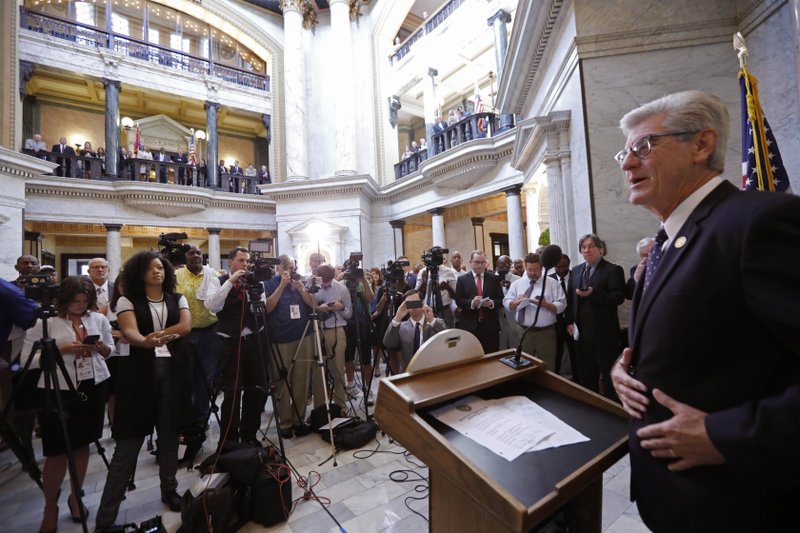
The Mississippi House reversed itself Tuesday and passed a bill to create a state lottery in the Bible Belt state where churches have long opposed it. The vote came during a special session, less than 24 hours after the House originally voted to kill the bill that the state’s Republican governor promises to sign into law. There was no debate Tuesday as a few representatives changed their votes from no to yes. Mississippi is one of six states without a lottery, and Gov. Phil Bryant had been pushing lawmakers for more than a year to create one. Supporters estimate a lottery could generate tens of millions of dollars annually, and Bryant says he wants the money to help pay for repair to crumbling highways and bridges. “This is a historic day in Mississippi,” Bryant said on Twitter. “Mississippi lawmakers rose to the occasion.” Supporters said it would take about a year to get a lottery up and running. The bill was opposed by politically powerful Baptist and Pentecostal groups and some people who called it a regressive tax on poor people in one of the poorest states in the U.S. The state’s influential casino lobby did not oppose a lottery but fought some lawmakers’ ultimately unsuccessful efforts to allow video lottery terminals in places like truck stops. Bryant pointed out that three of the four states bordering Mississippi have a lottery, and Mississippi residents drive to Louisiana, Arkansas and Tennessee to buy millions of dollars of tickets each year. The lottery bill passed the Senate Monday night but it failed initially in the House with 60 opposed and 54 in favor. The House subsequently passed the bill Tuesday with 58 in favor and 54 opposed. Tuesday was the fourth day of a special session that Bryant called, asking lawmakers to put millions more dollars into highways and bridges. More than 400 of Mississippi’s city and county bridges are closed because they are in bad repair. The state Department of Transportation says it needs at least $400 million more per year just to keep state highways from deteriorating. Supporters of a lottery estimate it could generate about $40 million for the state in the first year and $80 million in subsequent years. The Senate and House last week passed different versions of a lottery bill, and top lawmakers spent much of Monday working out the differences. The two chambers must agree on a single version before it can go to the governor. Republican Rep. Bill Denny said Tuesday that he has opposed attempts to establish a lottery for more than two decades, but he voted in favor this time because his constituents in Jackson want it. “Every time I go to the grocery store, ‘Bill, we need the lottery,’” Denny said. Democratic Rep. Greg Holloway of Hazlehurst voted against the bill initially and then for it Tuesday. “My people have contacted me,” Holloway said. “They want the lottery and I want them to have what they want.” Democratic Rep. Jeramey Anderson of Escatawpa voted for the bill Monday and against it Tuesday. He said he wanted a guarantee that a significant share of lottery money would go to education. “Killing the bill would have given us a better opportunity to negotiate,” said Anderson, who is running for a U.S. House seat. “Unfortunately, that didn’t happen. I do support the lottery, but I support public education, as well.” Republished with the permission of the Associated Press.
Kay Ivey among 7 governors backing Donald Trump’s nomination for Nobel Peace Prize

Alabama Governor Kay Ivey announced her part in nominating Donald Trump for the Nobel Peace Prize on Tuesday. “Yesterday, I was proud to join six other governors in highlighting the historical progress President Trump has made toward denuclearization and peace for the peoples of North and South Korea,” said Ivey. “Ending North Korea’s pursuit of nuclear weapons has eluded American presidents for decades. President Trump is due to be honored for his ability to bring everyone to the table to discuss a way forward which offers the Korean Peninsula, and the world, a path toward stability and peace.” Ivey joined Governor’s Eddie Baza Calvo of Guam, Jeff Colyer of Kansas, Phil Bryant of Mississippi, Governor of Maine Paul LePage, Henry McMaster of South Carolina, and Governor of West Virgnia, Jim Justice in nominating the President by sending a letter to Berit Reiss-Andersen, chair of the Norwegian Nobel Committee. “Though he has only been in office one year, President Trump has achieved an unprecedented victory for global peace and security. The President’s firm stance against nuclearization, coupled with his willingness to engage one-on-one with Pyongyang, has succeeded in opening new avenues of cooperation, friendship and unity between the two Koreas – and the rest of the world,” said the letter. “It isn’t often that presidents follow through on their promises; yet, President Trump is proving time and again that he isn’t like most presidents,” said Ivey. “I am thankful to the president for the conservative, smaller-government direction he is taking our nation and for his efforts in ensuring that our world is a safer place. The Nobel Committee should act quickly in affirming President Trump’s nomination and should give him the Nobel Peace Prize, which he certainly deserves.”
Jeb Bush: Campaign decision “in relatively short order”
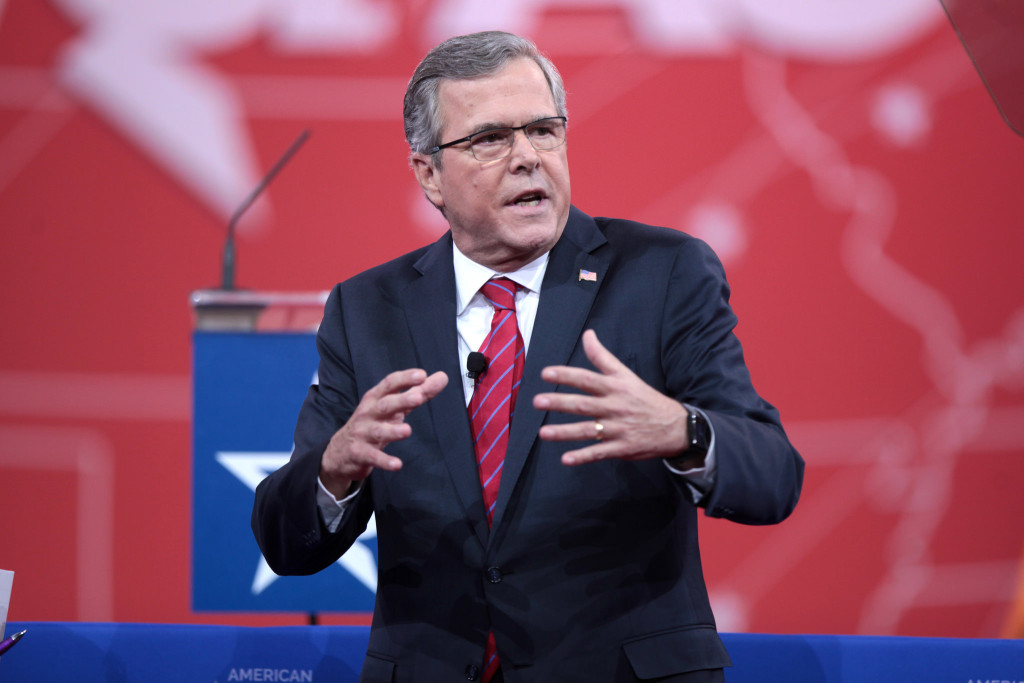
Jeb Bush said Thursday he will make up his mind “in relatively short order” whether to seek the Republican nomination for president in 2016. The former Florida governor will be in New Hampshire this weekend to speak at town hall-style meetings at two businesses and at a GOP event. He will also attend a night event called Politics and Pies and a morning event called Politics and Eggs, he said. “Typical day in New Hampshire, apparently,” Bush told reporters Thursday in Jackson, Miss., where he attended a bill-signing ceremony with Republican Gov. Phil Bryant. Bush said he’s not concerned that several other hopefuls are ahead of him in launching their campaigns. “I’m on a journey to kind of measure support,” Bush said. “Other people’s processes are not really that relevant to me. I’ll make up my mind in relatively short order. I’m excited about just the possibility of being in a position to consider it.” He said his family supports his exploration of a presidential bid. “In a campaign, no matter if it’s running for governor or running for president or anything else, you’ve got to go earn it,” Bush said. “You’ve got to go earn people’s respect and persuade people that your ideas are better, that you have leadership skills to make it happen. You’ve got a heart for people. Those are the things that matter. Who’s winning, who’s losing? Who cares?” The law Bryant signed is based on a program created in Florida when Bush was governor. Mississippi will issue $6,500 vouchers for a small percentage of the state’s special education students. Families can use the public money to pay for private school tuition, tutoring or other education services outside the public schools. Mississippi has about 66,500 special-needs students. The new law will create vouchers for 500 students the first year. Over five years, the program will grow to 2,500 students. Bush said he expects the program to boost educational opportunities in Mississippi, where fewer than 25 percent of special education students finish high school. “The schools will start becoming more focused on the challenges of children with learning disabilities and more kids will rise up,” Bush said. “I know in Florida when we gave kids choices they didn’t have, all schools got better.” Republished with permission of The Associated Press.
