
NYT highlights Homewood coach with heart for football and philanthropy
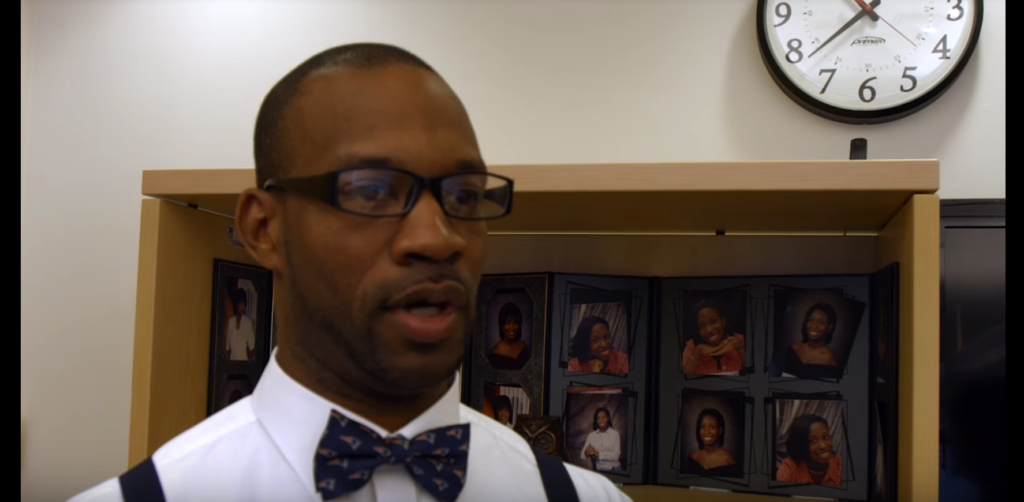
A Homewood Middle School football coach and teacher recently found himself in the national spotlight as his efforts to make an impact on local youth were highlighted by the New York Times (NYT). Steve Sills, “an evangelist for the gospel of encouragement, which he’s been preaching for 13 years at this economically and demographically diverse middle school in suburban Birmingham,” works hard to teach the middle school students he works with the importance of giving it your all. “Don’t matter if you are big or small, if you are fast or slow. If you give us the very best of you, together we can do great things,” Sills told the Homewood Patriots football team during a recent Monday night game according to the NYT. Sills, who envisioned a career in football after receiving a scholarship to play at Tennessee Tech and later played in the indoor Arena Football League, didn’t follow his expected life path. Instead he found himself teaching and coaching at Homewood Middle School. There, he teaches his students career and character where he endeavors to pass along his “look good, feel good, do good” mantra. But Sills takes his work beyond the classroom. Nine years ago, the educator founded the Homewood Trendsetters, a school club that according to the NYT, “combines sharp dressing with dozens of service projects, like feeding the homeless at local shelters or cheering on special needs students at athletic events. It now numbers more than 300, including more than 100 girls, and has logged thousands of volunteer hours and raised tens of thousands of dollars for the community.” When they NYT asked him to reduce his teaching philosophy to its core, he paraphrased the poet Maya Angelou: “These kids will forget what I said and did, but I hope they never forget how I made them feel.”
Daniel Sutter: Mandates and the cost of kindness

Last spring Alabama’s legislature mandated coverage of autism therapy by health insurance plans. Such mandates provide benefits to people without spending our tax dollars, but threaten the viability of health insurance. The main issue for autism coverage was Applied Behavioral Analysis (ABA), an intensive therapy program with demonstrated benefits for patients. Helping persons with disabilities lead fulfilling lives is a worthwhile goal. We should celebrate a therapy helping persons with autism. But the therapy is expensive. Few families can afford the $15,000 (or more) a year cost out-of-pocket. Mandating insurance coverage spreads the cost across all patients. We decided to help autistic children receive ABA regardless of their parents’ incomes. Although some business and insurance groups opposed the mandate, the legislature still decided to help. But similar issues are sure to arise in the years to come. I think that state lawmakers should have provided this benefit out of tax dollars. Mandates contribute to the slow death of health insurance, which may lead to more extensive government involvement with health care in the future. Insurance mandates allow lawmakers to provide benefits to people without spending tax dollars. Spending state funds, by contrast, would require either increasing taxes or cutting other spending. An insurance mandate spreads out the cost; coverage might only cost a few more dollars per policy per year. Furthermore, the link between the mandate and cost increases for policyholders will be indirect. This process gets repeated over and over. States have enacted around 2,000 mandates for 70 different services over the past thirty years, about 40 per state. In each case, the coverage likely represents a “good” cause and benefits some families, like with autism therapy. The accumulation of mandates forces employers to reduce salaries or increase deductibles and co-pays. Many employees never use most of the mandated coverage. Eventually employers stop providing health insurance as a benefit, increasing the ranks of the uninsured and the constituency for further government intervention. When we decide to help autistic children receive ABA, we are spending somebody’s money. Ultimately government money is our money. Taxes are how we should pay for things that we direct government to do. Insurance mandates act like a tax, but the hidden element leads to poor decisions. Suppose that autism therapy will cost $30 million a year. If lawmakers raised taxes, citizens would see the full cost. The weak link between mandates and higher costs for policyholders makes mandates less visible; perhaps they have a perceived impact equal to $10 million in taxes. Suppose we decide that helping autistic children is worth $20 million per year. If we think that the cost is $10 million because of the mandates, this looks like a good deal. But in reality the benefits are less than the cost. Another option which might be even better is philanthropy to assist families unable to pay the full price. Charities, I think, do a much better job than government verifying need and controlling cost. Insurance creates a third party payment problem: neither the patient nor provider pays the bills, and so neither worries about cost. We can always spend more on any service. For example, Board Certified Behavioral Analysts (most expensive), Board Certified Assistant Behavioral Analysts, or registered behavioral technicians (least expensive) can provide ABA. If we ignore the cost, making greater use of Board Certified Behavioral Analysts is always attractive. We could also extend the therapy and provide it to more children. Mandates make insurance companies even less likely to contain costs since employers cannot drop mandated coverage due to expense. Government also seems unlikely to wisely control costs. Americans believe strongly in the equality of opportunity. We are willing to help children to make this a reality, by paying for things like autism therapy. When we choose to help, we should be willing to bear the cost. Insurance mandates only appear to lower the cost, and contribute to the slow implosion of the health insurance market. ••• Daniel Sutter is the Charles G. Koch Professor of Economics with the Manuel H. Johnson Center for Political Economy at Troy University and host of Econversations on TrojanVision. The opinions expressed in this column are the author’s and do not necessarily reflect the views of Troy University.
Winners and losers in Donald Trump’s first budget plan

Military spending would get the biggest boost in President Donald Trump‘s proposed budget. Environmental programs, medical research, Amtrak and an array of international and cultural programs — from Africa to Appalachia — would take big hits, among the many parts of the government he’d put on a crash diet. The budget proposal out Thursday is a White House wish list; it’ll be up to Congress to decide where money goes. If Trump gets his way, there will be more losers than winners among government departments and programs. Some programs would tread water: WIC grants — money to states for health care and nutrition for low-income women, infants and children — are one example. Monday for states grants for water infrastructure projects would be held level as well. Some others would lose everything: Trump proposes to eliminate money for the Corporation for Public Broadcasting, the national endowments for the arts and the humanities and more than a dozen other independent agencies financed by the government. A sampling: WINNERS —The Pentagon. Trump proposes a 10 percent increase in the massive defense budget, adding $52 billion in military spending in one year top expand personnel, equipment and capability. Another $2 billion would go to nuclear weapons. —Veterans Affairs. Up 5.9 percent. That’s an additional $4.4 billion, driven by ever-growing health care costs. —Homeland Security. Up 6.8 percent. That’s $2.8 billion more. Most of the increase, $2.6 billion, would be to help kick-start Trump’s promised border wall. The president has repeatedly said Mexico would pay for the wall; Mexican officials are adamant that they won’t. Trump also wants an extra $1.5 billion for more immigration jails and deportations, and $314 million to hire 1,500 immigration enforcement and border patrol agents. —The National Nuclear Security Administration, which oversees the maintenance and safety of the nuclear arsenal and its research labs. The agency would grow by 11.3 percent, or $1.4 billion, so that it takes up more than half the Energy Department’s budget, which would shrink overall. —Opioid prevention and treatment: a proposed $500 million increase in the Health and Human Services Department to counter the epidemic and more money for the Justice Department to combat the problem. —School choice: $1.4 billion more to expand school choice programs, bringing spending in that area to $20 billion, even as the Education Department’s overall budget would be cut by $9 billion, or 13 percent. LOSERS: —EPA, facing a 31.4 percent cut, or $2.6 billion. The plan would cut 3,200 jobs at the agency, eliminate a new plan for tighter regulations on power plants, and “zero out” programs to clean up the Great Lakes and the Chesapeake Bay. —Health and Human Services, facing the largest cut in dollar terms: $12.6 billion, or 16.2 percent. The plan would cut $5.8 billion from the nearly $32 billion National Institutes of Health, the nation’s premier medical research agency, bringing its total to $25.9 billion. It’s not clear what research on diseases or disorders would lose the most money, although the budget plan specifically calls for elimination of a division that focuses on global health. Already, the NIH’s budget hasn’t kept pace with inflation over the last decade, making it dramatically harder for scientists around the country to win money for research projects into potential new treatments or better understanding of disease. —State Department and U.S. Agency for International Development. Down 28 percent, or $10 billion. Foreign aid would be reduced, as would money to the U.N. and to multilateral development banks including the World Bank. Some foreign military grants would be shifted to loans. —Labor Department. A more than 20 percent cut, or $2.5 billion. To be eliminated: a $434 million program that has helped more than 1 million people 55 and older find jobs, according to the department. The blueprint says the Senior Community Service Employment Program is inefficient and unproven. —Agriculture Department. A nearly 21 percent cut, or $4.7 billion, achieved in part by cutting land acquisition in the National Forest System, rural water infrastructure and statistical capabilities at the department. Trump also proposes reduced staff in county USDA offices, an idea that fell flat in Congress when President Barack Obama proposed a similar reduction. —Transportation Department. Trump proposes a cut of nearly 13 percent, or $2.4 billion. Amtrak, local transit agencies, and rural communities that depend on federal subsidies to obtain scheduled airline service would take the brunt. Trump would eliminate subsidies for Amtrak long-distance train routes, which would most likely mean the end of those routes since they are generally not profitable. Money for the Federal Transit Administration grant program for new light rail and subway construction would be eliminated except for multi-year projects the government has already committed to help fund. —Internal Revenue Service: After years of cuts, the IRS budget would be cut again — by $239 million from this year’s spending levels. The IRS budget is down about $1 billion from its height in 2010. Since then, the agency has lost more than 17,000 employees. As a result, the chances of getting audited have rarely been so low. —Commerce Department. A 16 percent or $1.5 billion cut. The plan would eliminate more than $250 million in National Oceanic and Atmospheric Administration grants, including a program that helps coastal communities adapt to climate change, deal with invasive species and maintain healthy water and fisheries. Also on the chopping block: the Economic Development Administration, which provides federal dollars to foster job creation and attract private investment; and the Minority Business Development Agency, which is dedicated to helping minority-owned business get off the ground and grow. The Trump administration says the two agencies duplicate work done elsewhere. —School programs: The plan would eliminate a $1.2 billion initiative that supports before- and after-school programs as well as summer programs. —Independent agencies supported by tax dollars. If Trump prevails, a hefty contingent of entities would lose all federal money and be shut. Among them, the public broadcasting corporation, the Appalachian Regional Commission, the Chemical Safety Board, the United States
Activists: Charities must move galas from Donald Trump’s Mar-a-Lago
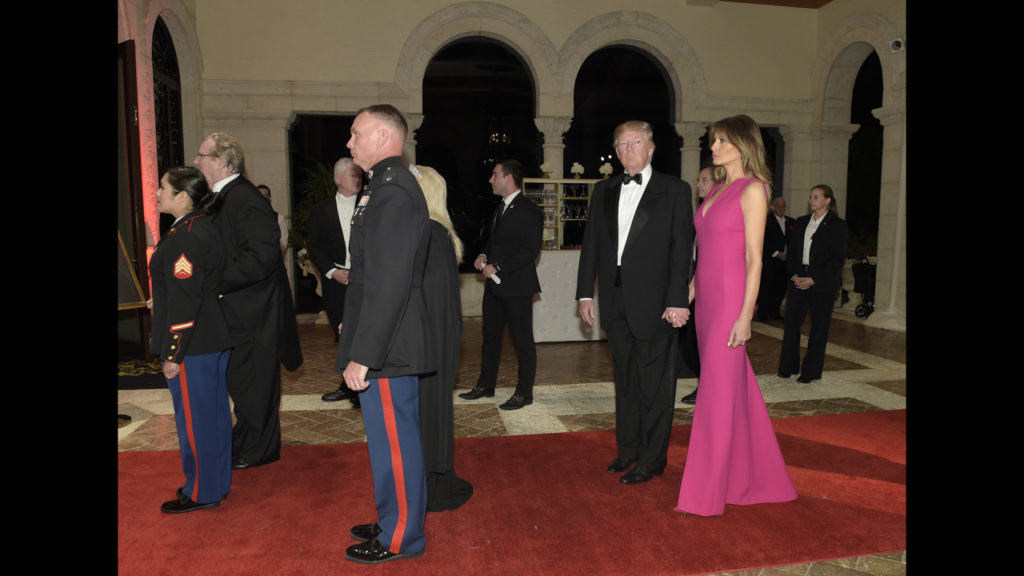
Since President Donald Trump opened the gold-infused ballroom at his Mar-a-Lago resort almost 12 years ago, it has been a popular rental for the American Red Cross, hospitals, medical researchers and other charities for fundraising galas where the wealthiest donors are wined and dined, often netting $1 million or more. But Trump’s election puts charities in an awkward position over choosing the resort — recently dubbed the president’s Winter White House — for events they may have planned more than a year in advance. With Trump placing a moratorium on refugees and immigrants from seven Muslim-majority countries and his promises to dismantle the Affordable Care Act, activists are pressuring charities such as the Dana-Farber Cancer Institute and the Cleveland Clinic to move or cancel their galas this month. As the International Red Cross held a gala fundraiser Saturday at Mar-a-Lago, about three thousand demonstrators marched nearby to protest Trump’s now-blocked executive order temporarily limiting immigration. The event ended peacefully, and there were no arrests. So far, no known Mar-a-Lago charity events have been moved or canceled. More than 2,000 people, including faculty and students from Harvard Medical School, have signed an online petition demanding that Boston-based Dana-Farber move or cancel its Feb. 18 “Discovery Celebration,” featuring a performance by Grammy Award winner David Foster. The cheapest ticket is $1,250. Petition organizer George Karandinos, a 30-year-old Harvard medical student from Houston, said he understands that canceling or moving the Dana-Farber event would be difficult, “but they can make a public moral stand that is in line with their stated values” of diversity and supporting scientific exchanges across borders. Plus, he said, a cancellation might attract additional donors. A similar open letter, signed by more than 1,100 including doctors and medical students, demands that Cleveland Clinic move its Feb. 25 “Reflections of Versailles: A Night in the Hall of Mirrors” gala. Its cheapest ticket also is $1,250. Both Dana-Farber and the Cleveland Clinic said they won’t move or cancel their events, but added that it doesn’t mean they support the president’s policies. Applications filed with the town of Palm Beach show Dana-Farber expects to raise $1.25 million after paying expenses of $250,000. The Red Cross says it will make $950,000 after spending $400,000. A portion of those expenses would go to Mar-a-Lago. The town did not immediately release Cleveland Clinic’s application. Dana-Farber President Dr. Laurie H. Glimcher issued a statement saying she shares the protesters’ concerns about the immigration moratorium and what it will mean for doctors, scientists, students and patients from the affected countries, but that the protesters are unrealistic. “The forthcoming fundraiser in Palm Beach is planned many months in advance, and raises critical funds to support this lifesaving work. Contracts have been signed, and a large number of people have committed to attend. Canceling the event outright would only deny much-needed resources for research and care,” she said. The Cleveland Clinic issued a similar statement. “The sole purpose of our event in Florida is to raise funds for important research to advance cardiovascular medicine that improves patient care,” spokeswoman Eileen Sheil said. “In no way is this connected to anything else but helping patients. The event has been held there for years, well before the election.” Mar-a-Lago director Bernd Lembcke didn’t return a call seeking comment. The Trump Organization didn’t respond to an emailed request for comment. Photos of the ballroom complex, including the Donald J. Trump Grand Ballroom, show large open spaces lighted by chandeliers and surrounded by massive archways and columns. Bathroom fixtures are gold-plated. The walls, ceiling and columns have intricate decorations gilded with gold leaf. Many organizations have been using the venue for years to host their wealthiest donors. Trump opened the 20,000 square-foot ballroom complex in late 2005 — the inaugural event was the reception for his wedding to Melania Trump. He told reporters the complex cost $35 million, but Palm Beach building records indicate the cost was lower, likely no more than $15 million. Mary Simboski, who teaches in Boston University’s fundraising management program, said that while she could not speak to any specific event, major galas like the ones the Cleveland Clinic, Red Cross and Dana-Farber are throwing take a year to plan and are a major part of an organization’s fundraising operation. Picking a site like Mar-a-Lago often comes down to location, size, cost and availability, she said, and has nothing to do with politics. Projecting that the groups could perhaps garner more financial support by canceling the event is wishful thinking, she said. “Hope is not a strategy,” Simboski said. Republished with permission of the Associated Press.
Donald Trump signed improper charity check supporting Florida AG Pam Bondi
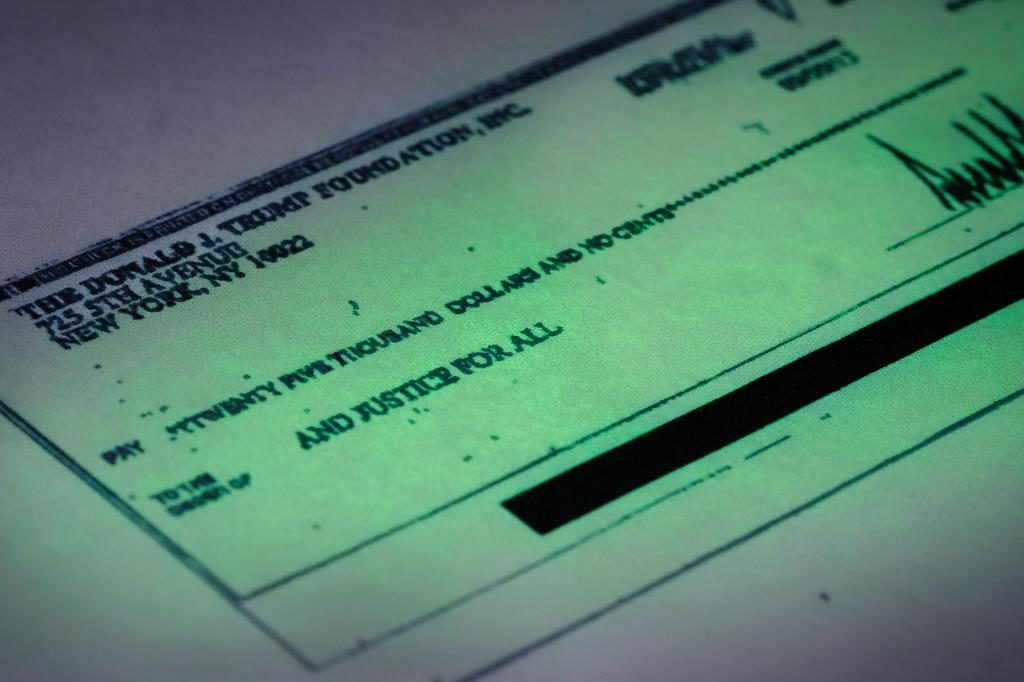
Donald Trump‘s signature, an unmistakable if nearly illegible series of bold vertical flourishes, was scrawled on the improper $25,000 check sent from his personal foundation to a political committee supporting Florida Attorney General Pam Bondi. Charities are barred from engaging in political activities, and the Republican presidential nominee’s campaign has contended for weeks that the 2013 check from the Donald J. Trump Foundation was mistakenly issued following a series of clerical errors. Trump had intended to use personal funds to support Bondi’s re-election, his campaign said. So, why didn’t Trump catch the purported goof himself when he signed the foundation check? Trump lawyer Alan Garten offered new details about the transaction to The Associated Press on Thursday, after a copy of the Sept. 9, 2013, check was released by New York Attorney General Eric Schneiderman. Garten said the billionaire businessman personally signs hundreds of checks a week, and that he simply didn’t catch the error. “He traditionally signs a lot of checks,” said Garten, who serves as in-house counsel for various business interests at Trump Tower in New York City. “It’s a way for him to monitor and keep control over what’s going on in the company. It’s just his way. … I’ve personally been in his office numerous times and seen a big stack of checks on his desk for him to sign.” The 2013 donation to Bondi’s political group has garnered intense scrutiny because her office was at the time fielding media questions about whether she would follow the lead of Schneiderman, who had then filed a lawsuit against Trump University and Trump Institute. Scores of former students say they were scammed by Trump’s namesake get-rich-quick seminars in real estate. Bondi, whom the AP reported in June personally solicited the $25,000 check from Trump, took no action. Both Bondi and Trump say their conversation had nothing to do with the Trump University litigation, though neither has answered questions about what they did discuss or provided the exact date the conversation occurred. House Democrats called earlier this week for a federal criminal investigation into the donation, suggesting Trump was trying to bribe Bondi with the charity check. Schneiderman, a Democrat, said he was already investigating to determine whether Trump’s charity broke state laws. Garten said the series of errors began after Trump instructed his staff to cut a $25,000 check to the political committee supporting Bondi, called And Justice for All. Someone in Trump’s accounting department then consulted a master list of charitable organizations maintained by the IRS and saw a Utah charity by the same name that provides legal aid to the poor. According to Garten, that person, whom he declined to identify by name, then independently decided that the check should come from the Trump Foundation account rather than Trump’s personal funds. The check was then printed and returned for Trump’s signature. After it was signed, Garten said, Trump’s office staff mailed the check to its intended recipient in Florida, rather than to the charity in Utah. Emails released by Bondi’s office show her staff was first contacted at the end of August by a reporter for The Orlando Sentinel asking about the Trump University lawsuit in New York. Trump’s Sept. 9 check is dated four days before the newspaper printed a story quoting Bondi’s spokeswoman saying her office was reviewing Schneiderman’s suit, but four days before the pro-Bondi political committee reports receiving the check in the mail. Compounding the confusion, the following year on its 2013 tax forms the Trump Foundation reported making a donation to a Kansas charity called Justice for All. Garten said that was another accounting error, rather than an attempt to obscure the improper donation to the political group. In March, The Washington Post first revealed that that the donation to the pro-Bondi group had been misreported on the Trump Foundation’s 2013 tax forms. The following day, records show Trump signed an IRS form disclosing the error and paying a $2,500 fine. Bondi has endorsed Trump’s presidential bid and has campaigned with him this year. She has said the timing of Trump’s donation was coincidental and that she wasn’t personally aware of the consumer complaints her office had received about Trump University and the Trump Institute, a separate Florida business that paid Trump a licensing fee and a cut of the profits to use his name and curriculum. Neither company was still offering seminars by the time Bondi took office in 2011, though dissatisfied former customers were still seeking promised refunds. Republished with permission of the Associated Press.
