
Parker Snider: Beware the rule of the philosopher kings
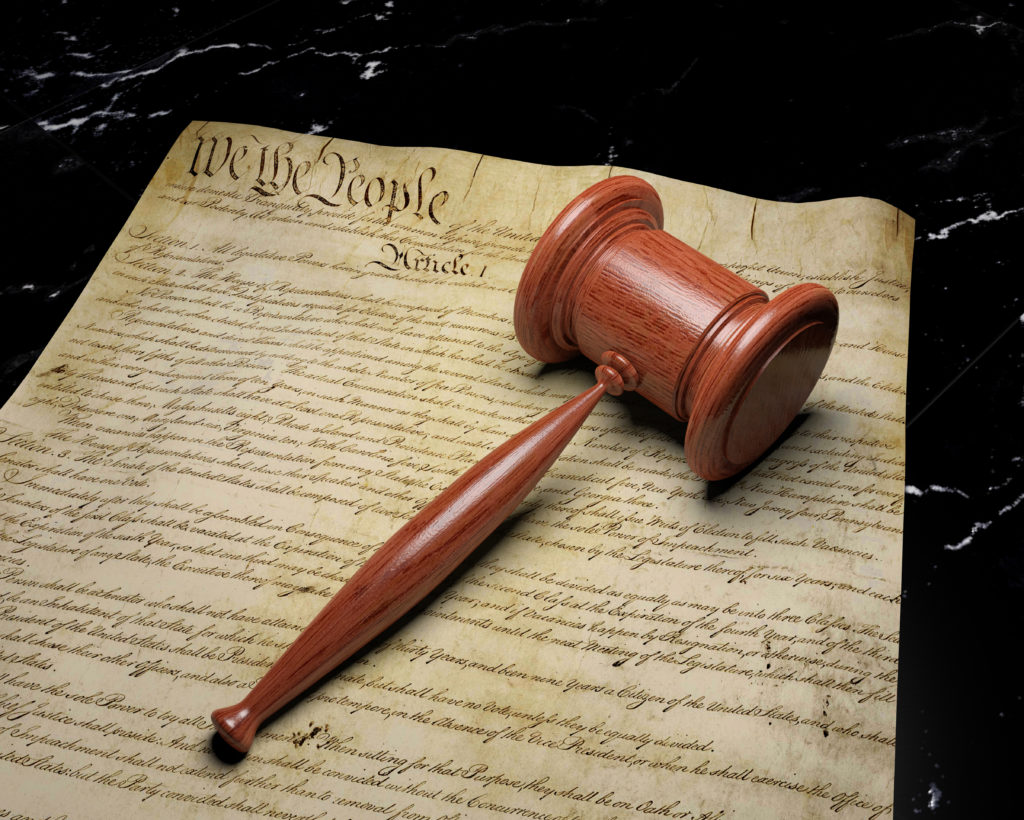
According to ancient Greek philosopher Plato, it is the great philosophers who are best suited to govern society. Known as “philosopher kings,” they use wisdom, Plato says, to determine how society should operate. Ours is not a country governed by philosopher kings. The Founding Fathers, instead, predicated our government as a government of the people. And it is Congress, the gathering of popularly elected representatives, which is given that weighty law-writing authority. When Roe v. Wade was overturned last month by the Supreme Court, the political left learned this lesson the hard way. For decades, the left duped themselves into believing that America is a nation led by philosopher kings. It is hard to blame them for this. Over and over again, the great thinkers – the philosopher kings – on the Supreme Court awarded the left win after win. In 1973 through Roe v. Wade, the Court created a right to abortion through the 14th Amendment’s right to privacy. Even though many states had already banned abortion while others limited it, Roe unilaterally forced the states to allow abortion. It was then considered a constitutional right that could not be overruled by state or federal law as the agenda of the left was accepted not only as legal but as the only constitutional possibility. Following the decision, state legislatures and Congress could not overpower Roe even if such a challenge garnered a unanimous vote. This decision was reaffirmed in 1992 through Planned Parenthood v. Casey, another “philosopher king” decision that decreed the left to be the political victors even though there was no consensus among the American people. The left won in a similar fashion with same-sex marriage. Before 2015, states were split when it came to recognizing same-sex marriages, with no consensus nationally expected any time soon – that is, until the philosopher kings got involved. On June 26, 2015, the Supreme Court ruled in Obergefell v. Hodges that there was a constitutional right to marriage for same-sex couples. All states, therefore, had to recognize same-sex marriage. Surprisingly enough, this was supposedly a right found in the 14th Amendment. Another win for the left, courtesy of the philosopher kings. No legislature could say otherwise. There are more rulings that could be listed here. What’s important to recognize is that, for the left, these victories simply could not be rivaled by legislative wins. Supreme Court decisions, which were seemingly permanent, could silence dissenters who knew the chances of reversal were slim. To the left, the Supreme Court offered a potential final word on an issue, a loss that conservatives could not come back from. Aiming for judicial decisions, many on the left have become democratically lazy. They have not come to divisive policy discussions with hopes of arriving at a consensus. Instead, they argue through the media that their view is the only morally just view, that their positions are not simply opinions but “rights” that should be protected (or created) by the Supreme Court. Their success in this arena has led them to exchange the democratic ideals of consensus and compromise for dictates from the philosopher kings sitting just east of the Capitol. This summer showed us just how bad a value judgment this was for the left. The reversal of Roe reveals that the left never considered what might happen if the philosopher kings weren’t their philosopher kings. It is unsurprising that such a question might not cross the progressive mind. They assumed there was no way the philosopher kings on the Supreme Court, who are highly educated and mostly from liberal Ivy League schools, could not be at least marginally on their side. Now that Roe is overturned, the left is trying diligently to convince Americans that the philosopher kings have simply been switched. The liberal philosopher kings no longer rule the Court, so now the conservative ones do. The left wants you to believe that six conservative justices now make all the decisions for our country. This is not true. Think about this. The conservative justices could have made abortion illegal throughout the nation if they desired. They could have philosophized their way to the desired position fairly easily and used the Constitution to argue their case, using the 14th Amendment again, perhaps. This is exactly what the liberal majority did in Roe, Casey, and Obergefell, all of which made the majority’s opinion the law of the land in every single state. But they didn’t. In overturning Roe, in fact, the majority decided to shed the philosopher king label altogether. Instead of assuming that they were the ones who were rightfully in charge, the Court gave the authority to make decisions about issues not explicitly in the Constitution back to the legislative branches of government. This is how our government was designed to operate. Congress and legislatures are to write the laws, not the Supreme Court. It is a good thing that both liberals and conservatives alike are wary of philosopher king elites. Both groups now have before them the hard work of convincing not nine men and women with law degrees of their position but the majority of the American people. While Plato may not like it, the Founding Fathers would not have had it any other way. Parker Snider is the Director of Policy Analysis for the Alabama Policy Institute.
Supreme Court overturns Roe v. Wade; states can ban abortion

The Supreme Court has ended constitutional protections for abortion that had been in place nearly 50 years in a decision by its conservative majority to overturn Roe v. Wade. Friday’s outcome is expected to lead to abortion bans in roughly half the states. The decision, unthinkable just a few years ago, was the culmination of decades of efforts by abortion opponents, made possible by an emboldened right side of the court that has been fortified by three appointees of former President Donald Trump. The ruling came more than a month after the stunning leak of a draft opinion by Justice Samuel Alito, indicating the court was prepared to take this momentous step. It puts the court at odds with a majority of Americans who favored preserving Roe, according to opinion polls. Alito, in the final opinion issued Friday, wrote that Roe and Planned Parenthood v. Casey, the 1992 decision that reaffirmed the right to abortion, were wrong the day they were decided and must be overturned. “We hold that Roe and Casey must be overruled. The Constitution makes no reference to abortion, and no such right is implicitly protected by any constitutional provision,” Alito wrote. Authority to regulate abortion rests with the political branches, not the courts, Alito wrote. Joining Alito were Justices Clarence Thomas, Neil Gorsuch, Brett Kavanaugh, and Amy Coney Barrett. The latter three justices are Donald Trump appointees. Thomas first voted to overrule Roe 30 years ago. Chief Justice John Roberts would have stopped short of ending the abortion right, noting that he would have upheld the Mississippi law at the heart of the case, a ban on abortion after 15 weeks, and said no more. Justices Stephen Breyer, Sonia Sotomayor, and Elena Kagan — the diminished liberal wing of the court — were in dissent. “With sorrow—for this Court, but more, for the many millions of American women who have today lost a fundamental constitutional protection—we dissent,” they wrote. The ruling is expected to disproportionately affect minority women who already face limited access to health care, according to statistics analyzed by The Associated Press. Thirteen states, mainly in the South and Midwest, already have laws on the books that ban abortion in the event Roe is overturned. Another half-dozen states have near-total bans or prohibitions after 6 weeks of pregnancy, before many women know they are pregnant. In roughly a half-dozen other states, the fight will be over dormant abortion bans that were enacted before Roe was decided in 1973 or new proposals to sharply limit when abortions can be performed, according to the Guttmacher Institute, a research group that supports abortion rights. More than 90% of abortions take place in the first 13 weeks of pregnancy, and more than half are now done with pills, not surgery, according to data compiled by Guttmacher. The decision came against a backdrop of public opinion surveys that find a majority of Americans oppose overturning Roe and handing the question of whether to permit abortion entirely to the states. Polls conducted by The Associated Press-NORC Center for Public Affairs Research and others also have consistently shown about 1 in 10 Americans want abortion to be illegal in all cases. A majority are in favor of abortion being legal in all or most circumstances, but polls indicate many also support restrictions, especially later in pregnancy. The Biden administration and other defenders of abortion rights have warned that a decision overturning Roe also would threaten other high court decisions in favor of gay rights and, even potentially, contraception. But Alito wrote in his draft opinion that his analysis addresses abortion only, not other rights that also stem from a right to privacy that the high court has found implicit, though not directly stated, in the Constitution. Abortion is different, Alito wrote, because of the unique moral question it poses. Whatever the intentions of the person who leaked Alito’s draft opinion, the conservatives held firm in overturning Roe and Casey. In his draft, Alito dismissed the arguments in favor of retaining the two decisions, including that multiple generations of American women have partly relied on the right to abortion to gain economic and political power. Changing the composition of the court has been central to the anti-abortion side’s strategy. Mississippi and its allies made increasingly aggressive arguments as the case developed, and two high-court defenders of abortion rights retired or died. The state initially argued that its law could be upheld without overruling the court’s abortion precedents. Then-Gov. Phil Bryant signed the 15-week measure into law in March 2018, when Justices Anthony Kennedy and Ruth Bader Ginsburg were still members of a five-justice majority that was mainly protective of abortion rights. By early summer, Kennedy had retired and was replaced by Justice Brett Kavanaugh a few months later. The Mississippi law was blocked in lower federal courts. But the state always was headed to the nation’s highest court. It did not even ask for a hearing before a three-judge panel of the 5th U.S. Circuit Court of Appeals, which ultimately held the law invalid in December 2019. By early September 2020, the Supreme Court was ready to consider the state’s appeal. The court scheduled the case for consideration at the justices’ private conference on Sept. 29. But in the intervening weeks, Ginsburg died, and Barrett was quickly nominated and confirmed without a single Democratic vote. The stage now was set, although it took the court another half year to agree to hear the case. By the time Mississippi filed its main written argument with the court in the summer, the thrust of its argument had changed, and it was now calling for the wholesale overruling of Roe and Casey. The first sign that the court might be receptive to wiping away the constitutional right to abortion came in late summer when the justices divided 5-4 in allowing Texas to enforce a ban on the procedure at roughly six weeks, before some women even know they are pregnant. That dispute turned on the unique structure of the
‘Still in shock.’ Abortion defenders, foes stunned by leak

The phones inside an Alabama abortion clinic were ringing off the hook: the callers wanted to know if abortion remains legal. And, if so, for how long? A leaked Supreme Court draft opinion was ricocheting around the world. As Dalton Johnson, the clinic’s owner, read it Monday night, he was struck by the bluntness of the language that would end the constitutional right to an abortion, closing clinics in about half of American states, including his. “I’m still in shock,” Johnson said Tuesday as he scrambled to reassure his staff and patients they would continue providing abortions as long as they’re allowed in Alabama. People on both sides of the abortion divide have been expecting the Supreme Court this summer to reverse the landmark 1973 Roe v. Wade case that legalized abortion nationwide. But many said the draft opinion was nevertheless stunning, forcing them to reckon with the reality the nation is likely to enter soon. “I can’t stop crying,” said an elated Mississippi state Rep. Becky Currie, who sponsored the 2018 law that is the basis for the Supreme Court case. “I am not quite sure I have the words to express how I feel right now, but God has had his hands on that bill since the beginning.” The leaked draft, published late Monday by Politico, is a 98-page opinion in Dobbs v. Jackson Women’s Health Organization, which challenged the constitutionality of the Mississippi bill that banned abortion after 15 weeks. If the decision stands as written, it would also overturn Planned Parenthood v. Casey, a 1992 decision that protected abortion services even though it allowed states to add some limitations. “Roe was egregiously wrong from the start,” the draft opinion states. It was signed by Justice Samuel Alito, a member of the court’s 6-3 conservative majority. According to Politico, four other justices — Clarence Thomas, Neil Gorsuch, Brett Kavanaugh, and Amy Coney Barrett — have agreed with the opinion. The draft opinion was written in February, and the language could change before the court issues its final ruling. As written, it would give states the power to decide the legality of abortion. Roughly half, largely in the South and Midwest, are likely to quickly ban abortion. Abortion clinics in those states opened Tuesday morning, still seeing patients but uncertain about the future. The daily rituals unfolded as they always do: some protesters screamed at people walking inside while other abortion opponents prayed, clinic escorts tried to shield patients and hustle them in the doors. “Please overturn Roe v. Wade,” said Barbara Beavers, who stood outside the clinic in Jackson, Mississippi, on Tuesday, gently trying to persuade people against going inside. “Have mercy on our unborn children. We’re destroying our future, killing our babies.” Inside clinics, the news prompted frantic phone calls, and abortion providers across America rushed to tell their patients that the clinics remained open. “I immediately felt sick to my stomach,” said Tammi Kromenaker, who owns a clinic in Fargo, North Dakota. “And 20 million thoughts started going through my head about what can we do? What does my staff need to hear? What do our patients need to hear?” She posted a notice on their website: “If you have an appointment at Red River Women’s Clinic, your appointment is safe.” In Charleston, West Virginia, Katie Quinonez had barely slept the night before; she was having nightmares about the Supreme Court. She rushed into the clinic Tuesday morning, terrified that her patients would misunderstand the news and think that abortion was immediately outlawed. They posted on social media that abortion remains legal and the clinic is open, but they don’t know for how much longer. She had been bracing for this news. “But there was still this visceral reaction, this very devastating feeling,” Quinonez said. “This is a red alert moment. This is beyond a red alert moment. The building is on fire.” At Johnson’s clinic in Huntsville, women called to ask whether they can still get an abortion. Johnson said his first call of the morning was from a woman who had an abortion scheduled for Friday and wanted to come in Tuesday instead. The staff held a meeting, and Johnson says he asked them to focus on those still coming for abortions who need their help. The opinion was just a draft, he told them, and cautioned that it wasn’t the final decision. Dr. Cheryl Hamlin, an OB-GYN from Boston, travels South about once a month to do abortions at Mississippi’s only abortion clinic. She said a lot of her patients won’t be able to afford the costs of going out of state to have an abortion, including paying for hotels and taking time off work. Meanwhile, states that continue to allow abortions “are going to be overflowing with patients,” she said. Some anti-abortion activists were skeptical that the draft would become reality, fixating instead on the fact that it was leaked the press and whether that implied political posturing. “I’m hopeful,” said Dennis Westover, a 72-year-old retired electrical engineer, a regular protester outside the clinic in Charleston, West Virginia. But he was suspicious that someone leaked it as ammunition in the country’s intractable culture wars. “When our Supreme Court stuff starts to be leaked, it’s egregious,” he said. “One side or the other did it for a political motive to stir up some kind of stink.” In Louisville, Kentucky, protester Angela Minter said she prayed the draft opinion will be the final one. “I’m excited today,” Minter said. “I believe it’s an indication of what’s to come.” Minter thinks that’s God answering her prayers: She’s been coming to the clinic most mornings since 2004. Patients tried to dodge her and the other protesters screaming outside. “Don’t murder your baby,” one man shouted at a young woman. Clinic escorts in orange vests helped her into the building. The Louisville clinic was closed for a week last month after the legislature banned abortion, until a court intervened. But if Roe falls, it will likely be shuttered again. “I
Injunction blocking abortion ban not appealed

Alabama’s near-total abortion ban will remain blocked by a federal judge as a lawsuit over the ban plays out in court. Alabama did not appeal the court injunction that blocked the state’s near-total abortion ban from taking effect last month, according to the attorney general’s office. The state has previously acknowledged the ban is likely unenforceable unless the U.S. Supreme Court makes a major shift on abortion rights. The preliminary injunction by U.S. District Judge Myron Thompson temporarily stopped the ban from taking effect Nov. 15 while he hears a lawsuit challenging the ban as unconstitutional. The 2019 law would make performing an abortion a felony in almost all cases. Alabama Attorney General Steve Marshall has said the state’s objective is to get the case to the U.S. Supreme Court to try to get justices to reconsider rulings such as Roe v. Wade and Planned Parenthood v. Casey. Roe legalized abortion nationwide. Casey affirmed abortion rights, but said that the states could enact limited restrictions. Mike Lewis, a spokesman for the attorney general, confirmed the state is not appealing the temporary injunction. “It will take time to develop a record in support of our arguments that Roe and Casey were wrongly decided and should be overruled. We hope to have a chance to build that record before any appeal. And for that reason, we have not appealed the preliminary injunction,” Lewis said. The appeal deadline was Nov. 29, according to Randall Marshall, executive director of the American Civil Liberties Union of Alabama. Alabama has acknowledged in court filings that its attempted abortion ban conflicts with current U.S. Supreme Court rulings that say abortion is legal. State lawyers wrote in a filing this summer that current precedent “regrettably requires” a judge to block enforcement. This story has been corrected to fix the name of the Supreme Court case. Republished with the Permission of the Associated Press.
