
Martha Roby goes after POLITICO for fake news
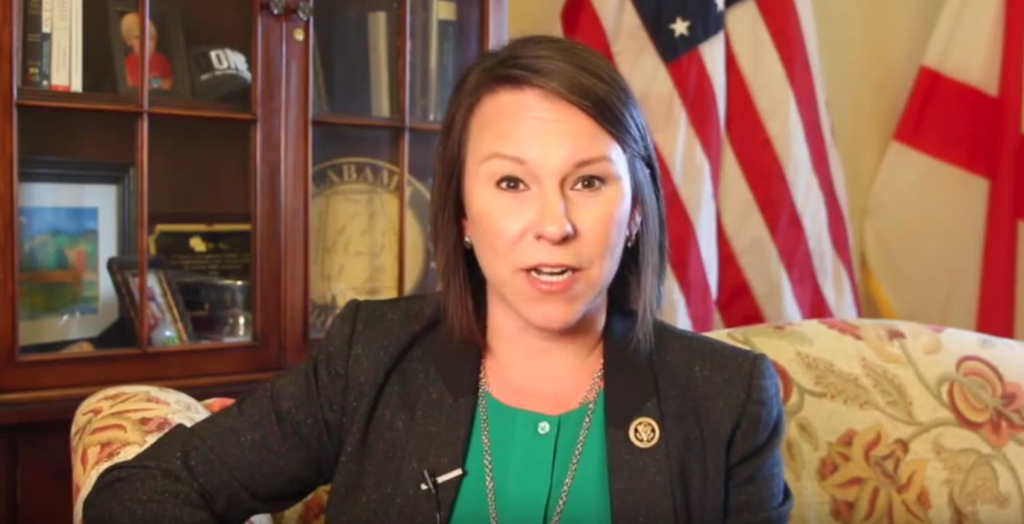
Taking a page straight from President Donald Trump’s playbook, Alabama 2nd District U.S. Rep. Martha Roby is calling out “fake news” just like Trump has on countless occasions. On Tuesday, Roby stood up to POLITICO for a piece they published the day before titled “President Trump’s enemies list” that purported she is on said list, calling the story “fake news.” “The term ‘fake news’ gets thrown around a lot lately, but this narrative from Politico really is pure fiction,” Todd Stacy, a spokesman for Roby, said in an email to Alabama Today. “Some in the media have a hard time accepting that Republicans are united and working together to advance a conservative agenda. The facts are that Rep. Roby has a good working relationship with the White House; she has been invited to several meetings with the President and Ivanka Trump; she has been clear and consistent about supporting the President’s policy agenda. But those facts don’t line up with Politico’s narrative of Republican infighting, so they get buried or tossed aside.” Stacy explained to Alabama Today that no such “enemies list” exists and that POLITICO is creating a story where one doesn’t exist simply because the Congresswoman is now working to advance conservative issues with the President, despite the fact she disagreed with the derogatory comments he made about women in a 2005 Access Hollywood video. “Fake news” is nothing new in the world of journalism, but it is a relatively new term to the American public that caught on at the end of 2016, after Trump began tweeting about it to describe stories that were complete fabrications. Reports by @CNN that I will be working on The Apprentice during my Presidency, even part time, are ridiculous & untrue – FAKE NEWS! — Donald J. Trump (@realDonaldTrump) December 10, 2016 In the months that have followed, Trump has turned the phrase into one of his most popular on social media. But in Roby’s office, it’s not a term they use lightly. Stacy confirmed this is the first time he has gone on record calling an article “fake news,” signifying just how “fake” they believe the POLITICO piece to be.
Politico reports Martha Roby classified as Donald Trump “enemy”
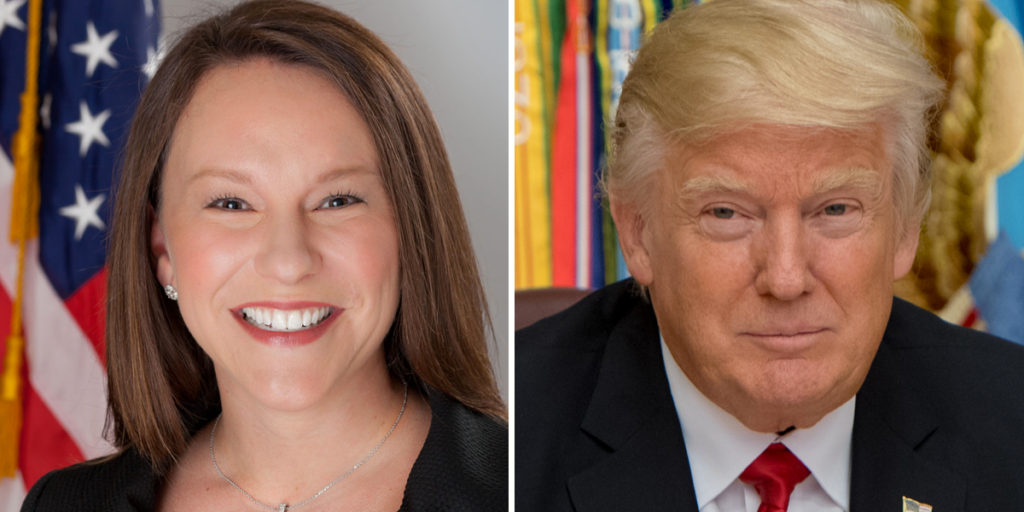
In the wake of withdrawing her support from former GOP presidential nominee Donald Trump in October, Alabama 2nd District U.S. Rep. Martha Roby found herself on the outs the billionaire businessman-turned-politician. At the time, Roby withdrew her support calling Trump “unacceptable” in the wake of the release of the infamous Billy Bush-Donald Trump “Access Hollywood” video where Trump made derogatory comments about women. Now, 10 months later, POLITICO has reported the Congresswoman is on Trump’s “enemies list” and says she is working hard to get back into the now-President’s good graces. “Fear of Trump reprisals has led one Republican congresswoman, Martha Roby of Alabama, to launch an intense campaign to win over a president who remembers every political slight,” a Politico reporter wrote Monday. In the nearly seven months since Trump’s inauguration, Roby has gone to the White House a total of 6 times — four to attend Trump-hosted events and two other times to meet with his daughter, Ivanka. Nevertheless, POLITICO reports that White House officials are skeptical of the Congresswoman’s intentions as she is “facing a fierce primary challenge from a Trump stalwart who has turned her past opposition to the president into the focal point of his campaign.” Roby’s office contends the article is false. “The term ‘fake news’ gets thrown around a lot lately, but this narrative from Politico really is pure fiction.,”Todd Stacy, a spokesman for Roby, said in an email to Alabama Today. “Some in the media have a hard time accepting that Republicans are united and working together to advance a conservative agenda. The facts are that Rep. Roby has a good working relationship with the White House; she has been invited to several meetings with the President and Ivanka Trump; she has been clear and consistent about supporting the President’s policy agenda. But those facts don’t line up with Politico’s narrative of Republican infighting, so they get buried or tossed aside.”
White House bars major news outlets from gaggle
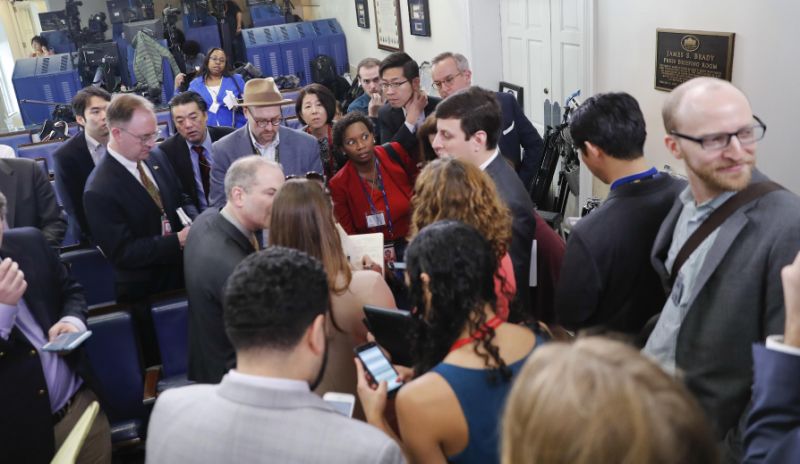
News organizations including The New York Times, the Los Angeles Times, CNN and POLITICO were blocked from joining an informal, on the record White House press briefing Friday. The Associated Press chose not to participate in the gaggle following the move by White House press secretary Sean Spicer. “The AP believes the public should have as much access to the president as possible,” Lauren Easton, the AP’s director of media relations, said in a statement. Several news organizations were allowed in, including the conservative website Breitbart News. The site’s former executive chairman, Steve Bannon, is chief strategist to President Donald Trump. The White House defended the decision not to include some news organizations. “We invited the pool so everyone was represented. We decided to add a couple of additional people beyond the pool. Nothing more than that,” said White House spokeswoman Sarah Sanders. Earlier Friday in a speech before the Conservative Political Action Conference, President Donald Trump railed against the media. Reaction from barred media outlets was swift. “Nothing like this has ever happened at the White House in our long history of covering multiple administrations of different parties. We strongly protest the exclusion of The New York Times and the other news organizations. Free media access to a transparent government is obviously of crucial national interest,” Dean Baquet, the Times’ executive editor, said in a statement. “This is an unacceptable development by the Trump White House. Apparently, this is how they retaliate when you report facts they don’t like. We’ll keep reporting regardless,” CNN said in a statement. Republished with permission of The Associated Press.
Donald Trump popularity rising post-election, new poll shows

Since winning the presidential election, Donald Trump has become more popular with Americans, a new poll of registered voters shows. According to a survey conducted by POLITICO/Morning Consult Nov. 16-18, 45 percent of voters now have either a very favorable or somewhat favorable opinion of Trump. Twelve percent say they have a somewhat unfavorable opinion and 34 percent have a very unfavorable opinion of the president-elect. Anna Palmer of POLITICO calls it a “dramatic uptick” since the election Nov. 8. Trump’s favorability has jumped by 9 points, from 37 to 46 percent, compared to a similar Morning Consult poll taken just before the election. His unfavorability rating dropped 15 points, from 61 to 46 percent. In addition, less than one-third of respondents believe Trump’s children should play a role in his administration, and only one in four say certain Trump family members should be given security clearance. Voters are also supporting Trump’s call for a lobbying ban. Sixty-one percent of voters say they believe lobbyists should not serve in presidential administrations (Democrats by 55 percent; 67 percent of Republicans). Despite that, around four in 10 believe it is very or somewhat likely Trump will restrain the influence of lobbyists and special interests in his White House. President Barack Obama has also become slightly more popular, with 54 percent of voters approving his job performance; 43 percent disapprove. Before the election, 50 percent approved; 48 percent disapproved. “Trump’s favorability among voters has reached new highs since he became president-elect,” Morning Consult co-founder and Chief Research Officer Kyle Dropp told POLITICO in a statement. “This honeymoon phase in common for new presidents. For example, Obama saw about a 20-point swing in his favor following the 2008 election.” Trump’s transition also is being well received, as 19 percent of respondents believe it is better organized than previous efforts; 34 percent say his transition is about the same. Dropp notes “many of the initial transition picks, including Reince Priebus, Steve Bannon, and Jeff Sessions are still largely unknown to Americans.” The survey found more than half of respondents had never heard of, or had no opinion, on Priebus (Trump’s choice for chief of staff) chief strategist Bannon, or Alabama Sen. Sessions, his pick for attorney general. Nevertheless, about a third of voters called Priebus a “strong choice,” as opposed to 27 percent who say it was “weak.” Two in 10 feel Bannon was a strong choice; 34 percent called it weak. The POLITICO/Morning Consult poll contacted 1,885 registered voters, with a margin of error of plus or minus 2 percent. Thirty-three percent of those surveyed self-identify as Democrats, 32 percent independents, and 33 percent Republicans.
Alabama’s Jeff Sessions snags No. 2 spot on 2016’s POLITICO 50 List
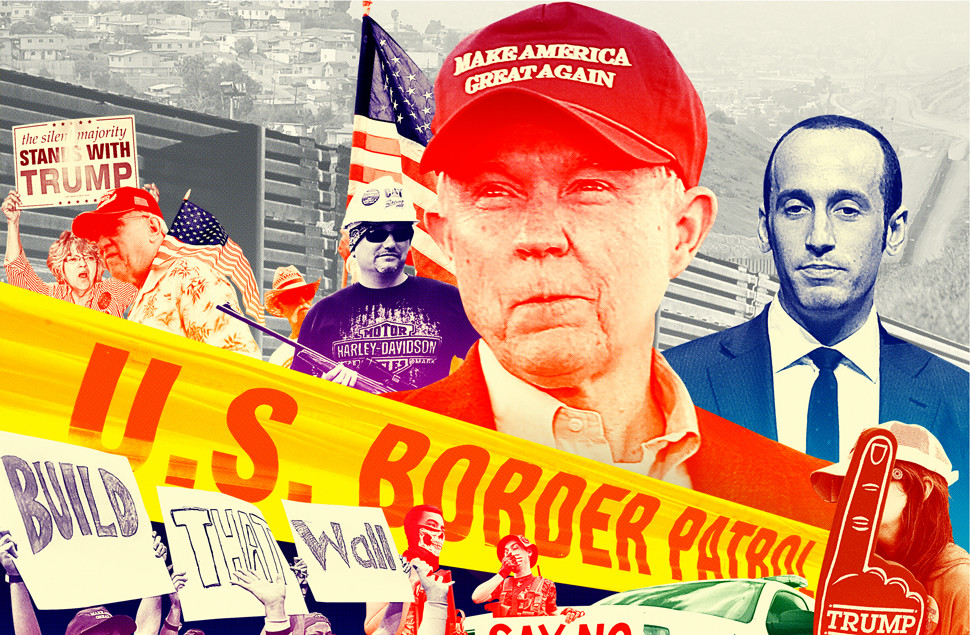
POLITICO Magazine Monday revealed its 2016 Politico 50 list, comprised of “thinkers, doers and visionaries transforming American politics in 2016.” As the magazine puts it, “in the midst of an often-bizarre and sometimes downright depressing election, this list represents something altogether surprising: a collection of people who, no matter their widely divergent views, offer powerful examples of how and why ideas continue to make a difference in politics and policy.” Snagging the No. 2 spot for 2016, this year’s list recognizes Alabama’s own U.S. Sen. Jeff Sessions, along with former Sessions staffer Stephen Miller, as “Trump’s policy whisperers.” Sessions, a a 69-year-old Republican senator from Hybart, is best known for his ultra-conservative policies on immigration and was the first U.S. Senator to endorse Donald Trump. Long before he donned a “Make America Great Again” hat at a February rally in Alabama, Sessions advocated for some of the same outsider views that Trump’s candidacy has turned into the new normal in the GOP. Throughout this election cycle, Sessions and Trump have become kindred political spirits, drawn together by a shared belief that some of their Republican Party leaders are selling out their own voters on immigration, as well as on trade.
Beat the press: Donald Trump’s contempt for media is calculated
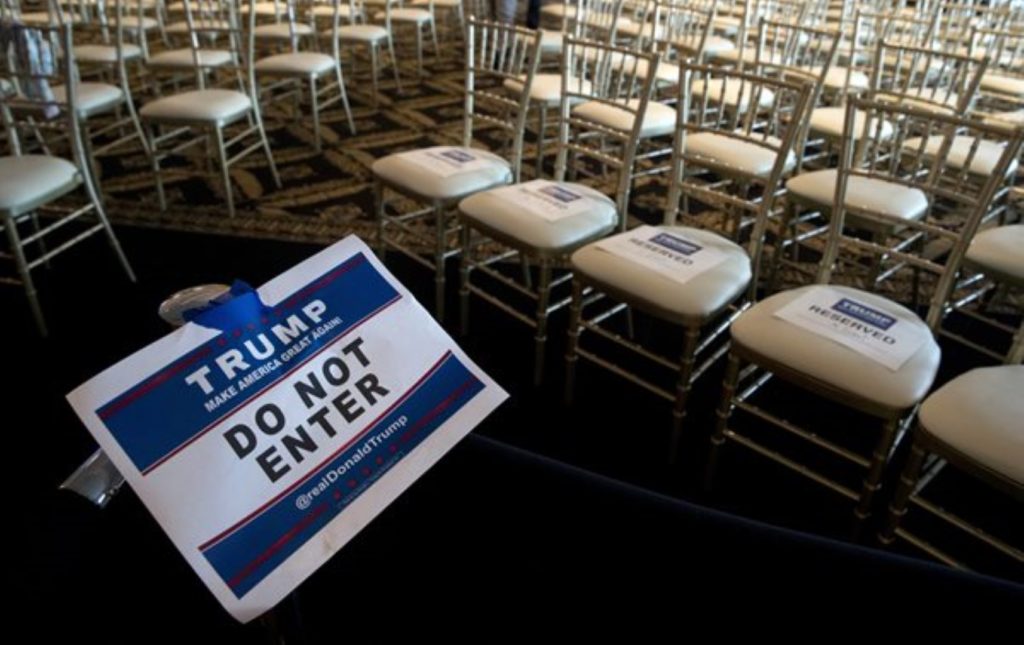
Donald Trump‘s favorite nickname for the news media is the “dishonest press.” He swaps in “disgusting press” from time to time. And sometimes, he puts it all together: “disgusting, dishonest human beings.” The presumptive Republican presidential nominee has a whole menu of takedowns for individual reporters and news organizations. In recent weeks, he’s used his microphone and his tweets to label them “third-rate,” ”not nice,” ”disgraceful,” ”phony,” ”low-life,” ”very unprofessional” and “bad people.” Or, for extra emphasis in a tweet, “BAD.” He’s also been quick to yank or withhold credentials from news organizations whose coverage he doesn’t like — most recently, The Washington Post. Trump seems to be perpetually mad at the press, but there’s a method to his madness. He sees little downside to bashing the media — and plenty of potential benefits. “It’s a truism of American politics that you don’t lose an election by criticizing the media,” said Robert Lichter, president of the private Center for Media and Public Affairs. “It plays well with the public, particularly with Republicans.” While Trump’s language is more incendiary and he lashes out more personally at reporters than typical for past candidates, he’s following a long tradition of modern politicians who shoot barbs at the messenger. Former President Dwight Eisenhower energized the 1964 Republican convention with his complaint about “sensation-seeking columnists and commentators.” Richard Nixon‘s vice president, Spiro Agnew, famously threw shade at “nattering nabobs of negativism” in the press. President George H.W. Bush, who played horseshoes with press photographers and invited reporters to White House picnics and other events, still exhorted voters during his re-election campaign to act on the bumper-sticker slogan: “Annoy the Media: Re-elect Bush.” His wife, Barbara, had some biting advice for Hillary Clinton when the incoming first lady visited the White House in November 1992: “Avoid this crowd like the plague,” Bush told Clinton, sweeping her hand toward the reporters and photographers on the South Lawn. Trump is taking the beat-the-press strategy to a whole new level. In a recent one-month period, he delivered 39 tweets skewering reporters and media organizations, mixed in with a much smaller number of positive and neutral references in his Twitter feed. Just one example: “The media is really on a witch-hunt against me. False reporting, and plenty of it – but we will prevail!” This week, Trump revoked the Post’s credentials, citing what he called the paper’s “incredibly inaccurate coverage and reporting.” Other news organizations he’s banned, either short-term or permanently, include Politico, the Des Moines Register, BuzzFeed, the Daily Beast and the Huffington Post. Post editor Martin Baron called Trump’s latest move “nothing less than a repudiation of the role of a free and independent press.” Kathleen Carroll, executive editor of The Associated Press, said his credentialing bans do a disservice to the public. In the race for the most powerful position on the planet, she said, “the public is interested in what the candidates do and say, and having independent coverage is part of what keeps the public informed.” Why is Trump so quick to pick a fight with the press? For one thing, his over-the-top language can be a successful strategy for changing the subject when he wants to divert attention. Last month, when reporters pressed Trump to document what he’d done with millions of dollars raised for veterans, he turned on them, calling one reporter “a sleaze” and sarcastically referring to another as “a real beauty.” That language itself became a big part of the story, shifting some of the attention away from questions about his handling of the money for veterans. Trump’s constant criticism of the press also helps to inoculate him against future negative news stories. Conservatives, in particular, already are wary of the mainstream media, and Trump’s rhetoric reinforces the message that nothing from the media is to be believed. “Part of what he’s probably decided is that he wants to be very aggressive, to make sure that his supporters routinely discount any kind of news media attack,” former House Speaker Newt Gingrich, a Trump supporter, said in a recent interview with Fox News. With the Republican Party in turmoil over Trump’s candidacy, the billionaire’s broadsides also serve as a unifying theme within the party. GOP faithful may have big differences with Trump on the issues, but they’re at one with him on contempt for the mainstream media. While Trump’s very public display of disdain is strategic, says Lichter, it’s also just “part of his daily dose of pugnacity.” At the same time, though, Trump can be charming in one-on-one interviews, flattering reporters and complimenting their questions. He calls many of them by their first names. He takes questions and offers considerable access, seeming to understand that for all his complaints about the press, he can’t live without them. “You know the press is the most dishonest people ever created by God,” he said at a March press conference. “So I would love to take a few questions from these dishonest people. Go ahead, press.” Republished with permission of The Associated Press.
Jeff Sessions continues to press conservative agenda on immigration
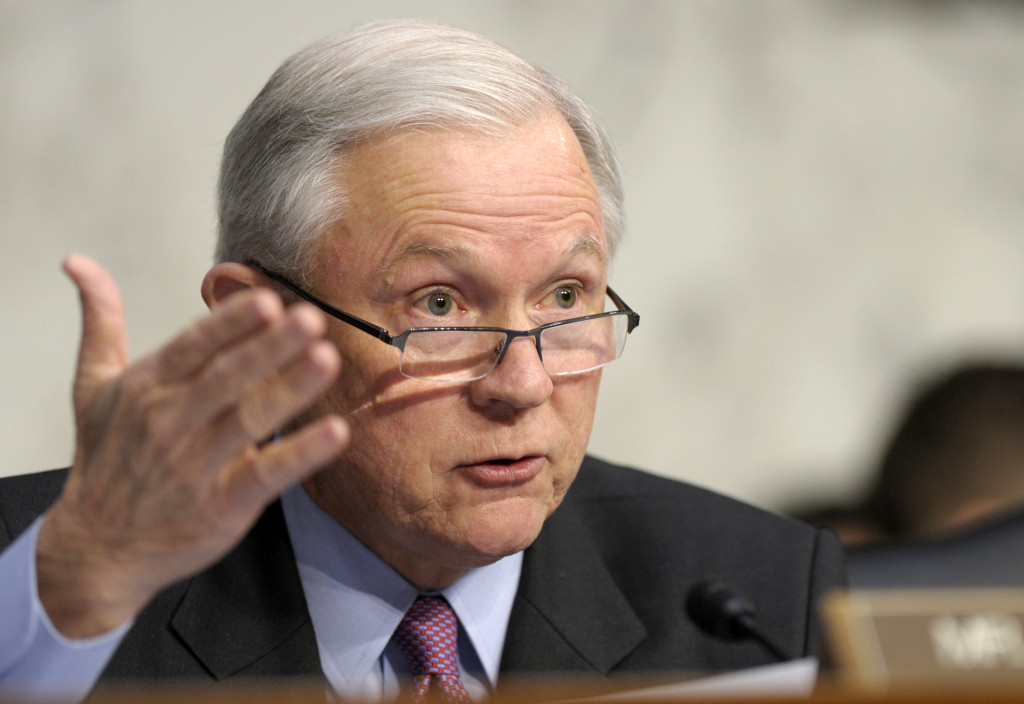
In a letter taking to task Obama administration officials over the release from state custody of more than 100 deportable immigrants who later went on to commit violent crimes, U.S. Sen. Jeff Sessions continued to work with Republican allies to advance a conservative immigration policy in the Senate. Sessions and U.S. Sen. Chuck Grassley — chairman of the Senate Judiciary Committee where Session has taken an active role lately — sent a letter addressed to Secretary of State John Kerry, Homeland Security Secretary Jeh Johnson, and Attorney General Loretta Lynch. Their letter railed against poor execution of deportation protocols by the federal Immigration and Customs Enforcement, formally requesting detailed answers to a list of more than 25 specific inquiries about why 121 suspected killers were allowed to pass through the federal immigration enforcement system and remain in the country. According to information provided by ICE, up to 121 homicides in the U.S. could have been avoided between Fiscal Year 2010 and 2014 had the aliens with criminal convictions been deported instead of released, Grassley and Sessions wrote. “This disturbing fact follows ICE’s admission that, of the 36,007 criminal aliens it released from ICE custody in FY 2013, 1,000 have been re-convicted of additional crimes in the short time since their release.” The senators pointedly asked the Cabinet members, appointed by President Barack Obama, whether their agencies are “fully leveraging existing tools and resources to prevent these dangerous outcomes.” “In the ongoing talks between the U.S. and Cuba, does the administration plan to make repatriation of all of those 30,000+ Cuban nationals, and not just some subset of that group, a condition precedent of granting diplomatic recognition to Cuba?” reads one question. “If not, why not?” The letter is in keeping with a long-term push on immigration on the part of Alabama’s junior senator. Last week, Sessions was vindicated in the conservative press after U.S. Rep. Paul Ryan expressed skepticism about Sessions’ claims that the Trans Pacific Partnership contains loopholes that could lead to a “flood” of new immigration. Ryan had called the language within the proposed TPP that would relax restrictions on the “Movement of Persons,” including professionals operating independently, an “urban legend.” Recent revelations about the trade deal, however, indicate that provisions to forbid mandatory interviews and economic means testing for visa-seekers are indeed part of the proposal, something that Sessions — dubbed by POLITICO as “the Senate’s anti-immigration warrior” — had spoken against. Senate Republican Whip John Cornyn of Texas called Sessions “perhaps the most vocal member of our conference” on immigration after he led the charge in confronting his own caucus in opposition of new H-1B visas for skilled foreign workers, saying it negatively affects domestic job-seekers. “We’ve got to ask — which hasn’t been asked — what does all this do to the ability of a college graduate who’s living at home with his parents because he can’t find a job?” said Sessions, chairman of the Subcommittee on Immigration & the National Interest. That’s a familiar note in his protectionist quest against labor pool distortions because of foreign labor. His approach to the issue evidently has struck a chord in his home state: Sessions was the only incumbent senator who ran unopposed in both primary and general elections in 2014. Sessions and Grassley gave the administration officials addressed in their inquiry a July 6 deadline to respond.
