
Drug testing for food stamps could soon be a law in Alabama
When the 2019 legislative session begins in March, state lawmakers will have the opportunity to consider a plan that would require certain food stamp recipients to undergo drug testing in attempt to combat fraud, reduce dependency and make the SNAP program more efficient. A series of bills have been pre-filed by Bryant-Republican, State Rep. Tommy Hanes that pertain to welfare reform. His legislation calls for drug testing of certain recipients. If the recipient submits a positive sample, SNAP benefits would be taken out of the hands of the individual and given to another family member. Hanes says this is a vital component of the bill as it ensures children of the recipient will continue to receive the benefits. “It’s time to eliminate food stamp fraud,” explained Hanes. “In order to better provide for families who are in need, this issue must be addressed. We owe it to the working-class taxpayers to make this program as efficient and waste free as possible.” The legislation would also prohibit the Department of Human Resources (DHR) from requesting a waiver of federal work requirements for able-bodied adults without dependents who are applicants or recipients of food stamps. The bill would require these recipients to work, provide volunteer service hours or continue their education to receive SNAP benefits. “We must enact welfare reform that reduces dependency on government,” Hanes added “Part of the solution is having able-bodied adults working. When a person earns a living it not only helps strengthen our economy, it restores confidence and self-esteem to individuals who know that they can be independent for themselves.” Substance abuse issues have long been part of public assistance policy discussions. In recent years, nearly all states have proposed some form of drug testing or screening for applicants. Nevertheless, over the weekend, Hanes came under fire from the media for his proposed legislation. He pushed back saying the “liberal news media” is “spreading false information about conservatives who attempt to implement common sense reform.” “The liberal news media is playing a role in spreading false information about conservatives who attempt to implement common sense reform,” said Hanes. Our goal should be helping folks become independent, so they are able to obtain a much higher standard of living. Left-wing media outlets have attacked me and called this reform a vilification of the poor. In attempting to make this program more efficient for those in need, these are the very citizens I am fighting for in this bill. Instead of reporting the truth, some in the press are misleading the public by spreading fake propaganda. I will never be intimidated in my fight for the working-class citizens of this state.”
Bill pre-filed in Alabama House would ban smoking with minors in car
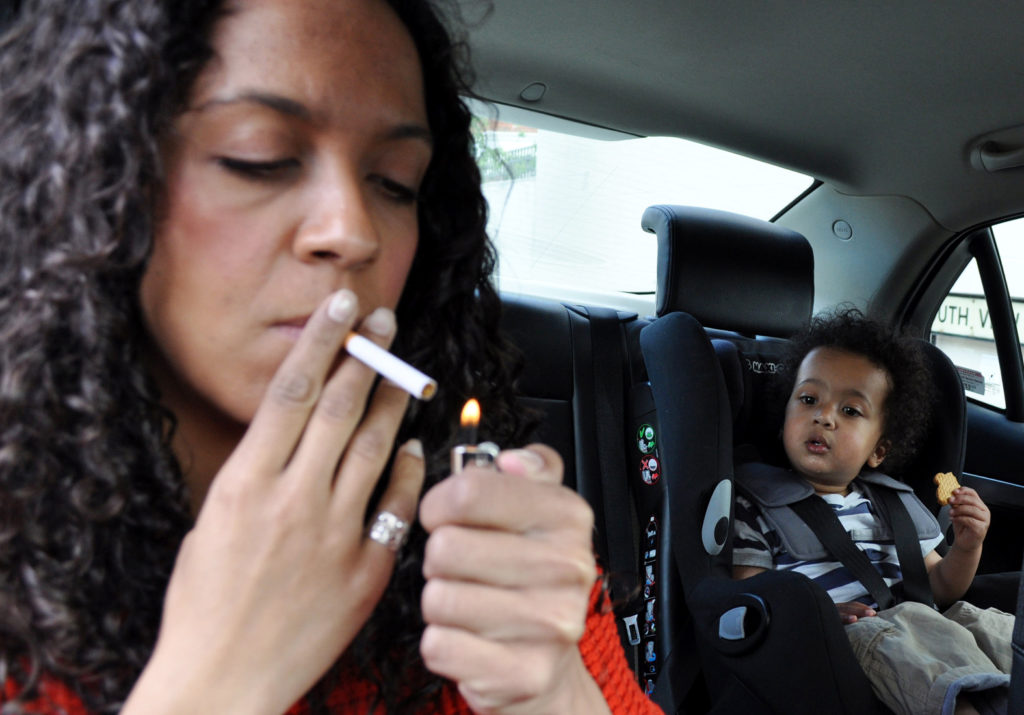
A bill that could stop Alabamians from smoking with children in the car has been pre-filed with the state House. Birmingham-Democrat state Rep. Rolanda Hollis pre-filed HB26, which would make it illegal to smoke a tobacco product in a motor vehicle — whether in motion or at 24 rest — when anyone under 18 is also present. The penalty for violating the law would be a $100 fine. According to the Centers for Disease Control and Prevention (CDC), secondhand smoke kills over 38,000 Americans each year. Children exposed to secondhand smoke are at an increased risk for sudden infant death syndrome (SIDS), acute respiratory infections, ear problems, severe asthma, and reduced lung function. Should Alabama pass Hollis’ bill, it would become the ninth state, along with Guam and Puerto Rico, to have laws on the book that prohibit smoking in the car with children. According to the Public Health Law Center, as of June 2017, here are the current statewide smoking bans: Arkansas: Up to $25; may be eliminated if violator enters a cessation program California: Up to $100 Louisiana: $150 or a minimum of 24 hours of community service Maine: 1st year after enactment, written warning; thereafter, $50 fine or warning Oregon: 1st offense, $250; subsequent violations, $500 Utah: Maximum fine of $45; may be suspended if violator has no prior convictions and enrolls in cessation program Vermont: Maximum fine of $100 Virginia: Subject to fine of $100 If passed, Hollis’ bill would go into effect on the first day of the third month following its approval by Gov. Kay Ivey.
