
Delor Baumann campaigns for House District 57
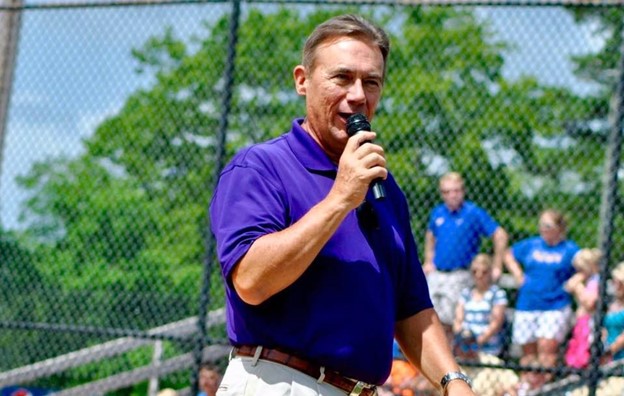
Candidate for the Alabama House of Representatives Delor Baumann addressed a joint meeting of the Jefferson and Shelby County BamaCarry groups Monday night at Mr. Wang’s Buffet in the Homewood area. Baumann is the Republican nominee in House District 57. Baumann said that he supports gun rights and the goals of the group and promised to be accessible if elected to the Statehouse. “I support permitless carry,” Baumann told the Second Amendment rights group. The Alabama Legislature passed and Governor Kay Ivey signed legislation that ended the requirement that Alabama citizens have to purchase a concealed carry permit from their local sheriff in order to carry their firearms with them concealed on their person or in a vehicle. That law goes into effect on January 1. Baumann served three terms as the former Mayor of Hueytown from 2004 to 2016. He emphasized that as Mayor he focused on improving the police and fighting crime. “When I became Mayor, we only had six police officers, and there was just one officer on duty at night,” Baumann stated. “Hueytown is a drive-thru city. We have a lot of people coming through Hueytown.” “Most of the people causing problems were not from Hueytown,” Bauman said. “I contacted the Sheriff, and he said that we are aware of it (the crime problem Hueytown was experiencing). I contacted the City of Birmingham, and they said that they are aware of it.” Baumann said that for several months they increased the number of traffic citations in Hueytown to over one thousand and one thousand warnings a month. “We increased the number of police contacts,” Baumann said. “After a few months, it was back down to two hundred citations a month, and the message was sent. We accomplished what we wanted to accomplish.” “The most important thing with a small city is having a good police department and a good fire department,” Baumann said. House District 57 includes Hueytown, Pleasant Grove, Maytown, Mulga, Midfield, Lipscomb, and Brighton. HD57 is currently represented by State Rep. Merika Coleman. Coleman is leaving the House to run for the open District 19, currently represented by the retiring Sen. Priscilla Dunn. Patrick Sellers received 52.5 percent of the vote (1,261 votes) over Charles Winston III with 47.5 percent (1,143 votes) in the Democratic primary. “I called my opponent after he won the primary to congratulate him,” Baumann said. “He asked if I would drop out of the race. I asked why I would drop out of the race. He said because I have more voters than you.” Baumann said that he had looked at running for the legislature in 2006 and went to Montgomery to learn more about the position where he talked to an influential person in state politics. “He took me to the top of the tallest building in Montgomery and told me that you can be the smartest person in Montgomery, but you won’t get anything done unless you know the right people in Montgomery,” Baumann said. He decided to stay Mayor. “I saw him again at the store and asked him how he was doing. Just after that, he was indicted and went to prison,” Baumann said of the Montgomery contact he had met with. The 2021 redistricting by the Legislature made the majority-minority HD57 a more purple district. A Baumann win would represent a legislative pickup for Alabama Republicans in the House. The Republicans currently hold a supermajority in the Alabama House of Representatives. “I have a lot of close friends in the Black community,” Baumann told Alabama Today. Baumann had no Republican primary opponent, so he said that he is just getting his campaign up and running. Baumann (R) will face Sellers (D) and Libertarian Manijeh Jones in the November 8 general election. To connect with the author of this story, or to comment, email brandonmreporter@gmail.com.
Seven State Senate seat races to watch
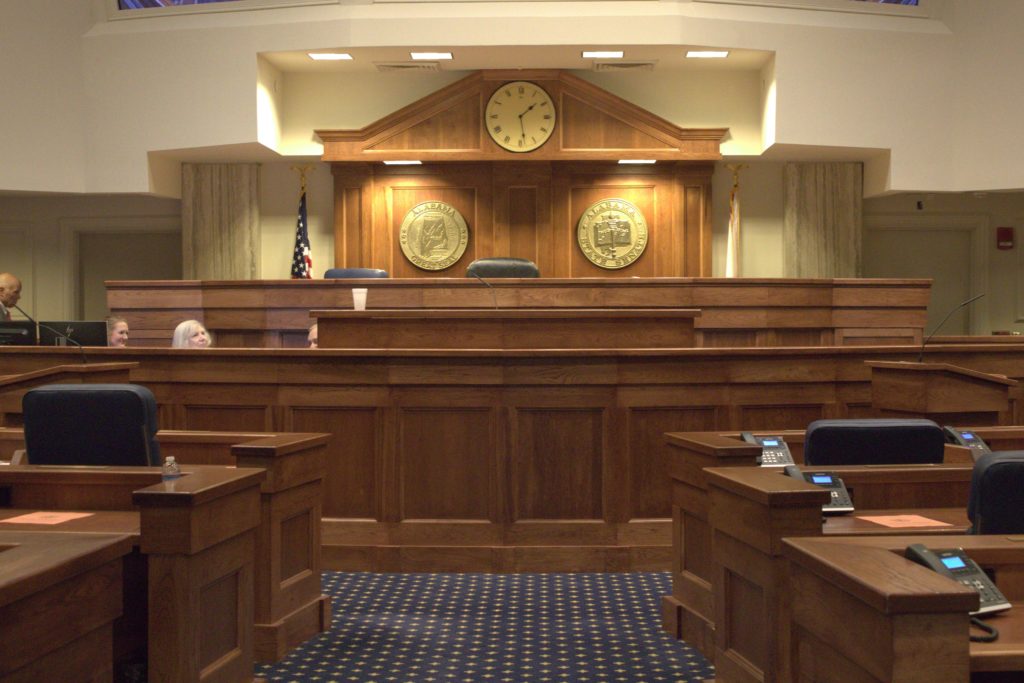
All 35 State Senate seats are up for grabs in the November 8 general election. Republicans hold a 27 to 8 margin over Democrats in the current makeup of the Alabama Senate. The Alabama Republican Party is running candidates in 29 seats. The GOP is defending all of the 27 seats they currently hold and are running candidates in two districts currently held by Democrats. Alabama Democrats are defending the eight seats they currently hold and are challenging the GOP in six districts currently held by Republicans. Libertarians currently hold no seats in the Alabama Senate but are running twelve candidates in State Senate races. There are a number of contested State Senate races on the November ballot. These are the seven races with the most chance of becoming interesting. Democrat Lisa Ward is challenging Republican incumbent State Sen. Gerald Allen in Senate District 21. Both of these candidates are well known in the Tuscaloosa area. Allen has represented the district for three terms and served in the Alabama House of Representatives before that. Ward is a former city councilwoman who is very active in the community. According to filings with the Alabama Secretary of State’s office, Allen has a $204,872.68 campaign account balance entering September, which includes August contributions of $8,250. Ward, the challenger, meanwhile raised $23,149.76 in August and has a cash balance of $31,968.94 entering September. Neither faced a primary opponent. Democrat Kim Lewis versus Republican incumbent State Sen. Tom Butler in Senate District 2. Butler has represented Madison County in the legislature for parts of five decades, but this is one of the fastest growing areas in the state, and there are thousands of new people that bring different politics with them to the area. Lewis is hoping that an increasingly purple Madison County will result in a win. Butler was pushed hard in the Republican primary by former State Sen. Bill Holtzclaw. Butler raised $44,500 in the month of August and enters September with $38,166.63. Lewis raised $7,830 in August and comes into September with $27,859.70. In Senate District 33, incumbent Democratic Sen. Vivian Figures faces Republican challenger Pete Riehm. This has been a very safe Democratic district consisting of the poorest parts of Mobile as well as Mobile County suburbs like Prichard, but redistricting meant that the new district now goes deep into Baldwin County and picked up the very prosperous and heavily Republican community of Spanish Fort. This district went from very blue to purple thanks to the legislature’s redistricting and efforts to “unpack” Black voters from majority-minority districts. Is it purple enough for a Republican to take it away from the Democrats? That is for the voters to decide on November 8. Sen. Figures raised $31,500 in the month of August to enter September with $110,497.02. Riehm had contributions of $19,577.54 in August and enters September with $60,911.31. Democrat Sherri Lewis versus Republican Jay Hovey in Senate District 27. Hovey, an Auburn City Councilman, just narrowly defeated incumbent Tom Whatley (R-Auburn) in a heavily contested GOP primary. Hovey, who has the challenge of unifying Republicans, raised $85,500 in contributions in August to enter September with a cash balance of $70,074.17. Reese meanwhile raised $1,806.20 in August to bring a total of $2,703.33 into the month of September. Senate District 23 – here, there are three candidates vying for the open seat formerly held by State Sen. Malika Sanders-Fortier, who vacated the seat in an unsuccessful bid for governor. Democrat Robert Lee Stewart narrowly defeated former State Sen. Hank Sanders in a hard-fought Democratic primary runoff in June. Stewart faces both a Republican in Michael Nimmer and a Libertarian in Portia Stephens. Stewart raised $16,987 in August to bring $17,872.84 into September. The Libertarian, Stephens, reported raising $2,060 in August to finish the month with $6,285 in cash on hand. The Republican, Nimmer, has not filed a campaign finance report. Alabama does not have general election runoffs, so when there are multiple candidates, the candidate with the most votes wins even if they got less than half of the votes. There is another three-way contest in Senate District 29. There, incumbent Republican Sen. Donnie Chesteen (R-Dothan) faces both Democrat Nathan “Nate” Mathis and Libertarian Floyd “Pete” McBroom. Matthis reported raising no money in August, but he has $5,719.36 in cash on hand. McBroom has not filed a campaign finance report with the Secretary of State’s office yet. The incumbent, Chesteen, raised $25,500 in August to enter September with $327,660.86. In Senate District 12, Republican Keith Kelley is battling Democrat David McCullars for the open seat currently held by Sen. Del Marsh. Kelley raised $29,658.24 in August and has $65,102.13 in cash on hand. McCullars only raised $265 in the month of August and entered the month of September with $4,377.15 in cash on hand. Kelley had a hard-fought Republican primary. This is a district that has given Marsh a close call in the 2014 general election. In other contested Alabama Senate races · SD3 incumbent Arthur Orr (R-Decatur) faces Libertarian Rick Chandler · SD4 incumbent Garlan Gudger (R-Cullman) faces Libertarian Jacob Marlow · SD6 incumbent Larry Stutts (R-Sheffield) faces Libertarian Kyle Richard-Garrison · SD7 incumbent Sam Givhan (R-Huntsville) faces Democrat Korey Wilson · SD15 incumbent Dan Roberts (R-Mountain Brook) faces Libertarian Michael Crump · SD17 incumbent Shay Shelnutt (R-Trussville) faces Libertarian John Fortenberry · SD24 incumbent Bobby Singleton (D-Greensboro) faces Libertarian Richard Benderson · SD25 incumbent Will Barfoot (R-Montgomery) versus Libertarian Louie Woolbright · SD28 incumbent Billy Beasley (D-Clayton) faces Libertarian David Boatwright · SD35 incumbent David Sessions (R-Grand Bay) faces Libertarian Clifton Hudson Republican incumbents Tim Melson, Greg Reed, Steve Livingston, Clay Scofield, Andrew Jones, Randy Price, April Weaver, Jabo Waggoner, Greg Albritton, Clyde Chambliss, Chris Elliott, and Jack Williams are all running unopposed. Republican newcomers Lance Bell in SD11 and Josh Carnley in SD31 are also unopposed in the general election. Democratic incumbents Rodger Smitherman, Linda Coleman-Madison, and Kirk Hatcher are all also unopposed in the general election. State Rep. Merika Coleman is unopposed in SD19, which is being vacated by the retirement of Priscilla Dunn (D-Bessemer). In 2022 Republican candidates in Alabama have received $44,321,108.97 in contributions. Political Action Committees have received $17,846,761.05. Democratic candidates have received $6,629,199.43, and all other candidates have received just $111,950.87. The general
Steve Flowers: Women and young folks prevail in 2022
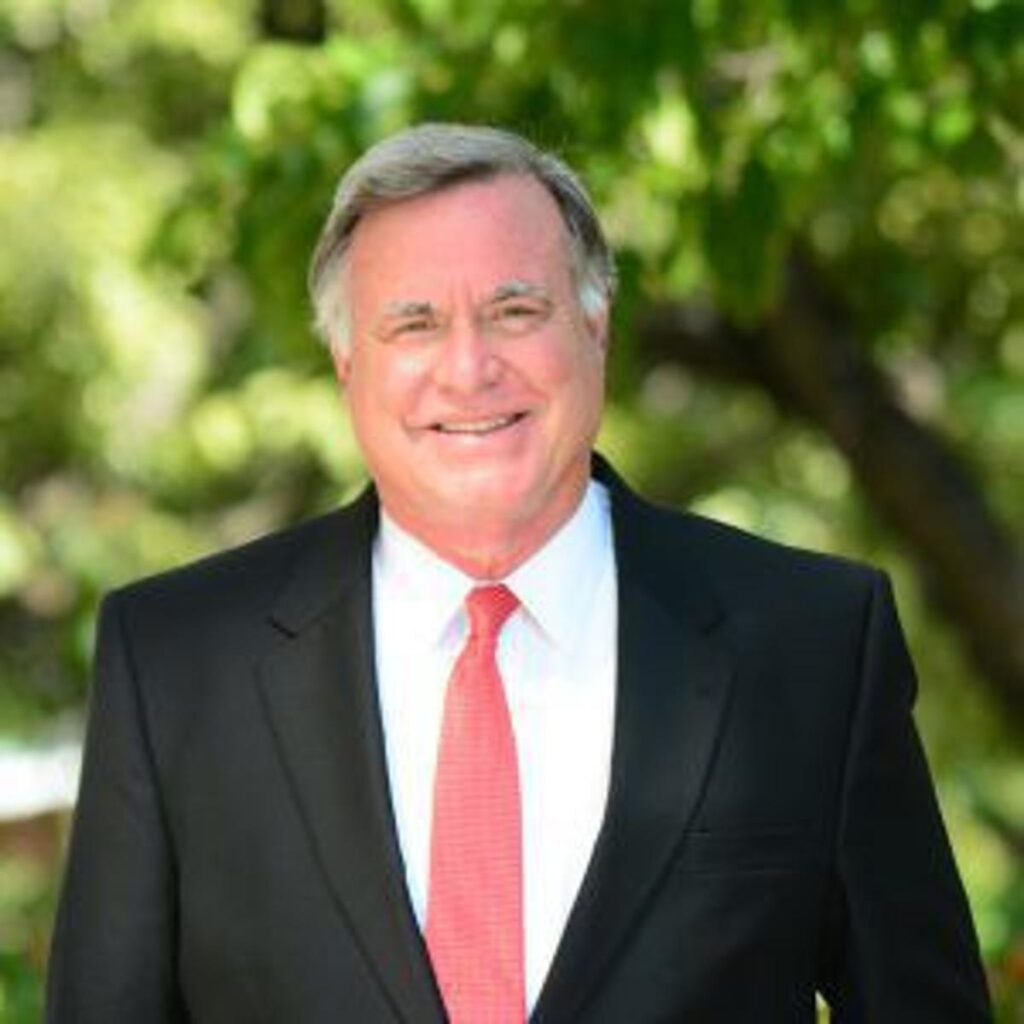
In my observations of Alabama politics, every election year brings an underlying election year surprise or two. The underlying prevailing theme emerging from the Alabama political arena this year is that women have arrived politically in the Heart of Dixie. Governor Kay Ivey is only the second female elected Governor of Alabama, Lurleen Wallace being the first in 1966. Governor Ivey won a decisive second-term nomination as the Republican nominee in May. She will face another female Democratic nominee, Yolanda Flowers, in the November General Election. This is the first time two women will face each other for governor. In fact, the first and second place finishers in both the Republican and Democratic primaries were women. Governor Ivey was followed by Lindy Blanchard, who finished second in the GOP primary. Dr. Yolanda Flowers, a retired Birmingham educator, was in a runoff with second place Democratic female State Senator Malika Sanders Fortier in the Democratic primary. Katie Britt emerged victoriously from the Republican U.S. Senate contest, and if elected in November, as is expected, she will be the first female elected to the U.S. Senate from Alabama. Katie Britt is the brightest young star in Alabama politics. She is the new rock star of the state. Not only will she be the first female senator, but she is also the headliner for the second theme of 2022. That is, we have a pair of new youthful stars arriving on the scene as the dust settles from the June 21 runoffs. Wes Allen and Andrew Sorrell have become the new stars on the scene. Wes Allen defeated veteran politico Jim Ziegler in the Secretary of State race. Andrew Sorrell bested Stan Cooke and Rusty Glover to become State Auditor. Both Sorrell and Allen were about to become freshmen members of the Alabama House this time four years ago. Now, they are the new stars on the statewide political block. They will be joining Lieutenant Governor Will Ainsworth as young constitutional officeholders with a future. You have four young stars on the horizon in the state. Rockstar Katie Britt is 40, superstar Will Ainsworth is 41, star Wes Allen is 46, and star Andrew Sorrell is 36. Another young superstar has arrived on the behind-the-scenes political consulting arena in Alabama politics. Twenty-seven-year-old Sean Ross ran the Katie Britt campaign masterfully. He is absolutely brilliant. He ran one of Twinkle Cavanaugh’s campaigns four years ago when he was just graduating from the University of Alabama. Katie did a good day’s work when she acquired his services with a recommendation from Twinkle. He is the hottest item in Alabama political consulting. There were four vacancies in the Alabama State Senate. State Representative Merika Coleman, a Bessemer attorney, won a very impressive victory for the seat of retiring Priscilla Dunn. She is young and brilliant and is going to be a star in the Alabama State Senate. Lance Bell won the seat of retiring state Senator Jim McClendon. Bell beat his opponent 73% to 27% in this Republican seat. Keith Kelley emerged victorious over Wendy Ghee Draper, in the Anniston-based Republican seat of retiring veteran state Senator Del Marsh. In probably the biggest upset surprise of the 2022 primary season was the victory of Josh Carnley to fill the Republican Southeast Alabama Senate Seat held for decades by the powerful and popular Jimmy Holley. This district is comprised of Coffee, Covington, Pike, and part of Dale counties. Twelve-year veteran State House member Mike Jones of Andalusia was expected to waltz to victory having every business group’s endorsement. Carnley carried his home county of Coffee overwhelmingly, and veteran political consultant David Mowery did a masterful job with Carnley’s ads. Popular first-term state senator, Dan Roberts, was challenged by a self-financed urologist in Roberts’ silk stocking Jefferson/Shelby district, but Roberts won handily. For the first time in 40 years, there will not be a Sanders representing the Black Belt in the Alabama Senate. Veteran Senator Hank Sanders failed in his bid to take back his seat he loaned to his daughter, the aforementioned Malika Sanders Fortier. Hank Sanders had served nine terms as the Black Belt’s senator. He was defeated by Robert Stewart of Selma. Jay Hovey won the coveted Lee/Tallapoosa/Russell County State Senate seat, prevailing over incumbent Tom Whatley by one vote. For the most part, the powerful 35-member State Senate will return intact with only a few new faces. See you next week. Steve Flowers is Alabama’s leading political columnist. His weekly column appears in over 60 Alabama newspapers. He served 16 years in the state legislature. Steve may be reached at www.steveflowers.us.
Steve Flowers: Incumbency reigns supreme in State Senate
Being an incumbent state senator in Alabama is like owning that seat. The level of re-electability odds is probably better than that of an incumbent congressman, which is about the same as being elected to a seat in the Russian Communist Politburo. Being a freshman state senator in Alabama is a more powerful position than being a freshman U.S. congressman, especially if you want to affect public policy. Many times, a 50-year old, successful person who is interested in seeking a representative role will approach me and seek my advice about running for either a state senate seat or an open congressional seat. I will quickly advise them that as a state senator, you are one of 35, and you immediately have an impact on your first year as a state senator. However, if you win a congressional seat, you are one of 435. Because of the seniority system, it will be 15 years before they know your name in Washington and 25 years before you are chairman of a committee, and then it is time to retire. In the 35-member Alabama Senate, there are 27 Republicans and 8 Democrats – a pretty supermajority for the GOP. Twenty-four of the twenty-seven senate Republicans are running for reelection. Republicans Jimmy Holley, Del Marsh, and Jim McClendon are retiring. These seats will be filled by another Republican. Therefore, when the Senate organizes next January, the 27 to 8 supermajority will remain the same. The lines are drawn to protect incumbents on both sides of the aisle. The Constitution provides the power of the pencil for legislators to draw their own legislative districts. Seventeen of the 24 Republican incumbents have no opposition in the Republican Primary. Of the seven Republican senators who drew a Republican opponent, they only got an opponent the last day of qualifying, and their opposition is token at best. All 24 Republican incumbents will be reelected. If my prognostication is correct, that is a 100% re-electability rate. There are only two GOP incumbents that were first thought to have viable opponents. Tom Whatley, at first blush, was rumored to have a race. However, polling and fundraising reveal he will win easily. The only interesting race may be in the Huntsville area, where incumbent Tom Butler is being challenged by Bill Holtzclaw, who previously served in that senate seat. The rule of incumbency also prevails on the Democratic side of the aisle. There is only one Democratic seat open. Priscilla Dunn holds the post in name only. She has never attended a senate day in Montgomery for this entire quadrennium. The Senate has, in essence, been operating with 34 senators. In actuality, the Democrats have only seven senate seats. There are 150,000 residents of Jefferson County who have had no voice or vote in the Alabama Senate for four years. There are two Democratic House members vying to fill this seat, Merrika Coleman and Louise Alexander. Ms. Coleman is favored to win this open Senate seat. The cadre of leadership on the Democratic side will return, including powers Bobby Singleton, Rodger Smitherman, and Vivian Figures. Hank Sanders will return to represent Selma and the Black Belt after a four-year sabbatical. His daughter was in the seat this last quadrennium. The entire leadership of the Republican-led Senate will return unopposed, including Greg Reed, Jabo Waggoner, Clay Scofield, Arthur Orr, Greg Albritton, Steve Livingston, Gerald Allen, and especially Clyde Chambliss. They will be joined by a superstar freshman class, who will become even more powerful. This class of leaders includes Will Barfoot, Garlan Gudger, April Weaver, Sam Givhan, Donnie Chesteen, and a trio contingency of Baldwin/Mobile senators Chris Elliott, Jack Williams, and David Sessions. Another member of this sterling class, Dan Roberts of Jefferson, has an opponent but will be reelected. The three open Republican seats and one Democratic open seat will give us some interesting senate races to follow. One of, if not the most important ingredients which creates the power of incumbency is the almighty campaign dollar. Money is the mother’s milk of politics. Most of this campaign money comes from Special Interest Political Action Committees. Ninety percent of those special interest dollars go to incumbents. Thus, over 90% of Alabama state senators are reelected. See you next week. Steve Flowers is Alabama’s leading political columnist. His weekly column appears in over 60 Alabama newspapers. He served 16 years in the state legislature. Steve may be reached at: www.steveflowers.us.
Steve Flowers: State Senate will have little turnover in 2022
2022 was anticipated to be an exciting competitive election year. However, it is going to be a yawn of a political year. If you thought there was no competition for the constitutional offices and the House of Representatives seats in next year’s elections, then you have not seen anything like the lack of turnover in the Alabama State Senate. Incumbency will prevail. In fact, the power of incumbency in the Alabama State Senate is on par with the incumbent return percentage for Congress, which is probably comparable to the Russian Communist Politburo. There are 35 state Senate seats; 27 of the 35 are held by Republicans. Out of the 27 Republican state senators, 24 are running for reelection, and all 24 probably will be reelected. Almost all of them have no opposition. The Democratic minority has just as high a reelection bar. Of the eight Democrats, seven probably will be running unopposed. The only Democrat not running will be Priscilla Dunn, who has not been to the Senate this entire four-year term. Most of the first-term State Senators have never met her. According to rumors, she is in poor health and cannot attend. The 150,000 people in Senate District 19 in Jefferson County have been without a voice or vote in the Alabama Senate for four years. The three retiring Republican State Senators are giants. Del Marsh, Jimmy Holley, and Jim McClendon’s shoes will be hard to fill. These three seats will be filled by new Republicans. The 27-8 super Republican majority will continue. State Senator Del Marsh (R-Anniston) has been a leader in the Senate for 23 years. He served as President Pro Tempore of the Senate most of that time. He ran a very effective ship of state. State Senator Jimmy Holley (R-Elba/Coffee) is an icon. He was a master of Senate rules. He also was a mentor to a good many young senators. State Senator Jim McClendon (R-St. Clair) will be sorely missed in the state senate. The gentleman from St. Clair served with honor and distinction for eight years in the State Senate and 12 years before that in the House of Representatives. This freshman class of senators has bonded and work cohesively with the veteran leaders. The Freshman Class includes Will Barfoot (R-Pike Road), Tom Butler (R-Huntsville), Sam Givhan (R-Huntsville), Dan Roberts (R-Jefferson), Garlan Gudger (R-Cullman), Randy Price (R-Lee), Donnie Chesteen (R-Geneva/Houston), David Sessions (R-Mobile), Jack Williams (R-Mobile), Chris Elliott (R-Baldwin) and Andrew Jones (R-Cherokee/Etowah). Senator April Weaver (R-Shelby/Bibb) won her seat recently when Cam Ward left to become head of Pardons and Paroles. April Weaver previously served in the House of Representatives. She is the only female GOP Senator. She has a bright future. All twelve of these new senators have done an excellent job, and all will be reelected. Ten of the twelve will probably run unopposed. There are some exceptionally talented and dedicated veterans in the Senate that will coast to reelection. Most, if not all, will be unopposed. This stellar group of legislative leaders includes President Pro Tem Greg Reed (R-Jasper/Walker), Senate Majority Leader Clay Scofield (R-Guntersville), Senator Clyde Chambliss (R-Autauga/Elmore), Senator Steve Livingston (R-Scottsboro/Jackson), Senator Shay Shelnutt (R-Jefferson), Senator Tom Whatley (R-Auburn/Lee), Senator Gerald Allen (R-Tuscaloosa), Senator Greg Albritton (R-Escambia) the Chairman of the Senate Finance General Fund, Senator Arthur Orr (R-Decatur) Chairman of Senate Finance Education, and last but certainly not least, the legendary Jabo Waggoner (R-Vestavia), who chairs the Senate Rules Committee. There will be some outstanding veteran Democrats returning to the State Senate. There are several giants, who include Senator Bobby Singleton (D-Greene), Senator Vivian Figures (D-Mobile), Senator Rodger Smitherman (D-Birmingham), and Senator Billy Beasley (D-Barbour). Senator Kirk Hatcher (D-Montgomery) is new to the senate. However, he bears watching. He is gregarious, likable, and a quick study. He will be effective for Capitol City. The senate abounds with outstanding leadership on both sides of the aisle. The lack of competition the members are garnering is a testament to their good work. This returning group of leaders could well portend for a successful future quadrennium. With this kind of experience and leadership, they will also be an independent group. They will not be a rubber stamp for the governor. See you next week. Steve Flowers is Alabama’s leading political columnist. His weekly column appears in over 60 Alabama newspapers. He served 16 years in the state legislature. Steve may be reached at www.steveflowers.us.
Greater Birmingham Humane Society calls for legislative action after ‘very sad week for animals’
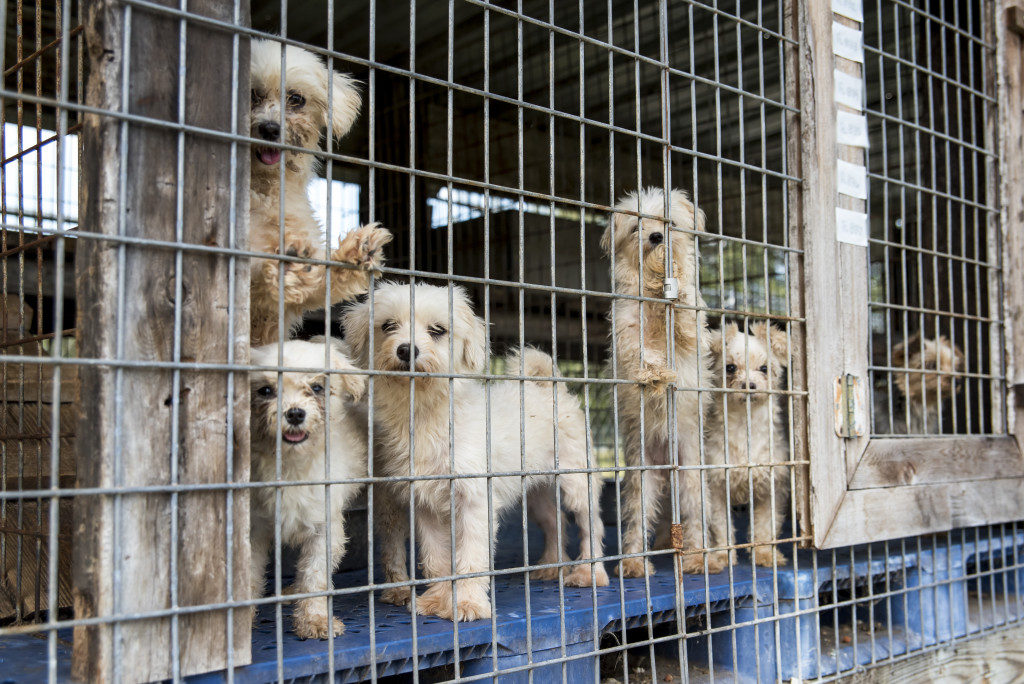
The Greater Birmingham Humane Society (GBHS) is calling for legislative action against puppy mills in the state following a puppy mill bust in Trussville, Ala. The GBHS rescued 83 dogs from the property which was deemed unfit for all the animals this week; the property owners were selling parakeets as well. According to AL.com, the property owners voluntarily surrendered all the animals but might face criminal charges of animal cruelty and operating a business without a license. GBHS CEO Allison Black Cornelius took to Facebook, to plead with voters and local legislators to file legislation in the next session to protect animals within the state. “It has been a very sad week for animals in our community with the passing of a dog left in a car in extreme heat and a puppy mill bust,” the group posted on Facebook. “GBHS Chief Executive Officer, Allison Black Cornelius, urges citizens to remember these two cases when the next legislative session begins and offer your support to promote legislation that protects animals in our state.” The shelter is accepting donations of puppy pads, puppy food and adult dog food. Last year, Jacksonville-Republican state Rep. K.L. Brown and Bessemer-Democrat state Sen. Priscilla Dunn both introduced bills drafted by the Alabama Puppy Mill Project, HB45 and SB17, in their respective chambers, which require commercial breeders of dogs and cats to be licensed and inspected annually in hopes to put an end to inhumane practices like puppy mills. The bills did not pass in the session.
Alabama “puppy mill” bill gets a name — Atti’s Bill
Man’s best friend has two new allies in the Alabama Legislature — Jacksonville-Republican state Rep. K.L. Brown and Bessemer-Democrat state Sen. Priscilla Dunn. The duo introduced bills drafted by the Alabama Puppy Mill Project, HB45 and SB17, in their respective chambers, which require commercial breeders of dogs and cats to be licensed and inspected annually in hopes to put an end to inhumane practices like puppy mills. On Thursday both bills finally got a name, and face, of their own — Atti’s Bill. Named after rescue pup Atti, short for Atticus Finch, along with her sister from a breeder in Troy, Ala. The bill now carries Atti’s name. According to the Alabama Puppy Mill Project, “they were riddled with parasites and had Parvo. They did everything they could to give them every ounce of veterinary care they could to save their lives. They were both fighters but Atti succumbed to the Parvo and died several days later.” The bills have now been renamed in her honor and memory. While neither bill directly refers to “puppy mills” they would apply to cat and dog breeders who have more than 10 female animals. They’d have to be licensed and inspected by the Alabama Dog and Cat Breeders Commission, which the legislation also creates. The state Department of Agriculture and Industries would have jurisdiction over the commission and funding would be covered through breeders’ licensing fees. According to the American Society for the Prevention of Cruelty to Animals (ASCPA), Alabama is one of only 20 states that doesn’t have regulations for puppy mills — a large-scale commercial dog breeding facility where profit is given priority over the well-being of the dogs. HB45/SB17 hopes to put an end to that.
CPI study: There are six lobbying entities to every Alabama lawmaker

A recent study by The Center for Public Integrity (CPI) has detailed the reach that national lobbying groups enjoy across the country. According to the study, 20 lobbying entities have access to all 50 states, including Aflac, the National Rifle Association (NRA), Pfizer, Wal-Mart and Anheuser-Busch. While all of these agencies and more are licensed to lobby in all 50 states, and a laundry list of others are allowed to lobby in fewer, the biggest lobbying presence in Alabama comes from the Alabama Education Association, Southern Company, AT&T, the Business Council of Alabama and Blue Cross/Blue Shield of Alabama. A lot of work has obviously been done on the part of these lobbying groups, as Alabama lawmakers have made great strides in expanding technology, providing tax breaks to small businesses and providing robust increases to the state’s education budget. But other entities are seemingly at work influencing other Alabama legislation as well. Among the bills on this week’s Senate calendar is SB296 from Sen. Tim Melson (R-Florence), which would allow epinephrine auto-injectors to be administered by “non-medical persons” at “summer camps, day care centers, restaurants, places of employment, and other entities.” The CPI study lists Mylan, Inc. among the entities which has significantly expanded operations over recent years. Mylan lobbies for EpiPens to be available in schools and restaurants and has expanded its lobbying efforts into 36 states since 2010 – one of which is Alabama. Another group which has expanded its lobbying efforts across the country is Uber Technologies, Inc., which has expanded into 35 states since 2010 and has recently seen its operations approved in Huntsville, Birmingham and Montgomery. Other groups include Excellence in Education National, which pushes for the establishment of charter schools and expanded technology access for students, and Xerox Corporation, which has pushed its state government services like speed cameras and state health insurance exchange software. Still other entities have decreased their presence across the country but remain active in Alabama. Reckitt Benckiser Group PLC has reduced its reach by four states due to a decision to allow competitors to make generic versions of its opioid-addiction drug Suboxone. SB280 from Sen. Priscilla Dunn (D-Bessemer), which also appears on this week’s calendar, would allow drug prescribers to indicate that a “generic equivalent drug” should not be used for participants in the Public Education Employees Health Insurance Program (PEEHIP). Currently, PEEHIP enrollees must receive a generic drug when available, assumedly for cost-saving purposes. While it is unclear that lobbying efforts have had any impact on the aforementioned legislation, the CPI study notes that there are six lobbying entities to every Alabama lawmaker.
Prison reform bill passes committee, moves forward to full Senate
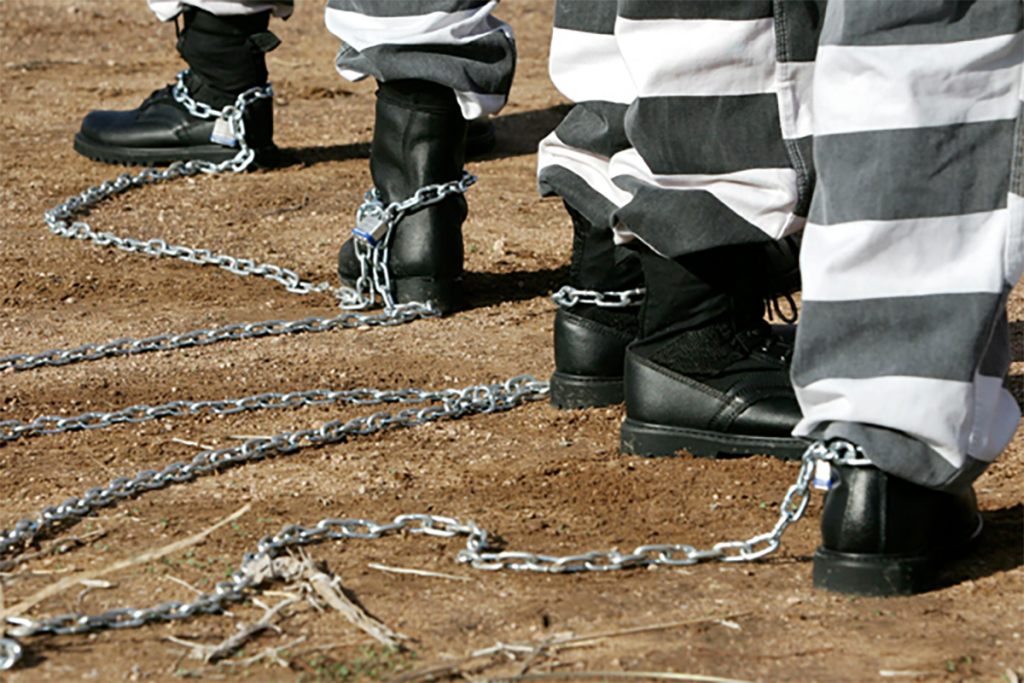
On Wednesday, the Senate Committee on General Fund Taxation and Finance passed the long-debated Alabama Prison Transformation Initiative Act, clearing its path to go before the full Senate next week. SB287 from Sen. Trip Pittman (R-Daphne) provides an $800 million revenue bond for the demolition of 14 of Alabama’s 16 prisons and subsequent renovation of the remaining two. The bill further provides for the construction of four new prisons, three male and one female, which will pay off the bond through perceived savings. As collateral, the bill provides a 1-mill tax currently reserved for funding the Alabama Department of Human Resources (ADHR) and the Alabama Department of Veterans Affairs (ADVA). Proponents say that the tax would only be used if the Alabama Department of Corrections (ADOC) defaults on its bond payments, which is not expected to happen. In previous committee meetings, opponents spoke out against the 1-mill tax commitment as well as the design/build method laid out in the bill, which state contractors have argued would stifle competition and have a negative effect on local companies. With the 1-mill tax concerns in mind, Sen. William Holtzclaw (R-Madison) offered an amendment which would protect the ADVA and ADHR. If forced to use the money because of an ADOC default, money would taken from each agency incrementally and, if funding became unsustainable, future legislatures would be forced to fully fund both departments. The amendment further imposes a sunset on the 1-mill tax commitment to alleviate concerns that it could be on the table for many years to come. The amendment was unanimously approved, with only Pittman abstaining from the vote. In regard to the design/build method, which repeatedly drew the ire of state engineers and architects, Pittman alleged that altering that language would be a nonstarter for Gov. Robert Bentley, who contends that the method is best for the state and the project. State Finance Director Bill Newton noted that design/build would shorten the time of construction by one year and save the state about $100 million. Many committee members spoke favorably of the legislation, despite the longstanding uproar and inner-concerns over the bill. “Don’t let this die in committee today and we lose the only vehicle we have for improving those facilities,” said Sen. Cam Ward (R-Alabaster). “That would be a terrible, terrible shame for all of us.” “If this is the only way we can make things better then we ought to do it,” said Sen. Priscilla Dunn (D-Bessemer). “I think it’s time that we try to do something about it. We need to do something about these prisons.” In the end, only Sen. Paul Sanford (R-Huntsville) voted against the bill.
