
ACLU of Alabama outlines how to cut the state’s prison population in half
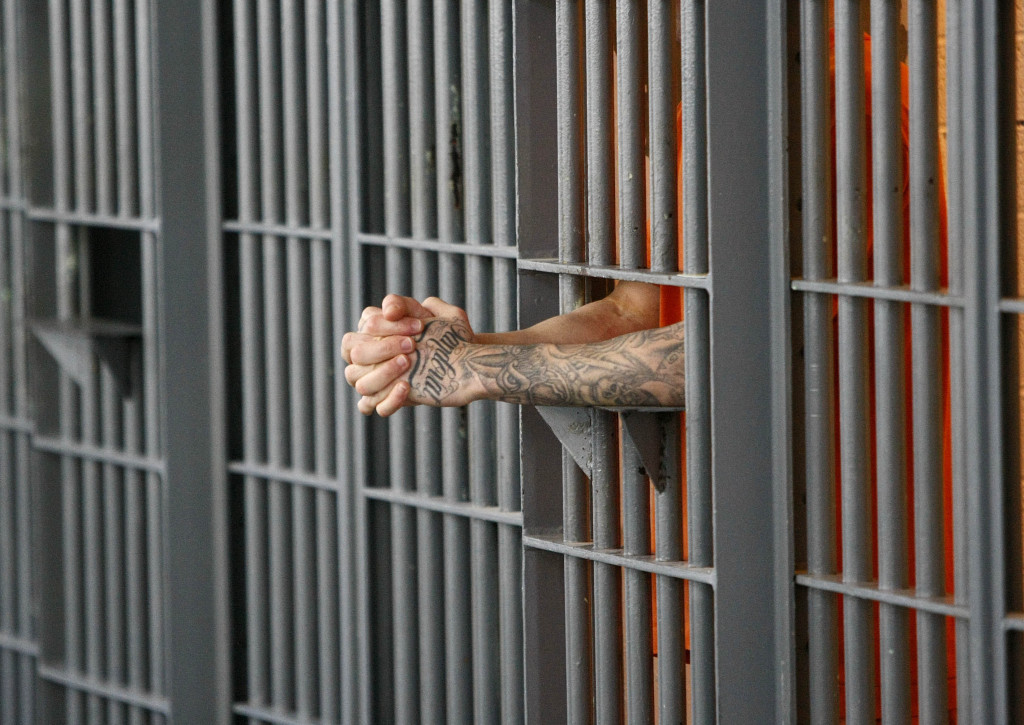
Out of the 2+ million people who are behind bars in this country, about 90 percent are held in local jails and state prisons, which is why the American Civil Liberties Union (ACLU) of Alabama has released a new report outlining how Alabama in particular can cut incarceration rates in half. Currently, 28,296 people are locked up in Alabama prisons, says the ACLU of Alabama. According to the Alabama Department of Corrections (ADOC), state facilities are are at 160 percent of their intended occupancy — the most overcrowded system in the country — as they’re collectively designed to hold only only 13,000 prisoners. The ACLU of Alabama says prosecutors, judges, the state’s parole board and state lawmakers have the ability to change these stats if they pursue reforms like changing drug sentencing laws and sentencing enhancement laws, reducing sentencing ranges, and addressing its juvenile justice system. The new report is a part of the ACLU’s Smart Justice 50-State Blueprints project, a comprehensive, state-by-state analysis of how states can transform their criminal justice system and cut incarceration in half. In the coming weeks, the ACLU of Alabama will convene briefings with advocates and policymakers to share the findings of the Blueprint and discuss strategies on how to move the criminal justice reform agenda further forward. “If Alabama were to follow these and other reforms in this Smart Justice 50-State Blueprint, 12,511 fewer people would be in prison in Alabama by 2025, saving nearly $470 million that could be invested in schools, services, and other resources that would strengthen communities,” reads the report’s website. According to the report, Alabama can dramatically reduce its prison population by implementing just a few sensible reforms: Reducing the amount of time people spend in prison by reforming harsh drug laws by amending the criminal code Doing away with direct and discretionary transfers of juveniles to adult court. Increasing the value threshold that defines whether a property offense is a misdemeanor or a felony. Eliminating or significantly scaling back mandatory minimum sentences. Repealing Alabama’s Habitual Felony Offender Act, which is one of the most punitive habitual offender laws in the country. Releasing aging people in prison who pose no threat to public safety. Looking back 2015, more than 70 percent of people in Alabama county jails had not been convicted of a crime and were still awaiting trial. According to the ACLU of Alabama, “practices like this that are funneling more people into prison and having them stay there for longer and longer periods of time is creating a strain on Alabama’s budget.” In fact, in 2016, Alabama spent nearly half a billion dollars of its general fund on corrections, which represents an increase of 126 percent since 1985, a figure that far outpaces growth in spending on higher education. “Alabama voters, advocates, policymakers, and prosecutors have a crucial choice to make: continue our over-reliance on incarceration that is stifling our state and hurting our communities, or move forward by building a new, more compassionate, more humane systems of accountability that puts people before prisons,” said Randall Marshall, executive director of the ACLU of Alabama.
Former State Rep. Micky Hammon released from prison

Former Alabama House Majority Leader Micky Hammon was released from federal prison Thursday, according to the Federal Bureau of Prisons website. The Decatur-Republican was sentenced to three months in prison on charges relating to mail fraud back in February. Hammon pleaded guilty on felony charges in September to devising a scheme to commit mail fraud involving his campaign funds. During his sentencing he was ordered to pay $50,657 in restitution for the crimes, which will be distributed to his campaign contributors, and was sentenced to three months in federal prison and three years supervised release. He faced a maximum sentence of 20 years. According to court documents, Hammon used campaign money to pay his own personal expenses as part of a mail fraud scheme. In 2013, he created a principal campaign committee through the Secretary of States Office allowing him to raise funds for his reelection campaign. He was writing checks from his campaign committee account and then depositing them into his personal account. He later used the funds to pay for personal expenses, which is strictly prohibited by Alabama campaign finance rules. As a result of pleading guilty to a felony, Hammon was automatically removed from his House seat in the state House. He had represented the 4th district in the Alabama House since 2002 and served as the House of Representative’s majority leader until Feb. 2017.
Alabama’s prison system back on trial this week
Alabama’s prison system is back on trial this week. The trial marks the latest stage in a lawsuit the Southern Poverty Law Center (SPLC) and the Alabama Disabilities Advocacy Program filed in 2014 against the Alabama Department of Corrections (ADOC) to end the poor conditions in the state prison system, including the understaffing of both correctional and mental health workers. According to the SPLC, the state has yet to come up with an acceptable remedy to address the “horrendously inadequate” and unconstitutional mental health care and staffing needs of the ADOC. The SPLC will argue just that in its closing arguments scheduled for Wednesday, Jan. 24 at 3 p.m. They follow weeks of testimony outlining ADOC’s plans to increase mental health and correctional officer staffing, raise personnel pay, and enhance outreach to potential new hires. Alabama legislators have requested $80 million over the next year and a half to address the issues plaguing the ADOC. But according to the SPLC, that amount does not address the current shortfalls, nor does it take into consideration decades of inadequate funding. “As Gov. Kay Ivey and ADOC Commissioner Jeff Dunn have both recognized, the constitutional violations of how the state treats prisoners developed over a generation. It will be difficult, and likely costly, to fix them. But ADOC has to fix them,” said Maria Morris, senior supervising attorney for the SPLC, and lead litigator in the case. “ADOC needs to be fast, creative and aggressive in figuring out how to come into compliance with the Constitution,” Morris added. “The recent budget request for ADOC covers little more than the expected increase in the system’s health care costs, and does nothing to address correctional staff shortages or the unconstitutional level of care.” Responding to the federal lawsuit in June 2017, the U.S. District Court issued a 302-page ruling declaring that Alabama’s prison system has failed to provide mental health care to the state’s prison population and is in violation of the Eighth Amendment’s prohibition on cruel and unusual punishment. “Given the severity and urgency of the need for mental-health care explained in this opinion, the proposed relief must be both immediate and long term,”U.S. District Judge Myron Thompson wrote in his decision. State officials denied providing inadequate mental health treatment, but the judge cited evidence to the contrary from inmates and prison officials. One inmate killed himself days after testifying, prompting the state to agree to new suicide prevention methods while the trial continued. The judge acknowledged that the department blames lack of funding, but said money alone couldn’t make up for such poor treatment, and sweeping change is required. Alabama’s state prison system houses nearly twice the inmates it was designed for. Prison officers and inmates have been killed and injured in a series of violent crimes behind bars.
Robert Bentley prison construction bill heads to committee vote

Alabama lawmakers are expected to vote as early as Wednesday on legislation being pushed by Gov. Robert Bentley. The bill, proposes an $800 million bond issue to build four “super-prisons” and would close 14 existing prisons. The Alabama Senate Judiciary Committee is scheduled to debate the proposal Wednesday after a public hearing. In his annual State of the State address in February, Bentley said the prison plan is vital because of the federal mandate to fix overcrowding and substandard conditions. ”Nearly all DOC facilities are double sometimes triple capacity, infrastructure is collapsing and the tensions created among inmates and officers by the deteriorating facilities and overcrowded conditions have even become deadly,” Bentley said in the address. “Alabama is about to embark on a complete transformation of the state’s prison system.” He continued, “The Alabama Prison Transformation Initiative will transform Alabama’s prison system into a national model for the 21st century. The initiative will consolidate 14 of 16 maximum custody level prisons into four large-scale, state-of-the-art regional correctional facilities — three men’s facilities and one women’s facility to permanently replace Tutwiler Prison for Women.” As of September, Alabama prisons were at 175 percent of their intended occupancy — housing roughly 23,000 prisoners in facilities designed for 13,000. In October, the U.S. Justice Department opened a statewide investigation into violence, rape, overcrowding, among other problems and conditions in Alabama’s prisons for men. Similar versions of the proposed plan passed both the House and Senate last year, but failed to win final approval.
Robert Bentley awards grant to help Ala. inmates overcome substance abuse dependencies
Gov. Robert Bentley awarded a $210,605 grant to the Alabama Department of Corrections to treat inmates in several correctional facilities with drug dependencies on Tuesday. “So many evils are rooted in illegal and illegally obtained drugs. In recent years, Alabama has seen a significant increase in the number of fatalities caused by opioid abuse, and we must assist those suffering from opioid addiction whenever possible,” Bentley said in a statement. “I support this program as a way to reduce our prison population and to safely release people back into the public, once they have completed their sentence and want to become productive members of society.” The six-month treatment program will be available at seven correctional facilities across the state and will be conducted by trained drug counselors and drug program specialists. The grant is made possible from funds from the U.S. Department of Justice. The Law Enforcement and Traffic Safety Division of the Alabama Department of Economic and Community Affairs (ADECA) will be responsible for administering the funds. “This valuable partnership is a major step in helping inmates transition back into society,” ADECA Director Jim Byard Jr. said. “Through this program, inmates who have struggled with drug dependency can take control of their lives and prepare to become responsible citizens once released. Public safety and our communities win when inmates are able to break an addiction.”
Private prison company hires former Jeff Session aides to lobby in D.C.
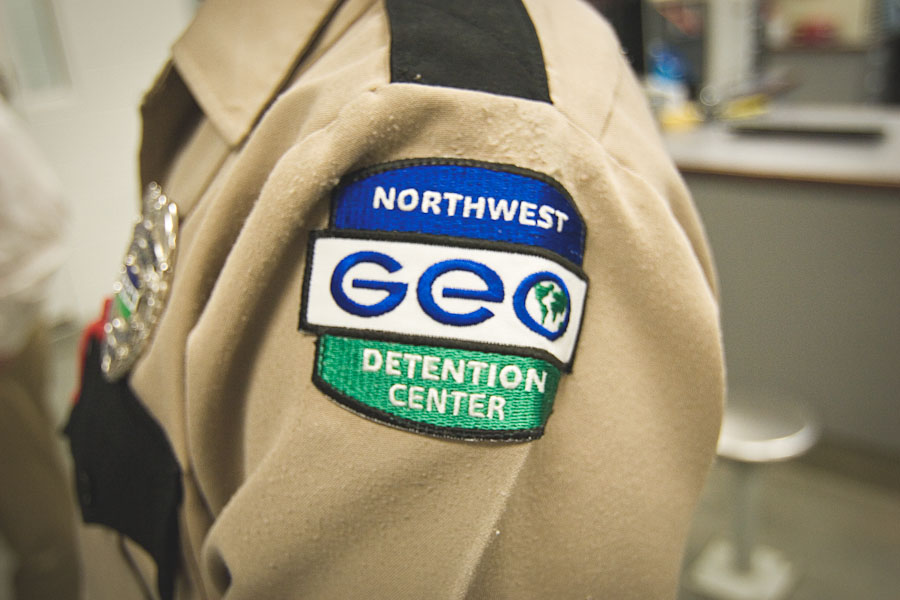
GEO Group, the Boca Raton-based private prison corporation, recently hired three lobbying firms in Washington D.C. POLITICO Influence reports that this month, GEO brought on David Olander of Capitol Counsel for real estate investment trust tax issues; David Stewart and Ryan Robichaux of Bradley Arant Boult Cummings — former aides to Alabama Sen. Jeff Sessions — to advocate on federal government use of contract correctional facilities; and the Scrivner Leon Group’s Michael Scrivner and Peter Leon for privately operated correctional facilities. GEO previously retained Leo Aguirre and Da Vinci Group’s Mark Smith. According to the GEO website, the company operations include the management and/or ownership of 104 correctional, detention, and community re-entry facilities with approximately 87,000 beds worldwide. In the U.S., GEO maintains 64 facilities, with 75,152 beds. In August, the Justice Department announced it will end the use of private prisons, which have lately come under fire for poor conditions and business practices.
Corrections officers miss shifts at crowded Alabama prison
Some corrections officers are not showing up for work at a crowded south Alabama prison that has been beset by multiple incidents of violence. Department of Corrections spokesman Bob Horton said six corrections officers assigned to William C. Holman Correctional Facility in Atmore called in sick for the third shift Sunday. Nine officers did not for show up for the same shift on Sept. 24, according to the prison system. Three officers resigned. Horton says officers have not announced an official strike or given demands to prison administrators. However, Horton said officers’ concerns expressed to media about the facility are “understandable due to understaffing and overcrowding.” Officers from other prisons have been brought over to fill in at the prison, he said. Located in southwest Alabama, the maximum-security prison houses the state execution chamber and has been the site of multiple outbreaks of violence. A Holman officer died last month after being stabbed by an inmate. Inmates injured the warden, set fires and seized control of dormitory during a March uprising. The prison was placed on lockdown again in August after officials said inmates in one of the dormitories “became aggressive” toward the guards. Officers secured the door of the housing area, and some inmates inside started a fire inside. A Department of Corrections report shows Holman was designed to hold 581 inmates but housed 804 inmates at the end of May. Republished with permission of The Associated Press.
Alabama agrees to changes for inmates with disabilities
A federal judge on Friday gave final approval to a lawsuit settlement regarding how inmates with disabilities are housed in Alabama prisons. U.S. District Judge Myron Thompson signed the agreement reached between inmates and the Alabama Department of Corrections. The state prison system agreed to survey prison facilities and make changes to settle claims brought by inmates under the Americans with Disabilities Act and the Rehabilitation Act. The department will have 32 months to make any architectural changes required to make sure inmates with disabilities are appropriately housed and can access prison programs and facilities. The state also agreed to screen inmates for physical, mental or intellectual disabilities and to hire and train ADA coordinators. Disabled inmates said in the 2014 federal lawsuit that they were kept in facilities that couldn’t safely accommodate them, were denied access to prison education, work release and other programs because of their disabilities and were sometimes inappropriately housed with higher security inmates solely because of their disabilities. During a fire, a prisoner in a wheelchair had to maneuver deeper into the prison to access a ramp to the outside, according to the lawsuit. Thompson had given preliminary approval to the settlement in June. “The Alabama Department of Corrections is committed to meeting its obligations as set out in the settlement agreement,” Commissioner Jeff Dunn said in a statement. Thompson praised both the inmates who brought the lawsuit and the state prison system for agreeing to make changes. “This settlement reflects the Alabama Department of Corrections’ commitment to making manifest the rights of disabled prisoners in its custody; it represents the shouldering of significant responsibility, and presents an equally significant opportunity, by delineating a years-long process of ensuring compliance with the dictates of federal disability law,” Thompson wrote. Thompson wrote that the federal laws were meant to protect people with disabilities from being shunted and ignored. “Prisoners, looked down upon by society and hidden from public view, are likewise at risk of such treatment. Absent the protections created and processes mandated by the ADA and accompanying regulations, and without effective oversight, prisoners with disabilities are doubly damned,” Thompson wrote. The issue of housing for disabled inmates is part of a broader lawsuit filed by inmates over prison medical care. A group of inmates filed a civil lawsuit in 2014 that accused the state of failing to provide basic medical and mental health care. Those claims have not yet gone to trial. Republished with permission of The Associated Press.
Alabama has 5th highest incarceration rate in the world
If the United States were divided up into 50 independent nations, Alabama’s rate of incarceration would be the fifth-highest of any country across the globe. That’s according to the Prison Policy Initiative‘s (PPI) newly released The States of Incarceration report, which looks at states as if they were independent countries by per-capita rate of incarceration. According to the PPI, “the U.S. incarcerates 693 people for every 100,000 residents, more than any other country. In fact, [the U.S.] rate of incarceration is more than five times higher than most of the countries in the world. Although [the U.S.] level of crime is comparable to that of other stable, internally secure, industrialized nations, the U.S. has an incarceration rate that far exceeds every other country.” Here’s a look at the top 22 states with the highest incarceration rates, which all rank above the U.S. as a whole. No other countries are listed, because when it comes to incarceration rates per 100,000 people, more than half of these United States rank above all nations with at least a half million people in total population. The findings show states from the Deep South lock up more of their residents than the rest of the country. Louisiana incarcerates 1,143 people per 100,000 state residents, Georgia’s imprisonment rate is 1,004 per 100,000 state residents, and Alabama’s rate of incarceration of 987 people locked up for every 100,000 inhabitants. With a prison system designed only to house 14,000, Alabama’s prisons are severely overcrowded — over 190 percent over capacity — despite the fact the state’s incarceration rate continues to climb. On May 23, 2011, the United States Supreme Court in Brown v. Plata upheld a court order requiring California to release up to 46,000 prisoners to relieve serious overcrowding in the state’s prisons and remedy grossly inadequate medical and mental health care. Alabama is hoping to avoid a similar fate. That is why Gov. Robert Bentley has made it one of his missions to reform and improve the Alabama prison system with a plan that would “reduce overcrowding and improve safety conditions for inmates and corrections officers, allow for additional inmate re-entry programs and to improve operational practices and procedures for the Alabama Department of Corrections (ADOC).”
State settles claim involving disabled inmates

Alabama has agreed to change how inmates with disabilities are treated and housed to settle part of a broader lawsuit over prison medical care. U.S. District Judge Myron H. Thompson will hold a Thursday hearing on the proposed settlement filed this week in federal court in Montgomery. In the proposed settlement, the state agreed to make sure inmate housing is compliant with the Americans with Disabilities Act and inmates can access programs and facilities. “This agreement is an important commitment by the Alabama Department of Corrections to address the discrimination and hardship these prisoners have faced for far too long,” said Maria Morris, a Southern Poverty Law Center attorney representing inmates. The lawsuit contended disabled inmates were kept in facilities that couldn’t safely accommodate them and were inappropriately housed with higher security inmates for no reason other than their disabilities. It also claims they didn’t have access to programs and devices, including functioning wheelchairs. During a fire, a wheelchair-using prisoner had to maneuver deeper into the prison to access a ramp to the outside, according to the lawsuit. The settlement agreement noted Alabama Gov. Robert Bentley‘s proposal to build four new prisons to replace existing facilities but said that monitoring of settlement compliance will continue regardless of whether the state builds new prisons. The Alabama Senate could vote on the proposed $800 million bond issue next week. “The Alabama Department of Corrections agrees that the filed settlement charts a sensible and prudent path to addressing ADA compliance issues caused largely by antiquated correctional facilities,” Corrections Commissioner Jeff Dunn said in a statement. “A proposal that is currently before the Alabama Legislature to transform the state’s prison system will allow for the construction of four new state-of-the-art facilities that will comply fully with ADA standards, and will go a long way in helping the department meet the terms of the settlement.” A group of inmates filed a civil lawsuit in 2014 that accused the state of failing to provide basic medical and mental health care to inmates. The remaining claims could go to trial later this year. “While we are pleased to have resolved these claims on behalf of prisoners with disabilities, this case is far from over,” said Lisa Graybill, deputy legal director of the Southern Poverty Law Center. Dunn said the department believes the remaining claims are without merit. “While the settlement only addresses ADA issues, the department believes it is providing constitutionally adequate medical and mental healthcare and services to offenders incarcerated in Alabama prisons,” Dunn said. Republished with permission of The Associated Press.
Daniel Sutter: How to overcrowd prisons
Alabama’s prisons house 24,000 inmates, but were designed to hold 13,000. The legislature’s 2015 sentencing reforms should reduce this overcrowding some, but a federal takeover of our prisons remains possible. Chronic overcrowding plagues both state and federal prisons. The problem results from how our political process makes laws and prosecutes offenders. Overcrowding puts both prisoners and corrections officers at risk. Prisoners should serve their sentences, but do not deserve to be terrorized and brutalized by other inmates, which overcrowding makes more likely. Overcrowding has been judged to constitute cruel and unusual punishment, violating inmates’ Eighth Amendment rights. Under a federal “takeover,” a federal judge makes decisions about a state’s prisons. Consequences could include prisoner releases and the construction of prisons at state expense. I do not like to prognosticate, so I will not speculate whether last year’s reforms have vanquished this threat. Overcrowding is not a consequence of America failing to build new prisons. Quite the opposite: between 1984 and 2005, the number of state prisons increased by 70 percent. Yet the new prisons offered only temporary respite. National attitudes toward incarcerating drug users significantly affect the prison population. Half of all federal prisoners are serving time for drug offenses, while two thirds of Alabama’s prisoners were convicted of either drug or property offenses. De-escalation of the War on Drugs, the wisdom of which is a topic for another day, would significantly reduce our prison population. Chronic prison overcrowding emerges from how we make political decisions about incarceration. Florida State economist Bruce Benson has convincingly argued that our system treats prisons as a common pool resource. Common pool resources can be used by many people without paying. Consequently too many people use the resource, and no one has an incentive to invest in conservation. Other common pool resources include fisheries (including whales), aquifers, and highways. Garrett Hardin coined the term “The Tragedy of the Commons” to describe the too frequent overuse of these resources: plummeting catches in the world’s international fisheries, rapidly falling water levels in major aquifers, and rush hour traffic jams. Overuse occurs because many people can use the resource without paying. Lawmakers, prosecutors and judges all “use” our prisons without paying. Yes, lawmakers must fund the Department of Corrections to operate and build prisons. But lawmakers, prosecutors and judges separately make decisions boosting the prison population. The Tragedy of the Commons ensures constantly overcrowded prisons. Let’s consider this in more detail, starting with lawmakers. Every year the news media reports on new, dire threats to our health and happiness, like the current heroin epidemic in the Northeast. Human trafficking is another current scourge. Past threats included crack cocaine, methamphetamine, and electronic cigarettes. Our elected officials compete to protect us from these threats, or at least appear to do so, because this wins elections. State legislators though do not walk a beat, investigate crimes, or prosecute the accused. So they do what they do: pass laws – laws criminalizing actions associated with the harms, or laws increasing penalties. When passing these laws, lawmakers do not have to pay for the extra prison space needed for the new prisoners and longer sentences. They can assume that the extra inmates will be housed somewhere. Prosecutors and judges (generally) must run for office, and seek to protect us from these same threats. Prosecutors and judges aggressively charge the accused and hand down lengthy sentences for the guilty to show how tough they are on (fill in the blank). If they don’t, a challenger in the next election will accuse them of neglecting this ill. Prosecutors or judges do not have to provide or pay for extra space when they hand out longer sentences. The common pool problem underlying prison overcrowding does not admit easy solutions. It emerges from how we structure decisions in the public sector. But correctly identifying a problem’s cause is usually a necessary precondition for devising a genuine solution. • • • Daniel Sutter is the Charles G. Koch Professor of Economics with the Manuel H. Johnson Center for Political Economy at Troy University and host of Econversations on TrojanVision. Respond to him at dsutter@troy.edu.
Prison overhaul bill near final passage
The Alabama Legislature could give final approval to sweeping changes to sentencing and probation standards in an effort to relieve crowding in state prisons. The Senate-passed bill was on the House debate agenda for Thursday. Alabama prisons house nearly twice the number of inmates they were originally designed to hold, a crowding level that state officials say is both dangerous and puts the state at risk of federal intervention. The bill aims to steer low-level offenders away from prison and create a new Class D felony class. It also seeks to increase supervision on former inmates as they are released from prison. The legislation was put together by a prison reform task force with help from the Council of State Governments. Republished with permission of The Associated Press.
