
Two officers on leave amid investigation into inmate’s death
The Alabama prison system announced Monday that it is investigating the use of force by officers following the recent death of an inmate and that an investigation is ongoing into the death of another prisoner in what has already been a violent year inside state prisons. The Alabama Department of Corrections said it is investigating the alleged use of force that resulted in the death of an inmate at Ventress Correctional Facility. Fifty-five-year-old Michael Smith of Fairfield, died Dec. 5 after being removed from life support following a Nov. 30 incident at the prison. The department released little information about the death, but said two officers were placed on mandatory leave afterward. The department is also investigating the death of another inmate, 48-year-old Willie Leon Scott, who died Dec. 6. The department didn’t give specifics, but said his injuries were the result of an incident Dec. 4 at Holman Correctional Facility. Corrections Commissioner Jeff Dunn said Monday that he is creating an internal task force to examine inmate-on-inmate violence as well as alleged excessive use of force by staff..The prison system said the action is being made because of recent deaths. “My department is taking swift and substantive action to create safer working and living conditions, better ensure policy adherence, and deter unacceptable behavior by both inmates and … staff,” Dunn said in a statement. The Alabamians for Fair Justice, a collection of advocacy groups and individuals, called the state’s reaction “too little too late.” The group said that a “culture of violence” is perpetuated by prison staff. “Once again, the State of Alabama has proven itself grossly inadequate at operating safe, humane prisons. Alabama runs the worst, most violent prisons in the country,” the organization said in a statement. The U.S. Department of Justice in April issued scathing findings that condemned Alabama prisons for high rates of inmate homicides and violence. More than a dozen inmates have been killed in incidents in state prisons since Oct. 1, according to department statistics and news releases. Ten inmates were killed in inmate-on-inmate homicides in a 10-month period between October 2018 and August 2019, according to statistics and news releases from the state prison system. Dunn said last week that it is continuing to investigate the death of Steven Davis, who died after an October altercation with officers at Donaldson Correctional Facility. His mother, Sandy Ray, last week showed a photograph of her son’s battered face to a state criminal justice reform panel created by Gov. Kay Ivey. The department has said officers used force after Davis rushed out of his cell and tried to strike an officer with makeshift weapons. Ray said her son was beaten beyond recognition and that she had to have a closed casket for his funeral. Ray and other family members and advocates for state inmates attended the meeting last week to urge the state to improve conditions in state prisons. Dunn said Monday that he has directed the task force to assess reinforcement training programs and examine the possible use of body cameras by officers. The department said instructors will be giving refresher courses to officers. Ivey’s administration is considering building three large regional prisons. Alabamians for Fair Justice said the solution is not building more prisons, but “locking up fewer Alabamians in these deadly warehouses.” Republished with the Permission of the Associated Press.
Alabama’s prison construction plan inches forward
Alabama’s governor will ask four companies to submit bids for building three new state prisons, her office announced Tuesday, as the massive construction project inches forward Gov. Kay Ivey announced that four developer teams have qualified for the next stage of the bid process. Ivey’s press office said the firms are The GEO Group, Corvias, CoreCivic and Alabama Prison Transformation Partners. The firms were selected after submitting their qualifications for the project. Ivey announced a plan in February to build the new large regional prisons to replace most state prisons. The prisons would house about 3,000 inmates each and would extend over 700,000 square feet (65,000 square meters), according to earlier state bid documents. “The revitalization of prisons in Alabama is crucial, and this plan to improve the state’s infrastructure is a major step towards reduced recidivism and improved public safety,” Ivey said a statement Tuesday, expressing her commitment to moving ahead with the plan. GEO and CoreCivic are two large private prison companies. Alabama Prison Transportation Partners is a project of multiple entities, including Birmingham-based construction company BL Harbert International, according to Ivey’s office. Ivey’s office said the request for proposals will go out to the companies next month. The proposals are expected to be received in the spring of 2020. The process has at times faced criticism that it is too secretive. Lawmakers previously rejected former Gov. Robert Bentley’s proposal to build regional prisons and close existing facilities. Ivey’s administration is exploring the possibility of leasing the prisons. Ivey said earlier this year that state officials will first gather proposals from companies and then decide how to proceed. Republished with the Permission of the Associated Press.
Corrections Commissioner Jeff Dunn honored despite troubles
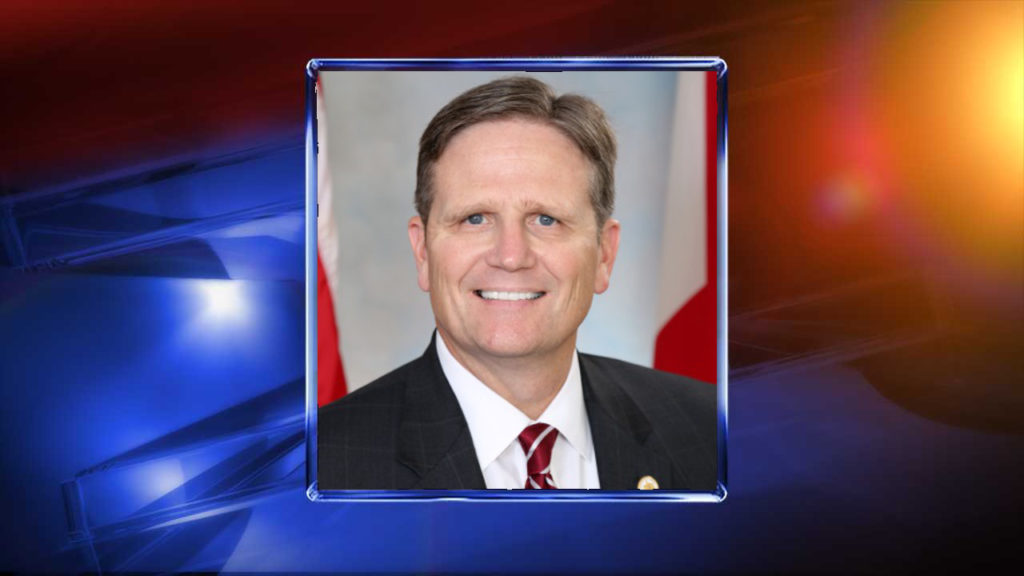
The head of Alabama’s troubled prison system is being honored with a national award. The department says Corrections Commissioner Jeff Dunn is being awarded a career achievement award by the Correctional Leaders Association, a national organization for prison administrators. Dunn serves as the group’s regional chair and is a member of its executive committee. He’s been commissioner of Alabama’s badly overcrowded prison system since 2015. Alabama’s prison system is plagued with a series of inmate deaths due to suicide, homicide and drug overdoses. And the Justice Department earlier this year cited the state for unconstitutional conditions including excessive violence. A prison reform group, Alabamians for Fair Justice, criticized Dunn’s award by saying his only solution has been to build new, larger prisons and keeping people locked up. Republished with the permission of the Associated Press.
5 companies compete to build new Alabama prisons
Five companies have expressed interest in building new prisons for the state of Alabama, the governor’s office announced Monday, as a prison construction plan inches forward. Gov. Kay Ivey’s office said five firms responded to a “request for qualifications” to build the three proposed prisons that would house 3,000 or more inmates each. Ivey’s press office said the firms are The GEO Group, Corvias, Corrections Consultants, CoreCivic and Alabama Prison Transformation Partners. GEO and CoreCivic are the nation’s two largest private prison companies. Although some of the companies are well-known names in corrections, little is known about one of the firms. The Alabama secretary of state’s website did not have records for a company called Alabama Prison Transformation Partners. In February, Ivey announced a plan to build three new large prisons to replace most state prisons. She has said state officials will first gather proposals and then decide how to proceed. The administration says the state could lease the prisons. Department of Corrections spokesman Bob Horton wrote in an email that the prison system will evaluate the companies’ qualifications. The prison system will ask the companies for proposals in the fall with intention of receiving proposals in the first part of 2020, he wrote. Republished with the permission of the Associated Press.
J. Pepper Bryars: Alabama must build more prisons but taxpayers don’t have to foot the bill
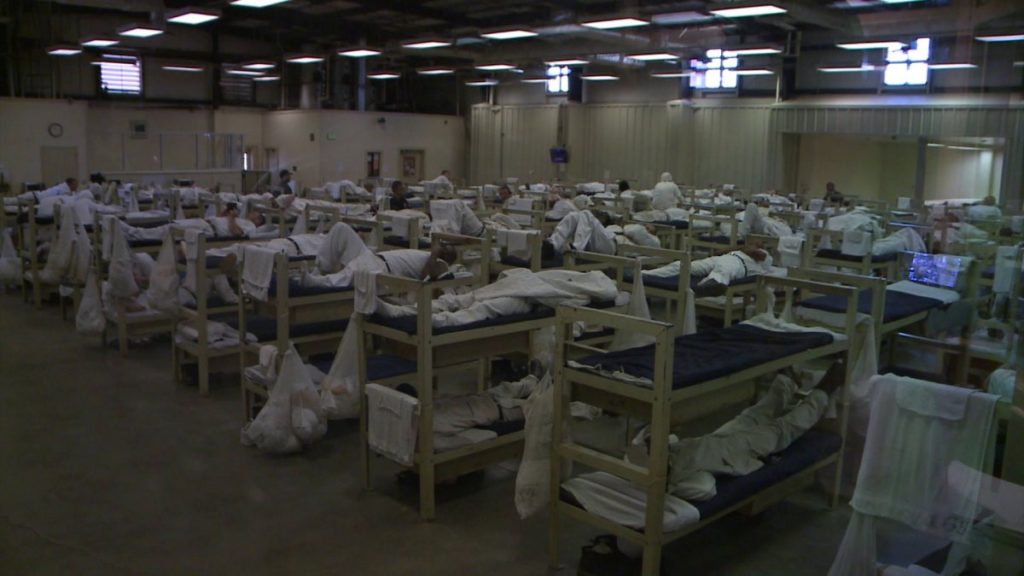
Vicious assault. Brutal rape. Cold-blooded murder. These are some of the crimes that will get you thrown into prison, but what if they’re also what could happen to you once you get there? Sadly, a federal investigation found this is happening in Alabama’s prison system, and part of the problem is we’ve simply run out of room. “Our investigation revealed that an excessive amount of violence, sexual abuse, and prisoner deaths occur within Alabama’s prisons on a regular basis,” wrote the authors of the report from the U.S. Department of Justice, adding that that one of the major factors is “severe overcrowding” and that the state doesn’t “provide adequate humane conditions of confinement.” “These are human beings,” said one mother of an inmate who was repeatedly threatened with violence at the state prison near Atmore. “I feel like our society is getting too numb when it comes to human lives.” Alabama’s prison system was designed for about 9,900 inmates but it’s currently holding more than 16,000 – an occupancy rate of more than 165 percent, according to data published by the Alabama Department of Corrections. It gets worse in some places. The investigation found that the medium-security prison in Elmore County was at 272 percent occupancy, holding nearly 1,400 inmates in a facility designed to hold about 500. And Kilby Correctional Facility outside Montgomery was designed to hold 440 but currently has more than three times that amount. While some were shocked by the details shared in the federal report and the graphic pictures from inside our prisons that were leaked to the press, others remain unconcerned. Alabama is a law-and-order state whose people believe in the adage that “if you do the crime, you do the time.” And a recent survey from the Public Affairs Research Council of Alabama found that a slight majority of us disagree with plans to build more prisons. But here’s the problem: if Alabama doesn’t get its act together than a federal court has said it may find us in violation of the Eighth Amendment and will force us to release thousands of these inmates before their sentences are complete. Do we really want that to happen? Of course not, and that’s why the Alabama Policy Institute has begun organizing with a coalition of concerned individuals and organizations who seek to promote, among other reforms, the construction of three new state-of-the-art prisons. The Ivey Administration released plans earlier this year calling for one facility to be a centralized location for medical and mental health care, housing for older inmates, and where prisoners first enter the system. It could house nearly 4,000 inmates. The other two would hold a little more than 3,000 prisoners each. Here’s the best part: Under the plan as currently proposed we wouldn’t have to raise taxes. Estimates show it’d cost $900 million, but through a creative public-private partnership, developers would fund construction up-front and then the state would lease the facilities for up to $78 million annually. That money would come from savings realized by consolidating services and closing old facilities that are expensive to maintain. “Alabama truly does have a major problem with our overcrowding of our prisons,” Gov. Kay Ivey said. “And it’s a challenge we Alabamians must solve, not the federal courts.” This plan would go a long way in meeting not only our constitutional responsibilities but our moral obligations, as well. The vast majority of Alabamians profess to be Christians, and as written in the thirteenth chapter of Hebrews, we’re called to be “as mindful of prisoners as if you were sharing their imprisonment.” When our State Legislature convenes early next year for what’s expected to be a special session to address prison reform, Alabamians should ask ourselves if we are honestly living up to that standard. And if we aren’t, it’s time to do something about it. J. Pepper Bryars is a senior fellow at the Alabama Policy Institute and host of the 1819 podcast. Follow him on Twitter at @jpepperbryars.
Kay Ivey: An Alabama solution to an Alabama problem: rebuilding the Alabama corrections system
In order to correct a problem, you must first admit there is a problem. In Alabama, we have a problem. Our problem is our state’s corrections system. Like many other states, issues of violence, poor living conditions and mental illness persist within our system. These issues, and others, are exacerbated by a crowded inmate population, correctional and health care staffing challenges, and aging prison infrastructure – each piece compounding the others. We have a problem in Alabama, and we have waited far too long to address it. The path forward to resolve these problems is clear and obvious. However, this path is neither quick nor simple. First, we must increase our correctional staffing levels by improving the pay scale for correctional officers and expanding our recruiting efforts. Second, we must construct prison facilities that meet the needs of a criminal justice system in the 21st century. We have already started making strides toward reducing our prison population and increasing staffing levels. In 2015, the Alabama Legislature passed historic criminal justice reform legislation that greatly reduced the number of inmates in Alabama prisons. Thanks to members of the Legislature, the state’s prison population has decreased from nearly 200 percent of capacity to approximately 160 percent, still too large but an important step in the right direction. Also in 2018, the Legislature helped improve our system by increasing funding for correctional and health services staffing. An additional $86 million was appropriated for the state’s 2018 and 2019 fiscal years to retain new staffing for medical and mental health services and to reduce the turnover rate of correctional staffing. For the upcoming Regular Session, my budget proposal will include an additional $31 million to hire 500 new correctional officers and increase the pay scale for all security personnel to make their salary competitive given current market conditions in Alabama. Alabama currently sits under a federal court order requiring the state to roughly double the number of correctional officers in the next two years. Although I disagree with many aspects of the lawsuit that led to this order, the fact of the matter is that it compels us to make staffing levels a necessary and vital part of the solution to our problem. In December, we saw our first increase in the number of correctional officers in years. With a rising retention rate, we can begin adding to our officer ranks, rather than simply maintaining our current staffing levels. This is a difficult task, but because of the commitment from members of the Legislature, we are now well on our way to addressing our staffing challenges. Next, we must improve the conditions in which we house inmates. “Deplorable”, “horrendous”, and “inadequate” are words which have been used to describe them. Our existing facilities need $750 million in maintenance alone. Last year, we closed the Draper Correctional Facility, a 79-year-old prison, because it was simply too costly to repair. Without costly maintenance, many other facilities may require closing as well. Repairing these facilities that do not meet the needs of today’s criminal justice system would be wasteful and ineffective. We must put aside politics of the past and fix this problem for the betterment of our state. Alabama must have new prison facilities because we must have better conditions, we must have better safety, and we must have better programs. The Department of Corrections hired a project management team that recommended we build three new regional men’s prisons. Of the three new facilities, one will have additional space centralizing services for special needs populations: the aged, the infirmed and those with mental health conditions. Additionally, there will be space in each new facility for educational and vocational training programs. These facilities will be a valuable and lasting investment in the future of our state. On average, 95 percent of our inmates, once they have completed their sentence and are eligible for release, will be returning to the cities, towns, communities and neighborhoods within Alabama. This investment will secure our opportunity to release these individuals back into society as more educated and more productive, law-abiding citizens. The investment in these new facilities will also ensure that we retain control of our correctional system. Across this nation, federal courts are intervening in unprecedented ways into the operations of correctional systems. In 2009, three federal judges ordered the release of thousands of inmates in the California prison system. Some estimate this order resulted in the release of more than 40,000 inmates. Following the release of these inmates, one study into the impact of this mass release called the increases in crime rates “alarming.” So, our public safety also demands this investment. Today, the Department of Corrections is preparing a “request for proposals” for distribution to contractors in Alabama and across the nation, asking for bids to build these new prisons. By taking this step, we will – for the first time – receive the most accurate view of the real cost of building these new facilities. Some opponents of this plan say that it is too costly. Here in Alabama and across our country, we have a set of laws to which every person must adhere. However, no matter what crime was committed, every human being deserves a certain level of care. I say to you that it is and will continue to be costly to provide adequate living conditions and health care for the more than 20,000 adults in our corrections system, to maintain aging facilities, and to sustain public safety. Others say special interests have a hand in this plan; that could not be further from the truth. In fact, I make a promise to you that part of this next step is to publicly provide the real costs we receive from contractors and to work closely with the Legislature to determine the most cost-effective way of moving forward. Whatever we do will be the best and most fiscally responsible decision for the state of Alabama. A tough decision will have to be made in
Alabama prisons seek funding for 500 more officers, raises
The Alabama Department of Corrections (ADOC) Commission Jeff Dunn on Wednesday told state lawmakers it is seeking a $42 million funding increase to hire 500 new correctional officers and a 20 percent pay increase in in hopes of tackling the state’s perennial understaffing issues at state prisons. The request represents a roughly 8.8 percent increase for the next fiscal year, which starts Oct. 1. “The Department of Corrections is undergoing unprecedented change,” Dunn told legislators. The ADOC is, “transforming the department into the most respected and trusted law enforcement agency in the state…. Although our recruiting efforts have increased, we still are down to 50 percent or lower staffing levels in many of our major facilities. And there is a direct correlation between the shortage of officers in our prisons and the increase in violence.” According to Dunn, the 2018 occupancy rate is now 163 percent of capacity. His goal is to reduce that to 145 percent capacity. The overcrowding has led to violence within the state’s prisons and prison officers and inmates have been killed and injured in a series of violent crimes behind bars. Under federal order for improvement U.S. District Judge Myron Thompson ruled in 2017 that mental health care in Alabama’s prisons was “horrendously inadequate” and ordered the state to improve conditions. Since then the ADOC has been under federal court order to improve its mental health care and increase its security staff.
Prison system: Alabama making progress in mental health
Alabama prison officials contend they are making “substantial progress” in increasing mental health staff and have asked a federal judge to not find the state in contempt of court. U.S. District Judge Myron Thompson has scheduled a Jan. 7 hearing on whether the Alabama Department of Corrections should be found in contempt of a court order to increase mental health staffing numbers to minimum levels. The department wrote in a Friday court filing acknowledged that Wexford Health Sources, the contractor hired to provide health care, had not been able to meet staffing targets but said “both are making all efforts to increase staffing as quickly as possible.”“In sum, the state is not contending that it has fulfilled every requirement of the staffing remedial order. But it has made in good faith all reasonable efforts to do so, and those efforts have resulted in substantial progress,” the filing stated. Attorneys for the inmates have asked the judge to find the prison system in contempt, arguing the prison system is “woefully short” of a requirement to fill 263 full-time mental health positions. “Defendants’ contempt is placing prisoners with serious mental-health needs at a substantial risk of serious harm every day. Their failures are most evident when looking at staffing levels for mental-health staff with advanced training, specifically psychiatrists, CRNPs, psychologists, and registered nurses,” lawyers for inmates wrote earlier this month. Elaine Gedman, chief administrative officer and executive vice president for Wexford Health Sources, disputed that characterization. She wrote in a declaration with the court filing that they had provided 227 full-time equivalent positions. The prison system wrote that there has been difficulty in recruiting staff because of a shortage of health professionals in the state, particularly in rural areas. They also said compliance should be measured by “hours of service” provided, instead of just positions filled. Thompson last year ruled that mental health care was “horrendously inadequate” in state prisons and created unconstitutional conditions. The ruling came after the Southern Poverty Law Center and the Alabama Disabilities Advocacy Program filed a class-action lawsuit over health care in state prisons. The first inmate to testify at the trial killed himself days after describing past suicide attempts and a lack of psychiatric treatment while in state custody. Republished with permission from the Associated Press.
Alabama sheriffs can still pocket jail food funds, until the legislature acts
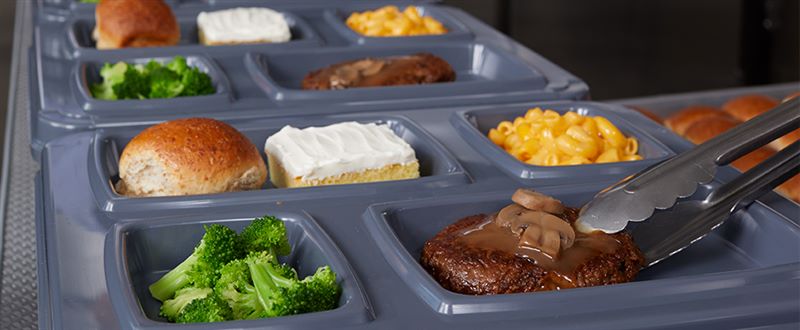
In two memos sent Wednesday, Alabama Gov. Kay Ivey announced Alabama sheriffs may no longer personally profit from a very small portion of jail food funds: those state funds allocated for services in preparing and serving food to people in their jails. “Public funds should be used for public purposes – it’s that simple,” Ivey said in a statement. Yet, some advocacy groups is pointing out the fact that contrary to what many believe, the memos do not yet fully fix the problem of sheriffs personally pocketing these public funds. Alabama Appleseed — a non-profit, non-partisan organization whose mission is to work to achieve justice and equity for all Alabamians that is currently suing, along with the Southern Center for Human Rights, 49 Alabama sheriff’s who have refused to turn over public records of jail food funds — says Ivey’s directive will have little practical impact on the problem it seeks to address. According to the group the reason Ivey’s memos won’t work is technical: the Governor’s memos only prohibit sheriffs from personally profiting from what is referred to in § Ala. Code 14-6-43 as “food service allowance funds”. Whereas memos fail to stop sheriffs from pocketing the far larger amounts of state monies that are provided, per §Ala. Code 14-6-42, for the cost of food itself. Thus, Ivey can’t unilaterally stop the sheriffs from keeping excess funds, only lawmakers can do that. Which is exactly what she’s calling on them to do in the next legislative session: change the laws. The devil’s in the details The food service allowance funds make up a small fraction of the total amount that a sheriff receives. In 2017, across the state, sheriffs received $204,605.10 in food service allowance funds, and the far larger sum of $4,991,500.50 for food costs. Translation: the food service allowance, which the Governor’s memo addressed, constituted less than 4 percent of the total amount of state jail food money that was given to sheriffs last year. “Unfortunately, unless this directive is revised, sheriffs will continue to pocket large amounts of taxpayer money from jail food accounts,” said Aaron Littman, an attorney at the Southern Center for Human Rights. “For decades some Alabama sheriffs have abused the public trust by placing personal profit over meeting the basic human needs of people in their care,” added Frank Knaack, executive director of Alabama Appleseed. “We thank Governor Ivey for taking the first step to rein in this abuse and urge Alabama legislators to heed her call to end this for good.”
Kay Ivey signs controversial contract with prison health care provider
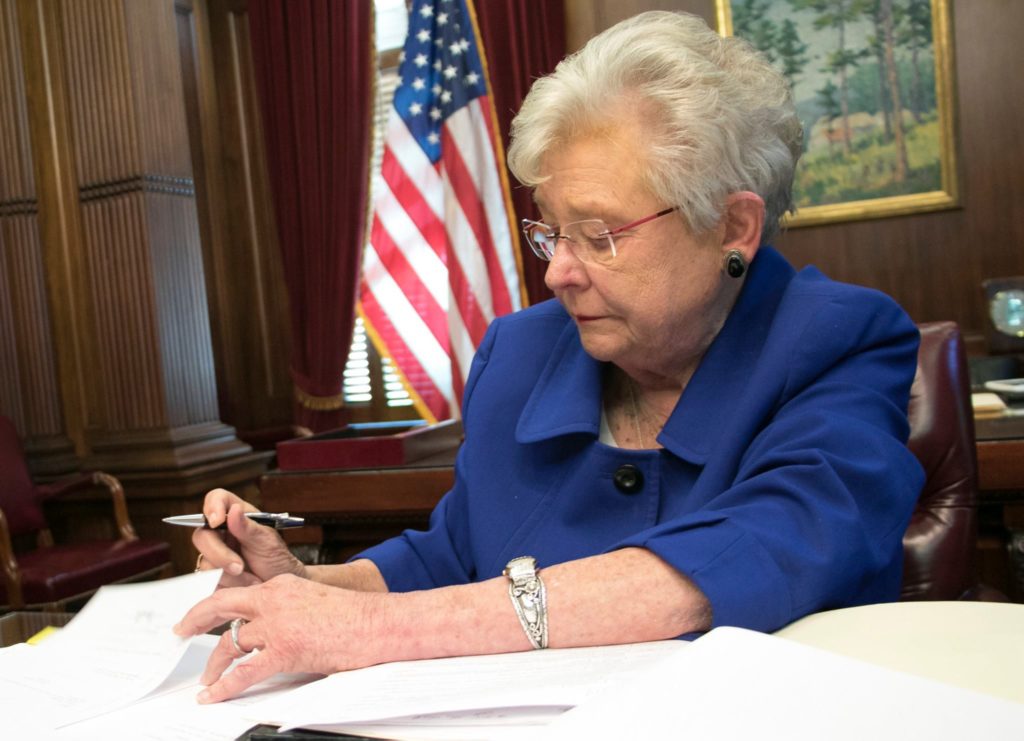
Gov. Kay Ivey has signed a controversial contract with for prison medical and mental health services for the Alabama Department of Corrections (ADOC) — with a company that is involved in a bribery case in neighboring Mississippi. The company, Wexford Health, was named in a suit brought forth by the Mississippi Attorney General Jim Hood to recoup funds and damages related to bribery charges that sent the former Mississippi Corrections Commissioner, Chris Epps, to jail for 20 years. Beginning April 1, Wexford “will provide comprehensive healthcare including both medical and mental health care and management services to State inmates in accordance to applicable laws” for 30 months — through Sept. 30, 2020 — for a sum of $360,471,062, which ADOC will pay. According to the Associated Press, Wexford had not been accused of any wrongdoing when the state decided to sign a contract with them. Which is why earlier this month a chairman of the state’s Legislature’s contract review committee, Vestavia Hills-Republican State Rep. Jack Williams, delayed the contract on March 1 to give Ivey’s office time to review it further and decide whether or not to stop it. “I held it up in order to give the governor’s office time to evaluate these others concerns that have been raised primarily from the state of Mississippi,” Williams said at the time. Ivey’s office has not returned a request for comment.
Steve Flowers: Robert Bentley’s lame-duck prison agenda
The premier issue of this year’s legislative session will be whether to borrow a massive amount of money to build new prisons in the state. This initiative appears to be our lame duck Gov. Robert Bentley’s primary agenda. Last year, Bentley proposed an $800 million bond issue for new prisons. He has come forward with a similar proposal this year. His plan would close all existing prisons and replace them with three new super men’s prisons and one smaller women’s prison. Folks, $800 million is a lot of money. There is no question that we have a prison problem. Alabama’s prison population is at 175 percent of capacity. It is among the highest in the nation. This overcrowding obviously causes violence and safety problems for our prison guards. The federal courts are probably on the verge of dosing out some kind of remedy for our prisons. The courts took over the California prisons a couple of years ago with a lower overcrowding ratio than ours is now. It is a tough spot for legislators. Funding prisons is not a popular re-election issue. There are several questions that would have to be answered if I were a legislator addressing this serious problem. First, if I were going to put this state in debt for that amount of money I would have to ask the imperative question, “How in the world are you going to pay for the debt?” There need to be absolute, concrete, valid, exact revenue sources to make the payment. It is doubtful that any banker would loan someone any money if the vague pie in the sky ambiguous reply was, “Well, the prisons will be more efficient, and therefore the savings will probably be enough to pay the note.” Probably ain’t going to get it is what I am afraid the banker would say to the borrower. The last time I checked there was no growth revenue in the General Fund. So hoping that there might be new revenue growth is also wishful thinking. You simply have to put dollars and cents to exactly how much you save with these nuts and bolts and how you are going to pay the bond indebtedness. Otherwise, you are buying a pig in a poke. In addition, the crazy point is that these ultramodern new prisons still leave us with overcrowded prisons. Therefore, it does not solve the problem. Another question that would have to be answered is why does the governor’s proposal require that the new prisons be designed and built by one company with a one-time exemption to the state bid laws. That just does not meet the smell test. That simply looks corrupt and, as they say, if it looks like a duck and quacks like a duck it must be a duck. Finally, if I were a legislator from a county or neighboring county that had a state prison located in my area, hell would freeze over before I would let the governor close it. I would rather cast a vote dissolving my county than vote to borrow $800 million in order to close down one of my area’s largest employers. Just ask the people in Elmore, Escambia, St. Clair, Limestone and Bibb what it would mean for their county economics if they closed their prisons. The prisons in Barbour and Bullock counties are the largest employers in their counties. Filibuster would have a new meaning if one of those prisons was in my Senate district. I would tell them in a New York minute, “that dog won’t hunt.” Besides, when the legislature last built new prisons in the aforementioned locales during the last Wallace administration they bought plenty of extra land around those prisons for future expansions. Gerald Wallace made sure of that. The good thing for you, the Alabama taxpayer, is that this bond issue probably will not pass simply because Bentley is for it. He is essentially a deterrent to anything passing in the legislature. See you next week. ___ Steve Flowers is Alabama’s leading political columnist. His weekly column appears in over 60 Alabama newspapers. He served 16 years in the state Legislature. Steve may be reached at www.steveflowers.us.
