Daniel Sutter: To serve and to be served
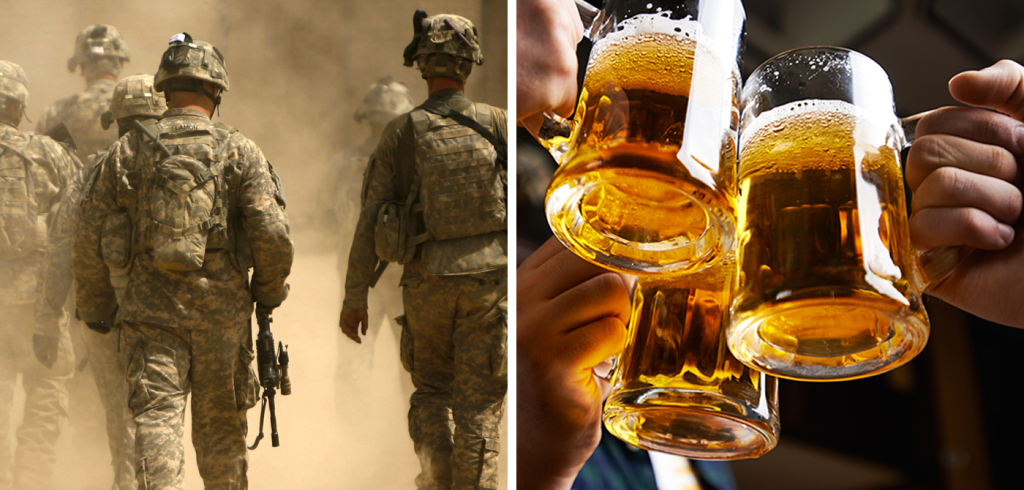
Eighteen-year-olds can join our armed forces and fight to defend our freedom, but not legally buy beer. This inconsistency I think constitutes a disgrace, and highlights some weaknesses of our democratic process. Eighteen-year-olds have been eligible to serve in the U.S. military since our nation’s founding. Many states lowered the drinking age to 18 in the 1970s, but raised it back to 21 in the 1980s. I lost the legal right to drink twice during college. I believe in individual freedom, but freedom requires the capacity to understand the consequences of and take responsibility for our actions. Both restricting freedom until people reach maturity as well as making the most consequential life choices the last freedoms young people attain make sense. But joining the armed forces is arguably the most consequential of life’s choices. Military service can, of course, be fatal in wartime – more than 400 teenagers died in combat in Iraq and Afghanistan. Survivors of combat bear serious emotional scars. Telling 18-year-olds that they are mature enough to serve but not to be served is insulting. Such legal inconsistencies, however, rarely emerge explicitly. The Federal government is not a single person, but rather the executive and legislative branches plus thousands of bureaucrats. Different Congresses decided that 18-year-olds could serve but not be served. Consequently, laws which stay on the books forever comprise a weakness of our system. Some states have sunset provisions for legislation, which require periodic reauthorization of agencies and their demise if public support evaporates. Federal laws remain in effect until Congress repeals them. The mechanism of raising the drinking age illustrates the bankruptcy of our federalism. The National Minimum Drinking Age Act of 1984 withheld 10 percent of federal highway funds from states which did not comply. America’s founders created a federal republic where states would check the national government’s power. State governments addicted to grants from Washington cannot exercise the political deliberation which federalism requires. More problematically, Congress raised the drinking age, essentially imposing prohibition, largely to address drinking and driving by teenagers. Prohibition is troublesome both ethically (using the irresponsibility of some to justify denying freedom to others) and practically. Binge drinking is a significant problem on college campuses, yet is a predictable consequence of prohibition. When college students must break the law to drink, they will consume more when they drink. A higher drinking age might have appeared necessary to combat drinking and driving, but the necessity was really a product of government’s feeble efforts. Suspending or revoking driver’s licenses is used to punish offenders, but the intoxicated can still operate cars without a valid driver’s license. Too often the drunken drivers who kill others have already had a suspended license; nationally 20% of fatal accidents involve drivers without a valid license. Sobriety checkpoints are also used to combat drunk driving, but sometimes fail to ticket a single drunk driver. The Chicago Tribune found that only 7 percent of citations issued at checkpoints in Illinois were for drunk driving. Checkpoints produce tickets for driving without insurance and expired licenses or car tags, but get few impaired drivers off the road. Electoral politics’ emphasis on appearances and intentions over results helps explain the persistence of ineffective policies. Our representatives win re-election by appearing to act in our interest. Government does not have a bottom line like profit and loss, so voters have difficulty punishing representatives when their actions prove costly and ineffective. If 18- to 20-year-olds cannot be trusted with a beer, they shouldn’t be trusted with an M-16. Hopefully, this contradiction might soon be resolved. Technology is one source of hope. Ignition interlock systems, or “car breathalyzers” which require a driver to pass a breathalyzer test to operate his car, are more effective in preventing driving after drinking. And three states have recently considered lowering their drinking age, reckoning that additional alcohol taxes may offset the loss of Federal highway dollars. Perhaps the enduring lesson is not to trust a political process that produces such glaringly incongruous policies. ••• Daniel Sutter is the Charles G. Koch Professor of Economics at the Manuel H. Johnson Center for Political Economy at Troy University and the host of Econversations on TrojanVision.
State-run liquor stores an unnecessary hangover from times long past
It’s not often you go to a government website and find recipes for mixed drinks. However, go to the Alabama Alcoholic Beverage Control Board webpage the home screen you’ll find a link to drink recipes. The state will tell you how to make a “Purple Rain” (which includes rum, vodka, gin, tequila, and triple sec if you were curious), “Irish Eyes” or even a chocolate margarita. If that’s not enough, if you visit the state pricing sheet you’ll get nearly 20 pages more of drinks. Why the push for strong beverages and spirits by our government? They’re in the alcohol business. Alabama is one of 17 states nationally that’s still a control state, but not to worry, they do so for your own good. From its website: “Following the era of Prohibition, each state individually decided how alcoholic beverages would be managed within its borders. The people of Alabama did not want alcoholic beverages marketed like soup and soft drinks. Recognizing the lethal potential of alcohol, Alabama citizens demanded its rigorous control. The ABC Board was legislatively created to fulfill this mandate.” Spotlighted on the homepage of the ABC board and paraphrased in their pricing sheet is an op-ed from ABC Administrator Mac Gipson that makes the case to continue the state program. He also argues against Senate Bill 115 , saying it would, “ultimately (lead) to higher prices, as well as increased consumption with all its associated social ills.” Aren’t you glad the state is here to save you from the “lethal potential of alcohol?” Could there be other interests beyond that residents of this great state need it to run liquor stores to keep them from becoming a heathen free-market system? Well, there’s all those jobs Gipson cites that would be lost. Only problem is that SB 115 by Sen. Arthur Orr addresses that. According to the committee report on the bill: “This bill also requires the Board to fill any nonessential positions with displaced ABC employees of retail operations. The bill also requires displaced employees receive (1) a five percent bidding preference when submitting an individual bid or submitting a bid on behalf of a corporation, partnership, association, or other business organization, of which the displaced employee owns at least a 50 percent interest and (2) five additional points on a state examination for appointment to the classified service for a period of two years. In addition, displaced employees shall be given a 20 percent discount on retail license and permit fees for the first two years after issuance. The bill also allows a licensee to receive a 20 percent discount on license and permit fees for employing a displaced employee full-time, for 12 consecutive months or longer. The discount would be given for each complete year the displaced employee is employed full-time, for up to five years.” Looking for other reasons to continue this not-so conservative, not-so free-market program, there’s always that big government rarely likes to end a program and return services to the market where they belong. Then there’s this a strong lobby against change: Monday morning, AL.Com’s Cameron Smith published Meet the money behind the effort to keep Alabama in the liquor retail business. In it he links to a letter Bob Leavell, former Alcoholic Beverage Control Board (ABC) administrator under Governors Folsom and James, sent to the landlords of the states liquor stores. Leavell pleads with them to contribute to a fund for lobbyists to fight Senate Bill 115, which would open up the market. In it he says, “If you thought this Bill was not going anywhere; that it would die or get killed like it always has, you need to think again!” Let’s hope he’s right! The fact is the prohibition days are long behind us and so should be the days of state-run liquor stores. Photo Credit: AP Photo/Doug McSchooler