
James Carville to speak to PARCA in September

The Public Affairs Research Council of Alabama (PARCA) is hosting an evening with Clinton-era Democratic political consultant James Carville in Birmingham on September 29. “The PARCA Speaker Series invites important, relevant voices to Alabama for an evening of conversation with our state’s thought leaders and opinion makers. Past speakers were George Will (2021) and Jon Meacham (2019). This year, we welcome James Carville,” the group announced in a statement. James “The Ragin’ Cajun” Carville is one of America’s best-known political consultants. His career has spanned five decades during which time he has represented a long list of candidates across the globe. But Carville is probably best known for his work with the campaigns of former President Bill Clinton and former Israeli Prime Minister Ehud Barack. He also was a consultant for then U.S. Senator and former First Lady Hillary Clinton’s failed 2008 presidential run. Carville has a long list of electoral successes. He has most recently focused on campaigns in more than 23 countries around the globe, stretching from the continents of South America to Europe to Africa and, most recently, Asia. Most Americans recognize Carville from his many appearances on television. From 2002 to 2005, he even hosted the CNN program Crossfire. The event will be at the Red Mountain Theater at 1600 3rd Ave. South: Birmingham, Alabama 35233. The evening will begin at 5:30 p.m. with a welcome reception. Carville is scheduled to deliver his remarks at 7:00 p.m. Afterwards, there will be a question-and-answer session. Dessert and book signings will follow at 8:00 p.m. Tickets start at $125. According to their website, PARCA works to support and inform policymakers at all levels, from state-wide elected officials to Legislators, to city and county officials, to public school administrators, and to nonprofit leaders. PARCA is Alabama’s first and only nonprofit, nonpartisan, good government research center. To connect with the author of this story, or to comment, email brandonmreporter@gmail.com.
Justin Bogie: Why Medicaid expansion is a bad idea for Alabama
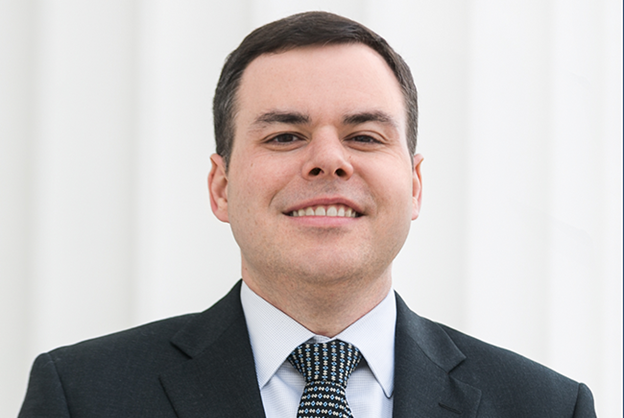
As the Legislature heads toward its 2023 regular legislative session, calls for Medicaid expansion are likely to increase. Alabama remains one of 12 states that has not expanded coverage under Obamacare. The question is, will state lawmakers continue to resist the pressure to expand Medicaid or go full speed ahead? For a state that has a Republican supermajority in the legislature, the answer should be a resounding “no” on fully expanding Medicaid. But given the rapid growth of Alabama’s state government over the past few years, the prospect of more federal dollars flowing into the state may be too much for limited government proponents to overcome. Under the provisions of Obamacare, states that expand Medicaid to adults with incomes at or below 138% of the federal poverty level receive a 90% federal matching rate. The American Rescue Plan Act (ARPA) of 2021 added an additional 5% match rate over two years for states that have not already expanded Medicaid coverage. According to The Public Affairs Research Council of Alabama (PARCA), Medicaid expansion would cost the state an average of $225 million per year through 2027. PARCA estimates that the additional federal funding, as well as new tax revenues, would allow the state government to realize net savings of more than $1 billion by 2027. Keep in mind that the state has already expanded coverage for new mothers from 60 days to 12 months. This would not affect them. Future expansion would make all adults who meet the income requirements eligible for Medicaid. On paper, it may look like a no-brainer. Expand coverage and bring an extra $1 billion into the state in the next five years. In reality though, it’s not that simple. It’s not that simple. First, there is the issue of costs and savings. If Alabama expands Medicaid, the state government will be putting nearly $250 million more per year into its program by 2027. While more money will be coming back to the state from Washington, most of it will be going into the Medicaid program. And $250 million will just be the start. These cost estimates are not dynamic. Because of rising healthcare costs and shifting demographics, Medicare is on pace to go insolvent by 2028. Medicaid will face similar cost and enrollment increases due to these factors. Federal matching rates could also change. Obamacare originally offered expansion states a 100% match rate. That was later reduced to 90%. The 5% additional match included in ARPA would go away two years after expansion. Without other healthcare reforms, Medicaid costs will continue to rise while federal matching rates could decrease, taking up a larger portion of the state budget each year. Where does that leave the Department of Corrections, Economic and Community Affairs, judicial system, and other agencies funded by the general fund? If there’s a shortfall, Alabamians will pay for it through higher taxes, despite the fact that the state government is already taking more from you than ever before. There is also this notion that federal money is somehow free money. It is not. It represents money that the government has already taxed from you, future taxes, and an ever-growing national debt. In 2008, the federal government spent $201 billion on the Medicaid program. Last year Medicaid spending grew to $521 billion, a 159% increase in 13 years. By 2032, the Congressional Budget Office (CBO) projects that Medicaid spending will hit almost $800 billion annually. CBO estimates the national debt will grow by $18 trillion over the same period. So, while Alabama’s government may see a “profit” from expanding Medicaid, you, your children, your grandchildren, and future generations will be giving more money to the federal government to pay for it. The issue of federalism is also at the heart of the Medicaid expansion debate. More money from the federal government means more strings attached. Alabama will have less say over how it runs its Medicaid program. This has already happened in other expansion states. Under the Trump Administration, the Centers for Medicare and Medicaid Services (CMS) generally approved waivers allowing states to put work requirements in place for able-bodied adults. At least six expansion states had work requirement waivers approved under Donald Trump, which were then withdrawn by CMS under the directives of the Biden Administration. Alabama filed such a waiver for its existing Medicaid program, which would have required most parents to work at least 35 hours per week to maintain eligibility. CMS never approved the waiver, and Alabama withdrew the application after Joe Biden became President. Estimates show that 200,000 to 340,000 people could become eligible for Medicaid if Alabama expands the program. The state would be able to set few requirements for benefit recipients, meaning they would have less incentive to contribute to the state’s workforce. Why would the state government want to create another disincentive to work when businesses are already struggling to fill positions? Before Alabama lawmakers bow to the pressures to expand Medicaid, they must carefully consider the long-term impacts on the state budget. More importantly than Alabama’s bottom line, they must consider how it will impact the people they represent. When the federal government offers something that sounds too good to be true, it probably is. Justin Bogie is the Senior Director of Fiscal Policy for the Alabama Policy Institute.
Ross Marchand: To avoid mile-long maintenance bills, maintain truck limits

Alabama’s roads and bridges are in a fiscal jam, as the state borrows more and more to keep things running smoothly. According to the Public Affairs Research Council of Alabama (PARCA), the state shoulders around $1 billion in road debt, with debt service alone “projected to rise to $114 million annually. That level of obligation for debt service will continue for 19 more years.” Unfortunately, some proposals from Washington, DC would compound the problem and force Alabama to go ever-deeper into debt to banish corrosion and pot-holes. Despite reasonable proposals to increase public-private partnerships and reduce the need for dwindling gasoline tax revenues, some lawmakers and pundits seem dead-set on allowing more dangerous vehicles on the highway that would increase maintenance and first responder costs. Many are calling for lawmakers to update truck limits imposed in 1982, and permit “Twin 33” foot double-trailers (read: really big trucks) on America’s roadways. While some proponents of relaxed truck size restrictions have painted the proposal as a panacea for lower costs, the change would lead to far more infrastructure costs down the road (pun intended). Taxpayers and customers must resist the allure of bold-sounding policies that open the door to billions of dollars more in repair costs and make roadways less safe. Periodically, the fight to increase maximum trailer length from 28 feet to 33 feet remerges in the halls of Capitol Hill and the editorials of leading publications, with proponents recycling the same tired arguments. Allowing more size flexibility, they argue, will lead to fewer accidents due to less rollovers and more vehicle stability. But vehicle safety arguments omit real risks that will likely increase accident costs on net. Even if rollovers were less common for Twin 33 compared to their current, shorter counterparts, accidents will be far more severe when rollovers do happen due to a larger “crash footprint.” And, according to the Insurance Institute for Highway Safety, “Multiple-trailer trucks have more handling problems than single-trailer trucks. In general, the additional connection points contribute to greater instability, which can lead to jackknifing, overturning, and lane encroachments.” The Institute notes that safety studies tend to conflict, in stark contrast to the “proven research” touted by amendment proponents. A point beyond debate, however, is the impact of Twin 33s on roadway maintenance costs. House Committee staff members have shown considerable foresight in warning “about the demands being placed on structurally deficient bridges…a significant increase in federal truck size could create greater funding needs.” Data shows a fairly straightforward relationship between vehicle size/weight and road damage, with a 9 ton big-rig inflicting roughly 40 times the amount of damage as a Hummer H2. Americans for Modern Transportation pushes back by claiming that any increased wear-and-tear can be more than offset by fewer trucks on the road. These theories, however, run into a brick wall due to something called “induced demand,” whereas more trucks and car drivers simply take up any freed up road space. A 2009 study by researchers at the University of Pennsylvania and the University of Toronto found that if road capacity in a city increases by 10 percent, the traffic volume in that city will increase by 10 percent. As a result, roads are just as congested as always, only with the addition of mega-trucks that drastically increase wear-and-tear. And, given that the Highway Trust Fund has required nearly $150 billion in taxpayer infusions over the past decade, these problems impact all citizens paying taxes. Proposed rule changes would mean a double-whammy for Alabamans, as greater infrastructure wear-and-tear would require increased federal and state taxes. Working toward less borrowing and taxation means keeping common-sense limits on vehicle sizes. Additionally, structural reforms can ensure that existing gasoline tax revenues are more directly funneled to infrastructure maintenance. Every year, for instance, Montgomery allows local governments a 95 percent matching rate for pedestrian and bike paths, funded via Alabama’s 22.91 cent per gallon gas tax. As the MacIver Institute points out, these kinds of programs encourage millions of dollars to be spent on bike paths adjacent to quiet roads, bike rack programs and pedestrian walkways in proximity to pre-existing routes. With better targeting of funds and sensible limits on truck size, taxpayers can have an easier time paying down Alabama’s looming transportation bills without raising gasoline taxes. ••• Ross Marchand is the director of policy with the Taxpayers Protection Alliance.
New study finds First Class Pre-K attendees more advanced than peers

A new study released on Tuesday, on behalf of the Alabama Department of Early Childhood Education found children in Alabama who voluntarily participated in the First Class Pre-K program are more likely to be competent in reading and math than their peers. “These findings prove that what we are doing in Alabama is working. Our First Class Pre-K program is second to none and our students are benefitting,” said Gov. Kay Ivey. “Now we must work to take the methods of instruction in Pre-K and implement them into kindergarten, first, second and third grade classrooms. Success breeds success and a strong educational foundation is the basis for the success of all Alabamians in the future.” The study also concluded that the program was notably effective with minority students and students from low-income families. “The latest analysis of the First Class Pre-K program provides the clearest evidence to-date that participation in Alabama’s high-quality, voluntary First Class Pre-K program is helping students succeed throughout their time in school, what is most exciting about this report is how the lessons learned in Alabama’s First Class Pre-K are persistent in every grade and in every race and ethnic group, with the most profound impact demonstrated by some of the state’s most vulnerable children,” added secretary of the Alabama Department of Early Childhood Education, Jeana Ross. The study, titled “Achievement Gap Closure and Gains Associated with Alabama’s First Class Pre-K,” was conducted by the University of Alabama at Birmingham and the Public Affairs Research Council of Alabama. The research team also observed that attendance in Alabama’s First Class Pre-K program: Narrowed the gap in reading proficiency by 28 percent for all children in poverty; 32 percent for White children in poverty; 31 percent for Hispanic children in poverty; and, 26 percent for Black children in poverty. Narrowed the gap in math proficiency by 57 percent for all children in poverty; 71 percent for Hispanic children in poverty; and, 37 percent for Black children in poverty. Increased reading proficiency for children in poverty by 12 percent overall; 25 percent for Hispanic children in poverty; 23 percent for Black children in poverty; and, 3 percent for White children in poverty. Increased math proficiency for children in poverty by 13 percent overall; 17 percent for Hispanic children in poverty; 16 percent for Black children in poverty; and, 10 percent for White children in poverty. The Alabama First Class Pre-K program is located in 941 classrooms across the state. The National Institute for Early Education Research has named the program the nation’s highest quality pre-k program for the past eleven years.
