
Queen Elizabeth II mourned by Britain and world at funeral
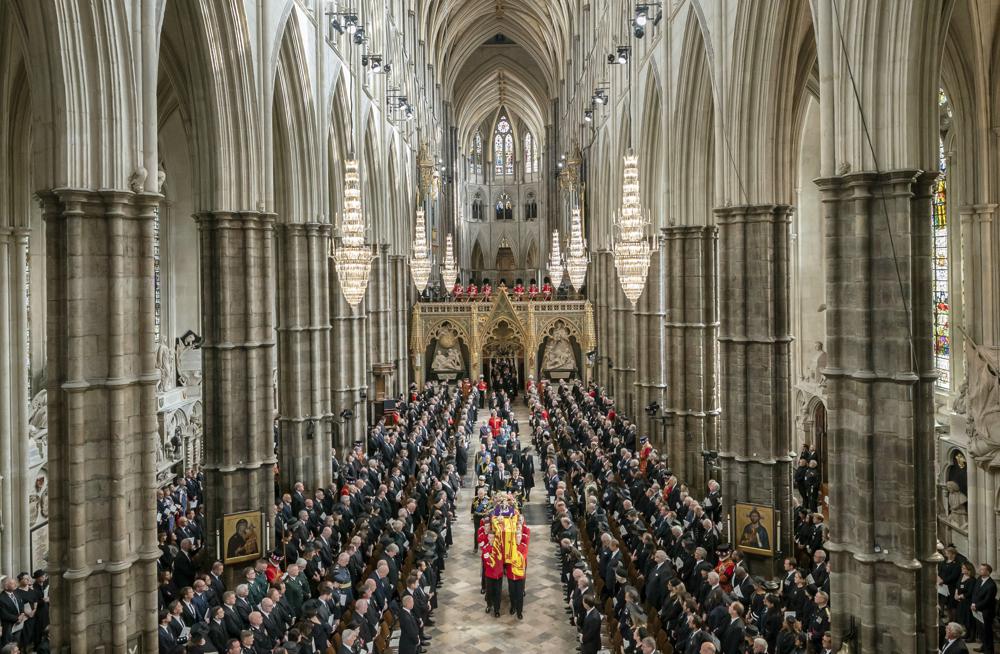
The United Kingdom and the world bade farewell to Queen Elizabeth II on Monday with a state funeral that drew presidents and kings, princes and prime ministers — and crowds in the streets of London and at Windsor Castle — to honor a monarch whose 70-year reign defined an age. In a country known for pomp and pageantry, the first state funeral since Winston Churchill’s was filled with spectacle: Before the service, a bell tolled 96 times — once a minute for each year of Elizabeth’s life. Then, 142 Royal Navy sailors used ropes to draw the gun carriage carrying her flag-draped coffin to Westminster Abbey, where pallbearers carried it inside, and about 2,000 people ranging from world leaders to health care workers gathered to mourn. The trappings of state and monarchy abounded: The coffin was draped with the Royal Standard, and atop it was the Imperial State Crown, sparkling with almost 3,000 diamonds and the sovereign’s orb and scepter. But the personal was also present: The coffin was followed into the church by generations of Elizabeth’s descendants, including King Charles III, heir to the throne, Prince William, and 9-year-old George, who is second in line. On a wreath atop the coffin, a handwritten note read, “In loving and devoted memory,” and was signed Charles R — for Rex, or king. “Here, where Queen Elizabeth was married and crowned, we gather from across the nation, from the Commonwealth, and from the nations of the world, to mourn our loss, to remember her long life of selfless service, and in sure confidence to commit her to the mercy of God our maker and redeemer,” the dean of the medieval abbey, David Hoyle, told the mourners. The service ended with two minutes of silence observed across the United Kingdom, after which the attendees sang the national anthem, now titled “God Save the King.” The day began early when the doors of Parliament’s 900-year-old Westminster Hall were closed to mourners after hundreds of thousands had filed in front of her coffin. Monday was declared a public holiday in honor of Elizabeth, who died September 8 — and hundreds of thousands of people descended on central London to witness history. They jammed sidewalks to watch the coffin wend its way through the streets of the capital after the service. As the procession passed Buckingham Palace, the queen’s official residence in the city, staff stood outside, some bowing and curtseying. Mark Elliott, 53, who traveled from the Lake District in northern England with his wife and two children to watch the procession, got up at 1:30 a.m. to stake out a good viewing location near the palace. “I know we don’t know the queen, but she’s been our head of state for 70 years. You feel as though you know her; you feel as though she’s part of the family. It is kind of moving,” he said. Archbishop of Canterbury Justin Welby said in his sermon at Westminster Abbey that “few leaders receive the outpouring of love we have seen” for the queen. More people lined the route the hearse took from the capital to Windsor Castle, and many tossed flowers at the cortege as it passed. Millions more tuned into the funeral live, and crowds flocked to parks and public spaces across the U.K. to watch it on screens. Even the Google doodle turned a respectful black for the day. As the coffin arrived at the castle, there were poignant reminders of her love of animals: A groom stood at the roadside with one of her ponies, Emma, and another member of staff held the leashes of two of her beloved corgis, Sandy and Muick. During the committal ceremony in St. George’s Chapel on the castle grounds, Dean of Windsor David Conner praised Elizabeth for her “life of unstinting service” to the nation but also her “kindness, concern and reassuring care for her family and friends and neighbors.” Then the crown and the orb and scepter were removed from atop the coffin and placed on the altar — separating them from the queen for the last time. Her coffin was lowered into the royal vault through an opening in the chapel’s floor. Charles looked weary and emotional as mourners sang the national anthem. At a private family service, the queen was later laid to rest with her husband, Prince Philip. The mourners at Westminster Abbey included U.S. President Joe Biden, French President Emmanuel Macron, all of the living former British prime ministers, and European royalty. In Japan, whose Emperor Naruhito also attended, several people sipped beer and watched the service at The Aldgate British pub in Tokyo’s fashionable Shibuya district. “The queen had an especially long history in a country that boasts a long history, and so she deserves deep respect,” said one of them, Tomotaka Hosokawa. The global outpouring of sympathy touched the king, who, on the eve of the funeral, issued a message of thanks to people in the U.K. and around the world, saying he and his wife, Camilla, the queen consort, have been “moved beyond measure” by the large numbers of people who have turned out to pay their respects. Jilly Fitzgerald, who was in Windsor, said there was a sense of community among the mourners as they prepared to wait hours to see the procession carrying the queen’s coffin. “It’s good to be with all the people who are all feeling the same. It’s like a big family because everyone feels that … the queen was part of their family,” she said. Republished with the permission of The Associated Press.
Joe and Jill Biden among thousands paying respects to Queen Elizabeth II
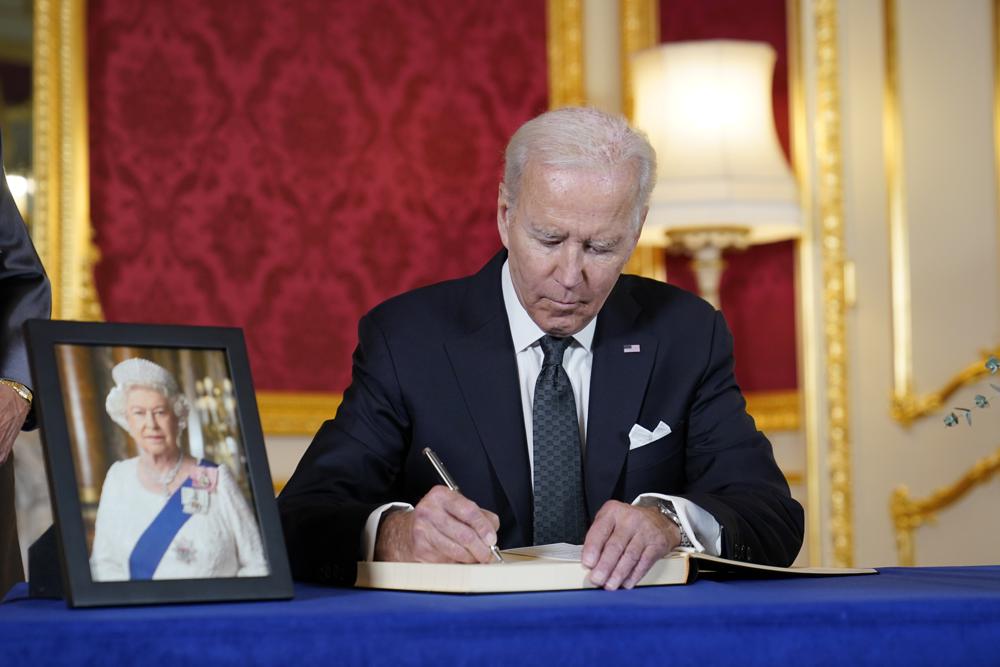
U.S. President Joe Biden paid his respects at Queen Elizabeth II’s coffin on Sunday as thousands of police, hundreds of British troops, and an army of officials made final preparations for the queen’s state funeral — a spectacular display of national mourning that will also be the biggest gathering of world leaders for years. People across Britain paused for a minute of silence at 8 p.m. in memory of the only monarch most have ever known. At Westminster Hall, where the queen is lying in state, the constant stream of mourners paused for 60 seconds as people observed the minute of reflection in deep silence. In Windsor, where the queen will be laid to rest on Monday evening after her funeral at Westminster Abbey, rain began to fall as the crowd fell silent for the moment of reflection. Some have set up small camps and chairs outside Windsor Castle, with plans to spend the night there to reserve the best spots to view the queen’s coffin when it arrives. “Well, it’s just one night and day of our lives. Elizabeth gave us – you know – 70 years. So the rest of it is not a lot to ask, is it?” said Fred Sweeney, 52, who kitted out his spot with two Union flags on large flag poles. Biden and first lady Jill Biden were among thousands of mourners — from locals and tourists to royals and world leaders — to pay their respects. The president made the sign of the cross and put his hand to his heart as he stood quietly near the casket in the ornate 900-year-old hall with his wife and U.S. Ambassador Jane Hartley. Biden then signed the official condolence book and attended a reception Sunday at Buckingham Palace hosted by King Charles III. He is one of 500 world leaders and royals invited to the queen’s state funeral Monday, along with hundreds of dignitaries, politicians, military veterans, and British charity workers. Biden called Queen Elizabeth II “decent,” “honorable,” and “all about service” as he signed the condolence book, saying his heart went out to the royal family. “Queen Elizabeth lived her life for the people,” Jill Biden wrote in a book for spouses and ambassadors. “She served with wisdom and grace. We will never forget her warmth, kindness, and the conversations we shared. One no-show will be Saudi Crown Prince Mohammed bin Salman, whose invitation drew criticism from human rights groups because of the killing of journalist Jamal Khashoggi inside the Saudi consulate in Istanbul in 2018. Saudi Arabia is expected to be represented by another royal, Prince Turki bin Mohammed. As the dignitaries poured in, hundreds hoping to view the queen’s coffin prepared to spend the night outside in the longest queue many have ever seen. Authorities closed the miles-long queue late Sunday so that everyone in the line can file past the coffin before Monday morning when it will be taken to Westminster Abbey for the queen’s funeral. Family by family, thousands of people kept joining the line around the clock, braving chilly overnight temperatures and waits of up to 17 hours in a queue that stretched for over 5 miles (8 kilometers.) Lauren Wilson, 36, was in the much-shorter queue for people with mobility issues. She said she wanted to experience in person the coffin lying in state. “The world is in such a weird place, and then this happened. It feels more momentous,” she said. She worried that the pageantry surrounding Elizabeth’s death deprives the queen’s relatives of the ability to come to terms with their loss. “The family are not allowed to grieve. I find it quite heartbreaking,” she said. The queen’s eight grandchildren, led by heir to the throne Prince William, circled the coffin and stood with their heads bowed during a silent vigil on Saturday evening. Among the foreign leaders in London was New Zealand Prime Minister Jacinda Ardern, who told the BBC she was humbled to represent her nation at the funeral and to witness the national outpouring of grief and respect for the late queen. “The thing that I will take away from this period is just the beauty of the public’s response, the kindness that you see from members of the public, the patience, the camaraderie. That has been, for me, the most moving tribute of all, has been the public response of the British people,” she said. Monday has been declared a public holiday in honor of Elizabeth, who died September 8 at 96 after 70 years on the throne. Her funeral will be broadcast live to over 200 countries and territories worldwide and screened to crowds in parks and public spaces across the country. Police officers from around the country will be on duty as part of the biggest one-day policing operation in London’s history. Camilla, the queen consort, paid tribute to her mother-in-law in a video message, saying the monarch “carved her own role” as a “solitary woman” on a world stage dominated by men. “I will always remember her smile. That smile is unforgettable,” said Camilla, who is married to Charles. Ukraine’s first lady, Olena Zelenska, was also among mourners paying respects to the queen’s coffin. British royal officials said Zelenska met with Catherine, the Princess of Wales, at Buckingham Palace on Sunday afternoon. They did not release further details. The British government has been among the strongest supporters of Ukraine since it was invaded by Russia in February. On Saturday night, it was the grandchildren’s time to mourn. William and Prince Harry, Charles’ sons, were joined by Princess Anne’s children, Zara Tindall and Peter Philips; Prince Andrew’s daughters, Princess Beatrice and Princess Eugenie; and Prince Edward’s two children — Lady Louise Windsor and James, Viscount Severn. William stood with his head bowed at the head of the coffin and Harry at the foot. Both princes, who are military veterans, were in uniform. The crowd kept slowly, silently filing past. “You could see that they were thinking hard about their grandmother, the queen,” said Ian Mockett, a civil engineer from
Queen Elizabeth II, a monarch bound by duty, dies at 96
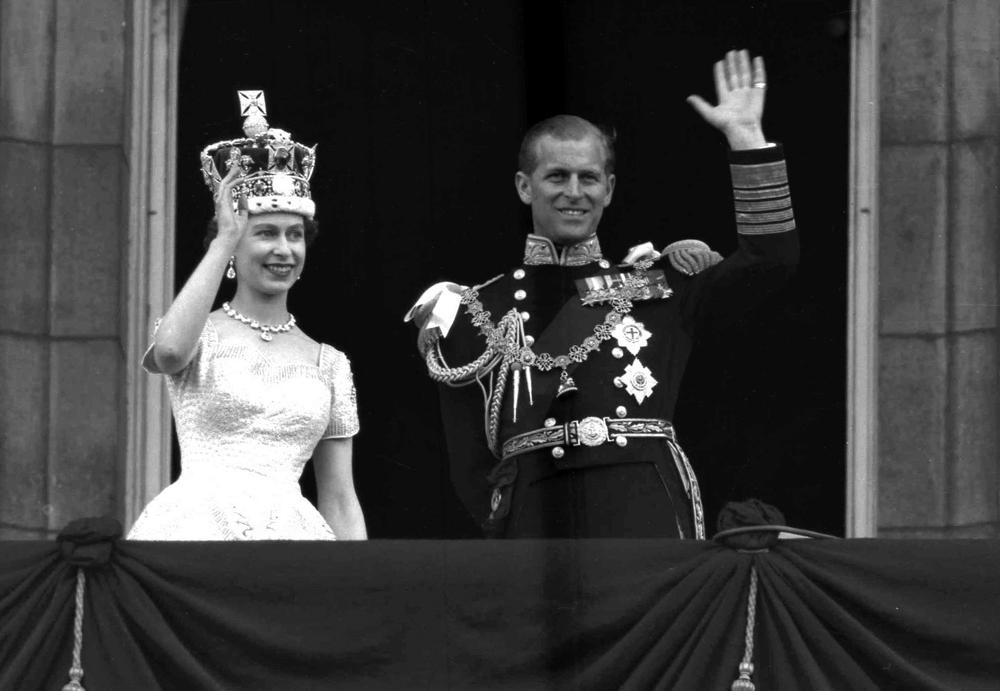
On her 21st birthday in 1947, Princess Elizabeth went on the radio and made a promise to Britain and its Commonwealth nations: She pledged that “my whole life, whether it be short or long, will be devoted to your service.” Over her very long life, Queen Elizabeth II fulfilled that vow. Through 15 prime ministers, from Winston Churchill to Liz Truss. Through Britain’s postwar deprivations, crippling labor unrest, and Brexit. Through the messy divorces, embarrassments, and scandals of her family. She endured through it all — a reassuring anchor in a fast-changing world. The longest-reigning monarch that Britain has ever known, Elizabeth died Thursday at 96 at Balmoral Castle, her beloved summer home in Scotland, after having steadied and modernized the royal institution through seven decades of huge social change. Her passing ends an era, the modern Elizabethan age. Her 73-year-old son, Charles, automatically became king upon her death. He will be known as King Charles III, although his coronation might not take place for months. Through countless public events in her 70 years as monarch, Elizabeth likely met more people than anyone in history. Her image — on stamps, coins, and banknotes — was among the most reproduced in the world. But her inner life and opinions remained mostly an enigma. The public saw only glimpses of her personality: her joy watching horse racing at Royal Ascot or being with her beloved Welsh corgi dogs. Yet Elizabeth had an intuitive bond with many of her subjects that seemed to strengthen over time, keeping a sense of perspective that served her well in most instances, said royal historian Robert Lacey. “A lot of it comes from her modesty, the fact that she’s very conscious that she’s not important, that she’s there to do a job, that it’s the institution that matters,” he said. She strongly felt the burden of her role as queen, though she was not destined for the crown from birth. Elizabeth Alexandra Mary Windsor was born in London on April 21, 1926, the first child of the Duke and Duchess of York. Her father’s elder brother, Prince Edward, was first in line for the throne, to be followed by any children he had. But in 1936, when she was 10, King Edward VIII abdicated to marry twice-divorced American Wallis Simpson, and Elizabeth’s father became King George VI. Her younger sister, Princess Margaret, recalled asking Elizabeth whether this meant that she would one day be queen. ”‘Yes, I suppose it does,’” Margaret quoted Elizabeth as saying. “She didn’t mention it again.” Like many of her generation, Elizabeth was shaped by World War II. She was barely in her teens when Britain went to war with Germany in 1939. While the king and queen stayed at Buckingham Palace during the Blitz and toured the bombed-out neighborhoods of London, Elizabeth and Margaret stayed for most of the war at Windsor Castle, west of the capital. Even there, 300 bombs fell in an adjacent park, and the princesses spent many nights in an underground shelter. Her first public broadcast, made in 1940 when she was 14, was a wartime message to children evacuated to the countryside or overseas. “We children at home are full of cheerfulness and courage,” she said with a blend of stoicism and hope that would echo throughout her reign. “We are trying to do all we can to help out gallant soldiers, sailors, and airmen. And we are trying, too, to bear our own share of the danger and sadness of war. We know, every one of us, that in the end, all will be well.” In 1945, after months of urging her parents to let her do something for the war effort, the heir to the throne became Second Subaltern Elizabeth Alexandra Mary Windsor in the Auxiliary Territorial Service. She enthusiastically learned how to drive and service heavy vehicles. On the night the war ended in Europe, May 8, 1945, she and Margaret managed to mingle, unrecognized, with celebrating crowds in London — “swept along on a tide of happiness and relief,” as she told the BBC decades later. She described it as “one of the most memorable nights of my life.” Two years later, at Westminster Abbey in November 1947, she married Royal Navy officer Philip Mountbatten, a prince of Greece and Denmark whom she had first met in 1939 when she was 13 and he 18. Postwar Britain was experiencing austerity and rationing, and so street decorations were limited, and no public holiday was declared. But the bride was allowed 100 extra ration coupons for her trousseau. The marriage lasted more than 73 years, until Philip’s death in 2021 at age 99. The first of their four children, Prince Charles, was born on November 14, 1948. He was followed by Princess Anne on August 15, 1950, Prince Andrew on February 19, 1960, and Prince Edward on March 10, 1964. Besides them, the queen is survived by eight grandchildren and 12 great-grandchildren. Elizabeth and Philip lived for a time in Malta, where he was stationed, and Elizabeth enjoyed an almost-normal life as a navy wife. Then in February 1952, George VI died in his sleep at age 56 after years of ill health. Elizabeth, on a visit to Kenya, was told she was now queen. “In a way, I didn’t have an apprenticeship,” Elizabeth told a BBC documentary in 1992 that gave a rare view into her emotions. “My father died much too young, and so it was all a very sudden kind of taking on and making the best job you can.” Her coronation took place more than a year later at Westminster Abbey, a grand spectacle viewed by millions through the new medium of television. Prime Minister Winston Churchill’s first reaction to the king’s death was to complain that the new queen was “only a child,” but he was won over within days and became an ardent admirer. “All the film people in the world, if they had scoured the globe, could
Martin Dyckman: Hail Britannia — U.K. could teach U.S. a thing or two about running government
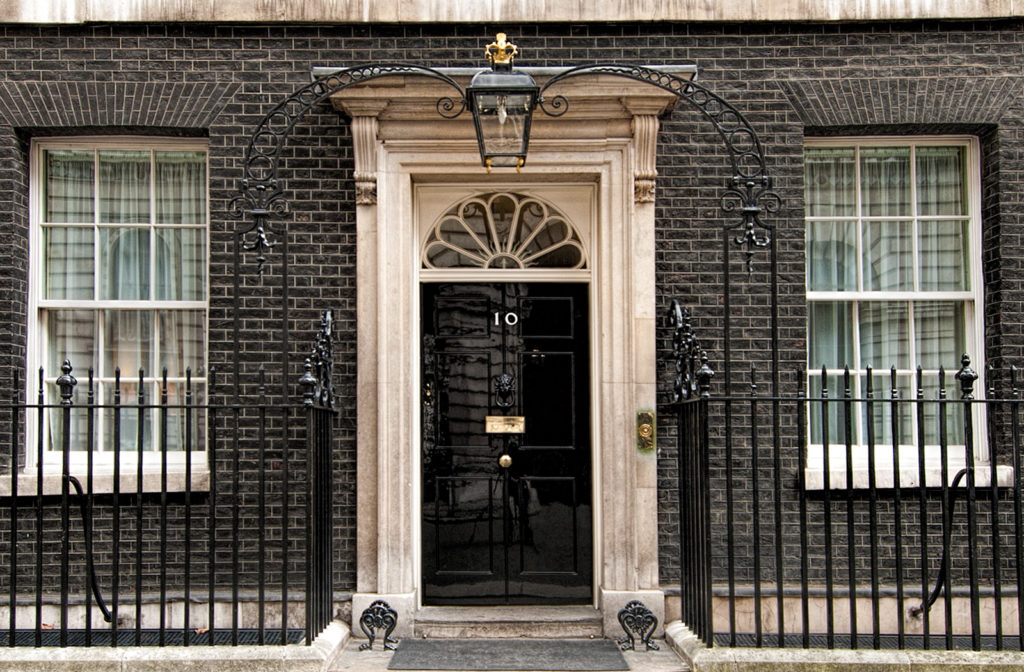
Late in the campaign, the New Yorker satirist Andy Borowitz wrote that Queen Elizabeth II was offering to take the colonies back, suggesting that Americans dissatisfied with their options should just write in her name for president. It doesn’t seem quite as funny now as it did then. Let’s imagine, though, that we are still part of the British Empire, and that Donald Trump has moved to London and is now Prime Minister. Imagine him waddling into the House of Commons to face that jolly good British ordeal known as Prime Minister’s Questions. Imagine him trying to explain to the MPs and to the world on television, why he discussed a North Korean missile launch in full view and earshot of a dining room full of swells without security clearances. Imagine the barrage of questions from the opposition over why he kept a national security adviser for weeks after he was warned that the Kremlin had blackmail on the man who, he knew also, had lied about it. Imagine him melting down under the jeers from their benches, if not also from his own side. Compared to the Commons, Saturday Night Live is gentle. Had he been the British P.M., it might not have gotten even that far. There would have been a no-confidence vote once it became plain that he and his family were in it for the boodle rather than for the nation “Buy Ivanka’s stuff?” Really? Or perhaps his network of Russian connections would have brought him down first. In 1963, the British regarded minister of war, John Profumo, was forced to resign after admitting that he had lied to colleagues in denying an affair with a call girl who was also sleeping with a Russian naval attaché and spy. The scandal helped to bring down the Harold Macmillan government a year later. What’s hardest to imagine, of course, is that Trump would have become prime minister in the first place. In the British parliamentary system, someone like him could never get near 10 Downing Street, except perhaps as a guest, with staff assigned to carefully watch the silver. Although Britain has no written constitution or law requiring that the prime minister be a member of the Commons, tradition demands it. There hasn’t been a PM who wasn’t since Lord Home was appointed in 1963, and even he quickly resigned his peerage so that he could be elected to the Commons. It is also assumed that the PM will be the leader of his or her party in the Commons. Nigel Farage, the British politician most like Trump, has failed five times to win a seat in Parliament. It’s theoretically possible for either of the major party conferences to elect a leader who isn’t a member of Parliament, but in practical terms it’s impossible. Labour Party rules, a friend in Britain tells me, require any candidate for party leader to be nominated by 35 of the party’s MPs. As for the Conservative Party, someone like Trump simply wouldn’t be their cup of tea. As all the government ministers are drawn from the Parliament — Britain has only two branches of government — the members are particular about who leads them. The judgments of these leaders are questioned frequently and fiercely, but their basic competence is assumed. Our Founders departed from the British model for good reasons. But is it possible that the mother country still has some lessons in governance to teach us? We can’t require—and we shouldn’t– that our presidents have Congressional experience. Barely half—25 of 45—have fit that bill. But the parties could—and should—require by rule a certain number of endorsements from Congress to become a nominee for president. Other good British examples: —They don’t elect judges. (In fact, almost no one else does.) Theirs are chosen strictly for professionalism, deportment and experience. —Their election campaigns are measured in weeks, not years. Spending is limited strictly. —All of their election districts are drawn by professionals and approved by entities called Boundary Commissions. That’s not to say there are no games played from time to time, but they don’t have anything like the gerrymandering scandals that betray our belief in democracy. —There are very few political positions jobs at the highest levels of their government. Ministers come and go, but civil servants run most things. —The most attractive example is the regular grilling that the Prime Minister must endure in the House of Commons and before the nation. As in Britain, American Cabinet officers are frequently before legislative committees, but the president himself almost never is. The last time—the only occasion in modern times—was in October 1974, when President Gerald R. Ford voluntarily appeared before a House subcommittee to answer questions about his pardon of his resigned predecessor, Richard Nixon. As it is, we’re likely to have a major showdown soon over executive privilege. That’s the claim made by presidents of both parties that their Cabinet officers and other appointees should not have to tell Congress what advice they give the boss. There’s nothing in the Constitution about that, so the line between talk and action has never been drawn. If the Senate is serious about probing Trump’s Russian connections, that showdown must come. Meanwhile, can we cheer ourselves up with a rousing chorus of “God save the Queen?” We already know the tune. ___ Martin Dyckman is a retired associate editor of the Tampa Bay Times. He lives in Asheville, North Carolina.
