
Senate Republicans back Donald Trump as impeachment trial nears

Donald Trump’s defenders in the Senate on Sunday rallied around the former president before his impeachment trial, dismissing it as a waste of time and arguing that the former president’s fiery speech before the U.S. Capitol insurrection does not make him responsible for the violence of Jan. 6. “If being held accountable means being impeached by the House and being convicted by the Senate, the answer to that is no,” said Republican Sen. Roger Wicker of Mississippi, making clear his belief that Trump should and will be acquitted. Asked if Congress could consider other punishment, such as censure, Wicker said the Democratic-led House had that option earlier but rejected it in favor of impeaching him. “That ship has sailed,” he said. The Senate is set to launch the impeachment trial Tuesday to consider the charge that Trump’s fighting words to protesters at a Capitol rally, as well as weeks of falsehoods about a stolen and rigged presidential election, provoked a mob to storm the Capitol. Five people died as a result of the melee, including a police officer. Many senators including Senate Republican leader Mitch McConnell immediately denounced the violence and pointed a finger of blame at Trump. Following the riot, Wicker said Americans “will not stand for this kind of attack on the rule of law” and without naming names, said “we must prosecute” those who undermine democracy. But with Trump now gone from the presidency, Republicans have shown little political appetite to take further action, such as an impeachment conviction that could lead to barring him from running for future office. Those partisan divisions appear to be hardening ahead of Trump’s trial, a sign of his continuing grip on the GOP. On Sunday, Wicker described Trump’s impeachment trial as a “meaningless messaging partisan exercise.” When asked if Trump’s conduct should be more deserving of impeachment than President Bill Clinton’s, whom Wicker voted to impeach, he said: “I’m not conceding that the President Trump incited an insurrection.” Clinton’s impeachment, in 1998, was sparked by his false denial in a deposition of a sexual relationship with a White House intern. Republican Sen. Rand Paul of Kentucky dismissed Trump’s trial as a farce with “zero chance of conviction,” describing Trump’s words to protesters to “fight like hell” as Congress was voting to ratify Joe Biden’s presidential victory as “figurative” speech. “If we’re going to criminalize speech, and somehow impeach everybody who says, ‘Go fight to hear your voices heard,’ I mean really we ought to impeach Chuck Schumer then,” Paul said, referring to the now Democratic Senate majority leader and his criticisms of Justices Neil Gorsuch and Brett Kavanaugh. “He went to the Supreme Court, stood in front of the Supreme Court, and said specifically, ‘Hey Gorsuch, Hey Kavanaugh, you’ve unleashed a whirlwind. And you’re going to pay the price.’” Paul noted that Chief Justice John Roberts had declined to preside over this week’s impeachment proceeding because Trump was no longer president. Democratic Sen. Patrick Leahy of Vermont will preside over the trial as Senate president pro tempore. “It is a farce, it is unconstitutional. But more than anything it’s unwise, and going to divide the country,” Paul said. Last month, Paul forced a vote to set aside the trial as unconstitutional because Trump is no longer in office, which legal experts say is disputable. But the vote suggested the near impossibility in reaching a conviction in a Senate where Democrats hold 50 seats but a two-thirds vote — or 67 senators — would be needed to convict Trump. Forty-four Republican senators sided with Paul and voted to oppose holding an impeachment trial at all. Five Republican senators joined with Democrats to reject Paul’s motion: Mitt Romney of Utah, Ben Sasse of Nebraska, Susan Collins of Maine, Lisa Murkowski of Alaska, and Pat Toomey of Pennsylvania. Some Republicans have said the vote doesn’t “bind” them into voting a particular way on conviction, with Republican Sen. Bill Cassidy of Louisiana saying Sunday he would listen carefully to the evidence. But even Trump’s sharper GOP critics on Sunday acknowledged the widely expected outcome. “You did have 45 Republican senators vote to suggest that they didn’t think it was appropriate to conduct a trial, so you can infer how likely it is that those folks will vote to convict,” said Toomey, who has made clear he believes Trump committed “impeachable offenses.” “I still think the best outcome would have been for the president to resign” before he left office, he said. “Obviously he chose not to do that.” Republican Sen. Lindsey Graham of South Carolina, one of Trump’s ardent defenders, said he believes Trump’s actions were wrong and “he’s going to have a place in history for all of this,” but insisted it’s not the Senate’s job to judge. “It’s not a question of how the trial ends, it’s a question of when it ends,” Graham said. “Republicans are going to view this as an unconstitutional exercise, and the only question is, will they call witnesses, how long does the trial take? But the outcome is really not in doubt.” Wicker spoke on ABC’s “This Week,” Paul was on “Fox News Sunday,” Toomey appeared on CNN’s “State of the Union,” and Graham was on CBS’ “Face the Nation.” Republished with the permission of the Associated Press.
Donald Trump impeachment goes to Senate, testing his sway over GOP
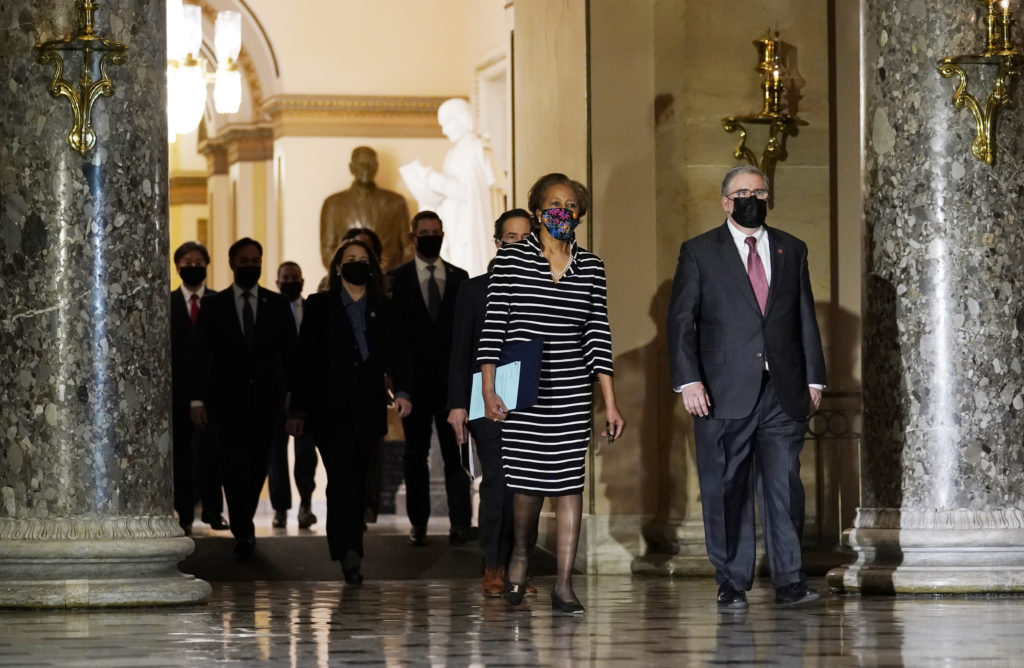
House Democrats delivered the impeachment case against Donald Trump to the Senate late Monday for the start of his historic trial, but Republican senators were easing off their criticism of the former president and shunning calls to convict him over the deadly siege at the U.S. Capitol. It’s an early sign of Trump’s enduring sway over the party. The nine House prosecutors carried the sole impeachment charge of “incitement of insurrection” across the Capitol, making a solemn and ceremonial march to the Senate along the same halls the rioters ransacked just weeks ago. But Republican denunciations of Trump have cooled since the Jan. 6 riot. Instead, Republicans are presenting a tangle of legal arguments against the legitimacy of the trial and questioning whether Trump’s repeated demands to overturn Joe Biden’s election really amounted to incitement. What seemed for some Democrats like an open-and-shut case that played out for the world on live television, as Trump encouraged a rally mob to “fight like hell” for his presidency, is running into a Republican Party that feels very differently. Not only are there legal concerns, but senators are wary of crossing the former president and his legions of followers — who are their voters. Security remains tight at the Capitol. Sen. John Cornyn, R-Texas, asked if Congress starts holding impeachment trials of former officials, what’s next: “Could we go back and try President Obama?” Besides, he suggested, Trump has already been held to account. “One way in our system you get punished is losing an election.” Arguments in the Senate trial will begin the week of Feb. 8, and the case against Trump, the first former president to face impeachment trial, will test a political party still sorting itself out for the post-Trump era. Republican senators are balancing the demands of deep-pocketed donors who are distancing themselves from Trump and voters who demand loyalty to him. One Republican, Sen. Rob Portman of Ohio, announced Monday he would not seek reelection in 2022, citing the polarized political atmosphere. For Democrats the tone, tenor, and length of the upcoming trial, so early in Biden’s presidency, poses its own challenge, forcing them to strike a balance between their vow to hold Trump accountable and their eagerness to deliver on the new administration’s priorities following their sweep of control of the House, Senate, and White House. Biden himself told CNN late Monday that the impeachment trial “has to happen.” While acknowledging the effect it could have on his agenda, he said there would be “a worse effect if it didn’t happen.” Biden said he didn’t think enough Republican senators would vote for impeachment to convict, though he also said the outcome might well have been different if Trump had six months left in his term. In a Monday evening scene reminiscent of just a year ago — Trump is now the first president twice impeached — the lead prosecutor from the House, this time Rep. Jamie Raskin of Maryland, stood before the Senate to read the House resolution charging “high crimes and misdemeanors.” Earlier, Senate Majority Leader Chuck Schumer said failing to conduct the trial would amount to a “get-out-jail-free card” for others accused of wrongdoing on their way out the door. Republicans appear more eager to argue over trial process than the substance of the case, he said, perhaps to avoid casting judgment on Trump’s “role in fomenting the despicable attack” on the Capitol. Schumer said there’s only one question “senators of both parties will have to answer before God and their own conscience: Is former President Trump guilty of inciting an insurrection against the United States?” On Monday, it was learned that Chief Justice John Roberts is not expected to preside at the trial, as he did during Trump’s first impeachment, potentially affecting the gravitas of the proceedings. The shift is said to be in keeping with protocol because Trump is no longer in office. Instead, Sen. Patrick Leahy, D- Vt., who serves in the largely ceremonial role of Senate president pro tempore, is set to preside. Leaders in both parties agreed to a short delay in the proceedings that serves their political and practical interests, even as National Guard troops remain at the Capitol amid security threats on lawmakers ahead of the trial. The start date gives Trump’s new legal team time to prepare its case, while also providing more than a month’s distance from the passions of the bloody riot. For the Democratic-led Senate, the intervening weeks provide prime time to confirm some of Biden’s key Cabinet nominees. Sen. Chris Coons, D-Del., questioned how his colleagues who were in the Capitol that day could see the insurrection as anything other than a “stunning violation” of the nation’s history of peaceful transfers of power. “It is a critical moment in American history,” Coons said Sunday in an interview. An early vote to dismiss the trial probably would not succeed, given that Democrats now control the Senate. The House approved the charge against Trump on Jan. 13, with 10 Republicans joining the Democrats. Still, the mounting Republican opposition to the proceedings indicates that many GOP senators will eventually vote to acquit Trump. Democrats would need the support of 17 Republicans — a high bar — to convict him. One by one, Republican senators are explaining their objections to the unprecedented trial and scoffing at the idea of trying to convict Trump now that he’s no longer in office. Rand Paul of Kentucky said that without the chief justice presiding the proceedings are a “sham.” Joni Ernst of Iowa said that while Trump “exhibited poor leadership,” it’s those who assaulted the Capitol who “bear the responsibility.” New Sen. Tommy Tuberville of Alabama said Trump is one of the reasons he is in the Senate, so “I’m proud to do everything I can for him.” Sen. Tom Cotton, R-Ark., is among those who say the Senate does not have the constitutional authority to convict a former president. Democrats reject that argument, pointing to an 1876 impeachment of
GOP splits as virus aid package could swell past $1 trillion

The price tag for the next COVID-19 aid package could quickly swell above $1 trillion as White House officials negotiate with Congress over money to reopen schools, prop up small businesses, boost virus testing and keep cash flowing to Americans while the virus crisis deepens in the U.S. Senate Majority Leader Mitch McConnell on Tuesday promised a new round of direct payments to earners below a certain income level, similar to the $1,200 checks sent in the spring. President Donald Trump insists on a payroll tax holiday for workers. And Democrats want billions to outfit schools and shore up local governments. “Regretfully, this is not over,” McConnell said after a raucous private GOP lunch, urging Americans to learn to live with the new virus by wearing masks and practicing social distancing until a vaccine can be found. Treasury Secretary Mnuchin and acting chief of staff Mark Meadows spent the day on Capitol Hill, meeting separately with McConnell, House Speaker Nancy Pelosi and others trying to broker a compromise between the GOP’s emerging $1 trillion proposal with the House’s more sweeping $3 trillion bill. The lunch session grew heated as key Republican senators complained about big spending, vowing to stall the relief bill’s passage. Supporters of the package “should be ashamed of themselves” Sen. Rand Paul of Kentucky said as he emerged. Paul compared GOP backers of the spending to “Bernie bros” — referring to the young supporters of Sen. Bernie Sanders of Vermont. “This is insane. … There’s no difference now between the two parties.” As a long line of senators rose to speak about aspects of the bill, Texas Sen. Ted Cruz asked his colleagues, “What in the hell are we doing?” Cruz warned if the economy is still shut down come November, Joe Biden will win the White House, Democrats will control the Senate and “we’ll be meeting in a much smaller lunch room,” according to a person granted anonymity to discuss the closed-door session. Sen. Rick Scott, of Florida left saying it’s wrong to “bail out” cash-strapped states. “Florida taxpayers are not going to pay for New York’s expenses,” he said. With the pandemic showing no signs of easing, officials acknowledge the daunting challenge of trying to contain the coronavirus and prevent further economic distress. The U.S. has rising infections and a death toll of 140,800, more than anywhere else in the world. The health crisis is worsening just as emergency aid is about to expire. Meadows told reporters the president wants to ensure the funding package “meets the legitimate needs that are before the American people.” The Republicans are poised to roll out a $1 trillion package, what McConnell called a “starting point” in talks. It’s a counter-offer to Pelosi’s $3 trillion House-passed plan as they race to strike a deal by the end of the month. That’s when a $600 weekly unemployment benefits boost and other aid, including a federal rental moratorium on millions of apartment units, expires. McConnell’s package would send a fresh round of direct cash payments to Americans below a certain income level, likely $75,000 for singles, extend small business loans under the Paycheck Protection Program and create a five-year liability shield against what he warns is a potential “epidemic” of coronavirus lawsuits. It’s also expected to include at least $105 billion for education, with $70 billion to help K-12 schools reopen, $30 billion for colleges, and $5 billion for governors to allocate. The Trump administration wanted school money linked to reopenings, but in McConnell’s package the money for K-12 would be split 50-50 between those that have in-person learning and those that do not. Republicans want to replace the $600 weekly federal jobless benefit with a lower amount, to prevent the unemployed from receiving more aid than they would through a normal paycheck, Republicans said. Over lunch, Mnuchin explained the unemployment boost could be phased down to a percentage of a worker’s previous income, according to a Republican granted anonymity to discuss the private meeting. Some Republicans prefer simply eliminating the $600 benefit. But the president’s priorities are splitting his GOP allies and giving momentum to Democrats. Trump wants a full repeal of the 15.3% payroll tax, which is shared among employers and employees, and funds Social Security and Medicare. Experts say that alone would cost $600 billion. At a White House meeting on Monday, GOP leaders told Trump they preferred to include only a partial payroll tax cut. Easing the payroll tax is dividing Trump’s party because it does little to help out-of-work Americans and adds to the debt load. The tax is already being deferred for employers under the previous virus relief package. Supporters say cutting it now for employees would put money in people’s pockets and stimulate the economy. The administration also panned McConnell’s proposed $25 billion for more virus testing, saying earlier allotments remain unspent. White House press secretary Kayleigh McEnany said Tuesday the administration wants “targeted” funds for the next round of aid, rather than adding more to the existing pot. She said no one is holding it up. Senate Democrats began investigating why the Trump administration has left almost half the testing money unspent. After meeting with Mnuchin, Pelosi and Senate Democratic leader Chuck Schumer said the Republicans must quit stalling. They broadly dismissed the emerging GOP effort as inadequate. “The president has been a disaster in the whole health care area,” Schumer said. “He’s holding them back.” The political stakes are high for both parties before the November election, and even more so for the nation, as the virus crisis and economic fallout hits cities large and small. Biden, the Democrats’ presumed presidential nominee, stated his own priorities, urging “a lifeline to those who need it most: working families and small businesses.” Trump’s renewed focus on therapeutics and a vaccine is falling flat among lawmakers who understand that any COVID-19 cures remain months, if not a year, from widespread distribution in the U.S. The federal government is still struggling to provide basic medical supplies and personal protective equipment to health care providers. Mnuchin vowed to stay on
Congress stalls on policing overhaul, despite public outcry

The standoff threatens to turn the nationwide protests over the deaths of George Floyd, Breonna Taylor and others into another moment that galvanizes the nation but leaves lawmakers unable to act.
GOP weighs jobless aid cuts to urge Americans back to work
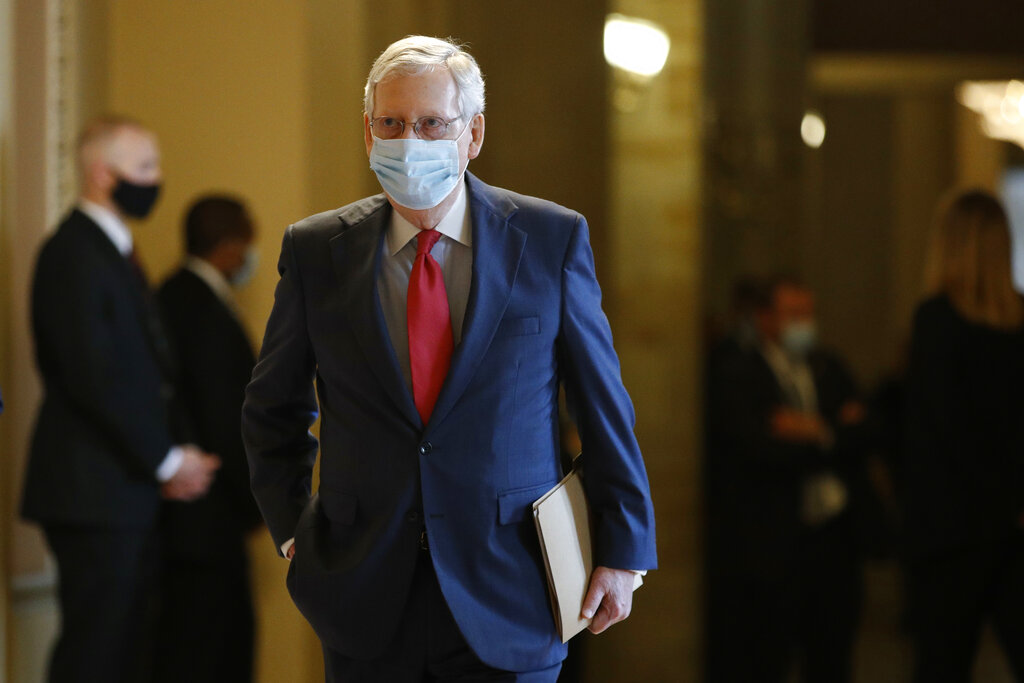
Revamping jobless aid is fast becoming the focus of debate over the next virus aid package.
Senate approves $483B virus aid deal, sends it to House
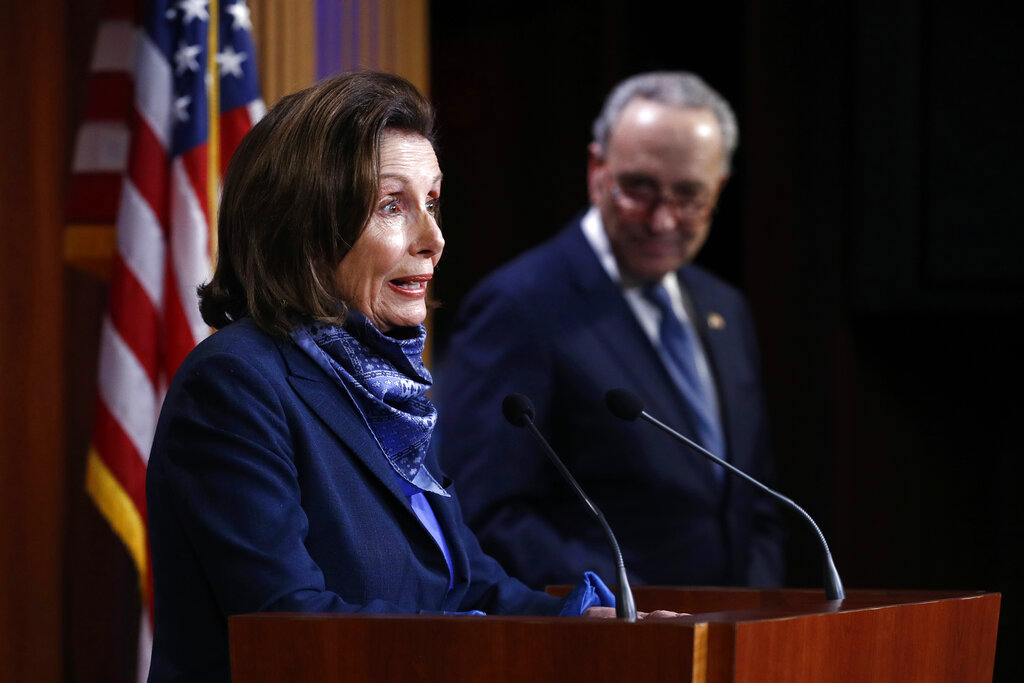
Passage was swift and unanimous, despite opposition from conservative Republicans.
Congressional rescue talks churn as crisis deepens
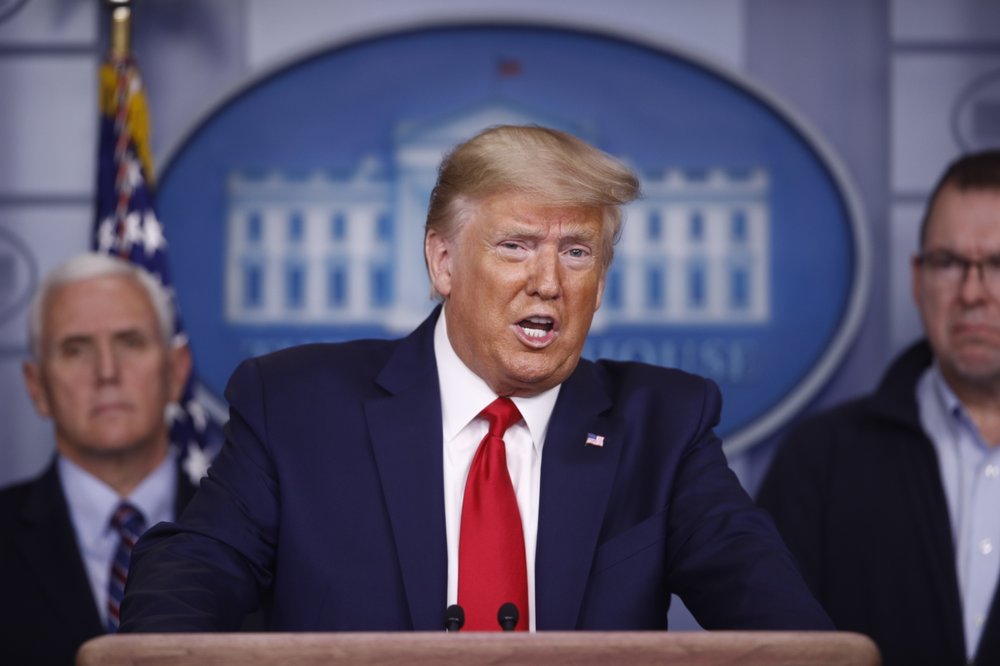
Washington labored under the size and scope of the rescue package that’s more ambitious than any in recent times.
Senate moves to limit Donald Trump on military force against Iran
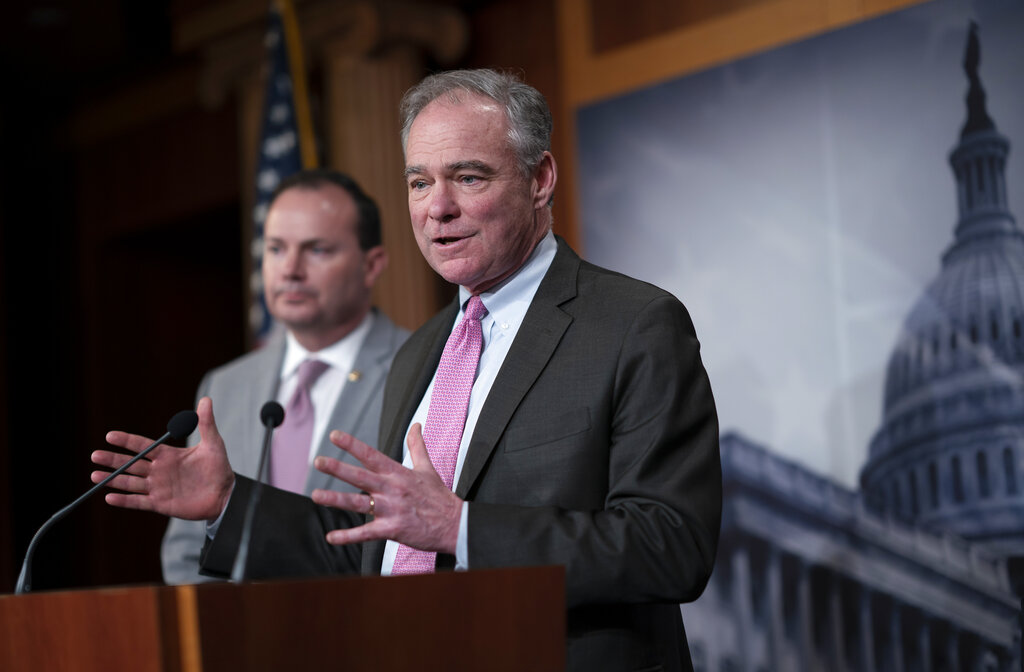
The rebuke was the Senate’s first major vote since acquitting Trump on impeachment charges last week.
Republicans could tip Donald Trump trial vote toward witnesses in trial

Any four Republicans could join with Democrats to demand taking more time for testimony.
GOP squirms as John Bolton prepares to dish on Donald Trump White House
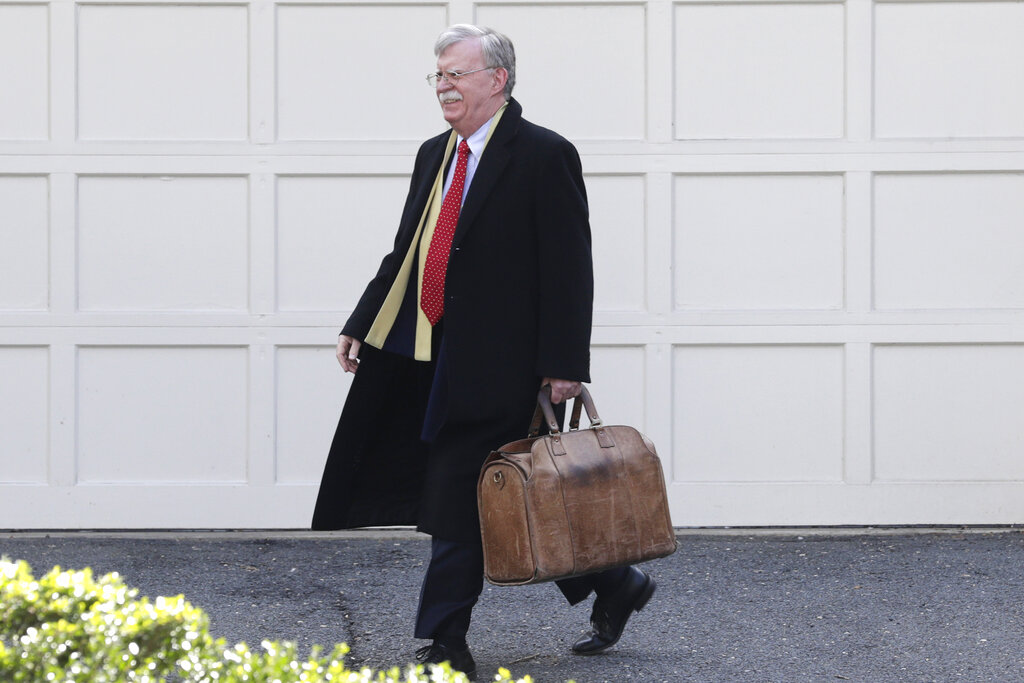
After this week’s early leaks about the book, White House aides and allies are privately expressing concern about what more Bolton might reveal.
GOP lacks votes to block trial witnesses, Mitch McConnell concedes

Several Republicans apparently are ready to join Democrats in considering in-person testimony from former National Security Adviser John Bolton and perhaps others.
Donald Trump team concludes defense, argues against calling John Bolton

Donald Trump’s defense team argued against a guilty verdict for a total of almost 12 hours.
