
Inquiry into teachers unions influence over school COVID closures ramps up
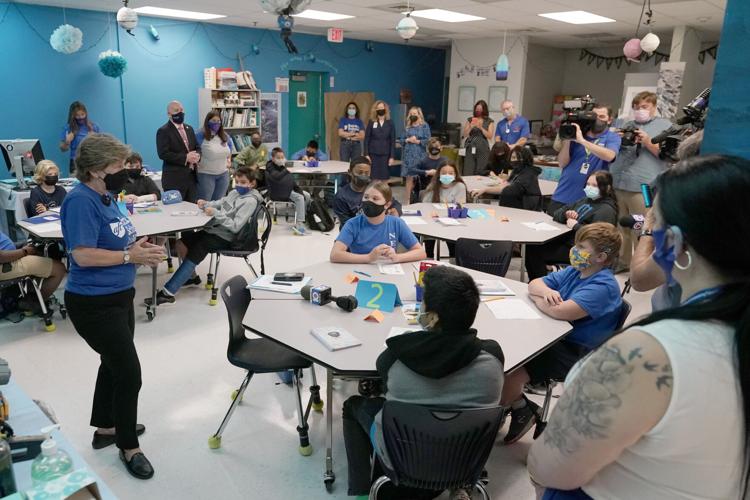
The U.S. House Committee tasked with reviewing the federal pandemic response is ramping up its investigation into what influence teacher’s unions had over federal rules that kept schools closed. Select Subcommittee on the Coronavirus Pandemic Chairman Brad Wenstrup, R-Ohio, sent a letter to U.S. Centers for Disease Control and Prevention Director Rochelle Walensky demanding all records and communications between her and American Federation of Teachers President Randi Weingarten. Critics note that teacher’s unions are significant political donors and raise concerns that those funds could have earned undue access to health policy at the expense of students. As The Center Square previously reported, federal election filings reveal that the American Federation of Teachers and its local affiliates doled out $19,903,532 in political donations in the 2020 election cycle, with almost all of those funds directed to Democrats and liberal groups. AFT donations in 2020 included at least $5,251,400 for the Democrats Senate Majority PAC and $4,600,000 for the Democratic House Majority PAC, according to filings and data compiled by The Center for Responsive Politics’ Open Secrets database. A GOP report released in March last year confirmed these findings and reported that teacher’s unions had “unprecedented access” to the federal officials in charge of recommendations for school reopenings and COVID policy. “Teachers’ unions, including AFT, donated more than $43 million to liberal groups and candidates during the 2020 election cycle,” the GOP report said. “The two largest unions – which both endorsed then-candidate Biden for President – have approximately 4.7 million members. [CDC scientist] Dr. [Henry] Walke’s testimony to the Select Subcommittee shows the Biden Administration rewarded their support with unprecedented access to the policymaking process for guidance on re-opening schools.” Weingarten pushed back on these claims during a Congressional in April with Wenstrup’s subcommittee. AFT argues they were not in favor of keeping schools closed, but for the reopening of schools safely. “If you have educators in your lives, you know that their priority is their students – to create a safe environment for all children and to prepare them for life, career, college, and citizenship,” Weingarten testified at the hearing.. “We know that kids learn best in person, so opening schools safely – even as the pandemic surged – guided the AFT‘s every action.” With conflicting accounts, Wenstrup is now pushing to get those written communications to show what was really said between AFT and federal health officials. Wenstrup pointed out that during that same hearing, lawmakers learned that Weingarten had a “direct telephone line” to Walensky. The latest research shows significant learning loss from students who missed class because of the pandemic. The Department of Education released data last fall showing that national test scores declined the most in decades largely as a result of learning loss from school closures. “Average scores for age 9 students in 2022 declined 5 points in reading and 7 points in mathematics compared to 2020,” the report said. “This is the largest average score decline in reading since 1990, and the first-ever score decline in mathematics. This Highlights report compares performance on the NAEP long-term trend reading and mathematics assessments for age 9 students from the winter of 2020 to results of long-term trend assessments in the winter of 2022.” Wenstrup says the CDC is largely not cooperating with the investigation. “The Department of Health and Human Services is continuing its pattern of obstructing Congress by apparently only producing documents already made publicly available via the FOIA,” the letter said. “As a reminder, FOIA does not apply to Congress. While negotiating your upcoming testimony, the Department, apparently on your behalf, wrote that the negotiation was ‘counterproductive to the [S]elect [S]ubcommittee’s broader dealings with the Department.’ The Department’s obstruction will not be tolerated.” Republished with the permission of The Center Square.
Anthony Fauci hopeful COVID vaccines get full OK by FDA within weeks
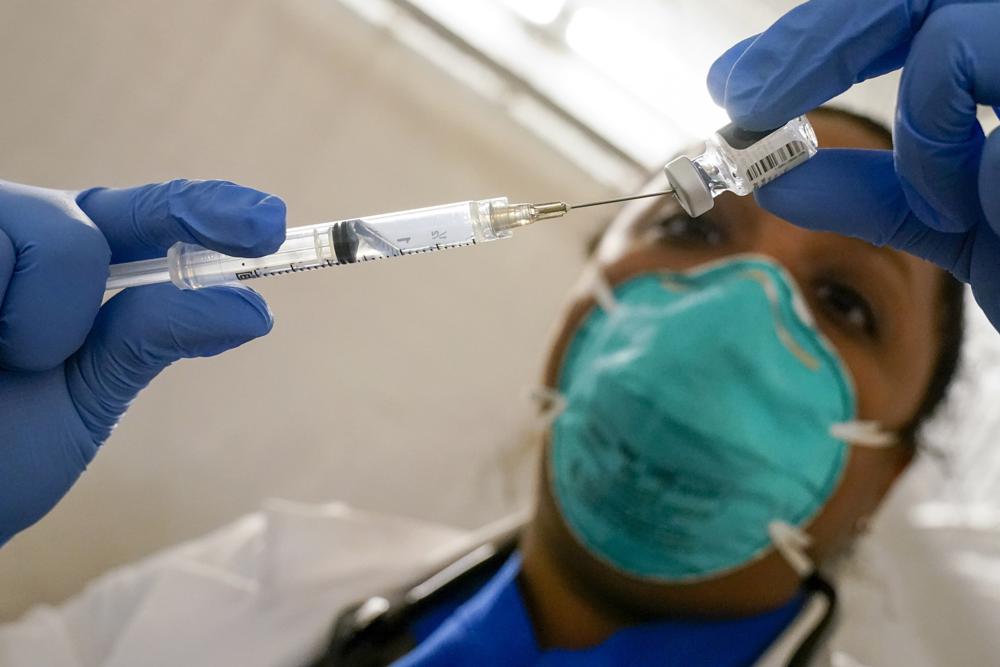
The U.S. government’s top infectious disease expert, Dr. Anthony Fauci, said Sunday that he was hopeful the Food and Drug Administration will give full approval to the coronavirus vaccine by month’s end and predicted the potential move will spur a wave of vaccine mandates in the private sector as well as schools and universities. The FDA has only granted emergency-use approval of the Pfizer, Moderna, and Johnson & Johnson vaccines, but the agency is expected to soon give full approval to Pfizer. The Biden administration has stated that the federal government will not mandate vaccinations beyond the federal workforce but is increasingly urging state and local governments as well as businesses to consider such mandates. Fauci, who is President Joe Biden’s chief medical adviser, said “mandates at the local level need to be done” to help curb the spread of the virus. “I hope — I don’t predict — I hope that it will be within the next few weeks. I hope it’s within the month of August,” Fauci said of FDA approval of the vaccine. “If that’s the case, you’re going to see the empowerment of local enterprises, giving mandates that could be colleges, universities, places of business, a whole variety, and I strongly support that. The time has come. … We’ve got to go the extra step to get people vaccinated.” Fauci’s comments come as the Biden administration is weighing what levers it can push to encourage more unvaccinated Americans to get their shots as the delta variant continues to surge through much of the United States. Biden recently approved rules requiring federal workers to provide proof of vaccination or face regular testing, mask mandates, and travel restrictions. Biden is also awaiting a formal recommendation from Defense Secretary Lloyd Austin on potentially requiring U.S. troops to get vaccinated. The administration has become more vocal in its support of vaccine mandates at a moment when high-profile companies have informed employees that coronavirus vaccination requirements are in the works, and some localities have adopted or are contemplating vaccine requirements to dine indoors. United Airlines informed its employees that they will need to be fully vaccinated by Oct. 25 or five weeks after the FDA grants full approval to one of the vaccines — whichever date comes first. Disney and Walmart have announced vaccine mandates for white-collar workers, and Microsoft, Google, and Facebook said they will require proof of vaccination for employees and visitors to their U.S. offices. Tyson Foods has also announced it will require all U.S. employees to get vaccinated by November. There’s also been pushback. The U.S. Supreme Court last week was asked to block a plan by Indiana University to require students and employees to get vaccinated against COVID-19. It’s the first time the high court has been asked to weigh in on a vaccine mandate and comes as some corporations, states, and cities are also contemplating or have adopted vaccine requirements for workers or even to dine indoors. Randi Weingarten, president of the American Federation of Teachers union, said on Sunday that she personally supports a vaccine mandate for educators. “As a matter of personal conscience, I think that we need to be working with our employers — not opposing them on vaccine mandates,” said Weingarten, who estimated about 90% of AFT members are already vaccinated. Dr. Francis Collins, director of the National Institutes of Health, on Sunday all but endorsed vaccine mandates, saying, “I celebrate when I see businesses deciding that they’re going to mandate that for their employees.” “Yes, I think we ought to use every public health tool we can when people are dying,” Collins said. Fauci and Weingarten spoke on NBC’s “Meet the Press,” and Collins appeared on ABC’s “This Week.” Republished with the permission of the Associated Press.
Federal Education Department proposes allowing guns in schools
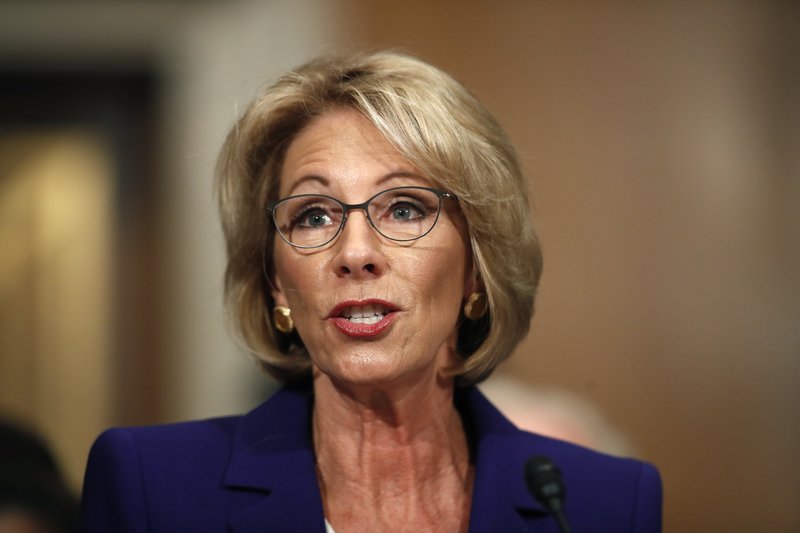
The Education Department says it is weighing whether to allow states to use federal funds to purchase guns for schools, prompting a storm of criticism from Democratic lawmakers and educators. If approved, the plan would likely generate a lot of controversy at a time when a string of especially deadly school shootings earlier this year led to the rise of a powerful student-led gun control movement. A senior Trump administration official told The Associated Press on Thursday that the agency is reviewing legislation governing federal academic enrichment grants to see if the money can be used to buy firearms. The official, who spoke on condition of anonymity because the person was not authorized to discuss the issue publicly, said the bipartisan Every Student Success Act, passed in 2015, does not expressly prohibit or allow the use of Student Support and Academic Enrichment Grants for the purchase of firearms. The official said the agency received several letters asking it to clarify what those funds could be used for and began researching the issue. Education Secretary Betsy DeVos, who chairs a federal commission on school safety, has previously said that schools should have the option to arm teachers. The commission, formed in the aftermath of the school shooting in Parkland, Florida, that killed 17 people, has been criticized for omitting the topic of gun control. The plan, first reported by The New York Times, prompted swift condemnation from Democratic lawmakers and many educators on Thursday, who accused the Trump administration of wanting to deprive students of much-needed mental health support and other resources in the interests of the National Rifle Association. House Minority Leader Nancy Pelosi, D-Calif., called the idea “one of the most egregious, short-sighted and dangerous executive branch abuses of our education system in modern history.” “Secretary DeVos continues to lead an anti-student and anti-teacher campaign on behalf of special interests and the NRA that rejects proven and effective initiatives to ensure a safe, welcoming school climate for children,” she said. Democratic Sen. Chris Murphy of Connecticut, which was the site of the Sandy Hook school shooting, swiftly introduced an amendment that would block the Education Department from using the funds to arm schools. “The Secretary of Education cares more about the firearms industry’s bottom line than the safety of our kids, and that should scare parents to death,” he said. Randi Weingarten, president of the American Federation of Teachers, accused DeVos of trying “to do the bidding of the National Rifle Association and gun manufacturers.” “Instead of after-school programs or counselors, programs that are critical for creating safe and welcoming schools and addressing the mental health needs of kids, DeVos wants to turn schools into armed fortresses and make kids and educators less safe,” Weingarten said in a statement. “She wants to turn the U.S. government into an arms dealer for schools. That’s insane,” she added. Martin West, professor of education at Harvard University, expressed skepticism. “It seems very hard to imagine that members of Congress drafting Title IV envisioned that the funds would be used to arm teachers,” West said. One of the requests for clarification came from Texas, where many school districts allow staff to carry weapons on campus. The Texas Education Agency said in a statement Thursday that it asked Washington for guidance in April after schools started asking whether they can use the grant money to cover the cost of guns. The problem took on even greater urgency in Texas after 10 people were killed in a school shooting outside Houston in May. Republished with the permission of the Associated Press.
Study: Despite modest income, teachers pay for class needs

Every year Anna Graven dips into her modest teacher salary and spends her own money to buy bulletin boards, pencils, paper, highlighters and tissues for her high school students in Oklahoma City. So do almost all of her colleagues across the nation. Nearly all public school teachers report digging into their pockets to pay for school supplies, spending nearly $480 a year, far more than the federal $250 tax deduction available to teachers, according to a study by the National Center of Education Statistics released Tuesday. The findings come as teachers across the country are walking out of classrooms to protest low pay and demand pay raises. Helping teachers pay for classroom supplies was a key demand during the Arizona teachers’ strike. Ninety-four percent of public school teachers say they spent their own money on notebooks, pens and other supplies in the 2014-15 school year without reimbursement, according to the study. The average amount spent was $479. About 44 percent spent $250 or less, while 36 percent spent $251 to $500. Teachers who spend their personal money on children’s classroom needs are able to reduce their taxable income by $250. That amounts to roughly $30-to-$60 in savings for each teacher, according to the American Federation of Teachers, a relatively small sum that is still regarded as a token of appreciation by educators. Teachers pushed back strongly last year when the tax bill passed by the House called for eliminating the deduction altogether. The Senate version of the bill, meanwhile, sought to raise the deduction to $500. In the end, the two chambers reached a compromise, and the deduction remained unchanged. Randi Weingarten, president of the AFT, said Tuesday that the study demonstrates a lack of funding of public schools in America. “Educators want to help children; that is why as long as their kids lack the essentials, educators will continue to dig deep, while fighting the defunding and underinvestment that created this crisis in the first place,” Weingarten said in a statement. “There is no other job I know where the workers subsidize what should be a cost borne by an employer as a necessary ingredient of the job.” The study also found that teachers in high-poverty schools were more likely to spend personal money on school supplies. Eighty-six percent of teachers in schools that don’t participate in free or reduced lunch school program said they paid for classroom needs, while around 94 percent to 95 percent of teachers in schools that did participate in the programs said they paid for classroom needs. Graven, who teachers American literature at an Oklahoma City high school, says the school provides very limited supplies and she and her colleagues are forced to pay out of pocket. “We do what we need to do for our students and for us to be able to do our job,” Graven said. “It would be less of a burden if we were also paid a livable wage.” Graven said a teacher like her, with a bachelor’s degree and 18 years of experience, is earning around $42,000 a year. At times Graven has contemplated going into a new profession that pays better. “It’s not an easy job, it’s very stressful and you think, ‘Is it all worth it?’” Graven said. “And then there will be that student that will make you realize that it is worth it.” Some teachers have even gone online to launch crowdfunding campaigns. The web site Gofundme.com has thousands of pages where teachers or activists are raising money to help pay for classroom supplies. The company has even compiled a guidebook to help teachers build effective campaigns, according to Heidi Hagberg, a spokeswoman for Gofundme. Republished with the permission of the Associated Press.
