
Oprah Winfrey-backed ‘Rape of Recy Taylor’ recounts woman’s ordeal
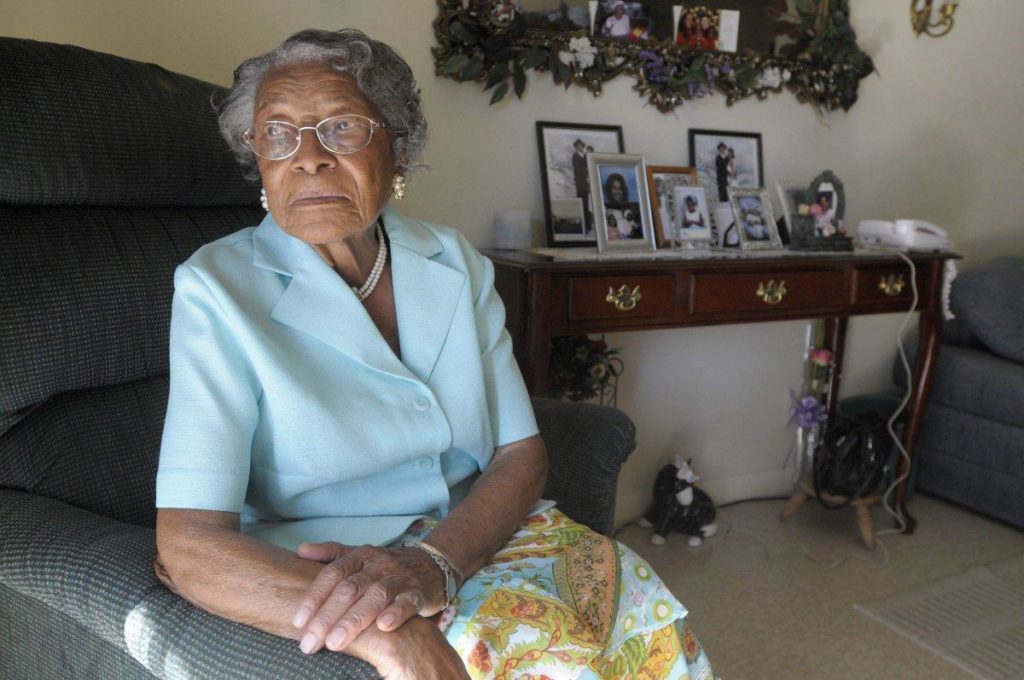
When Oprah Winfrey saluted unheralded #MeToo crusaders at the Golden Globes last January, she chose a rape victim from 1940s Alabama to drive home her point. “Recy Taylor, a name I know, and I think you should know, too,” Winfrey said, sketching the outlines of the African-American woman’s assault by six white Alabama youths and her quest for justice. Taylor’s wrenching story and its connection to female civil rights activists, most notably Rosa Parks, are illuminated in filmmaker Nancy Buirski’s documentary “The Rape of Recy Taylor” (airing 9 p.m. EDT Monday on the Starz channel). Taylor, who died last December at age 97 shortly after the film’s theatrical release, is seen and heard briefly in it. Her words are powerful despite her frailty. “I can’t but tell the truth of what they done to me,” she said, condemning both her attackers and the authorities who weren’t “concerned about what happened to me.” The film mixes orthodox documentary elements — accounts from Taylor’s relatives and other contemporaries, the perspectives of historians — with haunting visual touches and music such as Fannie Lou Hamer’s “Go Tell It on the Mountain.” It blends into somber, unsettling poetry. There are clips from so-called “race films,” vintage movies made by African-American moviemakers, including one in which a distraught woman flees from unseen danger. In a scene from Oscar Micheaux’s “Within Our Gates” (1920), a white man attacks a black woman. The movie excerpts help “communicate very quickly that this didn’t just happen to Recy Taylor” and help broaden one woman’s ordeal to a “much larger canvas” about the peril black women faced, filmmaker Buirski said. In 1944, Taylor, then 24, married and a mother, was walking to her Abbeville, Alabama, home after an evening church service with two friends, an older woman and her 18-year-old son. Local whites out joyriding stopped them and, at gunpoint, demanded Taylor get in their car. They raped her repeatedly and, after forcing money into her hand, released her after she agreed to remain silent. She stumbled home “crying and upset,” recalls her brother, Robert Corbitt. “Those young boys felt like they can do it and get away with it. They really felt like they could. They know nothing was going to happen to them.” But Taylor fought back, recounting the assault to the local sheriff. Her courage put her family at risk — their home was firebombed — and eventually led to two faint-hearted, failed efforts to bring the case to trial in the Jim Crow South. The roots of such inaction run deep. Yale associate professor Crystal N. Feimster, who is part of the documentary, has written that it was a legal impossibility for a female slave to file rape charges against a white man in any Southern state before 1861. Northern black newspapers doggedly covered Taylor’s case as it unfolded, prompting African-American protests and action by the NAACP. The civil rights group dispatched Parks, then the secretary in its Montgomery, Alabama, office, to meet with Taylor — before Parks gained fame as the woman whose refusal to move to the back of a segregated bus sparked a powerful boycott. In a newspaper photo taken at the time, Taylor stares directly at the camera with an expression both stolid and determined. It’s a portrait of a young woman prepared to stand her ground. At one point, the Abbeville sheriff dismissed Taylor as “nothing but a whore” whom he’d arrested before, then admitted she had never been jailed and that she and her family were of good reputation. Filmmaker Buirski, who recounted the groundbreaking interracial marriage of Richard and Mildred Loving in a documentary and was a producer on the big-screen drama “Loving,” learned of Taylor from historian Danielle L. McGuire’s 2010 book, “At the Dark End of the Street: Black Women, Rape, and Resistance.” “One of the things that I felt so strongly about in this film (and the ‘Loving’ documentary) is you have people who have the moral courage to stand up, and they change history as a result,” Buirski said. “They don’t have to be activists. Anybody can change history.” There’s a question she’s fielded before, about why a white New Yorker felt compelled to make a film about Taylor, and she has a ready answer. “I do feel that whites and blacks should be telling stories about each other. I think that whites in particular have a responsibility to deal with this information because whites really are the reason for the suffering that a lot of blacks had,” she said. Was she the right person to make the documentary? “I’m the first person to say I don’t know what it’s like to be in a black woman’s skin,” one who would recount Taylor’s life and times differently and maybe better, Buirski said. But, she added, it’s up to African-American filmmakers to make “The Rape of Recy Taylor” the first “in a volley of stories” about her, not the last. Republished with permission from the Associated Press.
Time for change: Alabama allows cops to have sex with those in custody?

A national story is gaining momentum and turning the looking glass at law enforcement officers nationwide who claim to have consensual sex with those in their custody. According to the story, Alabama is one of 35 states in the nation that have no laws against law enforcement officials having sex with someone in their custody and calling it consensual, even if the victim says it it rape. Alabama has a slough of law enforcement rape cases, even one within the past few weeks. Although most cases end with officers serving a short amount of time or being suspended for their crimes, most believe these punishments to be fairly moderate for the crime that was committed. A report by Buffalo News shows that more than 700 law enforcement officers have been accused of sexual misconduct. It’s a loophole most people don’t consider, and one that some believe should be closed. “Cultural shifts happen, but what we need to see is a policy shift,” Tara Burns, an advocate in Alaska who has worked to expand police sexual assault laws told Buzzfeed. “There’s a long entrenched history of institutionalized rape culture that has to change.” Although some officers do receive punishment for their actions from the law enforcement agencies themselves, they are often moderate. For example, in December of 2017 two police officers working for the Southside Police Department were charged with two counts of rape, each; and one was charged with two counts of sodomy. Following their arrest and indictment they were placed on leave, with pay. In January a Mobile, Ala. police officer was charged with raping a woman in his city-issued narcotics vehicle; no criminal charges have been filed against the officer. According to the Mobile Police Department “appropriate administrative action was taken” against the officer, but it is still unclear as to wether or not he is still on duty. “Of at least 158 law enforcement officers charged since 2006 with sexual assault, sexual battery, or unlawful sexual contact with somebody under their control, at least 26 have been acquitted or had charges dropped based on the consent defense. In most of the states that do not explicitly outlaw sex between on-duty cops and detainees,” such as Alabama, “an officer can claim consent and face only a misdemeanor “official misconduct” charge, which carries a maximum one-year sentence.” Amid all of the sexual assault allegations being exposed over the past few months, you would think everyone, especially law enforcement officials, would understand that women are no longer staying silent over these issues. Stories like this should make us stop and think; just because we hold the men in uniform to a higher standard than most, does that make them above the law? What do you think? Should Alabama consider changing this loophole?
Robert Bentley grants $1.9 million in aid to assist rape and abuse victims across Alabama
Gov. Robert Bentley has awarded grants totaling $1.9 million in support of nonprofit groups that assist rape and abuse victims in south and central Alabama. The Montgomery Area Family Violence Program, commonly known as the Family Sunshine Center, is using $1.4 million in grant funds to aid domestic violence victims in Autauga, Butler, Chilton, Crenshaw, Dallas, Elmore, Lowndes, Montgomery, Perry, and Wilcox counties. The Family Sunshine Center offers counseling services, case management, advocacy and safe shelter for abuse victims. A portion of the grant funds will help renovate a children’s playground at the organization’s emergency shelter. The playground is used as an outdoor play space to assist children as they recover from the trauma and stabilize their lives through therapeutic childcare and play. Matching funds of $129,660 are supplementing the grants.The agency also is one of 17 domestic violence centers in the state to receive additional funding through the state’s Domestic Violence Trust Fund. The fund, created through the state marriage license fee, is distributed quarterly to the agencies and is used to provide shelter for victims and to conduct educational and prevention programs. Lighthouse Counseling Center is using $290,000 in grants to continue its Standing Together Against Rape program for victims of sexual assault in Autauga, Butler, Crenshaw, Elmore, Lowndes, Montgomery, Perry, and Wilcox counties. Lighthouse Counseling Centers provide crisis counseling, two mobile units to assist victims who live in rural areas, advocacy services, and accompaniment to court hearings as well as a 24-hour crisis line and transportation services.The program also uses volunteer registered nurses who are specially trained to care for victims and collect evidence. The volunteers conduct the exams privately to spare victims the stress of visiting a hospital emergency room where privacy may be limited and wait times can be lengthy. Matching funds of $62,638 will supplement the grant. Child Protect is using $144,000 to continue providing services for child victims in Autauga, Elmore, and Montgomery counties. Child Protect provides counseling, forensic interviews, and family advocacy to children and caregivers. Matching funds of $33,751 are supplementing the grant. Legal Services Alabama is using a $64,775 grant to provide attorneys to represent low-income clients in domestic violence cases in Autauga, Bullock, Butler, Chilton, Crenshaw, Elmore, Lowndes, Montgomery, and Pike counties. Matching funds of $16,193 are supplementing the grant. LSA serves low-income people by providing civil legal aid and by promoting collaboration to find solutions to problems of poverty. “Abuse victims of all ages should have access to specialized care that can help them begin recovery and seek justice for the crimes committed against them,” Bentley said. “I commend the staff and volunteers from these organizations for their continued work and commitment to helping those most in need.” The Alabama Department of Economic and Community Affairs is administering the grants from funds made available to the state by the U.S. Department of Justice and the U.S. Department of Health and Human Services. ADECA manages a wide array of programs that support law enforcement and traffic safety, energy conservation, water resource management, economic development, and recreation. “Through ADECA’s partnerships with these organizations, we are ensuring that those who unfortunately become victims of abuse will have a safe place to turn for professional assistance as they escape abusive situations and begin recovery,” ADECA Director Jim Byard Jr. said.
D.C. lawmakers read Stanford rape victim’s letter to attacker
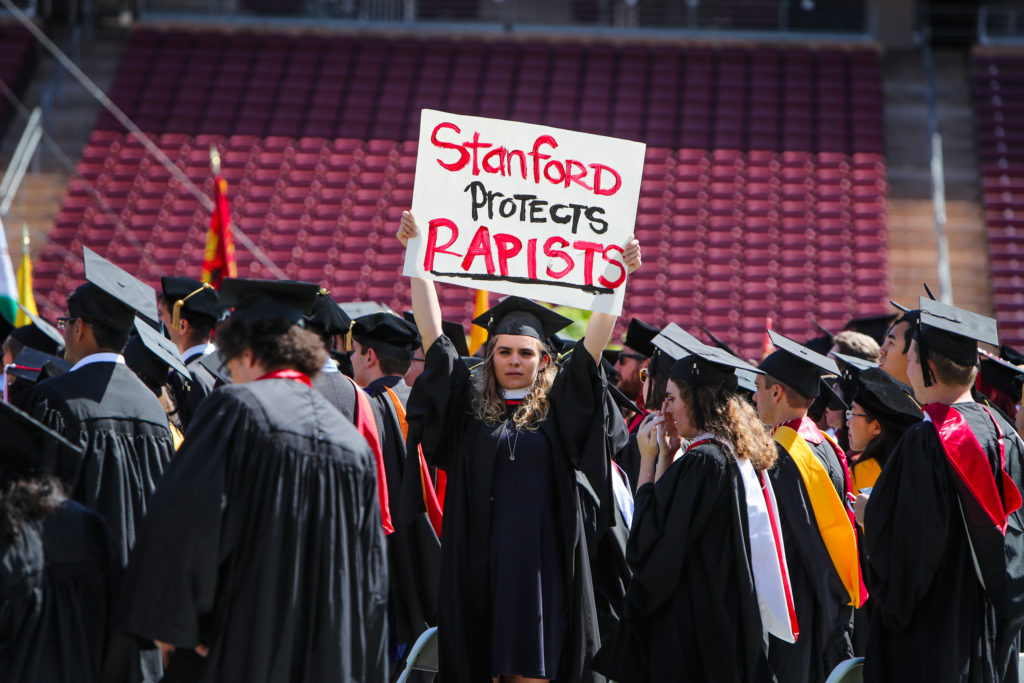
A bipartisan group of lawmakers read the wrenching letter of a woman whose attacker was given a six-month jail term after sexually assaulting her behind a dumpster on the Stanford University campus last year while she was unconscious. The victim’s emotional statement in open court to the defendant, former Stanford swimmer Brock Turner, powerfully details how the assault has devastated her life. It was widely shared online and drew national attention to the case. The expression of solidarity with the victim was led by Rep. Jackie Speier, D-Calif., who was joined by more than a dozen others. It took almost an hour to read. The case has attracted widespread attention and outrage after Turner, 20, was given such a short sentence. “The sexual predator received a paltry sentence of six months in county jail, of which he will serve only three,” Speier said in her introduction. “We are not moved by the judge, who said a longer sentence would have a ‘severe impact’ on the offender. We are not moved by the felon’s father, who said that his son should not serve jail time for ’20 minutes of action.’” The letter describes, in often painful words, the anguish and pain that the assault, investigation, trial and testimony brought upon the woman. “What he did to me doesn’t expire, doesn’t just go away,” the women said in her statement. “It stays with me, it’s part of my identity, it has forever changed the way I carry myself, the way I live the rest of my life.” Both Turner and the victim were intoxicated on the night of the incident. “I was assaulted with questions designed to attack me, to say, ‘See, her facts don’t line up, she’s out of her mind, she’s practically an alcoholic, she probably wanted to hook up.’” Republished with permission of The Associated Press.
