
Raphael Warnock, Hershel Walker pivot to overtime in Georgia Senate contest
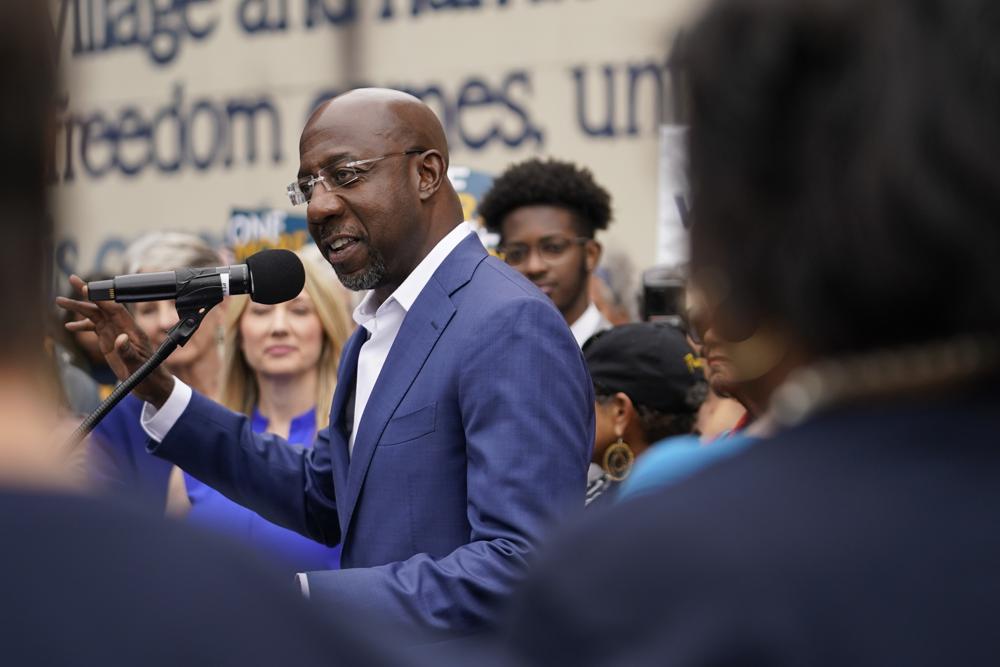
Democratic Sen. Raphael Warnock and Republican challenger Herschel Walker pivoted to a decisive extra round of their Senate race Thursday, while party leaders and donors around the country geared up for a four-week campaign blitz that could determine control of the chamber for the next two years. With votes still being counted in Senate contests in Arizona and Nevada, the single December 6 runoff in Georgia could either decide majority control — as did the state’s twin runoffs in 2021 — or further pad one party’s advantage. But neither Republicans nor Democrats were waiting for the Western states’ results to begin scrambling for big money. The Democrats’ Senate campaign arm announced early plans for a $7 million investment in field operations, a sum certain to be dwarfed by what both parties’ various committees will eventually spend on the airwaves. Top Republicans in Washington began huddling with donors, urging their continued support after the party nationwide fell short of expectations in Tuesday’s midterm elections. Former President Donald Trump, who has endorsed Walker, sent out fundraising pitches based on the runoff. The White House offered assurances that President Joe Biden would do whatever was best to help Warnock — even if that means keeping his distance. Warnock sidestepped the national implications Thursday, going directly at Walker and characterizing the former football star as unqualified and unfit for the office. “This race is about competence, and it’s about character,” Warnock said in his first public appearance since his election night party. He went on to detail Walker’s exaggerations of his business and professional achievements and allegations of violence against women, including Walker’s first wife. And he called Walker, who is making his first bid for public office, “manifestly uninformed” on public policy. “The choice between me and Herschel Walker is clear,” Warnock said. “Some things in life are complicated. This ain’t one of them. This is not a math test.” Walker was scheduled to host his first runoff campaign rally later Thursday in the northern reaches of metro Atlanta, key territory for Republicans in Georgia. Warnock’s searing indictment of Walker stands in contrast to the more muted arguments the senator offered for much of the fall, when he focused on his own record in Washington, especially deals with Republicans on infrastructure and provisions in Democratic bills to cap insulin and other drug costs for Medicare recipients. Both approaches, his advisers say, are aimed at independents and moderate Republicans who are critical in a state that, until recently, was dominated by the GOP at all levels of government. Tuesday’s election results appeared to validate Warnock’s strategy and show Walker’s vulnerability after sustained scrutiny of his past, including allegations from two former girlfriends that he encouraged and paid for their abortions despite calling for a national ban on the procedure as a political candidate. Walker led Warnock by about 35,000 votes out of more than 3.9 million cast but failed to clear the 50% threshold needed to avoid a runoff. More critically for Walker, he ran well behind nearly every other GOP nominee for statewide office, including Gov. Brian Kemp, who got about 200,000 more votes on his way to winning a second term. Walker’s vote shares trailed Trump’s 2020 marks across the state, in rural areas, suburban counties, and metro centers — and Trump still lost the state to Biden by a razor-thin margin. Republicans have acknowledged Walker’s flaws throughout the campaign but have argued Warnock remains vulnerable because of broad voter dissatisfaction with generally high inflation and the direction of the country under Democratic control of the White House and Capitol Hill. Dan Eberhart, a GOP donor, called Walker “damaged goods,” saying the contest has to be about who’s running Washington, not just a Georgia senator. “You are voting for Chuck Schumer or Mitch McConnell” to lead the Senate, Eberhart said. Walker, who dismisses the focus on his past as “foolishness,” has fully embraced a nationalized attack on his opponent. “Raphael Warnock represents Joe Biden, not the people of Georgia,” he says at every campaign stop. Stephen Lawson, who is leading the 34N22 political action committee in support of Walker’s bid, said the same. “That’s still the message: Elect a check on Joe Biden,” said Lawson, whose PAC features Walker’s jersey number as a running back for the University of Georgia and later pro football. Lawson said his PAC will focus on three pools of voters: the GOP base that stuck with Walker, the 200,000 Kemp voters who didn’t, and the 350,000 voters who backed Trump two years ago but didn’t return to the polls for the January 2021 runoffs that Democrats won. The anti-Biden message, he said, can reach all three groups. Warnock, for his part, tacitly acknowledges that his party affiliation may be his biggest liability, even as Democrats exceeded expectations Tuesday by winning enough to potentially hold their Senate majority and limit Republicans to a slim House majority, at best. From the start of his campaign, Warnock has distanced himself from Biden, at least in his campaign speeches and television advertising. The senator alludes to his 2021 runoff victory alongside fellow Georgia Democratic Sen. Jon Ossoff and links it to Democratic accomplishments, from the COVID-19 pandemic relief package to the confirmation of Supreme Court Justice Ketanji Brown Jackson as the first Black woman on the nation’s highest judicial body. Biden’s approval ratings nationally hover in the low 40s and are even lower in Georgia. White House communications director Kate Bedingfield said it was up to Warnock to decide what is best for his campaign. “The president will do whatever is helpful to Sen. Warnock, whether that’s campaigning with him, whether that’s raising money,” she said Thursday on CNN. “Whatever Sen. Warnock would like, the president will do.” But regardless of either candidate’s difficulty navigating his liabilities, one thing is certain: A full-scale national fight is underway. “There’s going to be plenty of money,” said Eberhart. “It’s the only game in town, so everyone will still be there.” Republished with the permission of The Associated Press.
GOP nudges closer to House win; Senate could hinge on runoff

Republicans inched closer to a narrow House majority Wednesday, while control of the Senate hinged on a few tight races in a midterm election that defied expectations of sweeping conservative victories driven by frustration over inflation and President Joe Biden’s leadership. Either party could secure a Senate majority with wins in both Nevada and Arizona — where the races were too early to call. But there was a strong possibility that, for the second time in two years, the Senate majority could come down to a runoff in Georgia next month, with Democratic Sen. Raphael Warnock and Herschel Walker failing to earn enough votes to win outright. In the House, Republicans on Wednesday night were within a dozen seats of the 218 needed to take control, while Democrats kept seats in districts from Virginia to Pennsylvania to Kansas, and many West Coast contests were still too early to call. In a particularly symbolic victory for the GOP, Sean Patrick Maloney of New York, the House Democratic campaign chief, lost his bid for a sixth term. Control of Congress will decide how the next two years of Biden’s term play out and whether he is able to achieve more of his agenda or will see it blocked by a new GOP majority. Republicans are likely to launch a spate of investigations into Biden, his family, and his administration if they take power, while a GOP takeover of the Senate would hobble the president’s ability to appoint judges. “Regardless of what the final tally of these elections show, and there’s still some counting going on, I’m prepared to work with my Republican colleagues,” Biden said Wednesday in his first public remarks since the polls closed. “The American people have made clear, I think, that they expect Republicans to be prepared to work with me as well.” Democrats did better than history suggested they would. The party in power almost always suffers losses in the president’s first midterm elections, though even if the GOP ultimately wins the House, it won’t be by a margin as large as during other midterm cycles. Democrats gained a net of 41 House seats under then-President Donald Trump in 2018, President Barack Obama saw the GOP gain 63 in 2010, and Republicans gained 54 seats during President Bill Clinton’s first midterm. A small majority in the House would pose a great challenge for the GOP and especially California Rep. Kevin McCarthy, who is in line to be House speaker and would have little room for error in navigating a chamber of members eager to leverage their votes to advance their own agenda. In the fight for Senate control, Pennsylvania was a bright spot for Democrats. Lt. Gov. John Fetterman, who suffered a stroke five months ago, flipped a Republican-controlled Senate seat, topping Trump-endorsed Republican Dr. Mehmet Oz. Georgia, meanwhile, was set for yet another runoff on December 6. In 2021, Warnock used a runoff to win his seat, as did Democratic Sen. Jon Ossoff — which gave Democrats control of the Senate. Both Warnock and Walker were already fundraising off the race, stretching into a second round. Both Republican and Democratic incumbents maintained key Senate seats. In Wisconsin, Republican Sen. Ron Johnson prevailed over Democratic Lt. Gov. Mandela Barnes, while in New Hampshire, Democratic Sen. Maggie Hassan beat Don Bolduc, a retired Army general who had initially promoted Trump’s lies about the 2020 election but tried to shift away those views closer to Election Day. AP VoteCast, a broad survey of the national electorate, showed that high inflation and concerns about the fragility of democracy were heavily influencing voters. Half of voters said inflation factored significantly, with groceries, gasoline, housing, and other costs that have shot up in the past year. Slightly fewer — 44% — said the future of democracy was their primary consideration. Biden didn’t entirely shoulder the blame for inflation, with close to half of voters saying the higher-than-usual prices were more because of factors outside of his control. And despite the president bearing criticism from a pessimistic electorate, some of those voters backed Democratic candidates. Democrats counted on a midterm boost from the Supreme Court’s decision to gut abortion rights, which they thought might energize their voters, and the bet paid off. In four states where the issue was on the ballot, voters backed abortion rights. VoteCast showed that 7 in 10 national voters said overturning the 1973 Roe v. Wade decision was an important factor in their midterm decisions. It also showed the reversal was broadly unpopular. And roughly 6 in 10 said they favor a law guaranteeing access to legal abortion nationwide. In the first national election since the January 6 insurrection, some who participated in or were in the vicinity of the attack on the U.S. Capitol were poised to win elected office. One of those Republican candidates, Derrick Van Orden in Wisconsin — who was outside the Capitol during the deadly riot — won a House seat. Another, J.R. Majewski, lost to Ohio Democratic Rep. Marcy Kaptur. Republicans had sought to make inroads in liberal New England but were shut out of House contests, with one Maine race still set to be determined by ranked-choice voting. Governors’ races took on outsized significance this year, particularly in battleground states that could help decide the results of the 2024 presidential election. Democrats held on to governors’ mansions in Wisconsin, Michigan, and Pennsylvania, defeating Republicans who promoted Trump’s lies about a stolen 2020 election. Republicans held on to governors’ mansions in Florida, Texas, and Georgia, another battleground state Biden narrowly won two years ago. Trump found some success as well. He lifted Republican Senate candidates to victory in Ohio and North Carolina. JD Vance, the bestselling author of “Hillbilly Elegy,” defeated 10-term congressman Tim Ryan, while Rep. Ted Budd beat Cheri Beasley, the former chief justice of the state Supreme Court. Trump had endorsed more than 300 candidates across the country, hoping the night would end in a red wave he could ride to the 2024 Republican presidential nomination. After summoning reporters
U.S. Senate is focus of politicos across the country
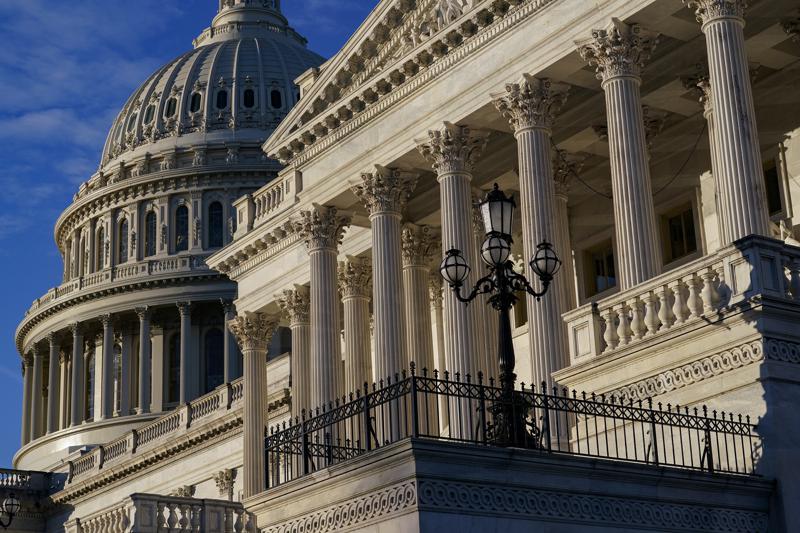
In Alabama, with hours left in the 2022 election cycle, the Republican nominee for U.S. Senate, Katie Britt, appears to be a prohibitive favorite over Democratic nominee Dr. Will Boyd and Libertarian nominee John Sophocleus for the open U.S. Senate seat, currently held by the retiring Richard Shelby. Nationally, though, there is intense speculation over what could happen on election day on Tuesday and which party will control the next Congress. Polling shows Republicans with growing momentum, and it appears almost a certainty that the GOP will take control of the U.S. House of Representatives after four years of Nancy Pelosi’s leadership, and it does not appear to even be close. Real Clear Politics does not see any of Alabama’s Seven Congressional Districts as even being in play in this election. With the House effectively lost to them, Democrats have focused their efforts on maintaining their narrow control of the U.S. Senate, which for the past two years has been tied 50 to 50; but Vice President Kamala Harris gives the Democrats control of the body. Democrats had staked their hopes on the Select Committee on January 6, and the abortion issue to energize their base. That has not happened. Instead, Republicans are running on inflation, crime, the border, and economic issues, and that strategy appears to be playing well with voters. It is too close to call who will control the Senate before the votes are counted, but clearly, the trend has been moving in favor of the GOP in the last three weeks. The best opportunity for a Republican pickup appears to be Nevada. There, the Republican challenger, former state Attorney General Adam Laxalt, is leading Democratic incumbent Sen. Catharine Masto in recent polling. The latest Real Clear Politics rolling poll average has Laxalt leading Masto by 1.9 points. The best opportunity for a Democratic pickup appears to be Pennsylvania, where Republican incumbent Sen. Pat Toomey is retiring even though he is only 60 years old. Toomey’s controversial vote in 2021 to convict former President Donald Trump of inciting the January 6 insurrection made his ability to win a Republican primary unlikely. Democratic lieutenant Governor John Fetterman had appeared to have an insurmountable lead over Republican nominee television host Dr. Mehmet Oz, but that lead has evaporated. The race is now a tossup, but Oz has the momentum after clearly besting Fetterman in the debate. Presidents Barack Obama and Joe Biden are both campaigning hard for Fetterman, and Trump is campaigning for Oz. Both parties recognize that there is little chance of the Democrats holding on to the Senate if Pennsylvania falls to the GOP. Georgia is a tossup between Democratic incumbent Sen. Raphael Warnock and college football star Republican challenger Hershel Walker, but Walker clearly has the momentum in this race. Due to Georgia’s election rules, however, this race will likely go to a December runoff. Warnock is being dragged down in the general election by the terrible performance of Democratic gubernatorial candidate Stacey Abrams. Brian Kemp is sure to best Abrams on Tuesday. If Walker faces Warnock again on December 6, however, will those Kemp voters come out to help the Republicans lift Walker over Warnock? The trifecta of Pennsylvania, Nevada, and Georgia likely decide the Senate, but there are other races where Democratic incumbents are fighting for their political lives. In New Hampshire, Democratic incumbent Sen. Maggie Hassan is leading Republican challenger Dan Bolduc, but this race is much closer at this point than politicos expected this summer. If there really is a Republican “red wave” where GOP voters come out to the polls on Tuesday with more enthusiasm than Democrats, then the Granite state could easily swing to the GOP. According to the latest Real Clear Politics rolling poll average, Hassan has a lead of just .8 – well inside the margin of error and trending in the wrong direction for Hassan. Another state where a “red wave” could unseat a Democratic incumbent is Arizona. This summer, it appeared that incumbent former astronaut and the husband of former Congresswoman Gabby Giffords, Sen. Mark Kelly, would win easy reelection by more than ten points. Now this race is much closer than even the most enthusiastic GOP supporters thought possible. Republican nominee Blake Masters has won over a lot of voters. If the GOP candidate for Governor wins and wins big, Arizona could be a surprise U.S. Senate pickup for the GOP. This race has been a tie in two of the last 5 polls, with Kelly’s best performance being plus three in a Marist poll. Both Remington and Fox News have Kelly leading by just one point. If Republicans flip Arizona, there is little likelihood of the Democrats holding on to the Senate. In the summer, the Democrats believed that Republican incumbent Ron Johnson in Wisconsin was very vulnerable. Those hopes are fading fast as Johnson is surging in the polls over Democratic challenger Lt. Gov. Mandela Barnes. Senate colleague Bernie Sanders is on the ground campaigning for Barnes this weekend. Johnson leads Barnes by 3.2 points in the most recent Real Clear Politics rolling average. If there is no GOP wave, this could be closer than the polls indicate, and a Barnes upset win is still not outside the realm of possibility. In Washington state, even Republicans were expecting incumbent Sen. Patty Murray to coast to another easy re-election. That race is now much closer than anyone had previously thought possible. Republican challenger Tiffany Smiley has pushed Murray far harder than anyone could have anticipated in this blue state. Murray was consistently polling nine points or more in September, but recent polling has shown her lead shrink to just 1 to 4 points. The Real Clear Politics still has Murray up by 3.0 points in their most recent polling average, but that has dropped from 9 points just four weeks ago. This would still be an unlikely pickup for Republicans in a state that Biden won by 19.2 points just two years ago. That said, a Smiley victory is now within the margin of error in some recent polling. Murray holding on to her seat remains the most likely outcome, but that is now far from certain. In North Carolina, Republican incumbent Sen. Richard Burr is retiring. This seemed to be an opportunity for Democrats to flip this red seat blue, and Civitas/Cygnal had the race between Republican Ted Budd and Democratic nominee Cheri Beasley tied as recently as September 26, but Budd appears to
Herschel Walker faces abortion allegation from 2nd accuser

A woman came forward Wednesday to accuse Herschel Walker, the anti-abortion Republican running for U.S. Senate in Georgia, of encouraging and paying for her 1993 abortion — an accusation that came just weeks after a former girlfriend said he did the same for her in 2009. Walker dismissed the newest allegation as “foolishness” and “a lie,” similar to his vehement denials earlier this month of the abortion alleged to have happened 13 years ago. “I’m done with all this foolishness. This is all a lie, and I will not entertain any of it. I also did not kill JFK,” Walker said in a statement later Wednesday. The second accuser, identified only as “Jane Doe,” spoke to reporters via an audio Zoom call arranged by her lawyer, Gloria Allred. The woman alleged that Walker, a former college and professional football star making his first bid for public office, pressured her into an abortion and paid for one after she became pregnant during their six-year relationship while he was married to his first wife. “The reason I am here today is because he has publicly taken the position that he is ‘about life’ and against abortion under any circumstances when, in fact, he pressured me to have an abortion and personally ensured that it occurred by driving me to the clinic and paying for it,” the woman said. She said she was not revealing her identity because she fears “reprisals against myself, my family and my livelihood.” “I do not believe that Herschel is morally fit to be a U.S. senator, and that is the reason why I am speaking up and providing proof,” she said. She said partisan allegiances were not a factor in her decision to come forward. She called herself a registered independent and said she voted twice for Donald Trump, the former Republican president who has endorsed Walker. The second round of abortion allegations against Walker returned the issue to the forefront of the campaign in the final two weeks before the November 8 elections. Walker is competing against Democratic Sen. Raphael Warnock in a tight race that could help determine party control of the Senate. Walker, campaigning Wednesday in north Georgia, seemed to blame Democrats for the latest accusation, much as he did the first, saying in a written statement that they “will say and do anything to hang on to power.” “Well, I’m Herschel Walker, and they picked the wrong Georgian to mess with,” Walker wrote. Allred, speaking to reporters in her Los Angeles office, detailed, among other items, cards that she said Walker gave her client and a hotel receipt from Minnesota. Allred played audio of what she described as a telephone message that Walker allegedly left her client in 1992 after he had arrived in Europe as part of the U.S. Olympic bobsled team. A notable women’s rights lawyer, Allred has represented several clients who have accused powerful men, including Trump and Hollywood producer Harvey Weinstein, of sexual assault and harassment. When The Daily Beast broke the story this month of the first abortion allegation, Walker insisted he had no idea who could make such a claim, but that was undermined by a follow-up report in which the woman identified herself as the mother of one of his children. The child was born two years after the 2009 abortion. Her evidence included a $575 receipt for an abortion, along with a get-well card signed by Walker and a personal check for $700 from the multimillionaire celebrity athlete. The check is dated five days after her abortion receipt. On Wednesday, Jane Doe said Walker gave her cash to have an abortion after she told him she was pregnant. She alleged that she first went to a clinic alone but was unable to go through with an abortion. She said Walker was “upset” when she told him, and he insisted they return the following day. She said he drove her to the clinic that day, waited in the car while the procedure occurred, and then took her to fill prescriptions. Allred declined to discuss the cost or any records of the alleged abortion, “at least at this time.” Walker’s responses to The Daily Beast’s stories evolved from absolute denials to suggesting the signature on a get-well card wasn’t his to suggesting he did send the woman money but that he didn’t know it was to cover an abortion. Doe said she heard Walker’s denial that he ever signed anything with a lone initial “H,” as the get-well card was signed. She said she knew that wasn’t true because he had signed cards to her that way. The first woman has not been identified publicly, asking that her name not be used out of concern for her privacy. She said she is a registered Democrat who is speaking out because of what she called Walker’s hypocrisy over abortion rights. She has spoken to multiple media outlets, revealing herself to be the same woman who filed a paternity suit for child support in New York family court. She has also alleged that Walker encouraged her to end their second pregnancy, though she refused, and that Walker has seen their son only a handful of times. Walker’s campaign has since shared with NBC News texts between his current wife and the woman acknowledging his relationship to the child. Walker promised to sue The Daily Beast after its initial story on the abortion claim was published on October 3. As of Wednesday afternoon, Walker had not confirmed that he has taken any legal action against the outlet. The reporting has put Walker on the defensive both about his claims of being a family man and his previous support for a national abortion ban, without any exceptions. That’s a notable position because the Supreme Court in June ended a constitutional right to an abortion, and Congress has been discussing federal legislation to set a national regulation. During the primary campaign, Walker was consistent about his absolute opposition to abortion. He repeated that approach after winning the nomination but has
Joe Guzzardi: Pro-Environment platform a mid-term winner
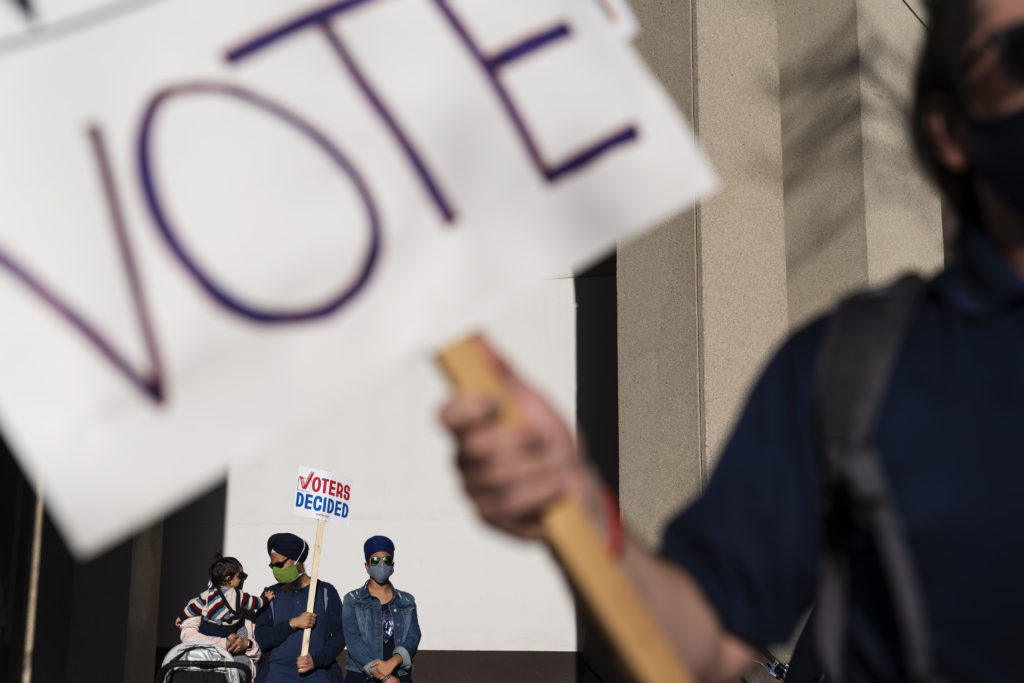
The latest mid-term election polling shows that Republicans and Democrats are dead even. In January, the same polling firm Statista had the GOP ahead by four points. Other polls like 538.com indicate more or less the same outcome. But if voters have learned anything since the 2016 and 2020 elections, it would be to distrust polling firm projections. Results from 2020 polls favored Democrats, with Susan Collins (R-Maine), Lindsey Graham (R-S.C.), Joni Ernst (R-Iowa), Thom Tillis (R-N.C.), and Steve Daines (R-Mont.) as likely losers. But Collins, 6.5 points behind, or so said the pre-election pollsters, won by 8.6 points. The other five candidates that the prognosticators wrote off as doomed won handily. Pollsters have an explanation to defend their theory that congressional Democrats might still retain the majority, despite record inflation, rising crime rates, a botched Afghanistan withdrawal, student debt forgiveness, billions of dollars squandered in support of what’s become an endless Russia-Ukraine war, and an open border. It is that the GOP has nominated poor candidates in key swing states. Among the races, pollsters are tracking most closely are Blake Masters in Arizona vs. incumbent Mark Kelly, Herschel Walker in Georgia vs. incumbent Raphael Warnock, Adam Laxalt in Nevada vs. incumbent Catherine Cortez Masto, and Mehmet Oz vs. John Fetterman in Pennsylvania, where incumbent Republican Pat Toomey is retiring. A state official who has no congressional voting record, Fetterman proudly notes that his wife’s family overstayed their visas, at which time their immigration status converted to unlawfully present, a clue that he favors more immigration. Fetterman’s website says he supports a “humane” immigration system, a vapid remark which confirms that he endorses Biden’s status quo. The GOP challengers, all within striking distance, may be getting short shrift from pollsters. The candidates were persuasive enough to capture primary nominations; they’re not too tongue-tied to debate. More important, going into the general election, the GOP has as much fodder – listed above – and primo debate material as any high-office challengers in history, thanks mostly to President Biden’s slipshod governance, and the incumbents’ whole-hearted endorsement of it. On the key open borders issue, Masters, Walker, and Laxalt have the benefit of launching an offensive against their opponents’ immigration voting records. Their rivals, Kelly, Warnock, and Cortez Masto are, like Fetterman and Biden, all-in on open borders. A review of the incumbents’ immigration votes found that each has consistently voted against reducing amnesty fraud, against curbing illegal immigrants’ rewards, against ending unnecessary employment visas, against stricter border enforcement, and against more rigorous interior enforcement. Stumping on reducing immigration can be problematic since such a focused campaign would trigger untruthful but potentially damaging racist allegations. A winning campaign would include linking immigration to unsustainable population growth, an indisputable fact that the Census Bureau confirms. Census Bureau data predicts that by the mid-21st century, the U.S. population will increase to more than 400 million from its current 333 million, a greater than 20 percent increase. More than half of that growth will be attributable to immigration and births to immigrants. For comparison’s sake, the Center for Immigration Studies’ researchers, based entirely on the Census Bureau’s American Community Survey and the Current Population Survey Annual Social and Economic Supplements, found that in 2017 there were 35.8 million legal and illegal immigrants living in the U.S. who arrived from 1982 to 2017. Further, these immigrants had 16.9 million U.S.-born children and grandchildren. In total, immigration added 52.7 million people to the U.S. population between 1982 and 2017, accounting for a little over 56 percent of population growth during this 35-year time period. For the nation’s population to increase by more than 65 million people, as the Census Bureau predicts, in less than 30 years, creates a grave danger that will exacerbate existing environmental problems like water shortages and land lost to urban sprawl. Opinions about immigration and its effects often differ. But sentiments about the environmental future Americans want to ensure for their children and grandchildren are consistent. Americans want open spaces and nature’s bounty to remain for future generations to enjoy, a goal that ever-more immigration makes impossible. To win and to prove the pollsters wrong again, the GOP platform must emphasize immigration’s harmful, unwanted consequences of unchecked population growth and the environmental degradation that accompanies it. Joe Guzzardi is a nationally syndicated newspaper columnist who writes about immigration and related social issues. Joe joined Progressives for Immigration Reform in 2018 as an analyst after a ten-year career directing media relations for Californians for Population Stabilization, where he also was a Senior Writing Fellow. A native Californian, Joe now lives in Pennsylvania. Contact him at jguzzardi@pfirdc.org.
Tommy Tuberville’s veterans post-9/11 GI bill passes Senate
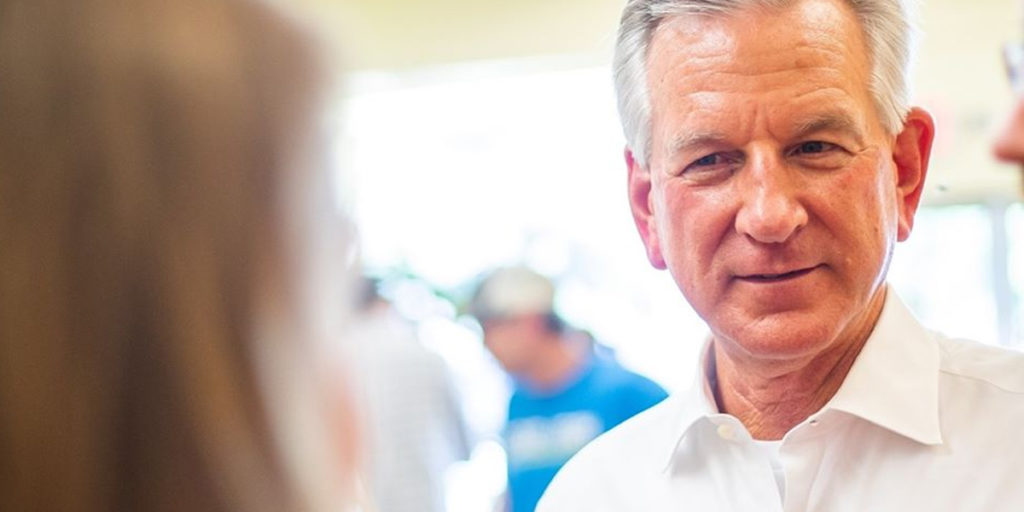
U.S. Senator Tommy Tuberville’s veterans bill (S. 3606) passed the U.S. Senate with unanimous support. The bill, which clarifies the information required on the post-9/11 GI Bill benefit transfer forms, is Senator Tuberville’s second piece of legislation to pass the Senate, after the Supporting Families of the Fallen Act passed in March. A bipartisan group of nine senators cosponsored the bill, including Senators John Thune, Marco Rubio, Mike Braun, Tim Scott, Marsha Blackburn, John Boozman, Raphael Warnock, Dianne Feinstein, and Richard Blumenthal. Once the bill passes the U.S. House of Representatives, where it also has bipartisan support, it will head to President Joe Biden’s desk to be signed into law. In a press release, Tuberville, applauded the support for the bill. “As the son of a veteran and a grateful American, I want to ensure that our veterans and their families are well-taken care of, not the victims of bureaucratic red tape,” said Tuberville. “This bill is another targeted, meaningful change that makes it easier for our veterans and their families to receive the benefits they so rightly deserve. I look forward to seeing this bill pass the House and sent to President Biden’s desk soon.” After learning of a small, but correctable error that makes it difficult for dependents to receive their Post-9/11 GI Bill benefits, Senator Tuberville introduced legislation to fix the issue in February 2022. The bill clarifies the information required on U.S. Department of Veterans’ Affairs (VA) and U.S. Department of Defense (DoD) forms filled out by a service member when they elect to have their post-9/11 GI Bill benefit transferred to a dependent. Part of current VA and DoD transfer forms requires the service member to fill out a field labeled “end date,” which refers to the date on which the dependent may no longer receive the benefit. Many service members were misreading the information requested in the GI Bill benefit transfer forms. This error resulted in eligible dependents being barred from education benefits due to an easily amendable error. Since this field is the cause of many incorrectly completed transfer forms, Senator Tuberville’s bill would remove the “end date” to prevent further issues. This bill will allow a service member to transfer his or her Post-9/11 GI bill benefits to a spouse or child so long as the service member has done the following: Completed at least six years on the date the service member requests to transfer the benefit, and Agreed to add four more years of service, and The individual receiving the benefits has enrolled in the Defense Enrollment Eligibility Reporting System (DEERS).
Terri Sewell only Alabama lawmaker to vote yes to Democrat led $35-a-month insulin cap bill
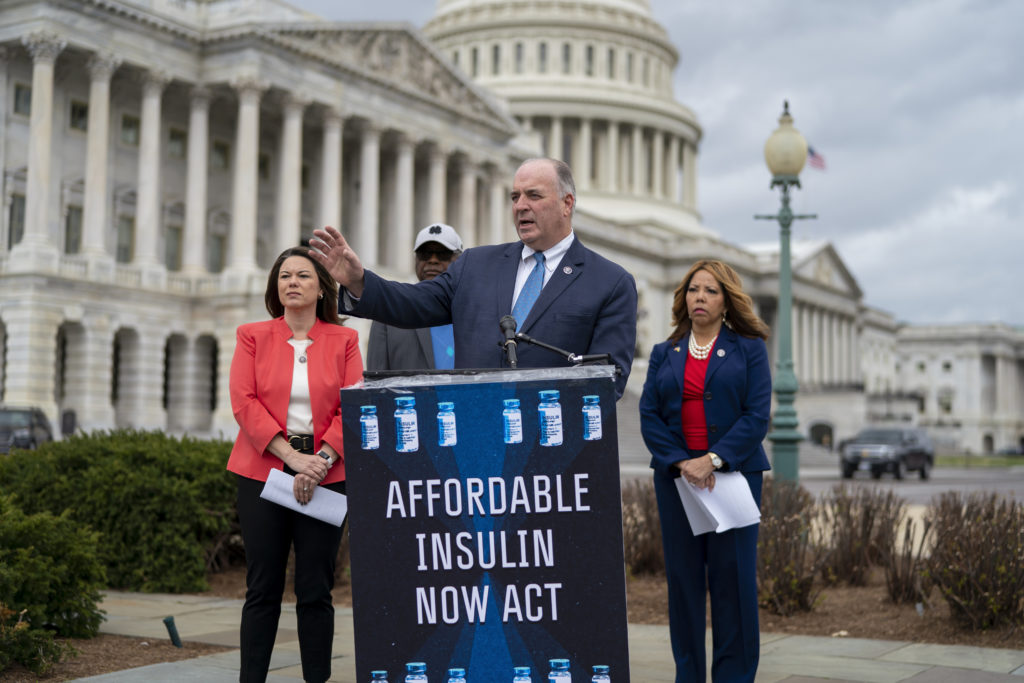
The House on Thursday passed a bill capping the monthly cost of insulin at $35 for insured patients, part of an election-year push by Democrats for price curbs on prescription drugs at a time of rising inflation. Rep. Terri Sewell was the only yea for the bill while the rest of the Alabama legislature voted nay. Experts say the legislation, which passed 232-193, would provide significant relief for privately insured patients with skimpier plans and for Medicare enrollees facing rising out-of-pocket costs for their insulin. Some could save hundreds of dollars annually, and all insured patients would get the benefit of predictable monthly costs for insulin. The bill would not help the uninsured. But the Affordable Insulin Now Act will serve as a political vehicle to rally Democrats and force Republicans who oppose it into uncomfortable votes ahead of the midterms. For the legislation to pass Congress, 10 Republican senators would have to vote in favor. Democrats acknowledge they don’t have an answer for how that’s going to happen. “If 10 Republicans stand between the American people being able to get access to affordable insulin, that’s a good question for 10 Republicans to answer,” said Rep. Dan Kildee, D-Mich., a cosponsor of the House bill. “Republicans get diabetes, too. Republicans die from diabetes.” Public opinion polls have consistently shown support across party lines for congressional action to limit drug costs. But Rep. Cathy McMorris Rodgers, R-Wash., complained the legislation is only “a small piece of a larger package around government price controls for prescription drugs.” Critics say the bill would raise premiums and fails to target pharmaceutical middlemen seen as contributing to high list prices for insulin. Sen. Chuck Grassley, R-Iowa, said Democrats could have a deal on prescription drugs if they drop their bid to authorize Medicare to negotiate prices. “Do Democrats really want to help seniors, or would they rather have the campaign issue?” Grassley said. The insulin bill, which would take effect in 2023, represents just one provision of a much broader prescription drug package in President Joe Biden’s social and climate legislation. In addition to a similar $35 cap on insulin, the Biden bill would authorize Medicare to negotiate prices for a range of drugs, including insulin. It would penalize drugmakers who raise prices faster than inflation and overhaul the Medicare prescription drug benefit to limit out-of-pocket costs for enrollees. Biden’s agenda passed the House only to stall in the Senate because Democrats could not reach consensus. Party leaders haven’t abandoned hope of getting the legislation moving again and preserving its drug pricing curbs largely intact. The idea of a $35 monthly cost cap for insulin actually has a bipartisan pedigree. The Trump administration had created a voluntary option for Medicare enrollees to get insulin for $35, and the Biden administration continued it. In the Senate, Republican Susan Collins of Maine and Democrat Jeanne Shaheen of New Hampshire are working on a bipartisan insulin bill. Georgia Democratic Sen. Raphael Warnock has introduced legislation similar to the House bill, with the support of Sen. Majority Leader Chuck Schumer of New York. Stung by criticism that Biden’s economic policies spur inflation, Democrats are redoubling efforts to show how they’d help people cope with costs. On Thursday, the Commerce Department reported a key inflation gauge jumped 6.4% in February compared with a year ago, the largest year-over-year rise since January 1982. But experts say the House bill would not help uninsured people, who face the highest out-of-pocket costs for insulin. Also, people with diabetes often take other medications as well as insulin. That’s done to treat the diabetes itself, along with other serious health conditions often associated with the disease. The House legislation would not help with those costs, either. Collins says she’s looking for a way to help uninsured people through her bill. About 37 million Americans have diabetes, and an estimated 6 million to 7 million use insulin to keep their blood sugars under control. It’s an old drug, refined and improved over the years, that has seen relentless price increases. Steep list prices don’t reflect the rates insurance plans negotiate with manufacturers. But those list prices are used to calculate cost-sharing amounts that patients owe. Patients who can’t afford their insulin reduce or skip doses, a strategy born of desperation, which can lead to serious complications and even death. Economist Sherry Glied of New York University said the market for insulin is a “total disaster” for many patients, particularly those with skimpy insurance plans or no insurance. “This will make private insurance for people with diabetes a much more attractive proposition,” said Glied. Republished with the permission of the Associated Press.
Eric D. Hargan: $35 insulin? Why didn’t we think of that?
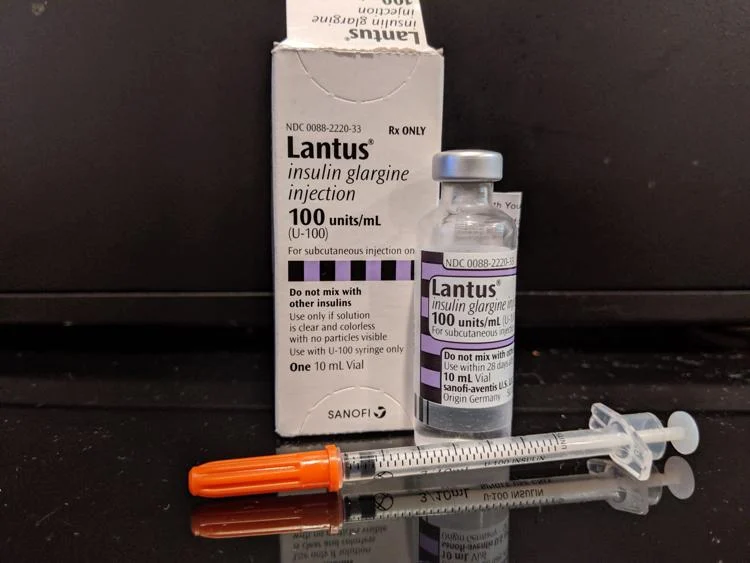
As we move through National Kidney Month, we should keep focused on one of the worst kidney diseases out there: diabetes. Millions of American diabetic patients require regular treatment with insulin, and the prices for many types of insulin can be quite high. In response, President Joe Biden announced in his State of the Union speech that he would be working on capping the price of insulin at $35 per month for everyone. Those of you in the field may have been jolted by this choice of pricing, because the Trump Administration set that exact same dollar amount, $35, on insulin for Medicare patients under a Part D voluntary model in 2020. Now, that was not the only attempt in 2020 to lower insulin costs. Community health centers were also required to provide insulin at near cost to their patients. This requirement on community health centers was overturned by the Biden Administration less than six months ago, and now community health centers are under no such requirement. So, the Administration seems to be going one step forward, one step back on this issue of lowering insulin costs for patients. The details are, naturally, lacking on what exactly President Biden meant by this national price cap on insulin. In this light, it is worth noting that President Biden seems to be following a proposal by Senator Raphael Warnock, which would fix the price of insulin at $35 nationwide, including by private insurers. This legislative proposal is just one of many out now discussing setting fixed prices. Indeed, setting fixed prices on goods seems to be in the air, as it was during the last period of painfully high inflation, the 1970s. When prices are rising quickly, as now for the first time in decades, people instinctively wish for prices to return to stability and think maybe the solution is just to pass a law fixing prices by force. But in debating the issues on insulin pricing, what is often little understood is that there are different kinds of insulin and that these kinds of insulin have wildly different costs. Certain insulins have been engineered to have significant advantages over others and are often much higher-priced. Much effort and ingenuity have been put into developing these new varieties of insulin, and all that effort has come at a cost. In addition, fixing insulin prices nationally may undermine the current system of private negotiations and the progress towards more and better generics. And will the $35 solution offered be the oldest and cheapest, and not necessarily the best, insulin? Now, everyone wants diabetes patients to have access to useful insulin to help them live longer, healthier lives. There is no “anti-access” lobby trying to prevent patients from obtaining medicine. The question is, as it usually is: How? How best to obtain and keep access to ever-better medical goods and services? Is fixing prices for goods nationally the best way to do so? Or, on the contrary, will this action slow continuing research and development into medical solutions in this area? If fixing prices is likely to slow or stop progress in this area, are we so satisfied with the current state of the insulins we have that we have agreed not to progress, and that the diabetic patients needing insulin now have the best solution they ever will? Anyone looking to balance current needs with future ones needs to balance access now with access tomorrow. We do need to use the technologies we currently have to help our citizens. Otherwise, why have them? But at the same time, we must realize that the tools we have now are not perfect, and we can do better. That realization must drive us to make sure that our system continues to drive towards better solutions, including ever-better technologies. While the cost of drugs is high, the cost of fixing the price of drugs may be higher still. Eric D. Hargan ( @EricDHargan ) founded the Hargan Group and was the deputy secretary of the Department of Health and Human Services after serving as acting secretary. Republished with the permission of The Center Square.
Stacey Abrams seeks national voting rights action before 2022 race
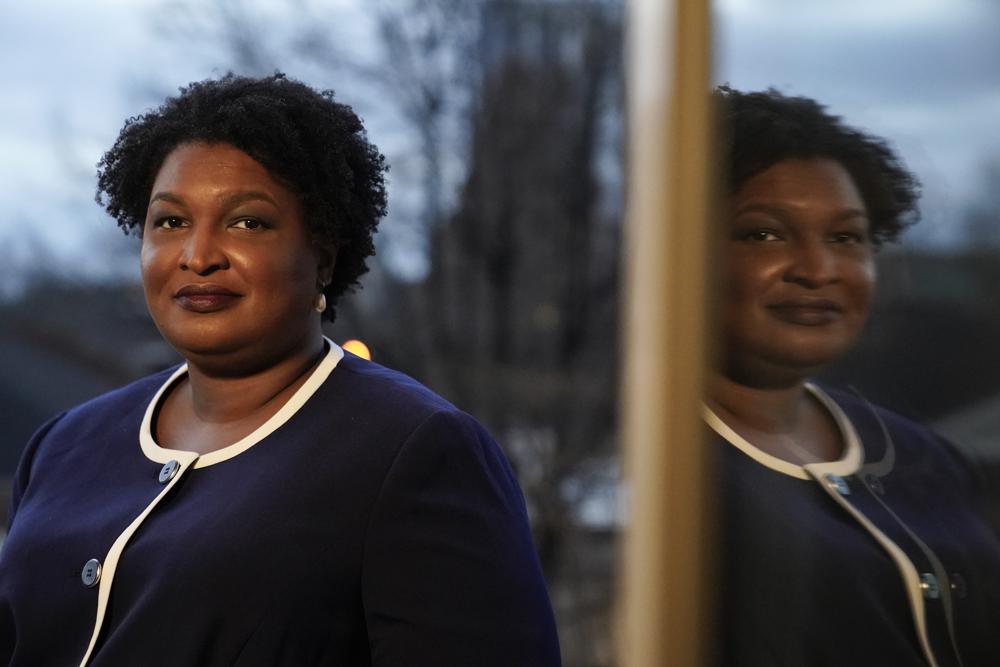
Stacey Abrams, who built her national reputation by advocating for voting rights, is calling on Congress to take action on federal voting rules as the Democrat launches a second bid to become Georgia’s governor. Senators, including Georgia Democrat Raphael Warnock, Abrams’ close ally, have been arguing in recent days that the Senate must try again on federal voting standards, despite earlier setbacks. In an interview Thursday with The Associated Press, Abrams said senators need to override Republican opposition to new federal voting guarantees by weakening the legislation-blocking filibuster to allow the Democrats’ bare majority to pass new rules. Otherwise, Abrams said, more Republican-dominated state legislatures nationwide will adopt voting restrictions like Georgia did this year. “Starting in January, when legislators come back into session in 2022, we’re going to see a maelstrom of voter suppression laws. I understand the resistance to completely dismantling the filibuster. But I do believe there’s a way to restore the Senate to a working body so that things like defending democracy can actually take place.” Abrams lost narrowly to Republican Brian Kemp in 2018 after becoming the first Black woman to ever become a major party’s nominee for governor. She maintains that Kemp used his position as secretary of state to unfairly tip the scales in his favor by doing things like purging voters from the rolls. Kemp denies wrongdoing. Abrams’ loss and her response, including forming a new voting group called Fair Fight, vaulted her to national prominence among Democrats. This year, Republicans pushed through a new voting law in Georgia, which, among other things, cuts days for requesting an absentee ballot, shortens early voting before runoff elections, and limits drop boxes. Democrats fear it will chip away at their gathering strength in Georgia, where President Joe Biden won the state’s 16 electoral votes, and then Warnock and fellow Democrat Jon Ossoff won runoffs in January, delivering control of the U.S. Senate to their party. Republicans argue the law is fair to all and was necessary to restore confidence in the state’s elections after claims of fraud by then-President Donald Trump inflamed many GOP voters. Those claims have been debunked and repeatedly rejected by courts. Abrams insists she can still win the election in Georgia next year even if there are no changes to its new law. “I will do everything in my power to make certain that these new onerous voter suppression laws do not effectively block voters from their right to vote,” she said. “And so yes, there’s absolutely a pathway to win.” Abrams said that pathway leads in a different direction than the traditional approach to policy taken by Southern Republicans, instead seeking to improve the prospects of those who don’t get a fair shot today. “This is a state that is on the cusp of greatness. But we have high income inequality; we have low graduation rates relative to our capacity; we have a broken public health infrastructure system,” Abrams said. “But we also have the ability, if we had good leadership, to invest in our communities, in all of our communities across the state.” Republicans are mobilizing against that approach, saying it would undermine freedom and the economy in Georgia and that Abrams is just using Georgia as a stepping stone to run for president. Although she said she’d like to be president one day, Abrams pledges to serve a full term as governor. In a lacerating attack on Kemp, Abrams argued he failed to recognize the severity of the COVID-19 pandemic and has been callous in his refusal to expand the Medicaid health insurance program to poor adults. “Leadership is about leading. It’s not about guessing, and more importantly, it’s not about abdicating responsibility by saying everyone just figure it out,” Abrams said. “If we wanted a system where everyone could figure it out, we wouldn’t need to elect the governor.” Kemp maintains he’s struck the right balance between health and the economy during the pandemic. He noted that he avoided unpopular lockdowns and that Georgia has a record-low unemployment rate right now. But with former Sen. David Perdue challenging Kemp in the Republican primary, Georgia’s 2022 governor’s contest might not be an Abrams-Kemp rematch. Abrams said Thursday that she would focus on her campaign, saying she didn’t know enough about Perdue to evaluate his record. “I don’t really know what it is, and I’m someone who’s paid very close attention to politics,” Abrams said. In a year where national public opinion has turned sour on Biden and Democrats, Abrams believes she can still win. She said that’s in part because Georgia is different, with a population on the cusp of becoming majority nonwhite, and because her approach is different, with a focus on “one Georgia” where she says, “I’m going to talk to every community, and I’m going to have plans for every community.” Republicans, though, maintain that Abrams will never overcome the tide of anti-Democratic sentiment and hope to lure wayward white suburbanites home, as well as pry away some African American, Latino and Asian voters. Abrams is preaching patience to those communities. “Winning an election isn’t about magic,” she said. “Voting isn’t magic. It is medicine. It takes time; it takes effort; it takes continued investment.” The terrain that Abrams is campaigning on could change in other ways in coming months. Congress is considering creating a workaround to give health insurance to more people in states that have refused to expand Medicaid to poor adults. Extending Medicaid benefits has been the central focus of Democratic campaigns in Georgia for a decade. Abrams said she would celebrate if Congress expanded Medicaid, but said Georgia would still have a high uninsured rate and a troubled public health system. The U.S. Supreme Court could clear the way for Georgia to ban abortions after six weeks of pregnancy. Passed in 2019, the law is currently on hold before an appeals court. Abrams called it a “forced pregnancy bill.” “I’m going to do everything in my power to ensure that no woman is forced to put her family, herself, or her
Beyond D.C. partisanship, Raphael Warnock makes broad pitch in Georgia
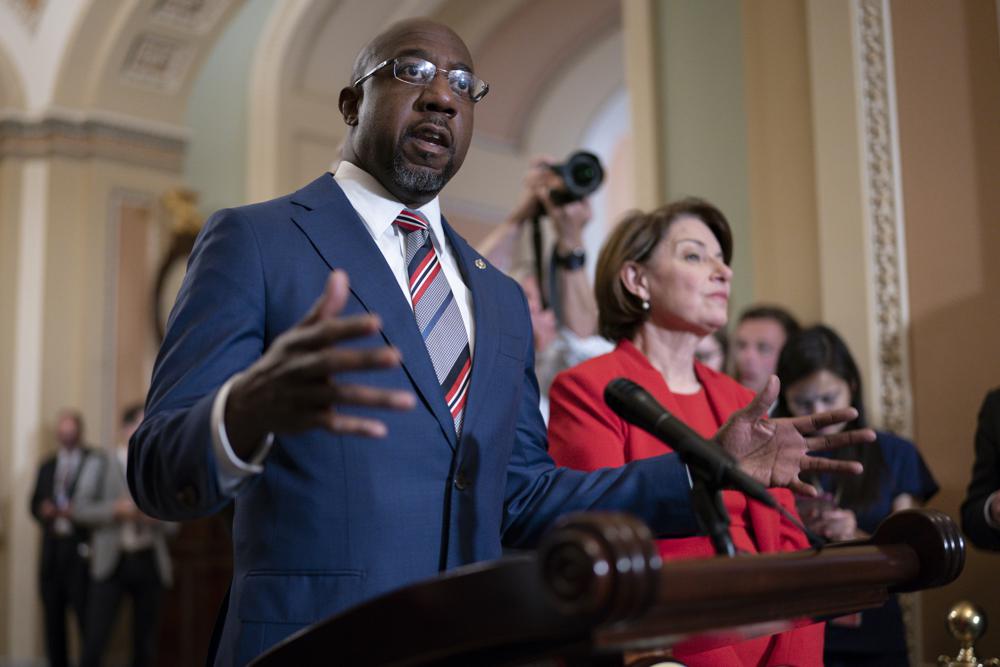
On Capitol Hill, Sen. Raphael Warnock assails Republicans’ push for tighter voting rules as “Jim Crow in new clothes,” while his campaign operation blasts emails bemoaning dire risks to democracy. Back home, Georgia’s first Black senator is more subtle, pitching a “comprehensive view of infrastructure” and avoiding talk of his reelection fight already looming just months after he won a January special election runoff with Senate control at stake. “I’m busy being Georgia’s United States senator,” Warnock said, smiling, as he brushed aside a question recently about famed football hero Herschel Walker potentially running for his seat as a Republican. Indeed, the preacher-turned-politician spent the Independence Day recess hopscotching from an inland port in the conservative Appalachian foothills to liberal Atlanta’s urban microbreweries and sprawling public hospital, then the suburban defense contractors in between. At each stop, he highlighted the federal money he’s routed — or is trying to route — to his state for health care, national security research, rural broadband and urban walking paths, among other projects. “We as Georgians should be proud of all that happens in the state,” Warnock said at the Georgia Tech Research Institute, cheerleading ongoing projects and arguing for more federal spending. “I had some sense of it before becoming a senator. But what I have been able to see firsthand is impressive.” The high-wire act will test whether Warnock, who will seek his first full Senate term next year, can again stitch together a diverse, philosophically splintered coalition that tilted Georgia to Democrats in 2020. He’s still the high-profile freshman whose election gave Democrats unified control in Washington, but now he’s angling to be seen as a “senator for all Georgians” delivering for the state with nuts-and-bolts legislative work. The approach is part necessity given Georgia’s toss-up status: Warnock and Sen. Jon Ossoff, also a freshman, each won their seats by less than 100,000 votes out of 4.5 million runoff ballots; Democrat Joe Biden topped Republican Donald Trump in the presidential contest by less than 13,000 votes out of 5 million last November. Warnock’s gambling that he can be an unapologetic advocate for Democrats’ agenda, including on voting laws, yet still prove to Georgians beyond the left’s base that he is a net-benefit for them. Come November 2022, that would mean maintaining enthusiasm among the diverse Democratic base in metro areas and Black voters in rural and small-town pockets, while again attracting enough suburban white voters, especially women, who’ve drifted away from Republicans in the Trump era. The senator doesn’t disclose such bald-faced election strategy. His office declined a one-on-one interview for Warnock to discuss his tenure and his argument for a full six-year term. Still, his public maneuvering illuminates a preferred reelection path. “Georgia is such an asset to our national security infrastructure,” Warnock said at the Georgia Tech outpost adjacent to Dobbins Air Reserve Base. He praised public and private sector researchers who develop technology for the Pentagon, U.S. intelligence and other agencies, saying they “keep our national defense strong and protect our service members.” He held up the installation as a beneficiary of the U.S. Innovation and Competition Act, a $250 billion package that cleared the Senate on a rare bipartisan vote, 68-32, eight more than the 60-vote filibuster threshold that’s held up Democrats’ plans on election law and infrastructure. As Warnock visited the Appalachian Regional Port, an inland container port in north Georgia, he highlighted the proposed RURAL Act, which he’s co-sponsoring with Republican Sen. Mike Braun of Indiana. It would speed upgrades of rural railway crossings. Afterward, Warnock’s office announced a $47 million grant for port expansion. The surrounding Murray County delivered 84% of its presidential vote to Trump last November. Warnock won just 18% there on Jan. 5. In Atlanta, where Warnock resides and still serves as senior pastor of Ebenezer Baptist Church, which Martin Luther King Jr. once led, the senator lined up more squarely with Democrats’ priorities. Yet even then, Warnock was deliberate when discussing Republicans. “It’s ridiculous that we haven’t expanded Medicaid,” he declared outside Grady Memorial Hospital, a vast public complex in downtown Atlanta. He noted that Georgia, still run by Republicans at the state level, remains one of a dozen states not to expand eligibility under Congress’ 2010 health insurance overhaul. Warnock accused state politicians of “playing games,” though he never mentioned Gov. Brian Kemp by name. Warnock said he’d soon introduce a measure allowing citizens in non-expansion states to be covered. That aligns with one of Biden’s key presidential campaign pledges. The senator later stood along the Atlanta Beltline, an old railroad path redeveloped into a pedestrian and cycling thoroughfare around the city’s perimeter. He touted a $5 million federal investment, billing it as an example of Democrats’ wide interpretation of infrastructure, and alluding to the GOP’s narrower “hard infrastructure” definition. “America needs a home improvement plan,” Warnock said. He endorsed a pending bipartisan infrastructure deal negotiated at the Biden White House but said Democrats should use Senate rules to pass an even larger package over Republican objections in the 50-50 chamber. To be sure, even with his emphasis on infrastructure, Warnock didn’t shy away from the voting rights debate when asked. As on infrastructure, Warnock said Democrats should use Senate rules — or rewrite them, in the case of the filibuster — to counter the spate of Republican state laws tightening access to absentee and early voting. Yet in all those arguments, Warnock tried to frame his case as something beyond party. “I’m making a jobs-and-economic viability argument,” he said on Medicaid expansion. “Once you have basic health care, you can pursue employment, and with a kind of freedom that you can work knowing that you’re covered.” He added that “rural hospitals are closing” under the financial strain of treating the uninsured and underinsured. Warnock extended that analysis to rural broadband and the urban Beltline. Both, he said, connect individuals to economic opportunities around them. Housing and child care, he argued, are “basic infrastructure” for the same reasons. As for voting rights, Warnock stood beside his
Tommy Tuberville joins Raphael Warnock and other leaders in bipartisan support for peanut farmers

Senators Tommy Tuberville and Raphael Warnock led 17 colleagues in a bipartisan push to reduce restrictive trade barriers and expand export market access for domestic peanut farmers and processors. The letter was sent to U.S. Department of Agriculture (USDA) Secretary Tom Vilsack and U.S. Trade Representative (USTR) Ambassador Katherine Tai. According to Tuberville’s press release, removing trade barriers for peanut farmers and processors would give a financial boost to the domestic peanut sector, increase international market access, and create job opportunities across the country. The letter states, “As U.S. Senators who proudly represent peanut farmers in our states, we strongly support joint efforts by USDA and USTR to engage with your E.U. counterparts with the goal of reducing existing non-tariff trade barriers on peanut exports. Increased market access will ultimately benefit the peanut farmers in our states, and we stand ready to support your efforts on their behalf.” Sen. Warnock stated on Twitter, “With GA leading the nation in peanut production, I was proud to lead a bipartisan group of Senators in pushing @USTradeRep & @USDA to expand export market access for our hardworking domestic farmers & processors. When we champion our farmers, we champion GA & our nation.” With GA leading the nation in peanut production 🥜, I was proud to lead a bipartisan group of Senators in pushing @USTradeRep & @USDA to expand export market access for our hardworking domestic farmers & processors. When we champion our farmers, we champion GA & our nation. — Senator Reverend Raphael Warnock (@SenatorWarnock) June 23, 2021 The senators who signed the letter include Senators John Boozman (R-AR), Richard Burr (R-NC), Bill Cassidy (R-LA), Tom Cotton (R-AR), John Cornyn (R-TX), Ted Cruz (R-TX), Lindsey Graham (R-SC), Cindy Hyde-Smith (R-MS), Tim Kaine (D-VA), Jon Ossoff (D-GA), Marco Rubio (R-FL), Rick Scott (R-FL), Tim Scott (R-SC), Richard Shelby (R-AL), Thom Tillis (R-NC), Mark Warner (D-VA), and Roger Wicker (R-MS). A copy of the letter can be found here and below: Dear Secretary Vilsack and Ambassador Tai, We write to bring your attention to ongoing nontariff trade barriers from the European Union (E.U.) affecting the domestic peanut sector. We encourage the U.S. Department of Agriculture (USDA) and the Office of the U.S. Trade Representative (USTR) to prioritize interagency collaboration and industry engagement in order to negotiate an effective solution with your E.U. counterparts that will ultimately allow increased market access for U.S. peanuts. According to data published by USDA, domestic peanut farmers produced over 1.6 million acres of peanuts in 2020 with a farm gate value over $1.2 billion. Due to their susceptibility to naturally-occurring aflatoxin, domestic peanut growers are subject to USDA testing to ensure all peanuts harvested for human consumption are safe to enter the food supply. U.S. growers have a long history of partnering with USDA to ensure their harvest is safe, with USDA also working on research initiatives to address the underlying causes of aflatoxin contamination and to improve post-harvest handling. Collectively, these efforts demonstrate that U.S. farmers and government officials are actively working to ensure that peanuts produced domestically are safe. In 2020, an estimated 668,000 metric tons of U.S. produced peanuts were exported to international markets. Unfortunately, stringent E.U. testing requirements for aflatoxin are preventing increased U.S. exports into this high-value market. In recent years, the U.S. industry estimates they have lost approximately $170 million in sales into the E.U. due to difficulties presented by these burdensome testing requirements. A review of data from the first quarter 2021 indicates an additional $130 million in anticipated lost sales. Without efforts to negotiate a workable solution that will increase opportunities for domestic peanut operations, our farmers and businesses will continue to struggle with prohibitive requirements set by international partners. As U.S. Senators who proudly represent peanut farmers in our states, we strongly support joint efforts by USDA and USTR to engage with your E.U. counterparts with the goal of reducing existing non-tariff trade barriers on peanut exports. Increased market access will ultimately benefit the peanut farmers in our states, and we stand ready to support your efforts on their behalf. Thank you for consideration of this request.
GOP filibuster blocks Democrats’ big voting rights bill
The Democrats’ sweeping attempt to rewrite U.S. election and voting law suffered a major setback in the Senate Tuesday, blocked by a filibuster wall of Republican opposition to what would be the largest overhaul of the electoral system in a generation. The vote leaves the Democrats with no clear path forward, though President Joe Biden declared, “This fight is far from over.” The bill, known as the For the People Act, would touch on virtually every aspect of how elections are conducted, striking down hurdles to voting that advocates view as the Civil Rights fight of the era, while also curbing the influence of money in politics and limiting partisan influence over the drawing of congressional districts. But many in the GOP say the measure represents instead a breathtaking federal infringement on states’ authority to conduct their own elections without fraud — and is meant to ultimately benefit Democrats. It failed on a 50-50 vote after Republicans, some of whom derided the bill as the “Screw the People Act,” denied Democrats the 60 votes needed to begin debate under Senate rules. Vice President Kamala Harris, the first Black woman to hold her office, presided over the chamber as the bill failed to break past that filibuster barrier. Biden praised Senate Democrats for standing together “against the ongoing assault of voter suppression that represents a Jim Crow era in the 21st Century.” In a statement from the White House, he said that in their actions, though unsuccessful on Tuesday, they “took the next step forward in this continuous struggle.” The rejection forces Democrats to reckon with what comes next for their top legislative priority in a narrowly divided Senate. They’ve touted the measure as a powerful counterweight to scores of proposals advancing in GOP-controlled statehouses making it more difficult to vote. “Once again, the Senate Republican minority has launched a partisan blockade of a pressing issue,” Senate Majority Leader Chuck Schumer said from the chamber floor. He vowed that the vote was the “starting gun” and not the last time voting rights would be up for debate. Whatever Democrats decide, they will likely be confronted with the same challenge they faced Tuesday when minority Republicans used the filibuster — the same tool that Democrats employed during Donald Trump’s presidency — to block consideration of the bill. Republicans showed no sign of yielding. Republican leader Mitch McConnell called the bill a “a solution looking for a problem” and vowed to “put an end to it.” Texas Sen. Ted Cruz dismissed it as “partisan legislation, written by elected Democrats, designed to keep elected Democrats in office.” And, more graphically, Sen. Shelley Moore Capito called the bill “a despicable, disingenuous attempt to strip states of their constitutional right to administer elections” that “should never come close to reaching the president’s desk.” Pressure has been mounting on Democrats to change Senate rules or watch their priorities languish. A group of moderate Democratic senators, however, including Sens. Joe Manchin and Kyrsten Sinema, have ruled that out, denying the votes needed to make a filibuster change. Biden has vowed what the White House calls the “fight of his presidency” over ensuring Americans’ access to voting. But without changes to Senate rules, key planks of his agenda, including the voting bill, appear stalled. Sen. Raphael Warnock, a Georgia Democrat and senior pastor at the Atlanta church Martin Luther King Jr. once led, called minority Republicans’ willingness to prevent debate on the voting bill a “dereliction” of duty. “What could be more hypocritical and cynical than invoking minority rights in the Senate as a pretext for preventing debate about how to preserve minority rights in the society,” Warnock said during a floor speech Tuesday. The changes being enacted in many Republican states are decried by voting rights advocates who argue the restrictions will make it more difficult for people to cast ballots, particularly minority residents who tend to support Democrats. Republicans, cheered on by Trump, talk instead about fighting potential voting fraud and say the Democrats’ concerns are wildly overblown. As the Senate discussion churns, more changes could be coming to the bill. Democrats want to protect against intimidation at the polls in the aftermath of the 2020 election. They propose enhancing penalties for those who would threaten or intimidate election workers and creating a “buffer zone” between election workers and poll watchers, among other possible changes. They also want to limit the ability of state officials to remove local election officials. Georgia Republicans passed a law earlier this year that gives the GOP-dominated Legislature greater influence over a state board that regulates elections and empowers it to remove local election officials deemed to be underperforming. But Democrats have divisions of their own. Until Tuesday, it wasn’t even clear that they would be united on the vote to bring the bill up for debate. Manchin, a moderate from West Virginia, announced earlier this month that he couldn’t support the bill because it lacked Republican support. Manchin flipped his vote to a “yes” after Democrats agreed to consider his revised version. His proposal was endorsed by former President Barack Obama and called a “step forward” by Biden’s administration. Manchin has proposed adding provisions for a national voter ID requirement, which is anathema to many Democrats, and dropping a proposed public financing of campaigns. Those changes did little, however, to garner the bipartisan support Manchin was hoping for. Senate Republicans said they would likely reject any legislation that expands the federal government’s role in elections. McConnell dismissed Manchin’s version as “equally unacceptable.” Sen. Lisa Murkowski, a moderate Alaska Republican, said some aspects of the Democratic bill were laudable and she supports other voting rights legislation, like a reinstatement of the Voting Rights Act struck down by the Supreme Court in 2013. But, ultimately, she said the “sprawling” bill amounted to “a one-size-fits-all mandate coming out of Washington D.C.” that “in many cases doesn’t work.” Months in the making, Tuesday’s showdown had taken on fresh urgency as Trump continues to challenge
