
Rep. Jerry Carl supports failed effort to censure Rashida Tlaib for alleged antisemitism
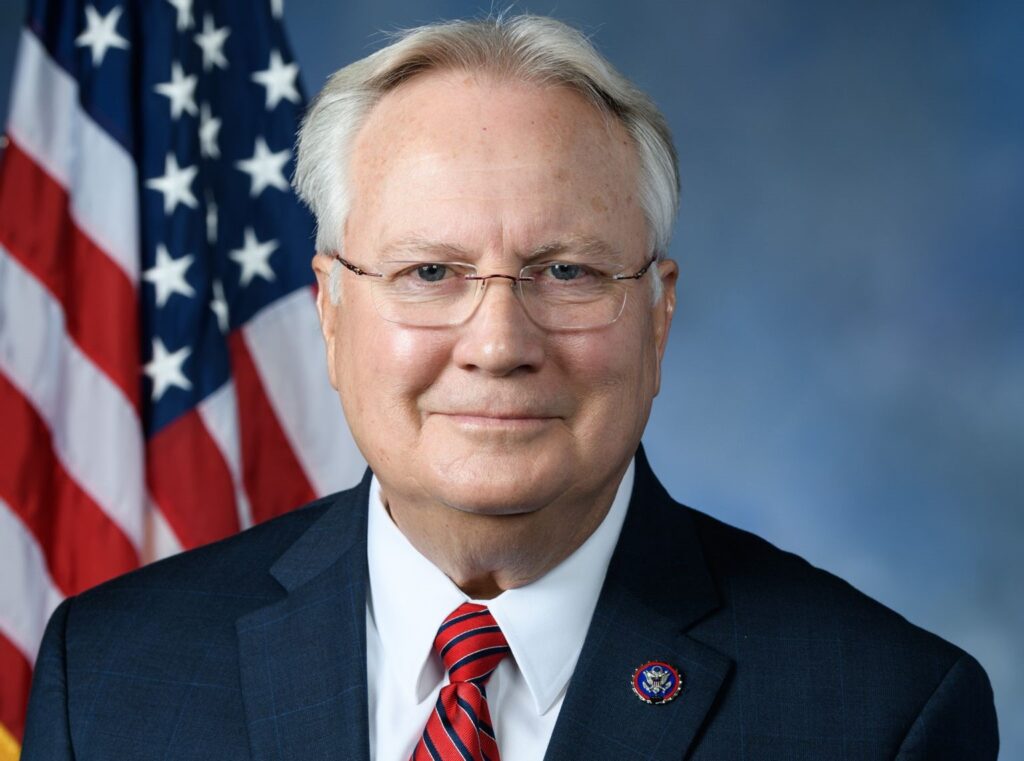
On Wednesday, a group of Congressional Republicans came to the aid of embattled Congresswoman Rashida Tlaib (D-Michigan) to block an effort to censure her over alleged antisemitic comments. Congressman Jerry Carl (R-AL01) had supported the effort to censure Tlaib. “Congress must condemn antisemitism and stand with Israel,” Rep. Carl said on Twitter. “Rep. Rashida Tlaib proudly stands with Hamas terrorists over Israel. She uses her platform to spread antisemitism and pro-Hamas propaganda, which is absolutely disgraceful.” The War between Israel and Hamas has led to tension between Jewish Americans and Palestinian Americans. Tlaib has been sharply critical of Israel and has defended the Palestinian position. Her parents immigrated from Palestine. Some Republicans went so far as to suggest that she condoned the Hamas attacks on Israelis that left 1,300 dead – many of them women and children. The censure resolution was brought by Georgia Congresswoman Marjorie Taylor Greene. 23 Republicans joined the Democrats to vote in favor of a procedural motion that blocked the disciplinary resolution from even reaching the floor. The final tally was 222 to 186. 13 Democrats abstained. Greene’s censure resolution accused Tlaib of “leading an insurrection” for her participation in an anti-war protest last month at the Capitol. Rep. Chip Roy (R-Texas) voted to table the legislation. “Rep. Rashida Tlaib has repeatedly made outrageous remarks toward Israel and the Jewish people. Her conduct is unbecoming of a member of Congress and certainly worthy of condemnation – if not censure. However, tonight’s feckless resolution to censure Tlaib was deeply flawed and made legally and factually unverified claims, including the claim of leading an ‘insurrection,’” Roy wrote on X. “I voted to table the resolution. In January 2021, the legal term insurrection was stretched and abused by many following the events at the Capitol. We should not continue to perpetuate claims of ‘insurrection’ at the Capitol and we should not abuse the term now.” Tlaib has accused Israel of war crimes in its response to the Hamas attacks. Palestinian authorities claim that Israeli airstrikes on Gaza have killed thousands of civilians. Tlaib has condemned the violence but has accused Israel of creating “apartheid” conditions in Gaza and committing genocide against Palestinians. Tlaib denounced Greene’s resolution. “Marjorie Taylor Greene’s unhinged resolution is deeply Islamophobic and attacks peaceful Jewish anti-war advocates,” Tlaib said. “I am proud to stand in solidarity with Jewish peace advocates calling for a ceasefire and an end to the violence. I will not be bullied, I will not be dehumanized, and I will not be silenced. I will continue to call for ceasefire, for the immediate delivery of humanitarian aid, for the release of hostages and those arbitrarily detained, and for every American to be brought home. I will continue to work for a just and lasting peace that upholds the human rights and dignity of all people, and ensures that no person, no child has to suffer or live in fear of violence.” That such a large number of the GOP caucus failed to support such a public measure is an indicator that much of the division and petty rivalries within the GOP Caucus that dominated the month of October are still not over. Speaker of the House Mike Johnson’s (R-Louisiana) lack of leadership experience in the body may have also played a factor in Wednesday’s events. Carl is serving in his second term in Congress. To connect with the author of this story or to comment, email brandonmreporter@gmail.com
New speaker lays out legislative agenda, receives broad support from party
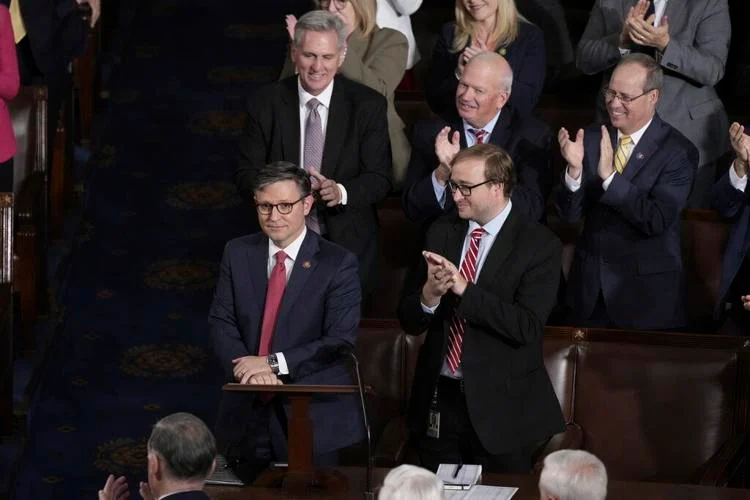
By Casey Harper | The Center Square U.S. House Speaker Mike Johnson, R-La., has laid out his vision for the House and legislative goals, but he faces the daunting task of reuniting a divided party in a slim majority and funding the government before the partial shutdown deadline in the middle of November. Before the vote to elect Johnson as speaker on Wednesday, Johnson sent a memo to his fellow Republicans asking for their support and promising an “ambitious” legislative agenda. “In the interest of time, I would propose that we seek consensus to discharge the last two appropriations bills-Labor, HHS, and Education and Commerce, Justice, and Science-from the Appropriations Committee,” Johnson said. “We should also create a new working group to address Member concerns with the Agriculture, Rural Development, and Food and Drug Administration appropriations bill. As all of this is being completed, if another stopgap measure is needed to extend government funding beyond the November 17 deadline, I would propose a measure that expires on January 15 or April 15 (based on what can obtain Conference consensus), to ensure the Senate cannot jam the House with a Christmas omnibus.” Johnson went on to suggest an immediate schedule for the House floor: Week of October 23: Energy and Water Week of October 30: Legislative Branch, Interior and Environment, THUD Week of November 6: FSGG, CIS Week of November 13: Labor/HHS, Ag In his acceptance speech, Johnson said support for Israel would be a top priority. Johnson, though, has been skeptical of more funding for Ukraine, which could complicate President Joe Biden’s latest request for about $60 billion for the embattled nation. “Our nation’s greatest ally in the Middle East is under attack,” Johnson said in his acceptance speech. “The first bill that I’ll bring to this floor in just a little while will be in support of our dear friend, Israel. And we’re overdue in getting that done.” At the same time, Johnson must deal with a controversial item almost immediately: a motion filed by Rep. Marjorie Taylor Greene, R-Ga., to censure Rep. Rashida Tlaib, D-Minn., for Tlaib’s “antisemitic activity, sympathizing with terrorist organizations” like Hamas and leading an insurrection at the U.S. Capitol, an apparent reference to an Oct. 18 protest where anti-Israel protestors took over a House office building. Because of House rules, Johnson must take the motion up for a vote, which is politically charged because of its direct comparison to the Jan. 6 storming of the Capitol and the attacks Democrats have levied against Republicans to this day over the incident. Notably, former President Donald Trump faces an indictment and criminal charges for his role in protesting the results of the 2020 election, which critics say led to the Jan. 6 protests. A vote on that censure resolution is expected next week. “Tlaib led a pro-Hamas insurrection into the Capitol complex, has repeatedly displayed her anti-Semitic beliefs, and shown her hatred for Israel,” Green wrote on X. “She must be held accountable and censured.” After his election as speaker, Republicans were quick to praise Johnson, who received unanimous Republican support, after he received the speakership. “House Speaker Mike Johnson is a proven conservative who is honorable, smart, and will do a great job leading the House Republican Conference,” Ways and Means Committee Chairman Jason Smith, R-Mo., said in a statement. “I’m excited to work hand-in-hand with Speaker Johnson to advance the policies we need to secure our southern border, increase support for Israel, and bring relief to working-class Americans who are struggling to get by in President Joe Biden’s economy.” Rep. Nancy Mace, R-S.C., was one of the handful of Republicans who voted to oust former House Speaker Kevin McCarthy, R-Calif., which kicked off more than three weeks of scrambling to find a new speaker. She released a statement after Johnson’s vote saying that while the process was difficult, it was “well worth it.” “Eight of us had the audacity to listen to the American people and vote to vacate the former Speaker,” she said.“We told the American people they deserved someone who would be honest and represent their interests, not Washington’s. “While we fully understand we don’t always see eye-to-eye with Mike Johnson, today the American people can finally be proud of their speaker,” she added. Johnson thanked his supporters this week and called for leadership with “bold, decisive action.” “It has been an arduous few weeks and a reminder that the House is as complicated and diverse as the people we represent,” Johnson wrote on X. “The urgency of this moment demands bold, decisive action to restore trust, advance our legislative priorities, and demonstrate good governance. Our House Republican Conference is united, and eager to work. As Speaker, I will ensure the House delivers results and inspires change for the American people. We will restore trust in this body.” Trump, who was actively campaigning for and against different speaker nominees, congratulated Johnson when talking to reporters, saying, “he will be a great speaker of the House.” Johnson promised an array of accomplishments upon taking the speakership, but whether he can succeed in the divided House remains to be seen. “We will advance a comprehensive conservative policy agenda, combat the harmful policies of the Biden Administration, and support our allies abroad,” Johnson said in a statement after winning the speakership. “And we will restore sanity to a government desperately in need of it. Let’s get back to work.” Republished with the permission of The Center Square.
House GOP votes to oust Democrat Ilhan Omar from major committee

The Republican-led House voted after raucous debate Thursday to oust Democratic Rep. Ilhan Omar from the chamber’s Foreign Affairs Committee, citing her anti-Israel comments, in a dramatic response to Democrats last session booting far-right GOP lawmakers over incendiary remarks. House Speaker Kevin McCarthy was able to solidify Republicans to take action against the Somali-born Muslim in the new Congress, although some GOP lawmakers had expressed reservations. Removal of lawmakers from House committees was essentially unprecedented until the Democratic ousters two years ago of hard-right Republican Reps. Marjorie Taylor Greene of Georgia and Paul Gosar of Arizona. The 218-211 vote, along party lines, came after a heated, voices-raised debate in which Democrats accused the GOP of going after Omar based on her race. Omar, who has apologized for 2019 remarks widely seen as antisemitic, defended herself on the House floor, asking if anyone was surprised she was being targeted. Democratic colleagues hugged her during the vote. “My voice will get louder and stronger, and my leadership will be celebrated around the world, as it has been,” Omar said in a closing speech. House Republicans focused on six statements she has made that “under the totality of the circumstances, disqualify her from serving on the Committee of Foreign Affairs,” said Rep. Michael Guest of Mississippi, the incoming chairman of the House Ethics Committee. “All members, both Republicans and Democrats alike who seek to serve on Foreign Affairs, should be held to the highest standard of conduct due to the international sensitivity and national security concerns under the jurisdiction of this committee,” Guest said. Republicans have clashed with Omar since she arrived in Congress, and former President Donald Trump frequently taunted her at his rallies in ways that appealed to his supporters. The resolution proposed by Rep. Max Miller, R-Ohio, a former official in the Trump administration, declared, “Omar’s comments have brought dishonor to the House of Representatives.” Democratic leader Hakeem Jeffries of New York said Omar has at times “made mistakes” and used antisemitic tropes that were condemned by House Democrats four years ago. But that’s not what Thursday’s vote was about, he said. “It’s about political revenge,” Jeffries said. Rep. Alexandria Ocasio-Cortez, D-N.Y., went further, referring to the Sept. 11, 2001, attack as she called the GOP’s action part of one of the “disgusting legacies after 9/11, the targeting and racism against Muslim-Americans throughout the United States of America. And this is an extension of that legacy.” She added, “This is about targeting women of color.” McCarthy denied the Republican decision to oust Omar was a tit-for-tat after the Greene and Gosar removals under Democrats, though he had warned in late 2021 that such a response might be expected if Republicans won back the House majority. “This is nothing like the last Congress,” he said Thursday. He noted that Omar can remain on other panels, just not Foreign Affairs, after her anti-Israel comments. Omar is one of the first two Muslim women elected to Congress. She is also the first to wear a hijab in the House chamber after floor rules were changed to allow members to wear head coverings for religious reasons. She quickly generated controversy after joining Congress in 2019 with a pair of tweets that suggested lawmakers who supported Israel were motivated by money. In the first, she criticized the American Israel Public Affairs Committee or AIPAC. “It’s all about the Benjamins, baby,” she wrote, invoking slang about $100 bills. Asked on Twitter who she thought was paying members of Congress to support Israel, Omar responded, “AIPAC!” Omar’s remarks sparked a public rebuke from then-House Speaker Nancy Pelosi and other Democrats who made clear that she had overstepped. She soon apologized. “We have to always be willing to step back and think through criticism, just as I expect people to hear me when others attack me about my identity,” Omar tweeted. “This is why I unequivocally apologize.” Also, in a May 2021 tweet, she made reference to Israel as “an apartheid state” over its treatment of Palestinians. Democrats rallied Thursday in a fiery defense of Omar and the experiences she brings to Congress. “This clearly isn’t about what Ilhan Omar said as much as who she is — being a smart, outspoken Black woman of the Muslim faith is apparently the issue,” said Rep. Mark Pocan, D-Wis. Black, Latino, and progressive lawmakers, in particular, spoke of her unique voice in the House and criticized Republicans for what they called a racist attack. “Racist gaslighting,” said Rep. Cori Bush, D-Mo. A “revenge resolution,” said Rep. Pramila Jayapal of Washington, the chair of the progressive caucus. “It’s so painful to watch,” said Rep. Rashida Tlaib, D-Mich., who joined Congress with Omar as the first two female Muslims elected to the House. “To Congresswoman Omar, I am so sorry that our country is failing you today through this chamber,” Tlaib said through tears. “You belong on that committee.” In the weeks leading up to the vote, the chairman of the committee, Rep. Michael McCaul of Texas, argued for excluding Omar from the panel during a recent closed-door meeting with fellow Republicans. “It’s just that her worldview of Israel is so diametrically opposed to the committee’s,” McCaul told reporters in describing his stance. “I don’t mind having differences of opinion, but this goes beyond that.” At the White House, press secretary Karine Jean-Pierre said of the ouster, “It’s a political stunt.” McCarthy has already blocked Reps. Adam Schiff and Eric Swalwell, both California Democrats, from rejoining the House Intelligence Committee once the GOP took control of the chamber in January. While appointments to the intelligence panel are the prerogative of the speaker, the action on Omar required a House vote. Several Republicans skeptical of removing Omar wanted “due process” for lawmakers who face removal. McCarthy said he told them he would work with Democrats on creating a due process system, but acknowledged it’s still a work in progress. One Republican, Rep. David Joyce of Ohio, voted present. In the last Congress, several Republicans had joined Democrats in removing Greene and Gosar from
Bernie Sanders struggles to expand supporter base after Elizabeth Warren exit
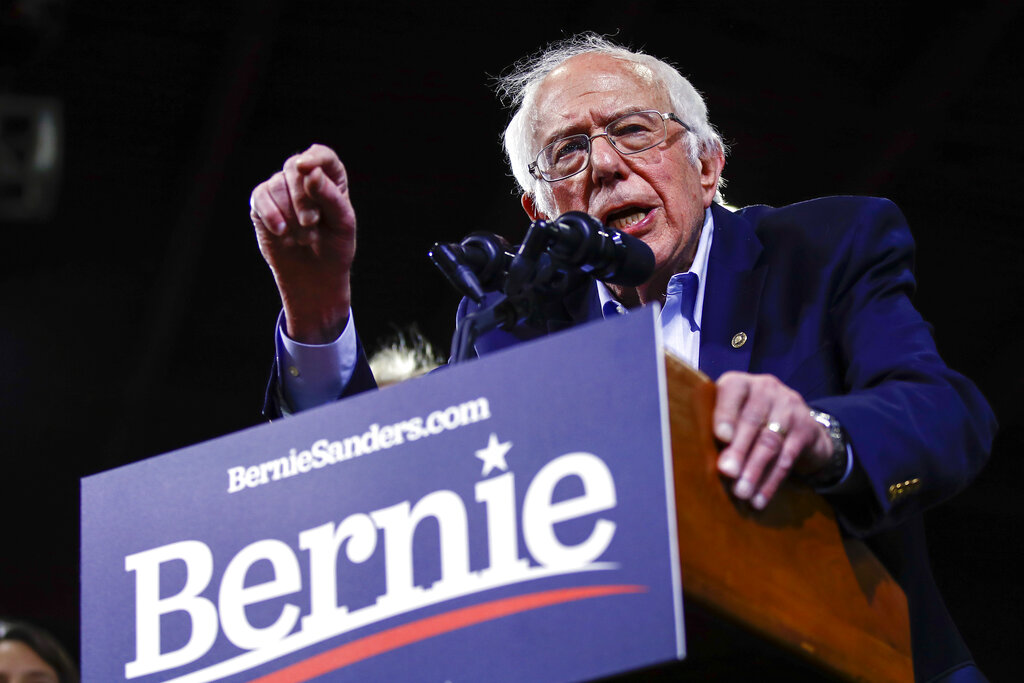
Elizabeth Warren declined to endorse anyone when she suspended her campaign for President.
Some Democrats fear fallout from Bernie Sanders atop the ticket
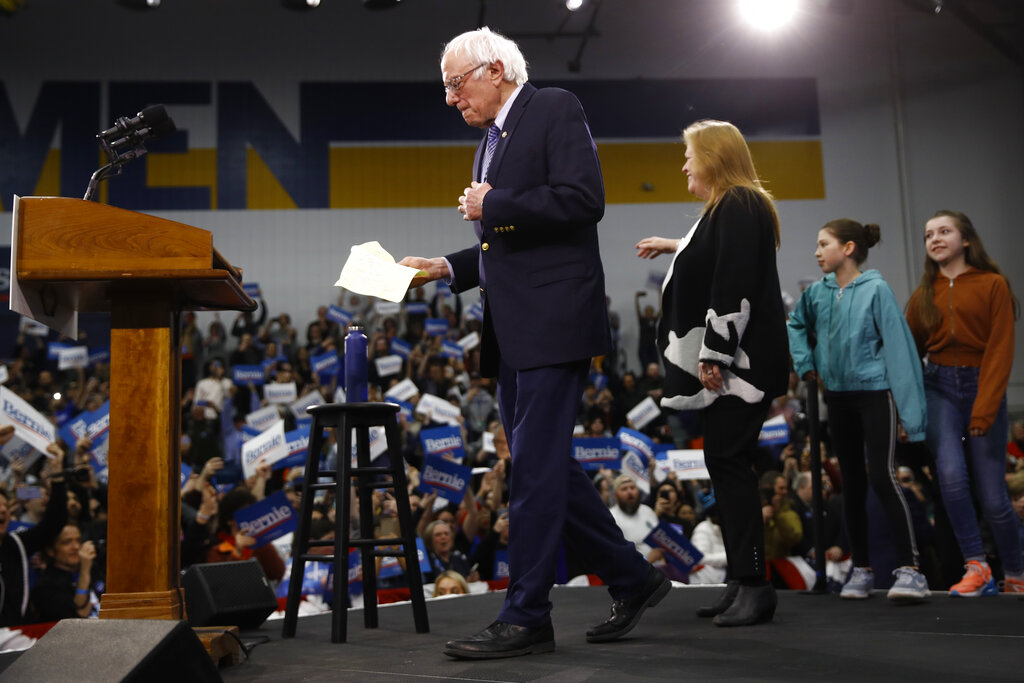
Democrats are worried that Sanders’ socialist label and unyielding embrace of controversial proposals such as medicare for all will repel voters.
Democrats focus on unity as tensions from 2016 linger

Democrats are trying to avoid the divides that some say helped Donald Trump win the presidency in 2016.
Donald Trump’s tweets against 4 liberal congresswomen called racist
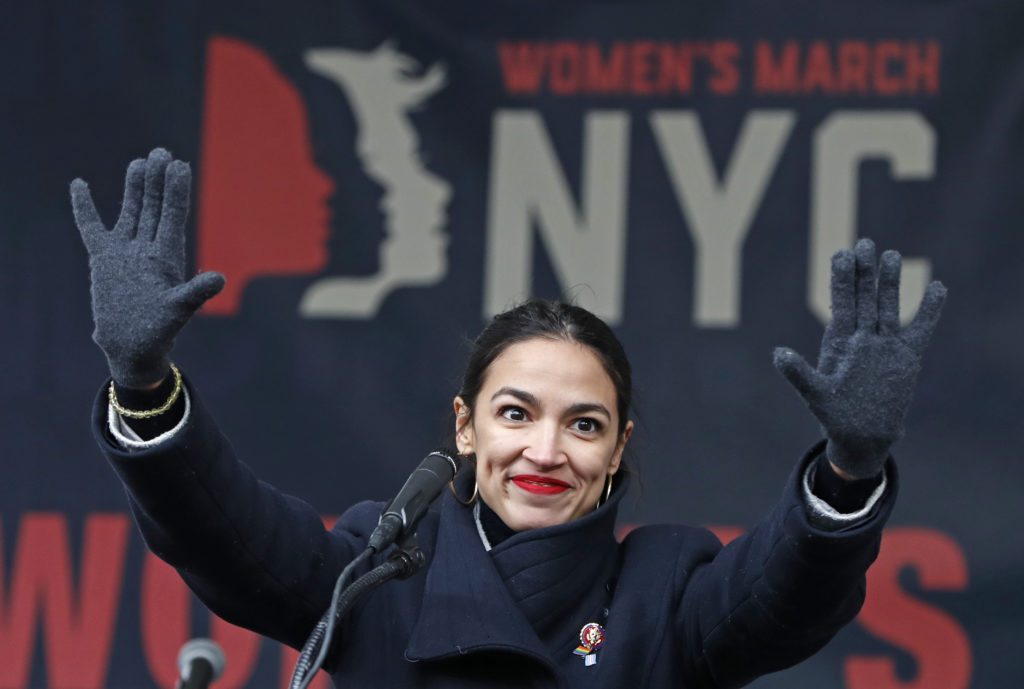
Starkly injecting race into his criticism of liberal Democrats, President Donald Trump said four congresswomen of color should go back to the “broken and crime infested” countries they came from, ignoring the fact that all of the women are American citizens and three were born in the U.S. His attack drew a searing condemnation from Democrats who labeled the remarks racist and breathtakingly divisive. Following a familiar script, Republicans remained largely silent after Trump’s Sunday morning broadsides against the four women. But the president’s nativist tweets caused Democrats to set aside their internal rifts to rise up in a united chorus against the president. House Speaker Nancy Pelosi said Trump wants to “make America white again.” Rep. Alexandria Ocasio-Cortez of New York, after jousting for days with Pelosi, said Trump “can’t conceive of an America that includes us.” Trump, who has a long history of making racist remarks, was almost certainly referring to Ocasio-Cortez and her House allies in what’s become known as “the squad.” The others are Reps. Ilhan Omar of Minnesota, Ayanna Pressley of Massachusetts and Rashida Tlaib of Michigan. Only Omar, from Somalia, is foreign-born. Ocasio-Cortez swiftly denounced his remarks . “Mr. President, the country I ‘come from,’ & the country we all swear to, is the United States,” she tweeted, adding that “You rely on a frightened America for your plunder.” Omar also addressed herself directly to Trump in a tweet, writing: “You are stoking white nationalism (because) you are angry that people like us are serving in Congress and fighting against your hate-filled agenda.” Rep. Hakeem Jeffries of New York, chairman of the House Democratic Caucus, summed up the Democratic response: “Racial arsonist strikes again. Shut. Your. Reckless. Mouth.”With his tweet, Trump inserted himself further into a rift between Pelosi and Ocasio-Cortez, just two days after he offered an unsolicited defense of the Democratic speaker. Pelosi has been seeking to minimize Ocasio-Cortez’s influence in the House Democratic caucus in recent days, prompting Ocasio-Cortez to accuse Pelosi of trying to marginalize women of color. “She is not a racist,” Trump said of Pelosi on Friday. On Sunday, Trump’s tone took a turn. “So interesting to see ‘Progressive’ Democrat Congresswomen, who originally came from countries whose governments are a complete and total catastrophe, the worst, most corrupt and inept anywhere in the world (if they even have a functioning government at all), now loudly and viciously telling the people of the United States, the greatest and most powerful Nation on earth, how our government is to be run,” he tweeted. “Why don’t they go back and help fix the totally broken and crime infested places from which they came. Then come back and show us how it is done.” He added: “These places need your help badly, you can’t leave fast enough. I’m sure that Nancy Pelosi would be very happy to quickly work out free travel arrangements!” The attacks may have been meant to widen the divides within the Democrat caucus, which has been riven by internal debate over how far left to go in countering Trump and over whether to proceed with impeachment proceedings against the president. Instead, the president’s tweets, which evoked the trope of telling black people to go back to Africa, brought Democrats together. Former Vice President Joe Biden, the Democratic presidential front-runner, tweeted Sunday that Trump “continues to spew hateful rhetoric, sow division, and stoke racial tensions for his own political gain.” “Let’s be clear about what this vile comment is: A racist and xenophobic attack on Democratic congresswomen,” tweeted Sen. Elizabeth Warren, a Democratic presidential candidate. Another 2020 contender, former Texas Rep. Beto O’Rourke, tweeted at the president: “This is racist. These congresswomen are every bit as American as you — and represent our values better than you ever will.” Few Republicans weighed in on the president’s comments. Congressional leaders, including Senate Majority Leader Mitch McConnell, did not respond to requests for comment, nor did Sen. Tim. Scott of South Carolina, the only Republican black senator. Mark Morgan, the acting commissioner of U.S. Customs and Border Protection, in a previously scheduled appearance on “Face the Nation” on CBS, said only: “You’re going to have to ask the president what he means by those specific tweets.” Shortly after the tweets, and a later presidential post defending the harsh scenes at a border detention facility where hundreds of migrant men are being held in sweltering, foul-smelling conditions, Trump left the White House to go golfing at his Virginia club. Trump appeared unbowed Sunday night when he returned to Twitter to say it was “so sad” to see Democrats sticking up for the women. “If the Democrat Party wants to continue to condone such disgraceful behavior,” he tweeted, “then we look even more forward to seeing you at the ballot box in 2020!” It was far from the first time that Trump has been accused of holding racist views.In his campaign kickoff in June 2015, Trump deemed many Mexican immigrants “rapists.” In 2017, he said there good people on “both sides” of the clash in Charlottesville, Virginia, between white supremacists and anti-racist demonstrators that left one counter-protester dead. Last year, during a private White House meeting on immigration, Trump wondered why the United States was admitting so many immigrants from “shithole countries” like African nations. Repeatedly, Trump has painted arriving immigrants as an “infestation” and he has been slow in condemning acts of violence committed by white supremacists. And he launched his political career with false claims that President Barack Obama was not born in the United States. Despite his history of racist remarks, Trump has paid little penalty in his own party.Though a broad array of Republicans did speak out against his reaction to Charlottesville, they have largely held their tongues otherwise, whether it be on matter of race or any other Trump provocation. Fearful of his Twitter account and sweeping popularity among Republican voters, GOP lawmakers have largely tried to ignore the provocative statements.Sen. Kamala Harris, a Democratic presidential hopeful
