
House GOP pushes sprawling bill to ‘unleash’ American energy
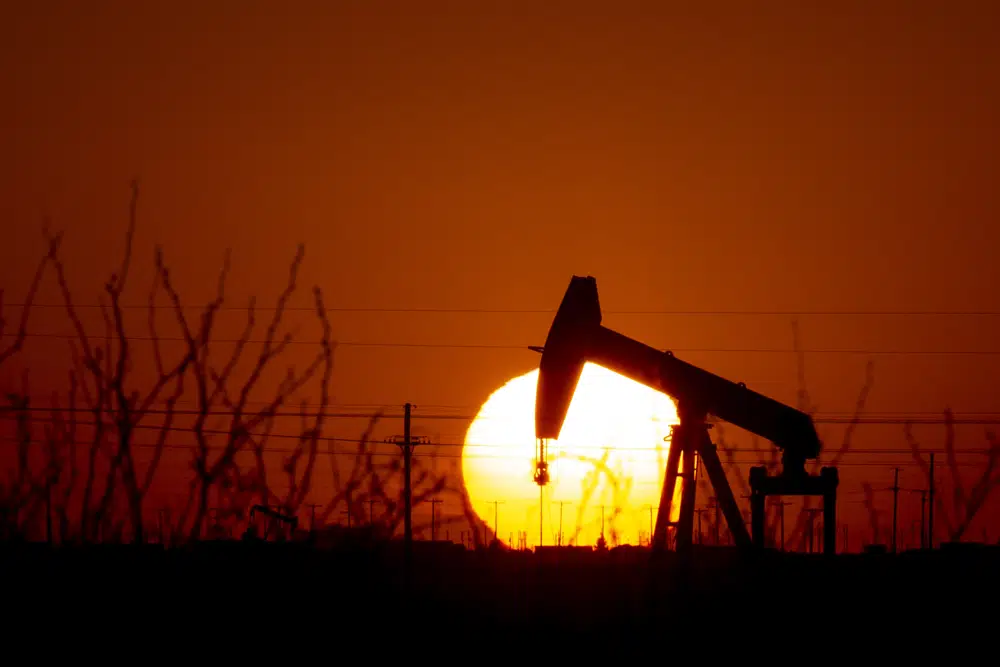
House Republicans are set to approve a sprawling energy package that seeks to undo virtually all of President Joe Biden’s agenda to address climate change. The massive GOP bill up for a vote Thursday would sharply increase domestic production of oil, natural gas and coal, and ease permitting restrictions that delay pipelines, refineries, and other projects. It also would boost production of critical minerals such as lithium, nickel, and cobalt that are used in products such as electric vehicles, computers, and cellphones. Republicans call the bill the “Lower Energy Costs Act” and have given it the symbolic label H.R. 1 — the top legislative priority of the new GOP majority, which took control of the House in January. The measure, which combines dozens of separate proposals, represents more than two years of work by Republicans who have chafed at Biden’s environmental agenda. They say Biden’s efforts have thwarted U.S. energy production and increased costs at the gas pump and grocery store. “Families are struggling because of President Biden’s war on American energy,″ said House Majority Leader Steve Scalise, R-La., one of the bill’s main authors. “We have way too many energy resources here in America to be relying on hostile nations and paying (high prices) at the pump.″ The GOP bill will “unleash those resources so we can produce energy in America,″ Scalise said. “We don’t have to be addicted to foreign countries that don’t like us.″ Democrats called the bill a giveaway to big oil companies. “Republicans refuse to hold polluters accountable for the damage they cause to our air, our water, our communities, and our climate,″ said New Jersey Rep. Frank Pallone, the top Democrat on the House Energy and Commerce Committee. “While Democrats delivered historic wins for the American people by passing historic climate legislation, Republicans are actively working to undermine that progress and do the bidding of their polluter friends,″ Pallone said. Biden has threatened to veto the energy bill if it reaches his desk, and Senate Majority Leader Chuck Schumer, D-N.Y., called it “dead on arrival” in the Democratic-controlled Senate. House Speaker Kevin McCarthy, R-Calif., said the GOP bill “restores American energy leadership by repealing unnecessary taxes and overregulation on American energy producers,″ and “makes it easier to build things in America″ by placing a two-year time limit on environmental reviews that now take an average of seven years. “Every time we need a pipeline, a road or a dam, it gets held up five to seven years and adds millions of dollars in costs for the project to comply with Washington’s permitting process,″ McCarthy said in a speech on the House floor. “It’s too long, it’s unaffordable, it’s not based on science, and it’s holding us back.″ He pointed to a project to modify and improve Lake Isabella Dam in his central California district that has lasted 18 years and still is not completed. “Permitting reform isn’t for everyone,″ McCarthy added. “If you like paying more at the pump, you don’t want to make it faster for American workers to build more pipelines. If you’re China, you’d rather America sit back and let others lead. And if you’re a bureaucrat, maybe you really do enjoy reading the 600-page environmental impact studies.″ Most Americans want lower prices and more U.S. energy production, McCarthy said — results he said the bill will deliver. Democrats called that misleading and said the GOP plan was a thinly disguised effort to reward oil companies and other energy producers that have contributed millions of dollars to GOP campaigns. Arizona Rep. Raul Grijalva, the top Democrat on the House Natural Resources Committee, derided the bill as the “Polluters Over People Act″ and “a nearly 200-page love letter to polluting industries.″ Instead of reining in “Big Oil” companies that have reported record profits while “hoarding thousands of unused leases″ on public lands and waters, the GOP bill lowers royalty rates paid by energy producers and reinstates noncompetitive leasing of public lands, Grijalva said. The bill also gives mining companies “a veritable free-for-all on our public lands” and “makes a mockery of tribal consultation″ required under federal law, he said. Under the GOP plan, mining companies will “destroy sacred and special places” throughout the West, “ruin the landscape and leave behind a toxic mess that pollutes our water and hurts our health — all without paying a cent to the American people,″ Grijalva said. Schumer called the measure “a giveaway to Big Oil pretending to be an energy package.” The House energy package “would gut important environmental safeguards on fossil fuel projects,″ locking America “into expensive, erratic and dirty energy sources while setting us back more than a decade on our transition to clean energy,″ Schumer said. Schumer said he supports streamlining the nation’s cumbersome permitting process for energy projects, especially those that will deliver “clean energy” such as wind, solar and geothermal power. “But the Republican plan falls woefully short on this front as well,″ he said, calling on Republicans to back reforms that would help ease the transition to renewable energy and accelerate construction of transmission lines to bolster the nation’s aging power grid. Schumer and other Democrats said the Republican bill would repeal a new $27 billion Greenhouse Gas Reduction Fund and other parts of the climate and health care law passed by Democrats last year. The bill also would eliminate a new tax on methane pollution. Republished with the permission of The Associated Press.
In historic pick, Joe Biden taps Deb Haaland as interior secretary
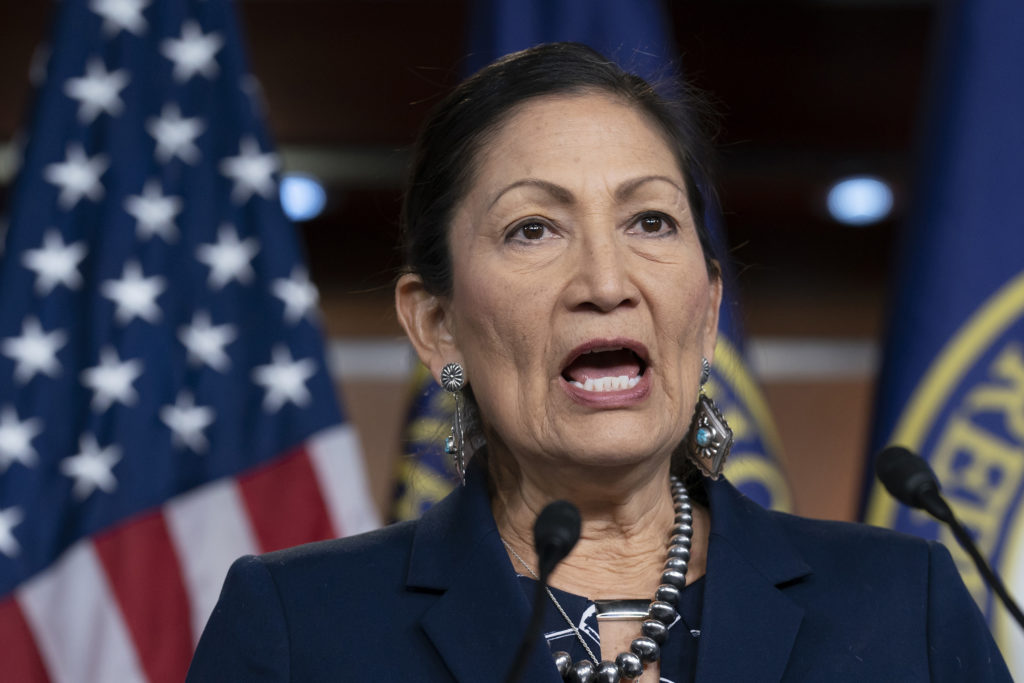
President-elect Joe Biden selected New Mexico Rep. Deb Haaland as his nominee for interior secretary on Thursday, a historic pick that would make her the first Native American to lead the powerful federal agency that has wielded influence over the nation’s tribes for generations. Tribal leaders and activists around the country, along with many Democratic figures, cheered Haaland’s selection after urging Biden for weeks to choose her to lead the Department of Interior. They stood behind her candidacy even when concerns that Democrats might risk their majority in the House if Haaland yielded her seat in Congress appeared to threaten her nomination. With Haaland’s nomination, Indigenous people will for the first time in their lifetimes see a Native American at the table where the highest decisions are made — and so will everyone else, said OJ Semans, a Rosebud Sioux vote activist who was in Georgia on Thursday helping get out the Native vote for two Senate runoffs. “It’s made people aware that Indians still exist,” he said. Haaland, 60, is a member of the Pueblo of Laguna and, as she likes to say, a 35th-generation resident of New Mexico. The role of interior secretary would put her in charge of an agency that has tremendous sway not only over the nearly 600 federally recognized tribes, but also over much of the nation’s vast public lands, waterways, wildlife, national parks, and mineral wealth. Haaland tweeted after the news was made public that “growing up in my mother’s Pueblo household made me fierce. “I’ll be fierce for all of us, our planet, and all of our protected land,” she pledged. Biden plans to introduce Haaland — and other picks for his Cabinet — at an event Saturday in Wilmington, Delaware. Her selection breaks a 245-year record of non-Native officials, mostly male, serving as the top federal official over American Indian affairs. The federal government often worked to dispossess Native Americans of their land and, until recently, to assimilate them into white culture. “You’ve got to understand — you’re taking Interior full circle,” said Arizona Rep. Raul Grijalva, chair of the House Natural Resources Committee and a champion of Haaland for the job. “For years, its legacy was the disenfranchisement of the Native people of this country, of displacement, of cultural genocide.” With Haaland’s nomination, “that in itself is a huge message,” Grijalva said. Navajo Nation President Jonathan Nez called it “truly a historic and unprecedented day for all Indigenous people.” “I am SO ELATED,” the head of progressive Democrats’ Sunrise Movement, Varshini Prakash, tweeted. “This will be the first time an Indigenous person – and a badass climate champion woman at that – will hold any presidential cabinet position. Congratulations to @JoeBiden for making history.″ Get-out-the-vote activists believe their efforts, and the Native vote, helped flip Arizona in particular for Biden and secure the presidency. “There’s a feeling something is changing,” said Ashley Nicole McCray, a member of the Absentee Kiowa tribe of Oklahoma and of an indigenous environmental coalition. “Finally, we’ve come to this point where Indigenous sentiment is no longer being silenced.” But Biden’s pick could further deplete, at least temporarily, the narrow majority Democrats maintain in the House. Biden has already selected several lawmakers from the chamber, including Louisiana Rep. Cedric Richmond and Ohio Rep. Marcia Fudge, to serve in his administration. Some on Biden’s transition team had expressed concerns about dipping further into the already thinned Democratic House majority for another senior administration posting. But Biden decided that the barrier-breaking aspect of her nomination and her experience as vice chair of the House Committee on Natural Resources made her the right pick for the moment. The president-elect has been methodically filling the posts in his Cabinet, adding North Carolina environmental official Michael Regan as his nominee to lead the Environmental Protection Agency. Biden introduced former South Bend, Indiana, mayor Pete Buttigieg earlier this week as his transportation secretary and announced Thursday that former Michigan Gov. Jennifer Granholm was his nominee for energy secretary. In a statement Thursday night, Biden said he had assembled a “brilliant, tested, trailblazing team” that “will be ready on day one to confront the existential threat of climate change.” “They share my belief that we have no time to waste to confront the climate crisis, protect our air and drinking water, and deliver justice to communities that have long shouldered the burdens of environmental harms,” the president-elect said. House Speaker Nancy Pelosi made it clear Wednesday that Biden had her blessing to choose Haaland, saying she would make an “excellent choice” as interior secretary. South Carolina Rep. James Clyburn, the No. 3 Democrat in the House and a close Biden ally, also supported Haaland for the job. Haaland is one of the first two Native American women in the House. She told The Associated Press before her nomination that see the difference her position in Congress made for ordinary Native Americans who came to her with business before the federal government. “They felt comfortable just launching into the issues they wanted,” Haaland told the AP in an interview before her appointment. They would say, for example, “Oh, we don’t have to explain tribal sovereignty to you,” meaning tribes’ constitutionally guaranteed status as independent nations. Haaland previously worked as head of New Mexico’s Democratic Party, as tribal administrator, and as an administrator for an organization providing services for adults with developmental disabilities. Born to a Marine veteran father and a Navy veteran mother, Haaland describes herself as a single mother who sometimes had to rely on food stamps. She says she is still paying off student loans after college and law school for herself and college for her daughter. New Mexico Sen. Tom Udall, who is retiring after 22 years in Congress and was initially considered the front-runner for interior secretary, congratulated Haaland on her selection, calling it “momentous and well-earned.’’ Previously, the highest-ranking administration official known to have Native American heritage was Charles Curtis, who served as Herbert Hoover’s vice president and whose mother was one-quarter Kaw tribe.
