
Former border chief: Alejandro Mayorkas underreported gotaway data in Senate hearing
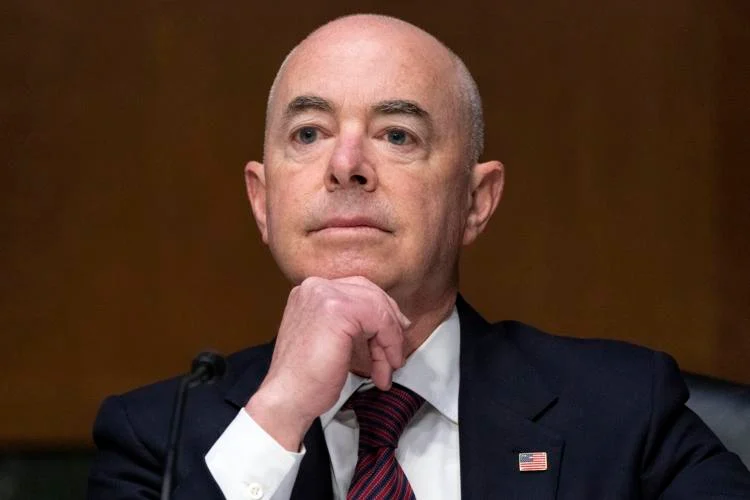
By Bethany Blankley | The Center Square contributor Former U.S. Customs and Border Protection Chief Mark Morgan estimates the number of people who entered the U.S. illegally and evaded capture in fiscal 2023 is closer to one million, much higher than the “over 600,000” that Department of Homeland Security Secretary Alejandro Mayorkas told U.S. senators at a Tuesday hearing. Morgan told The Center Square Wednesday in response to questions about Mayorkas’ testimony that official known gotaway data could hit one million in fiscal 2023, and the nearly 1.7 million gotaways since January 2021 is underreported by at least 20%. It’s “closer to over 2 million,” he said of the gotaway numbers since President Joe Biden first took office. Gotaways is the official term used by Customs and Border Protection to describe foreign nationals who illegally enter the U.S. primarily between ports of entry and don’t return to Mexico or Canada. They generally don’t file asylum or other immigration-related claims and intentionally illegally enter to avoid being caught. Many have criminal records, and run when pursued by Border Patrol agents or others in law enforcement, officials have told The Center Square. “The question Secretary Mayorkas should be providing the American people an answer to is how many aliens on the Terror Watchlist or Special Interest Aliens, who come from countries we know sponsor or harbor terrorist organizations, are among the [close to 1.7 million] known gotaways who have entered our country under his watch,” he told The Center Square. “The answer is – he has no idea. It’s not if, and when, the threat arrives in our homeland. It’s already here.” Mayorkas testified Tuesday before the Senate Homeland Security Committee, saying there were over 600,000 gotaways reported in fiscal 2023, a low estimate compared to data first reported by The Center Square. U.S. Sen. Roger Marshall, R-Kansas, asked Mayorkas how many gotaways U.S. Customs and Border Protection reported in 2023. Mayorkas replied, “I believe that number is over 600,000. I am sure you are well aware the phenomenon of gotaways is something that has been a challenge for the Department of Homeland Security for decades. In fact, it is a powerful example of a broken immigration system.” According to preliminary data obtained by The Center Square, Border Patrol agents reported at least 769,174 gotaways in nine southwest border sectors in fiscal 2023. This excludes Office of Field Operations data and data from the remaining 11 CBP sectors nationwide (there are 20), including at the northern border. Border Patrol agents in one northern border sector alone reported roughly 4,000 gotaways in fiscal 2023, the highest in northern border history. The nearly 770,000 gotaways are included in the roughly 4 million illegal border crossers reported in fiscal 2023 and more than 10 million since January 2021, when President Joe Biden first took office. These are the highest numbers of illegal border crossers reported in recorded U.S. history. By contrast, there were at least 308,655 known, reported gotaways in fiscal 2021 and 606,150 reported in fiscal 2022, as first reported by The Center Square. In fiscal 2023, 736 known or suspected terrorists (KSTs) were apprehended at the northern and southern borders, according to CBP data. The number of KSTs who were among the gotaway numbers is unknown. The majority of gotaways are single, military-age men. However, they also include women and children, many who are smuggled, law enforcement officers say. Former ICE Chief Tom Homan not only disagrees with Mayorkas’ claim about gotaways representing a “broken immigration system” but says the issue isn’t about immigration but about national security. “If you don’t think a single one of the 1.7 million [gotaways] is coming from a country that sponsors terrorism, then you’re ignoring the data,” he said. “That’s what makes this a huge national security issue.” Homan maintains that Mayorkas destroyed the system he and others put in place during the Trump administration and Biden administration border policies “are the greatest national security threat since 9/11.” As a result, he says, Mayorkas should be impeached. “Based on recently released data on the border numbers,” including “over 900,000 illegal aliens released in the U.S.” and the more than 600,000 gotaways Mayorkas claims were reported in one year, he said, “DHS Secretary Mayorkas needs to be impeached.” Homan also says he’s been calling on Congress to impeach Mayorkas for over two years. Several Congressional Republicans and state attorneys general, led by Florida AG Ashley Moody, have called for him to be impeached. Republicans on the U.S. House Committee on Homeland Security, led by committee chairman Mark Green, R-Tennessee, are continuing to hold hearings and issue reports to support their claim that Mayorkas is derelict in his duty and must be removed from office. Green, a retired U.S. Army Major and West Point graduate, says Mayorkas is derelict not only for helping to create the border crisis but also for DHS not properly vetting Afghan “refugees” brought to the U.S. after Biden’s deadly and chaotic withdrawal of U.S. troops from Afghanistan in August 2021. The Center Square has been reporting preliminary Border Patrol data, excluding OFO data, obtained from a Border Patrol agent on condition of anonymity for fear of reprisal. Official data is still a best guess, officials say, because agents aren’t able to report everyone who gets away for several reasons. Former Border Patrol Chief Raul Ortiz previously testified to Congress that gotaway data is underreported by between 10% and 20%. Ultimately, law enforcement officials say they have no idea how many gotaways are in the U.S., where, or who they are. The Border Report: #Gotaways caught on camera primarily in Terrell County in Big Bend Sector of Texas. Border Patrol agents, law enforcement, Homeland Security—tasked w defending the homeland—have no idea who or where they are. Nearly 1.6 million, => ind populations of 11 states. pic.twitter.com/PHnXFWrOFR— Bethany Blankley (@BethanyBlankley) August 24, 2023 To learn more, follow The Border Report with Bethany Blankley on Facebook and X. Republished with the permission of The Center Square.
Florida AG Ashley Moody defeats Biden administration in court, again
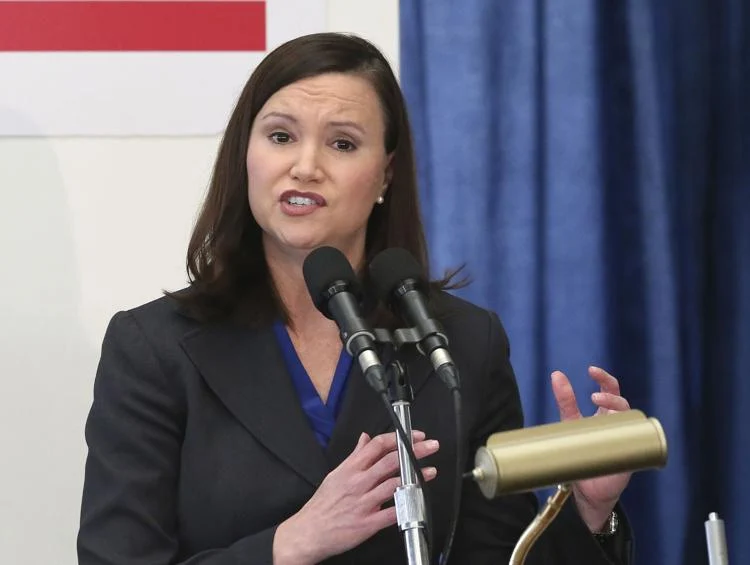
Florida Attorney General Ashley Moody won another round against the Biden administration in federal court, this time in the 11th Circuit Court of Appeals. On Monday, the court ruled to keep in place an injunction against the Department of Homeland Security’s parole program. The injunction was issued by a federal district judge in Florida last month. DHS appealed the judge’s ruling and lost. On May 8, U.S. District Judge T. Kent Wetherell of the Northern District of Florida Pensacola Division vacated DHS’s “Policy on the Use of Parole Plus Alternatives to Detention to Decompress Border Locations.” On May 16, he enjoined DHS’s “Parole with Conditions in Limited Circumstances Prior to the Issuance of a Charging Document” memorandum. The ruling is the latest among several in a lawsuit filed by Moody over DHS’ plans to release foreign nationals who’d illegally entered the U.S. en masse into local communities. DHS is also partnering with other federal agencies and nongovernment organizations to temporarily house and transport millions of people to U.S. cities nationwide. DHS appealed, requesting the 11th circuit issue a stay of the lower court’s ruling. In a 2-1 vote, the judges on the appeals court’s panel denied DHS’s request. At issue is a catch and release and parole program DHS implemented over which Moody sued, arguing it’s illegal. The plan for DHS to release people en masse when the public health authority Title 42 ended May 11 was first made public by Moody’s office as part of her lawsuit through a memo her office obtained written by Border Patrol Chief Raul Ortiz explaining it. Rio Grande Valley Sector Border Patrol Chief Gloria Chavez in Texas also explained her sector’s plan to release people into local communities, according to a recording of a meeting she held with local law enforcement provided to The Center Square. DHS argues blocking its plan undermines “the Executive Branch’s constitutional and statutory authority to implement its immigration priorities and secure the border.” It also maintains “the most immediate consequence” of the judge’s orders “will likely be [the] overcrowding [of] CBP facilities during increases in border encounters,” which would threaten the “health, safety, and security” of USBP officers and illegal foreign nationals. DHS, like Ortiz, argues overcrowded CBP facilities are resulting in agents releasing illegal foreign nationals without adequate monitoring measures. In the “worst-case scenario,” not being able to release millions of people into the U.S., it argues, would prevent it from apprehending illegal foreign nationals who are illegally entering the U.S. Former Border Patrol chiefs argue this is what is already happening because Border Patrol agents have been taken off the line to instead process people. They also argue over 7.5 million people have been apprehended or reported evading capture. No one knows how many have evaded capture, who or where they are. DHS’s arguments fell flat before the district judge and appellate judges hearing its case. The appellate judges ruled DHS couldn’t meet the “irreparable injury” factor to sustain its claim. They denied DHS’s motion “because DHS has not met its burden to show that it will suffer an irreparable injury absent a stay. “Simply showing some ‘possibility of irreparable injury,’ fails to satisfy” their request, the judges wrote in their nine-page ruling. The court “will not find irreparable harm based on mere conjecture,” the judges said. They also said DHS’s “ability to ascertain future harm is uncertain at best. Given this record, we take DHS’s latest claims of impending disaster if it is not allowed to use either of the challenged policies with some skepticism.” On May 11, Wetherell granted Moody’s request for a temporary restraining order enjoining DHS’ “Parole with Conditions” mass-release policy. The next day, he denied the Department of Justice’s “borderline frivolous” motion to stay his order. On May 15, he denied an emergency request for a stay, and on May 16, he enjoined DHS for another two weeks from implementing its plan through a temporary restraining order. DHS appealed, and the case was heard before the 11th Circuit, which denied its request on June 5. Wetherell has maintained DHS’s policy is “the latest in a series of policies adopted by DHS over the past two years to expedite the release of aliens arriving at the Southwest Border into the country instead of detaining them until their immigration proceedings are concluded as required by 8 U.S.C. §1225(b).” He also said, “If the allegations in the complaint and motion” filed by Moody were true after it was reported that DHS planned to follow through with its release plan under a new name, “then it appears that DHS is preparing to flout the Court’s order in Florida v. United States by implementing a new ‘parole’ policy that, based on the DHS spokesperson’s description of the policy, sounds virtually identical to the Parole+ATD policy the Court vacated in Florida.” It remains unclear if DHS will request the full 11th Circuit Court to hear its case or if the full court would consider it. Republished with the permission of The Center Square.
Number of migrants fell 50% at U.S. southern border after immigration changes
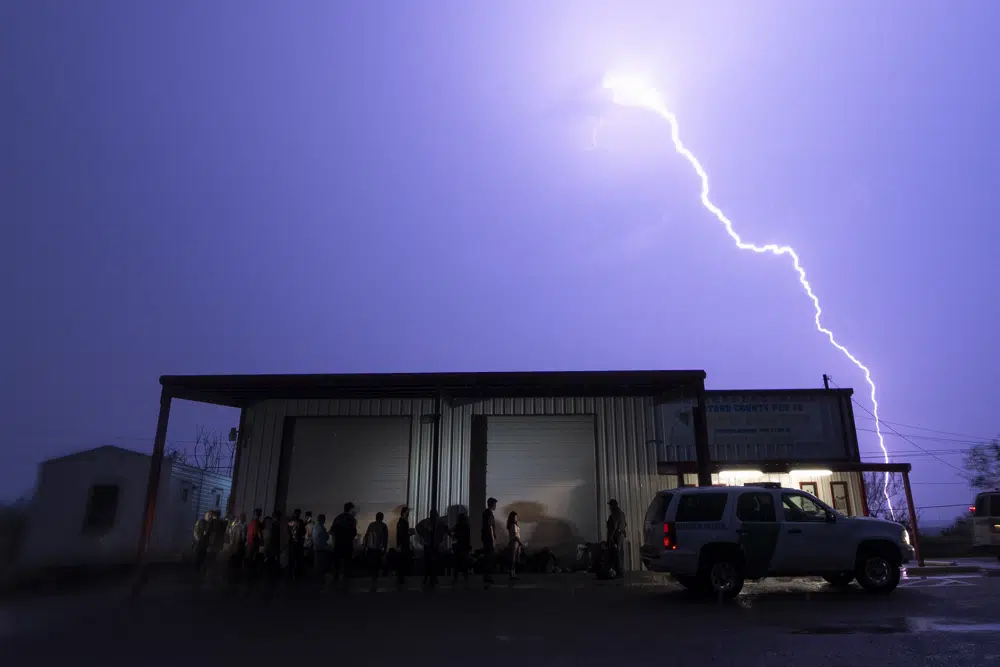
The number of migrants encountered at the southern border fell 50% during the last three days compared with the days leading up to the end of a key pandemic-era regulation, U.S. officials said Monday. But a high number of migrants are still in U.S. custody, although the number has fallen “significantly” since last week, said Blas Nunez-Neto, assistant secretary for border and immigration policy at the Department of Homeland Security. The ability of U.S. Border Patrol to hold migrants has been a key concern as more migrants came to the border in the days leading up to the end of immigration restrictions linked to the pandemic, referred to as Title 42. The administration is facing a lawsuit aimed at curtailing its ability to release migrants from custody even when facilities are over capacity. At one point last week, more than 27,000 migrants were in custody along the border, a number that may top 45,000 by the end of May if the powers to more quickly release migrants from custody when facilities are over capacity are curtailed, said Matthew Hudak, deputy Border Patrol chief, in a court filing last week related to the lawsuit. Nunez-Neto said border officials had been encountering a little less than 5,000 people a day since Title 42 expired at midnight Thursday, and new U.S. enforcement measures went into effect Friday. He did not give exact numbers. “It’s still too early to draw firm conclusions. We are closely watching what’s happening. We are confident that the plan that we have developed across the U.S. government to address these flows will work over time,” said Nunez-Neto. He credited the U.S. planning as well as enforcement measures Mexico and Guatemala have carried out in recent days along their own southern borders. He gave no details about what those two countries were doing. The head of the U.S. Border Patrol, Raul Ortiz, said on Twitter on Monday that his agents had apprehended 14,752 people over the past 72 hours; that averages out to 4,917 per day. The figures given Monday are sharply below the 10,000-plus encountered on three days last week as migrants rushed to get in before new policies to restrict asylum took effect. Title 42 allowed U.S. officials to quickly expel migrants without letting them seek asylum, but it also carried no consequences for those who entered the country and were expelled. In the leadup to the end of Title 42, the U.S. introduced tough enforcement measures to discourage people from just arriving at the border, encouraging them instead to use one of the pathways the U.S. has created to facilitate migration. Many migrants, worried about these tough enforcement measures, came before Title 42 expired. The U.S. is in litigation about whether it can release migrants without what’s called a “notice to appear.” Usually, migrants who are released into the United States — as opposed to those held in custody or immediately expelled — get a “notice to appear,” which includes a court date and some type of monitoring with immigration officials. But it can take up to two hours to process a single person for this, potentially choking Border Patrol holding facilities when they’re at capacity. Since 2021, the U.S. has often released migrants from custody with instructions to report to an immigration office in 60 days. It’s a process that takes only 20 minutes, but it’s come under attack by those who say it doesn’t offer enough oversight. On Friday, a Florida court temporarily put an end to the process; the administration is appealing that decision. On Monday, the judge, in a preliminary injunction, narrowed the order so it only applies to migrants who say they plan to stay in Florida until their court hearings. In court filings last week, U.S. authorities said they cannot confidently estimate how many people will cross the border. Hudak said authorities predict arrests will spike to between 12,000 and 14,000 a day. Hudak also noted that intelligence reports failed to quickly flag a “singular surge” of 18,000 predominantly Haitian migrants in Del Rio, Texas, in September 2021. Republished with the permission of The Associated Press.
Border chief Raul Ortiz in sworn testimony: Southern border ‘is currently in a crisis’

As part of ongoing litigation against the Biden administration, Florida Attorney General Ashley Moody continues to uncover what she calls “damning evidence” about the consequences stemming from Biden administration policies changing federal immigration laws. Moody’s chief deputy on July 28 deposed U.S. Border Patrol Chief Raul Ortiz, who testified under oath that the Biden administration purposely reduced U.S. Immigration and Customs Enforcement’s detention capacity and changed the removal process of people illegally in the U.S. While a complete transcript of Ortiz’s deposition was made public, part of his testimony is transcribed here. When asked, “would you agree that the southern border is currently in crisis,” Ortiz replied, “Yes.” When asked, “Would you agree that an unprecedented number of aliens are entering the United States right now,” he replied, “Yes.” When asked, “Are the individuals that are turning themselves in doing so because they believe they are going to be paroled?” He replied, “I would imagine they think they are going to be released, yes.” “Would you agree the aliens who cite favorable immigration policy as a reason to come to the United States are perceiving what is actually happening in the United States,” he replied, “Yes.” “When President (Joe) Biden was elected, did the number of aliens trying to illegally enter the United States increase or decrease?” He replied, “Increase.” “What is currently going on at the border? Is it making it less safe for Americans and aliens at the border alike?” He waited a while to respond and answered, “Yes.” “From your 31 years of experience, has the Border Patrol in a year ever had the number of encounters it’s going to have in 2022?” He replied, “No.” When asked why it is important to detain and remove individuals who are in-admittable, he replied, “You want to make sure you have consequences.” “And if you don’t have consequences, what is likely going to happen?” he was asked. He replied, “In my experience, we have seen increases [of illegal entry] when there are no consequences.” When asked if “migrant populations believe there aren’t going to be consequences, more of them will come to the border, is that what you are saying?” He replied, “There’s an assumption that if migrant populations are told that there’s a potential that they may be released that yes, you can see increases.” Throughout the questioning, Ortiz moved around a lot in his chair, rubbed his forehead, and appeared to be uncomfortable, according to an edited video recording of his deposition. His attorney objected to every single question he was asked before he ever replied. Of his responses, Moody said, “After the Biden administration denied that they were engaged in catch-and-release and that they were responsible for the historic surge at our southern border, Florida got the Chief of Border Patrol to admit, under oath, the truth. The Biden administration caused the surge, made the border less safe, and is flagrantly violating the very federal laws they swore to uphold. The Biden administration is putting hard-working border patrol agents in impossible and untenable positions – risking their lives and safety, and I want to thank Chief Ortiz for testifying truthfully at his deposition.” The deposition was part of a lawsuit filed by the state of Florida against the Department of Homeland Security and other agencies, claiming they failed to enforce federal law. For example, according to the lawsuit, one law not being enforced is the Immigration and Nationality Act. It requires federal agents to detain inadmissible foreign nationals who’ve entered the U.S. illegally and repatriate them to the country of their citizenship. Instead, those who would normally be deported are being released into the U.S., according to Customs and Border Patrol data. During the last full month of the Trump administration, Border Patrol agents released 17 foreign nationals who’d illegally entered the U.S. into the interior instead of deporting them, pending resolution of their cases. But within six months of Biden taking office, federal agents released more than 60,000 illegal foreign nationals into the U.S. in one month. According to federal documents provided to Florida during the discovery phase of the case, DHS disclosed that there were more than 48,000 foreign nationals illegally in the U.S. who indicated they were traveling to Florida and who failed to check in with ICE. The federal government has no idea where they are “even though most of them are legally inadmissible,” Moody said. The lawsuit points to revised DHS policy that directs federal agents to release family units and/or single adults from certain countries into the interior of the U.S. even though they were likely inadmissible and should have been deported according to federal law. After entering the U.S. illegally, federal agents didn’t fully process them or require them to report within a specific time period to an ICE facility for further processing, according to the lawsuit. Moody’s office filed an amended complaint to its original lawsuit in the U.S. District Court Northern District of Florida Pensacola Division on August 12. The case is scheduled to go to trial in January 2023. Republished with the permission of The Center Square.
U.S. officials defend expulsion of Haitians from Texas town

More than 6,000 Haitians and other migrants have been removed from an encampment at a Texas border town, U.S. officials said Monday as they defended a strong response that included immediately expelling migrants to their impoverished Caribbean country and using horse patrols to stop them from entering the town. Calling it a “challenging and heartbreaking situation,” Department of Homeland Security Secretary Alejandro Mayorkas issued a stark warning: “If you come to the United States illegally, you will be returned. Your journey will not succeed, and you will be endangering your life and your family’s life.” Mayorkas and Border Patrol Chief Raul Ortiz said they would look into agents on horseback using what appeared to be whips and their horses to push back migrants at the river between Ciudad Acuña, Mexico, and Del Rio, Texas, where thousands of migrants remain camped around a bridge. Both officials said they saw nothing apparently wrong based on the widely seen photos and video. Mayorkas said agents use long reins, not whips, to control their horses. Ortiz, the former chief of the Del Rio sector, said it can be confusing to distinguish between migrants and smugglers as people move back and forth near the river. The chief said he would investigate to make sure there was no “unacceptable” actions by the agents. Mayorkas said 600 Homeland Security employees, including from the Coast Guard, have been brought to Del Rio, a city of about 35,000 people roughly 145 miles (230 kilometers) west of San Antonio. He said he has asked the Defense Department for help in what may be one of the swiftest, large-scale expulsions of migrants and refugees from the United States in decades. He also said the U.S. would increase the pace and capacity of flights to Haiti and other countries in the hemisphere. The number of migrants at the bridge peaked at 14,872 on Saturday, said Brandon Judd, president of the National Border Patrol Council, a labor union that represents agents. Migrants in the camp are not in custody until they are put on buses, and “as long as they do not try to further their entrance into the United States, they’re free to go back and forth to Mexico,” Judd said Monday. Word of expulsion flights spread rapidly through the camp on Sunday, but few have turned back to Mexico, he said. “We’re achieving our goals; we’re getting there and getting to a point where we can manage the population here,” said Ortiz, who blamed the surge on smugglers who spread misinformation. “We are already seeing a quickly diminished (population) and will continue to see that over the coming days.” Mexico also said it would expel Haitian migrants and began busing them from Ciudad Acuña Sunday evening, according to Luis Angel Urraza, president of the local chamber of commerce. He said he saw the first two buses leave from in front of his restaurant with about 90 people aboard. “There isn’t room for them in the city anymore; we can’t help them anymore,” he said. Mexico’s immigration agency did not immediately respond to a request for comment. But a federal official told The Associated Press on Sunday that the plan was to take the migrants to Monterrey, in northern Mexico, and Tapachula, in the south, with flights to Haiti from those cities to begin in coming days. The rapid expulsions were made possible by a pandemic-related authority adopted by former President Donald Trump in March 2020 that allows for migrants to be immediately removed from the country without an opportunity to seek asylum. President Joe Biden exempted unaccompanied children from the order but let the rest stand. Any Haitians not expelled are subject to immigration laws, which include rights to seek asylum and other forms of humanitarian protection. Families are quickly released in the U.S. because the government cannot generally hold children. More than 320 migrants arrived in Port-au-Prince on three flights Sunday, and Haiti said six flights were expected Tuesday. The U.S. plans to begin seven expulsion flights daily on Wednesday, four to Port-au-Prince and three to Cap-Haitien, according to a U.S. official who was not authorized to discuss the matter publicly. Flights will continue to depart from San Antonio, but authorities may add El Paso, the official said. The only obvious parallel for such an expulsion without an opportunity to seek asylum was in 1992 when the Coast Guard intercepted Haitian refugees at sea, said Yael Schacher, senior U.S. advocate at Refugees International, whose doctoral studies focused on the history of U.S. asylum law. Similarly, large numbers of Mexicans have been sent home during peak years of immigration but over land and not so suddenly. Central Americans have also crossed the border in comparable numbers without being subject to mass expulsion, although Mexico has agreed to accept them from the U.S. under pandemic-related authority in effect since March 2020. Mexico does not accept expelled Haitians or people of other nationalities outside of Mexico, Guatemala, Honduras, and El Salvador. In Mexico, local authorities of border municipalities have asked for help from state and federal authorities. Claudio Bres, the mayor in Piedras Negras, about 62 miles (100 kilometers) southeast of Ciudad Acuña, told local media that the official agreement is to turn back all the buses with migrants to prevent them from reaching the border. He said that last weekend around 70 buses passed through his town. Haitians have been migrating to the U.S. in large numbers from South America for several years, many having left their Caribbean nation after a devastating 2010 earthquake. After jobs dried up from the 2016 Summer Olympics in Rio de Janeiro, many made the dangerous trek by foot, bus, and car to the U.S. border, including through the infamous Darien Gap, a Panamanian jungle. Some of the migrants at the Del Rio camp said the recent devastating earthquake in Haiti and the assassination of President Jovenel Moïse make them afraid to return to a country that seems more unstable than when they left. “In Haiti, there is no security,” said Fabricio Jean, a 38-year-old
Joe Biden faces pressure as U.S. sets new course on immigration

After a weeklong bus ride from Honduras, Isabel Osorio Medina arrived in northern Mexico with the hope President Joe Biden would make it easier for people like him to get into the United States. “It seems the new president wants to help migrants,” Osorio said as he got ready to check in to a cheap hotel in downtown Tijuana before heading to the U.S. “They’re saying he is going to help, but I don’t know for sure how much is true or not.” The 63-year-old is among thousands of people who have come to the U.S.-Mexico border with the hope they will be able to ask for asylum and make their way into the U.S. now that former President Donald Trump is no longer in office. While Biden has taken some major steps in his first weeks in office to reverse Trump’s hardline immigration policies, his administration hasn’t lifted some of the most significant barriers to asylum-seekers. In fact, it’s discouraging people from coming to the country, hoping to avoid what happened under both Trump and former President Barack Obama — border agents getting overwhelmed by migrants, including many Central Americans with children. “Now is not the time to come,” White House press secretary Jen Psaki said at a recent briefing, “and the vast majority of people will be turned away.” Secretary of State Antony Blinken struck a similar tone on Feb. 6 as he announced official steps to end Trump-era agreements with Honduras, El Salvador, and Guatemala that required many asylum-seekers to seek refuge in one of those countries instead of the U.S. “To be clear, these actions do not mean that the U.S. border is open,” Blinken said. “While we are committed to expanding legal pathways for protection and opportunity here and in the region, the United States is a country with borders and laws that must be enforced.” That message hasn’t reached everyone. More people have been arriving at an encampment in Matamoros, Mexico, a dangerous city just south of the Texas border where hundreds of asylum-seekers have been waiting under Trump’s “Remain in Mexico” program. It’s possible even more may come after the Biden administration announced Friday that it would slowly allow an estimated 25,000 people to enter the U.S. as their cases are reviewed. The first wave is expected Feb. 19. Walter Valenzuela, a 37-year-old Honduran, said he had been waiting in Tijuana, across the border from San Diego, for months for a chance to either seek asylum or risk an illegal crossing. For years, asylum-seekers who met the initial threshold of demonstrating a “credible fear” of persecution in their homeland could generally stay in the U.S. until an immigration judge decided whether they qualified for permanent residency, which can take years. Trump administration officials believed many asylum claims were fraudulent or lacked merit, submitted by people simply looking to remain in the U.S. But the issue is murky as tens of thousands flee violent gangs, natural disasters, and political upheaval. The Biden administration has signed several executive orders on immigration, including allowing in more refugees and establishing a task force to find the parents of about 600 children who were separated under Trump and still haven’t been reunited. But it hasn’t ended a public health order Trump issued at the start of the coronavirus pandemic that allows U.S. Customs and Border Protection to immediately expel nearly everyone, including asylum-seekers. Psaki said the government is still working to develop a “humane, comprehensive process” to evaluate people coming to the U.S. “Asylum processes at the border will not occur immediately,” she said. “It will take time to implement.” Alan Bersin, who held top positions dealing with border security during the Clinton and Obama administrations, warned that Biden is headed for a crisis if he releases all asylum-seekers into the United States. That would invite fraud and abuse, he said. “There’s such a pressing sense in the advocate community that is controlling the Biden immigration agenda — they want to reverse all Trump actions,” he said. Meanwhile, pressure is mounting. The number of people apprehended at the border has increased since January, though it’s below some previous periods. Authorities say many are getting caught and returned multiple times. Complicating matters, a law has taken effect in Mexico that prohibits holding children in migrant detention centers, and the U.S. has stopped sending back some families along parts of the border. CBP, which doesn’t have capacity to hold families because of COVID-19, in recent weeks has released dozens of people into the U.S. with instructions to appear in court later. Authorities fear that as word spreads of those releases, more people will come. And asylum is not the only immigration issue creating headwinds for Biden’s administration. Texas and Arizona have both sued to stop Biden’s 100-day deportation moratorium, which a judge temporarily put on hold. Immigration and Customs and Enforcement officers are complaining about proposed rules to focus on detaining and removing people in the country illegally who pose national security threats or have been convicted of more serious crimes. Jon Feere, a senior adviser to ICE under Trump, said such moves are part of a larger pattern that the Biden administration will come to regret. “When you send the message that you are not serious about immigration enforcement, you can’t act surprised when you see a massive influx of people that you have to manage,” he said. Raul Ortiz, deputy chief of the Border Patrol, said last week that as a liaison to the Biden transition team, he found the staff to be “very attentive” to the issues. Some had experience with surges of asylum-seekers under Obama. “This wasn’t uncharted waters,” Ortiz said in an interview produced by the Border Patrol. “It wasn’t like we were starting from scratch.” The larger debate is lost on Osorio, who came to Tijuana because he heard Biden wants to help people like him. He says he intended to seek asylum based on the dangers he faced as an environmental activist protesting illegal logging in Honduras. But because he
