
Alabama bioscience sector poised for growth through major investments
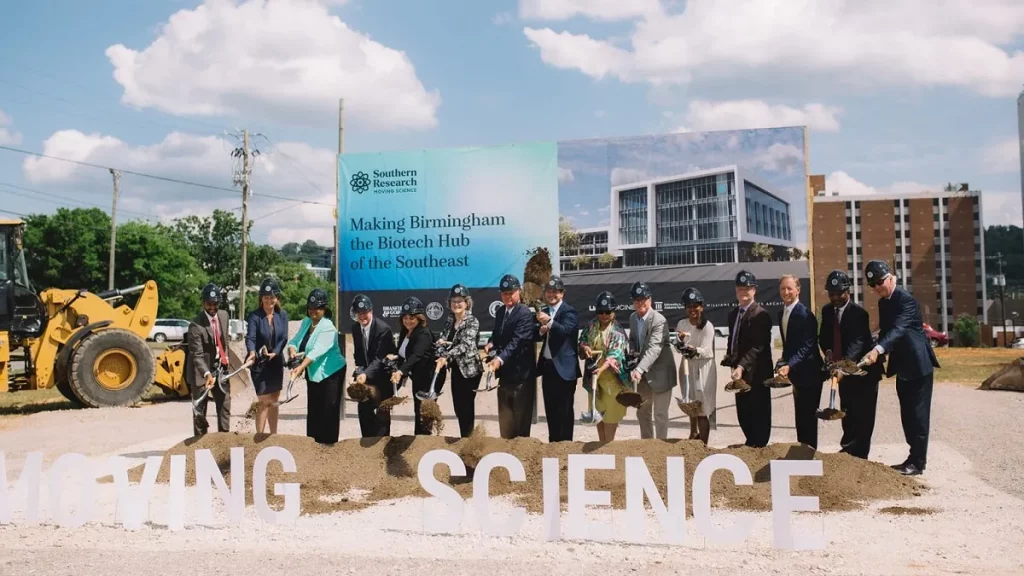
Growth projects valued at almost $200 million are underway in Alabama’s bioscience sector, setting the stage for new research funding and recruitment of scientists for cutting-edge projects. The growth spurt will build on investments announced in 2021 by life science companies in the state that totaled $166 million, according to an estimate by the Alabama Department of Commerce. These projects are creating 574 jobs. In Alabaster, Avanti Polar Lipids, which provides pharmaceutical and diagnostics industry products, is adding 67 jobs through a $16 million expansion launched last year, Commerce data shows. In Huntsville, Discovery Life Sciences is creating 140 jobs. And in Auburn, SiO2 Medical Products – which grabbed headlines by developing high-tech vials for COVID-19 vaccines – continued its fast-paced growth with a $123 million investment to expand production. The project is creating 40 jobs. Expanding the state’s bioscience sector is a strategic priority for the Alabama Department of Commerce, which supports industry growth in various ways, including trade missions to overseas biotech clusters and events. A mission to Nordic Life Sciences Days in Denmark is scheduled for 2023. “We have exceptional strengths in biosciences, including world-class research organizations and a roster of cutting-edge companies, so it’s a natural growth area for the state,” said Greg Canfield, secretary of the Alabama Department of Commerce. “Our goal is to help unleash brainpower and provide a catalyst for innovation within this important economic sector,” he said. While it’s overshadowed by the automotive and aerospace industries, Alabama’s bioscience sector already delivers a major financial impact for the state through activities that include medical research, drug discovery, genomic medicine and medical devices. Alabama is home to 780 bioscience establishments employing almost 18,000 people earning average annual salaries exceeding $67,000, according to an analysis conducted for Bio Alabama, an industry trade group. Biotech foundations During 2022, all three of Alabama’s major research institutions embarked on significant growth projects that will allow them to create new laboratory jobs while positioning them to make high-impact scientific discoveries. Southern Research – a landmark in Alabama’s bioscience sector since its founding in 1941 – is preparing to begin construction on a flagship biotech center in Birmingham. The organization plans extensive renovations on its campus. Coming in 2024, the new biotech center will feature 106,000 square feet of commercial wet labs, A/BSL-3 space and data science facilities. Renovations to 65,000 square feet of facilities include vivarium space and a new clinical diagnostics lab. Southern Research’s biotech center is projected to create 150 jobs, while doubling the organization’s annual economic impact to $300 million. “This is going to be another game-changer for Alabama,” said Gov. Kay Ivey, who approved a $45 million state investment in the biotech center. “We are proud of our investment. It’s going to help Alabamians and help change the world.” Southern Research is investing more than $108 million in the overall project, according to its 2021-2022 annual report. Also in Birmingham, UAB is constructing the Altec/Styslinger Genomic Medicine and Data Sciences Building to advance its leadership in precision medicine, genomic science, and biomedical research. UAB officials said the facility will allow the university to recruit 75 investigators and about 350 support staff to work alongside the talented cadre of researchers. It expects the center to attract an estimated $100 million in additional research funding annually. Total project costs are expected to exceed $78 million, including significant financial support from the state. Construction could be completed in spring 2024, according to UAB. Together, these projects represent groundbreaking initiatives to enhance research capabilities, create jobs, and generate new investment, while propelling Birmingham and Alabama to the forefront of innovation built around discoveries. “Between UAB and Southern Research, we are working to ensure that Birmingham and Alabama become the biotech commercialization center of the Southeast,” said Dr. Ray Watts, president of UAB and chair of the Southern Research board. Unleashing brainpower In Huntsville, the HudsonAlpha Institute for Biotechnology is growing in new and exciting directions. In August, HudsonAlpha announced a public-private partnership with the city of Dothan to create HudsonAlpha Wiregrass to advance education, agricultural research, and economic development through entrepreneurship. Meanwhile, the HudsonAlpha Center for Plant Science and Sustainable Agriculture recently opened a lab and greenhouse in Huntsville to grow research plants to improve existing crops and develop new uses for plants. The facility is equipped with two lab spaces, seven grow rooms with 15-foot ceilings, and several technologically advanced features rarely found in greenhouses. In addition, the HudsonAlpha AgTech Investment Accelerator opened to support startups and enhance the institute’s commercialization pipeline for new ideas. The initiative is a collaboration with gener8tor, a leading national tech accelerator. The HudsonAlpha AgTech Investment Accelerator is supported by the Growing Alabama Credit program through the Alabama Department of Commerce. “We’re committed to supporting innovation throughout Alabama’s economy, and the HudsonAlpha AgTech Investment Accelerator will be an important resource in helping us achieve that goal in this critically important sector,” Canfield said. Republished with the permission of The Alabama NewsCenter. This story originally appeared on the Alabama Department of Commerce’s Made in Alabama website.
UAB hires Trent Dilfer as new football head coach
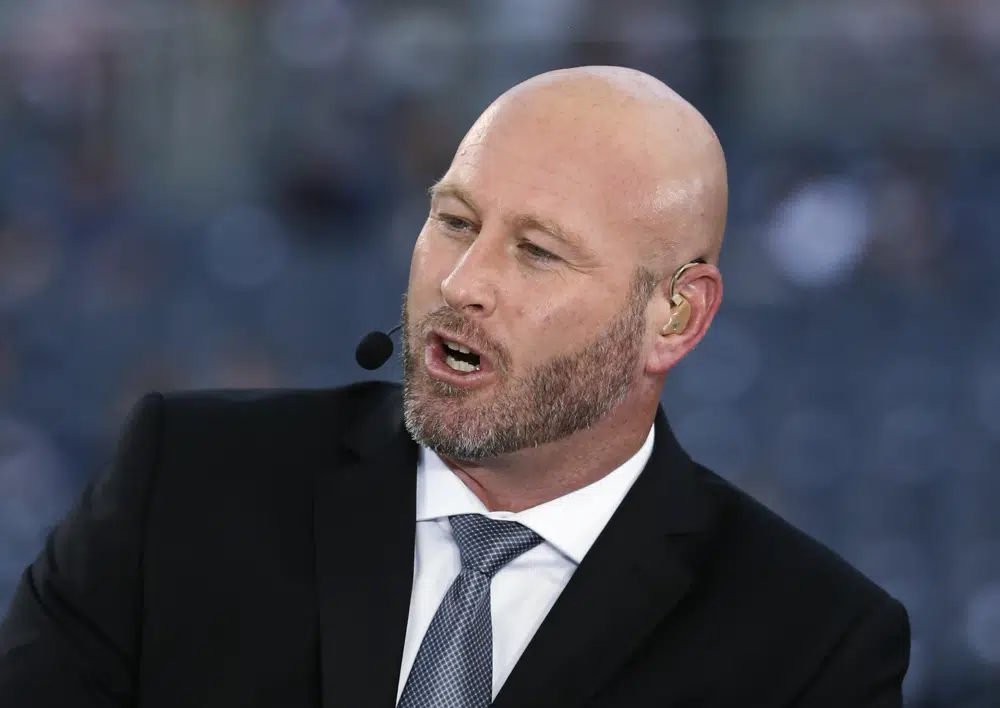
The University of Alabama at Birmingham introduced former Super Bowl-winning quarterback Trent Dilfer as its next head football coach in a press conference on Wednesday. Dilfer is a 14-year NFL quarterback, best known for his Super Bowl win for the defense-heavy Baltimore Ravens in 2000. Dilfer has worked in television and radio for sports outlets, including ESPN and Fox Sports. He has amassed a 38 and 8 record as the head coach of Lipscomb Academy, a private high school in Nashville, Tennessee. “Having the opportunity to lead such a quality program like UAB is one that I am beyond excited about,” Dilfer said in a statement. “The investments the university has made for UAB Football aligns with my vision of taking this program to new heights as we join the American Athletic Conference and compete annually for the highest prize of playing in the College Football Playoff. I would like to thank President Ray Watts, Director of Athletics Mark Ingram, and the entire search committee for their commitment to excellence and for trusting in me as we venture into this new era of UAB Football together.” Dilfer went to one Pro Bowl while quarterbacking the Tampa Bay Buccaneers in 1997. Dilfer won the Sammy Baugh Trophy as the best passer in America after throwing for 3,799 yards and 30 touchdowns at Fresno State during his collegiate career. In his NFL career, Dilfer accumulated 20,518 yards passing, completing 1,759 of 3,172 passes with 113 touchdowns and 129 interceptions. He will coach Lipscomb Academy one last time as they play for a state championship this week before joining UAB. While Dilfer has never formally worked as a college head or assistant coach, he has extensive experience working with elite college and high school quarterbacks preparing for college or the NFL draft. Dilfer is the head coach of the Elite 11 Academy, which began in 2009 and was launched to train elite-level high school quarterbacks. He has coached 27 of the 32 current NFL starting quarterbacks as well as 14 of the past 15 Heisman Trophy-winning quarterbacks. Currently, 60 of the 64 Power 5 starting quarterbacks in 2022 attended the Elite 11 Finals or Elite 11 Regional. “Trent is a proven winner on and off the field at all levels and will be a tremendous leader for our program,” athletic director Ingram said. “He is a Super Bowl-winning quarterback who played the game at its highest level for many years, and he has coached some of the top quarterbacks who are currently NFL franchise players. Trent’s goals and vision for our program is to lead UAB to the College Football Playoff, and we have no doubt that he is the right coach to lead our transition in the American Athletic Conference. Most importantly, Trent is an outstanding man, husband, and father with tremendous character who fits our department’s core values of winning championships, graduating with honors, and making a difference in our community.” UAB Coach Bill Clark resigned immediately prior to the 2022 season due to health concerns with his back. Clark had to endure the program being shut down by the University before it was resurrected due to popular demand from the student body. Clark had to rebuild his program from scratch. Despite that daunting challenge, Clark led UAB to five straight winning seasons and two Conference USA championships. He was the Eddie Robinson Coach of the Year in 2018. Interim head Coach Bryan Vincent led the team to a 6 and 6 record. To connect with the author of this story, or to comment, email brandonmreporter@gmail.com.
UAB named one of 16 Diversity Champions, again receives Excellence in Diversity Award

For the fifth consecutive year, the University of Alabama at Birmingham has been named a Diversity Champion by Insight Into Diversity magazine, the oldest and largest diversity-focused publication in higher education. UAB is one of only 16 colleges and universities in the nation identified as a champion. The university was one of 102 institutions to receive the 2022 Higher Education Excellence in Diversity Award. “UAB is proud to be recognized again by Insight Into Diversity with both these awards,” said university President Ray Watts. “This is a testament to the outstanding efforts of our Office of Diversity, Equity and Inclusion, as well as our entire campus, in daily promoting diversity and inclusiveness – and all of our Shared Values – as we partner for continued success in all areas of our mission.” As a recipient of the annual HEED Award – a national honor recognizing United States colleges and universities that demonstrate an outstanding commitment to diversity and inclusion – UAB will be featured among other recipients in the November issue of Insight Into Diversity magazine. This is UAB’s sixth HEED award. “Through collective intentionality, UAB strives to build a community that exemplifies our shared values and shapes a campus environment that is welcoming and inclusive,” said Paulette Patterson Dilworth, vice president of Diversity, Equity and Inclusion. “Our efforts and initiatives, such as the Diversity, Equity, Inclusion, and advocacy certificate and the Faculty Search Guide and committee training, reaffirm our commitment to diversity, equity and inclusion, and continue to make UAB a better place to learn, live and work. Lenore Pearlstein, publisher of Insight Into Diversity, said: “The HEED Award process consists of a comprehensive and rigorous application that includes questions relating to the recruitment and retention of students and employees – and best practices for both – continued leadership support for diversity, and other aspects of campus diversity and inclusion. “We take a detailed approach to reviewing each application in deciding who will be named a HEED Award recipient,” Pearlstein added. “Our standards are high, and we look for institutions where diversity and inclusion are woven into the work being done every day across their campus.” UAB is a member of the National Center for Faculty Development and Diversity (NCFDD), which offers mentoring tools and support for success. The NCFDD is composed of more than 450 colleges and universities. The independent NCFDD is dedicated to supporting academics in making successful transitions throughout careers and provides monthly webinars, multiweek courses, and writing challenges designed to help faculty, postdocs, and graduate students thrive in the academy. Click here for more information about the 2022 HEED Award. This story originally appeared on the UAB News website. Republished with the permission of The Alabama NewsCenter
$30 million program to provide tests for 265,000 Alabama college students
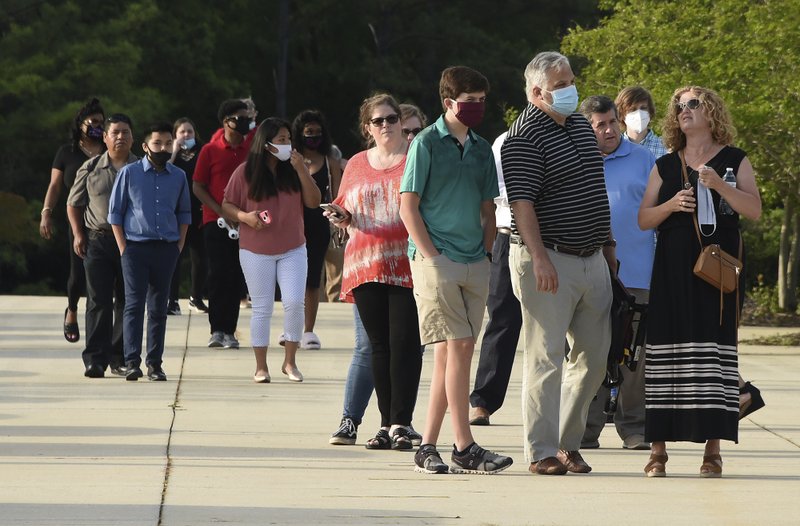
Some schools are also requiring tests for students coming to campus.
Birmingham’s innovation district expands, rebrands

The Switch expands Birmingham’s innovation footprint beyond the walls of its growing Innovation Depot to include several city blocks around the startup incubator.
UAB’s $37.5 million state-of-the art Collat School of Business opens
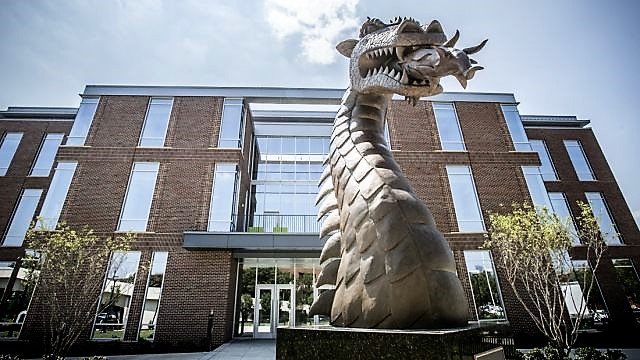
The University of Alabama at Birmingham bridges collaboration, innovation and entrepreneurship with the opening of the $37.5 million state-of-the-art facility that will house the Collat School of Business and Bill L. Harbert Institute for Innovation and Entrepreneurship (HIIE). UAB’s Collat School of Business welcomed students Aug. 27. (Adam Pope/UAB/Alabama Newscenter) “This beautiful new building changes everything,” said Collat School of Business Dean Eric Jack. “This addition to UAB’s campus heralds a new era of leadership in business education that will help drive innovation at UAB and in Birmingham for many years to come.” The grand opening and ribbon-cutting ceremony took place Friday, Aug. 24, at 10 a.m. at 1201 University Blvd. Students began classes for the fall semester Monday, Aug. 27. The 108,000-square-foot building was designed with input from students and community business leaders so that every detail enhances the learning experience while preparing students to work in modern business environments. The facility features breakout rooms, an innovation lab, classrooms designed for team-based learning, a high-tech finance lab, sales role-playing rooms, a three-story atrium, an auditorium, a career center and quiet study spaces. “The generous gift from Charles and his late wife, Patsy, for our new Collat School of Business has already enabled us to build on our reputation as one of the premier business schools in the nation,” said UAB President Ray Watts. “The Collats have been actively engaged with our School of Business and contributed to its success for nearly three decades, and their outstanding example of philanthropy underscores the power of partnership to advance all areas of UAB’s mission. This is a transformational moment for the Collat School of Business and our university, and we look forward to the tremendous impact this facility will have for years to come – providing exceptional opportunities for tomorrow’s business leaders and entrepreneurs and helping to grow a robust innovation-based economy for Birmingham and Alabama.” Located along the north side of University Boulevard between 12th and 13th streets south, the building will offer a modern learning environment and the technology infrastructure expected to competitively recruit the next generation of business leaders, as well as top faculty and staff dedicated to educating them. Open seating areas throughout the building promote collaboration and a sense of community, affiliation and connection to UAB while furthering innovation and entrepreneurship opportunities. “Locating the HIIE in the new Collat School of Business Building creates a hub for innovation and entrepreneurship right in the heart of campus that serves students, faculty and also the wider Birmingham innovation community,” said Kathy Nugent, Ph.D., associate vice president and executive director of the Bill L. Harbert Institute of Innovation and Entrepreneurship. “The new space supports our commitment to leveraging UAB’s powerful research engine to transfer discoveries into products that positively impact quality of life and highlights our goal to generate a pipeline of companies that promote economic development within the region.” The facility houses administrative and student function space for the Collat School of Business and HIIE, as well as the Center for Sales Leadership, the Nielsen Innovation Lab, the Healthcare Leadership Academy and the Regions Institute for Financial Education. The co-location of these cross-discipline entities will foster increased collaboration and create a bridge between undergraduate and graduate students and the marketplace. “We also want to thank our incredible business community, alumni, faculty, staff and students,” Jack said. “We would not have this incredible new learning facility without their generous support.” Gifts given by local businesses such as the Joy and Bill Harbert Foundation, Medical Properties Trust, Regions Bank and Kassouf & Co. exemplify the support of the community in furthering this project, which is the cornerstone of efforts to expand technology commercialization to attain positive impacts on economic development for the community, state and beyond. From an exterior perspective, the overall architecture of the building is in keeping with the recently completed Hill Student Center and soon-to-be completed School of Nursing, featuring a combination of traditional building materials and contemporary building elements. The building is four stories in total, with a primarily traditional brick enclosure and conventional windows on the western and eastern elevations, while the northern and southern elevations are primarily glass storefront. Robert A.M. Stern Architects of New York City and Williams Blackstock Architects of Birmingham designed the building so that all 100-plus offices have a window that is exposed to natural light from the exterior of the building. This was accomplished by having full-height atriums, or light-wells, on the east and west ends of the building. The Coca-Cola UNITED Dining Alcove offers dining options for students, faculty and staff, including Jamba Juice and Sandella’s Flatbread. UAB’s student-run investment fund, the Green & Gold Fund, will be housed in the new Chad Thomas Hagwood Finance Lab. Blazer Pride Plaza, a large landscaped courtyard on the east side of the building, leads students to the main entrance of the Collat School of Business, while the main entrance to the HIIE will be on the northern side of the building. The auditorium in the basement of the building has a FEMA-rated storm shelter that can accommodate more than 200 people in the event of severe weather. Williams Blackstock and Robert A.M. Stern served as the architects of record on this project. Brasfield & Gorrie served as general contractor and self-performed all concrete work, including foundations, foundation walls and site hardscapes. Republished with the permission of the Alabama Newscenter.
Birmingham hosts Smart Cities Readiness Workshop

Strategic plans for how Birmingham will become a smart city are being laid out over the next two days during the Smart Cities Readiness Workshop. The workshop is part of the Smart Cities grant awarded to the city of Birmingham earlier this year. “I believe our city is in the middle of an evolution that is really changing what and how we are doing things in our city,” Birmingham Mayor Randall Woodfin said in his opening remarks. “This is fueled by the Smart Cities grant, which helps us become a more inclusive and competitive government. This gives us the opportunity to integrate our systems and raise the bar for tech and innovation, as well as provide more coordinated, user-centered services for our residents and small business owners.” The workshop aims to use technology and data to improve public safety and quality of life in Birmingham. Projects underway include smart street lighting, bus rapid transit and community Wi-Fi. Strategy sessions will address community health, transportation and mobility and economic empowerment. Birmingham hosts Smart Cities Readiness Workshop to address key issues from Alabama NewsCenter on Vimeo. Woodfin stressed the importance of the partnership that collaborated to win the grant, saying it took a coalition to obtain the grants, and it will take a coalition to do the work. “Alabama Power and the University of Alabama at Birmingham partnered with the city of Birmingham with additional support from the Birmingham-Jefferson County Transit Authority, the Jefferson County Commission and the city of Hoover,” Woodfin said. “These coordinated strategies helped secure Birmingham’s winning application. We’re here because of all your hard work. And on behalf of the residents of Birmingham, we thank you.” To speak on the importance of this partnership, Alabama Power’s Vice President of Birmingham Division Jonathan Porter and the University of Alabama at Birmingham’s President Dr. Ray Watts were on hand to give remarks. “Mayor Woodfin and I are both natives of Birmingham and we are serious about serving our people,” Watts said. “We’re going to do that with the great resources of UAB. Partnering with the city and Alabama Power, really there is no limit to what we can do.” “The ongoing dialogue and discussion that will take place over the next few days during the workshop – and the strong collaboration to follow – will set the stage for Birmingham to become a better place to live and work while improving social equity and economic competitiveness,” Porter said. “These efforts will ultimately incorporate digital technology to help improve public safety, community health, economic empowerment, transportation, energy and more.” Attendees for the workshop include people from both Birmingham’s public and private sectors to provide insight into what they can offer and their thoughts on how Birmingham can use technology and data to tackle local challenges. The first half of the day included presentations from grant partners on smart city initiatives already underway, like smart street lighting. Dr Mashariki addresses Birmingham Smart Cities Readiness workshop from Alabama NewsCenter on Vimeo. Dr. Amen Ra Mashariki shared best practices on how New York City used data to become a smarter city. Mashariki was involved in numerous smart city initiatives as the chief analytics officer and head of Urban Analytics for New York City. “Our job was to be responsive to problems that cropped up on a daily basis that operational agencies needed help with,” Mashariki said. “Data analytics helps drive efficiency toward a city’s operations.” The day concluded with breakout sessions to develop strategic plans. The areas of focus were transportation, economic empowerment and community health. You can check out the entire opening program below. Republished with the permission of the Alabama Newscenter.
Innovate Birmingham prepares students for tech jobs
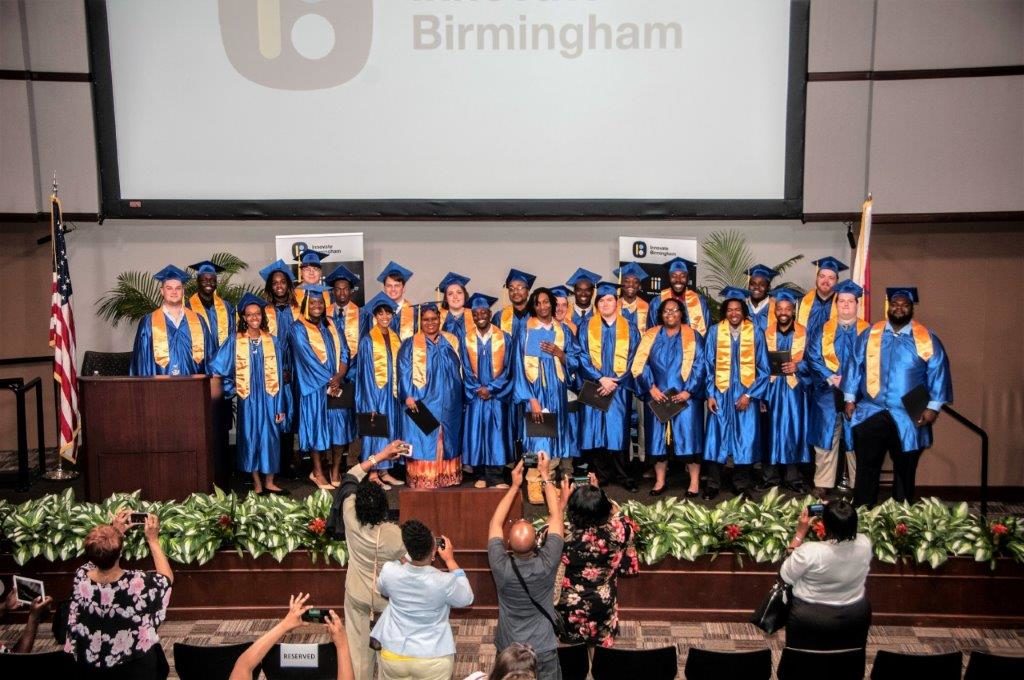
The 28 graduates of an Innovate Birmingham program are “the full definition of getting it right” according to Birmingham’s mayor and “how workforce development is supposed to work” according to an Alabama Power executive. The graduates were feted at a commencement ceremony at Alabama Power corporate headquarters on April 13 where UAB President Ray Watts presented them with their certificates. Each quarter, the Innovate Birmingham Development Program prepares students for careers in Birmingham’s growing tech sector through training via the I AM BHAM coding bootcamp and Generation IT bootcamp. Friday’s class was the fourth graduating class in the program. Innovate Birmingham holds graduation for tech students from Alabama NewsCenter on Vimeo. I AM BHAM, a 14-week program, offers short-term, fast-track, intensive training for full stack and front-end web development. The 12-week Generation IT program offers an IT specialist training program for students to receive their CompTIA A+ certification. Both programs, held onsite at Innovation Depot in Birmingham, allow students to interact daily with potential employers. More than 25 employers – including corporations such as Alabama Power, BBVA Compass, Regions Financial and Protective Life – support the program and offer graduates jobs. John Hudson, senior vice president of Marketing and Business Development at Alabama Power, said a program that can take someone who was unemployed, train them in a new skill and promise them a job upon graduation “is how workforce development is supposed to work.” “All of us who work on economic development in Birmingham are trying to move this community and this city toward a more technology-based economy,” Hudson said. “If we’re going to do that, workforce is going to continue to be prominent in us getting there.” Birmingham Mayor Randall Woodfin said the Magic City’s economy is hitched to growing the technology industry. “As we look at what our strengths are and what our strengths can be, IT technology and innovation is something we need to triple down on and have a full investment in,” Woodfin said. He said economic development is ultimately an investment in people and the Innovate Birmingham program epitomizes that idea. “This is a full definition of getting it right,” Woodfin said. Watts said the program is an extension of UAB’s mission. “As we looked at the needs in Birmingham, we realized there was a subset of our young people who have not had the opportunity yet to be in the right place at the right time to develop those educational skills,” he said. The program was made possible, in large part, by a $6 million grant from the U.S. Department of Labor. Josh Carpenter, director of the Birmingham Office of Economic Development, was instrumental in constructing the partnership that pursued that grant when he was at UAB. He was at the commencement. “Sustaining the economy through a qualified and diverse workforce is absolutely fundamental to our success in creating the innovation of the future,” Carpenter said. “This is laying a pipeline for us to be able to showcase around the country that we have a best-in-class program that can train people and equip them with the skills they need to succeed very quickly in a workforce that demands more nimble and qualified talent.” Watts said he was doing more than handing graduates their certifications: He was handing them a better Birmingham. “It’s a great opportunity to give our young people skills and knowledge that will allow them to get a really good job and provide for their families, and help their neighborhoods and the entire city be successful,” Watts said. Republished with the permission of Alabama Newscenter.
Terri Sewell applauds $6M UAB grant to train local young adults for 925 high-paying jobs
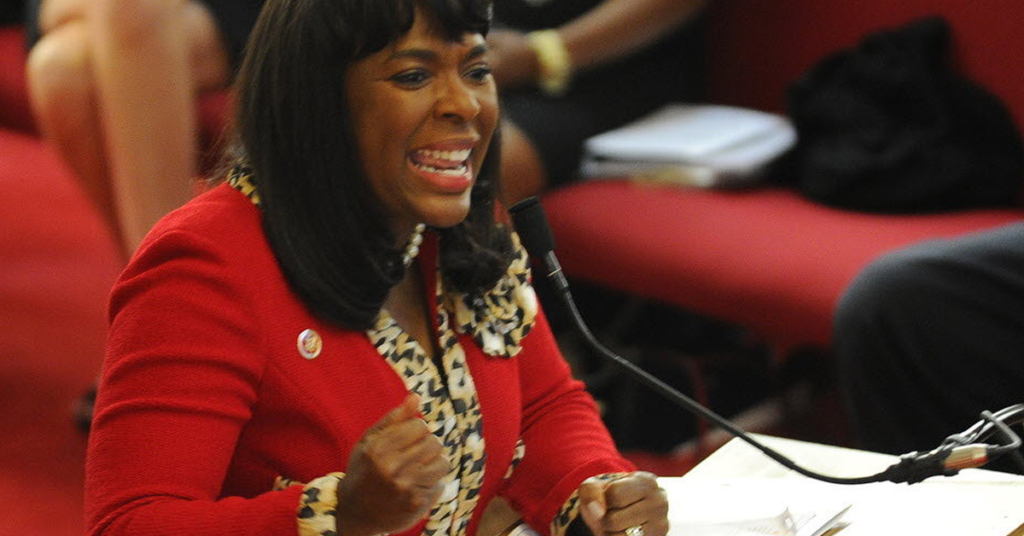
The University of Alabama at Birmingham (UAB) is getting $6 million in federal funding to help train students for in-demand jobs. UAB was one of 23 groups to receive the U.S. Department of Labor‘s America’s Promise grants, a federal program designed to accelerate the development and expansion of regional workforce partnerships committed to providing a pipeline of skilled workers in specific sectors. UAB was the only recipient in Alabama. Alabama 2nd District U.S. Rep. Terri Sewell helped UAB secure grant at the maximum allowed amount of nearly $6 million, which will fund Innovate Birmingham, a broad coalition led by UAB of public, community, business and education leaders committed to fostering economic growth for the region and offering better opportunities for young adults. “Innovate Birmingham’s consortium partners are among the most successful corporate, academic, and non-profit citizens in Alabama, all of whom realize that our national and global competitiveness is only as strong as our local workforce pipeline,” said Rep. Sewell. “With this vital funding from the Department of Labor, Innovate Birmingham will be able to meet the demand of the second fastest growing IT workforce in the country by educating and training 925 Birmingham-area disconnected youth for high-wage, high-demand jobs in the industry.” UAB President and Birmingham Business Alliance Board Chairman Ray Watts says UAB is excited to have the opportunity to help lead this important project that combines education, community service and economic development, touching several key priorities of the institution’s multifaceted mission. “The main focus of this effort is to offer new educational opportunities for the young adults in our community to provide them with training and expertise that will enable them to have prosperous, bright futures,” Watts said. “It will positively change their futures and the futures of their families and communities.” The Innovate Birmingham Regional Workforce Partnership’s program will fuel inclusive innovation for local employers by meeting workforce demand in information technology with sustainable, demand-driven education, training and employment opportunities for area young adults who are disconnected from the labor market. “This is a tremendous opportunity,” said Birmingham Mayor William Bell, “and the City of Birmingham leadership is proud to be among the dedicated team who combined their time, expertise and resources to make a compelling plan that truly embodies the spirit of America’s Promise and will have a great impact in our communities.”
Business group: Birmingham got $1.1 billion in capital investment in 2015

It has become conventional wisdom to take note of Birmingham’s economic resurgence of late. The ongoing construction, growing payrolls, and general sense that there’s more to do all seem to testify, providing their own wordless evidence. The Birmingham Business Alliance added a more concrete contribution to the chorus on Monday, announcing the findings of a new report saying the Magic City has taken nearly $1.1 billion in new capital investment in 2015. According the report, Birmingham added 3,509 current or announced jobs to boot. The BBA, a consortium of Birmingham industry interests, also trumpeted several new developments related to business and job growth, such as a new $34 million Publix distribution center that will add 200 jobs; a $45 million renovation of the Empire Building which will yield a new Empire Hotel; a new $100 million Yorozu Corp. metal stamping facility in Jasper set to create 300 jobs; and a $530 million, 354-job commitment from auto supplier Kamtek to grow their operations in Birmingham. Ninety companies announced jobs overall, according to the report. The BBA will release its full report at the 2016 Economic Growth Summit at the Harbert Center in downtown Birmingham on May 12. “This was a milestone year in terms of economic development and investment in the continued growth of our region,” said the group’s 2016 chairman, University of Alabama at Birmingham President Ray Watts in a prepared statement.
UAB President Dr. Ray Watts to lead Birmingham Business Alliance in 2016
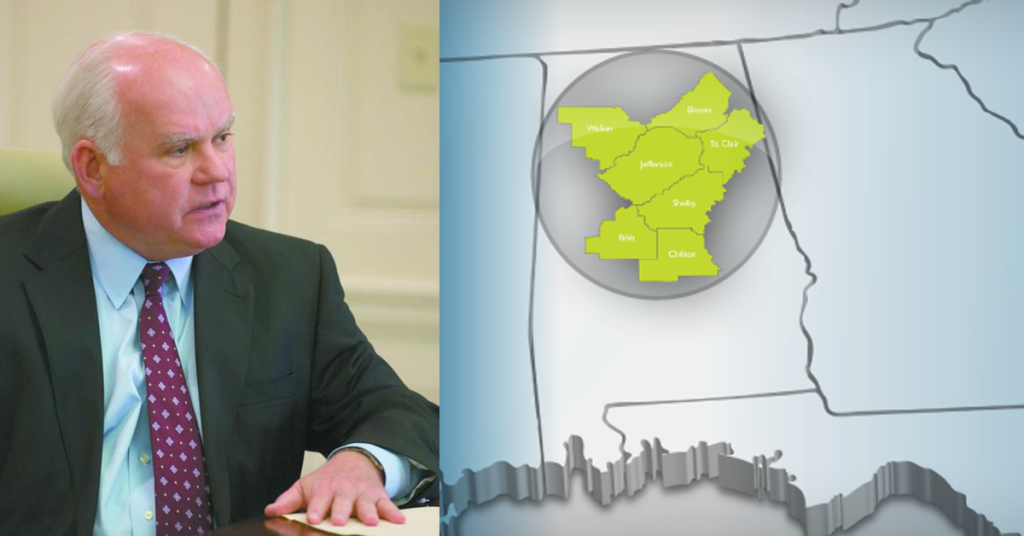
University of Alabama at Birmingham‘s President, Dr. Ray Watts has been elected Chairman of the Board of the Birmingham Business Alliance for 2016. A Birmingham native and graduate of West End High School, Dr. Watts earned a bachelor’s degree in engineering at UAB in 1976. He succeeds Mark Crosswhite, CEO of Alabama Power Co. “I am excited and honored to be serving as Chairman of the BBA in 2016,” said Dr. Watts. “We will build on the momentum our region has seen in recent years with strategic planning and investment and I think the result will be a powerhouse of innovation and economic development throughout our region and known around the globe. The BBA and UAB will continue to work closely throughout the year with our elected leaders and economic development allies to capitalize on our strongest assets and take our region to the next level.” “I also want to thank Mark Crosswhite for his strong support of our community and his leadership of the BBA in 2015, which has been exemplary,” Watts continued. “He has lent his wisdom and time to numerous complex regional issues and has worked hard behind the scenes to move our community forward in very positive ways.” Also elected were members of the BBA’s 2016 Executive Committee and Board of Directors. Each serves a one-year term. The 2015 officers are as follows: Dr. Ray Watts of UAB, BBA Chairman Lee Smith Jr. of BBVA Compass, BBA Chairman-Elect Fred McCallum of AT&T Alabama, Vice Chairman of Public Policy Craft O’Neal of O’Neal Industries, Vice Chairman of Finance Mark Crosswhite of Alabama Power Co., Immediate Past Chairman Brian Hilson is President and CEO of the BBA Bing Edwards of Balch & Bingham, Corporate Secretary
UAB president: University bringing football back in 2016
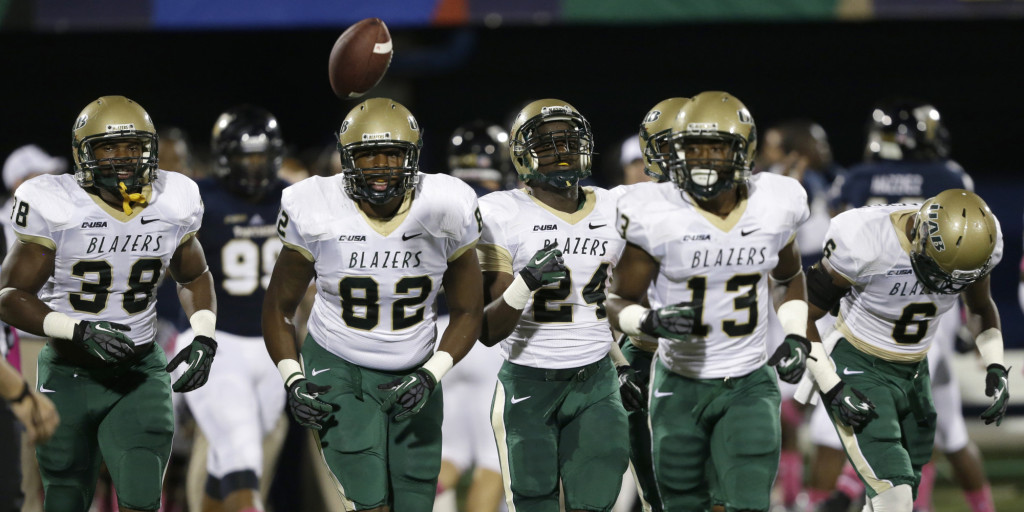
UAB President Ray Watts said Monday he is bringing the football program back as early as 2016, reversing a decision to shut it down because it was too expensive. Watts cited renewed financial commitment from supporters, students and the city as reasons for the change of heart. He said donors have pledged to make up the projected $17.2 million deficit over the next five years if football is restored,. Watts told The Associated Press he decided on Monday morning to reverse the earlier decision after meetings with UAB supporters continued through the weekend. “The biggest single difference is that we now have tangible commitment for additional support that we never had before,” Watts said at a news conference. In addition to reinstating football, Watts said Monday that he was also bringing back bowling and rifle. The study commissioned by the university was based on the programs being brought back in 2016. However, new athletic director Mark Ingram stopped short of guaranteeing 2016, saying only that the goal is to bring football back as soon as possible. Watts cut the programs last December after UAB commissioned a report saying it would cost $49 million over five years to field a competitive football program, generating both a groundswell of criticism for the decision and a rallying of financial support for the Blazers program. The president said UAB has dropped an indoor practice facility from the equation since the initial report, and has raised about 10 percent of the estimated $12.5 million to $14.5 million needed for a turf practice field and new fieldhouse. The December decision left players looking for teams and stirred fans, student and faculty groups to issue no-confidence votes against Watts. “This was a very difficult decision,” he said. “It broke our hearts to make that decision, and we are sorry for any consequences of that. But we are excited today that our community and supporters have come together. Had we not made that decision, which was based on sound information, that we wouldn’t be where we are today. We have never seen this level of support. It has been a painful process at times but it has been a process that has brought us to a new day.” UAB commissioned College Sports Solutions to review the initial report by CarrSports Consulting. The numbers were similar minus the indoor facility. Watts also said UAB’s cost of attendance could be about half the initial projected $5,000 per athlete, based on other Conference USA schools. The first season’s College Football Playoff payout also was higher than UAB had projected. Watts said that the initial projections “showed there was no way for us to cover that unless we took away from education and research and health care.” Watts said UAB sent documents to C-USA and NCAA notifying them of his decision, but he makes it clear UAB plans to remain in the league and play at the FBS level. Without football, UAB would have likely not have remained in C-USA, which has a bylaw requiring members to field football programs. C-USA Commissioner Britton Banowsky said members had not wanted to change the rule because “football is something that is critical to our long-term success and part of our core as a conference.” “It didn’t really come as a great surprise, but we’re very pleased with the decision to bring back football,” Banowsky told The AP. “As a conference, we’re committed to football so we welcome the good news that UAB football has been given another chance.” UAB will cap its subsidizing of athletics to $14.49 million for each of the next five years, about $200,000 less than the university paid in 2014. The City of Birmingham and UAB’s National Alumni Society have each pledged contributions to athletics while student government leaders will raise student fees. Those total $5.3 million with the balance of money coming from private donors. One thing that’s not on the table: UAB building an on-campus stadium to replace aging Legion Field. Watts said that’s up to the city and community to fund. “We will be happy to play in any new, modern facility that the city might choose to build,” he said. “We leave the specific type of facility and the exact location up to the mayor and city leaders and community leaders.” Now comes a huge rebuilding process on the field. Many of the players have moved onto other programs, leaving Clark and his staff to find recruits for 2016. Ingram said bringing football back “will bring a lot of renewed excitement around this program, that’s from top to bottom.” Clark issued a statement saying it was a relief that UAB football was being resurrected. “This is a critical first step toward UAB football’s new path,” Clark said. “It takes tremendous commitment and support to run a successful football program. We have a lot of work to do but we start anew today!” Republished with permission of The Associated Press.
