
Kay Ivey announces another round of Rebuild Alabama road projects through the Annual Grant Program
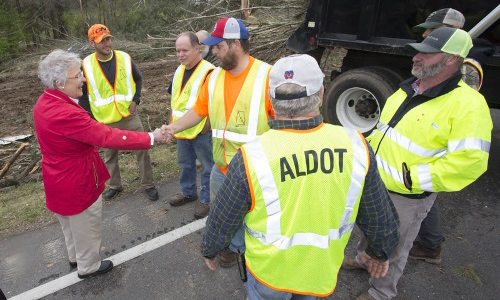
Alabama Governor Kay Ivey on Wednesday announced that another $2.6 million in state funding is being awarded to cities and counties for various road and bridge projects. Rebuild Alabama projects from the Alabama Department of Transportation (ALDOT) have now been awarded in all of the state’s 67 counties. The road repairs and improvements are paid for by a ten-cent a gallon fuel tax increase that Ivey asked the Legislature to pass following her election in 2018. This is the third year of the program. “I am incredibly proud that Rebuild Alabama has now made road and bridge projects possible in all of our state’s 67 counties,” said Governor Ivey. “Three years ago, I promised the people of Alabama that every single penny would go to road and bridge projects, and we are seeing that the proof is in the pudding. This is a remarkable milestone for our state, and I look forward to furthering these efforts to make Alabama a better place to live, work and raise a family.” The funding for these awards is made available through the Annual Grant Program, a program created under the Rebuild Alabama Act. The Rebuild Alabama Act was signed by Gov. Ivey in 2019. It required ALDOT to establish an annual program setting aside $10 million off the top of the state’s share of new gas tax revenue for local projects. There are 11 projects across Alabama receiving funding in the final award under the Annual Grant Program for the 2022 fiscal year. Of those awarded projects, cities and counties also contributed a total of over $1.1 million in local matching funds. Matching funds are not required to be eligible for the program, but all projects are required to move forward within one year of the awarding of funds. These new awards include: Autaugaville in Autauga County will receive $250,000 to resurface North Taylor Street, Golson Street, Line Street, South Washington Street, Sweet Gum Street, Dutch Bend Street, and Pine Street. Local authorities will provide a match of $44,765. Autaugaville in Autauga County will also receive $250,000 to replace Choctaw Bridge over Spear Creek on Timberline Road. The state is providing $250,000 for the project, while local authorities are providing $450,000. Tuscumbia in Colbert County was awarded $250,000 to widen and resurface Glendora Avenue from US-72 to Veterans Boulevard and Graham Avenue from Old Lee Highway to Cossey Drive. Local authorities are providing $77,517 for the project. Midland City in Dale County was awarded $250,000 to resurface Hinton Waters Avenue from CR-59 to 4th Street and to resurface 4th Street from SR-134 to Midland-Michigan Avenue for $250,000. Valley Head in DeKalb County was granted $220,000 to resurface Valley Head Square (Anderson Street, Commerce Avenue, Winston Street, and Sulphur Springs Road) and Carmichael Road). Flomaton in Escambia County received a grant of $250,000 to resurface and make drainage improvements on Hillview Drive, Titi Street, College Street, and Alley 5. Hueytown in Jefferson County received $250,000 to resurface Virginia Drive from 15th Street to Virginia Road. Local governments provided a match of $11,635. Lawrence County was awarded $250,000 to resurface CR-187 from SR-157 to CR-203, CR-203 from CR-187 to CR-81, and CR-81 from CR-203 to SR-157. Local government provided a $ 157,856 match for the $407,856 project. Albertville in Marshall County will receive $250,000 to resurface Pine Street from SR-205 to the city limits. Local government is providing a match of $ 213,130 to finish the $463,130 project. Helena in Shelby is receiving $161,376 to add a right-turn lane to CR-17 at the CR-58 intersection. Sylacauga in Talladega was awarded $250,000 to replace the bridge on Walnut Road over Ogletree Creek. The project includes a local match of $197,535. $130 million in state transportation funding has been awarded through the local grant programs created by the Rebuild Alabama Act. Ivey is seeking re-election in the general election on November 8. She faces Libertarian Dr. James “Jimmy” Blake and Democrat Yolanda Rochelle Flowers on the ballot. There are also a couple of write-in candidates: Dean Odle and Jared Budling. To connect with the author of this story, or to comment, email brandonmreporter@gmail.com.
Alabama roads, bridges in 10 locales getting $4.9 million in improvements
Alabama cities and counties are volunteering matching taxpayer funds to the state that will yield $4.9 million in improvements for road and bridge projects. Although not required by rules of the program, the matches of nearly $3 million will funnel with the $2 million provided by the Annual Grant Program. This is an initiative of the Rebuild Alabama Act, a 2019 legislative piece that has yielded some $27 million in roads and bridges improvement since inception, a release says. The Alabama Department of Transportation annually sets aside $10 million from the state’s share of new gas tax revenue. Republican Gov. Kay Ivey added, via the release, another round of local projects is expected to be awarded later this calendar year. Many will be under contract before Christmas. RAA rules require projects to be launched within a year of funds awarded. “Folks in all corners of Alabama and in areas big and small are seeing real results, and that will continue,” Ivey said in the release. Most of these projects are getting a quarter-million dollars from the state. Some, like a road resurfacing in Dallas County, are getting much more in the local match. In addition to Dallas, projects are slated for Clanton, Crossville, Scottsboro, Linden, Brundidge, Roanoke, Woodstock, Talladega County, and Wilcox County. Republished with the permission of The Center Square.
Justin Bogie: Gas, grocery taxes crushing Alabama families; is this the leadership we want?
Next week, Alabama voters will cast their votes for the 2022 Primary Election. While the races for U.S. Senate and Governor are getting most of the media attention, who walks the halls of the State House for the next four years will have just as much, if not more, impact on your life. As we prepare to elect the next Alabama Legislature, it’s important to look back at what our legislators did in the last four years. Did they represent and protect the values and principles that they promised to back in 2018? Has your life improved in the last four years? For many Alabamians, the unfortunate answer to both of those questions is no, and some of the blame lies with the current legislature. Many of those same legislators’ names will appear on the ballot next week. There are two missteps by the legislature that stick out when making the argument that life has gotten harder in the past four years: the passage of the $.10 gas tax increase in 2019 and the unwillingness of our lawmakers to repeal the state’s sales tax on groceries. What our governor and some legislators might consider to be the “crowning achievement” of the past four years is the passage of the Rebuild Alabama Act (RAA) back in 2019. It was one of the first actions of the newly elected legislature and passed by a wide 111-26 margin. The RAA implemented a $0.10 per gallon gas tax increase and, by the end of this year, is projected to generate more than $320 million annually. The state keeps about two-thirds of the new revenues while counties and municipalities get the rest. Nearly $12 million per year is set aside for the Port of Mobile. When the bill was being debated, the Alabama Policy Institute argued that the gas tax increase should only be approved if some other tax, such as the grocery tax, was repealed. That didn’t happen, and the tax burden on citizens has continued to climb, culminating in Alabama’s government taking more taxes than ever from Alabamians in 2021. That extra $0.10 may have seemed absorbable to some back in 2019. It isn’t anymore. When the RAA passed, gas prices were $2.25 per gallon. Today, AAA reports that the average gas price in Alabama is $4.24 per gallon, an 88% increase in just over three years and the highest at any point in state history. The $0.10 gas tax increase approved by the current legislature and signed by the governor is hurting many Alabamians. What’s more, with the passage of a massive federal infrastructure bill last fall, Alabama will see hundreds of millions of additional transportation dollars flowing into the state over the next five years. The RAA should be repealed. Doing so would provide at least some relief from the pain at the pump that we are all experiencing, but it seems no one in Montgomery is willing to give up the revenue that it provides. In March, our current governor was asked if she would even be willing to suspend the $.10 tax increase. She responded with a resounding no and instead blamed high energy costs on President Joe Biden. Alabamians may blame Biden for many things, but he had nothing to do with raising Alabama’s gas tax. The Alabama Legislature’s failure to repeal the sales tax on groceries is much like the imposition of the new gas tax. It is hurting citizens now more than ever. This is a bipartisan issue that would immediately help all Alabamians, yet in the past four years, Alabama’s Republican supermajority has never brought a bill to repeal the grocery tax to the Alabama House or Senate floor for a vote. Thus, Alabama remains one of three states that still fully taxes groceries. The cost of groceries is up 9.3% in the last year. The price of meat, poultry, fish, and eggs has increased by over 14%. Americans haven’t seen inflation like this in 40 years, and it is having a crushing effect on family budgets. Our state government began this year with a $1.5 billion revenue surplus. That’s on top of tens of billions of federal dollars that have flowed to the state in the form of COVID-19 relief since 2020. Yet they weren’t willing to give up around $500 million in revenue to help literally every resident of this state. The fact that the Alabama Legislature has done nothing about the grocery tax is indefensible. Combined with raising the gas tax, the effects are even more damaging. Is this the kind of leadership that we want for the next four years? Justin Bogie is the Senior Director of Fiscal Policy for the Alabama Policy Institute.
$5 million distributed through Rebuild Alabama benefits to cities, counties
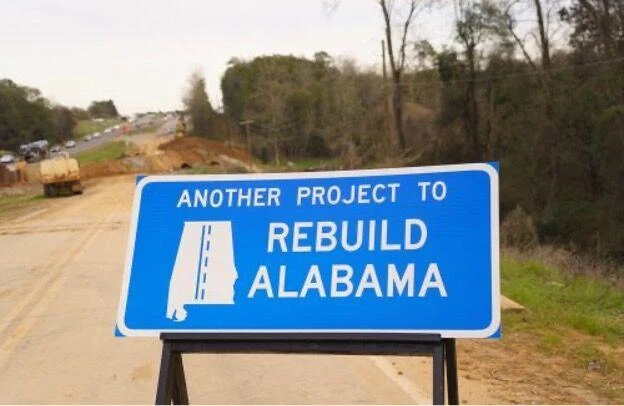
Revenue acquired through the state’s gas tax is being distributed in the form of grants to help repair the state’s roads and bridges, Gov. Kay Ivey said. The governor announced that $5 million is being sent to cities and counties to help improve the condition of roadways and bridges under the Rebuild Alabama Act. “Since becoming governor, with the support of Rebuild Alabama, we have embarked on more than 1,500 new road and bridge projects worth more than $5 billion,” Ivey said in the release. “We certainly have more work in front of us, and I am proud to continue those efforts today. Every single penny generated by Rebuild Alabama has gone to road and bridge projects, and we are not relenting on our efforts any time soon.” The Rebuild Alabama Act, according to the release, was passed by the Legislature and signed by Ivey in 2019. The law mandates the state’s Department of Transportation to set aside $10 million each year from funding culled from the state’s gasoline tax that is earmarked for local projects. Since the bill was signed, the state has set aside $20 million in revenue that has been awarded for local projects across the state, which includes 21 projects this year. For 2022, the projects receiving funds from the state are also contributing $2 million in local matching funds. The use of matching funds is not a requirement to be included in the disbursement of state funds. More projects, according to the release, are expected to be announced later in the year, and a number of projects are expected to be under contract by the year’s end. Projects must move forward within one year of receiving funding. In Elba in Coffee County, $250,000 will be used with $79,725 in matching funds to resurface Martin Luther King Jr. Drive from state Route 203 to Adkinson Avenue and then from Adkinson Avenue at Martin Luther King Jr. Drive to state Route 189. In Saraland in Mobile County, $250,000 will be used with $394 in matching funds to widen and resurface Old Highway 43 from East Bayou Avenue to H.P. Cain Bridge, East Maple Avenue from 3rd Street to Park Street, and Park Street to Tajuacha Drive South to East Orange Avenue. Republished with the permission of The Center Square.
Another round of projects funded by Rebuild Alabama announced
Governor Kay Ivey has announced more than $5 million in state funding for various road and bridge projects. The funding is made available through the Annual Grant Program, a program created under the Rebuild Alabama Act. Passed by the Legislature and signed by Governor Ivey in 2019, the Rebuild Alabama Act requires ALDOT to establish an annual program setting aside $10 million off the top of the state’s share of new gas tax revenue for local projects. $20 million in state funding awarded for local projects across since 2020. “Since becoming governor, with the support of Rebuild Alabama, we have embarked on more than 1,500 new road and bridge projects worth more than $5 billion. We certainly have more work in front of us, and I am proud to continue those efforts today,” stated Ivey. “Every single penny generated by Rebuild Alabama has gone to road and bridge projects, and we are not relenting on our efforts any time soon.” This round of the Annual Grant Program results in 21 projects receiving state funding. An additional round of local projects is expected later this year. All projects are required to move forward within one year of the awarding of funds. The list of projects can be found here.
Club for Growth launches long-anticipated opposition of Katie Britt
Club for Growth has finally joined the fight for the Alabama U.S. Senate seat. The 2022 election, still months away, is looking to be a long and hard-fought battle, with major players vying to take the seat now held by long-time senator Richard Shelby. Club for Growth Action, the federal super PAC, has endorsed U.S. Rep. Mo Brooks. Now the group is taking aim at Katie Britt. A Club for Growth spokesman told Yellowhammer News that it has a new ad that will run after the Iron Bowl in the Montgomery media market. The 30-second ad targets Britt for her association with Democrat Mayor Steven Reed and for her supporting the 2019 Rebuild Alabama Act, which included a fuel tax increase. The ad states, “Wouldn’t it be nice if politics had clear lines like football? Look at Katie Britt. Whose side is she on? Britt worked for Democrat mayor Steve Reed’s transition team when he took over in Montgomery that pushed a ton of liberal policies, including massive tax increases. And Britt backed a $300 million, 10-cent-a-gallon gas tax hike. Katie Britt: If you’re a Trump conservative, she’s not on your team.”
Groundbreaking held for nearly $760M west Alabama highway
Gov. Kay Ivey and other officials held a ceremony Friday to break ground on a project to construct a four-lane highway spanning rural western Alabama from north to south. Expected to cost some $758 million over five years, the West Alabama Corridor project will provide an interstate-type highway that will eventually connect Mobile and Tuscaloosa. A bypass at the Marengo County city of Linden is the first phase of the project. After that project, a southern leg will begin at U.S. 43 in Thomasville and run northward to the bypass. A northern section will begin from Linden to Alabama 69 north of Moundville, located just south of Tuscaloosa. Officials in the Black Belt region have long cited the lack of access to four-lane highways as a factor holding back development in the area. Passed in 2019, the Rebuild Alabama Act has allowed the state to spend more on economic development and road projects, Ivey’s office said. Tuscaloosa Mayor Walt Maddox, a Democrat who opposed Ivey in the 2018 gubernatorial race, attended the groundbreaking and praised Ivey’s leadership on the highway. Republished with the permission of the Associated Press.
Rebuild Alabama Act awards $2.08 million for road and bridge projects
Governor Kay Ivey announced Monday that $2.08 million in state funding is being awarded to cities and counties for various road and bridge projects. The funding is made available through the Annual Grant Program from the Alabama Department of Transportation, a program created under the Rebuild Alabama Act. Passed in 2019, the Rebuild Alabama Act requires ALDOT to establish an annual program setting aside $10 million off the top of the state’s share of new gas tax revenue for local projects. “Improving Alabama’s infrastructure remains a top priority of the Ivey Administration, and thanks to Rebuild Alabama, we are continually able to put these funds to good use. More and more communities and cities across our state are seeing new road and bridge projects in their areas, and I look forward to that continuing,” Governor Ivey stated. “When we invest in our roads and bridges, we are investing in our people and our future.” There were nine projects selected, with project applicants contributing a total of $4.2 million in local matching funds. Matching funds are not required to be eligible. This is the third round of projects awarded under the Annual Grant Program this year. In the first two rounds earlier this year, $8 million in state funds was awarded for 34 projects, with this final round bringing the total for FY 2021 to $10.04 million in state funds for 43 local projects. In 2020, $10.14 million was awarded for local projects. All projects are required to move forward within one year of the awarding of funds. Ivey stated on Twitter, “I’m pleased to join the Alabama Department of Transportation in announcing that $2.08 million in state funding is being awarded to cities & counties for various road & bridge projects as part of #RebuildAL.”
State Rep. April Weaver joins Trump administration, resigns seat
Weaver served as Chairwoman of the House Health Committee.
Kay Ivey announces $7 million in road work and bridge repair
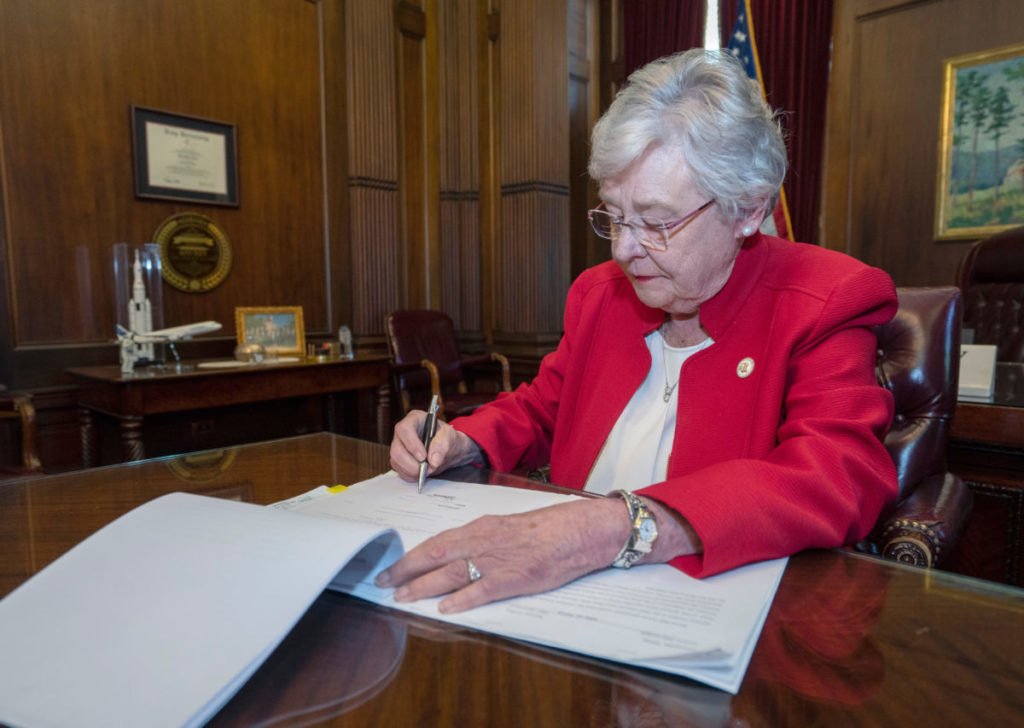
The grants are part of the Rebuild Alabama Act, which included a 10 cent per gallon tax increase over the next three years.
Kay Ivey touts Rebuild Alabama Act at Montgomery Chamber meeting
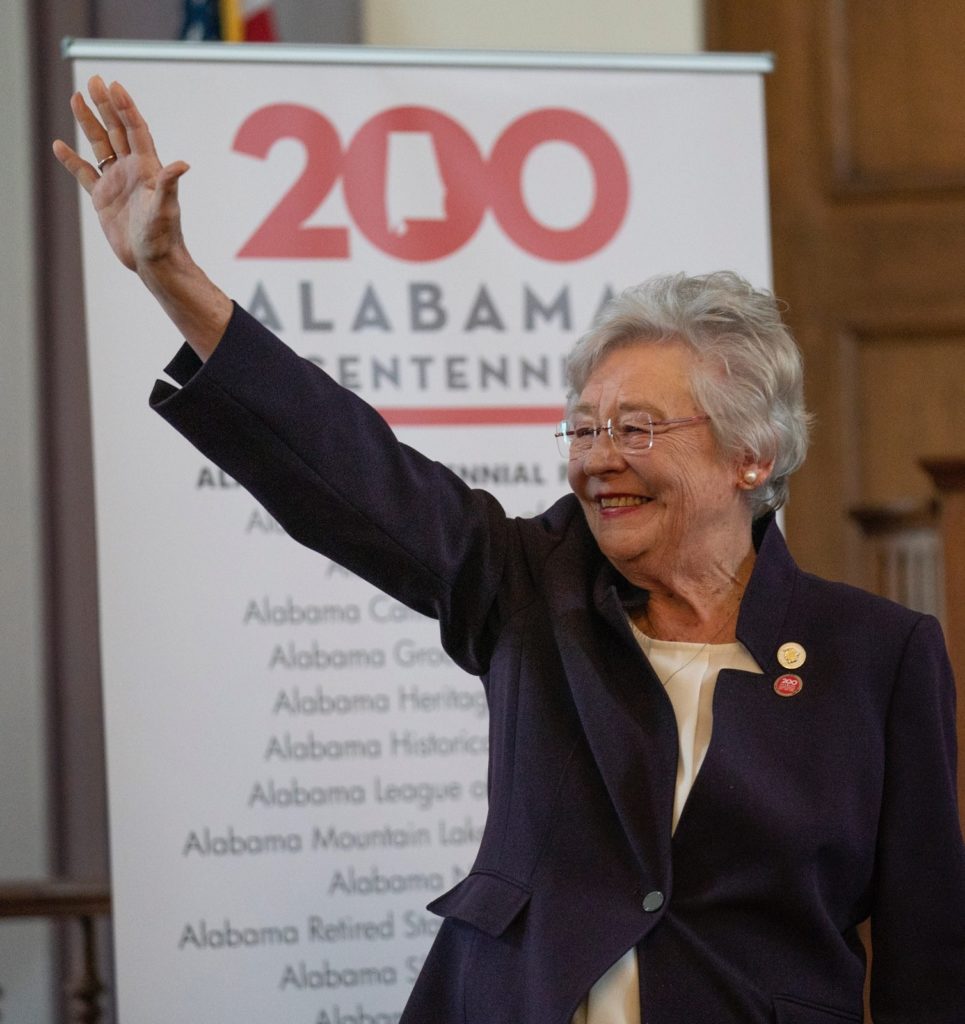
Alabama Gov. Kay Ivey touted the Rebuild Alabama Act, with its gasoline tax increases to fund infrastructure, as one of her major accomplishments that will address a longtime need in the state. Ivey delivered her “State of the State” address to members of the Montgomery Area Chamber of Commerce, emphasizing the Rebuild Alabama funding passed in a special session of the Legislature last month. “Since I took office two years ago tonight, we have seen 25,000 new jobs created here in Alabama,” Ivey said. “We have seen several coveted economic development projects announced. And we have seen strides taken to improve education. More recently, we saw the strength of teamwork in the effort to pass my Rebuild Alabama Act. It absolutely took a strong team effort to get that key piece of legislation passed.” The new law raises Alabama’s gasoline tax by 10 cents per gallon over the next three years to fund improvements to roads, bridges and the Port of Mobile, along with other transportation infrastructure improvements. “To expect a prosperous future for the great state of Alabama, it was just time for us to address once and for all the lingering issue of our crumbling infrastructure,” Ivey said. After delivering her address, Ivey told reporters the state is playing catch-up with others in addressing these problems. “Alabama is way behind our sister states in doing this,” she said. “We’ve got a lot of catching up to do. I’m just proud that the people of Alabama supported this and we’re moving forward to rebuild Alabama.” The governor said when business prospects are looking to locate in a state or area, infrastructure needs are essential. Anna Buckalew, president and CEO of the Montgomery Area Chamber of Commerce, agreed and praised the governor for pushing for the gasoline tax increase. “We took a little time and celebrated the passing of the gas tax,” Buckalew said. “That took tremendous leadership on her part. She led the way. We had great support with the Legislature and other leaders, but it took the governor to get that done. We’re so grateful. The gas tax gives us infrastructure that was critically needed. You can’t do economic development without good infrastructure.” Ivey said “the state’s economy is booming” and economic development will continue to be a key issue. She also acknowledged the need to address other problems. “So, as we move forward we will face our challenges, like improving infrastructure, like addressing the understaffing in our prisons, like improving the education system,” she said. “And we will continue to build on our strengths. And when we do all of this, working together, we will have a future that is filled with growth and opportunity. Remember that Alabama’s best days are still ahead of us.” Buckalew said that’s music to the ears of organizations like the Montgomery chamber. “The governor is a strong advocate of economic development,” she said. “We heard that this morning. The chamber is all about job creation and she was singing our song this morning. She talked about the thousands of jobs that have been created in the state. She is a pro-business governor.” Ivey said workforce development and its ties to education at every level will be a priority. “Looking forward, we’ve got to start preparing our people for jobs of the future,” Ivey said. “So, we’re trying to build that pipeline starting with pre-K and all the way through the workforce, two-year colleges and beyond. It’s important to keep the pipeline current and relative to the needs of industry.” Buckalew said a quality workforce tops the list of needs for companies looking to locate or expand in the state. “The governor has a tremendous agenda on workforce development (starting with) pre-K,” Buckalew said. “She understands the realities of what we need to have a trained workforce in this state. A trained workforce means that those people have opportunities, that our kids can have opportunities and jobs.”, with its gasoline tax increases to fund infrastructure, as one of her major accomplishments that will address a longtime need in the state. Republished with permission of Alabama News Center. For video of speech and additional photos please check out their site.
