
‘Rebuild Alabama’ will solidify state’s economic development gains, Greg Canfield says
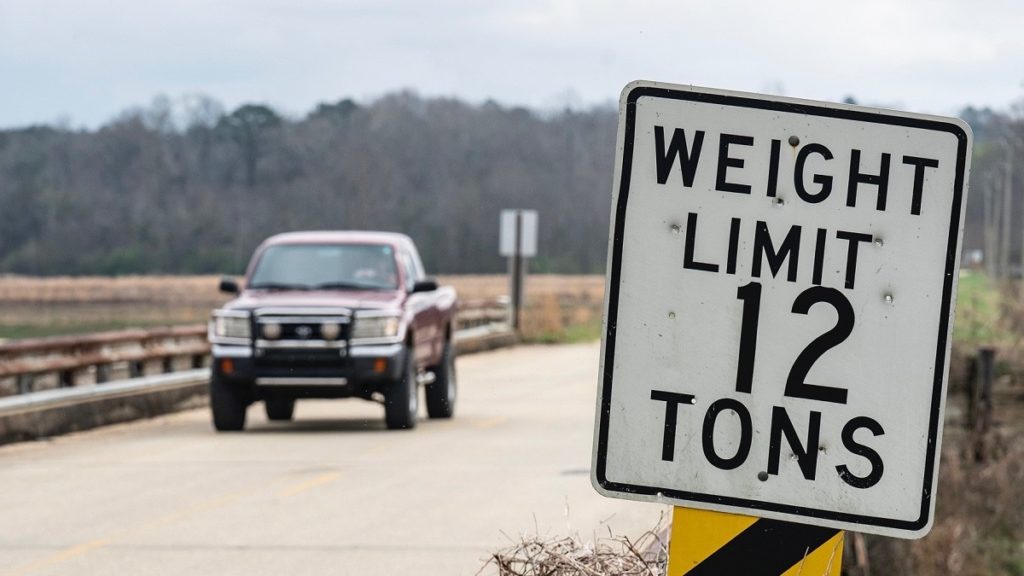
Alabama Commerce Secretary Greg Canfield said infrastructure improvements financed by Gov. Kay Ivey’s “Rebuild Alabama” plan would help the state’s economic development team sustain momentum as it seeks to recruit high-caliber jobs and companies. “I believe we need to focus on infrastructure as a key issue in Alabama at this critical time,” Canfield said. “We have had tremendous success in bringing great companies from around the globe to the state. For these companies to thrive and expand, Alabama needs to have the best roads and bridges it can.” Alabama’s economic development team registered impressive successes in 2018. The year’s biggest prize was a $1.6 billion Mazda-Toyota joint venture assembly plant that will create 4,000 jobs in Huntsville and accelerate growth in the state’s auto industry. “If we want to continue to attract world-class companies and high-paying jobs to Alabama, we need to make an investment in the state’s infrastructure system,” Canfield said. Ivey’s “Rebuild Alabama” plan calls for a 10-cent increase on the state’s fuel tax, rolled in over three years, to generate funding for improvements to the road network and at the Port of Mobile, the state’s only seaport. The governor this week called the Alabama Legislature into a Special Session, which began Wednesday, devoted solely to the infrastructure issue. The fuel tax has not been raised since 1992, even though it is the chief revenue stream for state funding of road repairs and improvements. Experts from the Alabama Transportation Institute at the University of Alabama noted in a January 2019 report that inflation, greater fuel efficiency and rising road construction costs have eroded the purchasing power of the fuel tax over time. Competitive disadvantage Other economic development leaders and business groups from around the state have joined Canfield in supporting the “Rebuild Alabama” plan as an investment in the future. Jim Searcy, executive director of the Economic Development Association of Alabama, said deficiencies in Alabama’s infrastructure system could soon begin to put the state at a disadvantage in the economic development process. “We are falling behind our neighboring states, the ones we most frequently compete with, in addressing our deteriorating infrastructure, and that’s crippling our ability to compete for investment and the jobs that investment creates,” Searcy said. Justice Smyth, the ATI’s outreach director and a former director of corporate development at the Montgomery Area Chamber of Commerce, said Alabama’s business-friendly environment and effective workforce development programs position the state to succeed in economic development. Alabama is not as strong in a third key area: the transportation network. “That’s where Alabama is struggling to stay as competitive as we are with the other aspects,” Smyth said. “Transportation is becoming more and more of a driver.” Revenue generated by Rebuild Alabama would permit the Alabama State Port Authority to make improvements to the ship channel providing access to the facilities at the Alabama State Docks. “Alabama’s port channel needs critical improvements to ensure Alabama industries remain competitive and enjoy transportation cost efficiencies to reach global markets,” said James K. Lyons, director and CEO of the Alabama State Port Authority. “Our port will fall behind competing ports, who are already modernizing their infrastructure, if our port is not deepened and widened.” Alabama Farmers Federation President Jimmy Parnell said the Rebuild Alabama plan would help the state’s agricultural industry and position rural areas for growth. “Poor and inadequate infrastructure is one of the greatest barriers to rural Alabama enjoying the same economic growth as larger cities,” Parnell said. The Business Council of Alabama, the state’s largest business group, also backs the infrastructure improvement plan. “The road to our future must be paved,” BCA President and CEO Katie Boyd Britt said. “Alabama’s transportation system is the backbone of the state’s economy and is crucial to our economic growth, and I commend Governor Ivey for making this a priority of her administration.” This story originally appeared on the Alabama Department of Commerce’s Made in Alabama website. Republished with permission from the Alabama NewsCenter.
Kay Ivey proposes 10-cent gas tax hike to pay for road improvement plan
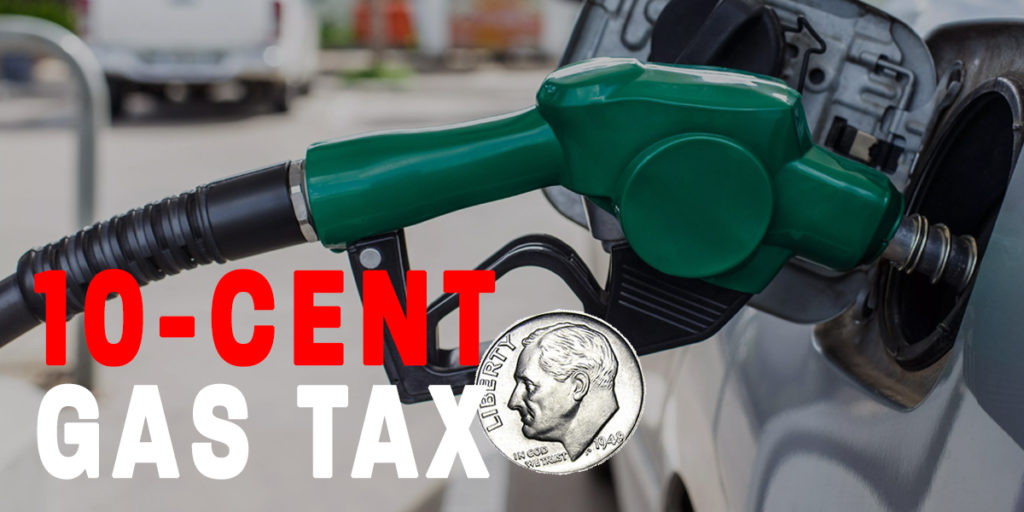
Gov. Kay Ivey announced her Rebuild Alabama Infrastructure Plan at a press conference on Wednesday that proposes raising the state’s gas tax 10-cents to pay for infrastructure improvements. Alongside a host of legislators, stakeholder groups and other state and local officials in Maplesville, Ala. Ivey proposed the fuel increase with an index designed to coincide with the rising costs of building roads. The state currently imposes a flat excise tax of 18 cents-per-gallon on gas and 19 cents-per-gallon on diesel, without adjusting for inflation and other construction and maintenance costs. This combined fuel tax revenue generates 80 percent of Alabama’s transportation funding. The plan’s 10-cent increase will be phased in over the next three years. New revenue generated by the increase will be dispersed between state, county, and municipal governments in Alabama. According to Ivey, these funds are to be used for transportation infrastructure improvement, preservation and maintenance projects. A separate portion of the revenues will go to pay a bond to be issued to finance improvements to the ship channel providing access to the facilities of the Alabama State Docks. “My Rebuild Alabama Infrastructure Plan is a comprehensive approach to a glaring issue affecting citizens in every corner of the state,” Ivey said announcing her plan. “After 27 years of stagnation, adequate funding is imperative to fixing our many roads and bridges in dire need of repair. By increasing our investment in infrastructure, we are also making a direct investment in public safety, economic development, and the prosperity of our state.” Moving the plan to state legislature Tuscaloosa-Republican state Rep. Bill Poole will sponsor the Rebuild Alabama bill during the 2019 Regular Legislative Session. “Today’s announcement is a major step in the right direction to improving Alabama’s infrastructure. I appreciate Governor Ivey for leading the charge and allowing me to help develop this plan,” Poole said. “A number of studies have concluded that Alabama’s aging infrastructure cannot continue to operate in its current state without severe consequences; these are simply facts we can’t ignore.” Pratville-Republican, State Senator Clyde Chamblisswill carry the bill in the Senate. “With one of the South’s biggest ports and the state’s growing economic development success, improving our poor infrastructure system allows us to remain competitive nationally and globally,” Chambliss said. “As a civil engineer, I applaud Governor Ivey’s efforts to address this pressing issue and look forward to working with stakeholders, from all levels of government, to ensure her infrastructure bill is successful.” Alabama’s infrastructure woes A 2019 report by the University of Alabama’s Alabama Transportation Institute and Alabama Transportation Policy Research Center found that cars and trucks are putting approximately 69 billion miles on Alabama’s roadways annually, a 17 percent increase over the past 15 years. With more travelers on the road, areas of congestion and public safety are a major concern to state officials. One-third of all traffic fatalities are estimated to be a direct result of a deficient roadway feature, according to the American Society of Civil Engineers. According to TRIP, a national transportation research group, 30 percent of major roads and highways in Alabama are in poor or mediocre condition because of inadequate state and local funding. In 2015, Alabama’s roads received a D+ grade in a report card released by the American Society of Civil Engineers. Ivey’s office says that ideally, county road resurfacing should operate on a 15-year schedule; yet, county governments are currently operating on a 56-year schedule. Additionally, a striking 1,200 bridges are classified as structurally deficient in Alabama, ranking the state as 17th in the nation. Even worse, counties should be operating on a 50-year bridge replacement schedule, but they are actually operating at a rate of 186 years. State government currently provides 40 percent of Alabama’s total transportation funding, while the rest comes from the federal government. However, increasing uncertainty about federal infrastructure funding has created a sense of urgency for states to have reliable funding sources. Over the past five years, 37 states have increased revenue in some way for their transportation budget.
