
Fed set to leave rates alone amid signs of rising inflation
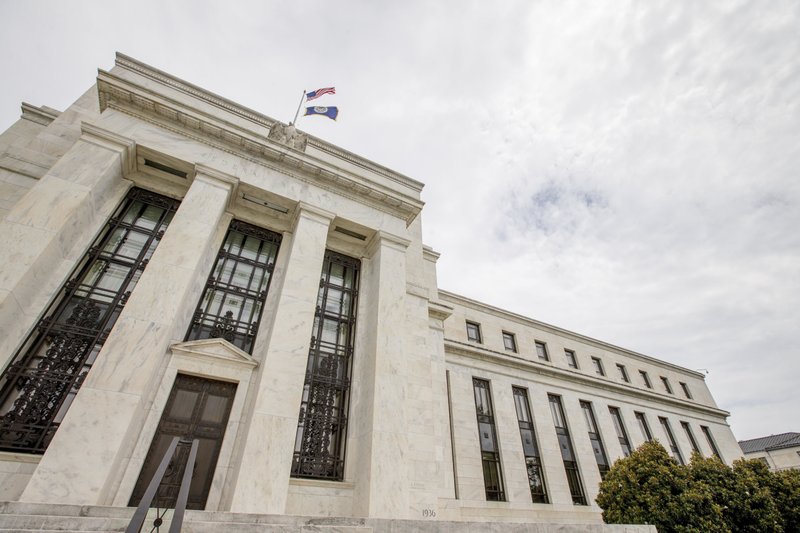
The Federal Reserve achieved an inflation milestone this week, but that isn’t likely to alter expectations for what the Fed will announce when its latest policy meeting ends Wednesday. After six years of mostly missing its annual 2 percent target for inflation, the Fed learned Monday that its preferred gauge of consumer inflation had reached a year-over-year pace of 2 percent. And in the coming months, inflation is widely expected to stay around that level. The debate the Fed is now likely to have is whether it should accept a period in which inflation rises above 2 percent without accelerating its pace of rate increases. But for now, a rate increase is considered unlikely. In a statement it will issue Wednesday afternoon, the Fed is expected to leave its benchmark rate unchanged at a still-low level of 1.5 percent to 1.75 percent. Solid economic growth, low unemployment and evidence of inflation pressures, though, are expected to keep the central bank on a path of gradual rate hikes the rest of the year. Most Fed watchers foresee either two or three additional increases in the Fed’s key rate by year’s end, coming after an earlier hike in January. The central bank is meeting as its board is undergoing a makeover, with a raft of new appointees by President Donald Trump who appear generally supportive of the Fed’s cautious approach to rates since the Great Recession ended. Despite Trump’s complaints during the presidential race that the Fed was aiding Democrats in keeping rates ultra-low under President Barack Obama, his choices for a chairman and for other slots on the Fed’s board have been moderates rather than hard-core conservatives who would favor a faster tightening of credit. “The Trump Fed could have been a much more hawkish Fed but so far, these choices are pretty middle-of-the road,” said Diane Swonk, chief economist at Grant Thornton in Chicago. As Jerome Powell, Trump’s hand-picked new Fed chairman, said at a news conference after the central bank’s most recent meeting in March, “We’re trying to take the middle ground, and the committee continues to believe that the middle ground consists of further gradual increases in the federal-funds rate.” Bond investors are signaling that they expect a pickup in U.S. inflation, having bid up the yield on the 10-year Treasury note last week above 3 percent before the yield settled just below that by week’s end. A year ago, the 10-year yield was just 2.3 percent. Under Powell’s predecessors, Janet Yellen and Ben Bernanke, the Fed’s board endured criticism from House Republicans over its decision to pursue a bond purchase program designed to lower long-term borrowing rates and to leave its key rate at a record low near zero for seven years. The critics charged that those policies would eventually produce destructive bubbles in the prices of stocks and other assets and, eventually, undesirably high inflation. But so far, Trump’s reshaping of the Fed’s board reflects a generally status quo approach. “Trump’s criticisms during the campaign have not been borne out by his decisions on who to put on the Fed,” said Mark Zandi, chief economist at Moody’s Analytics. Since the Fed began raising rates in December 2015, the pace has been modest and gradual: One quarter-point rate increase in 2015, one in 2016, three in 2017 and one so far this year. When the Fed announced its most recent rate hike in March, it forecast that it would raise rates twice more this year. But some economists think that the Fed will respond to the increased government stimulus in the form of tax cuts and higher spending to accelerate the rate hikes slightly from three to four this year. Congress in December passed a $1.5 trillion tax cut that took effect in January. And then in February, it approved $300 billion more in government spending for this year and next year. That stimulus, coming at a time when unemployment is at a 17-year low of 4.1 percent, could raise the threat of higher inflation. Yet even against this backdrop, the prevailing view is that the Trump-shaped Fed will remain cautious about rate increases. “The central bank does not want to make the mistakes made in the past when the Fed raised rates too high, too fast and became the No. 1 cause of a recession,” said Sung Won Sohn, an economics professor at California State University, Channel Islands. Republished with the permission of the Associated Press.
Nearly half of states expect to confront big budget gaps
With the nation’s economy at its healthiest since the Great Recession, a surprising trend is emerging among the states — large budget gaps. An Associated Press analysis of statehouse finances across the country shows that at least 22 states project shortfalls for the coming fiscal year. The deficits recall recession-era anxiety about plunging tax revenue and deep cuts to education, social services and other government-funded programs. The sheer number of states facing budget gaps prompted Standard & Poor’s Ratings Service to call the trend a sort of “early warning.” “After all, if a state is grappling with a budget deficit now, with the economic expansion approaching its sixth anniversary, what will be its condition when the next slowdown strikes?” credit analyst Gabriel Petek wrote in a recent report. The forces at work today are somewhat different than when the recession took hold in 2008. In some states, revenue growth has been stagnant, missing projections and making it difficult to keep pace with expanding populations and rising costs for health care and education. Other states have been hurt by a steep decline in oil prices or have seen their efforts to promote growth through tax cuts fail to work as anticipated. The result is a nation divided between states such as California and Colorado that are riding the wave of the economic recovery and others such as Illinois and Pennsylvania that appear closer to bust than boom. A majority of states have failed to climb back to their pre-recession status, in terms of tax revenue, financial reserves and employment rates, said Barb Rosewicz, who tracks the fiscal health of states for The Pew Charitable Trusts. Alabama, for example, faces a $290 million shortfall after a voter-approved bailout expires at the end of the current fiscal year. Projected cuts would create a $27 million hole in the state’s court system, forcing more than 600 layoffs and leaving just one juvenile probation officer and two clerical staffers in each county, said Rich Hobson, administrative director for the Alabama Unified Judicial System. If nothing is done, the courts will not have the staff to send jury notices, monitor juvenile delinquents, process protection orders and collect and distribute child support payments, he said. “This is an insane proposition,” Hobson said. “The public would suffer.” To avoid the cuts, Republican Gov. Robert Bentley has proposed raising $541 million through increases in the tobacco tax and sales taxes on automobiles. A top Republican in the Alabama Senate has introduced a gambling bill that would ultimately ask voters to decide whether to create a state lottery and allow four casinos. Lawmakers in some other states, including Nevada, Connecticut and Pennsylvania, have also debated whether to raise taxes. Nationally, total tax revenue coming to the states has been rising, but the pace has been slow as employment continues to lag pre-recession levels in more than half the states, according to the Pew Charitable Trusts. Pew also found that 30 states are collecting less revenue than at their peak. “What we are seeing across states right now is an economic and financial recovery that is a little bit different than the recoveries we’ve seen in the past,” said Emily Raimes, a vice president with Moody’s Investors Service who tracks state government finances. Previous recoveries were broader, she said, benefiting more states and allowing them to replenish their financial reserves. The Census Bureau recently reported that total state government tax collections in fiscal year 2014, which in most states ended last June, increased 2.2 percent over the previous fiscal year. That represented the fourth consecutive overall increase, but 17 states reported declines in tax revenue from the previous fiscal year, according to the report. Alaska saw the biggest drop, of $1.7 billion. Alaska relies heavily on oil revenue and projects a $3.2 billion budget shortfall for the coming fiscal year. A special legislative session has been called after lawmakers failed to agree on a way to fund the budget, even though the state has plenty of money in reserves to cover the gap. That’s not the case in Illinois, where lawmakers are trying to figure out how to close a $6 billion projected shortfall for the next fiscal year, largely because of the expiration of a temporary tax increase. Republican Gov. Bruce Rauner, who campaigned against the tax plan, has suggested cuts to health care, local governments and other areas. But lawmakers in the Democratic-led General Assembly say spending cuts alone will not close the gap. In Kansas, the Republican governor and GOP-dominated Legislature now confront budget deficits after aggressive tax cutting that prompted them to reduce school funding this spring. Districts across the state have cut staff and programs such as summer school, and at least eight are ending the current school year early to save money. That includes the Shawnee Heights district outside Topeka, where students will begin their summer break two days early. Lawmakers passed a new school funding law that promises the money will be restored and state aid will rise each of the next two fiscal years, but educators are skeptical. “There’s no rational person in education who would think we’ll be getting that money, when the state budget is tanking,” said Charles Walther, a middle school history, government and geography teacher who heads the district union. Republished with permission of The Associated Press.
