
Oprah Winfrey-backed ‘Rape of Recy Taylor’ recounts woman’s ordeal
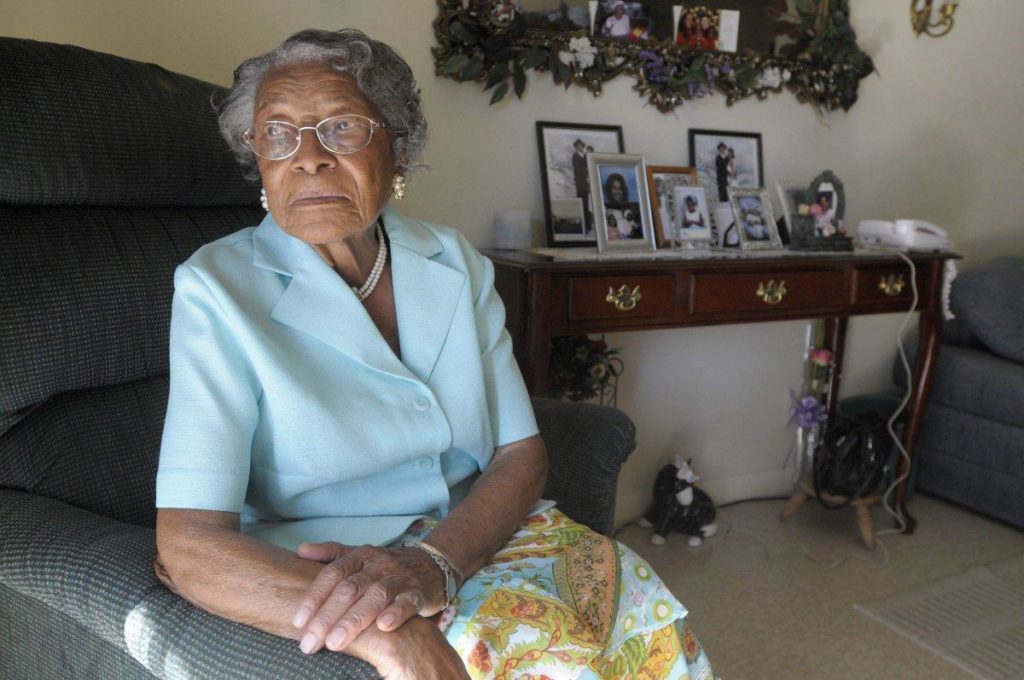
When Oprah Winfrey saluted unheralded #MeToo crusaders at the Golden Globes last January, she chose a rape victim from 1940s Alabama to drive home her point. “Recy Taylor, a name I know, and I think you should know, too,” Winfrey said, sketching the outlines of the African-American woman’s assault by six white Alabama youths and her quest for justice. Taylor’s wrenching story and its connection to female civil rights activists, most notably Rosa Parks, are illuminated in filmmaker Nancy Buirski’s documentary “The Rape of Recy Taylor” (airing 9 p.m. EDT Monday on the Starz channel). Taylor, who died last December at age 97 shortly after the film’s theatrical release, is seen and heard briefly in it. Her words are powerful despite her frailty. “I can’t but tell the truth of what they done to me,” she said, condemning both her attackers and the authorities who weren’t “concerned about what happened to me.” The film mixes orthodox documentary elements — accounts from Taylor’s relatives and other contemporaries, the perspectives of historians — with haunting visual touches and music such as Fannie Lou Hamer’s “Go Tell It on the Mountain.” It blends into somber, unsettling poetry. There are clips from so-called “race films,” vintage movies made by African-American moviemakers, including one in which a distraught woman flees from unseen danger. In a scene from Oscar Micheaux’s “Within Our Gates” (1920), a white man attacks a black woman. The movie excerpts help “communicate very quickly that this didn’t just happen to Recy Taylor” and help broaden one woman’s ordeal to a “much larger canvas” about the peril black women faced, filmmaker Buirski said. In 1944, Taylor, then 24, married and a mother, was walking to her Abbeville, Alabama, home after an evening church service with two friends, an older woman and her 18-year-old son. Local whites out joyriding stopped them and, at gunpoint, demanded Taylor get in their car. They raped her repeatedly and, after forcing money into her hand, released her after she agreed to remain silent. She stumbled home “crying and upset,” recalls her brother, Robert Corbitt. “Those young boys felt like they can do it and get away with it. They really felt like they could. They know nothing was going to happen to them.” But Taylor fought back, recounting the assault to the local sheriff. Her courage put her family at risk — their home was firebombed — and eventually led to two faint-hearted, failed efforts to bring the case to trial in the Jim Crow South. The roots of such inaction run deep. Yale associate professor Crystal N. Feimster, who is part of the documentary, has written that it was a legal impossibility for a female slave to file rape charges against a white man in any Southern state before 1861. Northern black newspapers doggedly covered Taylor’s case as it unfolded, prompting African-American protests and action by the NAACP. The civil rights group dispatched Parks, then the secretary in its Montgomery, Alabama, office, to meet with Taylor — before Parks gained fame as the woman whose refusal to move to the back of a segregated bus sparked a powerful boycott. In a newspaper photo taken at the time, Taylor stares directly at the camera with an expression both stolid and determined. It’s a portrait of a young woman prepared to stand her ground. At one point, the Abbeville sheriff dismissed Taylor as “nothing but a whore” whom he’d arrested before, then admitted she had never been jailed and that she and her family were of good reputation. Filmmaker Buirski, who recounted the groundbreaking interracial marriage of Richard and Mildred Loving in a documentary and was a producer on the big-screen drama “Loving,” learned of Taylor from historian Danielle L. McGuire’s 2010 book, “At the Dark End of the Street: Black Women, Rape, and Resistance.” “One of the things that I felt so strongly about in this film (and the ‘Loving’ documentary) is you have people who have the moral courage to stand up, and they change history as a result,” Buirski said. “They don’t have to be activists. Anybody can change history.” There’s a question she’s fielded before, about why a white New Yorker felt compelled to make a film about Taylor, and she has a ready answer. “I do feel that whites and blacks should be telling stories about each other. I think that whites in particular have a responsibility to deal with this information because whites really are the reason for the suffering that a lot of blacks had,” she said. Was she the right person to make the documentary? “I’m the first person to say I don’t know what it’s like to be in a black woman’s skin,” one who would recount Taylor’s life and times differently and maybe better, Buirski said. But, she added, it’s up to African-American filmmakers to make “The Rape of Recy Taylor” the first “in a volley of stories” about her, not the last. Republished with permission from the Associated Press.
Oprah visits grave of Alabama civil rights icon Recy Taylor
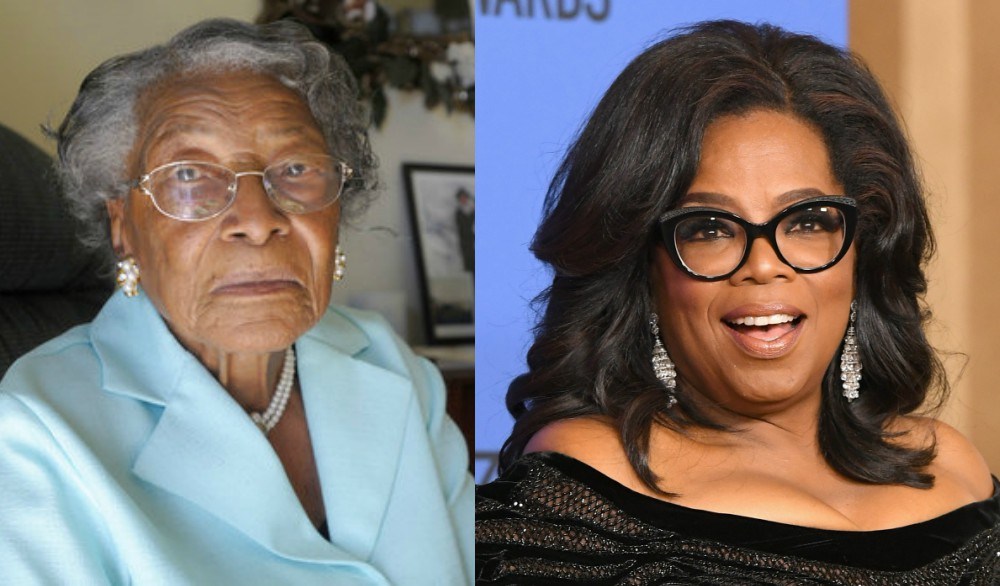
On Tuesday, Oprah Winfrey visited the grave of Recy Taylor, an African-American Alabama woman whose story Winfrey highlighted in her recent Golden Globes speech. Taylor was a 24 year old sharecropper in Abbeville, Ala. when she was kidnapped and raped by six men as she walked home from church. The case never went to trial, and two all-white, all-male juries refused to indict the men who confessed to assaulting her. The NAACP heard of the atrocious acts and assigned a young Rosa Parks to interview Taylor in Abbeville. Parks eventually helped move Taylor to Montgomery in an effort to avoid revenge from her attackers. Taylor died in December, just before her 98th birthday, and just three weeks after the release of “The Rape of Recy Taylor,” a documentary about the crime committed against her and systematic injustice. Winfrey posted the following caption on an Instagram post documenting the event: I don’t believe in coincidences, but if I did this would be a powerful one. On assignment for @60minutes I end up in the town of Abbeville where #RecyTaylor suffered injustice , endured and recently died. (GGspeech) To be able to visit her grave so soon after ‘speaking her name ‘sharing her story, a woman I never knew. Feels like🙏🏾☁️❤️ A post shared by Oprah (@oprah) on Jan 23, 2018 at 4:57pm PST “I don’t believe in coincidences, but if I did this would be a powerful one. On assignment for 60 Minutes I end up in the town of Abbeville where RecyTaylor suffered injustice, endured and recently died. To be able to visit her grave so soon after ‘speaking her name ‘sharing her story, a woman I never knew.”
Oprah Winfrey honors Alabama’s Recy Taylor in Golden Globe Awards speech
At the 2018 Golden Globe Awards Sunday night, Oprah Winfrey was honored with the Cecil B. DeMille Award for lifetime achievement. During her acceptance speech, Winfrey brought the Golden Globes crowd to its feet with a powerful speech where she called out sexual harassers around the world: “Their time is up.” In her speech, Winfrey told the story of Abbeville, Ala.-native Recy Taylor, a black civil rights activist who died late last month just days before her 98th birthday. Taylor was raped by a group of white men in Alabama in 1944. The horrific incident ultimately led her spearhead an anti-rape activism movement in the Jim Crow South. With the help of Rosa Parks — who was assigned the case by the NAACP — Taylor took on her attackers in court where two all-white, all-male grand juries decline to indict the men who admitted to authorities that they assaulted her. “Recy Taylor died 10 days ago. She lived too many years in a culture broken by brutally powerful men. Women were not believed,” Winfrey said, before adding to the abusive men, “their time is up.” Read the transcript of the segment of Winfrey’s speech mentioning Taylor: And there’s someone else, Recy Taylor, a name I know and I think you should know, too. In 1944, Recy Taylor was a young wife and mother walking home from a church service she’d attended in Abbeville, Alabama, when she was abducted by six armed white men, raped, and left blindfolded by the side of the road coming home from church. They threatened to kill her if she ever told anyone, but her story was reported to the NAACP where a young worker by the name of Rosa Parks became the lead investigator on her case and together they sought justice. But justice wasn’t an option in the era of Jim Crow. The men who tried to destroy her were never persecuted. Recy Taylor died ten days ago, just shy of her 98th birthday. She lived as we all have lived, too many years in a culture broken by brutally powerful men. For too long, women have not been heard or believed if they dare speak the truth to the power of those men. But their time is up. Their time is up. Their time is up. And I just hope — I just hope that Recy Taylor died knowing that her truth, like the truth of so many other women who were tormented in those years, and even now tormented, goes marching on. It was somewhere in Rosa Parks’ heart almost 11 years later, when she made the decision to stay seated on that bus in Montgomery, and it’s here with every woman who chooses to say, “Me too.” And every man — every man who chooses to listen. Winfrey’s moving speech have led many to call on her to run against President Donald Trump for President in 2020. “She launched a rocket tonight. I want her to run for president,” famed actress Meryl Streep told The Washington Post from the ballroom at the end of the awards show. “I don’t think she had any intention [of declaring]. But now she doesn’t have a choice.” NBC has since deleted a controversial tweet made during the award show. The official NBC handle tweeted Oprah will be “OUR future president” during the opening monologue.
Recy Taylor, Alabama civil rights icon, dies at 97
Recy Taylor, the black woman from Alabama whose rape by six white men drew national attention in 1944, passed away on Thursday morning just days before her 98th birthday on Sunday. Taylor’s brother, Robert Corbitt, confirmed with NBC News she died in her sleep at a nursing facility in her hometown of Abbeville, Ala. Taylor was 24 when she was kidnapped at gunpoint and brutally raped by six white men while walking home to her husband and young daughter after a late church service. “After they messed over and did what they were going to do me, they say, ‘We’re going to take you back. We’re going to put you out. But if you tell it, we’re going to kill you,’” Taylor told NPR in 2011. The horrific incident ultimately led her spearhead an anti-rape activism movement in the Jim Crow South. With the help of Rosa Parks — who was assigned the case by the NAACP — Taylor took on her attackers in court. Two all-white, all-male grand juries decline to indict the white men who admitted to authorities that they assaulted her. Over 70 years later, in 2011, Taylor finally received an apology from The Alabama Legislature, who passed a resolution apologizing.
