
GOP governors get into the ‘news’ business
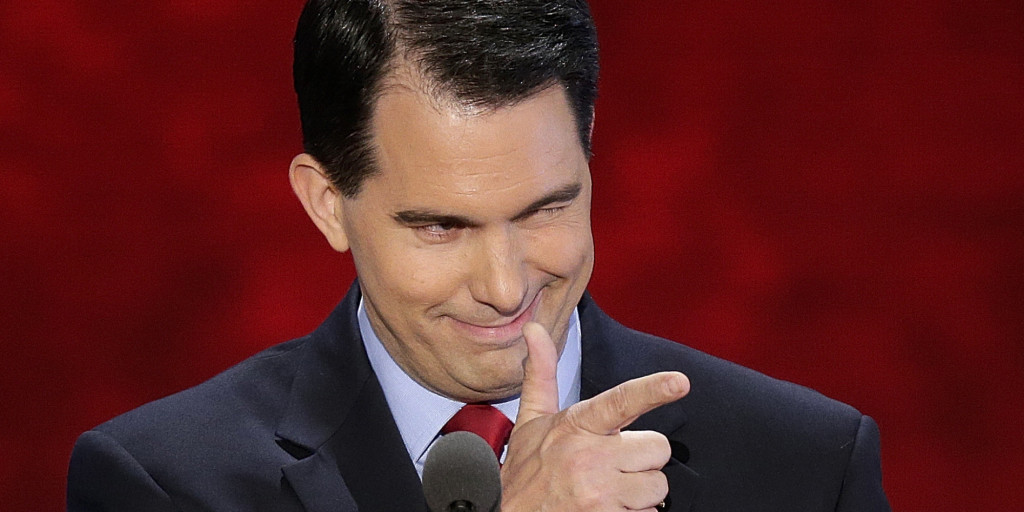
Republican governors are getting into the “news” business. The Republican Governors Association has quietly launched an online publication that looks like a media outlet and is branded as such on social media. The Free Telegraph blares headlines about the virtues of GOP governors, while framing Democrats negatively. It asks readers to sign up for breaking news alerts. It launched in the summer bearing no acknowledgement that it was a product of an official party committee whose sole purpose is to get more Republicans elected. Only after The Associated Press inquired about the site last week was a disclosure was added to The Free Telegraph’s pages identifying the publication’s partisan source. The governors association describes the website as routine political communication. Critics, including some Republicans, say it pushes the limits of honest campaign tactics in an era of increasingly partisan media and a proliferation of “fake news” sites, including those whose material became part of an apparent Russian propaganda effort during the 2016 presidential campaign. “It’s propaganda for sure, even if they have objective standards and all the reporting is 100 percent accurate,” said Republican communications veteran Rick Tyler, whose resume includes Ted Cruz‘s 2016 presidential campaign. The website was registered July 7 through Domains By Proxy, a company that allows the originators of a website to shield their identities. An AP search did not find any corporate, Federal Election Commission or IRS filings establishing The Free Telegraph as an independent entity. As of early Monday afternoon, The Free Telegraph’s Twitter account and Facebook page still had no obvious identifiers tying the site to RGA. The site described itself on Twitter as “bringing you the political news that matters outside of Washington.” The Facebook account labeled The Free Telegraph a “Media/News Company.” That’s a contrast to the RGA’s Facebook page, which is clearly disclosed as belonging to a “Political Organization,” as is the account of its counterpart, the Democratic Governors Association. RGA Chairman Scott Walker, governor of Wisconsin, deferred questions through a spokesman to the group’s national staff. At RGA, spokesman Jon Thompson said the site is “just another outlet to share those positive results” of the GOP’s 34 Republican governors. It’s not unprecedented for politicians to try their hand at news distribution. President Donald Trump‘s daughter-in-law, Lara Trump, hosted “real news” video segments in the summer, posted to the president’s Facebook page. In one typical segment she told viewers she wanted to highlight “all the accomplishments the president had this week because there’s so much fake news out there.” Vice President Mike Pence, when he was Indiana governor, pitched the idea of a news agency run by state government, but he ditched the idea in 2015 after criticism. In both cases, however, Lara Trump and Pence were not aiming to hide the source of the content. But the RGA site has Democrats, media analysts and even some Republicans crying foul. Democrats say Republicans are laying the groundwork with headlines that will appear in future digital and television ads, while also providing individual voters with fodder to distribute across social media. “They’re just seeding the ground,” said Angelo Carusone, who runs Media Matters, a liberal watchdog group. “They are repackaging their opposition research so it’s there as ‘news,’ and at any moment that publication could become the defining moment of the narrative” in some state’s campaign for governor. Political communications expert Kathleen Hall Jamieson, a University of Pennsylvania professor who has studied political advertising for four decades, said The Free Telegraph commits a form of “identity theft” by “appropriating the integrity of news” because “the form of news carries credibility” that blatantly partisan sites do not. Jamieson was particularly critical of RGA’s initial failure to disclosure its involvement. “What we know about audiences is they factor in the source of information when judging that information,” she said. “If you are denying the reader, the listener or the viewer information you know the reader uses, the question is why do you feel the need to do this?” A recent RGA fundraising email said the site was “fact-checking the liberal media” and is a counter to “decades of demonizing Republicans.” Playing off President Donald Trump’s dismissal of “fake news,” the email said media “can say whatever they like about us – whether it’s true or not.” Some of The Free Telegraph’s content plays off of material from traditional media organizations and from right-leaning outlets such as The Daily Caller. RGA press releases are linked. Some headlines and photos are exact duplicates of RGA press releases. In the days after Hurricane Harvey made landfall in Texas and Louisiana, the site included headlines praising Texas Gov. Greg Abbott, a Republican, for his response. There were no such headlines for Louisiana Gov. John Bel Edwards, a Democrat. The content is far tamer than from some sites from that popped up during the 2016 presidential campaign to propagate sensational but baseless stories. But it does create a cache of headlines that could turn up in campaigns. The first test is in this fall’s Virginia governor’s race pitting Democratic nominee Ralph Northam against Republican Ed Gillespie. Virginians already have seen another site, The Republican Standard, that is run by Virginia Republican operatives with ties to Gillespie, a former state and national party chairman, and to a firm that has been paid by the RGA. The Free Telegraph and its social media accounts frequently link The Republican Standard. Northam campaign spokesman David Turner accused Gillespie and Republicans of “creating their own Pravda,” a nod to the official newspaper of the Communist Party of the Soviet Union. The Gillespie campaign declined comment, referring questions back to the RGA. Republished with permission from the Associated Press.
New Mexico Gov. Susana Martinez throws support behind Marco Rubio
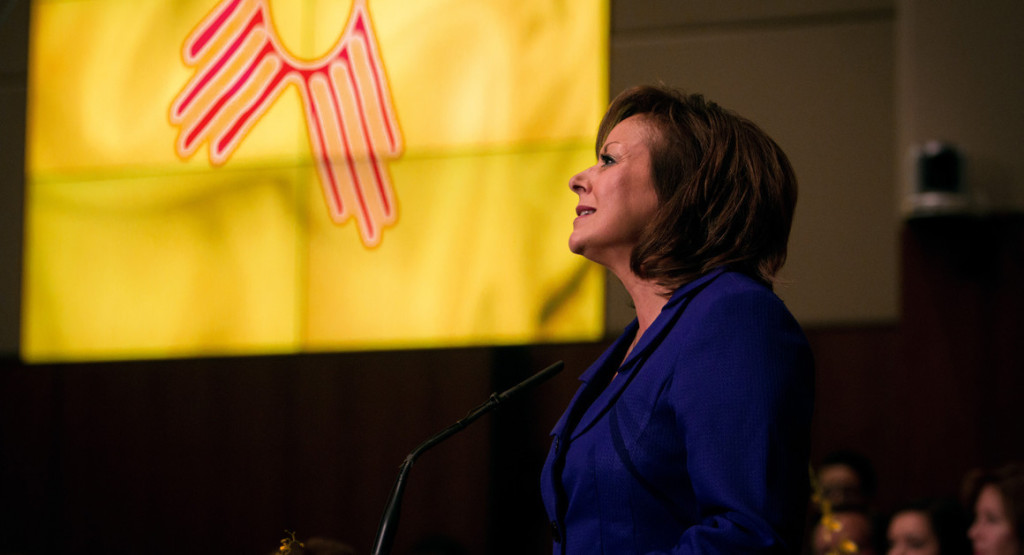
New Mexico Gov. Susana Martinez is throwing her support behind Marco Rubio. Martinez announced Thursday she was endorsing Rubio. The New Mexico Republican is expected to campaign with the Florida Republican in Kansas and Florida later this week. “Marco Rubio is a compelling leader who can unite the country around conservative principles that will improve the lives of all Americans,” she said in a statement. Martinez is the first Hispanic female governor in the United States. She’s also the first female governor in New Mexico’s history. She currently serves as the chairwoman of the Republican Governors Association. According to POLITICO, which first reported the endorsement this morning, Martinez wouldn’t commit to back Republican frontrunner Donald Trump if he becomes the Republican nominee. “The stakes for our great country are too high — and the differences between the candidates too great — for me to remain neutral in this race,” said Martinez in a statement. “I wholeheartedly trust Marco to keep us safe and ensure a better tomorrow, and I look forward to campaigning with him later this week.”
Robert Bentley: ‘there were few questions answered’ during White House Syrian refugee call
Governor Robert Bentley was among a group of 34 governors who were on a conference call with the White House Tuesday about the Obama Administration’s plans to take in roughly 10,000 refugees from Syria. White House officials arranged the 90-minute call, led by White House chief of staff Denis McDonough, after dozens of state leaders rejected the program in the wake the Paris terrorist attacks. Bentley is one of 28 of the nation’s governors, which accounts for more than half, that has since moved to block Syrian refugees from resettling in their states. “While the White House attempted to share information with Governors who have refused the relocation of Syrian refugees out of concern for their state’s security, there were few questions answered by the Obama Administration,” explained Bentley. “In a letter to the President yesterday, I expressed my frustration over the lack of information provided to states on how Syrian refugees are vetted. Other Governors shared those same concerns on the call with the White House. Governors expressed frustration over the failure to communicate with states. Federal officials admitted the refugee process is flawed and outdated and may need to be revised given the terrorists attacks in Paris.” Officials from the White House, the Department of Homeland Security, the FBI, the National Counterterrorism Center, and the Department of State arranged the call to provide information about their refugee-screening measures and policies, and address concerns raised by governors in the wake of the terror attacks on Paris. “Despite Tuesday’s call, I still have strong concerns on the vetting process of Syrian refugees,” Bentley continued. “I am joining fellow Governors this week to discuss this important issue at the Republican Governors Association Annual Conference. I will continue to press the Obama Administration for answers and will keep the safety and security of Alabamians a top priority.”
‘Lean and mean’ campaigns enable GOP candidates to endure
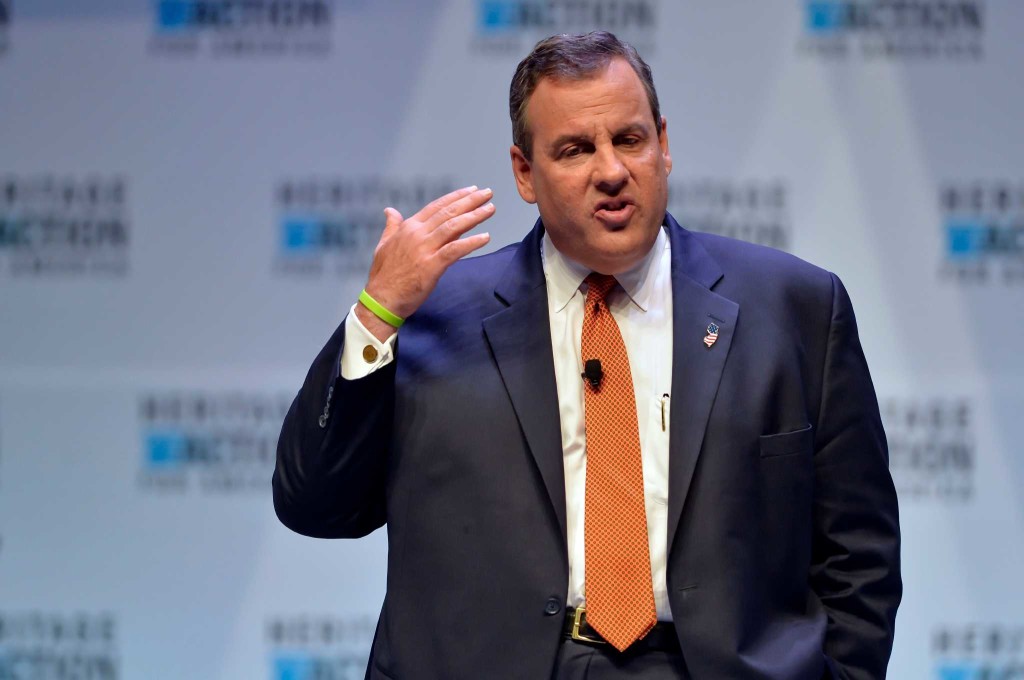
As Scott Walker gave up on his 2016 presidential race this week, he implored other Republicans in the crowded field to follow his lead and drop out – so that one could rise to challenge front-runner Donald Trump. None appears likely to do so anytime soon. Walker stood out in the GOP race with his unsustainable mix of lackluster fundraising and an expensive campaign operation. Few if any of the 15 remaining candidates feel the intense financial pressures that he did, according to a review of fundraising records and interviews with campaign staff. “We certainly don’t have a massive campaign mousetrap that we can’t pay for,” said Curt Anderson, a senior strategist for Louisiana Gov. Bobby Jindal, a presidential hopeful who, as was Walker, is at the bottom of early preference polls. “Maybe other campaigns have gotten a bit out over their skis, but no one quite like he had.” In the 70 days between Walker’s kickoff and his exit from the race, the Wisconsin governor built the kind of campaign operation that more closely resembled that of a party nominee, with nearly 100 employees. Former aides and top donors said Walker’s team crafted a pricey plan to introduce him nationwide, but struggled to raise the millions of dollars needed to pay for the strategy. “People don’t stop running for president because they run out of ideas or they run out of a desire to give speeches,” said Terry Sullivan, Marco Rubio‘s campaign manager, at a panel discussion Monday in Washington. “They stop running because they run out of money.” Walker didn’t even last long enough to file his first formal campaign finance report. The next reports are due in mid-October, and it’s then that Rubio, Jindal and others in the race will have to disclose how their fundraising – and campaign spending – is shaping up. Chris Christie, the governor of New Jersey, was known for expensive tastes while serving as a U.S. attorney and chairman of the Republican Governors Association, preferring chartered planes and luxury hotels for his past politicking. But without an influx of big campaign money and little movement in early polls, his aides say, he’s been thrifty in his three months as a presidential candidate. He generally flies commercial and has traded resorts and high-end meals for Radissons and Mexican food joints. In a fundraising pitch emailed on Wednesday, Matt Mowers, Christie’s New Hampshire director, wrote that $22 lets him invite 50 people to town halls. “Any amount helps,” he wrote. “As we keep this team `lean and mean’ we use this contribution wisely.” While Rubio’s campaign took in about $9.8 million through the end of June, far more than most of the other candidates, his operation is eager to emphasize thriftiness. Sullivan said at a Monday gathering of campaign managers that he personally must approve any expense over $500. He said Rubio almost always flies commercial – even ultra-cheap airlines on occasion. One reason the candidates seem anxious to portray themselves as penny pinchers: Not much money is coming in. The usual summertime fundraising slowdown was exacerbated this year by the dominance of Trump, the billionaire celebrity and real estate mogul who is mostly paying for his own campaign. Many reliable Republican donors are sitting on their wallets until, as Walker advocated, the contest narrows to fewer candidates. And as the departures of Walker and former Texas Gov. Rick Perry show, super PACs and their ability to raise unlimited amounts from wealthy donors can be only so helpful, because those groups are barred from taking directions from the candidate they’re helping. That means super PACs can’t legally pay for the basic expenses of running for president, such as candidate travel and official campaign employees. Most of the underdogs have been eager to portray themselves as scrappy all along. Those who, like Walker, have low-digit support in most recent national surveys have only a handful of employees and are focused on a single state, such as first-to-vote Iowa. That group includes Jindal, South Carolina Sen. Lindsey Graham, former Virginia Gov. Jim Gilmore, former New York Gov. George Pataki and former Pennsylvania Sen. Rick Santorum. “This is the survivor portion of the campaign,” said Matt Beynon, a Santorum spokesman. “You have to build an organization for the resources that you really have, not for the resources you expect or want to have.” Santorum is taking a page from his own playbook. He raised just $920,427 by the time Iowa voters caucused in January 2012. But his strategy of driving himself around in a pickup truck to each of the state’s 99 counties worked: He narrowly won. This time, he raised a little over $650,000 in his first month as a candidate. “Santorum,” Beynon said, “is a master at running underfunded campaigns.” Republished with permission of the Associated Press.
Mitt Romney hosts holiday sleepover with Chris Christie, Marco Rubio
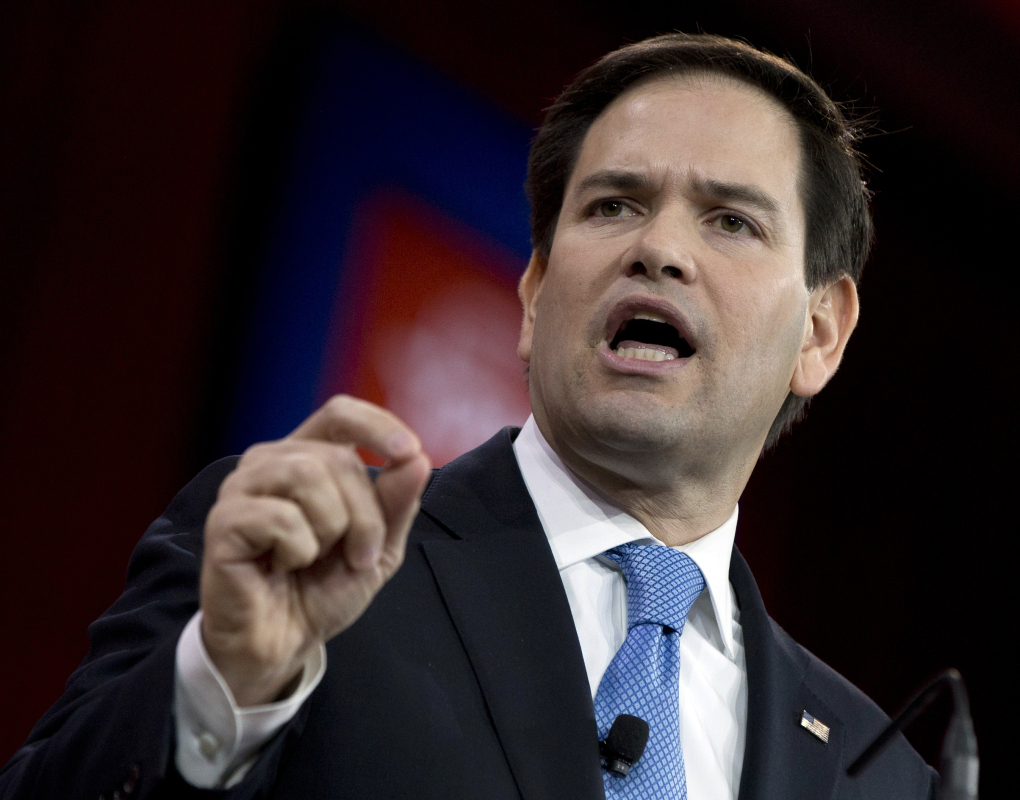
2012 GOP nominee Mitt Romney will be hosting two rival Republican presidential contenders at a holiday sleepover Friday evening. New Jersey Gov. Chris Christie and Florida Sen. Marco Rubio will both be staying over at Romney’s property in Wolfeboro, New Hampshire, an aide to Romney confirmed. The aide, who spoke on the condition of anonymity because of what the aide called the private nature of the event, said the former governor and his wife opened their home to the Christie and Rubio families after hearing they would be in town for the holiday weekend. Both candidates are scheduled to march in Wolfeboro’s Fourth of July parade. Christie, who formally jumped into the race this week, told reporters in New Hampshire Friday that he was grateful for the invitation. “I suspect there might be a little politics discussed tonight with Mitt and Ann, but me and Mary Pat, and Andrew and Sarah are really happy that Mitt and Ann invited us to stay with them tonight,” he said, according to video posted by NJ.com. A Rubio spokesman declined to comment. Romney had considered another run for president in 2016, but announced in January that he’d decided against it. His endorsement is now coveted. The Washington Post reported Friday night that Romney would meet next week with former Florida Gov. Jeb Bush, another GOP contender, at the Bush family compound in Kennebunkport, Maine. Christie was a top surrogate for Romney’s 2012 campaign and was considered a potential vice presidential contender. But he continues to receive heat in some Republican circles for leaving the trail and embracing President Barack Obama after New Jersey was hit by Superstorm Sandy just before the election. Christie’s campaign also announced some of its top staffers Friday. The campaign will be managed by Ken McKay, who formerly worked for the Republican National Committee and Republican Governors Association. Republished with permission of the Associated Press.
Chris Christie promises blunt campaign as he enters crowded 2016 race
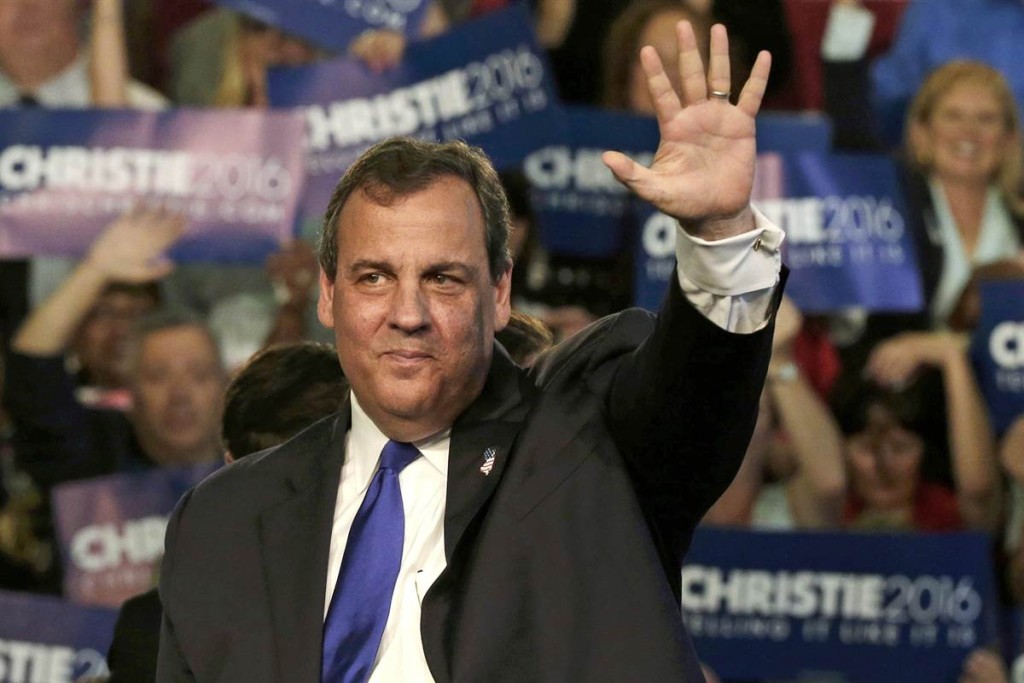
A tough-talking New Jersey Gov. Chris Christie launched his 2016 campaign for president Tuesday with a promise to tell voters the truth even if it makes them cringe. The Republican governor, a one-time GOP favorite who faded and now tries to climb back, lashed out at “bickering leaders” from both political parties in a kickoff rally in the gymnasium of his old high school. And in his trademark blunt style, he told voters – and warned Republican rivals – that he’s ready to be aggressive in the 2016 contest. “You’re going to get what I think whether you like it or not, or whether it makes you cringe every once in a while or not,” Christie declared. He added: “I am now ready to fight for the people of the United States of America.” Christie enters a Republican presidential field that already has more than a dozen GOP candidates. Not all draw as much attention as Christie, who will compete for the same slice of the electorate as pragmatic-minded White House hopefuls such as former Florida Gov. Jeb Bush. But it’s an accomplished lineup of governors, senators and business people. Christie’s effort is largely driven by his outsized personality, and his resume, while notable, contains scattered land mines that have given many Republicans pause. Four years ago, some of Christie’s backers tried to persuade him to challenge President Barack Obama. In the years since, he won re-election with ease, but also struggled to revive New Jersey’s moribund economy and fought with the state’s Democratic-controlled legislature over pensions and the state budget. While Christie’s turn as head of the Republican Governors Association was widely viewed as a success in the 2014 midterm elections, he’s also faced the fallout from the actions of three former aides, charged with creating politically motivated traffic jams at a bridge to retaliate against a Democratic mayor who declined to endorse Christie’s re-election. Christie has not been tied directly to wrongdoing, denies he had anything to do with the bridge closing and has seen no evidence emerge to refute that. Still, the episode deepened the sense that he may surround himself with people who will do anything to win. He declared early in the scandal that “I am not a bully” to counter the public perception that he is just that. The governor faces a tough sell with many conservatives, but has seemingly found his stride at times in visits to early voting states with the lively town hall meetings he’s known for at home. There will be plenty more of those now that he’s an affirmed candidate. Emboldened by his political successes in heavily Democratic New Jersey, he seems himself as a leader who can work across Washington’s bitter partisan divide. “We need this country to work together again, not against each other,” he said with his wife, Mary Pat, and their four children standing behind him. He promised to lead a White House that would “welcome the American people no matter what party, no matter what race or creed or color.” Yet Christie also jabbed President Barack Obama‘s “weak and feckless foreign policy” and called Democratic presidential candidate Hillary Rodham Clinton the president’s “second mate.” “America is tired of hand-wringing and indecisiveness and weakness in the Oval Office,” he said. “We need to have strength and decision-making and authority back in the Oval Office. And that is why today I am proud to announce my candidacy for the Republican nomination for president of the United States of America.” In 2012, Christie was seen as the charismatic, pragmatic governor who burst onto the scene in made-for-YouTube moments. He gained national attention with a landmark deal in which the state’s public sector unions agreed to higher health care costs and retirement ages in exchange for promised payments into the state’s chronically underfunded pension season. Christie’s fortunes have certainly changed. Now, Christie has been eclipsed by others in a pack of more than dozen rivals. And his poll numbers at home have sunk to record lows. New Jersey’s economy is lagging and there have been nine credit downgrades on Christie’s watch. Christie grew up in Livingston, a town about 20 miles west of New York City, and served as class president at the high school. His high school friends were among the first to receive word that Christie would be launching his campaign at their old school. Republished with permission of The Associated Press.
Chris Christie to embrace underdog role as he launches 2016 bid
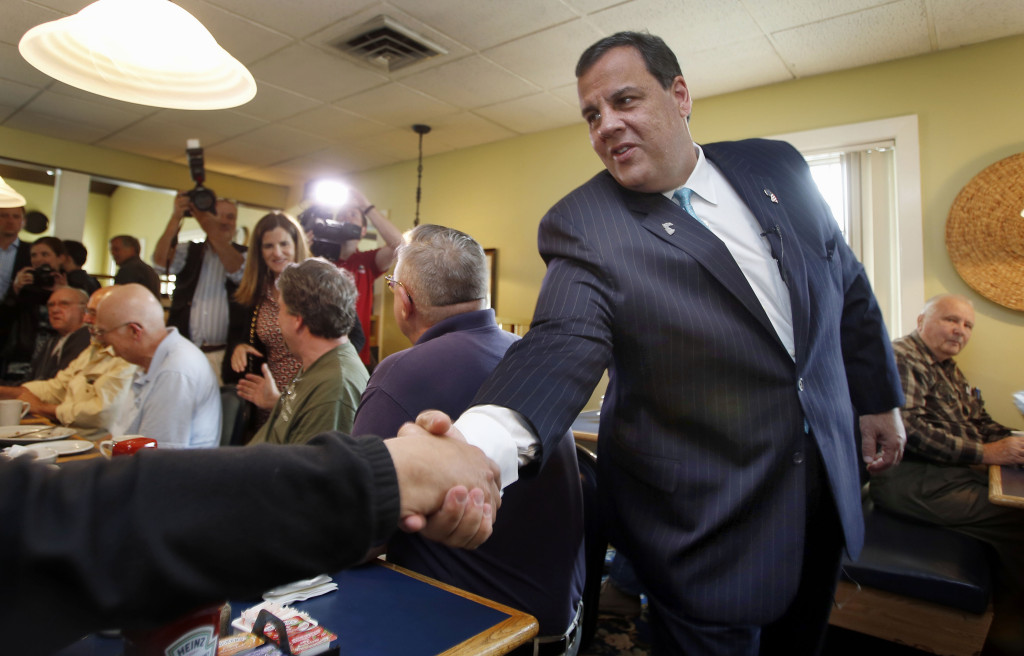
When New Jersey Gov. Chris Christie enters the race for president this week, he’ll do so as an underdog. The launch of the Republican governor’s White House campaign is the culmination of years of groundwork that began even before his landslide re-election to a second term as governor in 2013, but one nearly felled by scandal and a descent from his standing as one of the nation’s most popular state leaders to a politician whose approval ratings have reached record lows at home. It’s a reality Christie and his supporters are ready to embrace, not that they have a choice. “Clearly, he’s got some uphill work to be done,” said Ken Langone, a co-founder of Home Depot and one of Christie’s most vocal cheerleaders. “But I think it can be done.” In recent months, Christie’s team has tried to re-establish him as a credible candidate chock-full of policy prescriptions. His aides and supporters talk about his charismatic personality, quick wit and plain-spoken manner, which they believe can win over voters at town hall events and on debate stages. With so many candidates in the field — Christie will be the 14th major Republican to enter the race, with two more likely before summer’s end — and no clear front-runner, they say they can forge a path to the GOP nomination. “The worst position to be in is that of the media-anointed front-runner,” said Phil Cox, who founded the America Leads super PAC that will back Christie’s campaign. “The fact is, there is no front-runner, and anyone who tells you differently doesn’t know what they’re talking about.” Christie will kick off his campaign at the gymnasium of his old high school in Livingston, New Jersey, where he served in student government and played for the celebrated baseball team. His remarks will reintroduce him to a national audience and draw heavily on his biography. Christie often emphasizes his working-class roots, telling the story of his father, who paid his way through college while working at a Breyers ice cream plant. It’s an implicit contrast with former Florida Gov. Jeb Bush, whose family name and flush campaign accounts Christie will now be up against. With a new slogan — “Telling it like it is” — Christie will also play up his brash persona, presenting himself as someone unafraid to take on unpopular issues such as overhauling Social Security and Medicare. The message aims to move Christie past the moments that have defined him since 2012, when Langone was among those pleading with him to get into the presidential race. They include the actions of three former aides, charged with creating politically motivated traffic jams to retaliate against a Democratic mayor who passed on endorsing Christie’s re-election. While Christie’s turn as head of the Republican Governors Association was widely viewed as a success in the 2014 midterm elections, and the traffic scandal has never touched him personally, he has so far failed to build much momentum in polling. But polling at this point in the race is notoriously inaccurate, and Cox said the fundraising activity at the pro-Christie super PAC has picked up in the last month as the campaign launch approached. “There’s been more of a sense of urgency with the timeline the governor laid out for making his decision and the financial reporting deadline coming up,” he said. The group seeks to raise $15 million to $20 million by the end of the year, the amount it believes is needed for Christie to compete in early states, according to a person who has attended America Leads events. The group hopes to be a third of the way to that goal soon, said the person, who was not authorized to disclose the PAC’s fundraising and spoke on condition of anonymity. The goal for now: Not to have as much money as some top rivals, but to bring in a broad group of donors, including those who might give significantly more money after Christie declares his candidacy. Republished with permission of the Associated Press.
