
Donald Trump, brash New Yorker, picks up Southern campaign
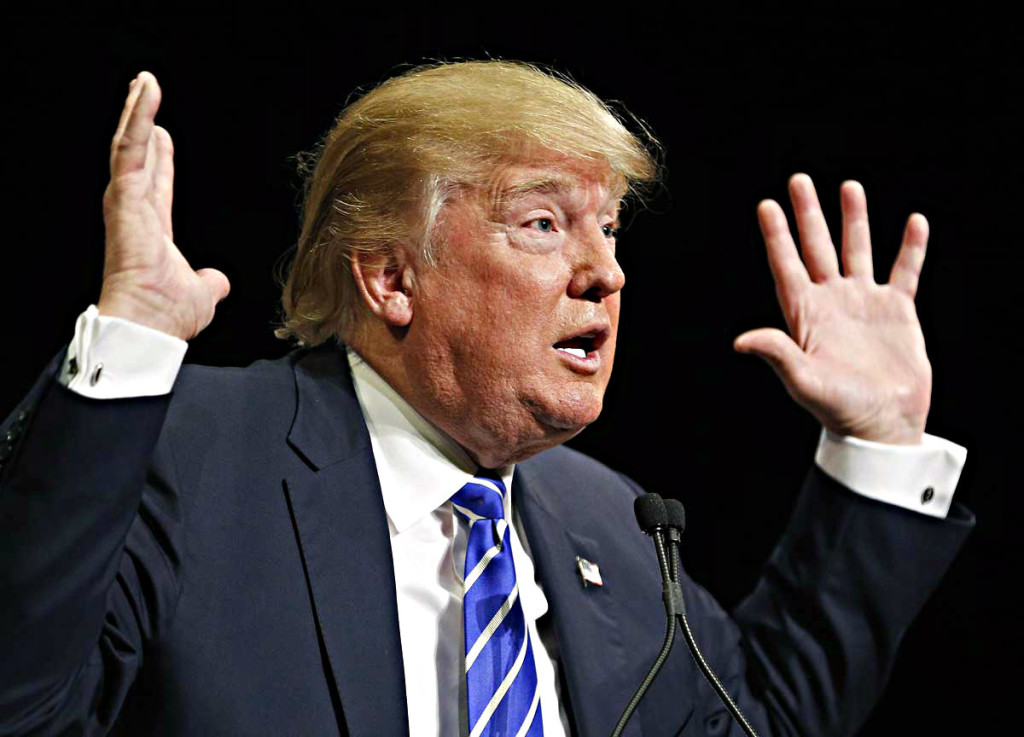
Donald Trump is a brash New Yorker who knows the path to the Republican presidential nomination runs through a swath of Southern states where residents pride themselves on graciousness and gentility. He leads many state polls in the region just as he does nationally. In the last few weeks he’s hired staff members in Alabama, Georgia, Florida, Tennessee, Texas and Virginia to go along with staff in South Carolina, which hosts the South’s first primary. “It’s almost like we’re running a campaign for president of the United States,” quipped Trump campaign manager Corey Lewandowski when asked about the expansion. Lewandowski said the hires and Trump’s schedule — he’ll be in metro Atlanta on Saturday — are proof that Trump is in the race for good. Trump and his aides are pushing back on suggestions — fueled by his own comments — that he is plotting an exit in case his poll numbers continue to slide, as they have recently. Lewandowski declined to talk about advertising plans and side-stepped questions on whether any firms have been hired to help with ballot access work. But he and political players in the South say Trump shouldn’t be taken lightly in the region, even if it may not seem like a natural fit. “Look, the idea that only Southerners appeal to Southerners and Northerners appeal to Northerners is overdone,” said David Mowery, an Alabama-based consultant who has worked for both Republicans and Democrats in multiple states. “He may not sound like us, but he’s saying the things that people in the Republican base — and even disaffected, frustrated voters outside that base — want to hear.” South Carolina is accustomed to its place immediately after Iowa and New Hampshire. But the rest of the South is enjoying a newfound prominence in the nominating process, driven by Georgia and others moving up for a March 1 Super Tuesday dubbed the “the SEC primary” after the college athletics league. Alabama, Arkansas, Georgia, Oklahoma, Tennessee and Virginia will have 471 delegates at stake that day. Kentucky, Louisiana, Mississippi, North Carolina and Florida follow in the next two weeks with a combined 301 delegates. With the earlier votes, the candidates have followed. Trump is expected to draw thousands to a campaign rally Saturday in Norcross, Georgia. In August, he set the high mark for Republicans this campaign when he drew about 30,000 to a rally in Mobile, Alabama. Among the Southern states voting in March, only Florida is winner-take-all, with the rest using varying proportional distributions of delegates. That means the region won’t put any single candidate on the cusp of the necessary 1,236 delegates necessary for nomination. But it will winnow the field. If anything, Trump’s anti-establishment rants may resonate more strongly in the region that has long been the nation’s most conservative and most distrustful of the central government. “He comes in and plays smash-mouth football, and it fires people up,” says Henry Barbour, a Mississippian and influential member of the Republican National Committee. Barbour said Trump would be well-served to add more policy specifics to his personality and style-driven pitch, but he said it’s obvious Trump’s initial approach has worked, animating a wing of Southern Republicans who look at the establishment and say “not only no, but hell no.” Barbour, who is neutral in the primary, initially backed Rick Perry, a former Texas governor who was at ease with Southerners but dropped out. Former Arkansas Gov. Mike Huckabee, an ordained Southern Baptist preacher who also fits the Southern politician prototype, previously called the SEC primary “manna from heaven” and won several primaries in the region in 2008. But he’s found a tougher path this year. So, too, have Louisiana Gov. Bobby Jindal and South Carolina Sen. Lindsey Graham. For his part, Huckabee, without directly addressing Trump, has boasted of his grassroots organization in South Carolina and neighboring states as more important than Trump’s standing months from voting. And, indeed, candidates like Huckabee, Jindal and Graham appear to devote much more energy than Trump to the meet-and-greet affairs that occur away from the big rallies. If any candidate has managed to produce both large crowds like Trump and build a nuts-and-bolts organization in the region, it’s Texas Sen. Ted Cruz, another conservative who appeals to the region’s anti-Washington bent. Barbour said Trump should try for the same balance if he hopes to sustain momentum. But Roger Villere, Louisiana’s longtime Republican Party chairman and vice chairman of the national GOP, said it may not matter in 2016. With so many states bunched close together, he said, it may be a campaign won largely on television and sweeping visits — just the race for a bombastic billionaire. “Sure, you need some help on the ground,” Villere said, “but I’m sure Mr. Trump or any of the rest of them who are doing well coming out of South Carolina will find everything they need.” Republished with permission of the Associated Press.
Lindsey Graham, sees world of peril, opens 2016 bid
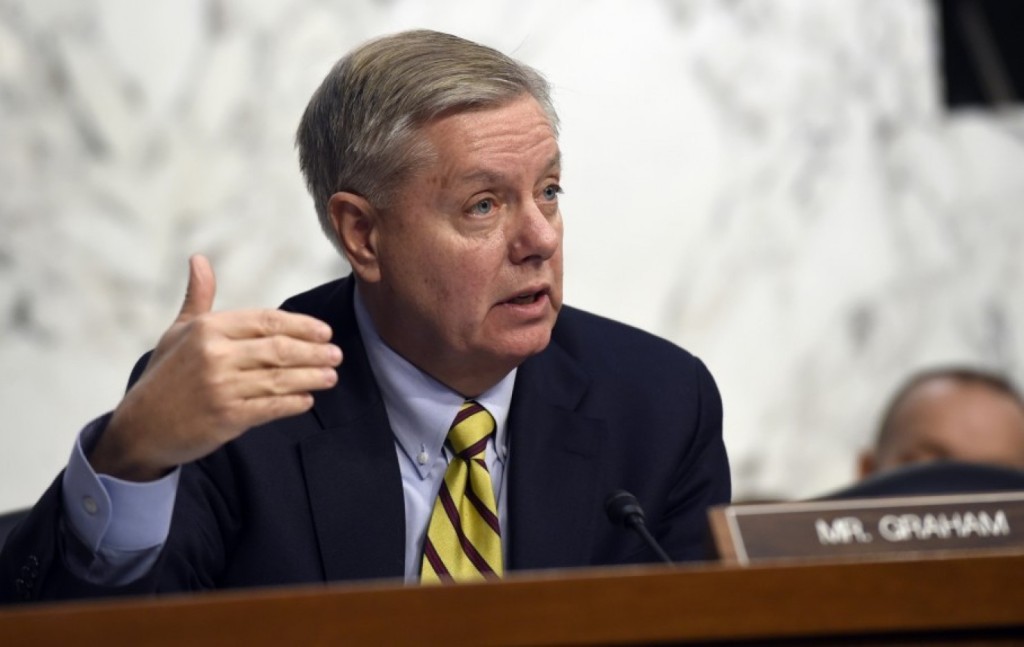
South Carolina Sen. Lindsey Graham opened his campaign for the Republican presidential nomination Monday with a grim accounting of radical Islam “running wild” in a world imperiled also by Iran’s nuclear ambitions. He dedicated himself to defeating U.S. adversaries, a commitment that would place thousands of troops back in Iraq, essentially re-engaging in a war launched in 2003. “I’ve got one simple message,” he told supporters in Central, S.C., the small town where he grew up. “I have more experience with our national security than any other candidate in this race. That includes you, Hillary.” In that fashion, he took on Democratic candidate Hillary Rodham Clinton, the former secretary of state, as well as non-interventionists in his own party and rivals with little to no foreign policy experience. Graham, 59, becomes the first candidate in either party to hail from one of the first four states that cast presidential primary ballots. Iowa and New Hampshire lead the process, followed by South Carolina and Nevada. Having won his third term in November, Graham is a prominent Senate voice in seeking a more muscular foreign policy and one who casts the threats facing the United States in particularly dark terms. “Simply put, radical Islam is running wild,” he said. “They have more safe havens, more money, more weapons and more capability to strike our homeland than any time since 9/11. They are large, they are rich, and they’re entrenched.” He said as president, he’d “make them small, poor and on the run.” “I’m afraid some Americans have grown tired of fighting them,” he said. “I have bad news to share with you: The radical Islamists are not tired of fighting you.” Despite his focus on Islamic State militants with footholds in those two nations, Graham said Iran poses the gravest threat. If the U.S. does not head off a nuclear capability in Iran, Graham said, “Iran will trigger a nuclear arms race in the least stable region on Earth, and make it more likely that people who aspire to genocide will have the most effective means to commit it.” He said recently there is no avoiding the reality that more Americans will have to fight and die to defend the country. His approach contrasts with that of fellow senator and presidential candidate, Kentucky’s Rand Paul, who favors less military intervention. His blunt talk about more troops and casualties stands out even among other Republican contenders who promise to quash Islamic State militants, but sidestep details. Polls suggest a majority of American adults support military action against the group commonly called ISIS. But support drops when respondents are asked specifically about a ground war. Graham came to Congress an outspoken member of the conservative freshman class that brought Republicans a majority in 1994. Yet he’s since joined with Democrats on some contentious votes. He backed a 2012 immigration overhaul and voted to end a 2013 partial government shutdown, for example. He also backed President Barack Obama‘s two Supreme Court nominees. That earned Graham enmity among some Republicans, but he said Monday his willingness to “work with anybody” is necessary. Graham said wealthier members of his generation will have to take fewer Social Security and Medicare benefits, while younger workers may have to work longer and pay more. “We have to fix entitlement programs to make sure people who need the benefits the most receive them,” he said. “That’s going to require determined presidential leadership.” That statement impressed Daniel Nichols, 35, of Central, S.C. “You know, I think he may be right on Social Security,” Nichols said. “I wonder if he’s being a little too truthful when he says that, though.” Graham leaned heavily on his personal story Monday, delivering his speech in front of the building where he grew up and his parents ran a pool hall, bar and restaurant. Graham’s parents died when he was in college, leaving him as guardian to his then 13-year-old sister, Darline. “We depended on Social Security benefits to survive,” Graham said. “As president, I’ll gladly do what it takes to save a program that once saved my family.” Graham planned appearances this week in New Hampshire and Iowa if the Senate schedule lets him go. Republished with permission of The Associated Press.
Marco Rubio cashed out retirement before presidential run
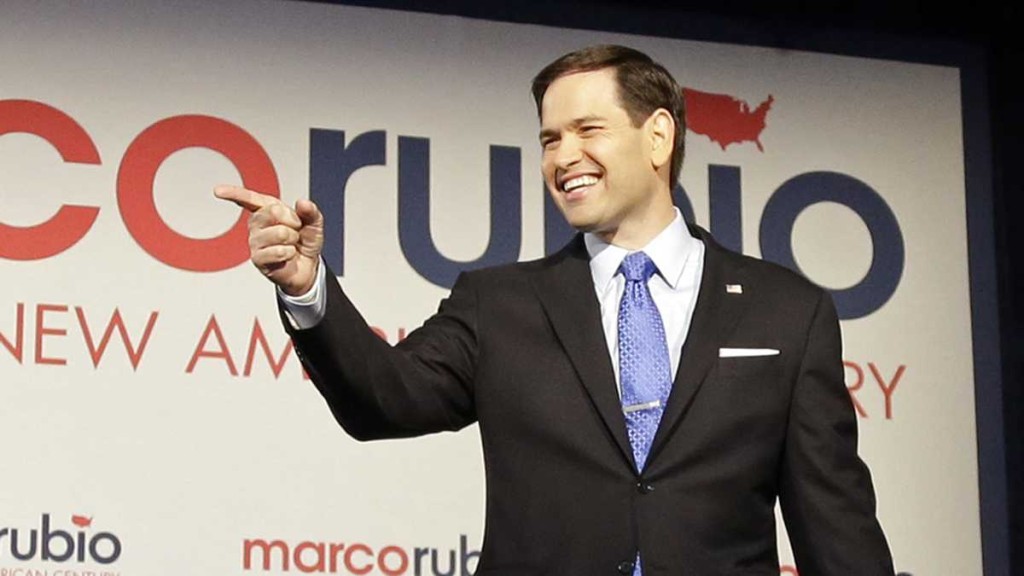
Sen. Marco Rubio cashed out most of his retirement savings while preparing to launch his bid for the Republican presidential nomination, records released Friday show. Rubio, 43, sold six retirement funds in September 2014 for $68,241.09, according to his personal financial disclosure statement. He made the sale even though he apparently had ample cash in the bank: He reported between $100,000 and $250,000 in a checking account and between $50,000 and $100,000 in a money market account at the end of 2014. And, so far in 2015, he estimates he has earned between $100,000 and $1 million from a new book. The son of Cuban immigrants, Rubio formally launched his presidential bid last month with a speech recalling his humble upbringing and about how hard his father, a bartender, and mother, a housekeeper, worked to ensure he could have greater opportunities than they did. For much of his political career, Rubio has struggled with debt. He paid off student loans only after becoming a U.S. senator in 2010 and writing an autobiography that paid him more than $1.1 million in royalties. His latest filings show he owes at least $450,000 on two mortgages and a home equity loan he took out in 2005. Still, the records show Rubio earned $52,000 on top of his $174,000 Senate salary last year from a part-time teaching position at Florida International University and in royalties that apparently come from the second book published in December. For the first time, Rubio also quantified how much his wife, Jeanette, earns, valuing her event-planning business at between $15,000 and $50,000. Jeanette Rubio, a former Miami Dolphins cheerleader, now advises a foundation run by Florida billionaire Norman Braman, who is one of Rubio’s biggest political backers. Her compensation was previously disclosed on Rubio’s forms only as greater than $1,000 per year. Rubio spokesman Alex Conant could not immediately explain why Rubio sold his retirement funds. Stephen Butler, president of Pension Dynamics Company in Lafayette, California, said it is unusual for people Rubio’s age to liquidate retirement savings. It’s usually done to cover a financial emergency, not when someone has a six-figure checking account. “It’s hard to imagine why somebody, especially when they have these other substantial amounts of income, would have had to cash that in,” Butler said, noting Rubio would have had to pay an extra 10 percent in taxes on the sale. “It’s not like he’s desperate and between jobs.” Rubio still qualifies for a pension for his eight years of service in the Florida legislature that will pay him about $1,000 a month when he turns 62, according to his filing. And as a senator he qualifies for a generous federal retirement plan. Rubio also still lists an employee savings plan from Florida International University, where he has taught since 2008, worth between $1,000 and $15,000. Rubio listed between $34,000 and $160,000 invested in special saving funds for his four children’s college education. Rubio’s maximum net worth, outside the value of the Miami house where his family lives, was $355,000 last year, according to an AP analysis of the new records. That may rise quickly: Rubio’s paperwork indicates that so far in 2015 he earned between $100,000 and $1 million off his book “American Dreams,” which describes his plan for helping the working and middle classes. Republished with permission of the Associated Press.
