Joe Biden tells Israel president he won’t tolerate nuclear Iran
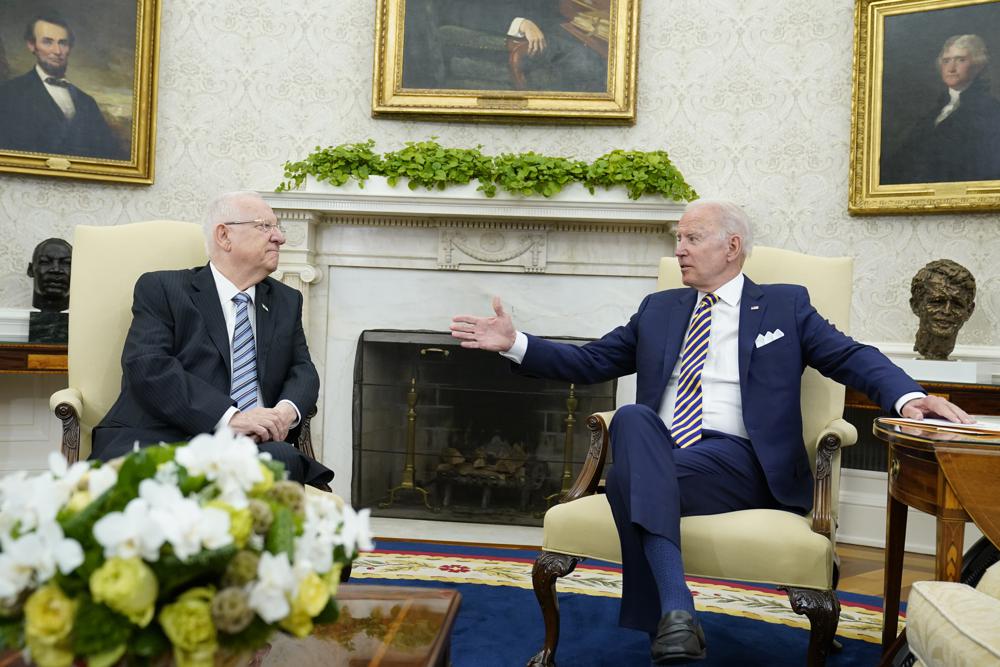
President Joe Biden sought to assure Israel that he would not tolerate a nuclear Iran as he met with outgoing Israeli President Reuven Rivlin on Monday amid a major shakeup in Israeli politics and growing angst in Tel Aviv over the U.S. administration’s effort to reenter the Iran nuclear deal. Biden noted that he had ordered airstrikes a day earlier targeting facilities the U.S. military says were used by Iran-backed militia groups near the border between Iraq and Syria. The rhetoric seemed to underscore that he would remain tough on malign Iran’s activity even as he seeks a diplomatic track to stem Tehran’s nuclear program. “What I can say to you is that Iran will never get a nuclear weapon on my watch,” Biden said at the White House meeting. The meeting with Rivlin, who is making his final foreign trip of his presidency, took place just weeks after Naftali Bennett became Israel’s new prime minister, replacing Benjamin Netanyahu. The Biden administration, meanwhile, has intensified efforts to revive Iran’s 2015 accord with world powers to limit Tehran’s ability to develop nuclear weapons. Former President Donald Trump, with Netanyahu’s backing, scrapped the accord in 2018. Biden said he hoped to meet the new prime minister at the White House “very soon.” Rivlin is set to leave office on July 7 after a seven-year term. Isaac Herzog, a former parliament member who most recently headed a nonprofit that works closely with the government to promote immigration to Israel, will take over as Israeli president. Rivlin met later Monday with House Speaker Nancy Pelosi. Both leaders stressed the friendship between their countries, although Rivlin noted disagreements as well. Biden said he and the Israeli president would talk about Iran and the aftermath of the Gaza war. The president also underscored his support for continued normalization of relations between Israel and countries in the Arab and Muslim world and planned to reiterate the administration’s promise to resupply Israel’s Iron Dome missile defense system, which was depleted during the 11-day war with Hamas in Gaza. The latest conflict claimed at least 254 Palestinian lives and killed 13 people in Israel. Biden has low hopes, at least for the moment, of reviving Israeli-Palestinian peace talks, according to an official familiar with Biden administration deliberations. The official, who spoke on the condition of anonymity to discuss private deliberations, said Biden administration officials are starting at square one in building contacts with the Palestinian Authority in the West Bank, a relationship that eroded during the Trump administration. The meeting with Rivlin comes one day after U.S. Secretary of State Antony Blinken met in Rome with Israeli Foreign Minister Yair Lapid, a centrist who along with Bennett and six other political allies built a fragile coalition government that put Netanyahu in the opposition. Aviv Kochavi, chief of staff of Israel Defense Forces, met last week with Biden’s national security adviser, Jake Sullivan, and other senior national security officials. Kochavi reiterated Israel’s opposition to efforts by the Biden administration to revive the 2015 accord. Administration officials, however, have countered in talks with Kochavi and others in the new Israeli government that it’s worth giving diplomacy a shot at stopping Tehran from acquiring a nuclear weapons system, even if it’s not guaranteed, the official said. Republished with the permission of the Associated Press.
Bradley Byrne: Lessons from Israel
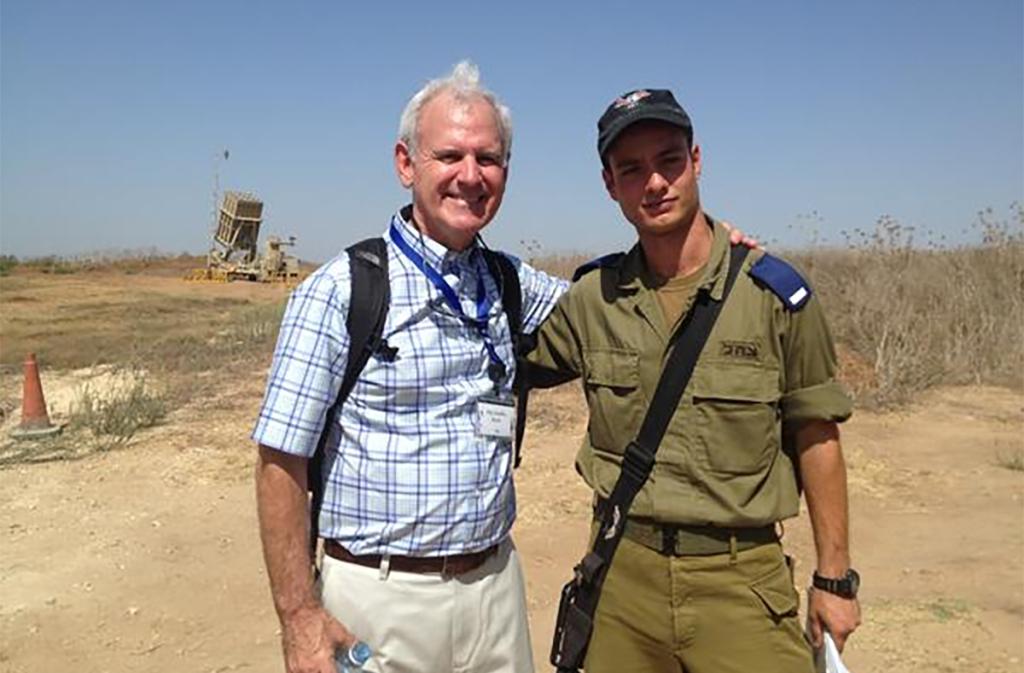
Ronald Reagan once said that the friendship between the United States and Israel is “based on historic moral and strategic ties, as well as our shared dedication to democracy.” With that in mind, I recently traveled to Israel with a Congressional delegation in an effort to strengthen the partnership between our two countries. Throughout the trip, we met with top Israeli officials, including Prime Minister Benjamin Netanyahu and President Reuven Rivlin. We also met with members of the Israel Defense Forces, the opposition leader, leaders from the Palestinian Authority, local historians, and Israeli business officials. I was especially impressed by the Israel Defense Forces and their commitment to defending their country. I had the opportunity to visit with young men and women who serve in the IDF during a luncheon near the Gaza Strip. I have no doubt in the ability of these individuals to stand up against the radical terrorists who continue to attack Israel. We were also able to get a firsthand look at the Iron Dome technology, which is the air defense system designed to intercept short-range rockets and artillery developed jointly between the U.S. and Israel. The system was very effective during last year’s conflict between Israel and Hamas. There are a number of Iron Dome sites set up all across Israel that have saved thousands of Israeli lives, and I am proud the United States helped make this technology possible. We also traveled to the Golan Heights in the northern part of Israel near the border with Syria. From there, we viewed some of the territory claimed by the Islamic State. Israel is in an impossible position, under attack from literally all sides, with a major Islamic terrorist organization and a country experiencing civil war just miles from its border. As you may expect, much of our trip focused on the proposed nuclear agreement between the United States and Iran. Israeli officials, including Prime Minister Netanyahu, expressed serious concerns that Iran will use the $150 billion in sanctions relief to fund terrorist organizations like Hamas and Hezbollah, who have repeatedly attacked Israel. We can’t forget that Iran is the foremost state sponsor of terrorism in the world, and it does not make sense to give them access to billions of dollars in frozen Iranian assets. I knew before I visited Israel that the Iran nuclear deal was bad for the American people, but this trip has further reinforced my concerns. I will certainly oppose the Iran nuclear agreement when it comes before Congress for a vote, and I will work to convince my colleagues to do the same. All political and national security issues aside, Israel is also home to a number of historical and holy sites. As a Christian, it was very powerful to travel in the area where Jesus once walked. I had the opportunity to pray at the Western Wall, which is the western wall of the Temple Mount in Jerusalem. We also visited the Sea of Galilee, the Mount of Beatitudes where Jesus delivered the Sermon on the Mount, and the Church of the Nativity in Bethlehem where Mary lay the Baby Jesus in the manger. So as President Reagan said, there are clear political, security, and cultural ties between the United States and Israel, and now is certainly not the time to be turning our back to Israel. I made sure to tell all the Israeli people I talked to that the United States is going to continue to stand strong with Israel against the violent extremists who threaten their way of life. Bradley Byrne is a member of the U.S. Congress representing Alabama’s 1st Congressional District.