
Could Nikki Haley’s role in Donald Trump’s administration taint a 2024 bid?
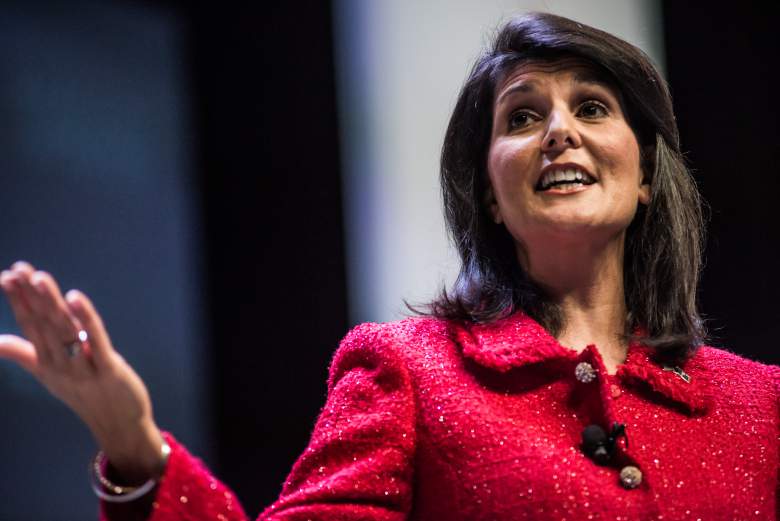
With the launch of her new memoir, former U.N. Ambassador Nikki Haley has again ignited speculation that she may be gearing up for a possible bid for the White House, perhaps as early as 2024. But even though the former South Carolina governor left the Donald Trump administration on her own terms, a rarity in a White House that has seen its share of turmoil, some strategists say that in a post-Trump era, she could struggle to win back GOP traditionalists who aren’t fans of the polarizing president. “She gets credit for getting out without being too stained by the Trump administration,” said Chip Felkel, a South Carolina-based Republican strategist. “Everybody seems to get stained by this guy, and they all get thrown aside when they aren’t useful. … She’s really walking a fine line, a balancing act, and so far she’s been successful, but she’s got to be careful.” Haley has been navigating her way through that balancing act since the 2016 campaign cycle, when there was initially no love lost between then-Gov.Haley and then-candidate Donald Trump. When Haley called for the release of Trump’s tax returns, and he called her an embarrassment to South Carolina, Haley’s tweeted response of “Bless your heart” epitomized tongue-in-cheek Southern shade. In her two years at the United Nations, Haley managed to tread a careful path of occasionally speaking out against Trump while not directly drawing his ire. That balancing act came into view, Haley writes in her memoir, in clashes with then-Secretary of State Rex Tillerson and then-White House chief of staff John Kelly, who she alleges once tried to get her to join them in opposing some of Trump’s policies, a move she called “offensive.” Conversely, Haley wrote that she was “deeply disturbed” by the president’s comments that there were “very fine people on both sides” at the white nationalist rally and counterprotest in Charlottesville, Virginia, in 2017, saying that she “was certain he didn’t understand how damaging his remarks were.” At the end of 2018, she left on her own terms, a decision that spawned speculation — which Haley quickly squelched — that she might challenge her soon-to-be-former boss in 2020. Since then, Haley has demurred when asked about politics, even in news cycles that floated the notion of Trump replacing Vice President Mike Pence with Haley on the 2020 ticket. She hit the speaking circuit, reportedly commanding as much as $200,000 per appearance. Earlier this year, she joined the Boeing Co. board, founded a nonprofit and, in September, announced a return to her native South Carolina with the purchase of a home on Kiawah Island, a tony golf community near Charleston. With Trump still the titular head of the Republican Party, Felkel said Haley remains well positioned with the constituency that sent her former boss to the White House, though any Republicans turned off by Trump’s presidency may not know how to view her now. “She’s made the base really happy, and that serves her well in a primary, but she’s angered and dismayed some independents and disaffected Republicans who saw her as someone who might get the party back to some sense of normalcy,” Felkel said. “So what she gained might not last, might not be worth what she needs, when she really needs it.” Others saw the situation differently, arguing that Haley’s loyalty to the administration when asked to serve will bode well for her as she seeks her own political successes. “Nikki has remained her own person while serving the president,” said Catherine Templeton, who served Gov. Haley as head of two state agencies. “No one, regardless of how they feel about Trump now or later, will begrudge loyalty and intelligent service. I just don’t think it is an issue.” Time could also prove a hindrance. With presidential cycles having stretched from months to several years ahead of the election itself, the competition for attention in what have recently been massive candidate fields makes it difficult to maintain visibility and favor during an extended campaign season, warned GOP strategist Terry Sullivan. “It’s tough to stay the bright, new shiny object for an extended period of time, especially when the attention spans of voters are so short,” said Sullivan, who managed Marco Rubio’s 2016 Republican presidential bid. “She’s working very hard to position herself as the Goldilocks candidate, where she’s just pro-Trump enough and loyal enough to the president that the supporters are for it, but just independent enough so that all the Never Trumpers can hang their hopes and dreams on her nomination.” Haley, who has launched a book tour and is making the media rounds to promote “With All Due Respect,” was not made available for an interview with The Associated Press. For Felkel, only the end of the Trump era — whether in 2020 or 2024 — will reveal Haley’s political staying power. “For Haley and for many others, when Trump is gone, whenever that is, we’ll find out whether this thing has legs or whether it was a flash in the historical pan.” he said. By Meg Kinnard Associated Press Meg Kinnard can be reached at https://twitter.com/MegKinnardAP Republished with the permission of the Associated Press.
Mike Pompeo: US will fight Russian interference in 2018 elections
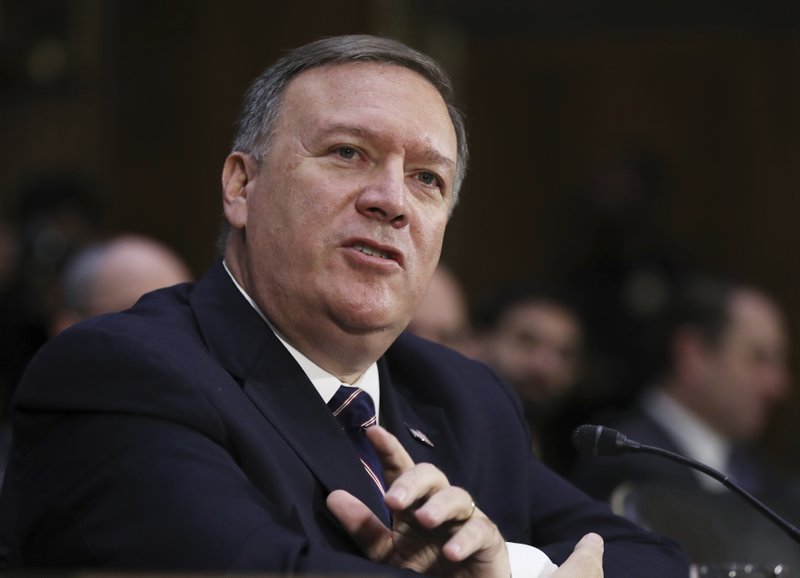
Secretary of State Mike Pompeo said Wednesday the Trump administration will not tolerate Russian interference in the 2018 congressional midterm elections. Pompeo told the House Foreign Affairs Committee that the administration will take “appropriate countermeasures” to fight what he called “continued efforts” by Russia to meddle in November’s vote. He did not elaborate on the Russian interference or say what the countermeasures would be but said there was much more work to be done to stop Russia’s efforts. He said the U.S. had not yet been able to establish “effective deterrence” to halt them. The top-ranking Democrat on the committee, Eliot Engel, however, contended that the Trump administration “is giving Russia a pass” because Russian President Vladimir Putin “supported President Trump over Hillary Clinton” in the 2016 presidential election. “If we allow foreign interference in our elections so long as it supports our political objectives, then we’ve put party before country and put our democracy in crisis,” Engel said. Russian meddling in the presidential election remains a touchy topic for President Donald Trump, as the White House tries to combat the threat posed by special counsel Robert Mueller’s investigation into potential ties between Russia and the Trump campaign. Trump denies there was any collusion. Pompeo was making his first congressional appearance since becoming top diplomat nearly a month ago, after Trump fired his predecessor, Rex Tillerson. Pompeo was testifying on the State Department’s budget, operations and policy priorities, but was asked about a wide range of issues, ranging from diplomacy with North Korea, the pullout from the Iran nuclear deal, and Russia. “We will not tolerate Russian interference in the 2018 elections,” he told lawmakers. “We will take appropriate countermeasures to continued Russian efforts.” He defended the Trump administration’s “enormous efforts to push back against Russia,” which he claimed were “light-years better than what was done in the previous administration.” Republished with the permission of the Associated Press.
White House pushes ahead with Mideast peace plan
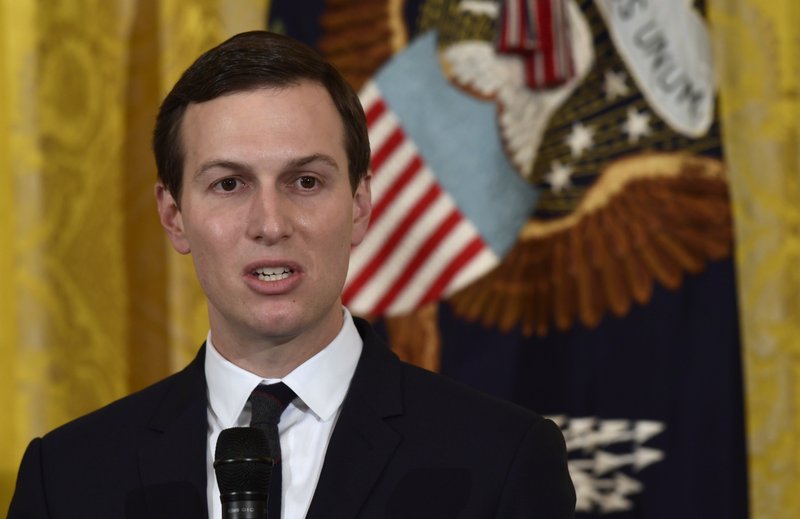
The Trump administration is aiming to roll out its much-hyped but long-delayed Middle East peace plan next month amid signs it may further alienate the Palestinians by slashing millions of dollars in funding for humanitarian and development projects in the West Bank and Gaza. Five U.S. officials and a congressional aide say the administration intends to release the peace plan in mid- to late-June, shortly after the end of the Muslim holy month of Ramadan, although they cautioned that the timing could slip depending on developments in the region. They say the plan’s main authors — President Donald Trump’s son-in-law and senior adviser Jared Kushner and Trump’s special envoy for international negotiations Jason Greenblatt — have already begun quietly briefing select allies and partners on elements of the proposal. Yet any Palestinian willingness to even consider the plan would require conditions to improve and anger to subside considerably in the coming weeks, an unlikely scenario as the Palestinians say evidence of one-sided Trump giveaways to Israel continues to pile up. U.S. allies in Europe and the Persian Gulf also have felt compelled to criticize the administration for its approach. Ostensibly, Trump would need buy-in from those same countries to build enough momentum for any peace plan to succeed. The administration has been resisting congressional demands to fully close the Palestine Liberation Organization office in Washington because Greenblatt and Kushner want to keep that channel open in case the Palestinians are open to re-entering negotiations with Israel based on the plan. The office was ordered closed by former Secretary of State Rex Tillerson last November, but has been allowed to stay open for limited purposes under the administration’s interpretation of the law requiring it to be shut down in the absence of peace talks. The prospect of Palestinian interest in the peace proposal appears dim, however, particularly since Palestinian leader Mahmoud Abbas recalled the mission’s chief earlier this week to protest Monday’s opening of the new U.S. Embassy in Jerusalem. The embassy move is said to have contributed to violent protests in Gaza that were met with deadly force from Israel. Nearly 60 Palestinians were killed Monday by Israeli forces, drawing condemnations and calls for restraint from Europe and elsewhere. The U.S. declined to join those calls and, while regretting the loss of life, opposed efforts at the U.N. to open an international investigation into the violence. Trump’s recognition of Jerusalem as Israel’s capital, the embassy move and the administration’s unreserved defense of Israeli Prime Minister Benjamin Netanyahu’s policies have alienated and angered the Palestinian leadership, which accuses the administration of abandoning its role as a neutral arbiter in the conflict. Saeb Erekat, the chief Palestinian negotiator, said any deal needs to be between the Palestinians and Israel — not the United States. “I don’t need Jason Greenblatt. I don’t need Kushner,” Erekat said. “It’s our lives.” That sense of betrayal may deepen significantly this summer as millions of dollars in U.S. assistance to the Palestinians appears likely to be cut and the funds re-allocated to other regions. That money has been on hold since last year and existing funding for some projects will start to run out in just months if it is not approved in the next two weeks. If that does not happen, the State Department and the U.S. Agency for International Development will have to notify aid recipients that continued U.S. funding is not forthcoming and those programs will begin to be shut down. Local staffers would be laid off and U.S. officials running the projects would be reassigned elsewhere. Of $251 million in U.S. aid planned for the Palestinians in 2018, only $50.5 million has been reported spent, according to the government’s online tracker, www.foreignassistance.gov. The remaining more than $200 million is currently on hold, a figure that does not include an additional $65 million in frozen U.S. assistance to the U.N. Relief and Works Agency, which provides services to Palestinians in the West Bank, Gaza, Jordan and Lebanon. The U.S. aid pays for programs on education, health, good governance and democracy promotion as well as disaster preparedness and security. For several months the White House has been sitting on State Department and USAID recommendations to spend at least some of the money, according to the officials. Three officials said there is no indication those recommendations will be acted upon any time soon despite appeals from lawmakers and even expressions of concern from Israel, which sees value in the assistance especially in the security sector. One official said there was “an overwhelming lack of urgency” about making a decision on the funding. The other two said there was no sign that the end-of-May timeframe would be met. “The administration is currently reviewing U.S. assistance to the Palestinians,” USAID said in a statement to The Associated Press. “USAID is in discussions with all affected implementing partners on the status of the review, and is working closely with the interagency, as the administration concludes its review.” At immediate risk are between five and 10 of the some 20 USAID projects in the West Bank and Gaza, along with proposed new initiatives, the officials said. Without a quick decision those will run out of money by the end of 2018, they said. Nearly all of the others will run out of money in early 2019 unless the U.S. funding is unblocked, they said. Republished with the permission of the Associated Press.
Mike Pompeo facing rare opposition from Senate panel
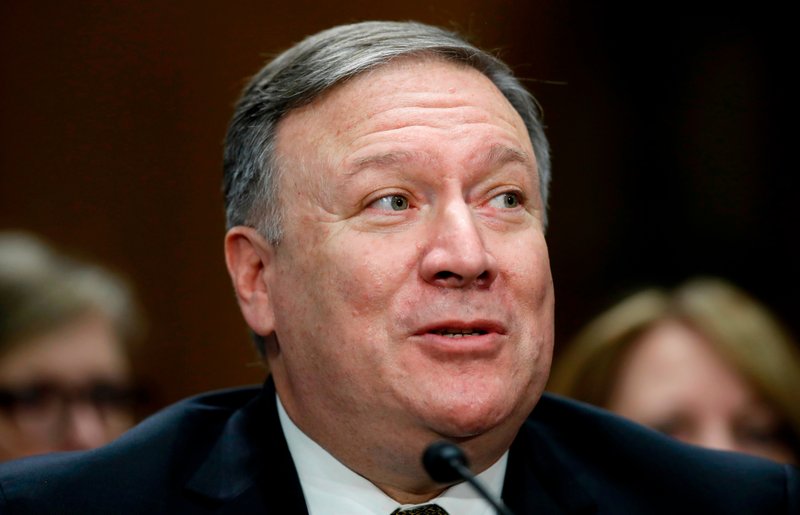
President Donald Trump’s nominee for secretary of state, Mike Pompeo, is facing serious opposition before the Senate Foreign Relations Committee, which may not have enough votes to recommend him for confirmation because all Democrats, and at least one Republican, have said they will oppose him. The full Senate is still expected to consider Pompeo’s nomination later this week. But the rare rebuke expected from the panel Monday, even after Pompeo’s recent visit with North Korean leader Kim Jong Un, would be the first time in years that a nominee for the high-level Cabinet position did not receive a favorable committee vote. Sen. Bob Corker, R-Tenn., the chairman of the committee, blamed partisan politics for opposition to Pompeo, now the CIA director, saying Pompeo is just as qualified as past secretaries of state nominees Hillary Clinton or John Kerry, both of whom received overwhelming support. “We are in an era where somebody like this, who is qualified, unfortunately, is likely to be voted out without recommendation or with a negative recommendation,” Corker said Sunday on “State of the Union” on CNN. “It’s just sad that our nation has devolved politically to this point.” Pompeo’s confirmation before the full Senate now hangs in balance, with the votes of just a handful of senators determining whether he becomes the nation’s top diplomat after Trump fired Rex Tillerson last month. Key Democrats, including some who had voted for Pompeo as CIA director last year, are peeling away, and Republican Sen. Rand Paul of Kentucky remains opposed, despite personal overtures from the president. Pressure is mounting on senators from both sides. White House allies are unloading ad campaigns against Democrats from Trump-won states, including North Dakota, Indiana and Missouri, to vote for the president’s nominee. But progressive groups are pounding senators’ offices in opposition to Pompeo’s hawkish foreign policy views and negative comments about gay marriage and Muslims. As soon as Sen. Heidi Heitkamp, D-N.D., announced her support last week, one group called on her to switch. “I don’t agree with every position he’s taken or every word he has spoken,” Sen. Susan Collins, R-Maine, said Sunday on “Meet the Press” on NBC. “But I believe he has an extensive knowledge of world affairs that has been enhanced by his time at the CIA.” Sen. Maggie Hassan, D-N.H., who met with the nominee last week, “has concerns about Mr. Pompeo’s nomination to serve as secretary of state,” said spokesperson Ricki Eshman. The senator “is reviewing his record before making a final decision.” In the committee, the opposition has been building ahead of Monday’s session. Sen. Chris Coons, D-Del., who was among the last Democrats on the panel to announce his no vote, said he’s is concerned that Pompeo “will embolden, rather than moderate or restrain” Trump’s “most belligerent and dangerous instincts.” “I do not make this decision lightly or without reservations,” Coons said in a statement Friday. “However, I remain concerned that Director Pompeo will not challenge the President in critical moments. On vital decisions facing our country, Director Pompeo seems less concerned with rule of law and partnership with our allies and more inclined to emphasize unilateral action and the use of force.” Rather than allow an unfavorable vote on the panel, where Republicans have a one-seat majority, senators could choose not to issue a recommendation if Pompeo cannot find enough backing. The committee action won’t necessarily stall Pompeo’s confirmation before the full Senate, but it would be an unusual setback not seen since the panel took a pass on John Bolton, President George W. Bush’s pick for ambassador to the United Nations. Sen. Tom Cotton, R-Ark., who has been among Pompeo’s most vocal champions in the Senate, lambasted his colleagues ahead of voting. “Democrats, especially on the Foreign Relations Committee, are really engaged in shameful political behavior,” Cotton said Sunday on CBS’ “Face the Nation.” But several Democratic senators who supported Pompeo for CIA director say Pompeo’s views are not reflective of those they want in the top diplomat. Republished with the permission of the Associated Press.
Senate panel divided over Mike Pompeo for secretary of state
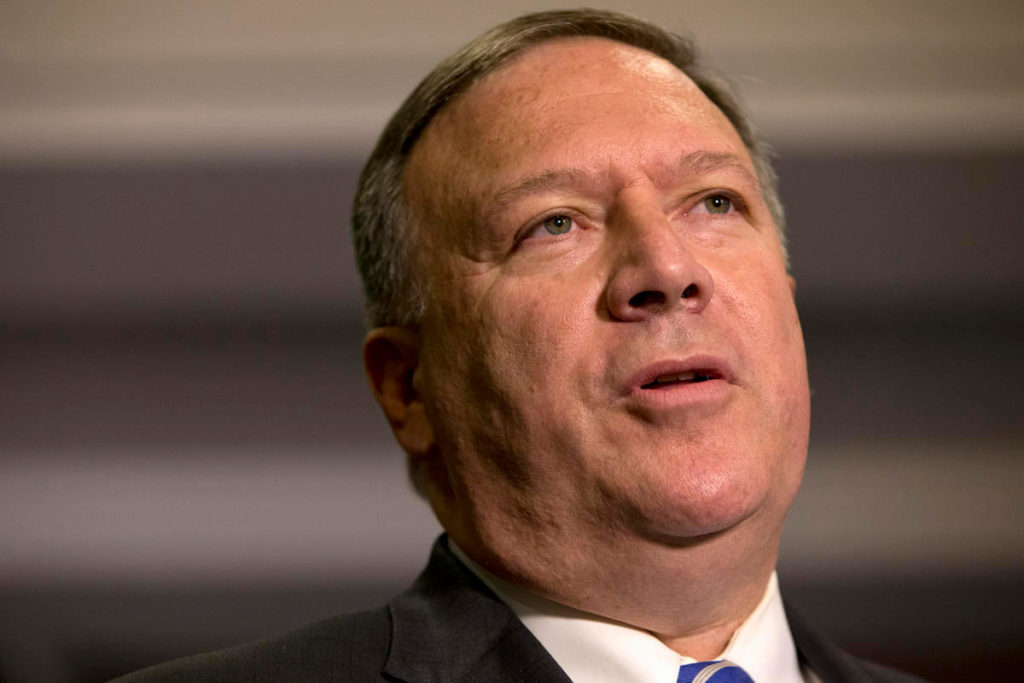
President Donald Trump’s pick for secretary of state, CIA Director Mike Pompeo, is facing so much opposition from Democrats on the Senate Foreign Relations Committee that the panel could be forced to take the unusual step of sending the nomination to the full Senate without a favorable recommendation. Democratic Sen. Jeanne Shaheen of New Hampshire on Tuesday became the latest member of the committee to announce her opposition, and Sen. Tim Kaine, D-Va., recently said he would vote no. Both supported Pompeo as CIA director last year. Pompeo is still expected to have enough votes in the full Senate to replace Rex Tillerson, who was fired by Trump. But as support peels away, his confirmation may come down to a handful of senators. The backlash ahead of the panel’s vote is a rare rebuke for such a high-profile Cabinet pick, and sets Pompeo on a potentially uneven path for the new job. “I continue to have deep concerns regarding Mr. Pompeo’s past statements and policy views, particularly in regards to the LGBTQ community, American Muslims and women’s reproductive rights,” Shaheen said in a statement, after calling the former Kansas congressman Tuesday to tell him she would be opposed. Shaheen said Pompeo’s previous roles “are fundamentally different from that of Secretary of State, who represents American values around the world.” A sign of the important role Pompeo plays in the Trump administration: The CIA director traveled to North Korea for a secret meeting with leader Kim Jong Un, two U.S. official say. The meeting came as U.S. and North Korean officials plan a summit between Trump and Kim. The officials spoke anonymously because they were not authorized to discuss the trip publicly. Rarely has the Senate panel failed to back a nominee, and some said not since President George W. Bush nominated John Bolton as U.S. ambassador to the United Nations has the committee declined to recommend a White House pick. Republicans have a narrow Senate majority, which gives them a single-vote advantage on the panel. But with stiff opposition from Democrats — and at least one Republican, Sen. Rand Paul of Kentucky, opposed — the committee may have few other options when it convenes as soon as next week. “We’ll see,” said the committee’s chairman, Sen. Bob Corker, R-Tenn. Under Senate rules, if the nominee does not have support in the committee, the panel could report to the full Senate unfavorably, which would send a strong rebuke to the White House, or simply report without a recommendation. It also could take no action. One top committee Democrat, Sen. Ben Cardin of Maryland, said he was still reviewing his decision. Senators submitted more than 100 questions for the nominee after his initial hearing, and many are waiting for those responses. Trump initially tapped Pompeo as CIA director, one of his first Cabinet nominees in 2017, and they became close allies. But some Democrats have faced resistance for their votes, and Pompeo is having a tougher path as the nominee for secretary of state over his hawkish foreign policy views and comments about minorities, having suggested that Muslims should denounce extremism and gay people should not be able to marry. During his confirmation hearing last week, Pompeo told senators it’s unlikely he’d resign if Trump fired special counsel Robert Mueller, who is leading the investigation into Russian interference in the 2016 election. Of the more than a dozen Democrats who supported Pompeo’s nomination as CIA director in 2017, at least four, including Sen. Dianne Feinstein of California and Sen. Brian Schatz of Hawaii, now oppose his nomination for State. “The Secretary of State is a very different role than CIA director, and it’s not the kind of position you learn on the job,” Feinstein said in a statement Tuesday. “I sense a certain disdain for diplomacy in Mike Pompeo that I believe disqualifies him from being our next senior diplomat.” Senate Minority Leader Chuck Schumer, D-N.Y., who also backed Pompeo earlier, declined to say Tuesday how he would vote. Republished with the permission of the Associated Press.
Mike Pompeo defends Donald Trump on Russia, won’t talk about Robert Mueller
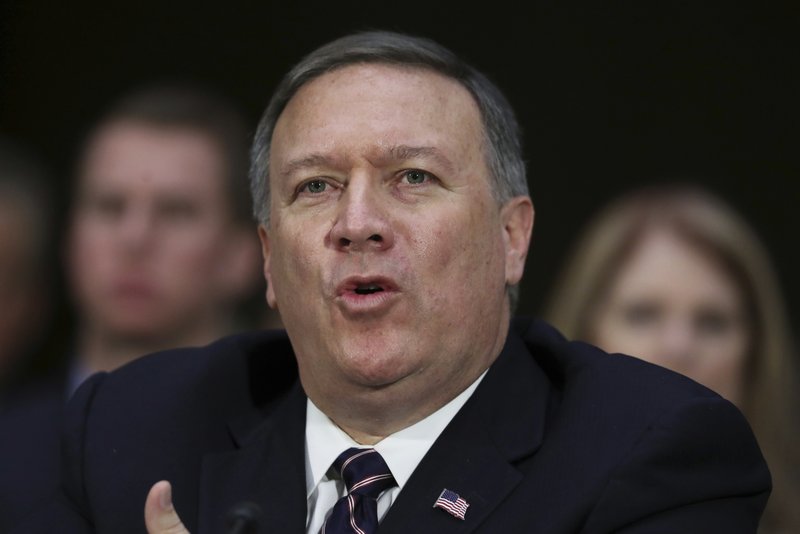
Mike Pompeo, the CIA director nominated to be secretary of state, defended the Trump administration’s efforts to push back on aggression from Russia at his confirmation hearing Thursday while suggesting more sanctions on Moscow are still needed. Yet he dodged repeatedly when Democrats tried to pin him down on President Donald Trump’s handling of the special investigation into Russian interference in the 2016 election. Pompeo confirmed for the first time publicly that he’s been interviewed by special counsel Robert Mueller, who is investigating potential ties between Russia and Trump’s presidential campaign and possible obstruction of justice issues. But he wouldn’t answer questions about the contents of the interview, arguing it would be improper since, as CIA director in charge of overseas intelligence gathering, he has been a “participant” in Mueller’s probe. “I cooperated,” Pompeo said. Under questioning, he said he would be unlikely to resign as secretary of state if Trump were to fire Mueller. Lawmakers are concerned the president may seek Mueller’s ouster to try to shut down the investigation, and the White House has said it believes Trump does have the authority to fire him if desired. “My instincts tell me no,” Pompeo said. “My instincts tell me my obligation to continue to serve as America’s senior diplomat will be more important in times of domestic political turmoil.” As for the prospect of leading the State Department, Pompeo pledged to make the department as central to national security decisions as the intelligence agency he now heads. Throughout the hearing, he drew a sharp contrast with his ousted predecessor, Rex Tillerson. He lamented the “demoralizing” vacancies at the top echelons of the department during Tillerson’s tenure and said he planned to fill those vacancies, asking the Senate’s help to get nominees confirmed. He cast his close connection to Trump as an advantage that would help him restore the significance of the department. “My relationship with President Trump is due to one thing: We’ve demonstrated value to him at the CIA. So, in turn, he has come to rely on us,” Pompeo said. “I intend to ensure that the Department of State will be just as central to the president’s policies and the national security of the United States.” His remarks before the Senate Foreign Relations Committee were the first chance for lawmakers and the public to hear directly from the former Kansas congressman about his approach to diplomacy and the role of the State Department, should he be confirmed. Pompeo’s views on global issues are well known — he was questioned extensively by senators for his confirmation to run the CIA — but Democratic senators have raised questions about his fitness to be top diplomat, given his hawkish views and past comments about minorities. Sen. Cory Booker, D-N.J., took Pompeo to task over for saying previously that Muslims have a special obligation to denounce extremism and for his longstanding position that gays should not be able to marry. “I continue to hold that view,” Pompeo said of gay marriage, though he declined repeatedly to answer whether he believes gay sex is a “perversion.” Instead, Pompeo responded to the criticism by saying repeatedly that his record at the CIA and elsewhere proves he treats everyone equally and with respect, regardless of religion, gender or sexual orientation. He sought to pre-empt concerns about Trump’s apparent unwillingness to challenge Russian President Vladimir Putin directly. He said a long list of punitive actions taken under Trump show the U.S. takes the threat from Russia seriously, adding that “we need to push back in each place we confront them,” including the economic and cyber arenas. “Each of those tools that Vladimir Putin is using, we need to do our best to make sure he doesn’t succeed,” Pompeo said. An avowed opponent of the Iran nuclear deal, Pompeo said he’d work immediately if confirmed to “fix” the agreement that Trump has threatened to abandon if it’s not strengthened. Pompeo wouldn’t say explicitly if he’d advocate a withdrawal if there’s no fix by Trump’s May 12 deadline, suggesting there could be an extension if significant progress was being made by then. Still, he affirmed that he won’t support staying in over the long term unless more restrictions are placed on Tehran. “If there’s no chance that we can fix it, I will recommend to the president that we work with our allies to achieve a better outcome and to achieve a better deal,” Pompeo said. Still, he acknowledged that Iran, technically speaking, is not violating the terms of the 2015 accord between the U.S., Iran and other world powers, adding: “I have seen no evidence that they are not in compliance.” Since being nominated last month, Pompeo has spent much of his time at the State Department immersing himself in briefing books and undergoing mock hearings and prep meetings on key issues like Iran, Syria and North Korea, as well as the inner workings of the department, a person close to Pompeo said. He’s also spoken to all eight living former secretaries — including Hillary Clinton, whom he famously criticized over the 2012 attack on U.S. facilities in Benghazi, Libya. Pompeo, who was confirmed for the CIA job by a 66-32 vote, developed a reputation for being more outwardly political than many past directors of the traditionally apolitical agency. He developed a visibly close relationship with the president, traveling to the White House on most days to deliver the classified President’s Daily Brief in person rather than leaving the task to other intelligence officials. Often Trump would have the CIA director stay in the West Wing after the briefing to accompany him to other meetings. Republished with the permission of the Associated Press.
Donald Trump’s talk of a Syria pullout nothing new
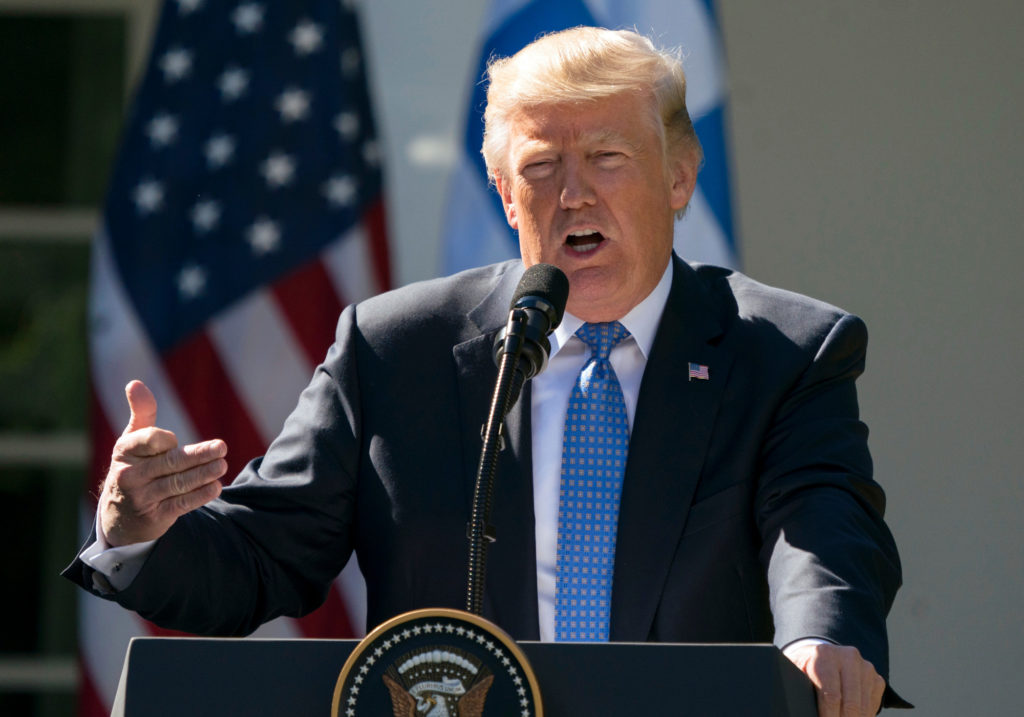
President Donald Trump’s unscripted remark this week about pulling out of Syria “very soon,” while at odds with his own policy, was not a one-off: For weeks, top advisers have been fretting about an overly hasty withdrawal as the president has increasingly told them privately he wants out, U.S. officials said. Only two months ago, Trump’s aides thought they’d persuaded him that the U.S. needed to keep its presence in Syria open-ended — not only because the Islamic State group has yet to be entirely defeated, but also because the resulting power vacuum could be filled by other extremist groups or by Iran. Trump signed off on major speech in January in which Secretary of State Rex Tillerson laid out the new strategy and declared “it is vital for the United States to remain engaged in Syria.” But by mid-February, Trump was telling his top aides in meetings that as soon as victory can be declared against IS, he wanted American troops out of Syria, said the officials. Alarm bells went off at the State Department and the Pentagon, where officials have been planning for a gradual, methodical shift from a military-led operation to a diplomatic mission to start rebuilding basic infrastructure like roads and sewers in the war-wracked country. In one sign that Trump is serious about reversing course and withdrawing from Syria, the White House this week put on hold some $200 million in US funding for stabilization projects in Syria, officials said. The money, to have been spent by the State Department for infrastructure projects like power, water and roads, had been announced by outgoing Secretary of State Rex Tillerson at an aid conference last month in Kuwait. The officials said the hold, first reported by The Wall Street Journal, is not necessarily permanent and will be discussed at senior-level inter-agency meetings next week. The officials weren’t authorized to comment publicly and demanded anonymity. The State Department said it continually reviews appropriate assistance levels and how best they might be utilized. And the agency said it continues to work with the international community, members of the Coalition, and our partners on the ground to provide much needed stabilization support to vulnerable areas in Syria. “The United States is working everyday on the ground and with the international community to help stabilize those areas liberated from ISIS and identify ways to move forward with reconstruction once there has been a peaceful political transition away from (Syrian President Bashar) Assad,” according to a statement from the State Department. Trump’s first public suggestion he was itching to pull out came in a news conference with visiting Australian Prime Minister Alastair Campbell on Feb. 23, when Trump said the U.S. was in Syria to “get rid of ISIS and go home.” On Thursday, in a domestic policy speech in Ohio, Trump went further. “We’ll be coming out of Syria, like, very soon. Let the other people take care of it now. Very soon — very soon, we’re coming out,” Trump said. The public declaration caught U.S. national security agencies off-guard and unsure whether Trump was formally announcing a new, unexpected change in policy. Inundated by inquiries from journalists and foreign officials, the Pentagon and State Department reached out to the White House’s National Security Council for clarification. The White House’s ambiguous response, officials said: Trump’s words speak for themselves. “The mission of the Department of Defense to defeat ISIS has not changed,” said Maj. Adrian Rankine-Galloway, a Pentagon spokesman. Still, without a clear directive from the president, planning has not started for a withdrawal from Syria, officials said, and Trump has not advocated a specific timetable. For Trump, who campaigned on an “America First” mantra, Syria is just the latest foreign arena where his impulse has been to limit the U.S. role. Like with NATO and the United Nations, Trump has called for other governments to step up and share more of the burden so that Washington doesn’t foot the bill. His administration has been crisscrossing the globe seeking financial commitments from other countries to fund reconstruction in both Syria and Iraq, but with only limited success. Yet it’s unclear how Trump’s impulse to pull out could be affected by recent staff shake-ups on his national security team. Tillerson and former national security adviser H.R. McMaster, both advocates for keeping a U.S. presence in Syria, were recently fired, creating questions about the longevity of the plan Tillerson announced in his Stanford University speech in January. But Trump also replaced McMaster with John Bolton, a vocal advocate for U.S. intervention and aggressive use of the military overseas. The abrupt change in the president’s thinking has drawn concern both inside and outside the United States. Other nations that make up the U.S.-led coalition fighting IS fear that Trump’s impulse to pull out hastily would allow the notoriously resourceful IS militants to regroup, several European diplomats said. That concern has been heightened by the fact that U.S.-backed ground operations against remaining IS militants in Syria were put on hold earlier this month. The ground operations had to be paused because Kurdish fighters who had been spearheading the campaign against IS shifted to a separate fight with Turkish forces, who began combat operations in the town of Afrin against Kurds who are considered by Ankara to be terrorists that threaten Turkey’s security. “This is a serious and growing concern,” State Department spokeswoman Heather Nauert said this month. Beyond just defeating IS, there are other strategic U.S. objectives that could be jeopardized by a hasty withdrawal, officials said, chiefly those related to Russia and Iran. Israel, America’s closest Mideast ally, and other regional nations like Saudi Arabia and the United Arab Emirates are deeply concerned about the influence of Iran and its allies, including the Shiite militant group Hezbollah, inside Syria. The U.S. military presence in Syria has been seen as a buffer against unchecked Iranian activity, and especially against Tehran’s desire to establish a contiguous land route from Iran to the Mediterranean coast in
The doctor is in: White House physician nominated to lead VA
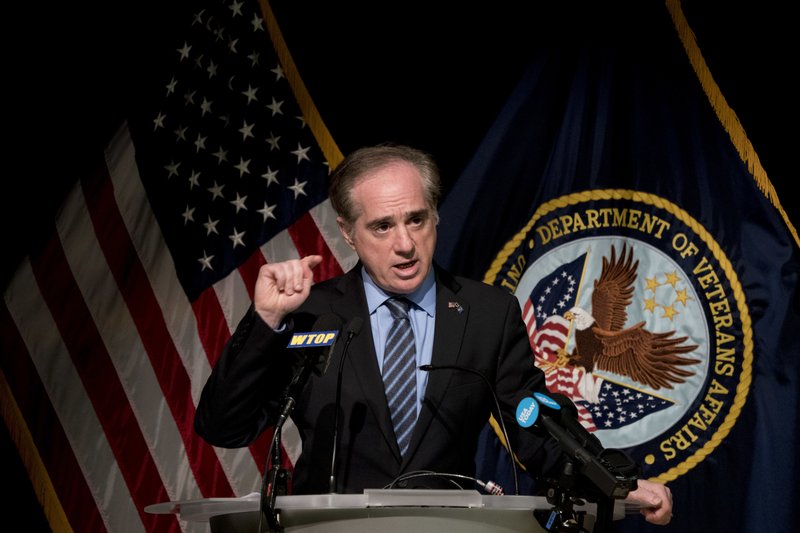
President Donald Trump fired Veterans Affairs Secretary David Shulkin and nominated White House doctor Ronny Jackson to replace him following a bruising ethics scandal and a mounting rebellion within the agency. A Navy rear admiral, Jackson is a surprise choice to succeed Shulkin, a former Obama administration official and the first nonveteran to head the VA. Trump had been considering replacing Shulkin for weeks but had not been known to be considering Jackson for the role. In a statement, Trump praised Jackson as “highly trained and qualified.” It was a decision that signaled Trump chose to go with someone he knows and trusts, rather than choosing a candidate with a longer resume, to run a massive agency facing huge bureaucratic challenges. Shulkin said he was undone by advocates of privatization within the administration. He wrote in a New York Times opinion piece that they “saw me as an obstacle to privatization who had to be removed.” He added: “That is because I am convinced that privatization is a political issue aimed at rewarding select people and companies with profits, even if it undermines care for veterans.” Jackson has served since 2013 as the physician to the president, one of the people in closest proximity to Trump day in and day out. His profile rose after he conducted a sweeping press conference about the president’s medical exam in January in which he impressed Trump with his camera-ready demeanor and deft navigation of reporters’ questions as he delivered a rosy depiction of the president’s health, according to a person familiar with the president’s thinking but not authorized to discuss private conversations. Jackson eagerly embraced the idea of moving to the VA, according to a White House official who spoke on condition of anonymity to discuss personnel matters. Ironically, it was Shulkin who had recommended Jackson for an undersecretary position at the agency in fall. Jackson was vetted during that time on his policy positions and other issues, the official said. The promotion of Jackson marks the latest Trump hire to be driven at least as much by personal familiarity with the president as by his vision for the role at government’s second-largest department, responsible for 9 million military veterans in more than 1,700 government-run health facilities. Brig. Gen. Dr. Richard Tubb, who trained Jackson, said in a letter read at Jackson’s briefing that the doctor had been attached like “Velcro” to Trump since Inauguration Day. “On any given day,” he wrote, “the ‘physician’s office,’ as it is known, is generally the first and last to see the President.” A White House official said Shulkin was informed of his dismissal by chief of staff John Kelly before the president announced the move on Twitter on Wednesday. A major veterans’ organization expressed concern over Shulkin’s dismissal and Trump’s intention to nominate Jackson, whom they worried lacked experience to run the huge department. “We are disappointed and already quite concerned about this nominee,” said Joe Chenelly, the national executive director of AMVETS. “The administration needs to be ready to prove that he’s qualified to run such a massive agency, a $200 billion bureaucracy.” Rep. Phil Roe, chairman of the House Veterans Affairs Committee, said he believed Shulkin did a “fantastic job” and didn’t think he should have been dismissed, but “at the end of the day, Cabinet secretaries serve at the pleasure of the president.” “I respect President Trump’s decision, support the president’s agenda and remain willing to work with anyone committed to doing the right thing on behalf of our nation’s veterans,” said Roe, a Republican from Tennessee. Shulkin is the second Cabinet secretary to depart over controversies involving expensive travel, following Health and Human Services Secretary Tom Price’s resignation last September. Trump said in a statement he is “grateful” for Shulkin’s service. Shulkin had agreed to reimburse the government more than $4,000 after the VA’s internal watchdog concluded last month that he had improperly accepted Wimbledon tennis tickets and that his then-chief of staff had doctored emails to justify his wife traveling to Europe with him at taxpayer expense. Shulkin also blamed internal drama at the agency on a half-dozen or so rebellious political appointees, insisting he had White House backing to fire them. But the continuing VA infighting and a fresh raft of watchdog reports documenting leadership failures and spending waste — as well as fresh allegations that Shulkin had used a member of his security detail to run personal errands — proved too much of a distraction. It was the latest in a series of departures of top administration officials, including Secretary of State Rex Tillerson and national security adviser H.R. McMaster. The VA change comes as Trump is trying to expand the Veterans Choice program, fulfilling a campaign promise that major veterans’ groups worry could be an unwanted step toward privatizing VA health care. His plan remains in limbo in Congress. Having pushed through legislation in Trump’s first year making it easier to fire bad VA employees and speed disability appeals, Shulkin leaves behind a department in disarray. Several projects remain unfinished, including a multibillion-dollar overhaul of electronic medical records aimed at speeding up wait times for veterans seeking medical care as well as expanded mental health treatment for veterans at higher risk of suicide. Trump selected Robert Wilkie, undersecretary of defense for personnel and readiness, to serve as the acting head of the VA. Republished with the permission of the Associated Press.
At odds with John Bolton on North Korea, Jim Mattis appears isolated
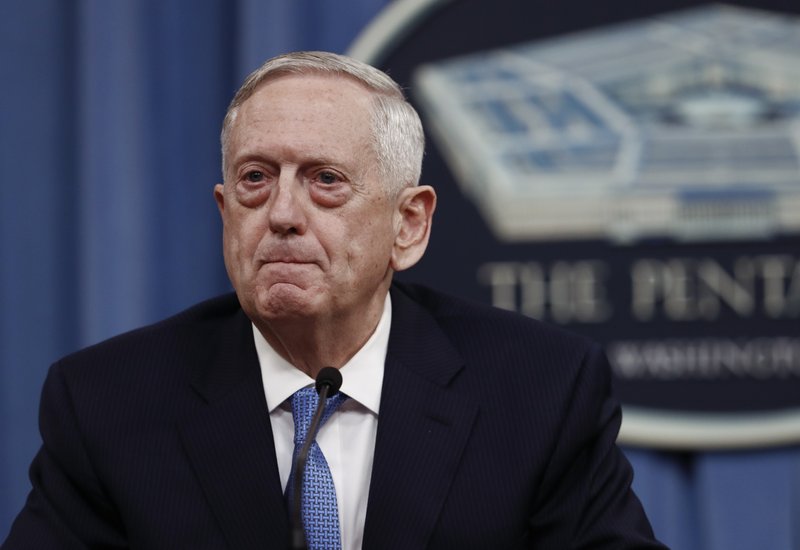
Of the issues that divide Defense Secretary Jim Mattis and President Donald Trump’s incoming national security adviser, John Bolton, one stands out: North Korea. Bolton, who will replace Army Lt. Gen. H.R. McMaster on April 9, has publicly advocated for overthrowing the North Korean government. Mattis, a retired Marine general who knows intimately the costs of war, favors diplomacy to rid the North of its nuclear weapons and has said war on the Korean peninsula would be “catastrophic.” On Iran, too, Mattis would seem at odds with Bolton, who has argued for abandoning the Obama-era nuclear deal. These and other matters of war and peace will test Mattis’ influence with Trump as his national security team is overhauled. Mattis was sometimes at odds with McMaster, but the arrival of the hawkish Bolton, combined with the firing of Secretary of State Rex Tillerson and the uncertain status of John Kelly as White House chief of staff, appears to leave Mattis more isolated than at any time since he took over the Pentagon 15 months ago. Often described as a steadying or moderating influence on the impulsive Trump, Mattis has little previous relationship with Bolton. The North Korea issue is front-and-center: Trump has agreed to meet with North Korean President Kim Jong Un by May to discuss the North’s nuclear disarmament. The unprecedented summit could be a turning point in a decades-old U.S.-North Korean standoff that Trump himself has said could end in “fire and fury” – an American nuclear attack __ to stop the North from gaining the ability to strike the U.S. with a nuclear missile. “This is buckle-up time,” retired Navy Adm. James Stavridis, dean of the Fletcher School of Law and Diplomacy at Tufts University, said last week on MSNBC. “For the military I have three words: Sharpen your swords. He (Bolton) is someone who is going to reach for the military instrument.” The changes in the White House and at the State Department, while significant for Mattis, are hardly heart-stopping. People close to him sense no change in his commitment to the job; some suggest that Trump’s decision to move former Republican congressman and current CIA director Mike Pompeo to State, replacing Tillerson, could benefit Mattis in the sense that he’ll have a partner at State who is better aligned with Trump. Publicly, Mattis has said little about the shakeup. He was in Afghanistan when Tillerson got the ax. When reporters asked his reaction a couple of days later, Mattis said he preferred not to comment on the details, although he went on to suggest that its importance was being exaggerated. He said that in all of his discussions abroad with foreign government officials and American troops, the matter was not brought up once. “I understand why you’re asking, but I’m just pointing out that in most parts of the world this is a Washington, D.C. story,” he said. Another Washington story is Mattis and his ability to forge a workable relationship with Trump despite differences on some issues like the Iran nuclear deal, which Mattis says is flawed but worth honoring as long as the Iranians do. Mattis also has differed with the president over Trump’s wish to bar all transgender people from serving in the military, and he helped sway Trump from his inclination last year to end U.S. military involvement in Afghanistan. The Mattis formula seems to be simple. Out of the spotlight, out of trouble. The less he says publicly, the less he risks losing influence with Trump. “Part of his success … is absolutely the fact that you don’t see him in the limelight terribly much,” says Loren Dejonge Schulman, a defense analyst at the Center for a New American Security who served in key national security positions in the White House and Pentagon under President Barack Obama. “That may be keeping him out of trouble with the White House but I think it’s setting an incredibly bad precedent in terms of Pentagon transparency.” If Mattis, who spent more than 40 years in uniform and is the first career military officer to lead the Pentagon since George C. Marshall in the early 1950s, isn’t the most experienced politician to run the military’s vast bureaucracy, he has shown a knack for staying out of trouble with his thin-skinned boss. Mattis has even broken Trump of his habit of calling the retired general “Mad Dog,” which Mattis insists was a media invention to begin with. Trump frequently has lunch and dinners with the defense secretary and speaks glowingly of him to outside advisers. White House officials have said that Trump sometimes repeats military historical anecdotes he heard from Mattis. Even Mattis’ few known stumbles have not dogged him. In August, for example, Mattis told sailors at a submarine base in his home state of Washington that the Navy would give them the worst and the best days of their lives, and then added, “That means you’re not some (expletive) sitting on the sidelines,” he said. “You know what I mean, kind of sitting there saying, ‘Well, I should have done something with my life.’” His language was quickly forgotten. The episode pointed to a man who has shaped the job and not let it shape him. So much so that perhaps the most poignant criticism of his tenure has been the secrecy with which the military has handled everything from troop deployment numbers to the details of its military strategies — things that often were made public under previous secretaries. Republished with the permission of the Associated Press.
Rex Tillerson’s dismissal may hasten demise of Iran nuclear deal
The Iran nuclear deal was in near terminal condition and on life support even before President Donald Trump fired Secretary of State Rex Tillerson. Tillerson’s dismissal this week may hasten its demise. As CIA chief and Iran hawk Mike Pompeo prepares to run the State Department, the Trump administration is weighing a speedier withdrawal from the agreement than even the president has threatened, according to two U.S. officials and two outside advisers briefed on the matter. They were not authorized to discuss the sensitive negotiations publicly and spoke on condition of anonymity. While such a scenario is unlikely, the fact it is being floated as an option may give U.S. officials more leverage in negotiations with European signatories to salvage the accord by toughening it. Two such negotiating sessions have already been held and a third is set for Thursday in Berlin. Trump, who calls the Obama administration’s signature foreign policy achievement the worst deal ever negotiated, has vowed to walk away from the 2015 agreement in mid-May unless Britain, Germany and France join the U.S. in addressing what the president says are its fatal flaws. These include no penalties for Iran’s missile work and support for militant groups in Lebanon, Syria, Yemen and elsewhere. The deal that was negotiated by the Obama administration and six other countries limits Iran’s enrichment and stockpiling of material that could be applied to a nuclear weapons program. In exchange, Tehran was granted widespread relief from international trade, oil and banking sanctions. Trump’s next deadline to extend some of those concessions is May 12, and he has vowed not to do so again unless the Europeans meet his demands. Any U.S. withdrawal would likely crater the agreement. If the U.S. begins threatening fines and other punishments for sanctions violations, countries around the world are likely to curtail commerce with Iran. That could prompt the Iranians to walk away as well, and perhaps even restart nuclear activities banned under the accord. An indication of the Trump administration’s thinking could come Friday, when the U.S., Britain, China, France, Germany, Russia, the European Union and Iran meet for a periodic review at the International Atomic Energy Agency headquarters in Vienna. State Department policy planning chief Brian Hook, who is running the negotiations with Europe, will lead the U.S. delegation to the larger meeting in Austria’s capital. Hook, who Tillerson leaned on heavily for policy advice and direction, could meet separately in Vienna with the Iranian delegation head, Deputy Foreign Minister Abbas Aragchi. For his part, Aragchi sees the writing on the wall. He told a parliamentary committee in Tehran on Wednesday that Tillerson’s ouster was proof that Trump would pull out and promised that Iran would withdraw if the U.S. does. In the U.S., Iran deal supporters braced for what they see as the inevitable. Pompeo “is certain to advise the president to withdraw the United States from our obligations under the nuclear agreement,” said Diplomacy Works, a group of mainly former Obama administration officials that lobbies for staying in the deal. Hook had been tasked by Tillerson with getting the Europeans to agree to as many of Trump’s demands as possible, with an eye toward selling the president on extending the sanctions waivers. Doing so would buy U.S. negotiators time to deal with elements of the agreement Trump has disparaged — such as its expiration dates on key nuclear constraints — and missile and terrorism concerns. With Tillerson gone, the emphasis will likely change. The ex-oilman had waged an often lonely battle within Trump’s Cabinet to save the deal. He succeeded for 13 months. But each time Trump faced another sanctions deadline, Tillerson met increased resistance to keeping the agreement alive. In firing Tillerson on Tuesday, Trump in particular noted his disagreement over the Iran accord. Trump won’t have that problem with Pompeo, who has lambasted the deal on a level similar to Trump, making clear the two men are of the same opinion. Trump said that he and Pompeo “have a very similar thought process” on the deal. As a congressman, Pompeo vociferously denounced the accord when it was struck. “The (deal) can perhaps delay Iran’s nuclear weapons program for a few years,” he wrote at the time. “Conversely, it has virtually guaranteed that Iran will have the freedom to build an arsenal of nuclear weapons at the end of the commitment.” His stance and position with Trump could give Pompeo leverage with the Europeans that Tillerson never enjoyed. U.S. officials said American positions have hardened over the past several weeks, notably on Iranian ballistic missile testing and the deal’s provisions that allow Iran to gradually resume advanced atomic work. Because Iran and the Europeans refuse to renegotiate the nuclear deal, U.S. officials are seeking to create a supplemental agreement with Europe to address these matters. At Thursday’s meeting in Berlin, U.S. and the European officials are hoping to compare draft written proposals and combine points of agreement into a new document that could form the basis of a side deal. U.S. and European diplomats say they’re closer on long-range ballistic missile launches, inspections and new sanctions on Iranian-backed militant groups. Gaps are larger on medium-range missiles that could hit Israel, Saudi Arabia and other Gulf Arab states and on the deal’s particulars for when advanced atomic work can restart. The U.S. focus turned to medium-range missiles after Israeli Prime Minister Benjamin Netanyahu met Trump in Washington earlier this month. Iran maintains that it must have medium-range missiles to defend itself, an argument the Europeans have been sympathetic to. The differences are even more stark on the sunset provisions, which are codified in the nuclear deal and which the Europeans and Iran regard as inviolable, according to the diplomats. One senior negotiator involved in the talks said last week that Europe is prepared to be “creative” in addressing the provisions but would not budge from opposing any measure that would punish Iran for activity that is otherwise permitted under the 2015 agreement. Republished with
Cabinet chaos: Trump’s team battles scandal, irrelevance
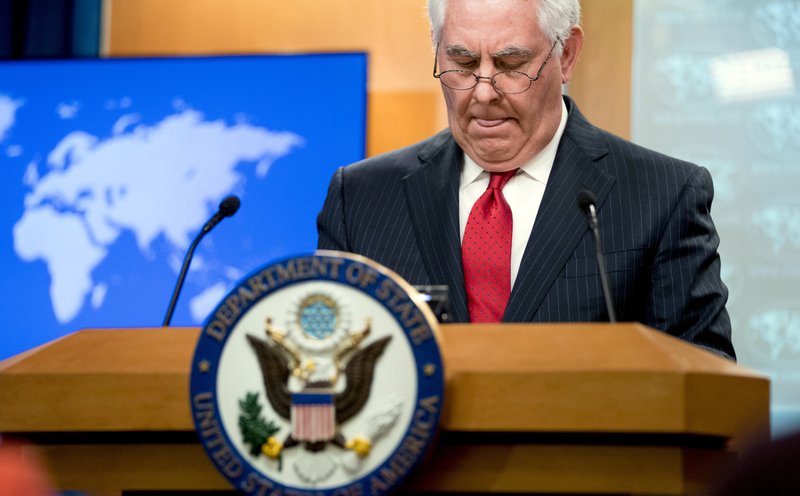
One Cabinet member was grilled by Congress about alleged misuse of taxpayer funds for private flights. Another faced an extraordinary revolt within his own department amid a swirling ethics scandal. A third has come under scrutiny for her failure to answer basic questions about her job in a nationally televised interview. And none of them was the one Trump fired. President Donald Trump’s Cabinet in recent weeks has been enveloped in a cloud of controversy, undermining the administration’s ability to advance its agenda and drawing the ire of a president increasingly willing to cast aside allies and go it alone. Trump’s ouster of Secretary of State Rex Tillerson on Tuesday may have just been the first salvo in a shakeup of a Cabinet that, with few exceptions, has been a team of rivals for bad headlines and largely sidelined by the White House. “Donald Trump is a lone-wolf president who doesn’t want to co-govern with anybody and doesn’t want anyone else getting the credit,” said presidential historian Douglas Brinkley of Rice University. “For his Cabinet, he brought in a bizarre strand of outsiders and right-wing ideologues. Many are famed conservative or wealthy business people, but that doesn’t mean you understand good governance.” The string of embarrassing headlines for Trump’s advisers, as well as the president’s growing distance from them, stands in sharp contrast to how he portrayed the group last year. “There are those that are saying it’s one of the finest group of people ever assembled as a Cabinet,” Trump said then. On Tuesday, the president hinted after firing Tillerson that more changes may be forthcoming, saying an ideal Cabinet is in the making. “I’ve gotten to know a lot of people very well over the last year,” Trump told reporters at the White House, “and I’m really at a point where we’re getting very close to having the Cabinet and other things that I want.” Even as Trump routinely convened Cabinet meetings in front of the cameras for “Dear Leader”-type tributes over the past year, his relationship with many of its members began to splinter. Last summer he began publicly bashing Attorney General Jeff Sessions, a former close adviser who was the first senator to back his campaign. Furious that the attorney general recused himself from the Russia probe that has loomed over the White House, Trump has privately mused about firing Sessions and taken to delivering unprecedented Twitter broadsides against him. Trump has used the words “beleaguered” and “disgraceful” to describe Sessions, who only recently stood up to the president and defended his recusal decision. Tillerson also frequently clashed with Trump, who never forgave the outgoing secretary of state for reportedly calling him “a moron” last summer after grumbling that the president had no grasp of foreign affairs. The pair never developed a particularly warm relationship. Last November, during a full day of meetings in Beijing, Trump and his senior staff were served plates of wilted Caesar salad as they gathered in a private room in the Great Hall of the People. None of the Americans moved to eat the unappetizing dish, but Trump prodded Tillerson to give it a try, according to a senior administration official. “Rex,” the president said, “eat the salad.” Tillerson declined, despite Trump’s urging. After repeatedly undermining and contradicting Tillerson, Trump at last fired his secretary of state in a tweet. Trump in recent days has told confidants that he feels emboldened. He’s proud of his unilateral decisions to impose sweeping tariffs on metal imports and to meet with North Korean dictator Kim Jong Un, and far less willing to put up with disloyalty around him, according to a person who has spoken to the president in recent days but was not authorized to discuss private conversations publicly. Trump’s esteem for the Cabinet has faded in recent months, according to two White House officials and two outside advisers. He also told confidants that he was in the midst of making changes to improve personnel and, according to one person who spoke with him, “get rid of the dead weight” — which could put a number of embattled Cabinet secretaries on notice. The officials all spoke on condition of anonymity to discuss internal matters. Interior Secretary Ryan Zinke underwent questioning Tuesday by Senate Democrats, who accused him of spending tens of thousands of dollars on office renovations and private flights while proposing deep cuts to conservation programs. Zinke pushed back, saying he “never took a private jet anywhere” — because all three flights he had taken on private planes as secretary were on aircraft with propellers, not jet engines. Veterans Affairs Secretary David Shulkin’s days on the job may be limited after a bruising internal report found ethics violations in connection with his trip to Europe with his wife last summer, according to senior administration officials. He also has faced a potential mutiny from his own staff: A political adviser installed by Trump at the Department of Veterans Affairs has openly mused to other VA staff about ousting the former Obama administration official. Trump has floated the notion of moving Energy Secretary Rick Perry to the VA to right the ship, believing Shulkin has become a distraction, according to two people familiar with White House discussions. They were not authorized to discuss internal deliberations and spoke on condition of anonymity. Others under the microscope: —White House aides deemed Education Secretary Betsy DeVos’ recent appearance on “60 Minutes” a disaster as she struggled to defend the administration’s school safety plan and could not answer basic questions about the nation’s education system. —Housing and Urban Development Secretary Ben Carson came under fire last month after reports his agency was spending $31,000 for a new dining set, a purchase HUD officials said was made without Carson’s knowledge. —Environmental Protection Agency Administrator Scott Pruitt has faced questions about $25,000 spent on a soundproof “privacy booth” inside his office to prevent eavesdropping on his phone calls and another $9,000 on biometric locks. —The first Cabinet member to
Rex Tillerson condemns hate speech, says bigotry is un-American
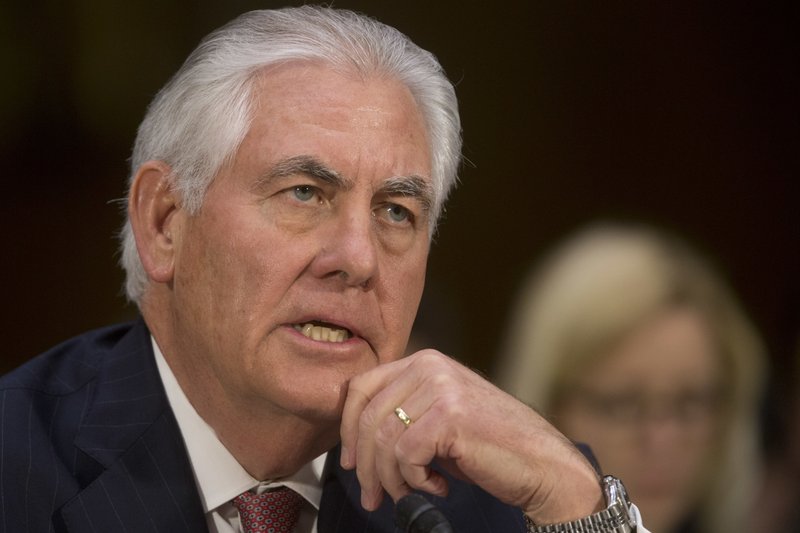
Secretary of State Rex Tillerson is condemning hate speech and bigotry as un-American and antithetical to the values the U.S. was founded on and promotes abroad. In his most extensive comments on race and diversity since last weekend’s violence in Charlottesville, Virginia, Tillerson on Friday called racism “evil.” He said freedom of speech is sacrosanct but that those who promote hate poison the public discourse and damage the country they claim to love. Speaking to interns and young minority staffers at the State Department, Tillerson pledged to diversify the overwhelmingly white ranks of the senior diplomatic corps. He also sought to calm fears he might eliminate programs designed to recruit minorities. He said an earlier suspension of the programs was only temporary. Republish with permission of The Associated Press.
