
Clinton team sees recount effort as waste of resources
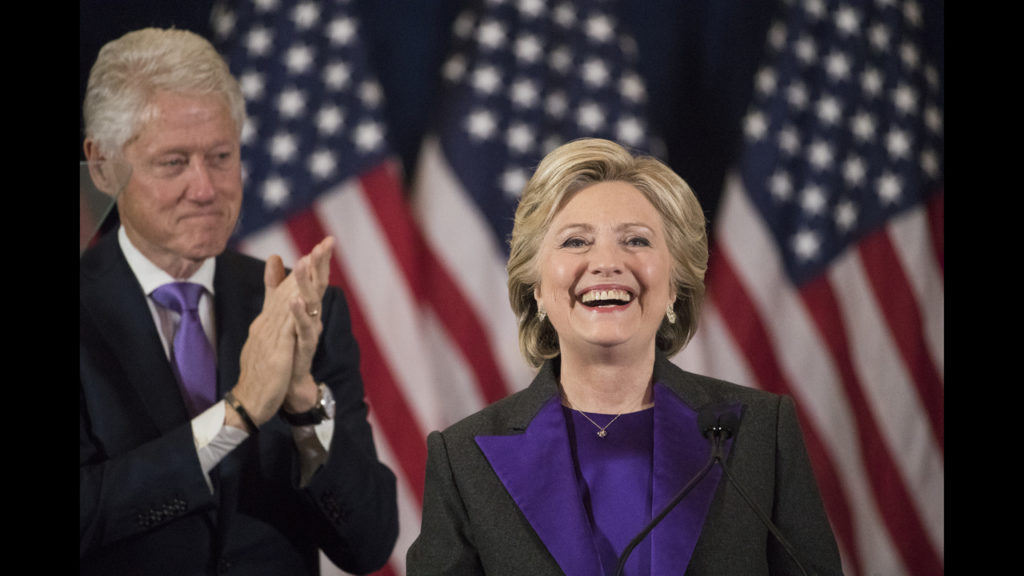
Hillary Clinton‘s aides and supporters are urging dispirited Democrats to channel their frustrations about the election results into political causes — just not into efforts to recount ballots in three battleground states. The former Democratic presidential candidate and her close aides see the recount drive largely as a waste of resources, according to people close to Clinton. The effort is being fueled by Green Party candidate Jill Stein, who’s formed an organization to try to force recounts in Wisconsin, Michigan and Pennsylvania. “Believe me if there was anything I could do to make Hillary Clinton the next president of the United States I would,” said former Pennsylvania Gov. Ed Rendell, a longtime Clinton supporter. “But this is a big waste of time.” Aides say Clinton is focused on moving past her unexpected defeat and has devoted little attention to the recount or thinking about her political future. She’s been spending time with her grandchildren and going for walks near her Westchester home. Sightings of Clinton hiking with her dogs and shopping at a Rhode Island bookstore went viral on social media. “There have been a few times this past week where all I wanted to do was curl up with a good book and our dogs and never leave the house again,” Clinton said in an emotional speech at a gala for the Children’s Defense Fund, her one public appearance since her loss. Former President Bill Clinton, meanwhile, has been poring over the election results, second-guessing decisions by top campaign aides and intensely trying to figure out how his wife lost the white working-class voters who were the base of his electoral coalition, say people familiar with the campaign. Clinton’s team was aware of possible discrepancies soon after the election, telling top donors on a conference call four days after the election that they were looking into potential problems in the three states. But while many campaign staffers believe Russian hacking influenced the outcome of the election, blaming foreign actors for incursions into campaign and Democratic National Committee emails, they’ve found no evidence of the kind of widespread ballot box tampering that would change the results of the race — or even flip a single state. Still, some dejected Clinton supporters have been unwilling to accept the results. Stein has raised $6.5 million for her recount campaign, according to a count posted on her campaign website on Tuesday. That’s nearly double the roughly $3.5 million she raised during her entire presidential bid. Some former Clinton aides have asked frustrated supporters to donate their dollars to what they view as more constructive causes, like state parties or the Democratic candidate in Louisiana, where a Dec. 10 runoff will be the party’s last chance to pick up a Senate seat this year. “I wouldn’t give a dollar to Jill Stein,” said Adam Parkhomenko, a longtime Clinton aide. “Volunteers, supporters and Democrats, they want to pick themselves up and get back out there. The best vehicle to do that is the Louisiana Senate race.” Clinton’s team conducted an exhaustive investigation into the possibility of outside interference in the vote tally, tasking lawyers, data scientists and political analysts to comb over the results. They contacted outside experts, examined the laws governing recounts and double-checked all the vote tallies. The campaign found no “evidence of manipulation,” wrote Marc Elias, the general counsel for Clinton’s campaign, in an online essay. But, he said, Clinton agreed to minimal participation in Stein’s effort, largely to make sure that her interests are represented. They put out a call for volunteers to monitor the proceedings and are relying on local lawyers to handle filings and other legal matters. Clinton is under pressure to participate from her supporters, some of whom have struggled to accept the election results given her lead in the popular vote, which has grown to more than 2.3 million in the weeks after the Nov. 8 election. “Now that a recount is underway, we believe we have an obligation to the more than 64 million Americans who cast ballots for Hillary Clinton to participate in ongoing proceedings to ensure that an accurate vote count will be reported,” Elias wrote. Clinton’s lawyers filed motions with a Wisconsin judge on Tuesday looking to join Stein’s lawsuit demanding that Wisconsin officials recount ballots by hand. The state elections commission will formally began the recount on Thursday. Stein’s organization has also filed for recounts in six of Pennsylvania’s largest counties and says it plans to file a petition Wednesday demanding a Michigan recount. “It’s election law malpractice to not have your lawyers sitting around the table with Jill Stein’s lawyers,” said Adam Ambrogi, elections program director at the bipartisan Democracy Fund. “It is just due diligence.” Republished with permission of The Associated Press.
Donald Trump pulls off clean sweep of 5 Northeast primaries
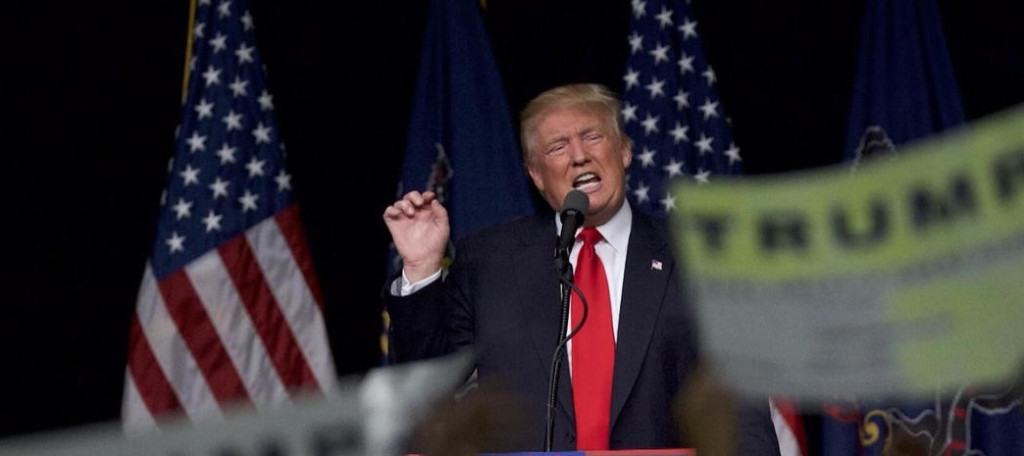
Donald Trump swept all five Republican primaries Tuesday, a commanding showing across the Northeast that keeps the Republican front-runner on his narrow path to the GOP nomination. Hillary Clinton carried Democratic contests in Maryland and Delaware, the start of what her campaign hoped would be a strong night for the former secretary of state. Trump’s victories came in Maryland, as well as Connecticut, Delaware, Pennsylvania and Rhode Island. His strong showing was a blow to rivals who are running out of ways to stop the brash billionaire. Clinton aimed to emerge from Tuesday’s contests on the brink of becoming the first woman nominated by a major party. She’s already increasingly looking past rival Bernie Sanders, even as the Vermont senator vows to stay in the race until primary voting ends in June. Sanders spent Tuesday campaigning in West Virginia, where he drew several thousand people to a lively evening rally. He urged his supporters to recognize that they are “powerful people if you choose to exercise that power.” Still, there were some signs that Sanders’ campaign was coming to grips with his difficult position. Top aide Tad Devine said that after Tuesday’s results were known, “we’ll decide what we’re going to do going forward.” Trump’s victories padded his delegate totals, yet the Republican contest remains chaotic. The businessman is the only candidate left in the three-person race who could possibly clinch the nomination through the regular voting process, yet he could still fall short of the 1,237 delegates he needs. GOP rivals Ted Cruz and John Kasich are desperately trying to keep him from that magic number and push the race to a convention fight, where complicated rules would govern the nominating process. The Texas senator and Ohio governor even took the rare step of announcing plans to coordinate in upcoming contests to try to minimize Trump’s delegate totals. But that effort did little to stop Trump from a big showing in the Northeast. Cruz spent Tuesday in Indiana, which votes next week. Indiana is one of Cruz’s last best chances to slow Trump, and Kasich’s campaign is pulling out of the state to give him a better opportunity to do so. “Tonight this campaign moves back to more favorable terrain,” Cruz said during an evening rally in Knightstown, Indiana. His event was held at the “Hoosier gym,” where some scenes were filmed for the 1986 movie, “Hoosiers,” starring Gene Hackman as the coach of a small-town Indiana basketball team that wins the state championship. Trump has railed against his rivals’ coordination, panning it as “pathetic,” and has also cast efforts to push the nomination fight to the convention as evidence of a rigged process that favors political insiders. Yet there’s no doubt Trump is trying to lead a party deeply divided by his candidacy. In Pennsylvania, exit polls showed nearly 4 in 10 GOP voters said they would be excited by Trump becoming president, but the prospect of the real estate mogul in the White House scares a quarter of those who cast ballots in the state’s Republican primary. In another potential general election warning sign for Republicans, 6 in 10 GOP voters in Pennsylvania said the Republican campaign has divided the party — a sharp contrast to the 7 in 10 Democratic voters in the state who said the race between Clinton and Sanders has energized their party. The exit polls were conducted by Edison Research for The Associated Press and television networks. With his three victories Tuesday, Trump will win at least half of the 118 delegates up for grabs in Tuesday’s contests. And he has a chance to win a lot more. In Pennsylvania, Trump collected 17 delegates for winning the state. An additional 54 delegates are elected directly by voters — three in each congressional district. However, their names are listed on the ballot with no information about which presidential candidate they support. Those delegates will attend the GOP convention as free agents, able to vote for the candidate of their choice. Democrats award delegates proportionally, which allowed Clinton to maintain her lead over Sanders even as he rattled off a string of wins in previous contests. According to the AP count, Clinton has 1,946 delegates while Sanders has 1,192. That count includes delegates won in primaries and caucuses, as well as superdelegates — party insiders who can back the candidate of their choice, regardless of how their state votes. Clinton’s campaign is eager for Sanders to tone down his attacks on the former secretary of state if he’s going to continue in the race. She’s been reminding voters of the 2008 Democratic primary, when she endorsed Barack Obama after a tough campaign and urged her supporters to rally around her former rival. Ahead of Tuesday’s results, Senate Democratic leader Harry Reid said that while Sanders has run a “unique and powerful” campaign, he does not believe the Vermont senator will be the party’s nominee. According to exit polls, less than a fifth of Democratic voters said they would not support Clinton if she gets the nomination. The exit polls were conducted in Connecticut, Pennsylvania and Maryland. Republished with permission of the Associated Press.
Donald Trump bristles at Ted Cruz-John Kasich collaboration
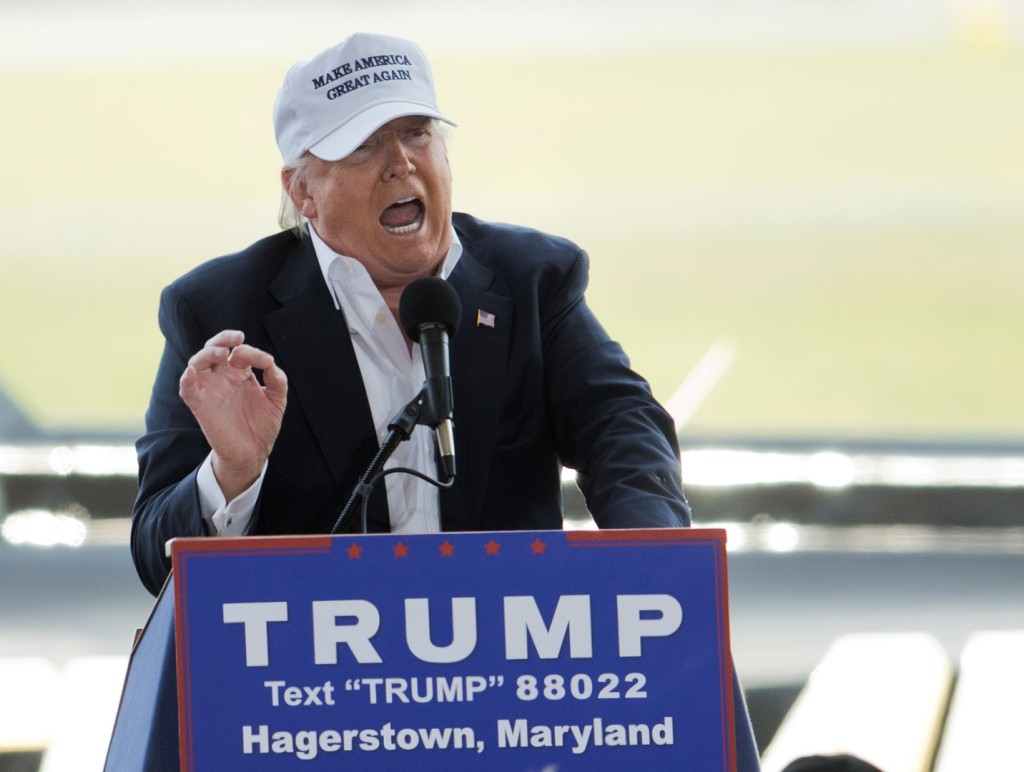
Donald Trump says an extraordinary collaboration between Ted Cruz and John Kasich aimed at unifying the anti-Trump vote in some remaining primaries is a desperate move by “mathematically dead” rivals. Such collusion would be illegal in many industries, the Republican presidential front-runner said, but it’s illustrative of “everything that is wrong in Washington and our political system.” Under the arrangement outlined Sunday, Kasich, the Ohio governor, will step back in the May 3 Indiana contest to let Cruz bid for voters who don’t like Trump. Cruz, a Texas senator, will do the same for Kasich in Oregon and New Mexico. The arrangement does not address the five Northeastern states set to vote Tuesday, where Trump is expected to add to his already overwhelming delegate lead. Yet the shift offers increasingly desperate Trump foes a glimmer of hope in their long and frustrating fight to halt the billionaire’s rise. Trump said in a statement the Cruz-Kasich compact joins two “puppets of donors and special interests” who have no path to the nomination. Cruz’s campaign manager, Jeff Roe, said in a statement explaining the new plans that Trump would be soundly defeated by the Democratic nominee, whether it’s Hillary Clinton or Bernie Sanders. “Having Donald Trump at the top of the ticket in November would be a sure disaster for Republicans,” he said. Added Kasich’s chief strategist, John Weaver, “Our goal is to have an open convention in Cleveland, where we are confident a candidate capable of uniting the party and winning in November will emerge as the nominee.” The announcement marks a sharp reversal for Cruz’s team, which aggressively opposed coordinating anti-Trump efforts with Kasich as recently as late last week. And the agreement applies only to Indiana, Oregon and New Mexico — three of the 15 states remaining on the Republican primary calendar. As Kasich backs out of Indiana, Cruz promised he would not compete in Oregon on May 17 and New Mexico on June 7. Trump campaigned Sunday in Maryland, which will vote on Tuesday along with Rhode Island, Connecticut, Pennsylvania and Delaware. Speaking to several thousand people in an airplane hangar in Hagerstown, Maryland, Sunday evening, Trump stressed repeatedly that he expects to win the 1,237 delegates needed in the first round of voting in Cleveland to stave off a contested convention. “I only care about the first,” he said. “We’re not going for the second and third and fourth and fifth.” As recently as three days ago Kasich’s campaign announced investments in Indiana, including the opening of two offices and the creation of a campaign leadership team. His campaign on Sunday night canceled a town-hall meeting and gathering in Indianapolis scheduled to watch the results of Tuesday’s primaries. Both campaigns encouraged allied super PACs and other outside groups to “honor the commitments.” On the Democratic side Sunday, underdog Sanders rallied thousands of voters in two New England states and offered mixed signals on how hard he would push his differences with the commanding front-runner, Clinton. The Vermont senator largely steered clear of Clinton at a Rhode Island park, but hours later delivered a sharp critique before more than 14,000 supporters in New Haven, Connecticut. Sanders reiterated his call for Clinton to release transcripts of lucrative Wall Street speeches she delivered after leaving the State Department in early 2013. Republished with permission of the Associated Press.
