
Nathaniel Ledbetter to retain Mark Tuggle as Chief of Staff

Last Wednesday, State Rep. Nathaniel Ledbetter announced that he will retain Mark Tuggle as his chief of staff when he is elected as the Speaker of the Alabama House of Representatives. Ledbetter was elected as the choice of House Republicans in their post-election Caucus meeting of the House Republicans. Since the GOP maintained its’ commanding 77 to 28 supermajority lead in the November 8 election, the choice of the Republican Caucus is going to be the Speaker of the House when the Legislature meets in an organizational session, likely in January. Tuggle is a former member of the House who has served as Chief of Staff for outgoing Speaker of the House Mac McCutcheon. Tuggle is a professional forester and a retired employee of the Alabama Power Company. “Mark was an outstanding legislator during his time in the Alabama House, and he has proven himself to be an equally talented chief of staff under Speaker McCutcheon,” Ledbetter said. “I know that Mark will be a source of wise counsel and sage advice as we work to tackle the challenges that Alabama faces in the coming quadrennium, and I look forward to working alongside him if elected speaker.” Tuggle was part of the 2010 class of Republican legislators, who were elected in a wave election that gave Republicans control of the House after 135 years of Democratic control of the body. Tuggle represented House District 81 for eight years and served as Chairman of the House State Government Committee. Tuggle has served as the Speaker’s chief of staff since leaving the Legislature in 2018. “As a member of the Alabama House, Mark set himself apart as a leader and proved a valuable source of wise counsel, so I’m pleased to continue utilizing his talents as my chief of staff,” McCutcheon said in a statement when he first appointed Tuggle. “Alabama faces many challenges that the Legislature must resolve, and Mark will play a large role in developing and passing needed solutions to those important issues.” “When I decided against seeking another term in the House, I assumed my work in state government had ended, but Speaker McCutcheon convinced me to continue serving the citizens of Alabama in this new role,” Tuggle said. “As a former member, I’ll be able to advise the new House members with the perspective of someone who has once held the same responsibilities, and I will work with the returning members as someone they already know and trust.” Tuggle has a bachelor’s degree from Auburn University and a master’s degree from Faulkner University. He and his wife, Michelle, have one daughter. Ledbetter will be the third Republican Speaker of the House, succeeding McCutcheon, who was elected Speaker of the House in 2016 after Speaker Mike Hubbard was found guilty of felony ethics violations by a Lee County Grand Jury. Seth Hammett was the last Democratic Speaker of the House. Democratic nominee Phillip Ensler successfully unseated incumbent Rep. Charlotte Meadows in the midterm elections. However, Republican nominee Rick Rehm successfully unseated incumbent Democratic incumbent Dexter Grimsley. Thus, there was no net change in the Republican-dominated Legislature. To connect with the author of this story, or to comment, email brandonmreporter@gmail.com.
Randy Kelley: Democrats have work to do after election showing
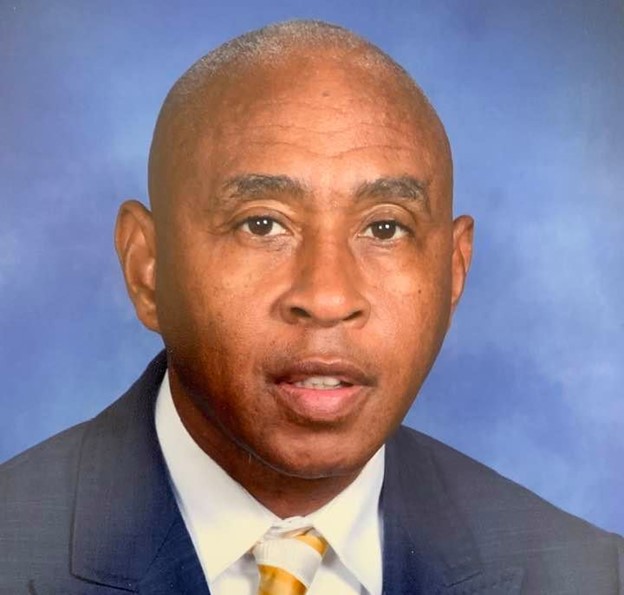
Alabama Democrats saw disappointing results in Tuesday’s election as the party continues to struggle to find its footing after the defeat of former U.S. Sen. Doug Jones. Democratic candidates in statewide races were held to about 30% of the vote on Tuesday, about 10 percentage points lower than four years ago, in an election noted for low voter turnout and a lack of competitive races at the top of the ticket “We’ve got to debrief, regroup and call our troops together. So, we’ll strategize and go on from here,” Alabama Democratic Party Chairman Randy Kelley said in a telephone interview. “I’m still optimistic despite being disappointed that our candidates didn’t win. We had some wonderful people running … But on the other hand, we’ve got some homework to do.” Voter turnout on Tuesday was an estimated 38.5%, according to unofficial returns. Democratic gubernatorial candidate Yolanda Flowers, who carried only 29% of the vote against Republican Gov. Kay Ivey after a poorly financed, shoestring campaign, said many voters didn’t realize her status as the first Black female to win a major party’s nomination for the office in Alabama. Speaking at a small gathering of supporters on election night, she told reporters some of the blame lies with the Alabama Democratic Party. “My team, they shared with me there was some hurt,” said Flowers, a longtime educator and political novice who made frequent mention of her Christian faith. “I wasn’t acknowledged as the candidate, the one to represent the state or the party.” Flowers said she received donations from some local Democratic groups, but her only real support from the state organization was contact with its vice chair, Tabitha Isner. Describing both the Democratic and Republican parties as “messed up,” Flowers said she plans to run for governor again in four years and won’t do anything differently. Her main purpose, she said, is “to keep God at the forefront.” The party has been through a power struggle in the past several years, as well as recent internal squabbling. Kelley this week sent party leaders a memo accusing Isner of overstepping her role. The Alabama Democratic Party’s Twitter account has been silent since August, when leadership changed hands. The party’s Youth Caucus wrote in a tweet this week that, “Alabama Democratic Party Leadership are fighting like 2-year-olds.” The Deep South was once the Solid South for the Democratic Party. But Alabama and other Southern states shifted to Republican control as white Southerners increasingly flocked to the GOP in a trend largely set in motion by the civil rights movement more than 50 years ago. Beleaguered Alabama Democrats were heartened by Jones’ 2017 victory in a special election. But the win did not translate to other gains. A slate of Democratic candidates were held to about 40% of the vote in 2018. Jones was defeated in 2020. Democrats on Tuesday were able to flip a legislative seat for the first time since 2010. Attorney Phillip Ensler defeated Republican incumbent Charlotte Meadows to win the Montgomery House seat. However, that win was tempered by the loss of longtime Democratic incumbent Dexter Grimsley to Republican challenger Rick Rehm in a southeast Alabama district. Both wins were aided by changes to district lines during the last redistricting process. Democratic hopes to pick up additional legislative seats did not materialize. Lisa Ward, who unsuccessfully challenged Republican incumbent Sen. Gerald Allen for the district that includes both the University of Alabama and rural west Alabama, said she remains optimistic. “You can’t give up because they say it’s a red state,” Ward said. She said she ran to bring attention to rural Alabama, and she said people in need don’t care about the party’s internal squabbles. “All they know is their water is brown, and they can’t pay rent, and their grocery tax is too high,” Ward said.
