
Jeb Bush struggles for Alabama delegates
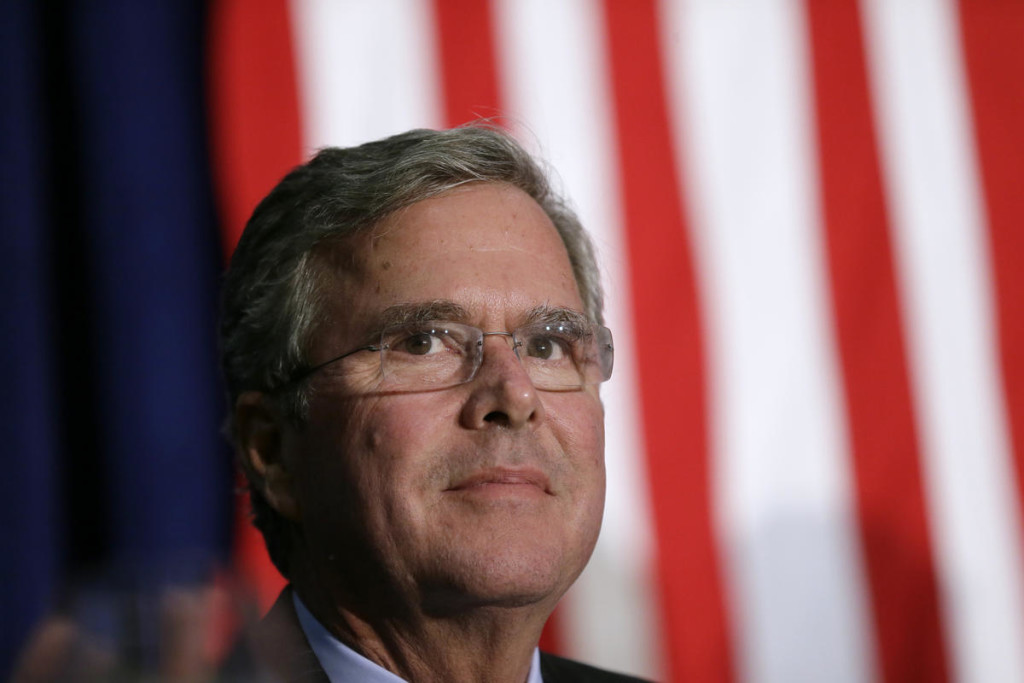
As news circulated throughout both the conservative and mainstream press that Jeb Bush failed to secure a full slate of delegates ahead of the Alabama primary in March, the question has emerged: does Bush have an “Alabama problem”? The conservative Weekly Standard sure seemed to think so. Their Michael Warren wrote Bush’s inability to fill commitments for all 47 of Alabama’s open delegates who will be awarded to the winner of the state’s primary amounted to “a sign the former Florida governor may be lagging in organization and enthusiasm in the Yellowhammer State.” Alabama political consultant Brent Buchanan was more severe still in an interview with Bloomberg Politics. “You can buy all the people you want, but it doesn’t make voters vote for you,” said Buchanan in an interview. “He’s just not connecting with people like his brother did. He’s a policy wonk, and that’s great for a governor. But it doesn’t always translate to the presidential race.” Bloomberg leveled a criticism at the Bush campaign that had lingered in Tallahassee, Miami and other Bush strongholds, but which has now reached the national stage, calling it “a top-heavy campaign with plenty of endorsements that’s still waiting for the candidate to turn on the ignition.” The more measured election watchers at the blog Frontloading HQ, on the other hand, were less apt to ring the alarm bells. Of those 47 spots, Bush has 32 delegate candidates covering 29 vacancies. That is short of the more than full slates that candidates like Donald Trump, Ben Carson, Ted Cruz and Marco Rubio had filing in support of them. Looks bad, right? It is. If a campaign touts its strength in filing a full slate of delegate candidates in Tennessee — as the Bush campaign has done and others have reported — then it says something that the campaign has missed the mark further south in Alabama. It says something about organization in an area of the country — SEC primary territory — where Bush has spent some time this fall. It says something more that, compared to the other candidates, Bush ranks sixth in terms of the number of Alabama delegate candidates that filed pledges to the former Florida governor. And yet – There are, however, a couple of matters that have gone unsaid and/or underreported in this story. One is that the above it just one comparison. The second is that the process in Alabama — the rules — are being overlooked. Both factors when not considered help to overstate the extent of the problem for Bush in Alabama… …look back four years and you will see that all four candidates who made the Alabama presidential primary ballot — [Newt] Gingrich, [Ron] Paul, [Mitt] Romney and [Rick] Santorum — all had gaps in the delegate slates that appeared on the ballot next to their names. And yes, that is more an excuse from the Bush perspective than anything else. 2016 is not 2012. However, if FHQ had asked you before the Alabama filing deadline — so absent this revelation about delegate slates there — whether Bush would get more or less than 12 delegates (of 47 total), I suspect most would have taken the under given the crowded field of candidates. Alabama is a small state and its field of GOP consultants and activists who make up the RNC delegate-type crowd is even smaller. The final verdict: Jeb’s campaign for Alabama’s 50 delegates isn’t looking great at this juncture, but neither were the campaigns of many Republican pols who have ultimately gone on to carry the state. How the new “SEC primary,” the candidate winnowing process sure to begin this winter, and other 2016-specific factors will play into the recent news of Bush’s missing delegates remains to be seen.
6 Republican 2016 hopefuls woo faithful at Texas megachurch
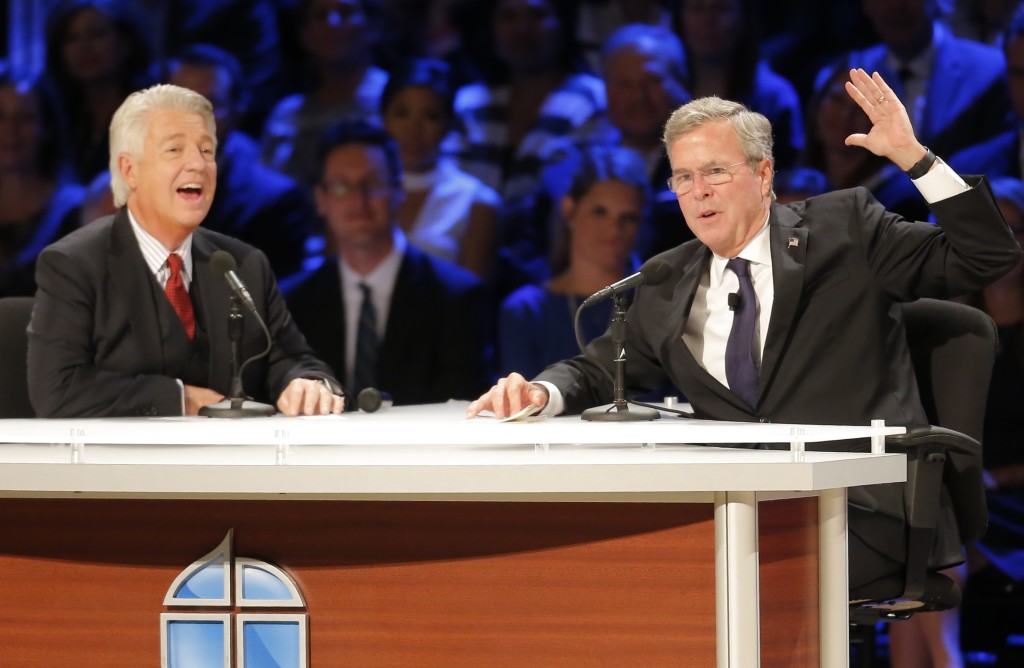
A half-dozen Republican presidential hopefuls worked to woo thousands of evangelicals at a Texas megachurch in suburban Dallas on Sunday, declaring their unwavering support for “religious liberty” even after the U.S. Supreme Court legalized gay marriage and their defense of life in abortion cases and beyond. Some of those making personal appeals – Sen. Ted Cruz, retired neurosurgeon Ben Carson, former Sen. Rick Santorum of Pennsylvania and former Arkansas Gov. Mike Huckabee – are already darlings of Christian conservatives. Former Florida Gov. Jeb Bush and ex Hewlett-Packard CEO Carly Fiorina, meanwhile, might like to be. But the four-plus-hour event before what organizers said was a crowd of 7,000 at the Prestonwood Baptist Church in Plano underscored the importance of the religious right, as well as the potentially pivotal role Texas’ earlier-than-usual primary could play in the 2016 race. Prestonwood claims nearly 40,000 members over multiple Dallas-area campuses. “I’m trying to separate church and politics, but Hillary Clinton said people of faith, ‘Just have to get over it,’” Bush said. “That’s just wrong.” Not attending was GOP front-runner Donald Trump. “Everyone was invited to come but we believe the right people are in the room today,” said Pastor Jack Graham, who interviewed all the candidates about the importance of faith in their lives. He identified those gathered as evangelicals whom he called “Christians who believe the Bible.” Santorum subsequently declared himself an “evangelical Catholic.” Responding to questions about his church’s nonprofit status perhaps being violated because the event was political, Graham said that Democratic presidential hopefuls were also invited — but didn’t appear. Carson declared, “It’s time for us to bring God back to our country,” bringing the crowd to its feet despite his self-admitted “calm demeanor that people mistake as softness.” “It’s not softness; it’s just the ability to look at things from multiple perspectives without getting angry about it,” Carson clarified, saying God gave him the ability to do so. Cruz said faith in America “was under assault,” prompting some in the sprawling, stadium-style sanctuary to bellow “Yes!” He pointed to the Supreme Court ruling on gay marriage, and to businesses that he said had faced boycotts because they opposed same-sex weddings on religious grounds. “I believe that 2016 is going to be a religious-liberty election,” Cruz said to raucous applause. “As these threats grow darker and darker and darker, they are waking people up here in Texas and all across this country.” Fiorina was more subdued, saying her faith was once “a little abstract” since “I came to think of God as a CEO of a big enterprise. He was in charge, but he couldn’t possibly know every little detail.” But, she told the faithful, she later discovered that “each one of us can have a personal relationship with Jesus Christ.” “God knows what’s going on in our lives,” she said, “and that personal relationship saw me through many hard times.” All candidates decried abortion. But Bush highlighted what he called his record of “defense of life” while governor, reminding the crowd that he intervened in the case of Terri Schiavo, a brain-damaged Florida woman at the center of a protracted court fight over having her feeding tube removed. “I didn’t talk about it,” Bush said. “I got to act.” Grassroots groups in Tea Party-dominated Texas largely have shunned Bush in favor of insurgent candidates like Cruz or Trump, but Bush has courted Christian conservatives at many events across the country organized by the Faith and Freedom Coalition, which also helped put together Sunday’s gathering. Bush spoke last and some streamed for the exits as he took the stage — after sitting through hours of candidates and intermissions featuring gospel music and a choir rendition of “America the Beautiful.” The Plano forum also offered presidential hopefuls a chance to make inroads in Texas, the country’s largest conservative state. Officials moved the presidential primary up from May to March 1, and Texas is now set to be the largest of 13 states voting on “Super Tuesday.” Bush was born in the oil-patch town of Midland, his brother George W. was Texas governor before he was president and his father, George H.W., lives in Houston. Graham declared, “Welcome to Bush country.” Bush smiled and replied, “Is that named after my brother or my dad?” Reprinted with permission of The Associated Press.
New PPP national survey has Donald Trump up by 10 points
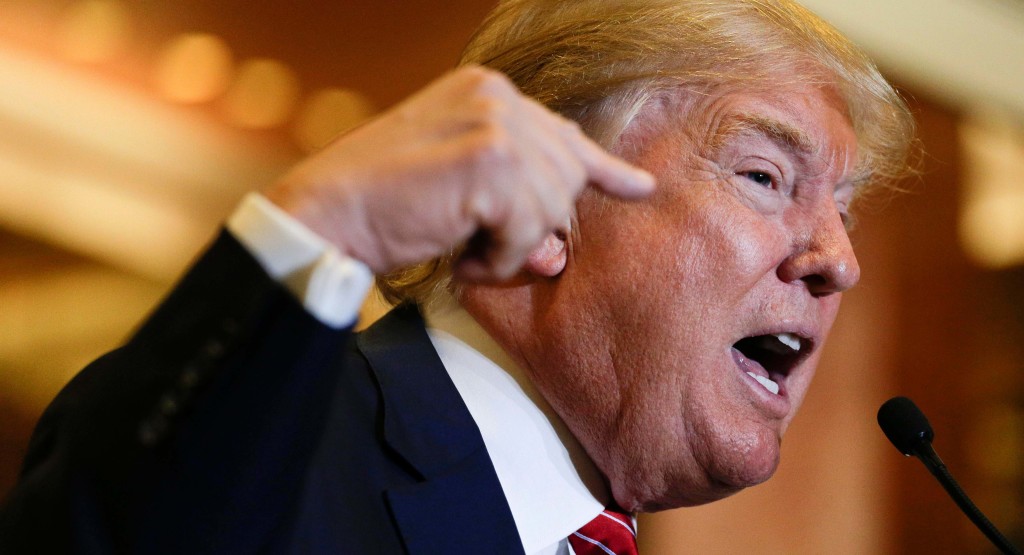
Donald Trump may or may not have already peaked in the Republican presidential contest, but no other candidate gets close to him in yet another national poll of GOP candidates released on Tuesday. The Public Policy Polling survey has Trump up with 27 percent support. Ben Carson is in second place with 17 percent, and Marco Rubio is next with 13 percent. These are all numbers that were roughly the same as when PPP conducted their last survey back in early September. Rounding out the field in fourth place is Jeb Bush with 10 percent, Ted Cruz is at 7 percent, Carly Fiorina is at 6 percent, and Mike Huckabee and John Kasich are each at 4 percent round out the list of candidates with with decent levels of support. Chris Christie, Rand Paul, and Rick Santorum are all at 2 percent, Lindsey Graham, Bobby Jindal, and George Pataki each get 1 percent, and in last place with less than 1 percent is Jim Gilmore. PPP says that Rubio “is really the only candidate who can claim any sort of momentum.” They say that because he’s gone from 5th place at 7 percent to 3rd place at 13 percent over the last five weeks. And he has a 57/24 favorability rating that puts him only behind Ben Carson when it comes to the most broadly liked of the Republican hopefuls. No one other than Rubio has seen more than a 2 point gain since our last poll. Florina’s six percent showing is down two points from a month ago, indicating that her No one’s really lost much ground in the last month either. The biggest decline anyone has seen in their support is 2 points- Trump, Fiorina, and Kasich have all seen that minor dip in the last month. Fiorina being at 6% after registering at 8% on our national poll in late August does suggest that whatever benefit she received from her strong debate performance last month may have already receded. Bush’s 10 percent showing is actually slightly up from a month ago and puts him in the top four, but he’s becoming more and more unpopular with Republican voters overall. Just 34 percent have a favorable opinion of him to 49% with a negative one. His struggles continue to be fueled by strong distrust from voters who identify themselves as ‘very conservative’- his favorability with them is 26/56 and only 2 percent support him for the nomination. Most interestingly, Republican primary voters are more liberal than all of the candidates when it comes to gun control and the economy. Eight-two percent of primary voters support background checks on all gun purchases, to only 13 percent opposed. Supporters of all 15 GOP hopefuls are in support of expanded background checks, including 82/18 support for them from Bush voters. There’s also 54 percent support among GOP voters for increasing the minimum wage to at least $10 an hour. Only 26 percent support keeping it where it is right now and 18 percent support eliminating the federal minimum wage altogether.
Conservatives to 2016 GOP field: Defy us at your own peril
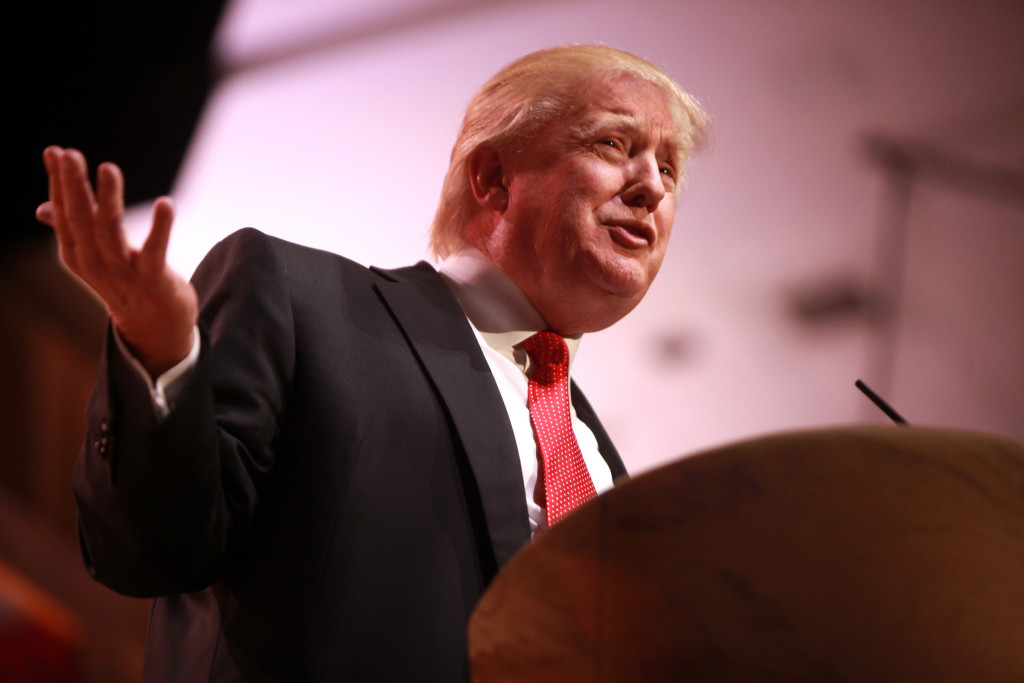
The Republican Party’s conservative wing, pumped up by House Speaker John Boehner‘s stepping down, is warning the 2016 presidential candidates that defying its wishes will come at their peril. Religious activists forcefully conveyed this message Saturday: embrace our uncompromising stance against abortion rights and gay marriage, among other priorities, even if doing so risks a federal government shutdown. An emboldened conservative movement signals fresh trouble for White House candidates viewed by the party’s frustrated base as insufficiently committed to their cause. Chief among them is former Florida Gov. Jeb Bush. “Conservatives are on fire at the moment,” said Gary Bauer, a former president of the Family Research Council. He was among the featured speakers at the Values Voter annual conference that brought an estimated 2,000 evangelical activists to Washington this weekend. Boehner’s announcement that he would resign from Congress by the end of October came without warning Friday, nearly four months before voting begins in the presidential primary. His decision revealed a deep divide within the GOP that raises questions about the party’s ability to unite behind one candidate next spring. Hard-line conservatives were deeply disappointed with the last two Republican presidential nominees – former Massachusetts Gov. Mitt Romney and Arizona Sen. John McCain. Boehner was unpopular among conservative activists, and his resignation will give them new hope that the party may choose a candidate who energizes the most passionate voters, even if that nominee is seen as less attractive to a general election crowd. A co-founder of the tea party movement said Boehner was just another of the establishment figures taken down by frustrated conservatives. “Today, the insurgency is more emboldened than ever and looks to even further dominate the presidential elections in 2016,” said Mark Meckler. “Our influence is growing.” In the crowded hallways of the Values Voter conference, 60-year-old Alvin Kaddatz said the turmoil on Capitol Hill sends a clear message to the presidential field. “They need to be listening to what the people are saying,” said Kaddatz, who sells farm equipment in Hillsboro, Texas. “They need to follow through on their promises. And if they don’t, elections have consequences.” It’s unclear whether grass-roots conservatives can back up their tough talk. But in an undeniably anti-establishment climate, the leading presidential contenders appear to be complying, for now. Most support a tea party-backed measure to strip federal dollars from the women’s health care provider Planned Parenthood as part of budget negotiations, even if such a move causes a partial government shutdown as early as this coming week. Polls show a majority of voters oppose such brinkmanship over this issue. Republicans were largely blamed the last time government shutdown over funding for the Affordable Care Act, which lasted 16 days in 2013. Who’s indicated a willingness to take it that far? Businessman Donald Trump; Sens. Marco Rubio of Florida and Ted Cruz of Texas; former technology executive Carly Fiorina; retired neurosurgeon Ben Carson; former Arkansas Gov. Mike Huckabee; Govs. Bobby Jindal of Louisiana and Chris Christie of New Jersey; and former Pennsylvania Sen. Rick Santorum. All those in the race want to strip the money from Planned Parenthood, but only a few want to do that without risking a shutdown. Put Bush and Ohio Gov. John Kasich in this category. That does little to help’s Bush’s standing with conservatives, already skeptical of his commitment to their principles. Bush was a noticeable omission from the Values Voter speaking program. He cited a scheduling conflict. Tony Perkins, president of the Family Research Council, which hosted the weekend conference, was surprised by Bush’s absence. “He needs to do well with this voting bloc,” Perkins said of social conservatives. “Especially where he’s at now in the polls. He needs all the help he can get.” Bush’s team cited 14 public and private meetings with religious conservative leaders since April, suggesting that his absence from the Values Voter summit did not signal a lack of commitment to their priorities. For Arlie Olsen, 64, who raises pigs in Blooming Prairie, Minnesota, Boehner’s departure was “a good omen for where the country may be headed.” Olsen offered a message to his party’s 2016 class: “It is going to be really hard for a candidate to win if they don’t have the backing of this group.” Republished with permission of the Associated Press.
Marco Rubio ramping up campaign with more time in early states
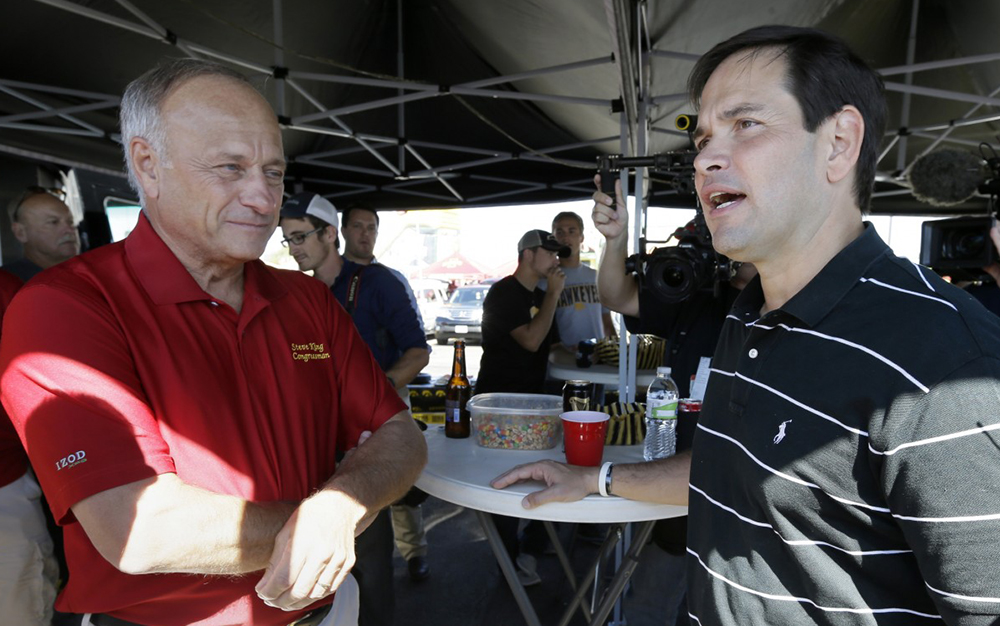
After a summer largely spent raising money for his Republican campaign for president, Marco Rubio says he’s about to start spending a whole lot more time in Iowa and the other early voting states. “There were obviously other things we needed to do,” the Florida senator said this past week in an interview with The Associated Press. “We need the resources to be able to have staff here and be on the air and do the things a campaign requires. But, we were just here a few days ago. We’re going to be back a lot more.” Following a return to Iowa next week he’ll go to the other three states — New Hampshire, Nevada and South Carolina — that are voting in the initial wave of presidential caucuses and primaries, his campaign advisers said. Rubio recently hired a state director in Iowa, a position other campaigns have had in place for months, and has booked millions in television ads that will start airing in November. For Republican activists and party faithful used to fawning attention, it’s about time. Rubio has visited New Hampshire just seven times this year, and five times since he announced his candidacy. By contrast, former Florida Gov. Jeb Bush will make his 14th visit to the state next week, while New Jersey Gov. Chris Christie has been there close to two dozen times. Rubio’s trip this week to Iowa was only his eighth this year, far fewer that many of his competitors — some of whom are staking their bids to win the lead-off caucus state by visiting all of its 99 counties. Former Pennsylvania Sen. Rick Santorum already has. The joke about Rubio is that he is only competing in Ankeny, the Des Moines suburb where his state chairman resides. Iowa Republican strategist Doug Gross, who has not endorsed a candidate, says voters like Rubio but “they haven’t taken him for a test drive.” Since he entered the race in April, Rubio has spent much of his time fundraising. His campaign and outside groups supporting him raised a combined $45 million through the second quarter — considered a good number, but not the biggest in the race. Rubio has posted two well-regarded performances in the first GOP debates and picked up a number of former supporters of Wisconsin Gov. Scott Walker following his abrupt departure last week. “There’s absolutely votes to be had,” said former Iowa Republican Party Chairman Matt Strawn. With Walker out of the race, he said, “the economic conservative establishment lane is less congested.” In New Hampshire, former Sen. Scott Brown, a Massachusetts Republican when he served with Rubio for two years, said he knows many voters who are “very, very interested.” To date, the Republican primary has been dominated by billionaire businessman Donald Trump. Rubio has largely avoided clashes with the outspoken GOP front-runner, but he criticized him Thursday for being “touchy and insecure.” The comments came during a radio interview in Kentucky after Trump had called Rubio a “lightweight.” Rubio said that night that he would seek to remain out of the scrum with Trump as much as possible. “I have no interest in being part of the back-and-forth freak show,” he said. “I’m running for president.” In Iowa on Thursday, Rubio drew an enthusiastic response from the crowd packed into a room at a minor-league baseball stadium. Gary Jones, 60, of Davenport, said he thought Rubio could do well. “His performances in the debates have really helped him,” Jones said. “He doesn’t seem to be sticking a finger in the air and picking up whatever populist wave is blowing.” Republished with permission of the Associated Press.
For GOP candidates, better to be with pope than against him
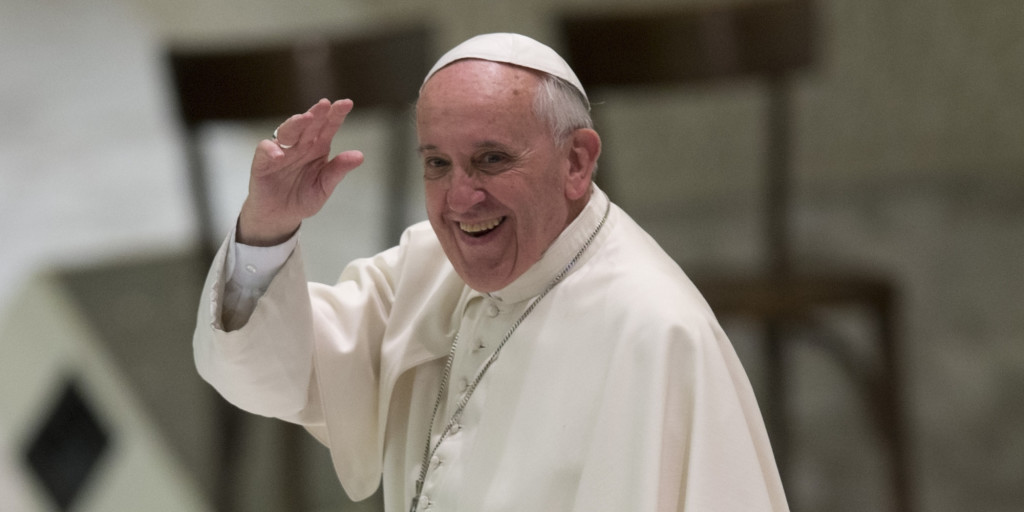
To some Republican presidential candidates, it’s better to be with the popular pope than against him. Marco Rubio, Rand Paul and Ted Cruz have deep policy differences with Pope Francis, but the senators will break off campaign travel to attend his address to Congress later this month, a centerpiece of his eagerly anticipated visit to the United States. Former Florida Gov. Jeb Bush, a devout Catholic, will attend Mass with Francis in Washington. New Jersey Gov. Chris Christie, another Catholic candidate, plans to attend one of the pope’s East Coast events. “Regardless of what the pope says or emphasizes, the simple fact of being associated with his visit is still significant for a candidate,” said David Campbell, a professor at the University of Notre Dame who studies religion and politics. “The images are very powerful.” Francis has become one of the world’s most popular figures since his 2013 election to the papacy, drawing praise for his humility and efforts to refocus the church on the poor and needy. He also has become involved in numerous hot-button political issues, often staking out positions that put him at odds with Republicans. The pope supports the Iran nuclear deal, which many GOP candidates pledge to tear up if they are elected president. As Republicans debate the place of immigrants in the U.S., the pope has urged countries to welcome those seeking refuge and has decried the “inhuman” conditions facing people crossing the U.S.-Mexico border. Francis was also instrumental in secret talks to restore diplomatic relations between the U.S. and Cuba, a rapprochement the GOP views as a premature reward for the island’s repressive government. In a heated primary where any break from party orthodoxy is a political risk, Republican candidates have stepped gingerly around their differences with Francis. When Francis issued an encyclical this year calling for aggressive international action to combat climate change, most Republicans made clear they had no problem with pope taking a position on the matter. But they suggested his stance would have little influence on their own views. “He is a moral authority and as a moral authority is reminding us of our obligation to be good caretakers of the planet,” Rubio, a practicing Catholic, said at the time. “I’m a political leader and my job as a policymaker is to act in the common good.” Bush, who was raised Episcopalian and converted to Catholicism as an adult, said it was best to leave climate change in the realm of politics, not religion. During a campaign stop Thursday in New Hampshire, Bush called the pope an “amazing man” and welcomed his emphasis on mercy and compassion. “I think he’s going to lift people’s spirits up,” Bush said about the pope’s visit to the U.S. “We’re in a time where there’s a lot of vulgarity and a lot of insults and a lot of just coarseness in our discourse. I’m not talking about politics, either. I’m talking about everyday life. “And here’s a man who comes with a gentle soul and I think it might be really healthy for our country to hear someone speak the way he does.” Not all GOP candidates plan to attend events with the pope. Among them are Wisconsin Gov. Scott Walker, whose spokeswoman said he didn’t expect to be in Washington during Francis’ visit, and Rick Santorum, the former Pennsylvania senator and devout Catholic, who was scheduled to be on a campaign trip to Iowa. American politicians have long struggled with how to balance their policy positions with the views of the Vatican. For Democrats, the focus has often been on the gulf between the party’s support for abortion rights and the church’s stern and contrary view. After John Kerry, a Catholic who backs abortion rights, captured the Democratic nomination in 2004, a top Vatican official issued a statement saying priests must deny Communion to politicians who hold that position. Francis has taken a more conciliatory tone on abortion, as well as homosexuality, but hasn’t changed church doctrine. President George W. Bush found himself at odds with the Vatican over the Iraq war. Both Pope John Paul II and his successor Benedict XVI vehemently opposed the war, yet each met Bush during their tenure. Charles Camosy, a theology professor at Fordham University, said that in interactions between politicians and popes, “politics is put aside and there’s respect shown.” Still, the timing of the pope’s visit — in the heart of fall primary campaigning — and his own schedule will make politics difficult to avoid. Francis will hold an Oval Office meeting Sept. 23 with President Barack Obama, who has highlighted areas where his agenda overlaps with the pope’s priorities, including income inequality. The pope will speak the following day on Capitol Hill, where at least some of the focus will be on the reaction to his remarks from the presidential candidates sitting in the audience. The pope’s message in Washington is expected to touch on some of the issues that are sources of disagreement with Republicans, though it’s unlikely he will insert himself directly into presidential politics. Still, as Campbell, the Notre Dame professor, noted, “One thing we’ve learned about Pope Francis is that he’s very unpredictable.” Republished with permission of the Associated Press.
GOP debate lineup: Trump and Bush in, Fiorina and Perry out
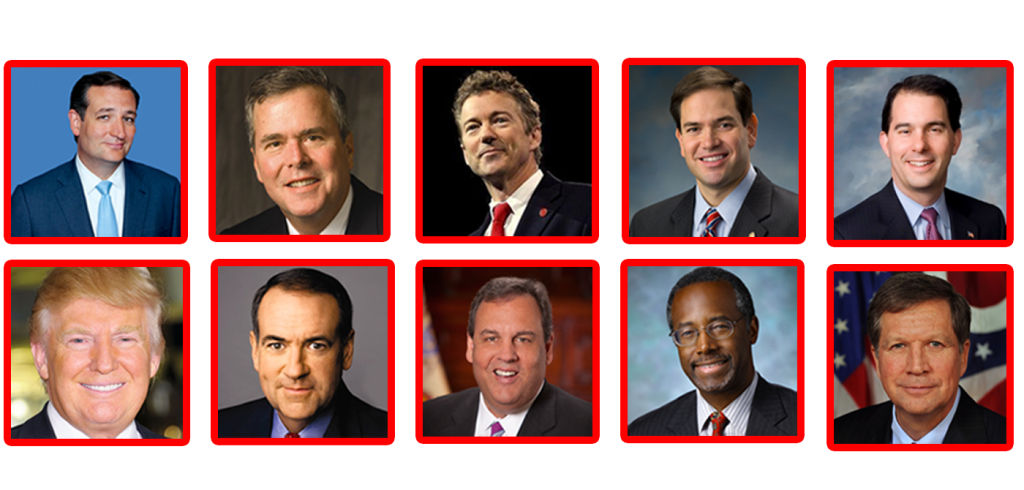
Ten candidates have made the cut for the first Republican presidential debate Thursday, with polling front-runner Donald Trump hoping for a civil evening but ready to pounce if attacked. The seven others lagging in the polls and relegated to an afternoon forum? Call them the not-ready-for-prime-time players, at least in the eyes of debate organizers. Sharing the Cleveland stage with the billionaire businessman will be former Florida Gov. Jeb Bush, Wisconsin Gov. Scott Walker, Texas Sen. Ted Cruz, Kentucky Sen. Rand Paul, Florida Sen. Marco Rubio, retired neurosurgeon Ben Carson, former Arkansas Gov. Mike Huckabee, New Jersey Gov. Chris Christie and Ohio Gov. John Kasich. Candidates with time to watch that debate are former tech executive Carly Fiorina, former Texas Gov. Rick Perry, Louisiana Gov. Bobby Jindal, South Carolina Sen. Lindsey Graham, former Pennsylvania Sen. Rick Santorum, former New York Gov. George Pataki and former Virginia Gov. Jim Gilmore. The largest field of contenders in modern memory challenged debate organizers. Fox News relied on an average of five national polls to decide the lineups for the prime-time debate and the forum four hours earlier. “We never ever envisioned we’d have 17 major candidates,” said Steve Duprey, New Hampshire’s representative to the Republican National Committee who helped craft the debate plan. “There’s no perfect solution.” Republican officials were particularly concerned about Fiorina’s status, hoping she would help balance Democratic front-runner Hillary Rodham Clinton‘s push to rally women. Trump’s recent surge in the polls, a surprise to many Republican officials, damaged Fiorina’s chances. Some Republicans fear that Trump’s rhetoric on immigration and other issues could hurt the party. “I probably am the target,” he said Wednesday on ABC’s “Good Morning America.” He said he did not want to attack any of his rivals and preferred to “just discuss the issues” in the course of a “very civil” debate. Still, he made clear that if attacked, he would have “to do something back.” Trump was far and away the front-runner in the five most recent national polls that determined the debate lineup. Several candidates were grouped together in the single digits, most separated by a number smaller than the margin of error. For example, in a Monmouth University survey released Monday, Kasich was the 10th candidate with the support of 3.2 percent of voters. But after taking the margin of error into account, Monmouth noted that Kasich’s support could be as low as 1.5 percent, while almost any of the candidates who polled lower could be that high or higher. Five more party-sanctioned debates are scheduled before primary voting begins in February. “This first debate is just one opportunity of many,” Amy Frederick, an aide to Fiorina, wrote supporters. “With many more debates to come, we fully expect that Carly will soon stand on the stage and show America what real leadership looks like.” Jindal spokeswoman Shannon Dirmann issued a challenge of sorts: “The governor will debate anyone anywhere at any time.” Candidates already began to turn their attention toward Trump. Asked about Trump while courting religious conservatives on Tuesday, Bush said the businessman’s rhetoric on immigrants is “wrong.” `’We have a different tone and a different view,” he said. “I respect the fact that he’s the front-runner for the Republican nomination,” Bush continued. “This is a serious thing. But I think to win and govern the right way – we have to unite rather than divide.” Republished with permission of The Associated Press.
2016 Republicans use Donald Trump, TV to make debate cut

Rick Perry is attacking Donald Trump‘s credibility and branding the billionaire businessman “a cancer on conservatism.” Rick Santorum, a conservative stalwart, popped up on a TV program popular with liberals. Lindsey Graham set his cellphone on fire. With the first debate of the Republican presidential campaign approaching, the White House hopefuls are trying everything they can to improve their polling position. A candidate needs to place in the top 10 in an average of national polls to meet the criteria Fox News Channel has set to take the stage Aug. 6 in Cleveland. Those kept out risk being overlooked by voters and financial backers heading into the critical fall stretch before the nominating contests start early in 2016. “If you’re not on the stage you’re irrelevant, you don’t matter,” said Republican pollster Frank Luntz. “Unless you have some serious ad dollars, it’s not a glass ceiling. It’s a concrete ceiling.” At of this past week, former Hewlett Packard CEO Carly Fiorina, Louisiana Gov. Bobby Jindal, former New York Gov. George Pataki, ex-Pennsylvania Sen. Santorum and South Carolina Sen. Graham were outside the top 10. Others close to the edge including Ohio Gov. John Kasich, New Jersey Gov. Chris Christie and ex-Texas Gov. Perry. That would relegate them to a second-tier debate, only an hourlong airing before the prime-time event. “In your heart of hearts, you want to see me debate Hillary Clinton,” Fiorina, the only woman in the Republican contest, said with a grin, drawing applause from more than 100 people at an Ames country club Thursday. “I would of course love to be on the debate stage, but we’re going to keep going with or without it,” she told reporters afterward. “The boys are going to fight, and I’m going to keep doing what I’m doing.” One guaranteed participant is Trump, despite incendiary comments about Mexican immigrants and Arizona Sen. John McCain‘s war record. Trump’s remarks have drawn a backlash in a party trying to expand its Latino voting bloc and where national security is an influential constituency. Boring in on Trump is one approach some rivals hope will help them to break through as the debate nears. Perry unloaded on Wednesday when he called Trump’s campaign a “barking carnival act” and “toxic mix of demagoguery, mean-spiritedness and nonsense.” Perry pollster Greg Strimple said the goal of the speech was part of a long-standing effort to raise his profile, not to get him in the debate. “We had long-planned a speech defending conservatism,” Strimple said. “When Donald Trump made his negative comments, it provided us the perfect comparison.” Perry’s supporters are buying national cable ads that could boost his numbers ahead of the debate. On Friday, backers of Christie announced a new ad to air on Fox News. Graham, even further behind in polling, called Trump a “jackass” after the real estate executive said McCain was “not a war hero.” McCain served as a Navy pilot during the Vietnam War, who was captured after his plane was shot down and held for more than five years as a prisoner of war. Graham then starred in a video produced by a conservative website demonstrating how to destroy a cellphone after Trump publicly disclosed Graham’s number during a campaign appearance in South Carolina. Curt Anderson, a strategist advising Jindal’s campaign, wrote in Thursday’s Wall Street Journal that the Republican Party was sabotaging itself by controlling the debates too much, after concluding that marginal candidates dragged 2012 nominee Mitt Romney too far to the right. “They have come out to limit the number of debates we can have, they dictated who can have it, where you have it and who will moderate it,” Anderson said in an interview, adding that his complaints were unconnected to Jindal’s campaign. “The only thing left is to dictate what can be said in it.” As with Perry, an outside group supporting the Louisiana governor is buying ads on national cable just in time for the debate. Santorum spokesman Matt Benyon said Santorum’s TV appearances, including on MSNBC’s “The Rachel Maddow Show,” were timed to take advantage of the candidate’s time in New York this past week, not to boost his poll numbers. “Would it be great to be in the debate? Absolutely,” Benyon said. “But to change your campaign strategy to focus on one date in August is a pretty shortsighted idea.” Republican consultant Reed Galen said candidates may have a better chance to introduce themselves to voters in the less-crowded second-tier debate than competing with Trump and the other contenders in the main debate. Still, he understood the drive for prime time. “You get more licks in AAA-ball,” Galen said. “But the majors are the big show.” Republished with permission of the Associated Press.
Ted Cruz, Mike Huckabee go head-to-head for evangelical votes
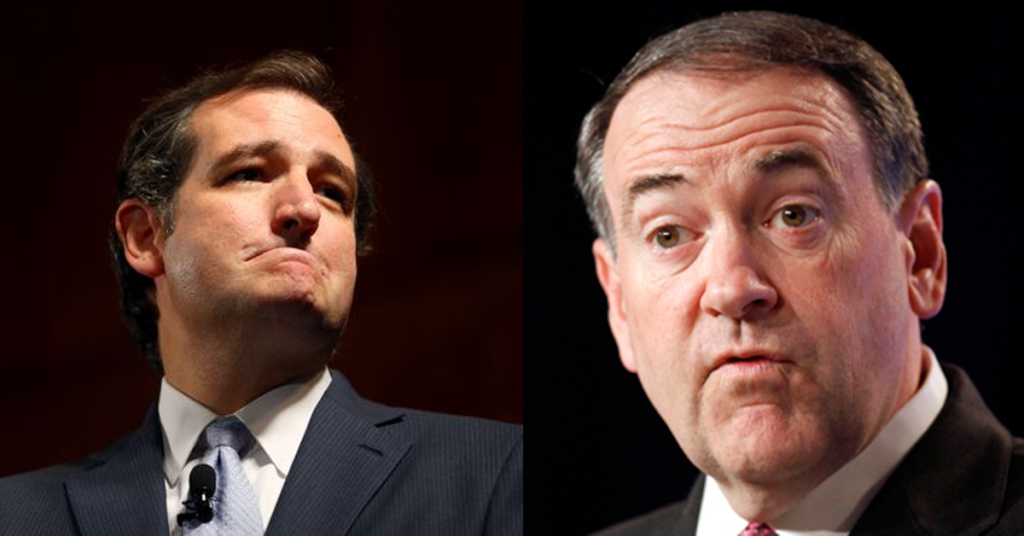
Republican presidential candidates Ted Cruz and Mike Huckabee went head-to-head for evangelical votes Sunday, telling a megachurch congregation in Georgia that God favors the United States but warning that the nation is on a perilous spiritual path because of actions like the Supreme Court decision legalizing same-sex marriage in all 50 states. Huckabee, who enjoyed evangelical support on his way to winning eight states in his 2008 White House bid, called the ruling “radical” and “illegal.” “I want to serve notice that the Supreme Court is just the supreme of the court system that is one of the three equal branches of government,” Huckabee told hundreds of members of Rock Springs Church in a rural area outside metro Atlanta. “It is not the supreme branch, and it most certainly is not the supreme being.” Cruz, the Texas senator, said a five-justice majority “ignored the text of the Constitution” and said the cascade of judicial and public support for same-sex marriage threatens religious liberty in America. He said he hopes the ruling “serves as a spark, to start a fire that becomes a raging inferno as the body of Christ stands up to defend the values that have built America.” Their appearance about 50 miles south of downtown Atlanta is part of the early, concerted scramble for the conservative evangelicals who remain an important bloc of the GOP presidential electorate. Christian conservatives have long held considerable influence in Iowa, which hosts the first caucus of the primary season, and in South Carolina, home of the South’s first primary a few weeks later. Now, Georgia and several other Southern states get more frequent visits from presidential hopefuls ahead of the planned “SEC primary,” named for the Southeastern Conference of college athletics. The March 1, 2016, vote falls after the traditional first four states and ahead of the usual “Super Tuesday” states. Huckabee, whose 2008 wins included Iowa and Georgia, has called the Southern-dominated primary date “manna from heaven.” But Cruz and others — Rick Santorum, Louisiana Gov. Bobby Jindal, retired neurosurgeon Ben Carson — are making hard runs for the same bloc of support. The Sunday event was a belated Independence Day observance that also featured The Charlie Daniels Band and Jep Robertson, one of the members of the cable television “Duck Dynasty” family. For Cruz and Huckabee, it might as well have been a county fair in Iowa, with an added opportunity to speak openly and passionately in their preferred evangelical tones. Cruz told the story of an Iowa couple he said were driven out of the wedding chapel business after denying their services to two men who wanted to get married. The case, Cruz said, “is emblematic of the persecution that religious liberty and believers across this country.” He continued: “I will always, always, always stand and defend the religious liberty of every American.” Huckabee said the Independence Day observances were an opportunity to reject “the revisionists” who say of the American founders: “They really were not believers.” The ordained Baptist minister argued: “There is simply no other explanation … God had to bless America or we would not exist. The question is will God continue to bless America without our repentance.” The Rev. Benny Tate, pastor of the 6,000-member Rock Springs congregation, joked about the attention. “Our zip code is E-I-E-I-O,” he said, “and we’ve got two presidential candidates. How about that?” But the minister is also a serious player in Republican politics, with many Georgia politicians, and now national ones, courting his public approval, if not his explicit endorsement. Tate told the assembly that Huckabee, as Arkansas governor, signed “a ban on partial-birth abortion,” referring to the termination of late-term pregnancies. He hailed Cruz for “standing against the Democratic Party … and even against the Republican Party.” Despite the emphasis on faith, Huckabee’s loudest applause came when he lauded his “fair tax” proposal that he said “would allow us to, once and for all, abolish the IRS.” Cruz, meanwhile, drew some of his most enthusiastic reactions when he declared, “I’m convinced 2016 will be a referendum on repealing Obamacare,” President Barack Obama‘s signature health care law. A few minutes earlier, the assembly passed offering plates for the church’s clinics, which Tate said provide “free health care” to residents in dozens of surrounding counties. Republished with permission of The Associated Press.
Inboxes overflow as 2016-ers amp up email appeals for cash

Hillary Clinton has a dinner invite for you. Jeb Bush is out to make a big splash. Rick Santorum wants to scare the heck out of you. Ted Cruz is looking for a sacrifice. Lincoln Chaffee wants to be your pal. Oh, and all of them want your money — and preferably before midnight on Tuesday night, please. Danger: The 2016 presidential candidates are emailing Americans such a flurry of appeals for money and support that the risk of inbox internal combustion is high. With each candidate making his or her own come-on, they’ve been offering voters all sorts of reasons to open their wallets before the quarterly reporting period for raising cash ends on Tuesday. Marco Rubio dangled the chance to win a trip to his Las Vegas birthday party with host Rick Harrison of TV’s “Pawn Stars.” “Official Hillary car magnet — plus free shipping!” reads one Clinton email. “Chip in $10 or more.” Cruz’s recent appeals for cash have included a plea for supporters to make a sacrifice on his behalf. He’s already made his own sacrifices, he tells them, and lists a few, such as the loss of family time and sleep, personal financial strain and the dreaded “pizza diet” on the campaign trail. Never mind the pizza, people: Santorum headlined one donation pitch with this chilling subject line: “ISIS is here.” Bush put his son Jeb Jr. to work trying to line up “5,000 Day One supporters by midnight to prove we’re serious about taking back the White House.” Lincoln Chafee went the let’s-be-pals route, using the subject line “hey” to try to lure voters to click on his email. The Republican candidates, in particular, are playing up the quarterly deadline as a reason to donate NOW and make a statement about their viability in a big pack of rivals. With no one casting votes yet, contributions from legions of grassroots donors can be read as a proxy measure of support, they reason. To be sure, there’s no other big reason to pony up now instead of later. Breathless appeals for cash won’t end Wednesday. But to hear them tell it, the looming reporting deadline is nothing less than the apocalypse. Cruz is running a “One Million Dollar Money Bomb Challenge.” Rubio has a “Let Freedom Ring” money bomb going. And Rand Paul wants $20.16 for his “End of Quarter Money Bomb.” Cruz’s latest emails have helpfully included an “FEC Deadline Countdown” clock showing the days, hours, minutes and seconds left until the Federal Election Commission‘s midnight deadline. “If there is still time on the clock below, then make an IMMEDIATE secure contribution by following this link,” he writes. Scott Walker, who has yet to enter the race, keeps asking supporters whether he should run — and to say so with cold cash. “Your gift today will show me your answer,” he writes. If words alone won’t close the deal, maybe different fonts, italics, bold-faced words, underlined phrases, CAPITAL LETTERS, stripes of color and exclamation points will reel in donations!!! With an oversized Paul vs. Obama photo and giant lettering that evoked a promo for a boxing prizefight, Rand Paul last month turned his opposition to government surveillance programs into a flurry of emails about a “NSA SPYING SHOWDOWN.” No, a simple “donate now” button will not suffice when candidates are lucky if even 20 percent of readers bother to open an email appeal. Campaigns rely on both research and hunches to try to figure out what will work — and there’s a lot happening on both sides of that equation. Cornell University political scientist Adam Seth Levine says campaigns can easily test what messages, words, colors, fonts and formats work best by sending out variations on the same fundraising pitch. “A lot of people don’t realize they are constantly being experimented upon,” says Levine. Campaigns may send out hundreds of variations to figure out what’s most effective, Levine says, analyzing who opens the emails, who clicks on links, what they do next and who ultimately donates. “The one thing they can’t do, which would be extremely Big Brother-ish, is see exactly where your eyes go,” Levine says. For all of those solid metrics, “intuition is going to play a large role because at the end of the day, no campaign is going to be the same as another campaign,” says Ryan Lyk, who runs email marketing for Alexandria, Va.-based IMGE, which works for companies, associations and GOP campaigns. “You’ve got to be creative and innovative with it.” Who’s at the forefront this year? Lyk gives good marks to Rubio for creativity and colorful content, and Carly Fiorina for casual wording that’s easy to relate to yet creates a sense of urgency. He credits Walker with aggressively bulking up his email list. And Clinton, Lyk says, “has all the bells and whistles.” Blue State Digital founder Joe Rospars, chief digital strategist for the 2008 and 2012 Obama campaigns, cautions that there’s a lot more to a winning strategy than simply cutting and pasting what’s worked before. “It really comes down to the relationship you’re building with the people on the other end of the email,” says Rospars. One of the Obama campaign’s most successful pitches to small givers — donate to try to win a meal with him — started as an experiment in 2007 when other candidates were holding fancy dinners with big-dollar contributors, Rospars recalls. Now, Clinton is urging her donors to sign up for a chance to win dinner “with the future President of the United States (knock on wood).” There’s no “donate” button. But you can bet those who sign up will be hearing more from Clinton — and getting the ask. Republished with permission of The Associated Press.
Religion and politics: GOP hopefuls’ new insight on faith

The 2016 Republican hopefuls are offering new insight into how faith would guide their decisions in the White House. Former Florida Gov. Jeb Bush calls his Catholic faith “an organizing part of my architecture.” Ohio Gov. John Kasich says religion gives him more empathy toward the poor. And Sen. Ted Cruz of Texas cites his Christian values in lashing out at the Supreme Court. Such are the views of the Republican presidential hopefuls in Washington this week for one of the nation’s premier gatherings of Christian activists. The Faith and Freedom Coalition‘s annual conference began the day after nine people were shot to death inside a South Carolina church, offering a grim backdrop to the three-day meeting designed to give religious activists a closer look at the large class of GOP candidates and other leaders considering bids. “That depraved individual didn’t just take the lives of black Americans. He gunned down nine children of God,” Texas Gov. Rick Perry said Saturday. Beyond the horrors in South Carolina, presidential prospects offered religious conservatives an intimate look at the role of faith in their public lives. Bush noted that he converted to Catholicism after marrying his Mexican-born wife. The religion, he said, has been “an organizing part of my architecture, if you will, as a person and certainly as an elected official.” He highlighted his work to institute new abortion restrictions while governor. He also cited his fight for the life of Terry Schiavo, a Florida woman kept alive in a vegetative state for 15 years on life support. While her husband wanted her feeding tubes removed, Bush ordered the tubes reinserted only to be overruled by a federal court. “I insisted that we build a culture of life,” Bush said Friday of his eight years as Florida governor. Kasich, who is expected to launch a presidential bid in the coming weeks, said his Catholic background pushed him to run for governor. “I got a calling, folks,” he said Friday in a speech referring to Bible verses from memory more than once. “I don’t turn to Matthew to figure out what my views are,” Kasich told reporters after his appearance on stage. “What my faith does for me, I hope, is gives me strength, it allows me to have patience, it helps me to love my enemies, it helps me to care more about other people, to be more empathetic toward other people.” Perry declared that “no candidate’s done more to protect unborn life” than he did as governor. After his speech, he was less willing to share how his faith would guide him in the White House. “That’s an issue between an individual and their Lord,” Perry told reporters. “My faith has guided me for my entire life, and I don’t suspect that’s going to change.” The Republican Party’s evangelical wing wields great influence in the selection of the GOP’s presidential nominee, particularly in Iowa and many of the southern states scheduled to host primary contests early in the voting calendar – South Carolina prominent among them. While this week’s conference drew almost the entire Republican presidential field, some contenders will do better with Christian conservatives than others. Both Louisiana Gov. Bobby Jindal and Perry have hosted daylong prayer events in their states. Cruz had a strong religious upbringing. Former Pennsylvania Sen. Rick Santorum is a devoted social conservative. Former Arkansas Gov. Mike Huckabee is also a Baptist minister. Conference organizers were largely pleased with the Republicans’ focus on faith, although some said talk is cheap. A real test, they suggested, would come after the Supreme Court weighs in on gay marriage. The court may strike down state laws that ban the practice. “We’ll see who’s offering political sound bites and who shows up when the going gets tough,” said Timothy Head, executive director of the Faith and Freedom Coalition. “The waters may get choppy soon, and that’s when people stay in the boat or walk on water.” Cruz, for one, is already girding himself for a possible court decision affirming same-sex marriage. A Southern Baptist, he asked for prayers that the court “not engage in an act of naked and lawless judicial activism tearing down the marriage laws adopted pursuant to the Constitution.” Bush, despite embracing his religion as a guide, also said this week that it would not dictate his actions as president. “I don’t go to Mass for economic policy or for things in politics,” he said in Iowa. Indeed, not all conservatives want religion heavily influencing public life. Self-described “very conservative Republican” Bob Rossney attended a GOP gathering in Philadelphia that attracted several presidential contenders as well. The 67-year-old small-business owner cautioned against mixing religion and governing in the White House. “His job is to uphold the Constitution,” Rossney said of the president. Republished with permission of The Associated Press.
Rick Santorum wishes Jeb Bush well during Alabama campaign stop
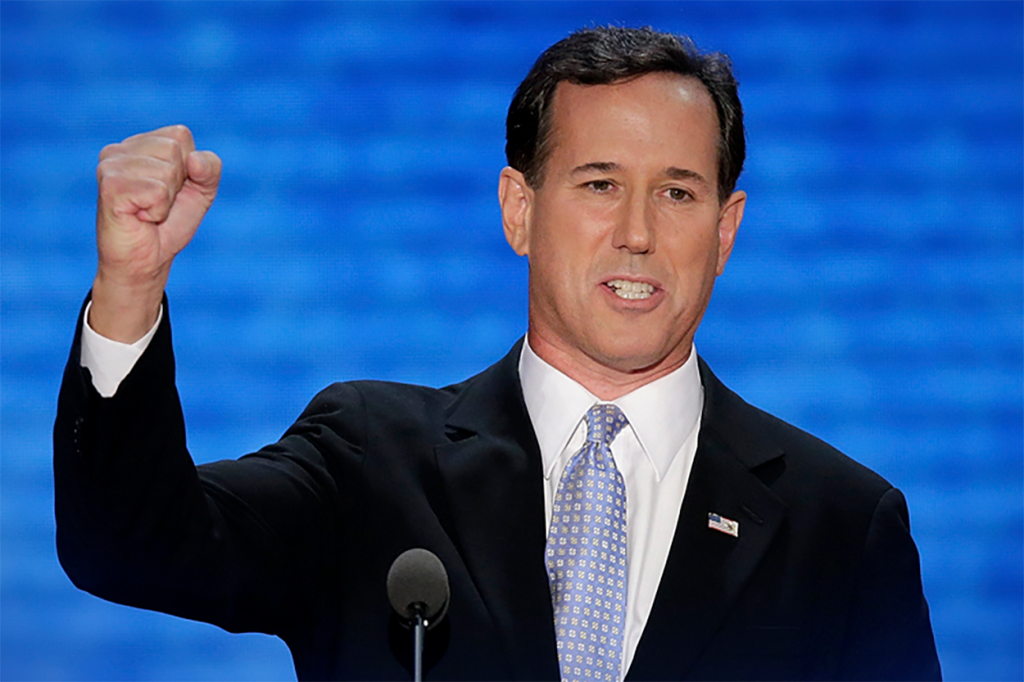
Republican presidential candidate Rick Santorum on Monday said he wished the best to Jeb Bush hours before the former Florida governor announced his White House bid. “I sent him a note this morning, an email, just to congratulate him and wish him the best, tell him that he is in our prayers,” Santorum said. “I’ve done that with several of the other folks who I’m friendly with in the campaign. I know how hard it is. I mean, this is not an easy thing to do, particularly someone who has a lot of the pressure that he’s feeling right now.” Bush officially kicked off his campaign Monday afternoon in Miami, becoming the newest candidate vying for the Republican presidential nomination. Santorum made the comments during a brief campaign stop in Montgomery while here for his son’s field training graduation at Maxwell-Gunter Air Force Base. The former U.S. senator from Pennsylvania said “the more the merrier” in the crowded field of Republican presidential candidates. Santorum won Alabama’s presidential primary in 2012 and said he believes he can win the state again in 2016. He joked that the GOP primary already has “265 candidates.” “I think it could be a very long, long competitive primary process, and you can’t just be a one-trick pony,” Santorum said. “I mean, you can’t just win an early state and expect everything to go well.” Santorum toured MMI Outdoor, a Montgomery-based business that designs and manufactures equipment for the military and U.S. Forest Service firefighters. MMI Outdoor CEO David Cobb said he was “pleasantly surprised” about Santorum’s visit. Cobb said he hasn’t decided which candidate he’ll support for president but would support Santorum if he wins the Republican primary. He said he’s looking for a candidate who “uses sound economic principles.” “You tax what you want to discourage; you don’t tax productivity, and that’s what we do,” Cobb said. “It’s hurt my ability to hire people and grow this company. Santorum said he opposes the “fast-track” trade bill in Congress that would allow President Barack Obama to finalize a Pacific trade agreement. “If we had a president that would actually abide by the law, stick to what trade deals are supposed to be about, and not use trade deals to further other goals, then I’d be more supportive,” he said. Santorum also outlined his plan for raising the federal minimum wage, which he said should be increased by 50 cents each year for three years to bring the minimum hourly wage to $8.75 from $7.25. “It’s hard to say you have a minimum wage when hardly anyone gets paid the minimum wage,” he said. “Minimum wage is supposed to be just that, to make sure there is a little distance between the floor and what workers are paid and right now there isn’t.”
