
German auto parts manufacturer to build plant in Auburn
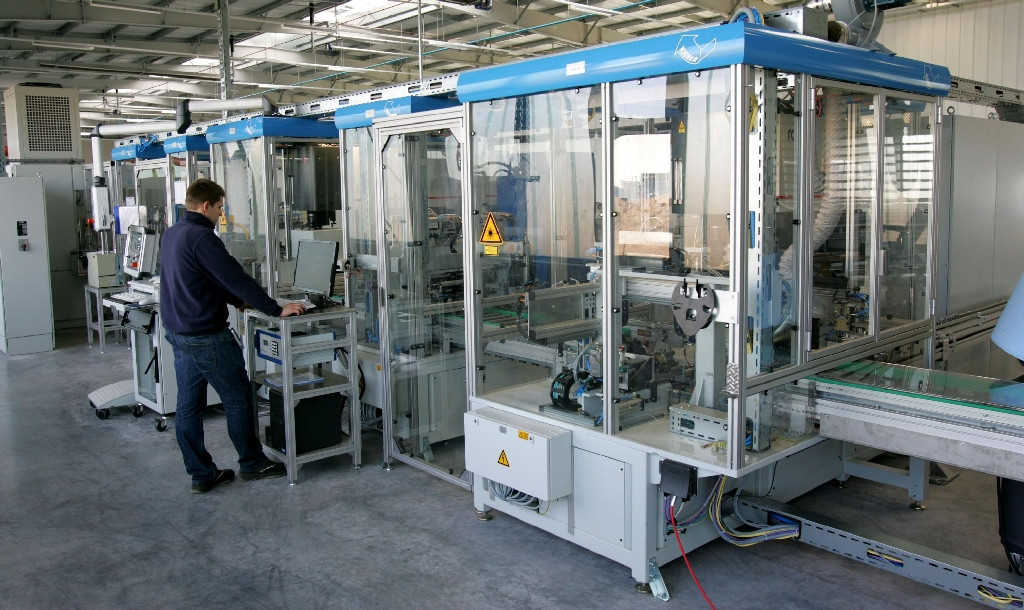
A German auto parts maker is building its first U.S. manufacturing plant in Alabama and production is expected to begin next year, Alabama Department of Commerce officials said Friday. Schmidt Maschinenbau GmbH is planning to build its plant in Auburn, and the facility will produce engine components including balance shafts and gear wheels for Mercedes-Benz and other German automakers, officials said. “Schmidt’s decision to open a manufacturing facility in Alabama is great news because it will result in the creation of 50 well-paying jobs and $17 million in new investment in Auburn,” Gov. Robert Bentley said in a statement. “We are extremely grateful for the support that the project has received from the Governor and his administration. Schmidt is a perfect fit for our diversified, high-tech industrial sector and we’re excited to welcome them to Auburn,” Mayor Bill Ham Jr. said. The company is looking for motivated and skilled employees who will be invited for extensive training in Germany this fall, the company’s President, Herbert Schmidt said. Interested applicants should contact with workforce development section of the City of Auburn’s Department of Economic Development, he said. Republished with permission of the Associated Press.
Barack Obama, Robert Bentley finally lower flags

Earlier Tuesday, Alabama Today reported State Auditor Jim Zeigler‘s call to Gov. Robert Bentley to lower the flag over the Alabama state capitol to fly at half-staff and join flags across the country in honoring the victims of the terrorist attack at two military centers in Chattanooga last Thursday. At 1:00 p.m. CT, Bentley posted on Facebook that he had just ordered the flags to be lowered. Bentley’s Facebook post came just 30 minutes after President Barack Obama ordered flags at the White House and other public buildings to fly at half-staff after mounting criticism over the delay in honoring five armed forces members killed last week by a gunman. Alabama Today asked the governor’s office whether his actions were before, or in response to, the president’s, it responded, “The governor ordered the flags to be displayed at half-staff today in compliance with the proclamation issued by the president.”
Anti-beverage tax group aims to take fizz from proposed “soda tax”

A group of pro-taxpayer and industry advocates have teamed up to launch an advocacy group called “Stop the Alabama Beverage Tax” as the specter of a new New York City-style tax on sodas and other drinks has emerged in Montgomery, according to an announcement Tuesday. The coalition says it will band together in the face of the new proposal to increase state revenue by taxing beverages because the new tax would hurt poor and working families disproportionately and hamper Alabama’s competitive status among its low-tax neighbors. “A soda tax will cost jobs, hurt our small businesses and raise grocery bills at a time when Alabama families are still recovering from a struggling economy,” said Virginia Banister, executive director of the Alabama Beverage Association and member of the new anti-tax group, in a prepared statement. Banister, who says she along with her allies intend to make their case to lawmakers “loud and clear,” added that as the economy slowly begins to recover in the Yellowhammer State and across the nation, “there couldn’t be a worse time to risk jobs and force taxpayers to pay higher prices at the grocery store.” Despite launching only this week, the campaign has already picked up a powerful ally: House Speaker Mike Hubbard, who intends to lead the charge against the soda tax plan favored by Gov. Robert Bentley and some Republicans in the Senate. Hubbard says he opposes the proposal on principle. “Rather than just picking out and say we’ll do this because it can generate this amount of money … [a soda tax is] the wrong way to look at tax policy,” Hubbard said Tuesday. “I don’t like picking winners and losers I don’t think that’s what we need to be doing.” As the state Legislature convenes for a Special Session to finalize a budget hampered by a looming deficit — recently ameliorated by a state settlement with petroleum giant BP over the 2011 Deepwater Horizon oil spill — and an earlier veto by Bentley, the group says it expects “thousands of people and businesses” to join them in their cause.
Flags lowered across nation to honor servicemen, not in Alabama

Flags have been lowered to fly at half-staff at the U.S. Capitol, in Florida and in other states to honor the victims of the terrorist attack at two military centers in Chattanooga last Thursday. Four marines and a sailor lost their lives, prompting calls to arm the military and national guard at their offices. State Auditor Jim Zeigler has called upon the Gov. Robert Bentley to lower the flags in Alabama as well. He posted a Facebook status which read: Flags in Alabama not lowered to half staff in honor of slain military personnel in Chattanooga I have now requested that Gov. Robert Bentley lower our flags to half staff in honor of our military personnel murdered in Chattanooga. This step of honor has not been taken at this time. The protocol is that the President requests the Governor who directs the Director of Capitol Operations to lower the flags. Since this has not been done, I have requested both the Governor and the Director of Capitol operations to now lower our flags. New protocol for an old tradition. I do not agree that Alabama should be bound by the President’s lack of action in this regard. We are a sovereign state and own and control these flags. According to AL.Com Thomasville Mayor Sheldon Day has also requested the flags be lowered. Mayor day quoted in their story as saying, “I respectfully request Governor Robert Bentley to issue an executive order asking everyone in our state to lower their flags to half staff in tribute to the five fallen heroes who were killed this week while doing their duty and serving America.” Alabama Today has asked the governor’s office for comment and will update this story when more information becomes available.
Governor Robert Bentley makes appointments to 10 boards, councils and commissions
Governor Robert Bentley made 41 appointments to 10 different boards, councils and commissions last week. The majority went to the Alabama Workforce Council, Erin’s Law Task Force, and the newly created Advisory Board on Broadband Development. You can find more information on open board positions on the appointments webpage. State Board of Education Matthew Brown Alabama Workforce Council Norman A.Crow Jerry T. Mays Dale Greer Cleveland Poole Philip C. “Chap” Jackson III Commissioner Fitzgerald Washington Aerospace Alliance Neal Wade Bob Smith Erin’s Law Task Force Patrick Guyton Eric Graves Elizabeth Huntley Robin D. Mackey Susan Roberts Nathan A. Ryan Deborah Callins Lillie James-Osborne AWAWG FAP William Puckett Walker County Civil Service Rufus Reed Historic Ironworks Commission Johnny Curry Healthcare Improvement Task Force Peggy Benson Holocaust Foundation Alvin Benn Advisory Board on Broadband Colonel Jeff Dunn Fizergald Washington Neal Morrison Brunson White Ron Sparks Tommy Bice Greg Canfield Jim Byard Lee Sentell Spencer Collier Donald Williamson Jim Perdue Stephanie Azar Mark Heinrich Gregory Fitch John Cooper Rod Scott Phil Williams Gerald Dial
Alabama business roundup: Headlines from across the state

Here’s a roundup of some of the top weekend business headlines from across the state: AL.com: Craft brewers: Alabama laws stifle growth of burgeoning beer industry Like many of Alabama’s close to three dozen craft brewers who stepped into an industry barely formed, Jeremy Pate is above all optimistic. On the Dothan farm where his grandparents used to grow corn and peas, Pate started Folklore Brewing & Meadery a few years ago, offering the only locally produced beer in the Wiregrass region. There he has lots of room to grow, but Pate says beer laws in the state need to catch up first. Pate, 40, believes the existing regulations, which restrict breweries from selling beer directly to customers other than through a licensed retailer, are not broad enough for his business to thrive. “There are beers that we do not distribute, that we do in very small scale, experimental nature,” he said. People often want to buy those, or another beer that’s to their liking. Unlike many states, Alabama law prohibits brewers from selling it — either in a keg, bottle or glass jug — to-go. Pate started by making a simple wheat ale when he opened in 2013. Wiregrass Wheat, he called it. Today, you can find one of his beers in restaurants and stores in Enterprise, Ozark and around Opelika and Auburn. Revenue from retail distribution is great, but not as lucrative as the cash that comes from residents and beer aficionados in search of something new to drink in their taproom. “The profits on a bottle that we sell out there in the market is miniscule compared to what we get by the pint,” Pate said, “so the limiting factor is how much beer came one person safely consume at a brewery?” Fighting ‘history’ Pate is not alone in his frustration with the state. Beer makers in north Alabama and down along the Gulf Coast have long agreed lawmakers could do better by the burgeoning industry. And there have been efforts since 2009 when a law allowing beers with a higher alcohol content to be sold was passed. But it was a relatively small change in the grand scheme of things. “It was not until the Brewery Modernization Act that any breweries wanted to be in Alabama, period,” Pate said. That law was passed in 2011, and aside from a bill allowing 22-ounce bottles known as “bombers” to be sold by breweries, expanding regulations for the industry has stopped. Brewers, who sometimes struggle to eke out a profit, say this has put a vise grip on available business opportunities and limits their ability to compete. Meanwhile, there’s about $23 million in unrealized economic activity in the beer industry, a figure that could grow with more relaxed beer laws, according to a recent study by Jacksonville State University. Like many, Pate knows there is more money to be made with off-premise sales, but in December 2014 he started bottling “bombers” for distribution. “That’s the only way that we have any chance to grow because of the limited laws,” he said. “And even at that rate we’re going to have to grow slower than other breweries in other states.” Using what’s known now as the “three tier system,” lawmakers placed in between the manufacturer and retailer an independent wholesaler to keep one company from controlling each stage of the process: production, distribution and sales. Beer and alcohol production was a different industry in 1933. The three-tier law never anticipated a surge in craft beer production several decades later, mainly by small upstarts, not dominant corporations. But “history” is the chief opponent to changing the old law, said Jason Wilson, current president of the Alabama Brewers Guild and founder of Back Forty Beer Company in Gadsden. In Alabama, and more generally in the Deep South, Wilson said changing “a lot of the stereotypes and misconceptions that are associated with alcohol” is not easy. Legislative challenges As a case in point, look to the recent Legislative session. A number of proposed solutions filtered through the statehouse in Montgomery. The largest bill, which would have allowed growler sales for breweries and brewpubs, and given them the option to participate in entertainment districts, failed. A trimmed down version of that bill also died. And a last-ditch measure that would have permitted just to-go beer sales didn’t come up for a vote. The one bright spot was the creation of the Alabama Alcoholic Beverage Study Commission, which has the task of making the state’s laws consistent with others around the country. Wilson said his hopes for the group “are a little bit grander” than simply identifying policy outcomes. The commission, which is hosting public hearings this month in Alabama, has “a pretty promising mission statement,” he said, “– now whether we can accomplish those things this year, I don’t know.” The Guild has already offered the commission a jump start, creating a list of proposals that outline the organization’s objectives. At least one of those, the creation of a single craft brewer license for brewpubs and breweries, may cause some in the industry to pause. “That means everybody is operating under one license, and I would have to revert back to ABC to see if you can actually regulate under those types of circumstances,” said Donna Alexander, executive director of the Alabama Wholesale Beer Association. Overall, she said craft brewers do not pose an existential threat to the beer wholesalers she represents. Limited opportunity In the meantime, some business opportunities are slowed. And an industry that produced close to 40,000 barrels of beer last year is moving at half speed. Some feel it more than others. Making about 250 barrels of beer every year, Druid City Brewing in Tuscaloosa is up against a real demand crunch, said co-owner Elliott Roberts. “We’re actively exploring expansion plans, but where we have trouble is, well, money,” Roberts said. Nailing down the right real estate has also been a challenge, but primarily it comes down to creating more revenue.
Sen. Gerald Allen files bill to prevent removing historic landmarks
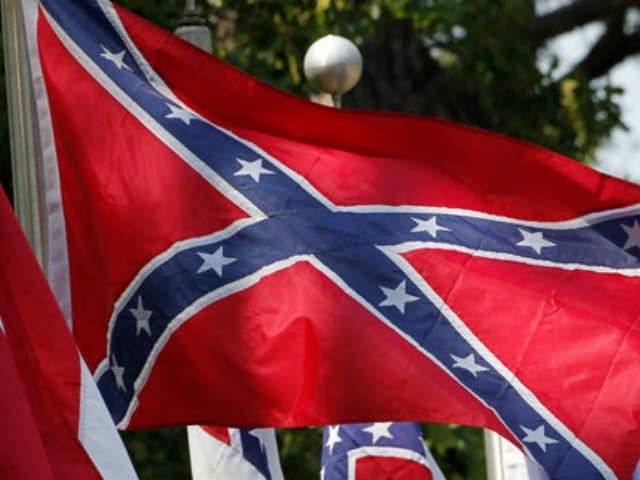
An Alabama state senator wants to pass legislation prohibiting the removal of historic monuments, markers and school names after debate over the display of Confederate emblems on public property. Republican state Sen. Gerald Allen said Thursday that the legislation would protect all history in the state. Allen filed the bill in the Special Legislative Session that began Monday. However, Allen must get the support of two thirds of state lawmakers since the bill is outside Gov. Robert Bentley‘s call for the Special Session. Allen said the bill is not meant as a reaction to the governor’s decision to remove four Confederate flags from a monument next to the Capitol. Bentley says he has no plans to remove any other Confederate monuments on Capitol grounds. Republished with permission of The Associated Press.
Alabama lawyer sues Robert Bentley over Confederate flag removal

A Cullman lawyer has sued Alabama Gov. Robert Bentley over his decision to remove four Confederate flags from a Confederate monument next to the state Capitol. Melvin Hasting, who filed the suit Tuesday in Montgomery Circuit Court, said he is asking a judge to declare whether Bentley had the legal authority to remove the flags. Hasting said he wonders whether Bentley overstepped his bounds last month by ordering the flags to be removed. A national debate about the Confederate flag began last month after the June 17 fatal shooting of nine black worshipers at a church in Charleston, S.C. Bentley received praise, and some criticism, for quickly removing the flags from the 88-foot-tall monument. “None of this is just about the flag,” Hasting said in an interview Wednesday. “It’s about our history, our heritage and protecting it in the state of Alabama.” A spokeswoman for Bentley did not respond to a request for comment. Bentley has previously said he checked with his staff to confirm his legal authority before removing the flags. Hasting is also suing the Alabama Historical Commission for removing Confederate battle flag items from the state Capitol gift store. Last week, Alabama Historical Commission acting Executive Director Lisa Jones said the commission decided to remove a small number of items from the Goat Hill Museum Store. The store on the first floor of the Capitol removed the items after the flags outside were taken down. The items were then transferred to Confederate Memorial Park, which is also managed by the commission. Jones did not respond to a request for comment regarding the lawsuit. Hasting, who said he campaigned for Bentley during the governor’s first gubernatorial campaign, said it’s “nothing personal.” “He is a good man,” Hasting said. “He means well, but we’ve got to stop what’s going on.” Republished with permission of The Associated Press.
Anne-Marie Kaulfers: Fund Alabama Medicaid so children, adults have access to life-saving services

I see numerous children with diabetes and endocrine diseases who are on Alabama Medicaid. In fact, I’m one of the few pediatric endocrinologists in the state that does. As a specialist in Mobile, I also take care of patients covered by Mississippi Medicaid and Florida Medicaid. There’s a vast difference between the three programs in the reimbursement to doctors and covered services, both for children and adults. This disparity is a direct result of funding provided by each state’s legislature. Alabama Medicaid is one of the hardest to qualify for in the country. They are also one of the most efficient – if not the leanest – run operations. Yes, the state’s $600+ million share matched by nearly $6 billion in federal dollars, provider taxes, and intergovernmental transfers sounds like a lot of money. But let me give you an example of how well Alabama Medicaid manages your tax dollars. An insurance policy on the healthcare exchange would cost $2,292 for the annual premium and $4,000 out-of-pocket for an 8-year-old boy for a total of $6,292. Alabama Medicaid spends on average $4,474 per covered individual. That means the cheapest private insurance plan available for a child is still 40 percent more expensive than Alabama Medicaid. This year, Gov. Robert Bentley requested a 20 percent increase over the previous year’s Medicaid funding. The budget passed by the legislature and vetoed by the governor had a 5 percent cut to Medicaid as part of an effort to address a $200 million revenue gap – plus hundreds of millions in other obligations the state owes. The governor has called the Legislature back for a late-summer Special Session to address the General Fund budget, of which Medicaid consumes more than 37 percent — and growing. Some are saying to cut Medicaid because it’s “just an entitlement program.” That it is not. Medicaid is the backbone of the healthcare system in Alabama. It pays for more than half of all baby deliveries, and most of the 1-million-plus participants are children. On top of that, every dollar the state invests in the Medicaid program returns nearly three dollars from the federal government. How would you like that guaranteed rate of return from your bank? During the past few years in an effort to trim costs, Alabama Medicaid has been forced to cut too many essential services that are covered by nearly every other state Medicaid program and by private health plans. This growing disparity in access to care for Medicaid recipients is penny wise and pound foolish. It is accelerating the cost curve rather than slowing it down. Every day, I see costly and debilitating complications suffered by children, and hear about it constantly from doctors who treat adults. This is usually caused by a lack of adequate access to effective therapies to help control their diabetes. As a result, treatment for kidney disease, loss of vision, emergency room visits for hypoglycemia, and other diseases are driving healthcare spending upward. With properly funded Medicaid services, we could slow the rate of growth in overall system costs. So as the debate begins about what agencies or programs to cut or what revenues to increase, keep in mind that Alabama Medicaid can’t be an effective steward of your money without the tools to properly manage and contain the cost of chronic diseases like diabetes. Strategically spending dollars now can save many more down the road. Let’s also not forget that Medicaid is the critical foundation for most hospitals around the state, including my hospital, Children’s Specialty Clinic in Mobile, and the world-renowned Children’s Hospital in Birmingham. Join me in asking the state Legislature to fully fund Medicaid and continue to implement smart healthcare management that will provide real economic and clinical value to the taxpayers and patients in Alabama for many years to come. All of our citizens deserve it. Anne-Marie Kaulfers M.D. is a Pediatric Endocrinologist at Children’s Specialty Clinic, part of the University of South Alabama Health System in Mobile, Ala.
Robert Bentley testifies before Congress on Alabama prison reforms
Gov. Robert Bentley on Tuesday testified before a U.S. House panel on the topic of recent reforms in the Alabama statehouse designed to limit long prison sentences for nonviolent offenders and increase inmate rehabilitation efforts, to reduce rates of recidivism and the high cost of housing the state’s incarcerated population. In a statement shortly after a hearing of the House Oversight and Government Reform Committee, Bentley touted Alabama’s reforms as a model for the nation. “Prison reform is an important issue in Alabama,” Bentley said. “Alabama has made significant progress over the last year to improve our criminal justice system, ease some of the challenges in our prison system and maximize the amount of state dollars we spend for the Alabama Department of Corrections. “I believe that our prison reform efforts have created a healthy foundation that can, over time, transform the landscape of the entire criminal justice system for the better.” Alabama, in turn, is following suit on a larger national push for “smart justice,” involving changes to federal sentencing guidelines, a move away from mandatory minimums to give more discretion to judges and focusing on giving former inmates viable alternatives away from criminal activity. Bentley praised congressional leaders for opening its doors to state leaders like him, invoking the old saw about states being the “laboratories of democracy.” “States can be laboratories of changes, creating unique opportunities that can address problems. I believe that Alabama is a national model for prison reform, and it was an honor to share our efforts with Congress,” Bentley said in a prepared statement. The move comes just a day after legislative leaders in Arizona called on Alabama Rep. Mike Jones for counsel on the changes he helped institute along with Sen. Cam Ward during the regular Legislative Session. Jones said on the occasion of his visit to the Grand Canyon state that he, too, hopes Alabama’s recent amendments to its criminal code can help show a way forward for a nation whose prison system is clogged with nonviolent offenders.
Del Marsh is right to file gambling bill

Bravo, Del! Bravo. Filing a gambling bill this Special Session is the right thing to do. No matter what position conservatives take on gambling it’s hard to argue that the issue shouldn’t be put before the voters of the state. The Auburn study on the proposal the Senate was looking at during session was so promising that it’s worth discussing. As we previously have written, a look at the numbers in the AUM reports: A staggering 13,000 plus jobs will be created; $331,667,963 is the expected annual revenue from a state-run lottery system, and; Depending on the tax rate, the estimated revenue from expanded casinos will be with a rate of 13 percent, $63,015,148, or up to $73,863,632 with a 15 percent tax rate. That adds up to nearly $400 million in tax revenue to be collected for the general fund with the expansion of both. The gambling bill has the support of Birmingham Mayor William Bell, many in the business community as represented by a coalition headed by Charles McCrary and Pat Dye, and of enough people that it’s worth discussing. Here’s to hoping Gov. Robert Bentley reconsiders his steadfast opposition to allowing the bill to come up in the Special Session or that the legislators are able to reach the majority needed to bring it up themselves. The people deserve the opportunity to vote.
Jim Zeigler calls for restoration of PACT scholarship funds using BP settlement
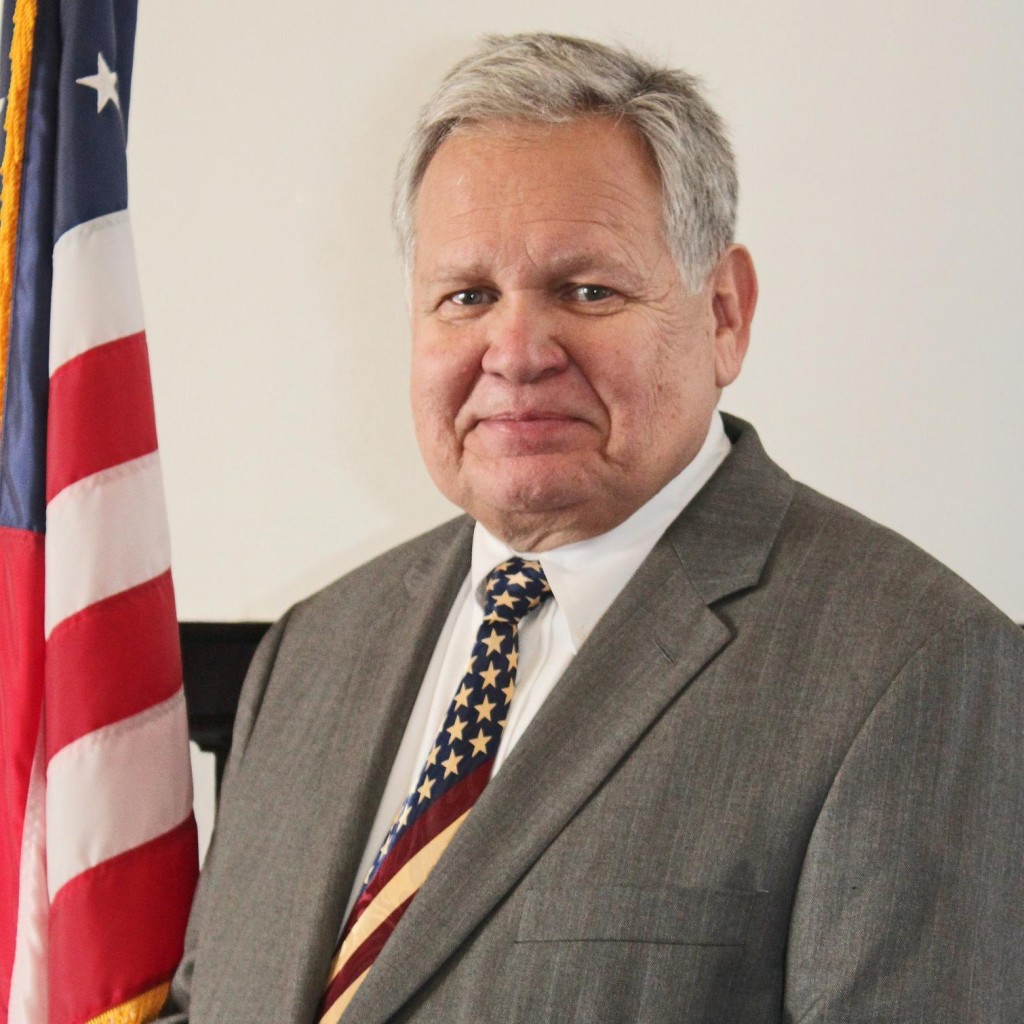
State Auditor Jim Zeigler has issued a call to lawmakers to include the restoration of a popular prepaid college tuition program to full funding in light of the recent $2.3 billion settlement between the state and British oil giant BP over the 2011 Deepwater Horizon spill that ravaged the Gulf of Mexico along Alabama’s coastline. As legislators gather again in Montgomery for a Special Session, Zeigler has added grievances by parents who were shortchanged by recent budget cuts to the list of Alabamians who may be made whole following the recent BP windfall. Meanwhile, lawmakers will attempt to sort out the ongoing state budget clash between statehouse leaders and Gov. Robert Bentley, who vetoed their first attempt at a plan to fund the state government for FY 2016-2017, Parents who prepaid for four-year college tuition plans under the state’s PACT — or Prepaid Affordable College Tuition — plan were abruptly told by state officials in 2009 that their purchases would no longer cover costs above what was covered the following year after the fund became insolvent. Zeigler has taken up their cause, arguing that their prepaid agreements with the state were not investments subject to loss, but pre-arranged contracts to be fulfilled by the state “at a sum certain.” Therefore said Zeigler, a retired lawyer, parents who purchased the plans but were denied coverage increases after 2010 are owed the differences they were forced to pay out-of-pocket despite earlier assurances to the contrary. With legislators such as Sen. Arthur Orr and Rep. Steve Clous already lining up to dedicate the bulk of the settlement to repay state debts, Zeigler said he isn’t asking for a special earmark, but simply for the state to pay what it had promised. “This is a wrong that needs to be righted. The BP money may be the last chance to provide the full tuition that these families paid for and based their planning on,” Zeigler said Monday evening.
