
Hyundai halts Alabama production line amid parts shortage
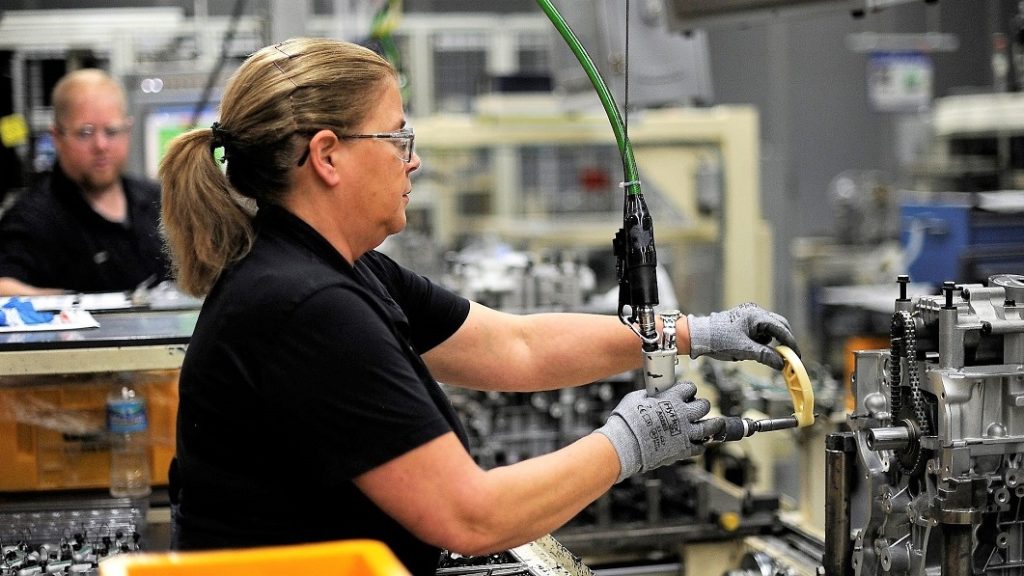
A production line in Alabama that makes many of Hyundai’s North American vehicles will be halted this week due to a parts shortage. The shutdown will leave about 1,000 regular workers temporarily unemployed for seven days, The Montgomery Advertiser reported. The problem is that Hyundai Motor Manufacturing Alabama hasn’t been able to get enough parts because of a semiconductor shortage. As a result, production at the Montgomery plant will be suspended until June 21. “No other downtime for this reason is expected,” said Robert Burns, vice president of human resources and administration. The company “will continue to work with Hyundai Motor Group’s global purchasing team to allocate microchips to its U.S. manufacturing plant to optimize production in the coming weeks and months,” Burns said. About 3,000 people work at the Montgomery plant. Most of them will continue to work this week, the newspaper reported. That includes maintenance workers, employees processing completed vehicles, and engine shop employees building engines to be delivered to Kia’s plant in Georgia. The plant produces the Sonata and Elantra sedans as well as the Santa Fe and Tucson SUVs. It began rolling out the new Santa Cruz pickup earlier this month after finishing a $410 million expansion. The company will help workers file unemployment claims, Burns said. Republished with the permission of the Associated Press.
Chaotic scene as Republicans disrupt impeachment deposition

Republicans briefly brought the Democrat-led impeachment investigation to a halt when around two dozen GOP House members stormed into a closed-door deposition with a Defense Department official. Democrats said the move compromised national security because some of the Republicans took electronic devices into a secure room. The protest by Republican lawmakers on Wednesday captured national attention, drawing the focus away from the testimony of a top U.S. diplomat who told lawmakers just a day earlier that he was told President Donald Trump was withholding military aid from Ukraine unless the country’s president pledged to investigate Democrats. The maneuver delayed a deposition with Laura Cooper, a senior Defense Department official who oversees Ukraine policy, until midafternoon. The interview began roughly five hours behind schedule, after a security check by Capitol officials, and ended after roughly four hours. As a series of diplomats have been interviewed in the impeachment probe, many Republicans have been silent on the president’s conduct. But they have been outspoken about their disdain for Democrats and the impeachment process, saying it is unfair to them even though they have been in the room questioning witnesses and hearing the testimony. “The members have just had it, and they want to be able to see and represent their constituents and find out what’s going on,” said Ohio Rep. Jim Jordan, the top Republican on the House Oversight and Reform panel. That committee is one of three leading the investigation, and its members are allowed into the closed-door hearings. Lawmakers described a chaotic scene. Rep. Debbie Wasserman Schultz, Democrat – Florida, said she had just walked into the room when the Republican lawmakers blew past Capitol police officers and Democratic staffers. The staff member who was checking identification at the entrance was “basically overcome” by the Republicans, she said. “Literally some of them were just screaming about the president and what we’re doing to him and that we have nothing and just all things that were supportive of the president,” Wasserman Schultz said. Later when the deposition began, Cooper answered questions from lawmakers and staffers in response to a subpoena, an official working on the impeachment inquiry said. She explained to lawmakers the process of distributing military aid and was asked whether the appropriate steps were followed on Ukraine, according to a person familiar with the interview. The official working on the impeachment inquiry and the person familiar with the interview spoke on the condition of anonymity to discuss the closed-door testimony. “The president’s allies in Congress are trying to make it even more difficult for these witnesses to cooperate,” said Adam Schiff, the chairman of the House intelligence committee. Democrats deny that Republicans are being treated unfairly, noting they have had equal time to question witnesses and full access to the meetings. Schiff says closed-door hearings are necessary to prevent witnesses from concealing the truth and has promised to release the transcripts when it will not affect the investigation. They also said the Republicans — several of whom do not sit on one of the three committees — compromised security at Wednesday’s closed-door deposition. The interviews are being held in what is called a Sensitive Compartmented Information Facility, or SCIF, which is a secure room where members can hear classified information. Several lawmakers leaving the facility said that some of the Republicans had their cellphones, even though electronics are not allowed. All members of Congress are familiar with the protocol of the SCIF, since they are often invited to classified briefings, and there are several such rooms around the Capitol. Several Republicans appeared to be tweeting from the secure room. North Carolina Rep. Mark Walker tweeted: “UPDATE: We are in the SCIF and every GOP Member is quietly listening.” Rep. Bennie Thompson, Democrat – Mississippi, who chairs the House Homeland Security Committee, alleged that Republicans “intentionally brought their electronic devices” into the secure area, violating congressional rules and the oath they take to gain access to classified information. The “unprecedented breach of security raises serious concerns” for committee chairs who maintain secure facilities in the Capitol, Thompson wrote in a letter to the House sergeant at arms asking for action to be taken against members of Congress involved in the breach.Sen. Lindsey Graham, Republican – South Carolina, criticized his Republican colleagues for the tactic, calling them “nuts” to make a “run on the SCIF.” “That’s not the way to do it,” he said. Graham later tweeted that he initially believed Republicans had taken the room by force and that it was actually a “peaceful protest,” adding his House GOP colleagues had “good reason to be upset.” The Republicans who took part in the protest were unbowed. Rep. Steve Scalise, the No. 2 House Republican, said Democrats are running a “Soviet-style process” that should “not be allowed in the United States of America.” “We’re not going to be bullied,” he said. The standoff came the day after William Taylor testified that he was told Trump withheld military aid to Ukraine until the country’s president went public with a promise to investigate Democrats. Trump wanted to put Ukraine’s leader “in a public box,” Taylor recalled. Democratic Rep. Ted Lieu of California said Republicans did not want to hear from Cooper because they were “freaked out” by that testimony. “They know more facts are going to be delivered that are absolutely damning to the president of the United States,” Lieu said. Associated Press writers Alan Fram, Robert Burns and Padmananda Rama contributed to this report. By Michael Balsamo and Mary Clare Jalonick Associated Press Republished with the permission of the Associated Press.
Hyundai’s new engine plant, Santa Fe will drive the future of the automaker’s Alabama operations
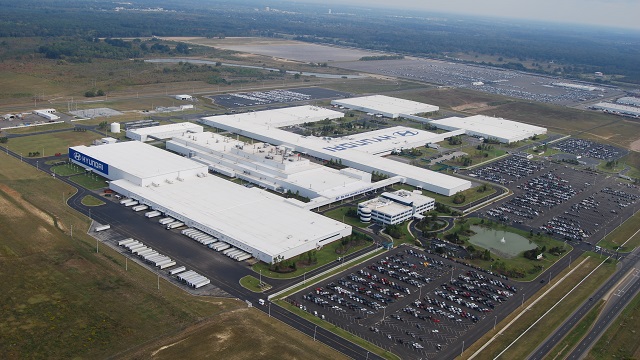
Hyundai Motor Manufacturing Alabama’s (HMMA) $388 million new engine plant and boosted SUV production are moves to position the South Korean automaker’s Montgomery plant as a key component of its global innovation efforts. On its own as an economic development project, the 260,000-square-foot engine plant and the 50 new jobs would be remarkable. But officials said it’s more than that. “This facility really is positioning itself for the future with this investment,” said Alabama Commerce Secretary Greg Canfield. “This is about technology. This is about taking a facility that’s been around for a couple of decades and really taking it and launching it into the next 20, 25, 30 years of productivity and ingenuity and technology.” With Tuesday’s announcement of the engine plant and today’s launch of the new Santa Fe SUV, HMMA is demonstrating its competitiveness and viability, Robert Burns, HMMA public relations director said. “We’re going to feel like we have a good product mix – Sonata, Elantra, Santa Fe – to meet the market demand in the U.S. and Canada as well as Mexico,” he said. Burns said more than 80,000 new Santa Fes will be produced the rest of this year with a goal of producing more than 100,000 in 2019. Santa Fes will make up about 40 percent of the production at the plant while the Sonata and Elantra sedans will each make up around 30 percent, he said. The engine plant will produce 700,000 engines annually for vehicles at both HMMA and those at the sister Kia plant in Georgia. “It’s important to point out that this engine machining line that’s being built is freeing up that space we need in the assembly plant that we have right now,” Burns said. “Because of the new process, we need more assembly line space to do that part of the process.” The new engines are expected to be more efficient with better fuel economy, but little else is being revealed. Canfield said Hyundai is showing its ability to respond to customer demand, a flexibility the automaker is known for throughout the world. “A plant like this could just sit here and continue to do the things that it does well,” he said. “This is the next stage of innovation technology that happens to evolve around engines and the power plant as well as other technology that will be developed not only for the Kia line but also the Hyundai line here at home.” It positions Hyundai’s Alabama plant as a linchpin for the company’s growth. “This investment really plants that flag for a long time to come,” Canfield said. Republished with the permission of the Alabama Newscenter.
