
Alabama wants executions by nitrogen hypoxia: What is it?
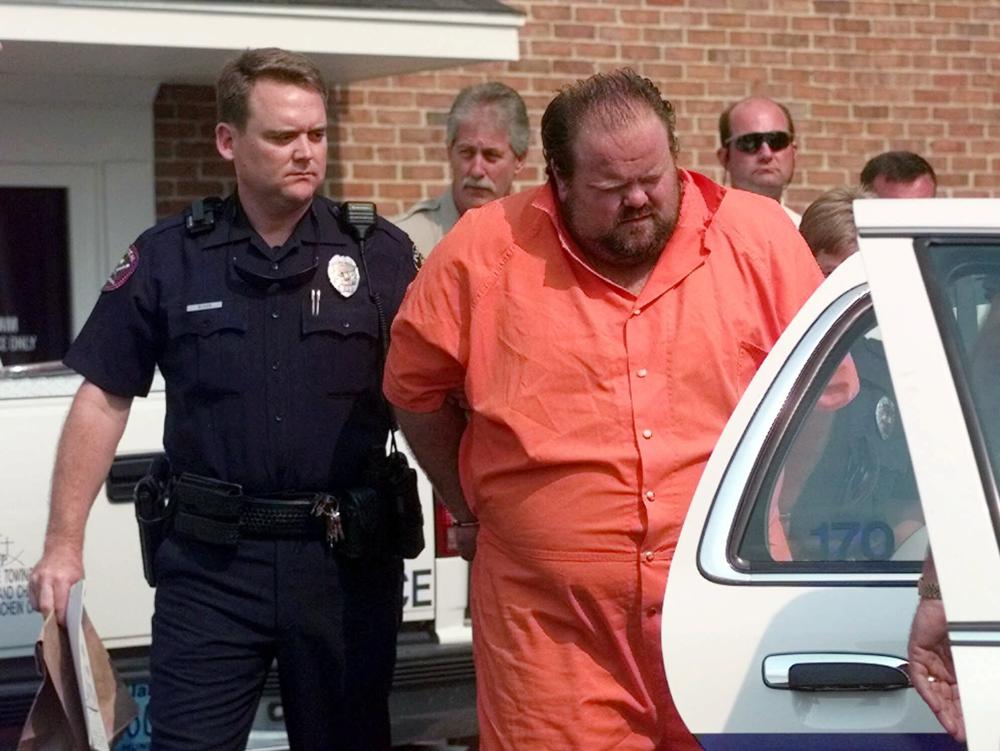
Alabama told a federal judge that it could soon be ready to use a new, untried execution method called nitrogen hypoxia to carry out a death sentence. The disclosure came Monday at a court hearing over inmate Alan Miller’s request to block his scheduled September 22 execution by lethal injection. Miller maintains that prison staff lost paperwork he returned in 2018 requesting nitrogen hypoxia, an execution method that the state has authorized but never used. U.S. District Judge R. Austin Huffaker Jr. asked whether Alabama was ready to carry out executions by nitrogen hypoxia. James Houts, a deputy state attorney general, said the method could be available as soon as next week. He said, however, that a final decision on when to use the new method would be up to Corrections Commissioner John Hamm. The Alabama Department of Corrections did not respond to an email seeking comment about the status of the proposed new execution method. Here is what is known about nitrogen hypoxia: WHAT IS NITROGEN HYPOXIA? Nitrogen hypoxia is a proposed execution method in which death would be caused by forcing the inmate to breathe only nitrogen, thereby depriving him or her of the oxygen needed to maintain bodily functions. HAS IT EVER BEEN USED? No. No state has used nitrogen hypoxia to carry out a death sentence. In 2018 Alabama became the third state — along with Oklahoma and Mississippi — to authorize the untested use of nitrogen gas to execute prisoners. However, lethal injection remains the state’s primary execution method. HOW IS IT SUPPOSED TO WORK? Nitrogen makes up 78% of the air inhaled by humans and is harmless when inhaled with oxygen. The theory behind the execution method is that changing the composition of the air to 100% nitrogen would cause the inmate to pass out and then die from lack of oxygen. WHY DID STATES PROPOSE THE NEW METHOD? States began proposing nitrogen hypoxia as an alternate execution method because of difficulty obtaining lethal injection drugs and ongoing litigation over the humaneness of lethal injection. Proponents have theorized that nitrogen hypoxia would be a simpler and more humane execution method. Then-Sen. Trip Pittman, a Republican lawmaker who sponsored the 2018 legislation, theorized it would be similar to how aircraft passengers pass out when a plane depressurizes. WHAT ARE THE CONCERNS? Critics have likened the untested method to human experimentation. “It is completely untested,” said Robert Dunham, executive director of the Death Penalty Information Center. No state has publicly released a protocol describing how it would work. While proponents have theorized it would be quick and painless, Dunham noted that states once said the same thing about the electric chair. The American Veterinary Medical Association’s euthanasia guidelines say inert gas hypoxia is acceptable, under certain conditions, for the euthanasia of chickens, turkeys, and pigs but is not recommended for other mammals such as rats. HOW WOULD ALABAMA CARRY OUT AN EXECUTION BY NITROGEN HYPOXIA? Unknown. The state has released little information about the proposed method. Most of the available information has come from court proceedings. The Alabama Department of Corrections told a federal judge last year that it had completed a “system” to use nitrogen gas but did not describe it. During a September 11 court hearing, a lawyer for the state said they asked Miller if he would agree to be fitted with a mask, an indication that the state may intend to place a face mask over the inmates’ nose and mouth. WHAT’S HAPPENING IN OTHER STATES? Oklahoma, which in 2015 was the first state to approve the use of nitrogen gas for use in executions, has not finalized plans to use it. The state has resumed lethal injections. Department of Corrections emails obtained by The Associated Press show the agency’s former deputy chief of operations reached out to a manufacturer of reduced oxygen breathing units used to help train pilots on the signs and symptoms of hypoxia. The president of the company responded that she didn’t believe executions would be an appropriate use of the product and that she had concerns about potential liability. WHAT HAPPENS NEXT? Alabama is working on finalizing a protocol for using nitrogen hypoxia, Houts told the judge. The steps must be added to the existing state protocol that describes the procedures for an execution using the electric chair or lethal injection. He said Alabama’s prison commissioner has the final decision on when to allow its use. Litigation is expected if the state decides to go forward with the method. Lethal injection will remain the primary execution method in Alabama. However, when Alabama authorized nitrogen hypoxia in 2018, state law gave inmates a brief window to select it as their preferred execution method. A number of inmates selected nitrogen. Republished with the permission of The Associated Press.
Execution of Joe Nathan James Jr. was botched, advocacy group alleges
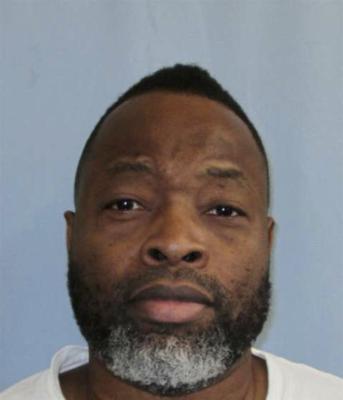
Alabama corrections officials apparently botched an inmate’s execution last month, an anti-death penalty group alleges, citing the length of time that passed before the prisoner received the lethal injection and a private autopsy indicating his arm may have been cut to find a vein. Joe Nathan James Jr. was put to death July 28 at an Alabama prison for the 1994 shooting death of his former girlfriend. The execution was carried out more than three hours after the U.S. Supreme Court denied a request for a stay. “Subjecting a prisoner to three hours of pain and suffering is the definition of cruel and unusual punishment,” Maya Foa, director of Reprieve U.S. Forensic Justice Initiative, a human rights group that opposes the death penalty, said in a statement. “States cannot continue to pretend that the abhorrent practice of lethal injection is in any way humane.” The Alabama Department of Forensic Science declined a request to release the state’s autopsy of James, citing an ongoing review that happens after every execution. Officials have not responded to requests for comment on the private autopsy, which was first reported by The Atlantic. At the time of the execution, Alabama Corrections Commissioner John Hamm told reporters that “nothing out of the ordinary” happened. Hamm said he wasn’t aware of the prisoner fighting or resisting officers. The state later acknowledged that the execution was delayed because of difficulties establishing an intravenous line but did not specify how long it took. Dr. Joel Zivot, a professor of anesthesiology at Emory University and an expert on lethal injection who witnessed the private autopsy, said it looked like there were numerous attempts to connect a line. Zivot said he saw “multiple puncture sites on both arms” and two perpendicular incisions, each about 3 to 4 centimeters (1 to 1.5 inches) in length, in the middle of the arm, which he said indicated that officials had attempted to perform a “cutdown,” a procedure in which the skin is opened to allow a visual search for a vein. He said the cutdown is an old-style medical intervention rarely performed in modern medical settings and that it would be painful without anesthesia. He also said he saw evidence of intramuscular injections not in the vicinity of a vein. The Alabama Department of Corrections prison system issued a written statement in which it noted that “protocol states that if the veins are such that intravenous access cannot be provided, the team will perform a central line procedure,” which involves placing a catheter in a large vein. “Fortunately, this was not necessary, and with adequate time, intravenous access was established,” the statement said. Alabama does not allow witnesses from news outlets to watch the preparations for a lethal injection. They get their first glimpse of the execution chamber when an inmate is already strapped to the gurney with the IV line connected. A reporter for The Associated Press who attended the execution observed that James did not respond when the warden asked if he had final words. His eyes remained closed except for briefly fluttering at one point early in the procedure. Lawyers who spoke with James by telephone said they were disturbed by his reported lack of movements and raised questions about what happened before the lethal injection. Hamm said James was not sedated. “That wasn’t the Joe that I knew. He always had something to say. He always wanted to be in control,” said James Ransom, the attorney who helped James file his appeal with the U.S. Supreme Court. “The fact that he did not give any sort of reaction … and that he didn’t open his eyes tells me something was up,” Ransom said. John Palombi, a federal defender who spoke with James twice on the day of his execution, said James, “was certainly alert” earlier in the day. The Atlantic quoted a friend of James as saying that the inmate had planned to make a final statement. Robert Dunham, executive director of the Death Penalty Information Center, a national nonprofit organization that analyzes issues concerning capital punishment, said the delay between the Supreme Court’s go-ahead and the execution, combined with the autopsy, points to a “botched execution, and it is among the worst botches in the modern history of the U.S. death penalty.” “This execution is Exhibit A as to why execution secrecy laws are intolerable,” Dunham wrote in an email to the A.P. “The public is entitled to know what went on here — and what goes on in all Alabama executions — from the instant the execution team begins the process of physically preparing the prisoner for the lethal injection until the moment the prisoner dies.” Republished with the permission of The Associated Press.
Alabama only state to limit media to 1 witness at execution
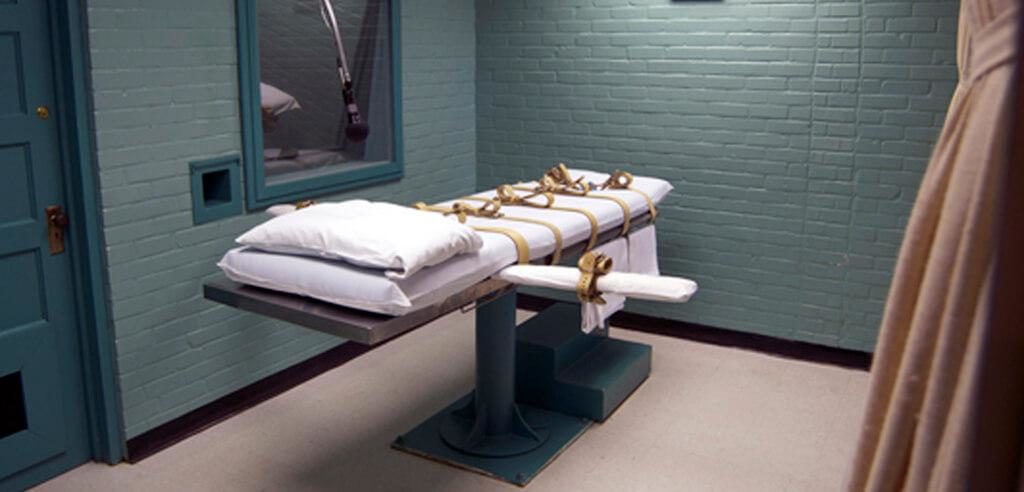
Alabama will be the third state to carry out an execution during the COVID-19 pandemic and will be the only prison system to reduce the number of news media witnesses to a single reporter. The Alabama Department of Corrections said because of COVID-19 precautions only one reporter, a representative of The Associated Press, will be allowed to witness Thursday’s lethal injection of Willie B. Smith. The state in the past allowed five media witnesses, although the number of outlets sending reporters is sometimes less than that. Only the federal government, Texas, and Missouri have carried out executions since the pandemic began last year. None reduced the number of media witnesses to a single reporter. There have been 19 executions carried out since April of 2020, according to a database maintained by the Death Penalty Information Center. All of them were attended by multiple reporters with the exception of one lethal injection in Texas where the prison system neglected to notify reporters it was time to carry out the punishment. Robert Dunham, executive director of the Death Penalty Information Center, said the media serves an “irreplaceable function” as “the public’s witnesses and play a vital role in holding states accountable when executions visibly go wrong.” “If an execution is not safe enough to be witnessed by the full complement of reporters, the remedy is not to decrease accountability and increase secrecy by excluding media witnesses who would otherwise be permitted to attend. If an execution is not safe enough for witnesses, it is not safe enough to go forward at all,” Dunham wrote in an email. Paige Windsor, the executive editor of the Montgomery Advertiser, said the news organization disagreed “that the press restrictions were necessary for COVID mitigation, especially once a vaccine was available.” “We object to any laws, procedures or practices that limit press coverage of state business, particularly when that business involves killing a human being in the public’s name. Reporting on all aspects of these proceedings is how a free press ensures the public’s business is carried out as prescribed,” Windsor said in an emailed statement. The Alabama Department of Corrections did not immediately respond to an email seeking comment. The prison system wrote in a media advisory issued Monday that the number of witnesses were being limited, “due to measures necessary because of the COVID-19 pandemic.” It is the same procedure and witness restrictions the state planned to use at Smith’s original execution date in February. That execution was called off by the state. Two reporters witnessed the two executions carried out in Missouri during the pandemic. And two or more reporters witnessed the executions in Texas, with the exception of the May lethal injection of Quintin Jones. Two reporters had been set to witness the execution, but a prison spokesperson never received the usual telephone call to bring them to the execution chamber. Thirteen of the 19 executions were carried out by the federal government. The AP served as the national media pool, providing coverage to other outlets, but local news outlets also witnessed the executions. An AP analysis earlier this year found that those executions may have acted as a superspreader event for COVID-19 infections. Most states have not carried out death sentences during the COVID-19 pandemic. Smith is scheduled to be executed by lethal injection for the 1991 kidnapping and killing of Sharma Ruth Johnson, 22. Prosecutors said Smith abducted Johnson at gunpoint from an ATM in Birmingham, stole $80 from her and then took her to a cemetery where he shot her in the back of the head. Smith’s attorneys on Tuesday asked the 11th U.S. Circuit Court of Appeals to block the lethal injection, arguing the intellectually disabled inmate could not understand the prison paperwork that laid the groundwork for the planned lethal injection. Lethal injection is the main execution method used in Alabama. But after lawmakers authorized nitrogen hypoxia as an execution method in 2018, the new law gave death row inmates a 30-day window to select nitrogen hypoxia as their execution method. Nitrogen hypoxia is a proposed execution method in which an inmate would breathe only nitrogen, thus depriving him or her of oxygen, causing unconsciousness and then death. Three states have approved it as an execution method, but it has never been used. Smith did not turn in a form selecting nitrogen, paving the way for the state to execute him next week by lethal injection. The state has not developed a procedure for using nitrogen as an execution method, and at least for now is not scheduling executions with nitrogen hypoxia. “I did not understand the Election Form because I’m slow and have trouble reading,” Smith said, according to a declaration filed with the emergency request for a preliminary injunction. Republished with the permission of the Associated Press.
Religion and the death penalty collide at the Supreme Court
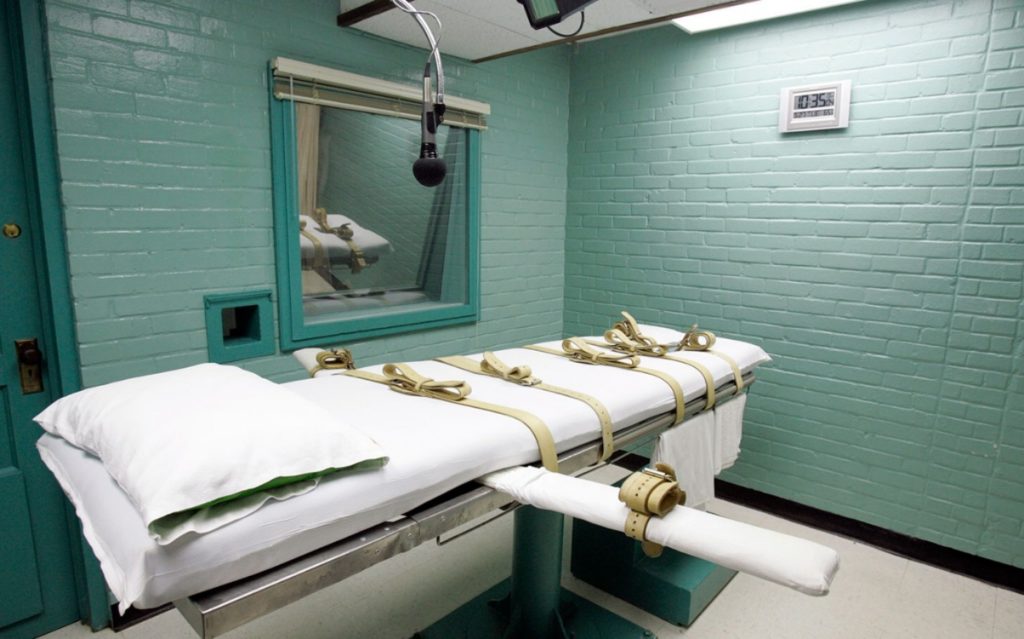
The Supreme Court is sending a message to states that want to continue to carry out the death penalty: Inmates must be allowed to have a spiritual adviser by their side as they are executed. The high court around midnight Thursday declined to let Alabama proceed with the lethal injection of Willie B. Smith III. Smith had objected to Alabama’s policy that his pastor would have had to observe his execution from an adjacent room rather than the death chamber itself. The order from the high court follows two years in which inmates saw some rare success in bringing challenges based on the issue of chaplains in the death chamber. This time, liberal and conservative members of the court normally in disagreement over death penalty issues found common ground not on the death penalty itself but on the issue of religious freedom and how the death penalty is carried out. Justice Brett Kavanaugh, one of three justices who said they would have let Smith’s execution go forward, said Alabama’s policy applies equally to all inmates and serves a state interest in ensuring safety and security. But he said it was apparent that his colleagues who disagreed were providing a path for states to follow. States that want to avoid months or years of litigation over the presence of spiritual advisers “should figure out a way to allow spiritual advisors into the execution room, as other States and the Federal Government have done,” he wrote in a dissent joined by Chief Justice John Roberts. Justice Clarence Thomas also would have allowed the execution of Smith, who was sentenced to die for the 1991 murder of 22-year-old Sharma Ruth Johnson in Birmingham. Alabama had up until 2019 allowed a Christian prison chaplain employed by the state to be physically present in the execution chamber if requested by the inmate, but the state changed its policy in response to two earlier Supreme Court cases. Robert Dunham, the executive director of the Death Penalty Information Center, says the court’s order will most clearly affect states in the Deep South that have active execution chambers. Dunham said most state execution protocols, which set who is present in the death chamber, do not mention spiritual advisers. For most of the modern history of the U.S. death penalty since the 1970s, spiritual advisers have not been present in execution chambers, he said. The federal government, which under President Donald Trump resumed federal executions following a 17-year hiatus and carried out 13 executions, allowed a spiritual adviser to be present in the death chamber. The Biden administration is still weighing how it will proceed in death penalty cases. The court’s order in Smith’s case contained only statements from Kavanaugh and Justice Elena Kagan. “Willie Smith is sentenced to death, and his last wish is to have his pastor with him as he dies,” Kagan wrote for herself and liberal justices Sonia Sotomayor and Stephen Breyer, as well as conservative Amy Coney Barrett. Kagan added: “Alabama has not carried its burden of showing that the exclusion of all clergy members from the execution chamber is necessary to ensure prison security.” Justice Neil Gorsuch and Justice Samuel Alito did not make public their views, but at least one or perhaps both of them must have voted with their liberal colleagues to keep Smith’s execution on hold. The court’s yearslong wrestling with the issue of chaplains in the death chamber began in 2019, when the justices declined to halt the execution of Alabama inmate Domineque Ray. Ray had objected that a Christian chaplain employed by the prison typically remained in the execution chamber during a lethal injection, but the state would not let his imam be present. The next month, however, the justices halted the execution of a Texas inmate, Patrick Murphy, who objected after Texas officials wouldn’t allow his Buddhist spiritual adviser in the death chamber. Kavanaugh wrote at the time that states have two choices: Allow all inmates to have a religious adviser of their choice in the execution room or allow that person only in an adjacent viewing room. In response, the Texas prison system changed its policy, allowing only prison security staff into the execution chamber. But in June, the high court kept Texas from executing Ruben Gutierrez after he objected to the new policy. Diana Verm, a lawyer at the Becket Fund for Religious Liberty, which had submitted briefs in two of the spiritual adviser cases, said it was unusual for the court with its conservative majority to halt executions. “You can tell from some of the opinions that the justices don’t like the last-minute nature of execution litigation, but this is an area where they are saying: ’Listen … religious liberty has to be a part of the process if it’s going to happen,” Verm said. Republished with the permission of the Associated Press.
Alabama releases copy of execution procedures
Alabama on Wednesday made its execution protocol public after being ordered to do so by a federal judge. The Alabama Department of Corrections filed a redacted copy of its execution procedure with the federal court following a legal fight with news outlets over the release of the information. A judge allowed the state to keep some of the information secret for security reasons. The 17-page document spells out procedures for before, during and after an execution. It includes information about the testing of equipment, inmate visitation, the consciousness test performed during lethal injections and a requirement to keep logs about each execution. Part of the released information was already known, such as the names of the drugs in the state’s lethal injection procedure, but the state had fought to keep the document secret.The document did not include information about where the state obtains lethal injection drugs or the job titles and training of people who connect the intravenous lines to deliver the drugs. Robert Dunham, executive director of the Death Penalty Information Center, said the document is more information than has been previously been released by Alabama. However, he said it does not tell the public some important details about how executions are carried out in the state. “It lacks critical information and redacts other important information that leaves Alabama executions secret and unaccountable,” Dunham said after briefly reviewing the document.Dunham noted that a section about execution logs was redacted and that it did not include information about the source of drugs. The Associated Press, The Montgomery Advertiser and the Alabama Media Group had asked the court last year to unseal the protocol and other records involved in a lawsuit brought by death row inmate whose execution was later halted because of problems. Alabama called off Doyle Lee Hamm’s execution last year after multiple failed attempts to insert a needle into his veins. A doctor hired by Hamm’s legal team wrote in a 2018 report that Hamm, who had damaged veins from illnesses and past drug use, had 11 puncture sites from the attempted execution. U.S. District Judge Karon Bowdre ruled the public has “a common law right of access” to the records. A federal appeals court agreed. “It may also help the public to understand how the same scenario might be repeated or avoided under the protocol as it currently stands,” Bowdre wrote of the release of the information. Alabama has also authorized execution with nitrogen gas, but has not announced the development of a protocol for using gas to carry out a death sentence. The state earlier this year cited security reasons for refusing to release a contract with an occupational safety firm. The head of the Alabama Legislature’s Contract Review Committee said the attorney general’s office indicated the contract was related to litigation over nitrogen gas as an execution method. Republished with the permission of the Associated Press.
Supreme Court: Execution of Muslim inmate can proceed
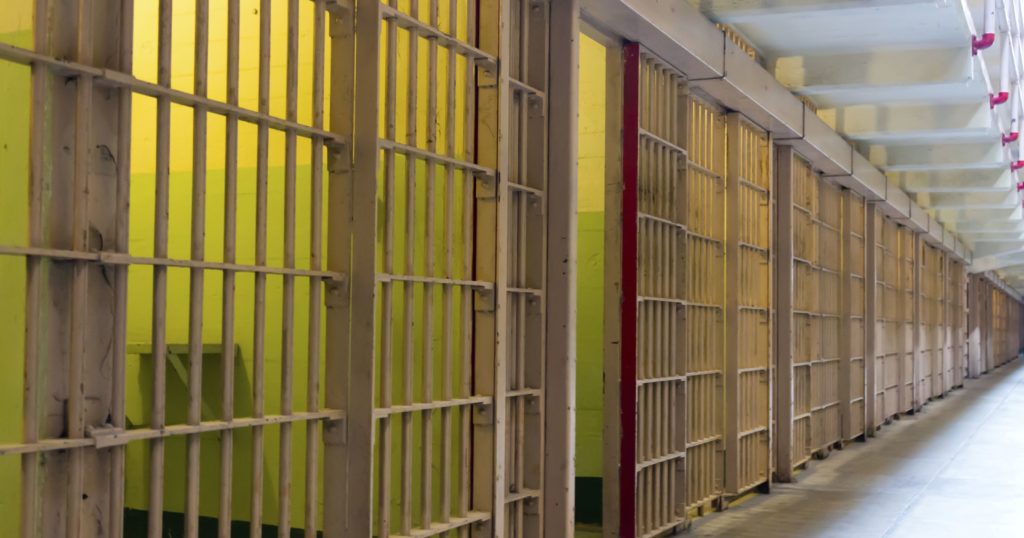
he U.S. Supreme Court on Thursday rejected claims from a Muslim inmate who said his religious rights were being violated, clearing the way for the lethal injection to go forward Thursday night. In a 5-4 decision, justices vacated a stay issued by a lower court that had been blocking the execution of Dominique Ray, 42. Ray argued Alabama’s execution procedure favors Christian inmates because a Christian chaplain employed by the prison typically remains in the execution chamber during a lethal injection, but the state would not let his imam be present. Justice Elena Kagan wrote in a dissent that the dissenting justice considered the decision to let the execution go forward “profoundly wrong.” Attorneys for the state said Ray had ample opportunity to visit with his imam before his scheduled execution, that only prison employees are allowed in the chamber for security reasons, and that the imam can visit him before he’s led to the execution chamber and witness the execution from an adjoining room. Prison system spokesman Bob Horton said Ray was visited by his imam both Wednesday and Thursday and that Ray again renewed a request to have the adviser present — the request that has been denied. Other states generally allow spiritual advisers to accompany condemned inmates up to the execution chamber but not into it, said Robert Dunham, executive director of the Death Penalty Information Center, which studies capital punishment in the United States. Durham said did not know of any other state where the execution protocol calls for a Christian chaplain to be present in the execution chamber. Ray was sentenced to death for the slaying of 15-year-old Tiffany Harville. The girl disappeared from her Selma home in July 1995, and her decomposing body was found in a cotton field a month later. Ray was convicted in 1999 after another man, Marcus Owden, confessed to his role in the crime and implicated Ray. Owden told police that they had picked the girl up for a night out on the town and then raped her. Owden said that Ray cut the girl’s throat. Owden pleaded guilty to murder, testified against Ray and is serving a life sentence without parole. A jury recommended the death penalty for Ray by an 11-1 vote. Ray’s attorneys had also asked in legal filings to stay the execution on other grounds. Lawyers say it was not disclosed to the defense team that records from a state psychiatric facility suggested Owden suffered from schizophrenia and delusions. The Supreme Court also rejected that claim Thursday. Republished with permission from the Associated Press
Appeals court blocks Alabama execution of Muslim inmate

A federal appeals court on Wednesday blocked the planned execution of an Alabama inmate to consider whether the state was violating the Muslim inmate’s rights by not allowing an imam to replace a Christian prison chaplain in the death chamber. Alabama may be violating the religious rights of a Muslim inmate set for execution Thursday by refusing to allow an imam present at his death, a federal court said Wednesday in blocking the lethal injection. The 11th U.S Circuit Court of Appeals granted a stay for Dominique Ray, 42, a day before his scheduled execution for the slaying of a teenager more than two decades ago. The state is still pushing for the execution to take place Thursday, though, and swiftly changed its execution protocol in response to the judges’ concerns. The Alabama attorney general’s office on Wednesday afternoon asked the U.S. Supreme Court to vacate the stay. Ray objected to Alabama’s practice of allowing a Christian prison chaplain, who is a prison system employee, to stand near the inmate during the lethal injection and to pray with the inmate if the inmate requests that. Ray asked to bring in his imam to stand near him during the procedure, but was told he could not because only prison employees were allowed in the execution chamber. A three-judge panel of judges wrote that it was “exceedingly loath to substitute our judgment on prison procedures.” But, they added that it “looks substantially likely to us that Alabama has run afoul of the Establishment Clause of the First Amendment.” “The central constitutional problem here is that the state has regularly placed a Christian cleric in the execution room to minister to the needs of Christian inmates, but has refused to provide the same benefit to a devout Muslim and all other non-Christians,” the three-judge panel wrote. The Alabama chapter of the Council on American-Islamic Relations said it supported Ray’s bid to have an Islamic leader present. “We welcome this decision and hope Mr. Ray will ultimately be provided equal access to spiritual guidance,” Ali Massoud, government affairs coordinator for CAIR-Alabama, said in a statement. In the request to vacate the stay, the Alabama attorney general’s office said as a result of the 11th Circuit order, the state has amended its lethal injection protocol so that the chaplain will no longer be present. State attorneys said inmates can have their spiritual adviser witness the execution from a room adjoining the execution chamber. Robert Dunham, executive director of the Death Penalty Information Center, which studies capital punishment in the U.S., said other states generally allow spiritual or religious advisers to accompany the inmate up to the execution chamber but not into it. Instead the adviser can view the execution, as do others, from a designated area. He did not know of any other states where the execution protocol calls for a Christian chaplain to be present in the execution chamber. Ray was convicted in the fatal stabbing of a 15-year-old Tiffany Harville. Harville disappeared from her Selma home in July 1995. Her decomposing body was found in a field a month later. Ray was convicted in 1999 after co-defendant Marcus Owden told police that they had picked the girl up for a night out on the town and then raped her. Owden said that Ray cut the girl’s throat. Owden pleaded guilty to murder, testified against Ray and is serving a life sentence without parole. Ray’s legal team on Wednesday asked the U.S. Supreme Court to stay the execution on other grounds. They argued it was not disclosed to the defense team that records from a state psychiatric facility suggested Owden suffered from schizophrenia and delusions. Attorneys asked the Supreme Court to halt the execution to examine whether the state had a duty to find and produce the information. Republished with permission from the Associated Press
Lethal injection or gas? Alabama’s death row gets to choose
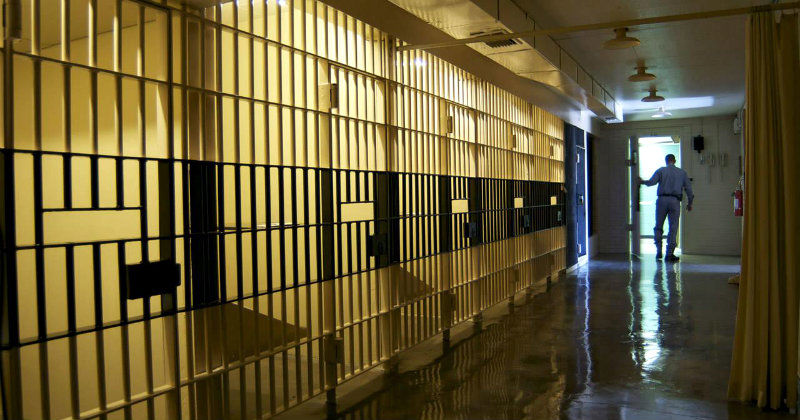
Some say inhaling nitrogen gas would be like dying on a plane that depressurizes in flight, swiftly killing all aboard. Now more than a quarter of Alabama’s death row inmates have signed statements saying they would prefer that gas over lethal injection or the electric chair when facing execution. No inmate in the U.S. has been put to death with nitrogen gas before, and critics suspect at least some inmates are simply hoping to delay a date with the death chamber through the inevitable legal challenges ahead. State corrections officials say 51 of Alabama’s 180 inmates have chosen nitrogen hypoxia, allowed a choice after Alabama lawmakers voted this year to authorize that alternative execution method. With difficulties obtaining execution drugs and litigation arising over claims of botched and horribly painful chemical injections this decade, Alabama is not alone as it joins Oklahoma and Mississippi in exploring that as a potential alternative. John Palombi, an attorney with the Federal Defenders Program, said his group advised inmates to request the uncertainties of nitrogen gas over what he called the known “torture” of Alabama’s three-drug cocktail. They had a June 30 deadline to make a choice. “Our decision to have our clients opt into use of nitrogen hypoxia was based on our belief that a three drug lethal injection protocol … is torturous and has tortured our clients,” Palombi wrote in an email, citing last year’s execution of Torrey McNabb and Ronald Smith Jr.’s the year before. While being sedated in the death chamber for the 1994 killing of a convenience store clerk, Smith coughed and heaved repeatedly for 13 minutes. His attorneys witnessed the execution and said his movements showed he was “not anesthetized at any point during the agonizingly long procedure.” Lawyers for McNabb said his final moments were inhumanely painful as he rolled his head back and forth while being executed for a police officer’s 1997 slaying. State officials disputed that anything went wrong either time. Bob Horton of the Alabama Department of Corrections gave no time estimate for when the alternative method would be ready. But the spokesman assured in an email that the department “will have a protocol in place before the state carries out executions by nitrogen.” Republican state Sen. Trip Pittman, sponsor of Alabama’s legislation, believes nitrogen will prove more humane. He spoke of how aircraft passengers have passed out and died from a sudden plane depressurization. While nitrogen gas isn’t itself poisonous, anyone breathing it without breathing oxygen will lose consciousness and die from lack of oxygen. “The person will pass out and ultimately pass,” said Pittman. Much of what is known about death by nitrogen comes from research, industrial accidents and suicides. It’s not even clear how nitrogen would be delivered, whether via some type of mask or breathing apparatus. “This is entirely experimental,” said Randall Marshall, legal director of the American Civil Liberties Union of Alabama. “It is the epitome of cruel and usual punish because it is experimenting on human beings.” State Sen. Cam Ward said he thinks some inmates signed for nitrogen gas because lengthy challenges are foreseen. “Some of them, not all of them, are probably litigating this to avoid the death penalty,” said Ward, who chairs Alabama’s legislative committee that oversees state prisons. But he added other inmates probably believe inhaling nitrogen gas could be a better way to die: “I think they’ve seen stories of where the three-drug cocktail lethal injection has failed and there’s that fear of it being a botched process as opposed to nitrogen.” In neighboring Mississippi, officials have authorized nitrogen hypoxia for executions in the event lethal injection is held unconstitutional or becomes “unavailable.” No actual plans to begin using gas have been announced, however, and the state hasn’t executed anyone since 2012, partly because a legal challenge to its lethal injection procedure continues. Elsewhere, Oklahoma officials announced in March that the state will develop protocols to use nitrogen gas to execute inmates because of the problems obtaining lethal injection drugs. Oklahoma Attorney General Mike Hunter said at the time that, “we can no longer sit on the sidelines and wait on the drugs.” Litigation over Alabama’s lethal injection method ended as the inmates opted for nitrogen. Alabama last month agreed to dismiss a lawsuit challenging lethal injection as cruel and unusual punishment because the eight inmate plaintiffs in the case had opted for nitrogen gas. The claims challenging the state’s lethal injection process as inhumane are now moot, “because their executions will be carried out at the appropriate time by nitrogen hypoxia,” attorneys wrote in a motion to the court. However, Robert Dunham, executive director of the Death Penalty Information Center, said he expects litigation over the use of nitrogen gas. He said Oklahoma’s execution process is currently subject to a federal court order. He noted that Alabama prisoners who selected nitrogen didn’t relinquish rights to challenge nitrogen gas or any other execution method. “Execution by nitrogen hypoxia has never been tried before and there are different potential dangers … I think it is highly likely that there will be challenges,” Dunham said. Republished with the permission of the Associated Press.
