
Alabama Supreme Court gives go ahead for execution by nitrogen hypoxia
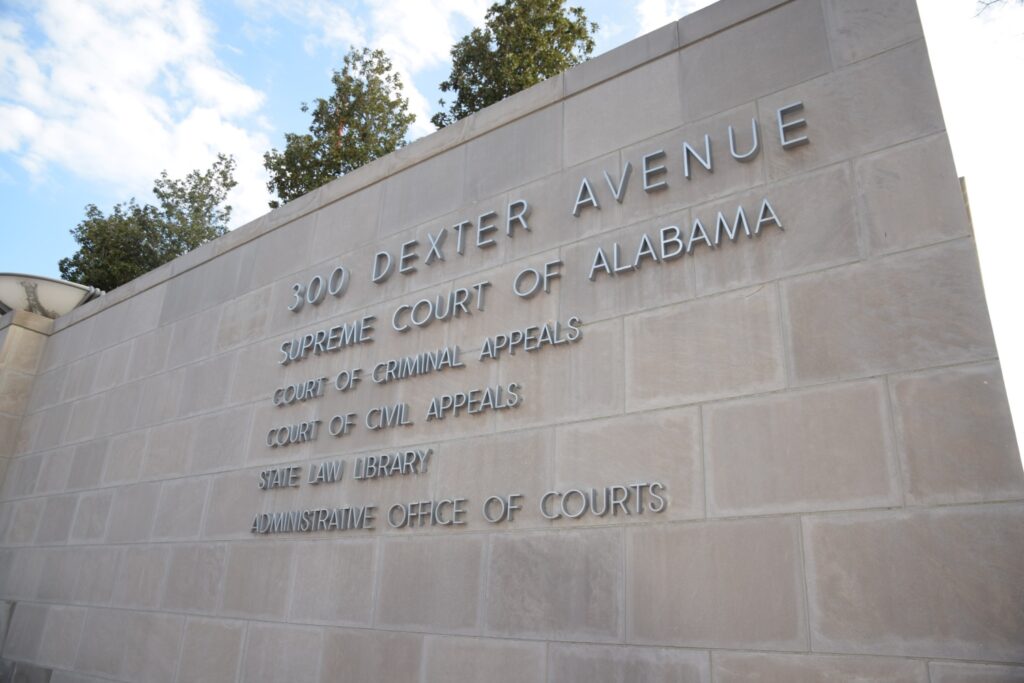
Ralph Chapoco, Alabama Reflector Alabama is one step closer to becoming the first state to execute someone by nitrogen hypoxia. In a 6-2 decision handed down Wednesday, the Alabama Supreme Court allowed the state to proceed with the execution of Kenneth Eugene Smith, convicted of the 1988 murder of Elizabeth Sennett, under that method. Alabama Attorney General Steve Marshall said in a statement Wednesday that Sennett’s family had “waited an unconscionable 35 years to see justice served.” “Though the wait has been far too long, I am grateful that our talented capital litigators have nearly gotten this case to the finish line,” the statement said. Chief Justice Tom Parker and Associate Justice Greg Cook dissented but gave no additional comment. Nitrogen hypoxia has never been used on a human being as a means of execution, and professional veterinary associations have discouraged its use in the euthanization of animals. Smith’s attorneys said in a statement Thursday that they were disappointed in the decision and would continue to work through the judicial process. Smith currently has an appeal pending with the Alabama Court of Criminal Appeals claiming that attempting to execute him a second time violates his constitutional rights. “It is noteworthy that two justices dissented from this Order,” wrote Robert Grass, an attorney for Smith. “Like the eleven jurors who did not believe Mr. Smith should be executed, we remain hopeful that those who review this case will see that a second attempt to execute Mr. Smith – this time with an experimental, never-before-used method and with a protocol that has never been fully disclosed to him or his counsel – is unwarranted and unjust.” The order gives the Alabama Department of Corrections the authority to carry out Smith’s execution within the time frame set by Gov. Kay Ivey, which cannot happen less than 30 days from Wednesday, when the court published its decision. The Attorney General’s Office filed a motion with the Alabama Supreme Court back in August, requesting the court set a date for Smith’s execution. Smith’s attorneys requested the court reject the state’s motion in September, stating that nitrogen hypoxia has not been tested and only recently released the protocol for using that method of execution. A jury convicted Smith in 1996 in the plot to murder Sennett and voted to sentence him to life without the possibility of parole. The judge in the case overrode the jury recommendation and sentenced Smith to death. Alabama abolished judicial override in 2017, the last state in the country to do so. But the rule was not made retroactive. In May the U.S. Supreme Court upheld a lower court’s decision that allowed him to select his method of execution, in this case is death by nitrogen hypoxia. The high court turned down the appeal by the Alabama Department of Corrections, which argued that Smith was pursuing a delaying tactic. Smith was scheduled to be executed in November following the botched executions of Joe Nathan James Jr. and Alan Miller. However, his execution was called off after ADOC staff repeatedly failed to secure a vein to carry out the execution. Smith’s attorneys wrote in a brief last January that he “continues to experience physical and emotional pain, including lingering pain in his arm, near his collarbone, back spasms, difficulty sleeping, and likely post-traumatic stress disorder” from the failed execution. Death through nitrogen hypoxia became an available method for executing people on death row after the Legislature passed a bill sponsored by Sen. Trip Pittman, R-Montrose, allowing its use. He said that the method was more humane than lethal injection. Doctors and medical ethicists have criticized those claims. “Last year, after Alabama tortured multiple people in botched executions using lethal injection, we encouraged the state to pursue an independent evaluation of its execution protocols,” said Alison Mollman, interim legal director of the ACLU of Alabama. “Governor Ivey and the Alabama Department of Corrections failed to complete an independent review and instead insisted the problem was not having enough time to kill someone. Now, at the urging of Attorney General Steve Marshall, Alabama is rushing to put a man to death with an untested, unproven, and never-before-used method of execution. As Alabama races to experiment on incarcerated people with nitrogen gas, they put the lives of correctional staff, spiritual advisers, the media, and victims at risk by potentially exposing them to an odorless and lethal gas. Using this method has no benefit on public safety. Governor Ivey and Attorney General Marshall have a responsibility to stop the execution of Mr. Smith.” The Death Penalty Information Center, a nonprofit that students and collects data on the death penalty, criticized Alabama’s move toward nitrogen executions in a statement on Thursday. “No state has ever used nitrogen in an execution, and there are still too many unanswered questions for Alabama officials to responsibly move forward with this protocol,” the statement said. “Mr. Smith has already endured one botched execution; he should not now face another attempt that carries this much risk and uncertainty.” Alabama Reflector is part of States Newsroom, a network of news bureaus supported by grants and a coalition of donors as a 501c(3) public charity. Alabama Reflector maintains editorial independence. Follow Alabama Reflector on Facebook and Twitter.
Alabama wants to be the 1st state to execute a prisoner by making him breathe only nitrogen

Alabama is seeking to become the first state to execute a prisoner by making him breathe pure nitrogen. The Alabama attorney general’s office on Friday asked the state Supreme Court to set an execution date for death row inmate Kenneth Eugene Smith, 58. The court filing indicated Alabama plans to put him to death by nitrogen hypoxia, an execution method that is authorized in three states but has never been used. Nitrogen hypoxia is caused by forcing the inmate to breathe only nitrogen, depriving them of oxygen and causing them to die. Nitrogen makes up 78% of the air inhaled by humans and is harmless when inhaled with oxygen. While proponents of the new method have theorized it would be painless, opponents have likened it to human experimentation. Alabama authorized nitrogen hypoxia in 2018 amid a shortage of drugs used to carry out lethal injections, but the state has not attempted to use it until now to carry out a death sentence. Oklahoma and Mississippi have also authorized nitrogen hypoxia but have not used it. The disclosure that Alabama is ready to use nitrogen hypoxia is expected to set off a new round of legal battles over the constitutionality of the method. The Equal Justice Initiative, a legal advocacy group that has worked on death penalty issues, said Alabama has a history of “failed and flawed executions and execution attempts” and “experimenting with a never before used method is a terrible idea.” “No state in the country has executed a person using nitrogen hypoxia, and Alabama is in no position to experiment with a completely unproven and unused method for executing someone,” Angie Setzer, a senior attorney with the Equal Justice Initiative, said. Alabama attempted to execute Smith by lethal injection last year, but called off the execution because of problems inserting an IV into his veins. It was the state’s second such instance within two months of being unable to put an inmate to death and its third since 2018. The day after Smith’s aborted execution, Gov. Kay Ivey announced a pause on executions to conduct an internal review of lethal injection procedures. The state resumed lethal injections last month. Smith was one of two men convicted in the 1988 murder-for-hire slaying of a preacher’s wife. The Alabama attorney general argued it is time to carry out the death sentence. “It is a travesty that Kenneth Smith has been able to avoid his death sentence for nearly 35 years after being convicted of the heinous murder-for-hire slaying of an innocent woman, Elizabeth Sennett,” Attorney General Steve Marshall said Friday in a statement. Alabama has been working for several years to develop the nitrogen hypoxia execution method but has disclosed little about its plans. The attorney general’s court filing did not describe the details of how the execution would be carried out. Corrections Commissioner John Hamm told reporters last month that a protocol was nearly complete. A number of Alabama inmates seeking to block their executions by lethal injection, including Smith, have argued they should be allowed to die by nitrogen hypoxia. Robert Grass, an attorney representing Smith, declined to comment Friday. Sennett was found dead on March 18, 1988, in the home she shared with her husband on Coon Dog Cemetery Road in Alabama’s Colbert County. Prosecutors said Smith was one of two men who were each paid $1,000 to kill Sennett on behalf of her husband, who was deeply in debt and wanted to collect on insurance. The slaying, and the revelations over who was behind it, rocked the small north Alabama community. The other man convicted in the killing was executed in 2010. Charles Sennett, the victim’s husband and a Church of Christ pastor, killed himself when the investigation began to focus on him as a possible suspect, according to court documents. Republished with the permission of The Associated Press.
Judge grills Alabama officials over lethal injection process
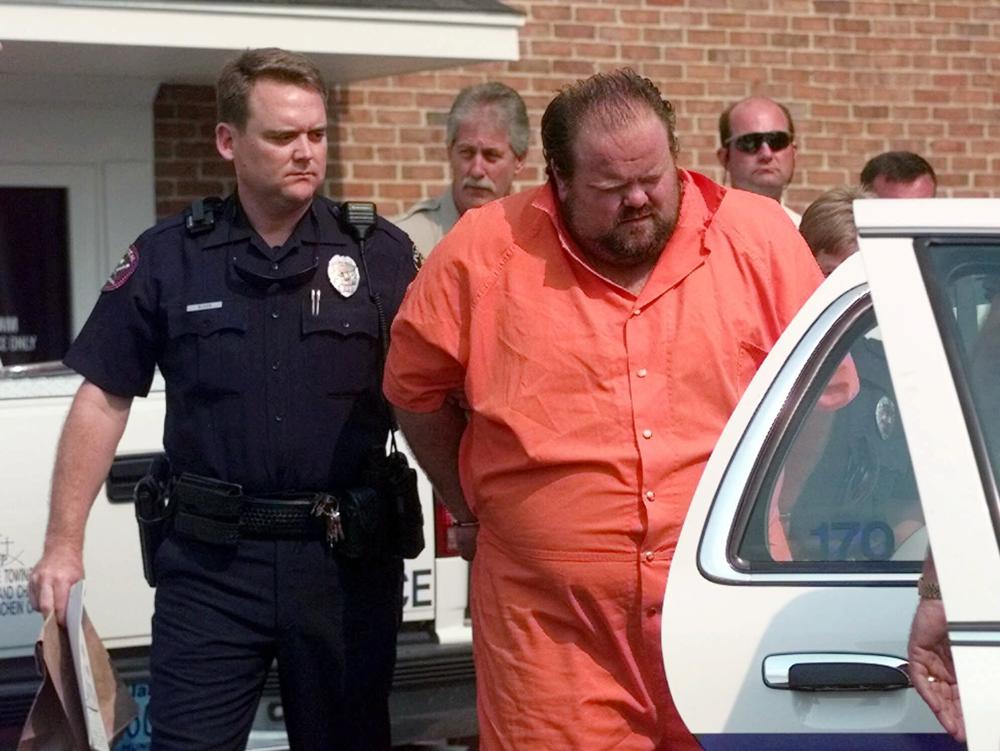
A federal judge on Thursday questioned Alabama officials about the state’s lethal injection procedures — including how many needle “pokes” are too many — after problems with vein access at the state’s last two scheduled executions. U.S. District Judge R. Austin Huffaker, Jr. put forth the questions during a court hearing in a lawsuit filed by Kenneth Eugene Smith, who is seeking to block his upcoming Nov. 17 execution. His attorneys have pointed to problems at recent lethal injections. Alabama called off a lethal injection last month after having trouble accessing the veins of the 351-pound (159-kilogram) inmate, and advocacy groups have alleged a July execution, carried out after a lengthy delay, was botched. Huffaker asked an attorney for the state at what point is the search for a vein impacted by the constitutional ban on cruel and unusual punishment. “It is 10 pokes? Is it 11? Is it 100? Is it one hour? … What is it?” Huffaker asked. He also asked when does the state make a decision to abort a lethal injection when there are problems obtaining a vein connection. Robert Anderson, of the Alabama attorney general’s office, said the state prison commissioner and warden are in charge of the decision on when to call off an execution. Huffaker also asked the state prison commissioner to clarify when the state will be ready to use nitrogen hypoxia, an execution method the state has authorized but never used. Huffaker said the state had told him different things at different times, including once suggesting that it could be ready for last month’s execution — a suggestion that turned out to be untrue. “It’s being developed, but we don’t have a protocol at this point,” Alabama Corrections Commissioner John Hamm told the judge. Anderson added that Alabama is attempting to develop the country’s first procedures for execution by nitrogen hypoxia, so it is a complicated endeavor and difficult to estimate a precise time. Smith, 57, is set to be executed by lethal injection at Holman Correctional Facility on Nov. 17 after being convicted in the 1988 murder-for-hire killing of Elizabeth Dorlene Sennett, a 45-year-old grandmother and pastor’s wife. Smith’s attorney, Robert Grass, said Alabama’s lethal injection procedure creates the intolerable “risk of cruel and unusual punishment.” He also said the state has kept much of the process shrouded in secrecy, including the identities and qualifications of the people who connect the IV line to the inmate. Grass is seeking to obtain records from recent executions and to interview execution team members. Alabama is asking the judge to dismiss Smith’s lawsuit, arguing that courts have long upheld the constitutionality of lethal injection. Alabama last month called off the lethal injection of Alan Miller after being unable to access his veins. The state faced a midnight deadline to get the execution underway. Miller said in a court filing that prison staff poked him with needles for over an hour as they tried to find a vein. Miller’s attorneys are fighting the state’s effort to seek a new execution date for him. The July execution of Joe Nathan James Jr. was carried out three hours after the U.S. Supreme Court said the state could proceed. The state acknowledged that establishing the intravenous line took longer than expected. However, Reprieve US Forensic Justice Initiative, a human rights group that opposes the death penalty, has maintained the execution was botched. Witnesses to a private autopsy said that James’ body showed evidence that officials had attempted to perform a “cutdown,” a procedure in which the skin is opened to allow a visual search for a vein. They also speculated that he may have been given a sedative shot. The state said that a “cut down” is not part of their protocol and that James was not sedated. Hamm, speaking under oath during the Thursday hearing, told the judge that during Smith’s execution that the state will not use a “cut down” procedure and will not give any sort of sedative shot. Republished with the permission of The Associated Press.
