
Tommy Tuberville supports bill to permanently ban taxpayer funding for abortions
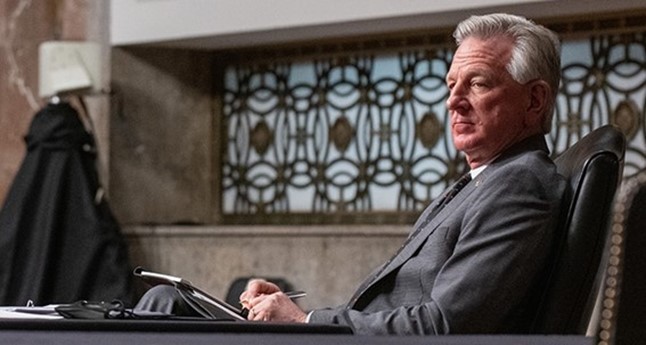
U.S. Senators Tommy Tuberville and Katie Britt joined 45 of their Senate colleagues in introducing the No Taxpayer Funding for Abortion Act to establish a permanent prohibition on federal funding for abortion. Tuberville said in a statement, “Every life is sacred.” “Millions of hardworking Americans believe that life begins at conception and don’t want their taxpayer dollars inadvertently funding abortions,” said Sen. Tuberville stated. “As a Christian and as a conservative, I share their belief that every life is sacred and every American has a right to life. That’s why I’m proud to sign on to this legislation that will solidify abortion funding restrictions that have been in place for decades and better protect the unborn.” “Most Americans do not want their hard-earned tax dollars being used for abortion-on-demand, but our current patchwork of regulations has brought years of uncertainty,” Sen. Roger Wicker said. “The No Taxpayer Funding for Abortion Act would simplify federal rules, ensuring that American tax dollars are never used for the destruction of innocent, unborn life.” The bill seeks to change 40 years of inconsistent policies that have regulated federal funding for abortion. It would make funding restrictions permanent for abortion and elective abortion coverage, including the Hyde Amendment, which requires annual approval. The legislation would also eliminate taxpayer-funded subsidies for elective abortion coverage currently offered on Affordable Care Act exchanges through refundable tax credits. Tuberville, Wicker, and Britt joined Sens. Mitch McConnell (R-Kentucky) John Barrasso (R-Wyoming), Marsha Blackburn (R-Tennessee), John Boozman (R-Arkansas), Mike Braun (R-Indiana), Ted Budd (R-North Carolina), Shelley Moore Capito (R-West Virginia), Bill Cassidy (R-Louisiana), John Cornyn (R-Texas), Tom Cotton (R-Arkansas), Kevin Cramer (R-North Dakota), Mike Crapo (R-Idaho), Ted Cruz (R-Texas), Steve Daines (R-Montana), Joni Ernst (R-Iowa), Deb Fischer (R-Nebraska), Lindsey Graham (R-South Carolina), Chuck Grassley (R-Iowa), Bill Hagerty (R-Tennessee), Josh Hawley (R-Missouri), John Hoeven (R-North Dakota), Cindy Hyde-Smith (R-Mississippi), Ron Johnson (R-Wisconsin), John Kennedy (R-Louisiana), James Lankford (R-Oklahoma), Mike Lee (R-Utah), Cynthia Lummis (R-Wyoming), Roger Marshall (R-Kansas), Jerry Moran (R-Kansas), Markwayne Mullin (R-Oklahoma), Rand Paul (R-Kentucky), Pete Ricketts (R-Nebraska), Jim Risch (R-Idaho), Mitt Romney (R-Utah), Mike Rounds (R-South Dakota), Marco Rubio (R-Florida), Eric Schmitt (R-Missouri), Rick Scott (R-Florida), Tim Scott (R-South Carolina), Dan Sullivan (R-Alaska), Thom Tillis, (R-North Carolina), John Thune (R-South Dakota), J.D. Vance (R-Ohio), and Todd Young (R-Indiana). Swing Republican Sens. Lisa Murkowski and Susan Collins did not sign off on the legislation, and neither did any of the 52 Senate Democrats who hold the majority in the body. U.S. Representative Christopher Smith (R-New Jersey) has introduced similar legislation in the House of Representatives. To connect with the author of this story, or to comment, email brandonmreporter@gmail.com.
U.S. Senators Katie Britt and Tommy Tuberville support school choice week

U.S. Senators Katie Britt and Tommy Tuberville released statements supporting the annual National School Choice Week, which runs from January 22 through January 28, 2023. Sens. Britt and Tuberville have co-sponsored bipartisan resolutions authored by Senator Tim Scott that would formally designate this week as “National School Choice Week” and celebrates educational freedom and excellence throughout our country. “This National School Choice Week, let’s recommit to ensuring that every single child across Alabama and our nation has the opportunity to unlock the American Dream through a high-quality education,” said Sen. Britt. “No child’s zip code should determine their destiny. School choice empowers families with the freedom to make important decisions to help their children achieve their full potential and secure a bright future.” “Nothing rivals the opportunity and freedom that come with a quality education,” Sen. Tuberville said. “The COVID-19 pandemic underscored the need for ensuring our students aren’t subject to educational disadvantages because of their background or location. I’m committed to breaking down educational barriers so that the next generation of leaders are empowered to achieve the American Dream, which is why I’m proud to join this resolution recognizing National School Choice Week.” Other resolution sponsors include U.S. Sens. Mike Braun (R-Indiana), Ted Budd (R-North Carolina), Bill Cassidy (R-Louisiana), John Cornyn (R-Texas), Tom Cotton (R-Arkansas), Kevin Cramer (R-North Dakota), Ted Cruz (R-Texas), Steve Daines (R-Montana), Lindsay Graham (R-South Carolina), Bill Hagerty (R-Tennessee), Cindy Hyde-Smith (R-Mississippi), Ron Johnson (R-Wisconsin), James Lankford (R-Oklahoma), Mitch McConnell (R-Kentucky), Mitt Romney (R-Utah), Marco Rubio (R-Florida), Rick Scott (R-Florida), Thom Tillis (R-North Carolina), and Todd Young (R-Indiana). Tuberville is a former coach, mentor, and educator for more than 40 years. Tuberville spoke on the floor of the Senate, expressing his commitment to promoting educational choice opportunities for students. Tuberville called on the U.S. Department of Education to reconsider proposed rules to redefine the Charter School Program (CSP) that would strip parents of the ability to choose the best school for their child. Tuberville also introduced the Children Have Opportunities in Classrooms Everywhere (CHOICE) Act to allow low-income families with children in grades K-12 to use federal education funds for educational options that best fit their needs. Last week Britt visited Dunbar Magnet School in Mobile, Alabama, where she attended a civics class, a dance class, and a physical education class before speaking to a school-wide assembly. Dunbar is a public magnet school for grades six through eight. When it comes to education, Britt said that she believes that one size does not fit all. Every family should be empowered to make the best possible choice for their child’s education. For many, that may be their local traditional public school. For others, it might be a traditional public school elsewhere. It could be a public charter or magnet school, a private school, a trade school, homeschooling, or a virtual academy or hybrid solution. “I trust parents to make the best choices for their individual children,” Britt said. “In the Senate, I will fight for their right to do just that.” Congressman John Moolenaar (R-Michigan) introduced the companion resolution in the U.S. House of Representatives. Tuberville and Britt are serving in their first terms representing Alabama in the Senate, with Tuberville being elected in 2020 and Britt being elected in 2022. To connect with the author of this story, or to comment, email brandonmreporter@gmail.com.
Joe Biden outpacing Donald Trump, Barack Obama with diverse judicial nominees
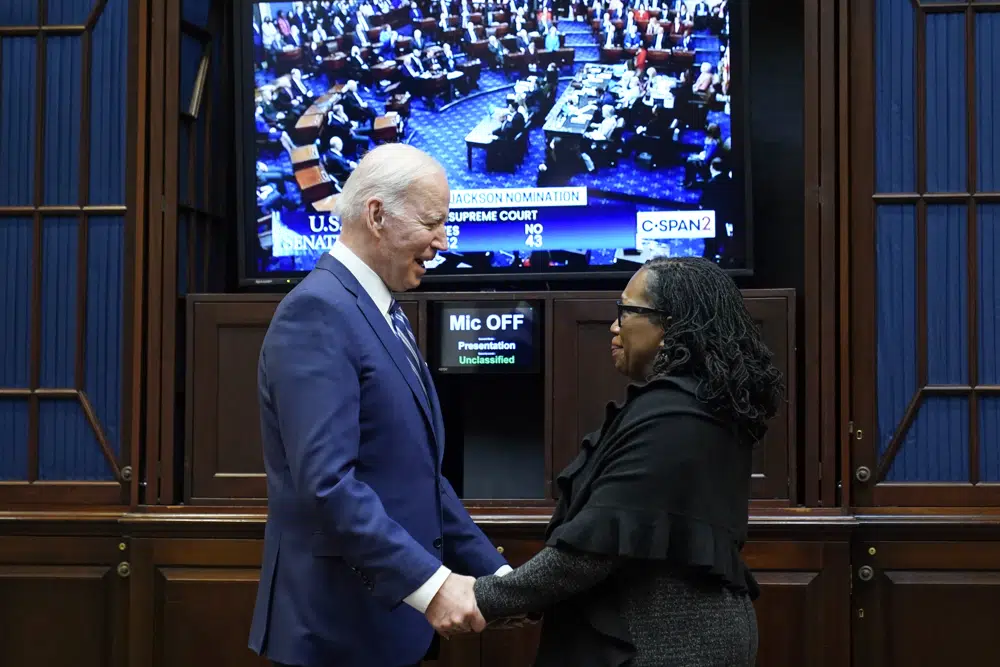
For the Biden White House, a quartet of four female judges in Colorado encapsulates its mission when it comes to the federal judiciary. Charlotte Sweeney is the first openly LGBT woman to serve on the federal bench west of the Mississippi River and has a background in workers’ rights. Nina Wang, an immigrant from Taiwan, is the first magistrate judge in the state to be elevated to a federal district seat. Regina Rodriguez, who is Latina and Asian American, served in a U.S. attorney’s office. Veronica Rossman, who came from the former Soviet Union with her family as refugees, is the first former federal public defender to be a judge on the 10th U.S. Circuit Court of Appeals. With these four women, who were confirmed during the first two years of President Joe Biden’s term, there is a breadth of personal and professional diversity that the White House and Democratic senators have promoted in their push to transform the judiciary. “The nominations send a powerful message to the legal community that this kind of public service is open to a lot of people it wasn’t open to before,” Ron Klain, the White House chief of staff, told The Associated Press. “What it says to the public at large is that if you wind up in federal court for whatever reason, you’re much more likely to have a judge who understands where you came from, who you are, and what you’ve been through.” Klain said that “having a more diverse federal bench in every single respect shows more respect for the American people.” The White House and Democratic senators are closing out the first two years of Biden’s presidency having installed more federal judges than did Biden’s two immediate predecessors. The rapid clip reflects a zeal to offset Donald Trump’s legacy of stacking the judiciary with young conservatives who often lacked in racial diversity. So far, 97 lifetime federal judges have been confirmed under Biden, a figure that outpaces both Trump (85) and Barack Obama (62) at this point in their presidencies, according to data from the White House and the office of Senate Majority Leader Chuck Schumer. D-N.Y. The 97 from the Biden presidency includes Supreme Court Justice Ketanji Brown Jackson, that court’s first Black woman, as well as 28 circuit court judges and 68 district court judges. Three out of every four judges tapped by Biden and confirmed by the Senate in the past two years were women. About two-thirds were people of color. The Biden list includes 11 Black women to the powerful circuit courts, more than those installed under all previous presidents combined. There were also 11 former public defenders named to the circuit courts, also more than all of Biden’s predecessors combined. “It’s a story of writing a new chapter for the federal judiciary, with truly extraordinary folks representing the broadest possible types of diversity,” said Paige Herwig, a senior White House counsel. The White House prioritized judicial nominations from the start, with Biden transition officials soliciting names of potential picks from Democratic senators in late 2020. Sen. Dick Durbin, D-Ill., chairman of the Senate Judiciary Committee, swiftly moved nominees through hearings and Schumer set aside floor time for votes. Particular focus was placed on nominees for the appellate courts, where the vast majority of federal cases end, and those coming from states with two Democratic senators, who could find easier consensus in a process where there’s still significant deference given to home-state officials. Democrats hope to speed up the tempo of confirmations next year, a goal more easily accomplished by a 51-49 Senate that will give them a slim majority on committees. In the past two years, votes on some of Biden’s more contested judicial nominees would deadlock in committee votes, requiring more procedural steps that ate up valuable Senate floor time. Republicans had also picked up the confirmation pace considerably in Trump’s final two years in office, after GOP senators put in place a rule change — now being used by Democrats — that significantly shortened the time required to process district court nominees. Schumer said he also hopes to install more judges in appeals courts that shifted rightward under Trump, an effort that the majority leader described as rebalancing those courts. “Trump loaded up the bench with hard right ‘MAGA’ type judges who are not only out of step with the American people, they were even out of step with the Republican Party,” Schumer said in an interview, using shorthand for Trump’s 2016 campaign slogan, “Make America Great Again.” Schumer added: “We had a mission, it’s not just a predilection. It was a mission to try and redress that balance.” Despite their limited power to actually derail Biden’s judicial picks, some Republicans have fought ferociously against many of them, arguing that their views were out of the legal mainstream despite Democratic arguments otherwise. The precarious 50-50 Senate, where Schumer’s plans were often thwarted by ailments or absences, meant several Biden nominees languished for months and were never confirmed before the Senate wrapped up its work this year. Democrats also say certain judicial nominees, particularly women of color, were unfairly targeted by their GOP critics, leading to tense fights in the Judiciary Committee. “The Republicans have just got a problem with this. Not all of them, some do,” Durbin said in an interview. “And when you call them out on it … ‘Why is it consistently women of color that are the object of your wrath?’ and they can’t answer.” Sen. Josh Hawley, R-Mo., a committee member, said Biden’s picks were “very, very left, but unapologetically so.” He said Durbin’s assertions about Republicans were “absurd.” “I think the president made a commitment to his base that he was going to put people who shared a very left-wing worldview, who are generally quite critical of, for instance, the criminal justice system, think that it is systemically racist,” Hawley said. Despite the strengthened Democratic majority, the White House could nonetheless confront some challenges when it comes to nominating and confirming judges over the next two
Senate passes defense bill rescinding COVID vaccine mandate
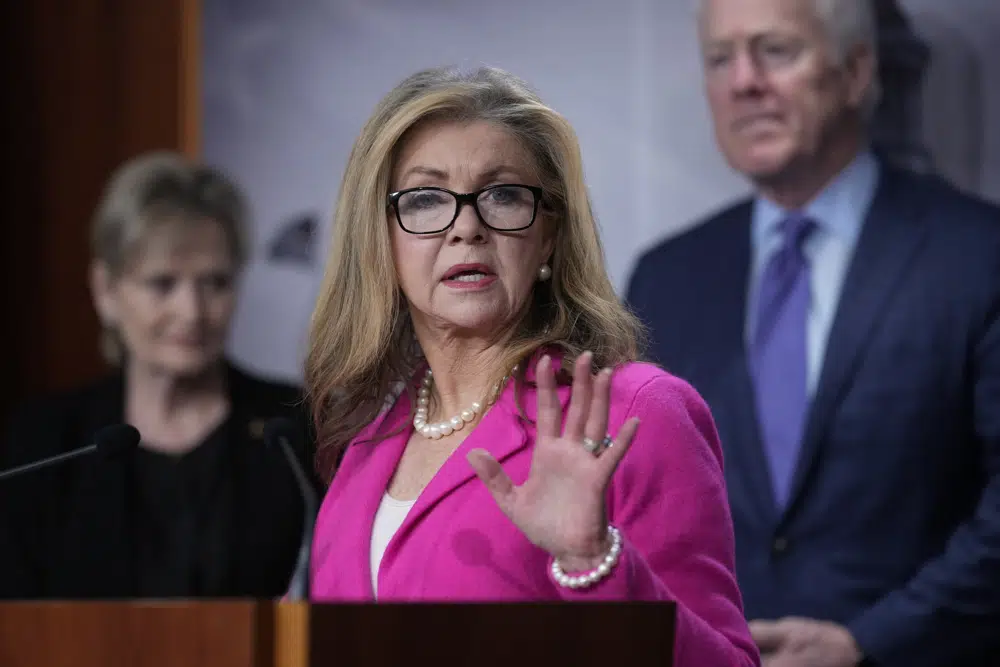
A bill to rescind the COVID-19 vaccine mandate for members of the U.S. military and provide nearly $858 billion for national defense passed the Senate on Thursday and now goes to President Joe Biden to be signed into law. The bill provides for about $45 billion more for defense programs than Biden requested and roughly 10% more than last year’s bill as lawmakers look to account for inflation and boost the nation’s military competitiveness with China and Russia. It includes a 4.6% pay raise for servicemembers and the Defense Department’s civilian workforce. The Senate passed the defense policy bill by a vote of 83-11. The measure also received broad bipartisan support in the House last week. To win GOP support for the 4,408-page bill, Democrats agreed to Republican demands to scrap the requirement for service members to get a COVID-19 vaccination. The bill directs Defense Secretary Lloyd Austin to rescind his August 2021 memorandum imposing the mandate. Before approving the measure, the Senate voted down a couple of efforts to amend it, including a proposal from Sen. Joe Manchin, D-W.Va., to speed the permitting process for energy projects. The effort had drawn fierce opposition from some environmental advocacy groups who worried it would accelerate fossil fuel projects such as gas pipelines and limit the public’s input on such projects. Manchin, who chairs the Senate Energy Committee, secured a commitment from Biden and Democratic leaders last summer to support the permitting package in return for his support of a landmark law to curb climate change. Machin’s legislation sets deadlines for completion of National Environmental Policy Act reviews for major energy and natural resource projects. It would require courts to consider litigation involving energy project permits on an expedited basis. It also directs federal agencies to permit the completion of a natural gas pipeline in his home state and Virginia “without further administrative or judicial delay or impediment.” “We’re on the verge of doing something unbelievable, but let me tell you, most of it will be for naught. Because without permitting reform, the United States of America is more litigious than any nation on earth,” Manchin told colleagues. Biden voiced his support for Manchin’s legislation a few hours before Thursday’s vote. He said far too many projects face delays and described Manchin’s amendment “as a way to cut Americans’ energy bills, promote U.S. energy security, and boost our ability to get energy projects built and connected to the grid.“ Not only did some environmental advocacy groups bash Manchin’s proposal, but so did many Republicans. Minority Leader Mitch McConnell, R-Ky., said it didn’t go far enough, calling it “reform in name only.” The amendment fell short of the 60 votes needed for passage, 47-47. An amendment from Sens. Ron Johnson, R-Wis., and Ted Cruz, R-Texas, also went down to defeat. It would have allowed for the reinstatement of those service members discharged for failing to obey an order to receive the COVID-19 vaccine and compensate them for any pay and benefits lost as a result of the separation. “People serving our military are the finest among us. Over 8,000 were terminated because they refused to get this experimental vaccine, and so I’m urging all of my colleagues to support Senator Cruz’s and my amendment,” Johnson said. But opponents worried about the precedent of rewarding members of the military who disobeyed an order. Rhode Island Sen. Jack Reed, the Democratic chairman of the Senate Armed Services Committee, said orders are not suggestions; they are commands. “What message do we send if we pass this bill? It is a very dangerous one,” Reed said. “What we’re telling soldiers is, ‘if you disagree, don’t follow the order, and then just lobby Congress, and they’ll come along, and they’ll restore your rank, or restore your benefits, or restore everything.’” The amendment failed, with 40 senators supporting it and 54 opposing it. The defense bill sets policy and provides a roadmap for future investments. Lawmakers will have to follow up with spending bills to bring many provisions to reality. It’s one of the final bills Congress is expected to approve before adjourning, so lawmakers were eager to attach their top priorities to it. The directive to rescind the vaccine mandate for service members proved to be among the most controversial provisions, but Democrats agreed to it to allow the bill to advance. As of early this month, about 99% of the active-duty troops in the Navy, Air Force, and Marine Corps had been vaccinated, and 98% of the Army. Service members who are not vaccinated are not allowed to deploy, particularly sailors or Marines on ships. There may be a few exceptions to that, based on religious or other exemptions and the duties of the service member. The vaccination numbers for the Guard and Reserve are lower, but generally, all are more than 90%. Republished with the permission of The Associated Press.
Democrats kept the Senate this year, but 2024 may be harder
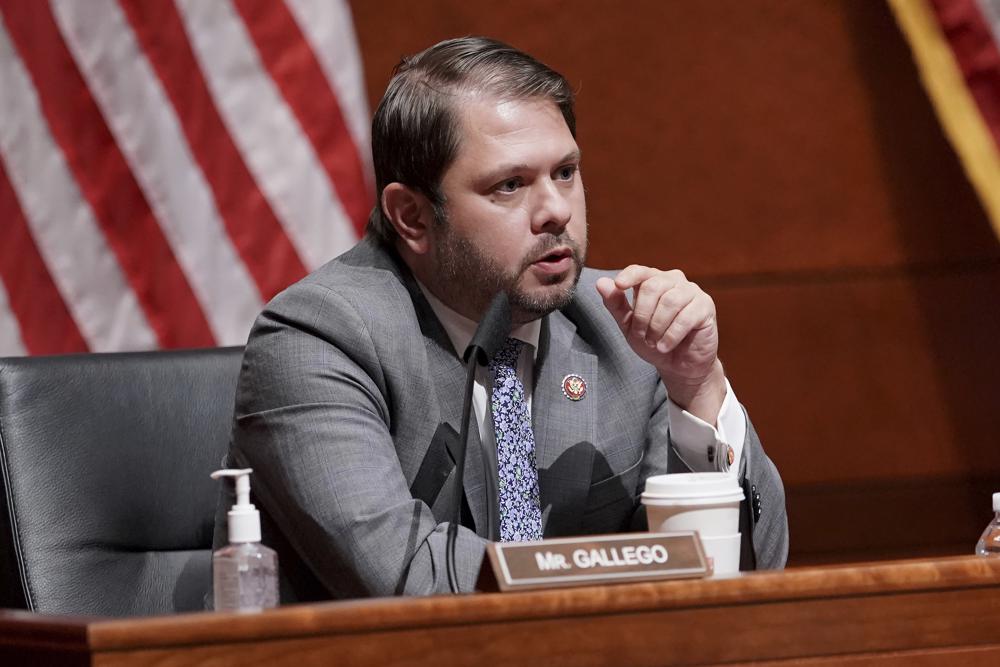
Democrats celebrating a successful effort to keep control of the U.S. Senate this year will soon confront a 2024 campaign that could prove more challenging. The party enters the next cycle defending 23 seats, including two held by independents who caucus with Democrats. That’s compared with just 10 seats that Republicans hope to keep in their column. Adding to the potential hurdles is that some 2024 contests are in states that have become increasingly hostile to Democrats, including Montana, Ohio, and West Virginia. Other Democratic-held seats are in some of the same hotly contested states that were at the center of this year’s midterms, such as Pennsylvania, Arizona, and Nevada. And while Democrats carried each of those races, they did so at great cost and with sometimes narrow margins. In Nevada, for instance, Democratic incumbent Sen. Catherine Cortez Masto won by less than 1 percentage point, or about 9,000 votes. For now, both parties insist they’re laser-focused on coming out on top in the December 6 Senate runoff in Georgia. But Democrats who are on the ballot in 2024 know that they could face fierce headwinds and are studying the results of this year’s election when the party outperformed expectations. For Nevada Sen. Jacky Rosen, a Democrat facing her first reelection campaign, that means staying focused on kitchen table issues and touting legislation like the infrastructure law and gun violence legislation signed by President Joe Biden. “We know that races are always close,” Rosen said in an interview. “We never take anything for granted.” The dynamics of the next Senate campaign could be influenced by a variety of outside factors, particularly the presidential election and the attention it generates. Biden, who turned 80 this month, has said his “intention” is to run for reelection and that he will make a final decision early next year. Former President Donald Trump has already announced a third White House bid, and multiple other Republicans are lining up to launch campaigns. The eventual nominee in each party could have a profound impact on down-ballot races, including those for Senate. But perhaps the biggest question for Senate Democrats seeking reelection will be who Republicans nominate as their opponents. The GOP lost several Senate elections this year, including those in Arizona, Pennsylvania, and Nevada, after Trump-backed candidates struggled to raise money and connect with a broader, more moderate range of voters during the general election. In Nevada, the Republican field to challenge Rosen has not begun to shape up but is expected to attract several contenders. One name receiving attention is Sam Brown, a former U.S. Army captain who was awarded a Purple Heart after being severely wounded in Afghanistan. Brown ran for Senate this year and put up a strong challenge in the Republican primary before losing to Adam Laxalt, who lost in the general election to Cortez Masto. Richard Hernandez, who was Brown’s campaign adviser, said, “He has committed to his supporters that he will never stop fighting for their issues, but he has not made any decisions as to whether that involves a future run for office.” Also in the southwest, Arizona Sen. Kyrsten Sinema, a centrist Democrat, will be up for reelection. The race, like other recent statewide contests in Arizona, is expected to be very competitive. But Sinema is likely to first face a well-funded primary challenger after angering much of the Democratic base by blocking or watering down progressive priorities like a minimum wage increase or Biden’s big social spending initiatives. She has not said whether she plans to run for reelection. Sinema’s most prominent potential primary challenger is U.S. Rep. Ruben Gallego, who has a long history of feuding with Sinema. Gallego has not announced his plans for 2024 but has made it no secret that he’s thinking about challenging Sinema. He even raised money on the prospect he might oppose Sinema. An independent expenditure group is also raising money, saying it will support grassroots organizations committed to defeating Sinema in a Democratic primary. Republicans hope a bruising Democratic primary might give them an opening to win the seat after losing Senate races in Arizona in three consecutive elections. Sinema is among a trio of moderate Senate Democrats who have sometimes used their leverage in an evenly divided chamber to block or blunt some of Biden’s plans and nominees. They will also be among the party’s most vulnerable incumbents in 2024. The other two senators, Joe Manchin of West Virginia and Jon Tester of Montana, will be running as Democrats in states that Trump handily carried in 2020. Manchin has already drawn a GOP challenger in U.S. Rep. Alex Mooney, who declared a week after winning reelection that he was setting his sights on higher office. Manchin has not yet said whether he’ll run for reelection. Republicans see Tester, a three-term senator, as vulnerable, and the opportunity to run for the seat could draw a fierce primary contest between former Interior Secretary Ryan Zinke and Rep. Matt Rosendale. Zinke, who won a House seat in this year’s midterm elections, said he will decide whether to run next year, and Rosendale declined to answer. Tester has not announced if he will seek another term but has said he anticipates 2024 will be just as tough as his last race in 2018, when he beat Rosendale in a close contest. In Pennsylvania, Democratic U.S. Sen. Bob Casey has not said whether he intends to run for a fourth term. Casey easily won reelection in 2018, but Pennsylvania has been competitive for Republicans, including in this year’s Senate race won by Democrat John Fetterman. One potential Republican challenger whose name has been floated in Pennsylvania is former hedge fund CEO David McCormick, who narrowly lost the Republican primary in this year’s race to celebrity heart surgeon Dr. Mehmet Oz. McCormick advisers declined to comment on that prospect. Conservative activist Kathy Barnette, who finished a close third in the Republican primary, didn’t respond to messages about whether she’s considering a 2024 campaign. Wisconsin, which saw Republican Sen. Ron Johnson narrowly win reelection this year, is also expected to have
Britt calls incoming freshman of GOP Senators “the kind of fresh blood needed”

Senator-elect Katie Britt released a statement praising the group of freshmen Republican Senators entering the U.S. Senate following the Senate Republican Caucus’s meeting and leadership elections on Wednesday. “Our incoming freshman class of Republican senators represents the kind of fresh blood needed to help get our country back on the right track, and I’m going to bring that perspective to our caucus every single day,” Britt said in a statement. “I believe that having this spirited internal debate on how we can best fight to put American families first and defend our conservative values is good for our party and good for our country. Now, it’s time to move forward together as a united front determined to do everything in our power to stop President [Joe] Biden and his congressional allies from crushing hardworking Alabamians and Americans even further. The first step, and where our full focus must be, is helping Herschel Walker win in Georgia.” The GOP Senate Caucus voted during the meeting to keep Sen. Mitch McConnell as the Senate Minority Leader. McConnell beat back a challenge from Sen. Rick Scott, who headed the National Republican Senatorial Committee (NRSC) during the recent midterm elections. Senate Republicans are still shocked by their poor performance in the midterm elections that many pollsters had reported would go their way. The GOP lost close Senate elections in Pennsylvania, Arizona, and Nevada that would have flipped control of the Senate to Republicans. Scott criticized McConnell for failure to articulate a Republican message prior to the election. Sens. Tom Cotton and John Barrasso nominated McConnell, while Sen. Ron Johnson nominated Scott. “Every one of our candidates knew what they were for, expressed it quite clearly,” McConnell said. “It’s pretty obvious, and all of you have been writing about it, what happened. We underperformed among independents and moderates because their impression of many of the people in our party in leadership roles is that they’re involved in chaos, negativity, excessive attacks, and it frightened independent and moderate Republican voters.” Some observers believed that McConnell was making a veiled reference to former President Donald Trump, who announced Tuesday night that he was once again running for the Republican nomination for President in the 2024 election. Two McConnell-controlled outside groups, One Nation and the Republican Leadership fund spent $363 million on the midterm elections – significantly more than Scott and the NRSC. McConnell won reelection as Senate GOP leader 37 to 10, with one member abstaining. Republican nominee for Senate Herschel Walker is in a December 6 runoff election with incumbent Sen. Raphael Warnock. Despite the disappointing Senate performance, Republicans did win control of the U.S. House of Representatives. This means that Kevin McCarthy will likely replace Nancy Pelosi as Speaker of the House. Britt defeated Democratic nominee Dr. Will Boyd and Libertarian John Sophocleus a week ago in the general election on November 8 to win the open Senate seat. Clay Armentrout and Sean Ross are heading Britt’s transition team. To connect with the author of this story, or to comment, email brandonmreporter@gmail.com.
GOP nudges closer to House win; Senate could hinge on runoff

Republicans inched closer to a narrow House majority Wednesday, while control of the Senate hinged on a few tight races in a midterm election that defied expectations of sweeping conservative victories driven by frustration over inflation and President Joe Biden’s leadership. Either party could secure a Senate majority with wins in both Nevada and Arizona — where the races were too early to call. But there was a strong possibility that, for the second time in two years, the Senate majority could come down to a runoff in Georgia next month, with Democratic Sen. Raphael Warnock and Herschel Walker failing to earn enough votes to win outright. In the House, Republicans on Wednesday night were within a dozen seats of the 218 needed to take control, while Democrats kept seats in districts from Virginia to Pennsylvania to Kansas, and many West Coast contests were still too early to call. In a particularly symbolic victory for the GOP, Sean Patrick Maloney of New York, the House Democratic campaign chief, lost his bid for a sixth term. Control of Congress will decide how the next two years of Biden’s term play out and whether he is able to achieve more of his agenda or will see it blocked by a new GOP majority. Republicans are likely to launch a spate of investigations into Biden, his family, and his administration if they take power, while a GOP takeover of the Senate would hobble the president’s ability to appoint judges. “Regardless of what the final tally of these elections show, and there’s still some counting going on, I’m prepared to work with my Republican colleagues,” Biden said Wednesday in his first public remarks since the polls closed. “The American people have made clear, I think, that they expect Republicans to be prepared to work with me as well.” Democrats did better than history suggested they would. The party in power almost always suffers losses in the president’s first midterm elections, though even if the GOP ultimately wins the House, it won’t be by a margin as large as during other midterm cycles. Democrats gained a net of 41 House seats under then-President Donald Trump in 2018, President Barack Obama saw the GOP gain 63 in 2010, and Republicans gained 54 seats during President Bill Clinton’s first midterm. A small majority in the House would pose a great challenge for the GOP and especially California Rep. Kevin McCarthy, who is in line to be House speaker and would have little room for error in navigating a chamber of members eager to leverage their votes to advance their own agenda. In the fight for Senate control, Pennsylvania was a bright spot for Democrats. Lt. Gov. John Fetterman, who suffered a stroke five months ago, flipped a Republican-controlled Senate seat, topping Trump-endorsed Republican Dr. Mehmet Oz. Georgia, meanwhile, was set for yet another runoff on December 6. In 2021, Warnock used a runoff to win his seat, as did Democratic Sen. Jon Ossoff — which gave Democrats control of the Senate. Both Warnock and Walker were already fundraising off the race, stretching into a second round. Both Republican and Democratic incumbents maintained key Senate seats. In Wisconsin, Republican Sen. Ron Johnson prevailed over Democratic Lt. Gov. Mandela Barnes, while in New Hampshire, Democratic Sen. Maggie Hassan beat Don Bolduc, a retired Army general who had initially promoted Trump’s lies about the 2020 election but tried to shift away those views closer to Election Day. AP VoteCast, a broad survey of the national electorate, showed that high inflation and concerns about the fragility of democracy were heavily influencing voters. Half of voters said inflation factored significantly, with groceries, gasoline, housing, and other costs that have shot up in the past year. Slightly fewer — 44% — said the future of democracy was their primary consideration. Biden didn’t entirely shoulder the blame for inflation, with close to half of voters saying the higher-than-usual prices were more because of factors outside of his control. And despite the president bearing criticism from a pessimistic electorate, some of those voters backed Democratic candidates. Democrats counted on a midterm boost from the Supreme Court’s decision to gut abortion rights, which they thought might energize their voters, and the bet paid off. In four states where the issue was on the ballot, voters backed abortion rights. VoteCast showed that 7 in 10 national voters said overturning the 1973 Roe v. Wade decision was an important factor in their midterm decisions. It also showed the reversal was broadly unpopular. And roughly 6 in 10 said they favor a law guaranteeing access to legal abortion nationwide. In the first national election since the January 6 insurrection, some who participated in or were in the vicinity of the attack on the U.S. Capitol were poised to win elected office. One of those Republican candidates, Derrick Van Orden in Wisconsin — who was outside the Capitol during the deadly riot — won a House seat. Another, J.R. Majewski, lost to Ohio Democratic Rep. Marcy Kaptur. Republicans had sought to make inroads in liberal New England but were shut out of House contests, with one Maine race still set to be determined by ranked-choice voting. Governors’ races took on outsized significance this year, particularly in battleground states that could help decide the results of the 2024 presidential election. Democrats held on to governors’ mansions in Wisconsin, Michigan, and Pennsylvania, defeating Republicans who promoted Trump’s lies about a stolen 2020 election. Republicans held on to governors’ mansions in Florida, Texas, and Georgia, another battleground state Biden narrowly won two years ago. Trump found some success as well. He lifted Republican Senate candidates to victory in Ohio and North Carolina. JD Vance, the bestselling author of “Hillbilly Elegy,” defeated 10-term congressman Tim Ryan, while Rep. Ted Budd beat Cheri Beasley, the former chief justice of the state Supreme Court. Trump had endorsed more than 300 candidates across the country, hoping the night would end in a red wave he could ride to the 2024 Republican presidential nomination. After summoning reporters
GOP’s election-year standing with independents at risk

Sarah Motiff has voted for Sen. Ron Johnson every time his name appeared on the ballot, starting in 2010 when the Wisconsin Republican was first elected as part of the tea party wave. Fond of his tough views on spending, she began the year planning to support his reelection again. She became skeptical this summer as the House committee investigating the January 6, 2021, Capitol insurrection reported his office discussed giving then-Vice President Mike Pence certificates with fake presidential electors for Donald Trump from Wisconsin and Michigan, part of a broader push to overturn Joe Biden’s victory. Johnson has downplayed the effort, and the certificates were never given to Pence, but Motiff, a political independent, wasn’t convinced. “I’m not going to lie when I say I’ve had some concerns about some of the reports that have come out,” the 52-year-old nonpartisan city councilwoman from Columbus, Wisconsin, said. “It just put a bad taste in my mouth.” Nudged further by the June U.S. Supreme Court decision invalidating a woman’s constitutional right to an abortion, Motiff is opposing Johnson and supports his Democratic challenger, Lt. Gov. Mandela Barnes, in one of the most fiercely-contested Senate races this year. “Which was really a hard decision for me because I do think he’s done good things in the past,” Motiff said of Johnson. “But this is pretty damaging.” Motiff’s evolution represents the challenge for Republicans emerging from a tumultuous summer, defined by the court decision, high-profile hearings on former President Donald Trump’s actions during the insurrection, and intensifying legal scrutiny of his handling of classified information and efforts to overturn the election. Now, a midterm campaign that the GOP hoped would be a referendum on President Joe Biden and the economy is at risk of becoming a comparison of the two parties, putting Republicans in an unexpectedly defensive position. In politically-divided Wisconsin, where recent elections have been decided by a few thousand votes, the outcome could hinge on self-described independent voters like Motiff. “Having former President Trump so prominently in the news in so many ways makes it easier for Democrats to frame the midterm as a choice between two competing futures as opposed to a referendum on the Democrat governance,” said Republican pollster Whit Ayres. “That’s hurting Republicans. It’s distracting from the referendum message and allowing more of a focus on a choice of two different parties.” That tension is playing out in Columbia County, Wisconsin, a constellation of tidy small towns surrounded by rolling dairy farm country, all within commuting distance of Madison. Statewide, top-of-the-ticket candidates have won by barely a percentage point in the past three elections. Trump won Columbia County by a little more than 500 votes out of 33,000 cast in 2020. In interviews with more than a dozen independent voters here over two days last week, many were rethinking their support of the GOP this fall. Steve Gray, a self-described Republican-leaning independent “but never a Trump fan,” opposed the June court decision because he backs abortion rights. But the 61-year-old school maintenance manager also resented what he saw as an unwelcome political power play by out-of-power Republicans. “Trump stacked the Supreme Court. We all knew he wanted to overturn Roe,” said Gray, of small-town Rio, where Trump won by two votes in 2020. “That decision was a partisan hand grenade Trump threw into this election.” The court decision “upended the physics of midterm elections,” said Jesse Stinebring, a pollster advising several Democratic campaigns. It gave voters the rare opportunity to judge a policy advance backed by the minority party, distracting them from a pure up-or-down vote on majority Democrats, he said. “The backlash from a political perspective isn’t directed at the traditional party in power, but is actually reframed in terms of this Republican control of the Supreme Court,” Stinebring said. The decision made Dilaine Noel’s vote automatic. The 29-year-old data analytics director for a Madison-area business said she had never affiliated with either party. Despite her grievances about Democrats’ warring moderate and liberal wings, her support for abortion rights gave her no choice than to vote for the party’s candidates this fall. “By default, I have to move in that direction,” said Noel, from small-town Poynette in the Wisconsin River valley. “I’m being forced to.” Mary Percifield is a lifelong independent voter who says the abortion decision motivated her to vote Democratic because she worries the court might overturn other rights. “A right has been taken away from us,” the 68-year-old customer service representative from Pardeeville, said. “I question if a woman’s right to vote will be taken away. A woman’s right for birth control.” Independent voters who lean neither Democrat nor Republican nationally preferred Biden over Trump, 52% to 37% in 2020, and preferred Democrats over Republicans in U.S. House races by a similar margin in the 2018 midterms, according to AP VoteCast. Independents who lean neither Democrat nor Republican made up 5% of the 2020 electorate and 12% in 2018. Independents had moved toward Republicans by early this year, seeking answers on the economy, said Republican pollster David Winston, a senior adviser to House Republican Leader Kevin McCarthy. But they have drifted back toward Democrats as efforts by GOP leaders to focus on the economy have clashed with Republican attacks on the Justice Department and Trump’s continuing complaints about the 2020 election. “Everything is suddenly back in the context of Trump,” Winston said in light of Trump’s prominent endorsement of Senate candidates and protests of the federal investigation into classified documents recovered from his Florida home. “It’s not that Democrats are gaining. It’s that Republicans over the summer were off talking about a variety of things. And independents are thinking, ‘If you’re not talking specifically about the problems that I’m concerned about, why am I listening?’” Republicans remain optimistic about their chances in November, particularly about netting the handful of seats they need to regain the U.S. House majority. Inflation remains high and, despite a recent uptick, approval of Biden is still low for a party hoping to maintain its hold on power. The
Senate panel subpoenas federal prisons director Michael Carvajal to testify
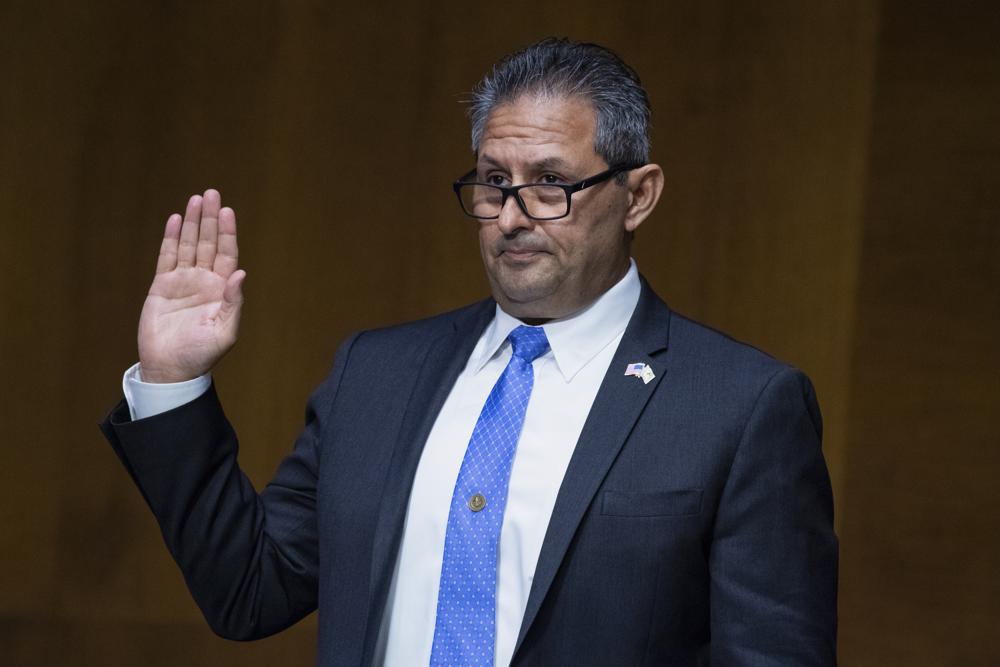
The outgoing director of the Bureau of Prisons has been subpoenaed to testify before a Senate committee examining abuse and corruption in the beleaguered federal agency. Michael Carvajal was served a subpoena to appear at a hearing later this month. The subpoena was announced Monday by Sen. Jon Ossoff, the chairman of the U.S. Senate Permanent Subcommittee on Investigations. The committee’s subpoena follows an investigation by The Associated Press exposing systemic issues in the agency, including widespread criminal activity by staff and rampant sexual assault at a women’s prison in California. The Justice Department announced last week it was replacing Carvajal with Colette Peters, the director of Oregon’s prison system. That announcement came about seven months after Carvajal submitted his resignation amid mounting pressure from Congress after the AP’s investigation. Though Carvajal is a holdover from the Trump administration, the issuance of the subpoena to compel him to appear before the Senate panel is rare, in part because Democrats have control of both the Senate and the White House. The decision to issue a subpoena exemplifies the lengths members of Congress and congressional investigators will bring additional oversight to the embattled agency that has long skirted intense public attention. Ossoff and Sen. Ron Johnson, the committee’s top Republican, said the subpoena was issued after the Justice Department refused to make Carvajal available to testify voluntarily. In a statement, the Justice Department said it was disappointed that Ossoff issued the subpoena and said officials had cooperated extensively with the subcommittee’s work and had offered to provide a lower-level official in Carvajal’s place. The department said it was “committed to focusing” Carvajal’s last days on preparing for Peters to take over and said having him prepare for a congressional hearing days before Peters takes control of the agency would be distracting. “As the Department has previously explained to the Subcommittee, we believe that preparation for testimony just five business days before this critical leadership transition may distract Director Carvajal’s time and attention away from this goal,” the Justice Department’s statement said. “Nevertheless, we continue to work with the Subcommittee to find an agreeable solution.” Carvajal has been at the center of myriad crises within the federal prison system. His tumultuous tenure included the rampant spread of coronavirus inside federal prisons, a failed response to the pandemic, dozens of escapes, deaths, and critically low staffing levels that have hampered responses to emergencies. The committee’s investigation has included an examination of abuse, misconduct, and corruption both at the U.S. Penitentiary in Atlanta — Osoff’s home state — and more broadly in the federal prison system. “To date, the Subcommittee has been provided no legal basis that would prevent Director Carvajal’s testimony before the Subcommittee, and the Department of Justice continues to refuse to make him available to testify,” Ossoff and Johnson said in a joint statement. The Biden administration had faced increasing pressure to remove Carvajal and do more to fix the federal prison system after President Joe Biden’s campaign promise to push criminal justice reforms. The Bureau of Prisons is one of the largest Justice Department agencies, budgeted for around 37,500 employees and over 150,000 federal prisoners. It has an annual budget of around $8 billion. Peters is set to take over the agency in August. Republished with the permission of The Associated Press.
Tommy Tuberville continues push to fully reopen U.S. Capitol, Senate to visitors
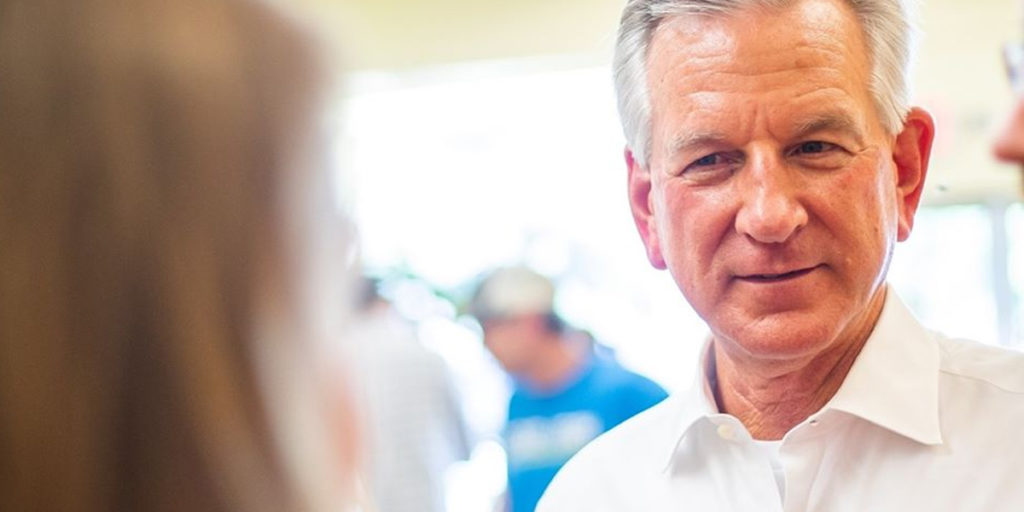
U.S. Senator Tommy Tuberville joined U.S. Senator Bill Hagerty in introducing a resolution supporting the full reopening of the U.S. Capitol and Senate Office Buildings to the American public. Tuberville has been vocal on returning the U.S. Capitol and Senate Office Buildings to pre-COVID visitation policies. The Capitol and Senate office buildings have remained largely closed to the public for nearly two years. This closure has restricted lawmakers’ ability to welcome constituents to their offices and arrange for Capitol tours. The resolution aims to recognize the importance of reopening the U.S. Capitol and Senate office buildings and support returning to the pre-COVID public visitation policies for areas within Senate jurisdiction. Senator Tuberville expressed the need to open the Capitol so that the public can watch the democratic process. “Two years ago, it was reasonable to close public access in the name of public health. But now, it is no longer justifiable to restrict the public’s access to Capitol Hill, and we must accept the reality that we will be living with COVID for the foreseeable future,” Tuberville commented. “It should not be the case that only Members of Congress, their staff, and a few select people be the only ones who can access the Capitol. Americans deserve to visit their country’s beacon of democracy.” Hagerty argued that the Capitol needs to be reopened because the rest of the U.S. has reopened. “It is long past time for the Senate to re-open its doors to those who sent us here to represent them—the American people,” stated Hagerty. “Thanks to Operation Warp Speed, vaccines have been available for over a year for those who want them, and Americans from coast to coast have learned to live their lives safely despite the pandemic. From stores to venues and most workplaces and schools, the rest of the United States has re-opened, and it’s time for the Senate to do the same.” Other senators who support the resolution include Senators John Thune (R-SD), Jerry Moran (R-KS), Marco Rubio (R-FL), Rick Scott (R-FL), James Inhofe (R-OK), James Lankford (R-OK), Mike Braun (R-IN), Thom Tillis (R-NC), Kevin Cramer (R-ND), Roger Wicker (R-MS), Cindy Hyde-Smith (R-MS), John Cornyn (R-TX), Cynthia Lummis (R-WY), Rand Paul (R-KY), John Hoeven (R-ND), Chuck Grassley (R-IA), John Kennedy (R-LA), Josh Hawley (R-MO), Ron Johnson (R-WI), John Boozman (R-AR), Roger Marshall (R-KS), Marsha Blackburn (R-TN), Mike Crapo (R-ID), Jim Risch (R-ID), and John Barrasso (R-WY).
GOP seeks to convince vaccine skeptics within its own ranks

When a group of Republican doctors in Congress released a video selling the safety of the coronavirus vaccine, their message wasn’t explicitly aimed at their conservative constituents but nonetheless had a clear political bent. Getting the shot is the best way to “end the government’s restrictions on our freedoms,” Rep. Larry Bucshon, an Indiana Republican and heart surgeon who donned a white lab coat and stethoscope when he spoke into the camera. The public service announcement was the latest effort from GOP leaders to shrink the vaccination gap between their party and Democrats. With vaccination rates lagging in red states, Republican leaders have stepped up efforts to persuade their supporters to get the shot, at times combating misinformation spread by some of their own. “Medicine and science and illness, that should not be political,” said Dr. Brad Wenstrup, a Republican congressman from Ohio and a podiatrist who has personally administered coronavirus vaccine shots both as an Army Reserve officer and as an ordinary doctor. “But it was an election year and it really was.” Wenstrup said both parties helped foment some skepticism, though increasingly vocal moves by other Republicans amount to acknowledgment that GOP vaccine hesitancy is a growing public health problem — and potentially a political one. “Things could easily spiral quickly if we don’t solve this red-state-blue-state issue,” said Kavita Patel, a physician, and health policy expert who worked in the Obama administration. Patel said life could return to normal in certain parts of the country while the pandemic continues to rage elsewhere — potentially even disrupting in-person voting in primaries ahead of next year’s midterm elections. “We could be sitting here in the winter-fall with an entirely different, scary version of the pandemic,” she said. “One driven by a combination of variants and people who didn’t want to get vaccinated.” It’s easy to spot potential trouble spots now — and the political pattern. Mississippi has the nation’s lowest vaccination rate, with less than 31% of its population receiving at least one anti-coronavirus shot. And the four states that proceed it in national rankings, Alabama, Louisiana, Idaho, and Wyoming, according to an Associated Press analysis of Centers for Disease Control and Prevention data. They all vote reliably Republican in presidential races. By contrast, the five states with the highest vaccination rates backed Democrat Joe Biden in November. New Hampshire leads the nation with 60% of its population receiving at least one dose, followed by Massachusetts, Vermont, and Connecticut. The fifth highest vaccination rate state, Maine, awarded three of its electoral votes to Joe Biden and one to former President Donald Trump. Republicans are more likely than Democrats to say they definitely or probably won’t get vaccinated, 44% versus 17%, according to a poll released in February from The Associated Press-NORC Center for Public Affairs. Hence this week’s video, where Texas Republican Rep. Michael Burgess, an obstetrician who reassured viewers that rather than rush the vaccine out in an unsafe fashion, federal officials “cut bureaucratic red tape, not corners. And they got the job done in record time.” The video also credited the Trump administration’s Operation Warp Speed with bringing the vaccine so quickly. Amid polling showing that Republican men were among the most likely vaccine holdouts, Senate Minority Leader Mitch McConnell said earlier this month, “I can say as a Republican man, as soon as it was my turn, I took the vaccine.” Even Trump, who was vaccinated privately while in office, suggested on Fox News Channel that he’d be willing to record a video urging vaccination. Doing so would be an about-face for Trump, who as president long said he’d be willing to take a vaccine but also relished politicizing the pandemic. He suggested that lockdowns recommended by his administration’s experts were governmental overreach, mocked then-candidate Biden for wearing a mask in public too frequently, and used racist terms like “China virus.” Not all Republican lawmakers feel the same sense of urgency to raise the vaccination rate, meanwhile. “The science tells us that vaccines are 95% effective. So if you have a vaccine, quite honestly, what do you care if your neighbor has one or not?” Wisconsin Republican Sen. Ron Johnson said during a recent interview with a conservative radio host. “I mean, what is it to you?” Between 70% and 85% of the population would need to be immune before the coronavirus is effectively contained, experts believe. The GOP’s top leaders may also have political incentives to appeal to those resistant to getting the shot. Joe Brettell, a GOP strategist in deep red Texas, said he expects Republican governors looking to raise their profiles will seize on vaccine-related debates, such as opposing “vaccine passports” that may eventually be required for travel, even as they implore their state’s people to get immunized. “I think that’s where smart governors are going to start asserting themselves,” he said, noting that some already have. Ideology also isn’t the only factor in vaccine hesitancy. Experts are also tracking a generational gap, with younger Americans believing that, even if they get the virus, it is unlikely to seriously sicken or kill them. Republican West Virginia Gov. Jim Justice even is offering $100 saving bonds to residents ages 16 to 35 who get or have gotten the shot — trying to reverse a trend that saw his conservative state become an early leader in vaccination rates only to have it slow since. Republican pollster Frank Luntz, who has been researching how best to convince vaccine skeptics, says he believes the effort is most effective when it avoids politics, with people hearing about the benefits of immunization from doctors, not politicians. He said many skeptics are persuaded to get the shot because it benefits their friends and family, not just themselves. “If it’s politicized, they will not reach herd immunity,” said Luntz, who said that means giving credit to both sides, praising the Trump administration for Operation Warp Speed and the Biden White House’s efficient and effective distribution of vaccines. Luntz argued that public health officials should be targeting
By slimmest of margins, Senate takes up $1.9T relief bill
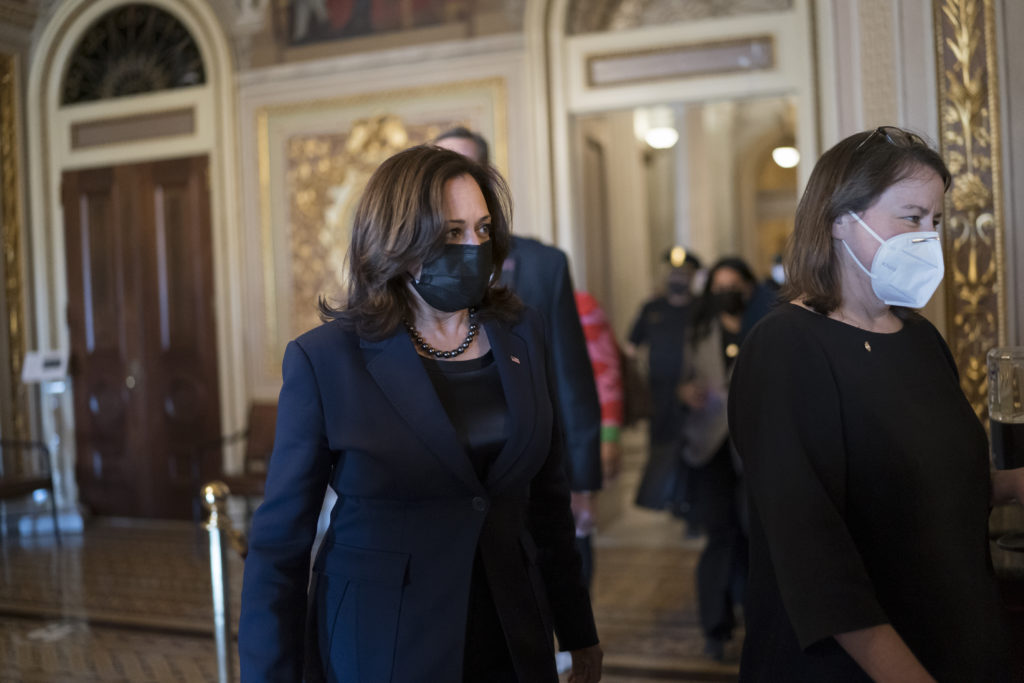
The Senate voted by the slimmest of margins Thursday to begin debating a $1.9 trillion COVID-19 relief bill after Democrats made eleventh-hour changes aimed at ensuring they could pull President Joe Biden’s top legislative priority through the precariously divided chamber. Democrats were hoping for Senate approval of the package before next week, in time for the House to sign off and get the measure to Biden quickly. They were encountering opposition from Republicans arguing that the measure’s massive price tag ignored promising signs that the pandemic and wounded economy were turning around. Democratic leaders made over a dozen late additions to their package, reflecting their need to cement unanimous support from all their senators — plus Vice President Kamala Harris’ tie-breaking vote — to succeed in the 50-50 chamber. It’s widely expected the Senate will approve the bill and the House will whisk it to Biden for his signature by mid-March, handing him a crucial early legislative victory. The Senate’s 51-50 vote to start debating the package, with Harris pushing Democrats over the top, underscored how they were navigating the package through Congress with virtually no margin for error. In the House, their majority is a scrawny 10 votes. The bill, aimed at battling the killer virus and nursing the staggering economy back to health, will provide direct payments of up to $1,400 to most Americans. There’s also money for COVID-19 vaccines and testing, aid to state and local governments, help for schools and the airline industry, tax breaks for lower-earners and families with children, and subsidies for health insurance. “We are not going to be timid in the face of a great challenge,” said Senate Majority Leader Chuck Schumer, D-N.Y. The new provisions offered items appealing to all manner of Democrats. Progressives got money boosting feeding programs, federal subsidies for health care for workers who lose jobs, tax-free student loans, and money for public broadcasting and consumer protection investigations. Moderates won funds for rural health care, language assuring minimum amounts of money for smaller states, and a prohibition on states receiving aid using the windfalls to cut taxes. And for everyone, there was money for infrastructure, cultural venues, start-up companies, and afterschool programs. Even with the late revisions, there was a good chance lawmakers will make yet another one and vote to pare back the bill’s $400 weekly emergency unemployment benefits to $300. That potential change could also extend those emergency payments another month, through September. It was described by aides and a lobbyist who spoke on condition of anonymity to describe internal conversations. Biden and Senate leaders had agreed Wednesday to retain the $400 weekly jobless payments included in the version of the relief bill the House approved Saturday. The reduction to $300 — which seemed likely to occur once the Senate begins a “vote-a-rama” on scores of amendments later this week — seemed to reflect a need to secure support from moderate Democrats. It also left House Speaker Nancy Pelosi, D-Calif., the task of keeping her chamber’s numerous progressives on board. Liberals already suffered a blow when their No. 1 priority — a federal minimum wage increase to $15 hourly that was included in the House package — was booted from the bill in the Senate for violating the chamber’s rules and for lack of moderates’ support. In another bargain that satisfied moderates, Biden and Senate Democrats agreed Wednesday to tighten eligibility for the direct checks to individuals. The new provision completely phases out the $1,400 payments for individuals earning at least $80,000 and couples making $160,000, well lower than the original ceilings. “My hope is they don’t screw around with it too much,” Rep. Jim McGovern, D-Mass., said of the Senate in an interview. “If they do there could be some problems.” Congress wants to send the bill to Biden before March 14, when a previous round of emergency benefits for people tossed out of work by the pandemic expires. As soon as the Senate began considering the bill, Sen. Ron Johnson, R-Wis., forced the chamber’s clerks to begin reading the entire 628-page measure aloud. He was the only senator at his desk for most of the night, appearing to follow along silently, one sheet at a time. As the night dragged on, he stood every so often and paced the perimeter of the chamber, reading as he walked. He said earlier that he was doing it to “shine the light on this abusive and obscene amount of money.” Schumer said Johnson would “accomplish little more than a few sore throats for the Senate clerks.” Asked about GOP delays, Biden told reporters he’s talked to Republican lawmakers and added, “We’re keeping everybody informed.” Biden met last month with Republican senators who offered a plan one-third the size of Democrats’ proposal, and there have been no signs since of serious talks. Johnson’s move, which would take many hours to complete, pointed to a larger GOP argument: Democrats were ramming an overpriced bill through that disregarded that growing numbers of vaccinations and other signs suggesting the country’s pandemic ordeal is beginning to ease. “Instead of heading into a dark tunnel, we’re accelerating out of it,” said Senate Minority Leader Mitch McConnell, R-Ky. The economic recovery began to stall late last year as the virus surged, causing a shortfall in hiring in recent months. Employers added just 49,000 jobs in January and cut 227,000 jobs in December. Economists estimate that the February employment report being released Friday will show gains of 175,000, not nearly enough to swiftly recover the nearly 10 million jobs lost to the pandemic-induced recession. The nonpartisan Congressional Budget Office estimates economic growth will exceed 4% this year without Biden’s rescue package. Republicans cite that as evidence the economy is pointed upward, but Democrats say a strong economic stimulus is still needed to prevent a relapse. “It’s a crisis that is still very much with us, and it is deadly, deadly serious,” Schumer said. Republished with the permission of the Associated Press.
