
Congress sends stopgap spending bill to Biden’s desk, averting shutdown for now
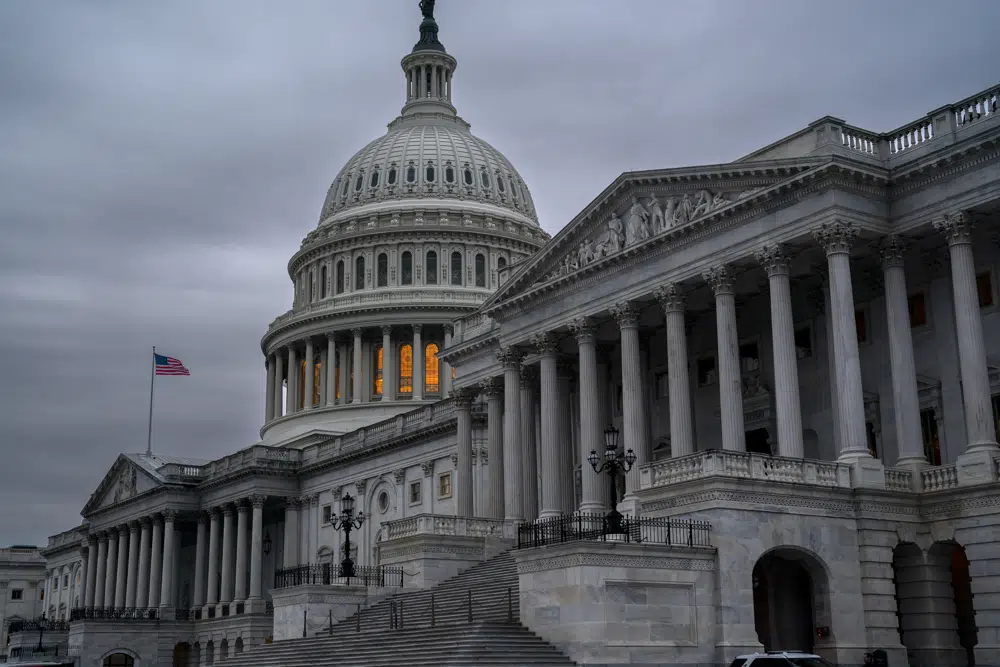
Jennifer Shutt, Alabama Reflector WASHINGTON — U.S. senators voted 87-11 to approve legislation Wednesday that would fund the government into next year, clearing the measure for President Joe Biden’s signature. The stopgap spending bill, sometimes called a continuing resolution or CR, would fund part of the government until mid-January and the rest of the programs within the annual appropriations process through early February. But many hurdles likely remain before a final deal is reached on full-year spending. Senate Appropriations Chair Patty Murray, a Washington state Democrat, said just before the bill passed that she’s already turned her attention to “what happens next.” “Because avoiding a shutdown is so very far from mission accomplished,” Murray said. “We have a lot of work to do after the dust settles and before the next shutdown deadline comes up. Now is not the time to pat ourselves on the back.” That conference process between the House and Senate, Murray said, will require “listening to the other side, making some tough decisions, leaving out partisan nonstarters, and writing a bill that can actually pass into law.” “That is going to make a difference for people we represent at home,” Murray said. The House voted 336-95 to approve the stopgap legislation on Tuesday, and Biden is expected to sign it before current funding expires Friday at midnight. House members abruptly canceled further votes and left D.C. for their Thanksgiving recess on Wednesday morning, after far-right members objected to advancing a different spending bill. More time needed The stopgap spending bill is intended to give the Republican House, Democratic Senate, and White House more time to reach agreement on the dozen full-year spending bills. Congress was supposed to finish its work by the start of the fiscal year on Oct. 1 but is relying on the stopgap spending bill to continue current funding levels until a deal is negotiated. Reaching agreement is a well-established practice for the four leaders of the Appropriations Committees — Senate Chair Murray; Senate ranking member Susan Collins, a Maine Republican; House Chair Kay Granger, a Texas Republican; and House ranking member Rosa DeLauro, a Connecticut Democrat. The four lawmakers have years of experience working out bipartisan deals on spending bills as well as other legislation, but they all often caution against politics or outside influences meddling in those negotiations. “Appropriators left to their own devices” can reach agreement, they often say. But they rarely are left to do their work. New faces in the talks Sign-off on the final dozen full-year bills also falls to the four congressional leaders. Senate Majority Leader Chuck Schumer, a New York Democrat, and Senate Minority Leader Mitch McConnell, a Kentucky Republican, have plenty of experience negotiating spending bills and other consequential legislation with each other. Joining them at the table this year will be newly elected House Speaker Mike Johnson, a Louisiana Republican, and House Democratic Leader Hakeem Jeffries, of New York. Both are new to forging agreement on the annual appropriations bills, which last year totaled about $1.7 trillion. Congress will have until Jan. 19 to come to find compromise on the Agriculture-FDA, Energy-Water, Military Construction-VA, and Transportation-HUD spending bills. They’ll have until Feb. 2 to reach a deal on the Commerce-Justice-Science, Defense, Financial Services, Homeland Security, Interior-Environment, Labor-HHS-Education, Legislative Branch, and State-Foreign Operations appropriations bills. The Senate drafted its dozen spending bills to the total spending levels in the debt limit law that Congress approved this summer. But House Republicans wrote their bills more than $100 billion below those levels and added in dozens of hot-button policy proposals that stand no chance of becoming law. Collins said Wednesday that she met with Johnson last week to talk about total funding levels and the supplemental spending package that Congress could pass in the coming weeks to fund Israel, Ukraine, Taiwan, and U.S. border security. Ultimately, she said, congressional leaders will be the ones who decide whether to stick to the spending levels in the debt limit law or go in a different direction. “To me, it should be guided by the numbers in the (Fiscal Responsibility Act), plus the side agreement that was worked out between Speaker McCarthy and President Biden,” Collins said, referring to the debt limit deal from earlier this year and former House Speaker Kevin McCarthy. In the meantime, she suggested, the Senate could take up a four-bill spending package that includes the Commerce-Justice-Science, Energy-Water, Defense, and Labor-HHS-Education spending bills. “That might be a good four-bill package that we could bring,” Collins said. A senior appropriator, speaking on background, said Wednesday that a proposal was circulating that would have the Senate turn to that exact four-bill spending package once it gets back from the Thanksgiving recess. The Senate has approved a three-bill package with a broadly bipartisan vote and the House has approved seven bills without Democrats’ support. House exit The House was set to vote on two additional spending bills this week, but Republican leaders announced late Wednesday morning the chamber was done until after the Thanksgiving break. The canceled votes came after the House was unable to adopt the rule that would have set up debate on the Commerce-Justice-Science spending bill, amid anger on the stopgap spending bill from far-right members of the party. Senate Republican Whip John Thune, of South Dakota, said Wednesday it will be difficult to work out agreements between the two chambers on the dozen appropriations bills before the new deadlines. “One of the biggest challenges, obviously, is there’s a difference in numbers between the House and the Senate,” Thune said, noting the two chambers will have to deal with that when they begin the conference process. “And I think we have to give that a chance,” Thune said. “You’ve got a new speaker over there. It seems like people want to cooperate a bit, so let’s see if they can move bills.” Alabama Reflector is part of States Newsroom, a network of news bureaus supported by grants and a coalition of donors as a
Barry Moore opposes $1.7 trillion spending bill passed by ‘lame duck’ Congress
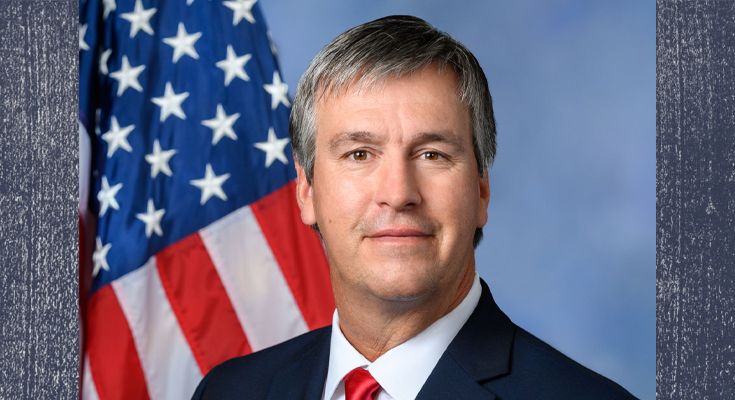
Republicans will take control of the U.S. House of Representatives in two weeks, but despite this, Congress is poised to vote on an omnibus spending bill this week – before Christmas. On Thursday, Congressman Barry Moore voted against a one-week continuing resolution (CR) that kept the government funded until Friday while a handful of lawmakers prepare a massive $1.7 trillion omnibus spending bill outside of the normal budgeting process. Moore has spoken out against a lame-duck session spending bill since August. “The one-week CR is nothing more than a surrender to Democrats that greases the skids for a wasteful $1.7 trillion spending bill next week – which we still have not seen yet,” said Moore. “Instead of rolling over and submitting to retiring and defeated Democrats, Republicans must insist that funding levels are extended past the lame duck session into the new Congress so that the American people can hold accountable the elected officials spending their tax dollars.” On September 30, a continuing resolution was passed, funding the government through December 16 and postponing the normal budgeting order until after the midterm elections. On Tuesday, Senate Appropriations Chairman Patrick Leahy said that he and Sen. Richard Shelby, the Vice Chair of the Appropriation Committee, have agreed on a framework that should lead to a bipartisan vote on an omnibus spending bill. “Today, Vice Chairman Shelby, Chair DeLauro, and I reached a bipartisan, bicameral framework that should allow us to finish an omnibus appropriations bill that can pass the House and Senate and be signed into law by the president,” Sen. Leahy said in a statement Tuesday. The omnibus spending bill will likely be voted on this week. However, some Republicans would like to do another CR to carry the government over to January, when Republicans will have control of the U.S. House of Representatives. Without some sort of a deal, there could be a partial government shutdown on December 24. A partial government shutdown at Christmas could adversely impact millions of American families – particularly given the inflation Americans have experienced this year. “The pain of inflation is real, and it is being felt across the federal government and by American families right now,” Leahy said. “We cannot delay our work any further, and a two-month continuing resolution does not provide any relief. I look forward to continuing to work with my friend, Vice Chairman Shelby, and Chair [Rosa] DeLauro over the next week to finish the job the American people sent us here to do.” Moore was just reelected to his second term in the House of Representatives. Moore served in the Alabama House of Representatives from 2010 to 2018. To connect with the author of this story, or to comment, email brandonmreporter@gmail.com.
Joe Biden invokes Defense Production Act for formula shortage

President Joe Biden on Wednesday invoked the Defense Production Act to speed production of infant formula and authorized flights to import supply from overseas as he faces mounting political pressure over a domestic shortage caused by the safety-related closure of the country’s largest formula manufacturing plant. The Defense Production Act order requires suppliers of formula manufacturers to fulfill orders from those companies before other customers, in an effort to eliminate production bottlenecks. Biden is also authorizing the Defense Department to use commercial aircraft to fly formula supplies that meet federal standards from overseas to the U.S., in what the White House is calling “Operation Fly Formula.” Supplies of baby formula across the country have been severely curtailed in recent weeks after a February recall by Abbott Nutrition exacerbated ongoing supply chain disruptions among formula makers, leaving fewer options on store shelves and increasingly anxious parents struggling to find nutrition for their children. “I know parents across the country are worried about finding enough formula to feed their babies,” Biden said in a video statement released by the White House. ”As a parent and as a grandparent, I know just how stressful that is.” The announcement comes two days after the Food and Drug Administration said it was streamlining its review process to make it easier for foreign manufacturers to begin shipping more formula into the U.S. In a letter Wednesday to the Department of Health and Human Services and the Department of Agriculture, Biden directed the agencies to work with the Pentagon to identify overseas supply of formula that meets U.S. standards over the next week so that chartered Defense Department flights can swiftly fly it to the U.S. “Imports of baby formula will serve as a bridge to this ramped-up production,” Biden wrote. Regulators said Monday that they’d reached a deal to allow Abbott Nutrition to restart its Sturgis, Michigan, plant, the nation’s largest formula plant, which has been closed since February due to contamination issues. The company must overhaul its safety protocols and procedures before resuming production. After getting the FDA’s OK, Abbott said it will take eight to ten weeks before new products begin arriving in stores. The company didn’t set a timeline to restart manufacturing. “I’ve directed my team to do everything possible to ensure there’s enough safe baby formula and that it is quickly reaching families that need it the most,” Biden said in the statement, calling it “one of my top priorities.” The White House actions come as the Democratic-led House approved two bills Wednesday addressing the baby formula shortage as lawmakers look to show progress on what has become a frightening development for many families. One bill with wide bipartisan support passed by a vote of 414-9. It would give the secretary of the Agriculture Department the ability to issue a narrow set of waivers in the event of a supply disruption. The goal is to give participants in an assistance program commonly known as WIC the ability to use vouchers to purchase formula from any producer rather than be limited to one brand that may be unavailable. The WIC program accounts for about half of infant formula sales in the U.S. “I want to say to the mom struggling that we hear you in Congress, and you do not need to handle this on your own. We are working to find you a solution,” said the bill’s sponsor, Rep. Jahana Hayes, D-Conn. The other measure, a $28 million emergency spending bill to boost resources at the Food and Drug Administration, passed by a mostly party-line vote of 231-192, and it’s unclear whether the Senate will go along. “This bill just continues the Democrats’ strategy of throwing money at the same bureaucrats who caused the crisis and who have not made its solution a priority,” said Rep. Andy Harris, R-Md. Rep. Rosa DeLauro, the Democratic chair of the House Appropriations Committee, said the money would increase FDA staffing to boost inspections of domestic and international suppliers, prevent fraudulent products from getting onto store shelves and acquire better data on the marketplace. “It is essential that we ensure the federal government has the resources it needs to get baby formula back on the shelves,” said House Speaker Nancy Pelosi, D-Calif. Abbott’s voluntary recall was triggered by four illnesses reported in babies who had consumed powdered formula from its plant. All four infants were hospitalized with a rare type of bacterial infection, and two died. After a six-week inspection, FDA investigators published a list of problems in March, including lax safety and sanitary standards and a history of bacterial contamination in several parts of the plant. Under Monday’s agreement, Abbott must regularly consult with an outside safety expert to restart and maintain production. Chicago-based Abbott has emphasized that its products have not been directly linked to bacterial infections in children. Samples of the bacteria found at its plant did not match the strains collected from two babies by federal investigators. But FDA officials pushed back on that reasoning Monday on a call with reporters — their first time publicly addressing the company’s argument. FDA staffers noted they were unable to collect bacterial strains from two of the four patients, limiting their chances of finding a match. “Right from the get-go, we were limited in our ability to determine with a causal link whether the product was linked to these four cases because we only had sequences on two,” FDA’s food director Susan Mayne said. Fixing the violations uncovered at Abbott’s plant will take time, according to former FDA officials. Companies need to exhaustively clean the facility and equipment, retrain staff, repeatedly test and document that there is no contamination. As part of the FDA’s new import policy, regulators said companies would need to provide documentation of their factory’s inspections. Republished with the permission of the Associated Press.
House votes to avert shutdown, but quick Senate approval in doubt
The House passed a bill Thursday that funds the government through February 18 and avoids a short-term shutdown after midnight Friday, but quick Senate approval was in doubt because of a fight over President Joe Biden’s COVID-19 vaccine mandates. An agreement among congressional leaders announced earlier in the day would keep the government running for 11 more weeks, generally at current spending levels, while adding $7 billion to aid Afghanistan evacuees. The Democratic-led House passed the measure by a 221-212 vote. The Republican leadership urged members to vote no; the lone GOP vote for the bill came from Illinois Rep. Adam Kinzinger. Lawmakers bemoaned the short-term fix and blamed the opposing party for the lack of progress on this year’s spending bills. Rep. Rosa DeLauro, chair of the House Appropriations Committee, said the measure would, however, allow for negotiations on a package covering the remainder of the budget year through September. “Make no mistake, a vote against this continuing resolution is a vote to shut government down,” DeLauro said during the House debate. Before the House acted, President Joe Biden said he had spoken with Senate leaders, and he played down fears of a shutdown. “There is a plan in place unless somebody decides to be totally erratic, and I don’t think that will happen,” Biden said. Conservative Republicans opposed to Biden’s vaccine rules want Congress to take a hard stand against the mandated shots for workers at larger businesses, even if that means shutting down federal offices over the weekend. It was just the latest instance of the brinkmanship around government funding that has triggered several costly shutdowns and partial closures over the past two decades. The longest shutdown in history happened under President Donald Trump — 35 days stretching into January 2019, when Democrats refused to approve money for his U.S-Mexico border wall. Both parties agree the stoppages are irresponsible, yet few deadlines pass without a late scramble to avoid them. Republicans said during the debate that they had made it clear in the summer that they would not support spending bills that include “irresponsible spending increases and extreme policies.” “Unfortunately, that is exactly where we find ourselves,” said Rep. Kay Granger, R-Texas. Democrats were able to use their majority to advance the spending bill. They have a more difficult task in the 50-50 Senate, where objections by just one senator can slow a final vote past Friday’s midnight deadline. That could mean a short-term shutdown into the weekend. Sen. Mike Lee, R-Utah, said Democrats knew last month from a letter that several Republicans would use all means at their disposal to oppose legislation that funds or allows the enforcement of the employer vaccine mandate. He blamed Senate Majority Leader Chuck Schumer, D-N.Y., for not negotiating and for ignoring their position. If the choice is between “suspending nonessential functions” or standing idle while Americans lose their ability to work, “I’ll stand with American workers every time,” Lee said. GOP senators said the idea is to vote on stripping money that the Occupational Safety and Health Administration would use to implement the requirement that private employers with 100 or more workers ensure they are vaccinated or regularly tested. “This is a chance to correct a wrong,” said Sen. Roger Marshall, R-Kan., who undertook a similar effort against vaccine mandates during the last government funding standoff. Schumer said it was “not easy to reach this deal” and that while most Republicans do not want a shutdown, a “few individual Republican senators appear determined to derail this important legislation because of their opposition to the president’s lifesaving vaccine guidelines.” “Let’s be clear, if there is a shutdown, it will be a Republican, anti-vaccine shutdown,” Schumer said. The White House sees vaccinations as the quickest way to end a pandemic that has killed more than 780,000 people in the United States and is still evolving, as seen Wednesday with the country’s first detected case of a troubling new variant. Courts have knocked back against the mandates, including a ruling this week blocking enforcement of a requirement for some health care workers. For some Republicans, the court cases and lawmakers’ fears about a potentially disruptive shutdown are factors against engaging in a high-stakes shutdown. “One of the things I’m a little concerned about is: Why would we make ourselves the object of public attention by creating the specter of a government shutdown?” said Texas Sen. John Cornyn, a GOP leader. “There’s too much chaos in our country right now, too much concern about omicron. The last thing we need is more confusion and fear,” said Sen. Mitt Romney, R-Utah. Senate Minority Leader Mitch McConnell, R-Ky., reiterated that there will be no shutdown. “We’re not going to do that,” he said Thursday. The administration has pursued vaccine requirements for several groups of workers, but the effort is facing legal setbacks. A federal judge this week blocked the administration from enforcing a vaccine mandate on thousands of health care workers in 10 states. Earlier, a federal appeals court temporarily halted the OSHA requirement affecting employers with 100 or more workers. The administration has also put in place policies requiring millions of federal employees and federal contractors, including military troops, to be fully vaccinated. Those efforts are also under challenge. Polling from The Associated Press shows Americans are divided over Biden’s effort to vaccinate workers, with Democrats overwhelmingly for it while most Republicans are against. Some Republicans prefer an effort from Sen. Mike Braun, R-Ind., to vote to reject the administration’s mandates in a congressional review action expected next week, separate from the funding fight. Separately, some health care providers protested the stopgap spending measure. Hospitals say it does nothing to shield them from Medicare payment cuts scheduled to go into effect amid uncertainty about the new omicron variant. Republished with the permission of the Associated Press.
US opens new mass facility in Texas for migrant children

The federal government is opening a new mass facility to hold migrant children in Texas and considering detaining hundreds more youths on three military bases around the country, adding up to 3,000 new beds to the already overtaxed system. The new emergency facility in Carrizo Springs, Texas, will hold as many as 1,600 teens in a complex that once housed oil field workers on government-leased land near the border, said Mark Weber, a spokesman for Office of Refugee Resettlement. The agency is also weighing using Army and Air Force bases in Georgia, Montana and Oklahoma to house an additional 1,400 kids in the coming weeks, amid the influx of children traveling to the U.S. alone. Most of the children crossed the border without their parents, escaping violence and corruption in Central America, and are held in government custody while authorities determine if they can be released to relatives or family friends.All the new facilities will be considered temporary emergency shelters, so they won’t be subject to state child welfare licensing requirements, Weber said. In January, the government shut down an unlicensed detention camp in the Texas desert under political pressure, and another unlicensed facility called Homestead remains in operation in the Miami suburbs. “It is our legal requirement to take care of these children so that they are not in Border Patrol facilities,” Weber said. “They will have the services that ORR always provides, which is food, shelter and water.” Under fire for the death of two children who went through the agency’s network of shelters and facing lawsuits over the treatment of teens in its care, the agency says it must set up new facilities to accommodate new arrivals or risk running out of beds. The announcement of the program’s expansion follows the government’s decision to scale back or cut paying for recreation, English-language courses and legal services for the more than 13,200 migrant toddlers, school-age children and teens in its custody. The Health and Human Services Department, which oversees the refugee office, notified shelters around the country last week that it was not going to reimburse them for teachers’ pay, legal services or recreational equipment, saying budget cuts were needed as record numbers of unaccompanied children arrive at the border, largely from Guatemala, Honduras and El Salvador. In May, border agents apprehended 11,507 children traveling alone. Attorneys said the move violates a legal settlement known as the Flores Agreement that requires the government to provide education and recreational activities to migrant children in its care. Last week, attorneys filed a motion claiming that the government also was violating the decades-old settlement by keeping kids at Homestead for months in some cases, instead of releasing them within 20 days. “If they are going to open the program up in these numbers and they can’t even manage the influx facility that they have in a humane way, then compounding that is going to be disastrous,” said Holly Cooper, an attorney at the Immigration Law Clinic at University of California, Davis who represents detained youth. Advocates have slammed the move as punitive, saying such services are typically available to adult prisoners. “ORR’s cancelling of these services will inflict further harm on children, many of whom continue to languish for months without being placed safely and expeditiously into a sponsor’s care. That is not only unacceptable, it could be in violation of the law,” said Rep. Rosa DeLauro, a Connecticut Democrat who chairs the House Appropriations subcommittee with oversight on the agency’s budget. Republished with permission of the Associated Press.
