Ross Marchand: At long last, Postal Service ends Reseller program
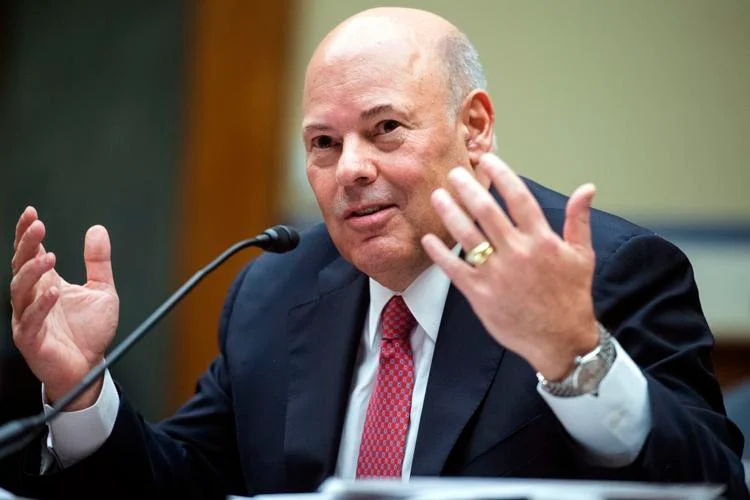
Too often, taxpayers have had to put up with costly government programs that only expand over time. America’s mail carrier has more than its fair share of red ink, and the agency’s mission creep and inefficient operations certainly haven’t helped. Due to dubious discounts supposedly passed along to bulk postage buyers, the U.S. Postal Service (USPS) has had real trouble raising revenue to meet growing expenses. For years, companies participating in the reseller program have used these discounts to pad profits while undermining the USPS’ business model. This program is, fortunately, coming to an end, giving taxpayers and consumers a rare cause for celebration. Other agencies should take the USPS’ lead and give much-needed scrutiny to floundering operations. Like most sellers, the USPS is eager to extend promotions as a way of getting new consumers and attracting large clients. Without the appropriate oversight, strategic discounts can easily spring leaks in any venture. The USPS learned this the hard way when it gave private resellers the green light to offer marked-down postage to bulk buyers. These middlemen strayed far from program guidelines, extending discounts to companies that didn’t buy enough postage to qualify for promotional rates. In 2017, the Capitol Forum (a watchdog group) used barcode scanning technology to decode the postage prices that middlemen were offering small postage buyers. They found that these small buyers were offered bottom-of-the-barrel prices by resellers even after the postal consumers emphasized how small their shipping volumes are. In some cases, these buyers paid just $10.26 on a three-pound parcel that should have cost $14.90. That $4.64 difference bolsters middlemen’s balance sheets because it ensures that customers will patronize them instead of going directly to the post office. But every cent of that total comes at the expense of postal profitability and subtracts from product cost coverage. For a while, this unsustainable arrangement operated free of scrutiny and cost the agency more than $200 million per year. The first shoe thankfully dropped at the beginning of 2019, when the USPS began divorcing itself from leading reseller Stamps.com. The agency nixed an “exclusive partnership” with the reseller, cutting off access to the lion’s share of deeply discounted postage. Despite this step in the right direction, the reseller program continued to limp along at a substantial cost. The USPS Inspector General (IG) released a heavily redacted report that analyzed, “[t]he complex role of middlemen and discounts in the USPS package business.” While most of the report is hidden behind a thick sludge of black ink, postal management wasn’t pleased by the findings. The IG notes, “management claimed that the OIG’s report contains commercially sensitive information and should only be disclosed to postal management… Management also disagreed with many of the OIG’s findings.” The IG regarded these clumsy attempts at secrecy as “an attack on the independence of the OIG and an attempt to keep important work from being disclosed to critical stakeholders.” Meanwhile, taxpayers and consumers were left wondering why the USPS was so afraid of discussing its supposedly innovative and money-making venture out in the open. Then-incoming Postmaster General Louis DeJoy rightly saw this postal drama as a major red flag and reportedly tried to immediately axe the program. There was (predictably) pushback from postal management, and progress proved slow. But it looks like DeJoy finally got his way; the program is scheduled to be unceremoniously kiboshed on October 1. At last, taxpayers and consumers can place some trust in beleaguered postal leadership. The $200 million in annual revenue gains won’t make up for multi-billion-dollar net losses, but reform has to start somewhere. Only time will tell if the USPS can fully get its act together and deliver for the American people. Ross Marchand is a senior fellow for the Taxpayers Protection Alliance. Republished with the permission of The Center Square.
Ross Marchand: Overlooked postal ‘reform’ provision spells trouble for USPS
The United States Postal Service (USPS) isn’t exactly known for its financial acumen. The agency has lost more than $90 billion over the past 15 years, including nearly $15 billion since the start of the pandemic. Delivery speeds have rebounded since the middle of 2020, and the agency has a historic amount of cash-on-hand, but leadership has failed to stop the fiscal bleeding. And now, lawmakers are set to make things even worse by passing the deeply misguided H.R. 3076, the Postal Service Reform Act of 2021. This bundle of changes would shift retirement costs around and put the USPS on the hook for ill-defined “nonpostal services.” Congress should steer clear of H.R. 3076 and work toward genuine postal reform. The Postal Service Reform Act would change plenty about how the USPS operates. The most widely discussed change is the “integration” of retiree health benefits into Medicare. The legislation would split the existing Federal Employees Health Benefits (FEHB) program, which covers about 8 million federal and postal workers, retirees, and family members, into two. Out of this divorce would emerge a new general FEHB and a separate Postal Service Health Benefits (PSHB) Program linked financially to the Medicare program. Virtually all USPS employees would eventually be covered by Medicare, absolving America’s mail carrier of considerable healthcare costs. This “reform” does little, though, to actually save taxpayer money. It merely shifts a costly burden from one federal agency to another. Medicare expenditures now total more than $800 billion per year, and the program’s main trust fund is expected to hit insolvency by 2026. Adding postal retirement liabilities onto an already-bloated program seems like an odd way to keep costs under control. The grand Medicare “fix” receives far more attention than an even more alarming provision of the postal proposal. Section 103 of the act authorizes the USPS to “establish a program to enter into agreements with an agency of any State government, local government, or tribal government to provide property and services on behalf of such agencies for non-commercial products and services…” The limited-sounding scope of the provision seems to rule out the possibility that the USPS will take up banking (which many agency watchers reasonably feared). In reality, the legislative language gives the USPS wide license to dabble in banking and other problematic endeavors. To see how, consider that states such as New Jersey and California have been toying around with the idea of opening public sector banks. In 2019, California Gov. Gavin Newsom (D) signed into law a bill allowing counties and cities to create their own financial institutions that could take deposits and facilitate certain low-interest loans. And, New Jersey has been busy studying the implementation of its own public banking initiatives. One problem for public officials is cost. If taxpayer-funded banks provide inexpensive financial services, that money must come from somewhere. Enter the USPS, which can grab taxpayer subsidies and low-interest Treasury loans if it fails to balance its books. If H.R. 3076 becomes the law of the land, expect states and localities to try and partner up with the federal agency to provide ostensibly “non-commercial” financial services. And, if the USPS’ check-cashing pilot is any indication, expect that effort to end in disaster. If lawmakers really want the USPS to get back into the black, they’ll need to push the agency to focus on its core strength … delivering the mail. This will mean adequately pricing packages to ensure that artificially cheap parcels don’t swamp mail volumes and slow down mail delivery. There’s some promising language in H.R. 3076 ordering the Postal Regulatory Commission to review how products are priced. But, this will accomplish little if all the other problematic provisions become law. The USPS can continue delivering for the American people, but only if lawmakers avoid the misguided policies contained in postal “reform” legislation. Ross Marchand is a senior fellow for the Taxpayers Protection Alliance.
Ross Marchand: USPS must deliver greater transparency
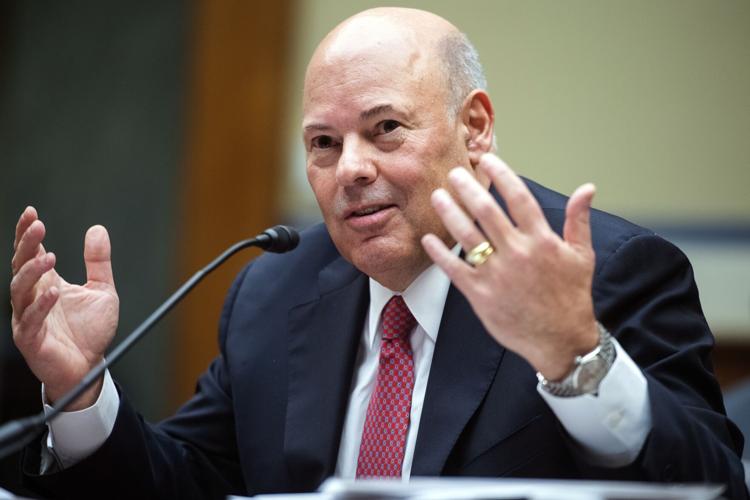
Transparency and accountability are supposed to be the hallmarks of any democratically elected government. Unfortunately, progress in shining the light on government activities has been disturbingly uneven. Most Americans are familiar with the controversy over warrantless wiretapping and the uncooperative federal response to requests for greater transparency. But few realize that America’s mail carrier has gone rogue. A recent news report highlights the U.S. Postal Service’s (USPS) continued inability to open up to the American people about their mission creep and operational dysfunction. From blockchain security to social media surveillance to report redactions, the agency simply refuses to explain its activities to taxpayers and consumers. It’s time for Postmaster General Louis DeJoy to introduce some much-needed transparency to agency operations. On December 13, Washington Post contributors Joseph Marks and Jacob Bogage reported, “[t]he U.S. Postal Service pursued a project to build and secretly test a blockchain-based mobile phone voting system before the 2020 election, experimenting with a technology that the government’s own cybersecurity agency says can’t be trusted to securely handle ballots.” The initiative was shelved by the agency after tests revealed that the voting system was susceptible to hacking. Strangely, though, the USPS never told anyone about this potentially game-changing technology. Cybersecurity and Infrastructure Security Agency senior advisor Matt Masterson says he was never told about this initiative despite his critical role as the federal government’s chief liaison to state and local election officials. He reasonably argues, “[i]t’s scandalous for a government entity to conduct research into the security of blockchain online voting, which shows how insecure it is, but then hide the results and deprive the public and officials of these findings for over two years.” And, this is hardly the first time that the USPS has hid its activities from the public. In April, Yahoo News reported that the agency runs an investigation unit known as the Internet Covert Operations Program (iCOP), which sounds more like a CIA op than a postal division. According to the news outlet, “[t]he work involves having analysts trawl through social media sites to look for what the document describes as ‘inflammatory’ postings and then sharing that information across government agencies.” As if that isn’t (mission) creepy enough, the agency uses facial recognition software during internet searches “to help identify unknown targets in an investigation or locate additional social media accounts for known individuals.” Then there’s the agency’s regular refusal to release data, spurning Freedom of Information Act (FOIA) requests that could help independent researchers and analysts pinpoint its many problems. In fiscal year 2019, the agency issued full denials to more than 35% of processed and finalized FOIA requests. This makes the USPS moderately more transparent than the CIA (55%) but considerably more tight-lipped than NASA (11%), the Department of Justice (6%), and the Department of Homeland Security (2%). That’s quite an anomaly, given that the latter three agencies and departments routinely deal with sensitive intelligence that has national security implications. The USPS could spare itself from a deluge of FOIA requests if it was simply more transparent in its agency oversight reports. Unfortunately, any quick trip to the inspector general’s website reveals the liberal use of black ink to smudge out critical information about agency operations and finances. Clearly, the USPS has a deep-seated problem in opening up to the public (and other government agencies) about its issues. It certainly is not too late for Postmaster General DeJoy to launch a new transparency initiative that would decrease FOIA denials and fully explain all of its experimental programs. If agency leadership refuses to act, though, Congress may need to get involved and force the USPS’ hand. Americans might reasonably expect (some) secrecy from the government’s national security agencies, but not from America’s mail carrier. Ross Marchand is a senior fellow for the Taxpayers Protection Alliance.
Ross Marchand: Amidst abysmal finances, postal reform is a must
The United States Postal Service (USPS) continues to bear the consequences of poor financial management to the detriment of taxpayers and consumers across the country. The agency reported yet another financial loss this week, bringing total net losses for the year to $3.9 billion, an increase of $1.2 billion compared to last year. To outside observers of this fiscal malaise, better choices at every step of the way could have averted subsidization via low-interest Treasury loans. By adapting stronger efficiency guidelines and making a greater effort to reign in crony deals, the USPS can finally tackle its mammoth debts. Despite the misleading pronouncements of senior USPS officials, taxpayers would save billions of dollars per year from a better-fun fiscal ship. To listen to the claims of USPS top brass, the agency is doing everything it can to “put information and technology at the center of its business strategies” in delivering mail to hundreds of millions of Americans. Unfortunately, successive reports by the Office of the Inspector General (IG) shed considerable doubt on this hype. The USPS, for instance, is supposed to use a modeling tool to sort out job assignments based on mail processing volume, but regular deviations result in increased overtime and lower employee productivity. The IG estimates that a more thorough use of its own modeling tools would save the USPS $420 million in labor costs alone. But assigning employees requires a thorough, well-documented hiring process in the first place. On this basic function, the USPS again comes up short. In the IG’s analysis of non-career employee background screening in the Los Angeles District, the IG found that HR officials were not doing their due diligence. Of the 33 hired applicants analyzed in the report, 11 had “automatic disqualifying driving eligibility factors” and 7 had “disqualifying criminal suitability factors.” Maybe bad employees slip through the cracks, but at least performance evaluation reviews can be used to hold them accountable. Too bad, then, that “13 of 13 (100 percent) 90-day performance evaluation reviews were not maintained in the electronic official personnel file, as required.” This permissive culture and poor documentation lead to further poor behavior, contributing to the USPS’s mammoth financial problems. Too often contractors fail to satisfactorily perform a service requested by the USPS due to avoidable mistakes on the part of the contractor. These “chargeable irregularities” should result in the USPS getting refunds from contractors. But, due to the lack of necessary paperwork and complete reviews, the USPS squanders tens of millions of dollars nationwide to lost contracts. For the Chicago Network Distribution Center alone, the USPS’s IG estimates that $7 million is at risk for a mere 11 contracts renewed during the 2016 and 2017 fiscal years. And, then, of course, there are the increased distribution and delivery costs that come with the USPS’s arrangement with Amazon. As the result of 2013 deal inked with the multi-billion dollar company, Amazon gets to use USPS to deliver packages at a far lower rate than the usual Priority Mail Express prices companies would have to use for Sunday delivery. In the five years since the approval of the deal, Sunday-related parcel delivery costs have quickly risen. Since Sunday operations are dictated by a special carveout, the result is hardly an efficient operation. The OIG finds that, in the San Francisco District, “the increased use of higher cost full-time city carriers and scheduling uncertainty” has resulted in more than $2 million in additional quarterly operating costs. Additionally, parcel volume uncertainty leads to overstaffing with employees paid at the overtime rate. While the USPS will charge somewhat higher fees on Amazon starting in 2019, its unlikely that the privilege of lower Sunday prices will go away. USPS should reexamine this, and other deals with major companies, while committing to efficiency and spending priority reforms. Making greater use of a national, comprehensive F1 Scheduler system and keeping greater tabs on questionable contracts could save the USPS billions of dollars per year and restore the promise of one of America’s more popular government institutions. ••• Ross Marchand is the director of policy for the Taxpayers Protection Alliance.
Ross Marchand: To avoid mile-long maintenance bills, maintain truck limits

Alabama’s roads and bridges are in a fiscal jam, as the state borrows more and more to keep things running smoothly. According to the Public Affairs Research Council of Alabama (PARCA), the state shoulders around $1 billion in road debt, with debt service alone “projected to rise to $114 million annually. That level of obligation for debt service will continue for 19 more years.” Unfortunately, some proposals from Washington, DC would compound the problem and force Alabama to go ever-deeper into debt to banish corrosion and pot-holes. Despite reasonable proposals to increase public-private partnerships and reduce the need for dwindling gasoline tax revenues, some lawmakers and pundits seem dead-set on allowing more dangerous vehicles on the highway that would increase maintenance and first responder costs. Many are calling for lawmakers to update truck limits imposed in 1982, and permit “Twin 33” foot double-trailers (read: really big trucks) on America’s roadways. While some proponents of relaxed truck size restrictions have painted the proposal as a panacea for lower costs, the change would lead to far more infrastructure costs down the road (pun intended). Taxpayers and customers must resist the allure of bold-sounding policies that open the door to billions of dollars more in repair costs and make roadways less safe. Periodically, the fight to increase maximum trailer length from 28 feet to 33 feet remerges in the halls of Capitol Hill and the editorials of leading publications, with proponents recycling the same tired arguments. Allowing more size flexibility, they argue, will lead to fewer accidents due to less rollovers and more vehicle stability. But vehicle safety arguments omit real risks that will likely increase accident costs on net. Even if rollovers were less common for Twin 33 compared to their current, shorter counterparts, accidents will be far more severe when rollovers do happen due to a larger “crash footprint.” And, according to the Insurance Institute for Highway Safety, “Multiple-trailer trucks have more handling problems than single-trailer trucks. In general, the additional connection points contribute to greater instability, which can lead to jackknifing, overturning, and lane encroachments.” The Institute notes that safety studies tend to conflict, in stark contrast to the “proven research” touted by amendment proponents. A point beyond debate, however, is the impact of Twin 33s on roadway maintenance costs. House Committee staff members have shown considerable foresight in warning “about the demands being placed on structurally deficient bridges…a significant increase in federal truck size could create greater funding needs.” Data shows a fairly straightforward relationship between vehicle size/weight and road damage, with a 9 ton big-rig inflicting roughly 40 times the amount of damage as a Hummer H2. Americans for Modern Transportation pushes back by claiming that any increased wear-and-tear can be more than offset by fewer trucks on the road. These theories, however, run into a brick wall due to something called “induced demand,” whereas more trucks and car drivers simply take up any freed up road space. A 2009 study by researchers at the University of Pennsylvania and the University of Toronto found that if road capacity in a city increases by 10 percent, the traffic volume in that city will increase by 10 percent. As a result, roads are just as congested as always, only with the addition of mega-trucks that drastically increase wear-and-tear. And, given that the Highway Trust Fund has required nearly $150 billion in taxpayer infusions over the past decade, these problems impact all citizens paying taxes. Proposed rule changes would mean a double-whammy for Alabamans, as greater infrastructure wear-and-tear would require increased federal and state taxes. Working toward less borrowing and taxation means keeping common-sense limits on vehicle sizes. Additionally, structural reforms can ensure that existing gasoline tax revenues are more directly funneled to infrastructure maintenance. Every year, for instance, Montgomery allows local governments a 95 percent matching rate for pedestrian and bike paths, funded via Alabama’s 22.91 cent per gallon gas tax. As the MacIver Institute points out, these kinds of programs encourage millions of dollars to be spent on bike paths adjacent to quiet roads, bike rack programs and pedestrian walkways in proximity to pre-existing routes. With better targeting of funds and sensible limits on truck size, taxpayers can have an easier time paying down Alabama’s looming transportation bills without raising gasoline taxes. ••• Ross Marchand is the director of policy with the Taxpayers Protection Alliance.