
2023 has been a battleground for transgender athletics

By Tom Gantert | The Center Square A law took effect in Texas this month that bans transgender women from playing a women’s sport at the college level. It was similar to a 2021 law that banned athletes in public schools in that state from playing on any team that differed from the sex they were assigned to at birth. This year has been the battleground for the debate on whether biological males who identify as females should be allowed to play female sports as politicians and the courts have grappled with the issue. Many government agencies and transgender advocacy groups are pushing to allow boys who say they are girls to participate in sports previously reserved for females, while polling shows that a majority of Americans are against it. According to The Center Square Voters’ Voice Poll of 2,500 registered voters across the U.S., a 2-to-1 majority oppose transgender women student-athletes competing in women’s sports. The poll was released in August and conducted by Noble Predictive Insights. A Gallup poll released in June found 69% say transgender athletes should only be allowed to compete on sports teams that align with their biological sex at birth. At the core of the debate is the accusation of discrimination, transgender women being victims of it by those wishing to keep girls’ women’s sports played among women; and the accusation of fairness, girls and women being the victims when forced to compete against biological males. “Women and young girls deserve to compete on a level playing field. When laws ignore biological reality and allow males to compete on girls’ sports teams, girls are harmed and denied athletic opportunities,” Christiana Kiefer, senior counsel for Alliance Defending Freedom, wrote in an email to The Center Square. “Science and common sense tell us that males are generally bigger, faster, and stronger than females. They have larger hearts and lungs, denser bones, and stronger muscles. No amount of testosterone suppression can undo all those advantages. We hope that states continue to protect fairness in women’s sports by adopting laws and policies that reflect biological reality.” The Alliance Defending Freedom is involved in a 2020 lawsuit in which it represented four female Connecticut high school athletes. They filed a lawsuit challenging the state athletic association’s policy to allow boys to play girls’ sports. U.S. District Judge Robert Chatigny ruled against the female athletes in December. The Heritage Foundation reported that Chatigny ordered attorneys for the Alliance Defending Freedom to use the term “transgender females” when referring to boys who identify as girls. The 2nd U.S. Circuit Court of Appeals initially ruled in favor of Connecticut’s policy in 2022, but has since said it would reconsider the case; it is pending. The Movement Advancement Project analyzes transgender sports policies across the country. It says the nation is split on the issue. It found that 24 states and two territories have policies that are fair or favorable to transgender athletes and 26 states and three territories have policies that are not. ESPN has tracked transgender legislation and reported that 23 states had passed laws restricting transgender athletes’ ability to play sports since 2020. In March, Democrats in the U.S. House introduced the Transgender Bill of Rights, a resolution that would “ensure” transgender athletes could participate in the sport of their choice. The Transgender Bill of Rights calls on the federal government to take action. In April, Republicans in the U.S. House introduced House Resolution 734, the “Protection of Women and Girls in Sports Act 2023.” It would ban boys, who call themselves transgender women, from playing in female sports. The House passed the bill; its road in the Senate is considered uphill with a Democratic majority in place. In August, the North Carolina House and Senate overrode Democratic Gov. Roy Cooper’s veto and passed the Fairness in Women’s Sports Act. The law “prohibits male students from playing on middle school, high school, or collegiate athletics teams designated for females, women, or girls.” It also “requires a student’s sex to be recognized solely based on reproductive biology and genetics at birth for purposes of athletic participation.” The U.S. Department of Education supports transgender athletes being able to play on the sports team gender in which they identify. The department says banning transgender athletes from playing on a sports team due to gender is discrimination. Discussion of the issue escalated around Lia Thomas, a swimmer at Penn University who competed on the men’s team as William Thomas for three years. The athlete switched to Lia for a senior season, and was allowed by the university and the NCAA to compete in 2022. Thomas was the first openly transgender athlete to win an NCAA Division I national championship in 2022. Thomas was ranked 65th in the 500-meter freestyle in 2018-19, the last season Thomas swam for the University of Pennsylvania men’s team, according to Swimming World Magazine. Thomas won the NCAA championship in the women’s 500 freestyle in 2022 while competing for the Penn women’s team. Other men competing in women’s categories have lifted visibility for events from volleyball, to weight lifting to cycling to running. The website SheWon.org tracks “achievements of female athletes who were displaced by males in women’s sporting events” all over the world. As of Sept. 22, it had 608 entries. A 2010 report conducted by authors affiliated with the Women’s Sports Foundation and The National Center for Lesbian Rights called concerns that transgender females playing female sports would dominate as “not well founded.” The report stated that “medically guided hormonal treatment prior to puberty” neutralized any advantage. Thirteen years later, the polls, many women athletes, and lawyers like Kiefer disagree. In Michigan, the high school association states it will determine eligibility on a “case-by-case” basis. The Michigan High School Athletic Association does ask for documentation of a student’s medical and psychological records as well as whether they have undergone hormone therapy and gender-affirmation surgery. In Ohio, the high school athletic association allows transgender athletes to compete for girls’ teams, but the athlete must be taking a medically prescribed hormone treatment related to gender transition and have completed a minimum of one year
Effort to preserve choice of power in vehicles clears U.S. House

The U.S. House on Thursday advanced legislation to block states from outlawing gas vehicle sales, a move counter to green agendas pushing electric vehicles. House Resolution 1435, a bipartisan measure known as the Preserving Choice in Vehicle Purchases Act, cleared the lower chamber with a vote of 222-190 Thursday with all Republicans and eight Democrats, including North Carolina Rep. Don Davis, in support. The legislation, which is expected to face stiff resistance in the Senate, aims to ban states from limiting the sales of gas-powered vehicles and for states planning to, to roll back federal approvals. While the resolution did not name specific states, California’s Air Resources Board last year implemented restrictions on vehicles that would effectively prohibit the sale of new gas powered vehicles by 2035, prompting more than a dozen states to consider similar measures. “Almost 94% of the 275 million vehicles in America are powered by gasoline. EVs are still too expensive for many Americans, nearly $17,000 more than a gas-powered car,” Rep. Chuck Edwards, R-N.C., wrote on social media. “The Preserving Choice in Vehicle Purchases Act will prevent the far left from banning gas-powered cars.” The Biden administration opposes the resolution, which conflicts with the president’s goal of electric vehicle sales comprising half of all new vehicle sales in the country by 2030. In North Carolina, Gov. Roy Cooper wants to have 1.25 million electric vehicles registered by 2030. Cooper also issued Executive Order 271 last year to accelerate the uptake of zero-emissions trucks and buses. Thursday’s approval of HR1435 follows days after the release of the fourth annual Transportation Electrification in the Southeast report. It shows while “new EV sales in the Southeast continue to reach new highs” aided in part by $4,000 federal tax credits, in the second quarter of 2023, only “6.2% of all new light-duty vehicles sold were EVs, up from 5% 12 months ago.” In North Carolina, the market share for new electric vehicles was 7.1%, second in the region to Georgia at 7.2%. Those figures trail the national market, where electric vehicles comprised nearly 9.3% of all light-duty sales in the second quarter of 2023. The report shows North Carolina runs second to Florida for taxpayer money invested in the industry, with $50.2 million from the state and $189.5 million from the federal government. The federal investment translates into the highest federal funding per capita in the region at $18.28. Florida spent $147.4 million and collected $207.4 million from the federal government. Other metrics in the report show North Carolina has a total of 11,723 announced jobs tied to the electric vehicle industry, behind Georgia at 27,817 and Tennessee at 12,719, but ahead of South Carolina at 10,611, Alabama at 2,058, and Florida at 314. The Old North State holds the largest announced investment in the region with Toyota’s $5.9 billion battery manufacturing facility in Liberty that’s slated to begin production in 2025, according to the report. North Carolina is in the middle of the pack regionally for electric vehicle charger deployment with 811 fast charging ports and 2,601 Level 2 ports, figures that have increased 57% and 62%, respectively, over the last year. Total ports per 1,000 residents stood at 0.33 in North Carolina, ahead of South Carolina, Tennessee, and Alabama, and behind Georgia and Florida. According to the most recent North Carolina Department of Transportation data, of the roughly 66,000 electric vehicles registered in North Carolina through May, just under 50,000 are fully electric. In May 2022, just under 30,000 registrations were for fully electric vehicles. Based on those figures, North Carolina would need to register nearly 15,000 per month to meet Cooper’s goal by Jan. 1, 2030, or more than 13,000 per month by Dec. 31, 2030, if both fully electric and hybrid vehicles are included. Cooper’s goal does not provide an exact date, whether the beginning or end of that year. The rate of registrations would need to be nearly 15,200 per month to reach the goal by Jan. 1, 2030, or nearly 13,200 per month by the end of 2030, if accounting for only fully electric vehicle registrations. Republished with the permission of The Center Square.
North Carolina Gov. Roy Cooper vetoes trio of LGBTQ+ restrictions in ongoing fight with GOP supermajority
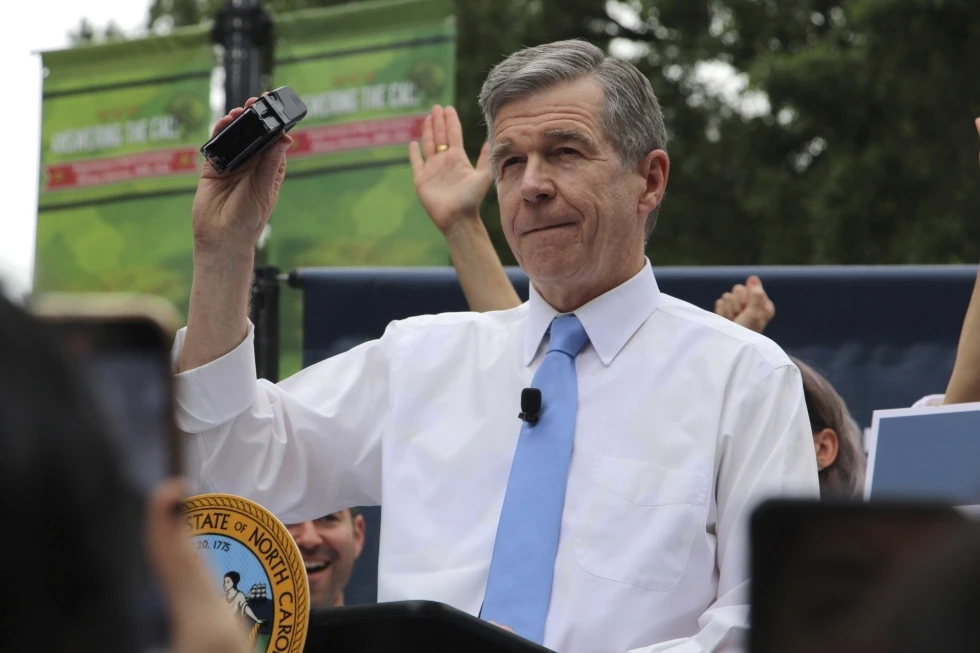
North Carolina Democratic Gov. Roy Cooper vetoed Wednesday a trio of bills aimed at LGBTQ+ youth that would ban gender-affirming health care for minors, restrict transgender participation in school sports and limit classroom instruction about gender identity and sexuality. While LGBTQ+ rights advocates say Cooper’s attempt to block the bills demonstrates his support amid what they view as unrelenting attacks from the General Assembly, his veto stamp carries little weight now that Republicans hold narrow veto-proof majorities in both chambers. His vetoes are not expected to survive override attempts, which could happen as soon as next week when lawmakers return from their Fourth of July break. Cooper denounced the bills as “a triple threat of political culture wars” that he said would interfere with the ability of doctors and parents to care for vulnerable children whose lives have been thrust into the political spotlight and upended by legislation in dozens of Republican-led states. Before this year, North Carolina had largely refrained from passing LGBTQ+ regulations after its 2016 “bathroom bill” — which restricted transgender access to public restrooms and banned cities from enacting new anti-discrimination ordinances — cost the state millions in lost business before it was rolled back in 2017 and settled in federal court in 2019. These policies, Cooper warned, could damage the state’s reputation and economy in a similar way. One of the three vetoed bills would bar North Carolina medical professionals from providing hormone therapy, puberty-blocking drugs, and surgical gender-transition procedures to anyone under 18, with limited medical exceptions. Young people who begin treatment before Aug. 1 — when the law would take effect — could continue receiving treatment if their doctors deem it medically necessary and their parents consent. Although some local LGBTQ+ rights advocates are holding out hope that they can convince moderate Republicans to sustain Cooper’s veto, others are bracing for a rapid loss of access to the treatments many trans people credit as life-saving. The Campaign for Southern Equality announced Wednesday that families of trans youth in North Carolina are now eligible to apply for support from the Southern Trans Youth Emergency Project, which helps connect patients with gender-affirming care providers in other states and provides emergency grants for immediate needs. “Even as we will advocate tirelessly for the NCGA to do the right thing by sustaining Gov. Cooper’s veto, we remain clear-eyed that families should take steps to prepare if anti-LGBTQ+ legislation is enacted,” said Jasmine Beach-Ferrara, a former Democratic congressional candidate and the campaign’s executive director. If the bill becomes law, opponents have already vowed to challenge it in court. At least 20 states have now enacted laws restricting or banning gender-affirming medical care for trans minors, and most face lawsuits. A federal judge struck down Arkansas’ ban as unconstitutional last month, and federal judges have temporarily blocked bans in Alabama, Indiana, Kentucky, and Tennessee. Oklahoma has agreed to not enforce its ban while opponents seek a temporary court order blocking it, and a federal judge blocked Florida from enforcing its ban on three children who challenged the law. Another bill that North Carolina Republicans could enact over Cooper’s opposition would require public school teachers to alert parents before they call a student by a different name or pronoun. Trans and nonbinary youth who testified throughout the legislative process said they were terrified for their closeted friends who could be forcibly outed to unaccepting parents. An exception would withhold school records from parents if there is reason to believe it would lead to abuse or neglect. Promoted by Republicans as giving parents greater authority over their children’s education and health care, the proposal also prohibits instruction about gender identity and sexuality in K-4 classrooms, with an exception for student-initiated questions. Supporters argue such topics should be left to parents to address with their young children. A spokesperson for Republican Senate leader Phil Berger did not respond Wednesday to emails seeking comment on the vetoed bills. The office of House Speaker Tim Moore declined to comment. “Parents are the most essential educators for their children, and their involvement must be encouraged, but this bill will scare teachers into silence by injecting fear and uncertainty into classrooms,” Cooper said. He added that it would hamper the sometimes lifesaving role of educators as confidants when students have nowhere else to turn. Some teachers are already planning to protest the requirements. The third bill would prohibit transgender girls from playing on middle school, high school and college sports teams designated for girls. Sen. Vickie Sawyer, an Iredell County Republican and primary sponsor, described it as “not only pro-women — it is pro-safety and pro-fairness.” But trans girls, who would no longer be able to participate in sports that align with their gender identity, say it’s exclusionary and targets a tiny number of kids. Two Democrats and all present Republicans voted for the sports bill when it passed initially, indicating a veto will likely be overridden. At least 22 other states have banned trans athletes from participating in school sports consistent with their gender identity. Republished with the permission of The Associated Press.
Supreme Court rejects GOP in North Carolina case that could have reshaped elections beyond the state
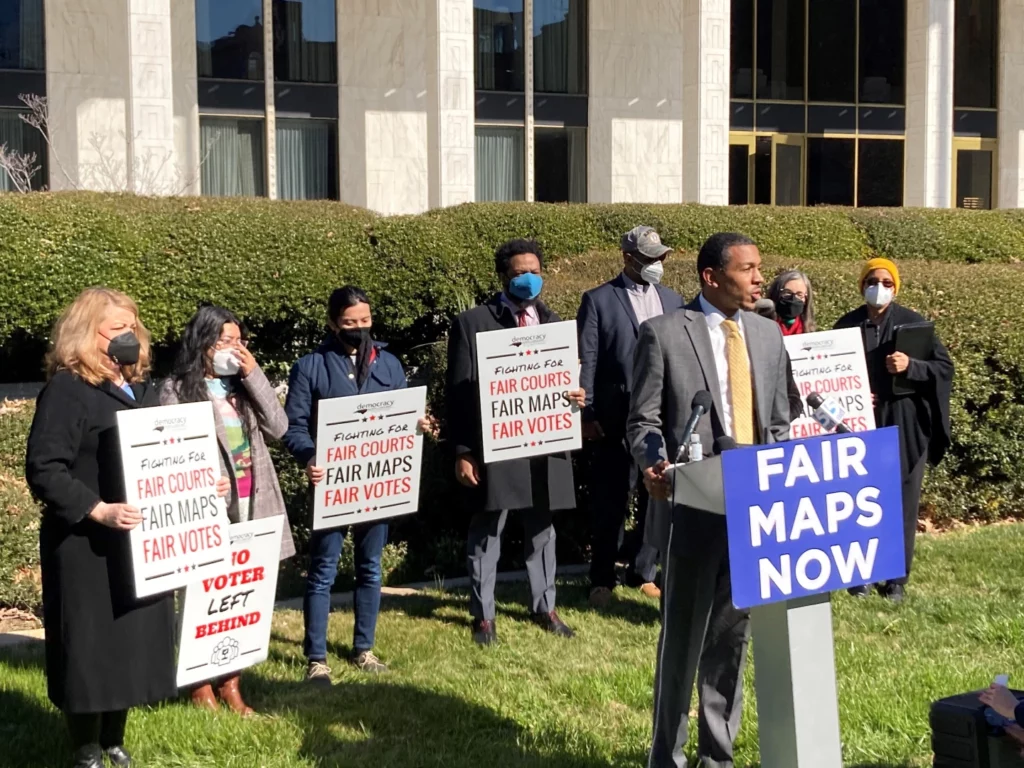
The Supreme Court ruled Tuesday that state courts can curtail the actions of their legislatures when it comes to federal redistricting and elections, rejecting arguments by North Carolina Republicans that could have dramatically altered races for Congress and president in that state and beyond. The justices, by a 6-3 vote, upheld a decision by North Carolina’s top court that struck down a congressional districting plan as excessively partisan under state law. The high court did, though, indicate there could be limits on state court efforts to police elections for Congress and president, suggesting that more election-related court cases over the issue are likely. Chief Justice John Roberts wrote for the court that “state courts retain the authority to apply state constitutional restraints when legislatures act under the power conferred upon them by the Elections Clause. But federal courts must not abandon their own duty to exercise judicial review.” The decision was the fourth major case of the term in which conservative and liberal justices joined to reject the most aggressive legal arguments put forth by conservative state elected officials and advocacy groups. Earlier decisions on voting rights, a Native American child welfare law, and a Biden administration immigration policy also unexpectedly cut across ideological lines on the court. Major rulings are expected by Friday on the future of affirmative action in higher education, the administration’s $400 billion student loan forgiveness plan, and a clash of religious and LGBTQ rights. The practical effect of Tuesday’s decision is minimal in North Carolina, where the state Supreme Court, under a new Republican majority, already has undone its redistricting ruling. Another redistricting case from Ohio is pending, if the justices want to say more about the issue before next year’s elections. Justices Samuel Alito, Clarence Thomas, and Neil Gorsuch would have dismissed the North Carolina case because of the intervening state court action. Vice President Kamala Harris said in a statement that the decision “preserves state courts’ critical role in safeguarding elections and protecting the voice and the will of the American people.” The Democratic administration defended the power of state courts in the case. Former President Barack Obama, in a rare public comment on a court decision, applauded the outcome as “a resounding rejection of the far-right theory that has been peddled by election deniers and extremists seeking to undermine our democracy.” At the same time, the leader of a Republican redistricting group said he was pleased the court made clear there are limits on state courts. The decision “should serve as a warning to state courts inclined to reach beyond the constitutional bounds of judicial review. This is a first, positive step toward reining in recent overreaches of state courts,” Adam Kincaid, president and executive director of the National Republican Redistricting Trust, said in a statement. Derek Muller, a University of Iowa law professor and elections expert, said Tuesday’s decision leaves some room to challenge state court rulings on federal election issues, “but these are likely to be rare cases.” “The vast majority of state court decisions that could affect federal elections will likely continue without any change,” Muller said. The North Carolina case attracted outsized attention because four conservative justices had suggested that the Supreme Court should curb state courts’ power in elections for president and Congress. Opponents of the idea, known as the independent legislature theory, had argued that the effects of a robust ruling for North Carolina Republicans could be reached much further than just that one state’s redistricting. Potentially at stake were more than 170 state constitutional provisions, over 650 state laws delegating authority to make election policies to state and local officials, and thousands of regulations down to the location of polling places, according to the Brennan Center for Justice at the New York University School of Law. The justices heard arguments in December in an appeal by Republican leaders in the North Carolina Legislature. Their efforts to draw congressional districts heavily in their favor were blocked by a Democratic majority on the state Supreme Court on grounds that the GOP map violated the state Constitution. A court-drawn map produced seven seats for each party in last year’s midterm elections in the highly competitive state. The question for the justices was whether the U.S. Constitution’s provision giving state legislatures the power to make the rules about the “times, places and manner” of congressional elections cuts state courts out of the process. Former federal appeals court judge Michael Luttig, a prominent conservative who has joined the legal team defending the North Carolina court decision, said in the fall that the outcome could have transformative effects on American elections. “This is the single most important case on American democracy — and for American democracy — in the nation’s history,” Luttig said. Leading Republican lawmakers in North Carolina told the Supreme Court that the Constitution’s “carefully drawn lines place the regulation of federal elections in the hands of state legislatures, Congress, and no one else.” During nearly three hours of arguments, the justices seemed skeptical of making a broad ruling in the case. Liberal and conservative justices seemed to take issue with the main thrust of a challenge asking them to essentially eliminate the power of state courts to strike down legislature-drawn, gerrymandered congressional district maps on grounds that they violate state constitutions. In North Carolina, a new round of redistricting is expected to go forward and produce a map with more Republican districts. The state’s Democratic governor, Roy Cooper, praised Tuesday’s decision, but also implicitly acknowledged that it does nothing to inhibit Republicans who control the legislature from drawing a congressional map that is more favorable to them. Cooper, who by state law can’t block redistricting plans approved by lawmakers, said that “Republican legislators in North Carolina and across the country remain a very real threat to democracy as they continue to pass laws to manipulate elections for partisan gain by interfering with the freedom to vote.” Republished with the permission of The Associated Press.
Justin Bogie: Tax cuts seem to be everywhere – except in Alabama’s future
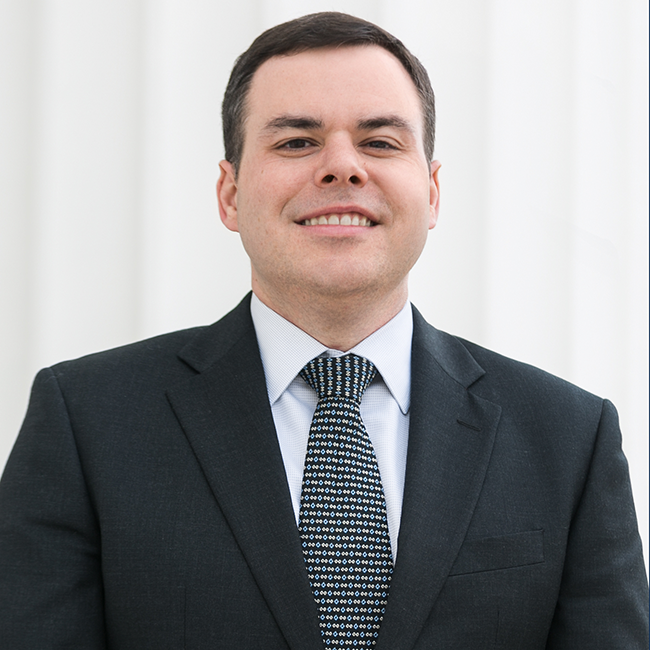
Kansas, one of a handful of states alongside Alabama that still fully taxes the sale of food, recently announced a bipartisan plan to “Axe the Food Tax.” Just before Thanksgiving, North Carolina Gov. Roy Cooper signed a budget into law that will make sweeping changes to the state’s tax code, fully repealing the corporate income tax by the end of the decade and cutting the personal income tax rate by 1.26% over the next five years. And the tax cuts that North Carolina just enacted and that Kansas is proposing are not outliers. According to the Tax Foundation, North Carolina became the 12th state to enact personal or corporate income tax rate cuts in 2021. So, what did Gov. Kay Ivey and the Alabama Legislature do in 2021, and what could be on the horizon? Despite taking more revenue from citizens than ever before, there was no meaningful effort to reduce taxes this year. Instead, the 2021 Regular Legislative Session was consumed by a failed effort to legalize, and of course, heavily tax casino-style gaming in Alabama. Lawmakers also found time to legalize the use and sale of medicinal marijuana in Alabama, which could mean financial windfalls for state government and the chosen few businesses allowed to grow, process, and distribute marijuana in Alabama. Given the progress made by other states and Alabama’s failure to pass any meaningful tax reforms this year, surely they are coming in 2022, right? If tax cuts are in the cards, our elected state leaders are not talking about them. Most lawmakers seem focused on how to spend money that has already been taxed from citizens or find ways to take even more. Just this week, State Sen. Greg Albritton, chairman of the Senate general fund budget committee, said that he expects gaming legislation to be a hot topic when the legislature reconvenes on January 11. According to a report from Yellowhammer News, Albritton said that he was hopeful gaming legislation would pass in the upcoming session. And while he said getting control of existing gaming in the state was a driving factor, money may be the biggest motivation. Albritton said, “We’ve got to have some taxing on it. We’ve got to have some benefits on it.” It was estimated that the 2021 gaming legislation would have brought in $260 million to $393 million annually, just from a new tax on gaming revenue. Much of that revenue would have, of course, come out of the pockets of Alabamians. What are other priorities? Sens. Del Marsh and Bobby Singleton have bonuses for retired state workers and teachers on their minds. Marsh’s pre-filed bill would give a minimum bonus of $300 to retirees. Senate education budget chairman Arthur Orr has indicated support not only for retiree bonuses but another pay raise for the state’s teachers. If those priorities pass, Orr has said that it might be the right time to look at limited tax breaks for retirement age and lower-income Alabamians. But surely Gov. Kay Ivey is talking about taking less money from the people of Alabama? Not exactly. On Monday, Ivey announced a state-sponsored plan to expand electric vehicle use in Alabama. Interestingly, when asked if she would move to an electric vehicle, Ivey said her car is “still in good shape,” but she might consider a change in the future. Perhaps Ivey is like many other Alabamians who don’t know much about or have little interest in driving an electric vehicle. According to the Alabama Department of Revenue, nearly five million passenger vehicles were registered in 2020. Less than 3,000 of those vehicles were electric. Are these really the major priorities for Alabama citizens? If the recent gubernatorial election in Virginia is any indication, no. After a 12-year drought in statewide elections for Virginia Republicans, Glenn Youngkin was able to win because he focused on conservative principles such as school choice and lowering taxes. Exit polling conducted by Cygnal found the driving issues for Youngkin voters were education, taxes, the economy, and public safety, among others. Electric vehicles and expanded gambling appeared nowhere on the list. Few would argue that Alabama is a conservative state. Yet, the current tax and spend priorities of state lawmakers do not reflect conservative principles. If the governor and Republican supermajority legislature want to get back to those roots, they need only look to other states for inspiration. Justin Bogie is the Senior Director of Fiscal Policy for the Alabama Policy Institute.
Colonial Pipeline restarts operations days after major hack
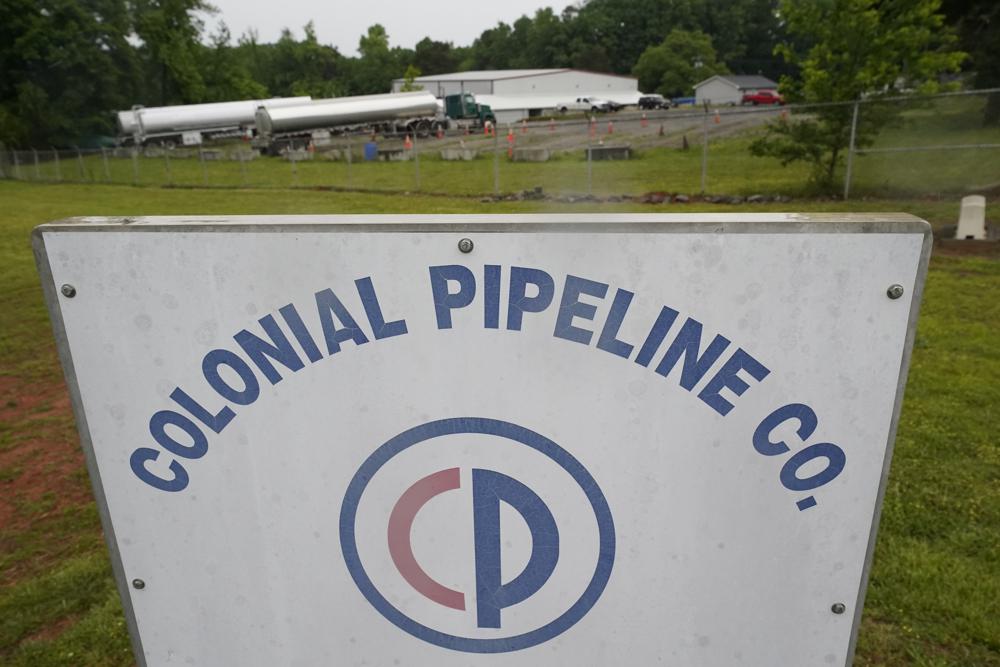
The nation’s largest fuel pipeline restarted operations Wednesday, days after it was forced to shut down by a gang of hackers. The disruption of Colonial Pipeline caused long lines at gas stations in the Southeast due to distribution problems and panic-buying, draining supplies at thousands of gas stations. Colonial initiated the restart of pipeline operations late Wednesday, saying in a statement that “all lines, including those lateral lines that have been running manually, will return to normal operations.” But it will take several days for deliveries to return to normal, the company said. In the meantime, drivers have been finding gas stations with little or no gas in some Southeast states. The Colonial Pipeline, which delivers about 45% of the fuel consumed on the East Coast, was hit on Friday with a cyberattack by hackers who lock up computer systems and demand a ransom to release them. The hackers didn’t take control of the pipeline operations, but Colonial shut the pipeline down to contain the damage. The attack raised concerns, once again, about the vulnerability of the nation’s critical infrastructure. “What you’re feeling is not a lack of supply or a supply issue. What we have is a transportation issue,” said Jeanette McGee, spokeswoman for the AAA auto club. “There is ample supply to fuel the United States for the summer, but what we’re having is an issue with is getting it to those gas stations” because the pipeline is down. The pipeline runs from the Gulf Coast to the New York metropolitan region, but states in the Southeast are more reliant on it. Other parts of the country have more sources to tap. For example, a substantial amount of fuel is delivered to states in the Northeast by massive tankers. Jamar Gatison, 36, was filling up his tank in Norfolk, Virginia, Wednesday before a doctor’s appointment. “I’m about to run out of gas, so I have no choice,” the construction worker said while waiting in line at a 7-Eleven. “I’m also an Uber Eats driver. I also need gas for that,” said Gatison, who added he probably won’t deliver food Wednesday night because he doesn’t want to wait in line again while the shortage continues. In North Carolina, 65% of gas stations were out of fuel, according to Gasbuddy.com, a technology firm that tracks real-time fuel prices across the country. Just outside Raleigh, two people were charged with assault after fighting and spitting in each other’s faces while arguing over their spots in line Tuesday at a Marathon gas station, authorities said. North Carolina Democratic Gov. Roy Cooper urged people Wednesday to only buy gas if their tank is low and to report any instances of price gouging. “This news is another reason people do not need to panic buy gas right now unless they really need it,” he tweeted after Colonial announced it was restarting the pipeline. Georgians were also getting squeezed, with 43% of stations there out of gas, according to Gasbuddy.com. In Virginia, 44% of stations were out, and in South Carolina, 16% had no fuel. Along the Appalachian Trail, which stretches from Georgia to Maine through some of the most rugged and remote terrain in the Southeast, hikers depend on car and van shuttles to ferry them to and from the trail and get them back to civilization. “If I don’t have the gas, I’m not running,” said Ron Brown of Ellijay, Georgia, who operates Ron’s Appalachian Trail Shuttles and often takes hikers on hourslong trips from Atlanta’s airport into the north Georgia mountains, and to and from many points along the trail. Mary Goldburg, 60, of Norfolk, Virginia, waited more than 20 minutes for a slow-operating pump at a 7-Eleven to fill up her tank on Wednesday. Her job includes delivering T-shirts for events and other promotional products. “I can’t get paid until my customers get their products,” Goldburg said. The disruption is taking place at the time of year when Americans begin to become more mobile, especially as the nation emerges from the pandemic. Four to five cars were lined up at each pump at a Circle K in Clemmons, North Carolina. Several people said they had driven to multiple gas stations to find one that had gas. Across the street, gas stations were out of fuel. Mair Martinez, who works in landscaping, was filling up his lawn equipment and truck after checking several other gas stations without luck. “That’s why we’ve come in today, to fill up everything,” he said. Johnathan King, who works for an area towing company, was filling up his tow truck. He said he typically does 10 to 12 service calls a day, driving between several area cities. “It’s going to be very hard for us. Hopefully, we’ll be able to get through it,” he said. Multiple U.S. agencies coordinated to relax rules and enable fuel to be shipped faster using trucks, trains, or ships, but those changes had little impact Wednesday. The White House said the Department of Transportation is now allowing states served by the pipeline to use interstate highways to transport overweight loads of gasoline and other fuels. But there’s a national trucker shortage, so the industry isn’t able to put many more trucks on the road. Nationwide there are about 121,000 convenience stores that sell about 5,300 gallons per day of gasoline, accounting for about 80% of retail fuel sales. At many stores, demand has been two to five times the normal amount, said Jeff Lenard of the National Association of Convenience Stores, in a conference call with reporters. Retailers were even running out of fuel in parts of Florida that are not dependent on the pipeline, he said. Rationing has been imposed after some natural disasters, including Hurricane Sandy in 2012, but there could be resistance to that this time, especially if it looks like the pipeline could return to normal operation in a few days. It could also backfire. “Once rationing occurs, more panic buying ensues,” said Ryan McNutt, CEO of the Society of
Many still hesitate to get vaccine, but reluctance is easing
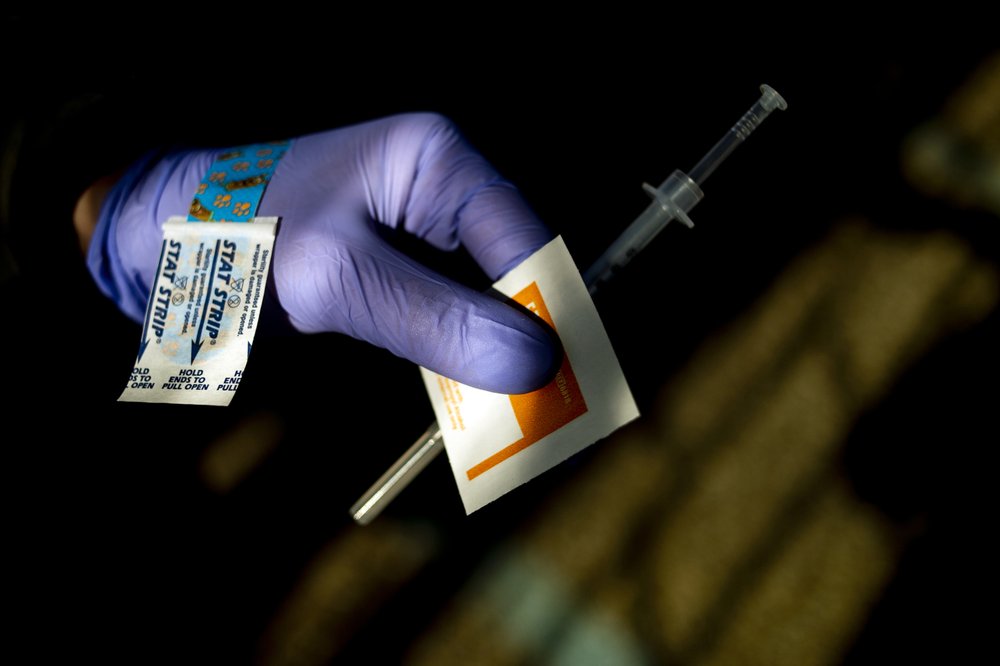
So few people came for COVID-19 vaccinations in one county in North Carolina that hospitals there now allow anyone 16 or older to get a shot, regardless of where they live. Get a shot, get a free doughnut, the governor said. Alabama, which has the nation’s lowest vaccination rate and a county where only 7% of residents are fully vaccinated, launched a campaign to convince people the shots are safe. Doctors and pastors joined the effort. On the national level, the Joe Biden administration this week launched a “We Can Do This” campaign to encourage holdouts to get vaccinated against the virus that has claimed over 550,000 lives in the U.S. The race is on to vaccinate as many people as possible, but a significant number of Americans are so far reluctant to get the shots, even in places where they are plentiful. Twenty-five percent of Americans say they probably or definitely will not get vaccinated, according to a new poll from The Associated Press-NORC Center for Public Affairs Research. They are leery about possible side effects. They tend to be Republican, and they are usually younger and less susceptible to becoming critically ill or dying if they catch COVID-19. There’s been a slight shift, though, since the first weeks of the nation’s largest-ever vaccination campaign, which began in mid-December. An AP-NORC poll conducted in late January showed that 67% of adult Americans were willing to get vaccinated or had already received at least one shot. Now that figure has climbed to 75%. That, experts say, moves the nation closer to herd immunity, which occurs when enough people have immunity, either from vaccination or past infection, to stop uncontrolled spread of a disease. Anywhere from 75% to 85% of the total population — including children, who are not currently getting the shots — should be vaccinated to reach herd immunity, said Ali Mokdad, professor of health metrics sciences at the University of Washington School of Public Health. A little over three months after the first doses were given, 100 million Americans, or about 30% of the population, have received at least one dose. Andrea Richmond, a 26-year-old freelance web coder in Atlanta, is among those whose reluctance is easing. A few weeks ago, Richmond was leaning toward not getting the shot. Possible long-term effects worried her. She knew that an H1N1 vaccine used years ago in Europe increased risk of narcolepsy. Then her sister got vaccinated with no ill effects. Richmond’s friends’ opinions also changed. “They went from, ‘I’m not trusting this’ to ‘I’m all vaxxed up, let’s go out!’” Her mother, a cancer survivor, whom Richmond lives with, is so keen for her daughter to get vaccinated that she signed her up online for a jab. “I’ll probably end up taking it,” Richmond said. “I guess it’s my civic duty.” But some remain steadfastly opposed. “I think I only had the flu once,” said Lori Mansour, 67, who lives near Rockford, Illinois. “So I think I’ll take my chances.” In the latest poll, Republicans remained more likely than Democrats to say they will probably or definitely not get vaccinated, 36% compared with 12%. But somewhat fewer Republicans today are reluctant. Back in January, 44% said they would shy away from a vaccine. The hesitance can be seen in Alabama’s rural Winston County, which is 96% white and where more than 90% of voters backed then-President Donald Trump last year. Only 6.9% of the county’s roughly 24,000 residents are fully vaccinated, the lowest level in Alabama. Elsewhere in Alabama, health officials tried to counter problems that include reluctance in heavily Black areas where distrust of government medical initiatives runs deep. They targeted a few counties with a pro-vaccine message, especially in the old plantation region where a large percentage of the population is Black and many are poor. The campaign enlisted doctors and pastors and used virtual meetings and the radio to spread the word. Dr. Karen Landers, assistant state health officer, said the effort had positive results. For example, in Perry County, where 68% of the population of about 9,300 is Black, more than 16% of the population is fully vaccinated, among the highest levels. Officials likely will make similar efforts for other parts of the state, she said. Nationwide, 24% of Black Americans and 22% of Hispanic Americans say they will probably or definitely not get vaccinated, down from 41% and 34% in January, respectively. Among white Americans, 26% now say they will not get vaccinated. In January, that number was 31%. The Biden administration’s campaign features TV and social media ads. Celebrities and community and religious figures are joining the effort. Iowa Gov. Kim Reynolds, a Republican, is trying win over the one-third of adult Iowans who will not commit to getting a vaccine by emphasizing that the shots will help return life to normal. In North Carolina’s Cumberland County, fewer than 1 in 6 residents have gotten at least one shot. Amid worries there would be an unused surplus of vaccines, Cape Fear Valley Health hospital systems opened up the shots last week to everyone 16 or older. “Rather than have doses go unused, we want to give more people the chance to get their vaccine,” said Chris Tart, a Cape Fear Valley Health vice president. “We hope this will encourage more people to roll up their sleeve.” On Wednesday, Gov. Roy Cooper, a Democrat, tweeted a video of him getting a free doughnut from the Krispy Kreme chain. Customers who show their vaccine card can get a free doughnut every day for the rest of the year. “Do it today, guys!” Cooper encouraged viewers. Nearly 36% of North Carolina adults have been at least partially vaccinated, state data show. Younger people are more likely to forgo a shot. Of those under 45, 31% say they will probably or definitely forgo a shot. Only 12% of those aged 60 and older say they will not get vaccinated. Ronni Peck, a 40-year-old mother of three from
U.S. hospitals facing worrisome shortage of nurses, doctors
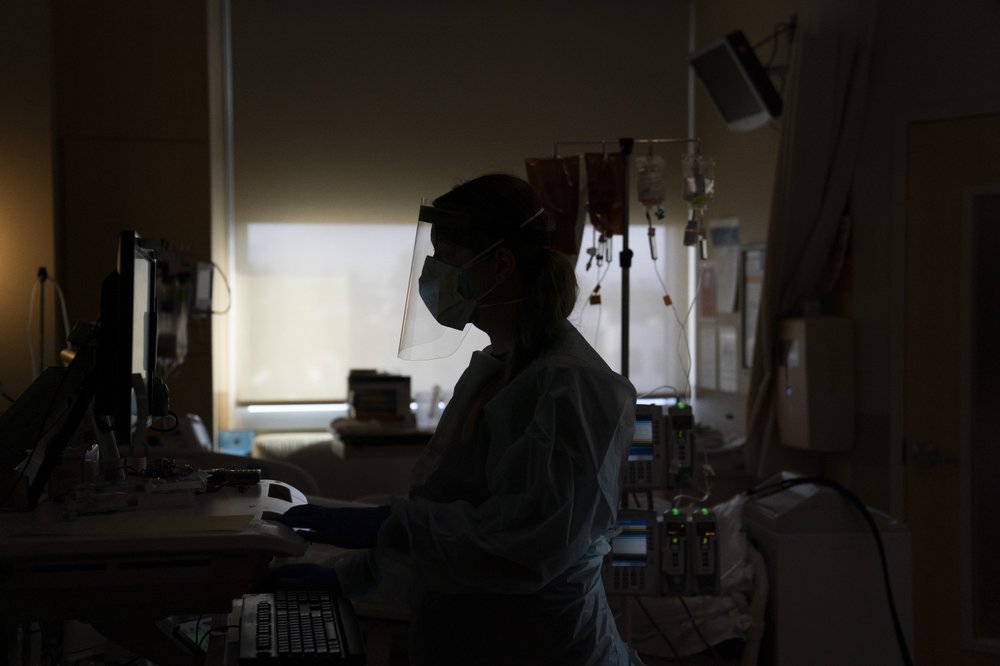
With so many states seeing a flood of coronavirus patients, U.S. hospitals are again worried about finding enough medical workers to meet demand just as infections from the holiday season threaten to add to the burden on American health care. California, which is enduring by far its worst spike in cases and hospitalizations, is reaching out to places like Australia and Taiwan to fill the need for 3,000 temporary medical workers, particularly nurses trained in critical care. “We’re now in a situation where we have surges all across the country, so nobody has many nurses to spare,” said Dr. Janet Coffman, a professor of public policy at the University of California in San Francisco. Hospitals in some states have enlisted retired nurses and students. In Alabama, more than 120 students and faculty members from the University of Alabama at Birmingham’s nursing school began helping with care last week at UAB Hospital. “I know our biggest concern is staff, even more concerned about that than physical beds and physical ICU units,” North Carolina Gov. Roy Cooper said Tuesday. Elected leaders and health officials across the U.S. are asking people to stay home for the holidays while also trying show the public that the COVID-19 vaccines trickling out to health care workers and nursing home residents are safe. A day after getting vaccinated on live television, President-elect Joe Biden said Tuesday that he has full confidence in the vaccine. He also thanked front-line workers, scientists, researchers, and clinical trial participants while urging Americans to avoid large gatherings over the Christmas holidays. Dr. Anthony Fauci, the nation’s top infectious disease expert, received the initial dose of the newest vaccine, produced by Moderna, alongside other federal health leaders who helped oversee its development. Fauci told “Good Morning America” on Tuesday that he expects to start vaccinating the general population in late March or early April and that most Americans will have access to the injections by mid-summer. Also on Tuesday, Dr. Deborah Birx, coordinator of the White House coronavirus response, said she planned to retire, but she is willing to first help Biden’s team as needed. Birx, in an interview with the news site Newsy, did not give a specific timetable on her plans. The medical worker staffing shortages are happening as some states report a record number of deaths. Both Mississippi and West Virginia surpassed their previous highs for virus deaths reported in a single day on Tuesday while Arizona saw its second-highest daily increase during the pandemic. South Carolina Gov. Henry McMaster tested positive for the virus and was to receive outpatient antibody treatment for “mild symptoms,” his office said Tuesday. In Tennessee, which is seeing the nation’s worst new COVID-19 infection surge per capita, the state health commissioner has warned that combining the Thanksgiving surge with another would “completely break our hospitals.” Deaths in Florida’s nursing homes doubled during the Thanksgiving holiday, according to statistics gathered by AARP. The rise drew concern from advocates also worried about gatherings over Christmas and other year-end celebrations. “There is nothing to celebrate. The national average is a catastrophe,” said Dave Bruns, the spokesperson for AARP Florida. Much of California has exhausted its usual ability to staff intensive care beds. All of Southern California and the 12-county San Joaquin Valley to the north have been out of regular ICU capacity for days. An emergency room physician in Los Angeles who helped set up a surge hospital last spring said there are no plans to reopen it. “There would be no way to staff it,” said Dr. Marc Futernick. California hospitals typically turn to staffing agencies during flu season, when they rely on travel nurses to meet patient care needs. But the pool of available travel nurses is drying up as demand for them jumped 44% over the last month, with California, Texas, Florida, New York, and Minnesota requesting the most extra staff, according to San Diego-based health care staffing firm Aya Healthcare. Dr. Mark Ghaly, California’s Health and Human Services secretary, said the state is “lucky to get two-thirds” of its requests for travel nurses fulfilled right now. It’s a sharp contrast from the spring when health care providers from California flew to New York to help their overworked colleagues. Ghaly said entire areas of California may run out of room even in surge capacity units “by the end of the month and early in January.” It’s trying to avoid that by opening makeshift hospitals in places like gymnasiums, tents, and a vacant NBA arena, and sending patients to parts of the state with empty beds. While larger hospital systems can stretch their staff, some smaller or unaffiliated hospitals do not have that ability and are a priority for state staffing assistance particularly with nurses and respiratory therapists, he said. Sara Houze, a traveling cardiac intensive care nurse from Washington, D.C., began a new assignment this week caring for COVID-19 patients on the brink of death in San Bernardino, about 60 miles (97 kilometers) east of Los Angeles. She said her online community of nurses is offering webinars about moral distress because many of them have had to change the way they care for patients. “The patients that aren’t yet intubated, and even the ones intubated, aren’t getting the kind of nursing care that I want to give them because our resources are so limited and time is taxed,” she said. “It’s really disheartening.” Republished with the permission of the Associated Press.
Lockdowns are fading, but GOP outrage isn’t in campaigns
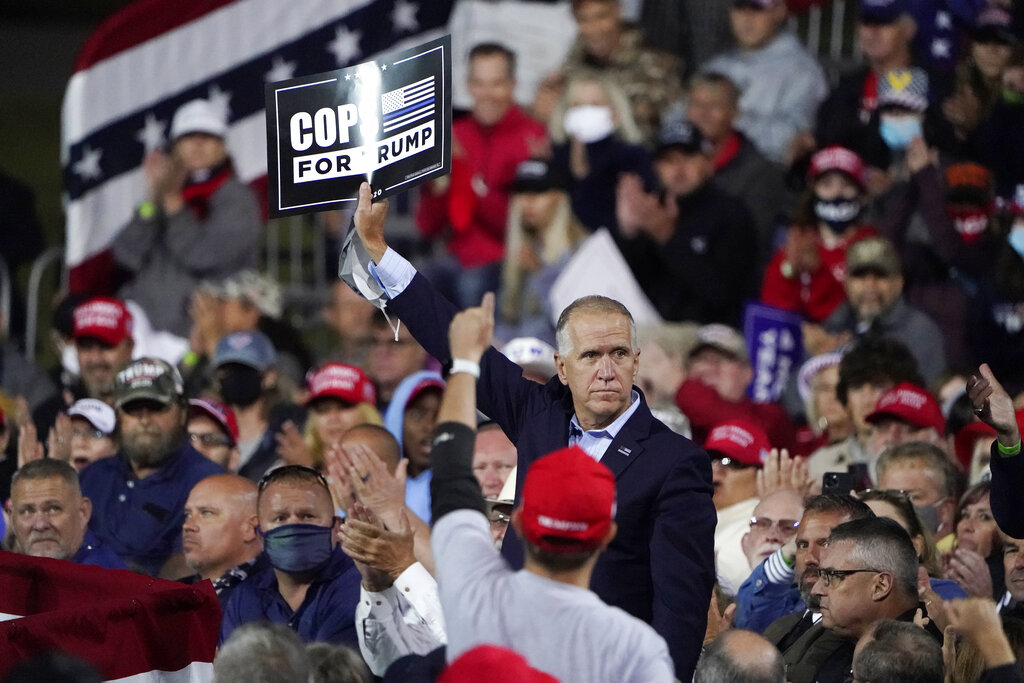
Nearly $500,000 poured into a donation fund set up by conservative activists.
Donald Trump defies coronavirus rules as ‘peaceful protest’ rallies grow

Democratic governors and local leaders have urged the president to reconsider the events, warning that he’s putting lives at risk.
Coronavirus worries force election officials to get creative
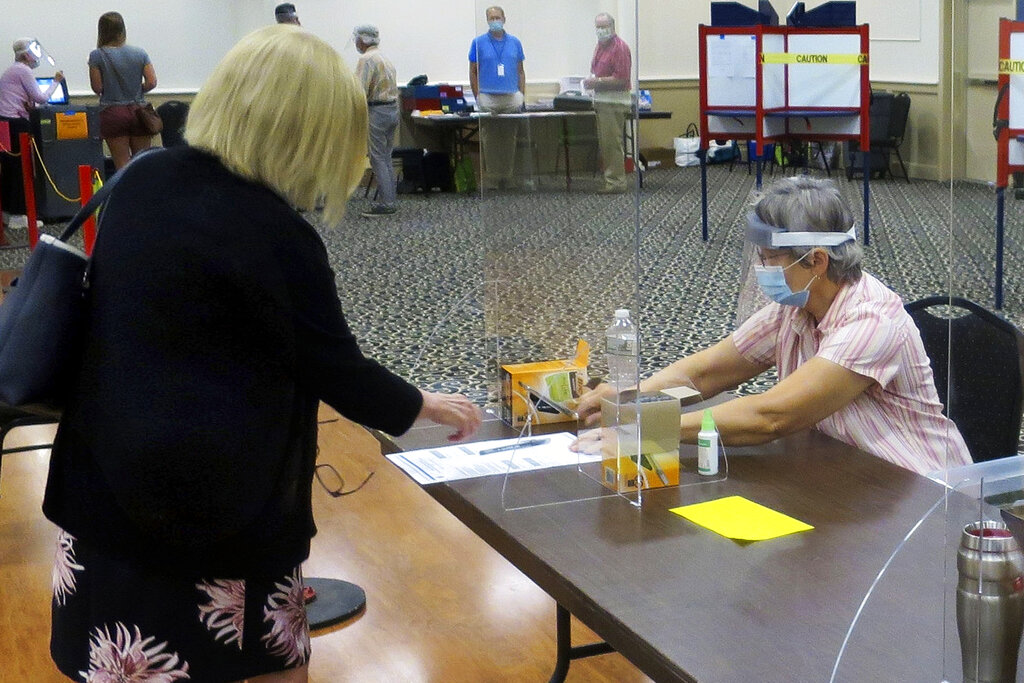
Some are finding ways to expand access to voter registration and ballot request forms. Others are testing new products, installing special equipment or scouting outdoor voting locations.
Donald Trump questions election integrity as he’s renominated

Trump, who was not scheduled to deliver his keynote convention address until later in the week, nevertheless made multiple public appearances throughout the first day of the four-day convention.
