
Bipartisan congressional caucus forms to address fentanyl crisis
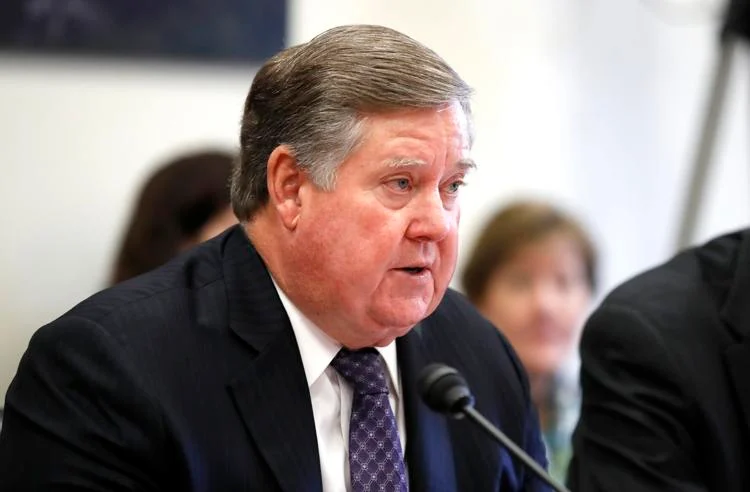
Labeling the smuggling of illicit fentanyl into the U.S. from Mexico “a national crisis,” a group of lawmakers has formed a bipartisan caucus to address the issue. Led by Republican California Reps. Ken Calvert and Darrell Issa and Democratic Reps. Joe Neguse of Colorado and Madeleine Dean of Pennsylvania, the Bipartisan Fentanyl Prevention Caucus was formed to “coordinate with members from both sides of the aisle to combat the nationwide spike in fentanyl-related overdoses and drug poisonings.” The group says it will work with federal and state law enforcement and “to educate the public and the Congress, in cooperation with prevention and awareness groups to better understand the ongoing threat of fentanyl in communities across America.” “Fentanyl is devastating the lives of Americans in every corner of our country. With fentanyl-related deaths climbing every year, we need new solutions to stop this alarming trend,” Calvert said. “This is not a partisan issue – it’s a national crisis.” Rather than pledging to end the fentanyl crisis, Calvert said he hoped the caucus would “educate Americans on the dangers of fentanyl and provide real solutions that will stop the destruction of this deadly drug.” “Fentanyl is not a new danger. But the deadly threat it poses has now reached every corner of our country, and no community is being spared,” Issa said. “The stakes could not be more clear: If we don’t win the fentanyl fight, we’re not going to just lose my community or my neighbor’s. Or any one of my colleagues. We’re going to lose this country. This caucus is needed now as we tell the truth, develop solutions, and save lives.” When announcing its formation, the caucus didn’t call on the president or Secretary of State Antony Blinken to declare Mexican cartels as Foreign Terrorist Organizations, as Texas Gov. Greg Abbott and 21 attorneys general have repeatedly done. Last September, Abbott issued an executive order designating the Sinaloa Cartel, the Jalisco New Generation Cartel, and any similarly situated Mexican drug cartels as foreign terrorist organizations” under Section 219 of the Immigration and Nationality Act. He also requested President Joe Biden do likewise, the second time he’d made the request since April 2021. In his September 21, 2022 letter, Abbott said since then, “There was no action, no response.” He’s still received no response, his office has told The Center Square. Last week, Blinken told Congress he’d consider designating cartels as FTOs. Two weeks prior, the White House said it didn’t have any intention of doing so. Republican U.S. Sens. Rick Scott of Florida and Roger Marshall of Kansas introduced the Drug Cartel Terrorist Designation Act, which Florida Attorney General Ashley Moody said will “do the job Biden refuses to do – protect the American people.” The caucus also hasn’t demanded the president designate fentanyl as a weapon of mass destruction, as 18 attorneys general have done led by Moody. Fentanyl poisoning remains the leading cause of death among adults between the ages of 18 and 45. Two milligrams, the weight of a mosquito, is lethal. In fiscal years 2021 and 2022, CBP agents confiscated enough fentanyl to kill nearly 5 billion people. Since March 2021, Texas Operation Lone Star officers have seized over 373 million lethal doses of fentanyl. Florida law enforcement officers in a few month’s time last year seized enough fentanyl to kill everyone in Florida. The U.S. Drug Enforcement Administration has issued several public alerts warning Americans about the dangers of fentanyl. Most recently it issued another public alert about the “sharp increase in the trafficking of fentanyl mixed with Xylazine,” an animal tranquilizer referred to on the streets as “Tranq.” It did so after the FDA, CDC, and multiple state agencies issued warnings about Xyzaline being detected in an increasing number of illicit drug mixtures and a growing number of overdose deaths nationwide. “Xylazine is making the deadliest drug threat our country has ever faced, fentanyl, even deadlier,” DEA Administrator Anne Milgram said. DEA has so far seized Xylazine and fentanyl mixtures in 48 of 50 states. Caucus members also include Angie Craig (D-MN), Chris Pappas (D-NH), Raja Krishnamoorthi (D-IL), Melanie Stansbury (D-NM), Chrissy Houlahan (D-PA), Ruben Gallego (D-TX), Nikki Budzinski (D-IL), Marc Veasey (D-TX), Sheila Jackson Lee (D-TX), Raúl Grijalva (D-AZ), Doug Lamborn (R-CO), Sharice Davids (D-KS), Don Bacon (R-NE), Claudia Tenney (R-NY), Andre Carson (D-IN), Ralph Norman (R-SC), Chris Smith (R-NJ), Lance Gooden (R-TX), Bob Latta (R-OH), Andy Biggs (R-AZ), Jake LaTurner (R-KS), Barry Moore (R-AL), David Valadao (R-CA), and Robert Aderholt (R-AL). Republished with the permission of The Center Square.
Jerry Carl co-sponsors bill to give veterans free access to national parks passes House unanimously
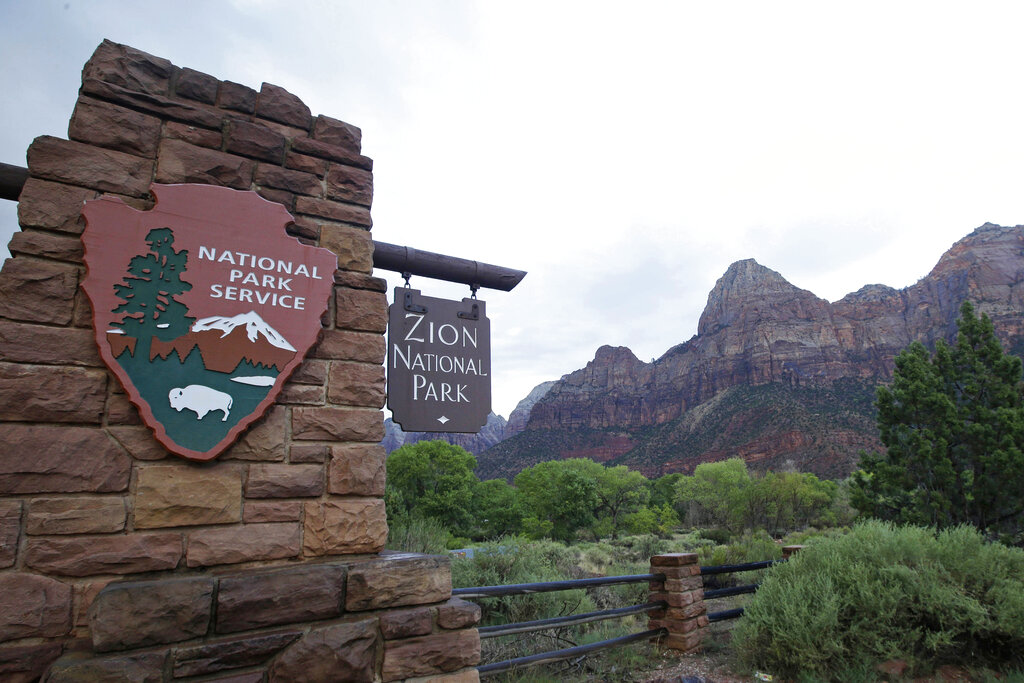
Rep. Jerry Carl announced that he had cosponsored bipartisan legislation to give veterans and Gold Star families lifetime free access to national parks, ALreporter.com reported. The bill has passed the U.S. House of Representatives unanimously. “Our service members and Gold Star Families have paid the ultimate sacrifice to keep our country safe and secure, so it’s critical we do everything we can to support them and show them our gratitude,” Carl stated. “I’m proud to support this bipartisan legislation to provide free annual America the Beautiful passes to current military service members, veterans, and Gold Star Families so they can gain free access to all our national parks and public lands.” The Alexander Lofgren Veterans in Parks (VIP) Act is led by Reps. Mariannette Miller-Meeks, and Ruben Gallego. The Act aims to recognize that our active-duty service members, veterans, and Gold Star Families should be treated like VIPs in national parks and on our public lands. In 2020, the Trump administration made America the Beautiful passes free for all veterans and Gold Star families. By passing this law, it will continue the benefit. The Pass provides access to over 2,000 federal recreation areas, including national parks, national forests, and wildlife refuges. The act will convert those passes into lifetime passes. It will also create annual passes for active-duty military members that can be converted into lifetime passes once they leave the military. Gallego commented on Twitter, “Today, the House passed my and @RepMMM’s Veterans in Parks Act, a bill to provide veterans & Gold Star families with free lifetime passes to federal public lands and national parks. Our veterans fought to protect these lands – they should be able to enjoy them too.”
Democratic lawmakers seek criminal corruption probe of EPA’s Scott Pruitt
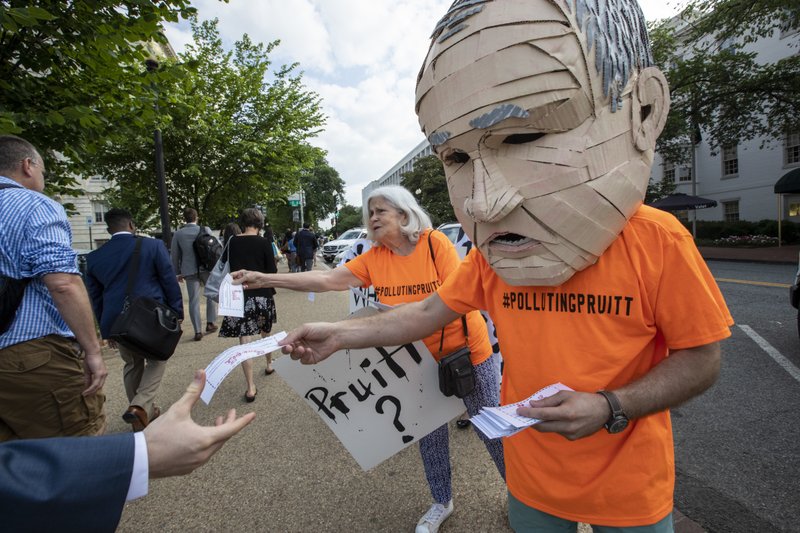
House Democrats on Friday formally requested that the Justice Department investigate Environmental Protection Agency Administrator Scott Pruitt for potential criminal conduct. In a letter to FBI Director Chris Wray and Justice criminal division chief John Cronan, six Democratic lawmakers with oversight of Pruitt’s agency allege he repeatedly violated federal anti-corruption laws by seeking to leverage his government position for personal gain. As evidence, the Democrats cite Pruitt’s $50-a-night lease of a Capitol Hill condo tied to a lobbyist seeking to influence his agency, directing an EPA aide to contact a senior Chick-fil-A executive as part of an effort to land his family a franchise, and a $2,000 payment to his wife from organizers of a conference the administrator then attended at taxpayer expense. A spokesman for Pruitt did not immediately respond to messages seeking comment. The letter was signed by Democratic Reps. Gerald Connolly and Donald Beyer of Virginia, Jamie Raskin of Maryland, Ruben Gallego of Arizona, Pramila Jayapal of Washington and Ted Lieu of California. Connolly is a senior member of the House Committee on Oversight and Government Reform and serves as the ranking Democrat on the Subcommittee on Government Operations. President Donald Trump signaled Friday he is still standing by his embattled EPA chief, even as Pruitt’s support among other Republicans has started to erode. “Scott Pruitt is doing a great job within the walls of the EPA,” Trump told reporters at the White House. “I mean, we’re setting records. Outside he’s being attacked very viciously by the press. And I’m not saying that he’s blameless. But we’ll see what happens.” For his part, Pruitt sought to laugh off the controversy this week over his using government resources to seek a “business opportunity” with the fast-food fried chicken chain whose owners are known for supporting conservative Christian causes, including outspoken opposition to same-sex marriage. “I mean, look, my wife is an entrepreneur herself. I love, she loves, we love Chick-fil-A as a franchise of faith,” Pruitt said in a TV interview on Wednesday. In their letter, the House Democrats make their case that Pruitt’s conduct rises to the level of criminal conduct. “At the very least, we know that federal ethics laws bar public officials from using their position or staff for private gain,” the Democrats wrote to Wray and Cronan. “Administrator Pruitt has certainly done just that. Further, his actions related to his wife’s employment and the quid-pro-quo condo situation with industry lobbyists may have crossed a line into criminal conduct punishable by fines or even by time in prison.” Republished with the permission of the Associated Press.
Hardliner Jeff Sessions could face repeat of 1986 Senate confirmation battle
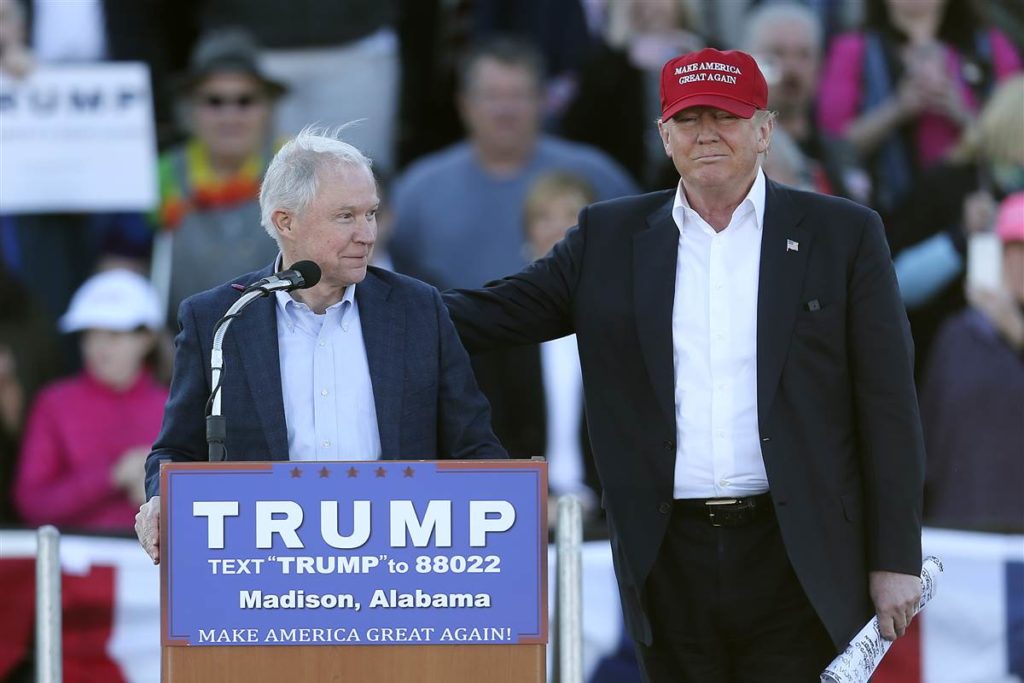
Thirty years ago, federal judge nominee Jeff Sessions ran afoul of a Senate confirmation hearing after accusations emerged he called a black attorney “boy” and referred to the NAACP as “un-American.” Now a senior member of that same Senate panel, the Alabama Republican, one of the chamber’s strongest conservatives, could once again face a confirmation battle as one of Donald Trump’s staunchest supporters. POLITICO reports Sessions, as a reward for backing Trump, is under consideration for either U.S. Attorney General or Secretary of Defense. However, those same accusations of racial insensitivity and hardline attitudes on immigration could make a possible Cabinet position far from assured. Sessions’ nomination could add fodder to Trump critics, particularly after the announcement of Steve Bannon, who leads the alt-right Breitbart News, as a top White House adviser. “Jeff Sessions, just because he’s a senator, does not mean he doesn’t have any racist intent,” Arizona Democratic Rep. Ruben Gallego told POLITICO, adding that Sessions aligns with Trump and is known for “anti-Latino and anti-minority viewpoints.” Sessions could still get a pass from senators — even those who have been critics in the past — including South Carolina Sen. Lindsey Graham, who has disagreed with Sessions on immigration. “He was the early, only supporter for Donald Trump … in the Senate,” Graham told reporters this week. “I believe that Jeff Sessions has earned the right to serve President Trump at the highest levels … I think he’s a good, competent, capable man.” Sessions has long denied accusations of bigotry, telling the judicial confirmation hearing in 1986: “I am not the Jeff Sessions my detractors have tried to create. I am not a racist. I am not insensitive to blacks. I have supported civil rights activities in my state. I have done my job with integrity, equality, and fairness for all.” And his stance on immigration has made him popular with several senior Republicans. “Just because the leadership does it or likes it doesn’t mean it’s right,” said California Republican Rep. Duncan Hunter, another early Trump congressional backer. “He’s been right on immigration. … It just so happens we now have a president-elect that sees directly eye to eye with what Jeff Sessions always has believed is right.” Originally, Sessions was in rare company among Senate Republicans, supporting Trump over Texas Sen. Ted Cruz in the early months of the campaign. Now that loyalty looks like it will be paying off, when Trump named Sessions vice-chair of the transition executive committee. Over his Senate career, Sessions frequently clashed with his own party on issues such as the federal defense budget and immigration, leading the attacks on the bipartisan “Gang of Eight,” which in 2013 attempted to produce a compromise immigration reform bill. It could be just the thing that feeds backlash should he face another Senate confirmation hearing.
Jeb Bush’s tough week exposes challenges for his likely 2016 bid
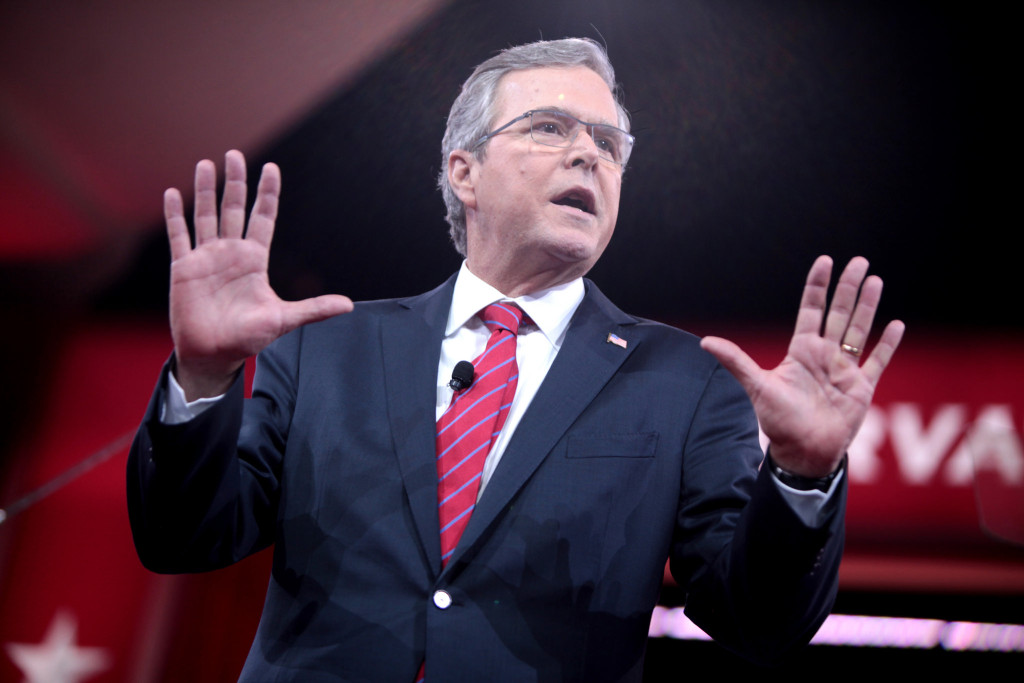
Jeb Bush worked his way through the dim hallway of an Arizona resort for hours, shuttling from room to room and meeting with dozens of Republican officials, many for the first time. He was in need of a political reset. For days, he had offered confusing answers to questions about the war in Iraq. He had disappointed Republicans in Iowa, the leadoff state in the nomination chase. And, for a moment, he had forgotten he wasn’t yet a 2016 presidential candidate. Only weeks earlier, donors willing to give millions to put him in the White House were coming to see him at an opulent Miami Beach hotel. Now it was Bush seeking the private gatherings, on the sidelines of a Republican National Committee meeting. The former Florida governor was trying to recover from what was undeniably his worst week in politics since announcing he was considering a run for the White House. “It’s the one thing you have to learn in a campaign,” said Matt Borges, the Ohio Republican Party chairman, as he emerged from a private session. “How to fall down and get up.” Interviews with dozens of RNC members, Bush donors, early state supporters and strategists show: —concerns with his skills as a campaigner. —unease that his designation as a front-runner has yet to materialize in polls. —worries that while they know the Bush name, they don’t yet know this Bush outside of Florida. “In this cycle, there’s less and less off-Broadway. And for Jeb Bush, there’s no off-Broadway,” said Fergus Cullen, the former chairman of the New Hampshire Republican Party. But none of the Republicans interviewed by The Associated Press said Bush had been irreparably damaged. His name recognition and fundraising operation make him a force in the GOP contest. “But I don’t know anybody who ever said in this cycle there’s an untouchable front-runner,” said Ron Kaufman, a Bush supporter who helped arrange some of the meetings in Arizona. Bush’s tough week began with a Fox News interview that included a question about the Iraq war begun by his brother. When President George W. Bush invaded Iraq in 2003, he cited intelligence that showed the country had weapons of mass destruction. The intelligence later was found to be faulty, and no such weapons were uncovered. Over the course of 72 hours, Jeb Bush said he would have ordered the invasion, based on the intelligence presented at the time; claimed he misunderstood the interviewer’s question; then said he would have done something different but refused to say what that might be. On Thursday, he finally answered the original question. “If we’re all supposed to answer hypothetical questions, knowing what we know now, what would you have done? I would not have engaged. I would not have gone into Iraq,” he said. The episode demonstrates Bush’s determination to chart his own path in a family of presidents and avoid publicly judging the policies his father and brother pursued. “I’m not going to go out of my way to say that my brother did this wrong or my dad did this wrong,” Bush said this past week. “It’s just not going to happen.” Bush’s answers about Iraq prompted a wave of commentary from his likely Republican rivals, each eager to show how they’re different with a not-yet-a-candidate still perceived by many as an early front-runner. “If we don’t learn the lesson in Iraq, you don’t understand the lessons that we should learn also from Libya and Syria,” Kentucky Sen. Rand Paul said in an interview with the AP. Bush’s response also fueled Democrats’ preferred narrative of the former Florida governor: that he’s an apologist for a brother who is viewed favorably by less than a third of Americans six years after leaving office. Arizona Democratic Rep. Ruben Gallego, who fought in Iraq and criticizes the war, said reports that Bush considers his older brother an adviser on Middle East issues “makes me question even more if he has the judgment to be president.” Amid all the talk about Iraq, Bush also slipped up for a moment about his candidacy. He’s not yet formally declared his intention to run for president, and saying he’s still thinking about it keeps Bush on the right side of campaign finance rules. Yet after a town hall-style meeting in Nevada on Wednesday, Bush said, “I’m running for president in 2016,” before quickly catching himself, noting, “if I run.” Kaufman and other Bush supporters concede Bush had a challenging week, comparing his tight knit but still growing political operation to a baseball team in spring training. While Bush has a small number of experienced advisers, his decision to put off his formal entry into the campaign until at least June has left them unable to mobilize quickly and respond to problems. But perhaps more than anything, Bush’s week underscored a quiet concern among some Republicans about a candidate who last ran for office 13 years ago: He’s rusty. “He hasn’t been a candidate for anything for years,” said Tom Rath, a New Hampshire-based Republican who advised former President George W. Bush. By Saturday, Bush was able to joke about the issue, which was missing earlier in the week, a sign of a candidate recovering from a blunder. Told by a voter at a town hall in Iowa he hadn’t slipped up at all in the Fox News interview, Bush fessed up with a line that drew laughs. “I misstepped, for sure. I answered a question that wasn’t asked. That’s just what happened,” Bush said, shrugging. “It was a great answer, by the way. But it wasn’t to the question that was asked.” While Bush’s family name and cadre of wealthy donors fuel the perception he is a front-runner for the nomination, early polling suggests voters in key states aren’t buying into the narrative. But polls this early in a presidential campaign are poor predictors of eventual outcomes, and Bush hopes to regain his stride during a weekend trip to Iowa and stops next week
Mo Brooks leads U.S. House GOP to strip immigration language from defense bill
U.S. House conservatives on Thursday voted down a nonbinding provision aimed at helping young immigrants without permanent legal status enlist in the military, angering some fellow Republicans and handing Democrats a political issue heading into an election year. The vote was 221-202 to remove the measure from Congress’ annual defense policy bill. Some 20 Republicans voted “no” but couldn’t overcome conservatives who threatened to oppose the overall bill if they didn’t get their way. “This Congress should support and represent Americans by voting to stop military service opportunities from being taken from struggling American families in order to give them to illegal aliens,” GOP Rep. Mo Brooks of Alabama, who led the fight, argued on the House floor ahead of the vote. The handful of Republicans on the other side of the issue struggled to round up votes. Their job was made harder because Democrats had already decided to vote against the defense bill for unrelated budgetary issues, giving Brooks and his supporters leverage to bring down the bill if they didn’t prevail. “This is a mistake,” said Rep. Carlos Curbelo, a freshman Republican from Florida. “It sends the wrong message to the country. I assure you that the overwhelming majority of Americans are for allowing young people who were raised in this country, who love this country and want to serve it, to have that opportunity.” Democrats wasted no time in jumping on an issue that could help them mobilize Latino voters heading into a presidential election year. House Democratic leader Nancy Pelosi of California and her top lieutenants held a news conference to denounce Republicans over the issue, and presidential candidate Hillary Rodham Clinton also got in on the action. She issued a prepared statement from her political director, Amanda Renteria, saying: “If these courageous young men and women want to serve, they should be honored and celebrated, not discriminated against.” The debate revived the simmering partisan dispute over executive actions President Barack Obama took this past fall to defer deportations for millions of immigrants in this country illegally, including expanding protections for those, known as Dreamers, who arrived in the United States as young children. Many Republicans argued that supporting the provision included in the defense bill would have validated the actions Obama took, which have been challenged in court and are on hold pending a ruling by the 5th U.S. Circuit Court of Appeals. “The House should not take action to legitimize the president’s unconstitutional overreach,” said House Judiciary Chairman Bob Goodlatte, a Virginia Republican. Other Republicans argued that the $612 billion defense policy bill, which covers a multitude of military issues, was not the place for a debate on immigration. The measure by Democratic Rep. Ruben Gallego of Arizona would have expressed the House’s view that the Pentagon should study whether military enlistment should be opened to Dreamers. It was added to the defense bill during a marathon committee session last month, with the support of six Republicans. But several Republicans asserted Thursday that it shouldn’t have been included in the first place, suggesting that perhaps it only was because the debate occurred so late at night and people were not fully focusing. “It went for 18 hours, late in the process one of our members offered an amendment to insert the immigration issue into this bill, it was unfortunate and it was inappropriate,” said Alabama Rep. Bradley Byrne. Gallego disputed that argument, saying his amendment was offered about 10:30 p.m., which he asserted was not overly late. Republished with permission from The Associated Press.
